



The holiday season is upon us. It seems it begins now officially with Halloween.
 How did a kids’ holiday take on so much adult significance? By the time I was in high school, my classmates and I were well past even the chalk socks and egging of middle school. The morning after is All Saints Day, which meant attending Mass and there was no excuse for too much chocolate.
 It is a pet peeve of mine that we do not celebrate Thanksgiving as the great holiday it is. The day is truly the only semi-religious and patriotic holiday on the schedule. Just like our Pilgrim forefathers we should give thanks for the bounty of being an American and if you are inclined to do so we should say a prayer for all that our country should stand for.
 In this edition we introduce two new columns. The first is a travel one written by Marcelo Guimarāes who was reading our newspaper while waiting for Fletch from Boys and Girls Club. He contacted me and here is his debut. The second new column is one from Stuart Kiwanis, penned by Suzy Hutcheson that wrote a monthly column when she was the CEO of Helping People Succeed.
Don’t forget to read all our other columns, including Dr. Michele Libman on the latest science regarding autism. We are still seeking a food columnist so if you or someone you know has an interest please contact me.
I hope you and your family have a Happy Thanksgiving and approach the coming Christmas/Chanukah/Kwanza seasons with the good will and yes, spirituality that fostered us celebrating to begin with.
Sit back, have another coffee, and enjoy our latest edition.
Have a great Sunday Morning!
My first non-neighborhood political campaign was in 1974 when I was a student coordinator for Howard Samuels. It was the Democratic primary for New York Governor. I did work for Congressman Mario Biaggi for N.Y. Mayor in 1973, but it was short lived even by political standards. Though I was not in his district, he was a friend of the family.
 Howard Samuels, a businessperson who was also a perennial at running and losing elections, lost the primary to Hugh Carey who became governor. Another member of that ill-fated election team was Mario Cuomo for lieutenant governor. After winning the election, Carey then made Cuomo his secretary of state.
In 1977, I was on the Mario Cuomo campaign when he ran for mayor. I was working at a South Bronx rally when I first met Andrew Cuomo, his son. Though still in college at Fordham, there was no mistaking the fact Andrew was calling the shots behind the curtain that day.
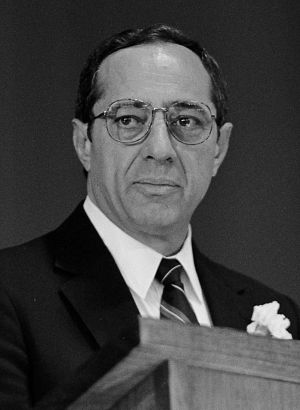 Andrew was the opposite of his father in temperament. Mario would speak to anyone he encountered. The son was brusque and all business making sure you knew who was in charge. When I tried to make pleasantries about whether he was taking classes with any of my old professors, he looked at me like I was crazy.
Mario made it to number two in the Democratic primary, but no one received the 50% necessary to secure the nomination. He and Congressman Ed Koch were in the runoff where Koch beat Cuomo by about 10%. That was the election where the slogan “Vote for Cuomo, not the homo” originated. Though I never knew for certain, there was no doubt in my mind that Andrew was certainly capable of being behind the slur. Ed never forgave Cuomo for that.
Mario continued to run on the Liberal line against Democrat Koch and lost in the general by 10%. By that time, I was working with the Koch campaign and was driving around the Bronx on election day making sure the clubhouses were getting out the vote. Koch proved to be a good mayor and brought the city back from the fiscal crisis. In 1978 and 1980, I ran campaigns for the New York Legislature, so I was more interested in those races than what was going on with Cuomo.
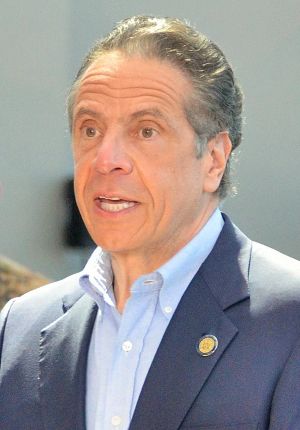
At the different political club dinners I would attend, Mario would be the keynote speaker, and my wife commented a couple of times that this was the 10th time we heard the speech, but it was a hell of a speech. Mario always had a hello for me even if he didn’t remember my name. Andrew couldn’t even be bothered. He was not the politician that his father was.
I drifted over and became a Reagan Democrat and then a Reagan Republican. Anyone who loved a good speaker and speech couldn’t resist the guy. And as the Democrats became more anti what I believed in, I felt left out of the party.
The only time I was almost swayed to come back was the counter speech in 1984 made by Mario to Ronald Reagan’s “City on the Hill.” It was called the “Tale of Two Cities.” It did a fairly good job of countering the Reagan positions. The phrase campaign in poetry and govern in prose comes to mind.
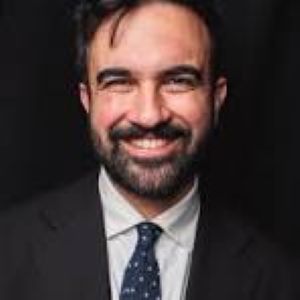 But both Ronald Reagan and Mario Cuomo were masters of tugging at voters’ heartstrings. That was something Andrew Cuomo never was.
The art of government is much different than the science of it. Cuomo, the younger, never mastered the art. Andrew, now age 67, lost the mayoralty of New York to someone that has mastered the art, but I would be surprised if Mamdani has the science down. Andrew Cuomo certainly does know the science of governing.
All presidents turn to foreign affairs when they are losing popularity domestically.
 To look at Trump’s poll numbers in almost every category, he has the support of his MAGA base only. When you get down to the low to mid 30s, there are big problems. Instead of trying to recalibrate, Trump does the Trump thing and doubles down on his policies that are not working.
With late October’s CNN/SSRS poll number, he sits at 37% approval for the job he is doing. Only 28% of independents approve of his performance. It doesn’t look as if Trump has deep support among any group. Even among Republican’s, he is down by 4% in the last few weeks.
 When other president’s begin having domestic problems, they turn to overseas. In his second term, Trump is no different. You cannot call almost all trade and tariff matters as anything other than domestic. Any sanctions imposed on Russia could be looked on as an extension of foreign policy. But the threatened 100% tariffs on Italian pasta is strictly a domestic matter.
Even his vaunted immigration enforcement is showing signs of losing mass support. Most Americans surveyed give Trump high marks for effectively stopping illegal border crossings which are at a 55-year low. Yet the rest of his immigration strategy is at 53% disapproval.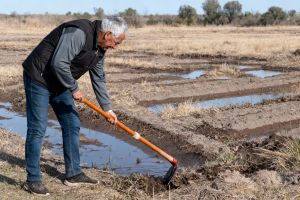
You would think that now would be the time to introduce a bill to overhaul the entire immigration system in the U.S. The idea that we don’t need immigrants is wrong. Birth rates for some time have not matched replacement rates. We currently have 1.6 births per woman, and the replacement rate is 2.1%.
As people age out of the work force, we will need immigrants to fill every classification of employment as well as the taxes and social security they pay. This is where Trump could be a change agent instead of a reactionary. A law which is a balanced approach would end up being something that could make Trump a great president.
On the international stage, he has succeeded in brokering a cease fire in Gaza. That is a great accomplishment. But without continuous handling by the president, it will be very short lived. All the rest of his supposed peace-making is more braggadocio than actuality. And those lack of results are what will prevent him from being anything but an afterthought to history.
President Trump’s fascination with military solutions both domestically and foreign are leading him down another rabbit hole that is not a good one. At home, it will at some point result in mass demonstrations and civil disobedience. Internationally, it may have the unintended consequences of a war that no one wants.
Take the blowing up of boats that are originating from Venezuela. At the very least, those actions are extra-legal. The United States does not execute criminals without due process…neither do other democracies.

The elimination of drug use by people will never happen. There will always be those who sell and buy these substances. There would be no sellers if there were not buyers.

Probably the boats off the coast of Venezuela are transshipping very small amounts of cocaine that ultimately ends up on the world’s market. If we are tracking those boats, why can’t we have our law enforcement (U.S.C.G.) arrest the culprits and place them on trial. It may look like we are doing something by blowing up a few boats, but that is the equivalent of the police arresting “corner drug sellers.” More will immediately take their place.
 The hostility that stunts like that engenders will set our relations with all Latin America back for years to come. Tyrants like Maduro will use these provocations to organize opposition to the U.S. with the Venezuelan people. That will thwart our efforts to help organize opposition against him. The Trump policy will make more enemies without the ability to make corresponding friends.
Drug taking in the U.S. and elsewhere is the cause of illegal importation and the corruption of governments throughout the world. Instead of a legal problem, we should be looking at addiction as a medical one. No amount of enforcement will stop the problem unless you take the old Chinese approach which was to execute addicts.
Immigration is mainly an economic matter. It too is a supply and demand problem. America has a demand for labor and people. The immigrant has an economic and safety need to be here. There is a rational approach for both.
It isn’t the demonization of either nations or peoples that is a valid approach. These are eminently solvable problems. I don’t believe Trump is up to implementing the solutions. Or maybe neither are the American people.
It seems to me there is a much better way to curtail local government spending than trying to limit how much property taxes should be levied.
Politicians tend to be populists if it doesn’t get in their way. No one wants to pay taxes, but there is nothing free. It is no different when we talk about property taxes.

Too often the legislature ends up creating so many unintended consequences with the implementation of what seemed like a good idea. The system we have now is replete with assumptions that go against how markets work. Even markets such as government services which no one else can or will provide. The mess the state finds itself in with property taxes is the direct result of poor ways of thinking about supply and demand.
If you want to stop increasing property taxes, then a better way to do it would be to leave the ability to charge them as it currently stands. The state needs to legislate how property taxes can be spent.

What Florida has never done is clearly legislated what local government should be responsible for providing to their residents. That leaves commissioners free to spend money on almost anything they want. Just look at Stuart and the hundreds of thousands of dollars for an environmental attorney while laying off employees in other departments to do so. Is this really a function of local government?

I believe Public Safety, Parks & Recreation, Roads, Permits & Building, and Utilities should be where our local property taxes should be spent. There are a certain number of administrative expenses that need to be taken into that number, but it is not impossible to calculate. What the state must not do is tell localities that they can’t reduce budgets or eliminate departments. There should be no special carveouts for Law Enforcement or Fire Rescue.
The point is that the state can say these are the areas where local government may provide services, not that they must do so. In that way, they will give a road map but not erect barriers for localities to be responsive to citizen needs. The more Tallahassee tries to limit local government whether politically or by trying to solve a perceived problem, they will fail.

The larger the population centers, the more services one needs to be able to provide. The state can use their funds to provide for housing or mental health needs in all communities, not just the largest. If the state really took up the mantle of providing those services, then cities and counties wouldn’t need to use property tax dollars to do so. Both state and local governments would save taxpayer money.

In curtailing property taxes, Governor DeSantis and the legislature have not solved a problem, only made one worse. By legislating what property taxes may be used for by local governments, you will curb the operations of cities and counties. Without the need to spend money, it will automatically mean less of it needs to be collected.
It will allow for decisions about how much to spend in defined categories up to the residents of cities and counties. By eliminating local government from taking on functions that are not critical to their mission, you have already curbed spending. At the same time by not dictating individual budgets for items like for police and fire those decisions can be left to the grass roots.

If levels of government know what they are responsible for there will be less mission creep. It is a DOGE without necessitating the state trying to play gotcha.
Another take on Zohran Mamdani’s victory would be evolution.
 As much as some people hate to admit it, we are a nation forged by a succession of different immigrant groups. New York and other large cities are where most immigrants first settle. They want their families, friends, foods, and culture to be close by as they begin their journey from newcomer to American. Why then is it a surprise when immigrants begin to gain political power and seize the local government from those who came before by winning elections?
One of the perks about aging is you begin to see an inevitable progression of  change and patterns before your eyes. In some ways, I am a generation behind many of my peers when it comes to living among immigrants since I did that from my earliest memories through my working life. I see it in how my Calabrian-born relatives looked at America and the differences between them and my outlook. And my children look at our nation through completely different eyes.
Politically, I cut my teeth in the Democratic clubhouses in New York. At that time, they were still filled with pols and fixers from the “old country.” Some were Italian strongholds while at others you heard the accents of the Emeral Isle.
My political education taught me that a good party man could go to the clubhouse and find a job or have a government problem solved or even settle a dispute between neighbors. Talk about getting out the vote…those guys were experts at it. On election day they could always know how the vote was going by looking at the back of the old lever voting machines that manually kept track of the counts.
 That world changed as the old city immigrant neighborhoods emptied and new immigrants moved in. New York is still a city of immigrants but now from so many more countries than when I was young. The clubhouse occupants’ accents may have changed, but the reasons they are bound together haven’t.
Mamdani is an immigrant who arrived here with his parents, accomplished ethnic Indian refugees from Africa. He didn’t struggle as many do when he was first here. Dad is a professor at Columbia and mom a distinguished film maker. No struggle there. I always find it easy to be a socialist when you come from the moneyed class.
 Though his platform centered on restoring affordability to those living in New York, many of his Muslim, Indian, and Arab votes came from the thousands of middle- and working-class people who could relate to him as a fellow immigrant. He beat Andrew Cuomo, a former governor, more from the clubhouses of my time than today. His other opponent who didn’t even receive 10% of the vote was Curtis Sliwa, another character from another time.
Just like the Irish and Italians eventually took political New York away from the patrician English and Dutch, it is now the time of those from the Islands, Latin America, Africa, and Asians to take political control. The outer boroughs are now enclaves for these newcomers, and Mamdani is only the first from this new wave to be mayor. It is another sign of the Americanization of the latest ethnic groups who are now making their mark.
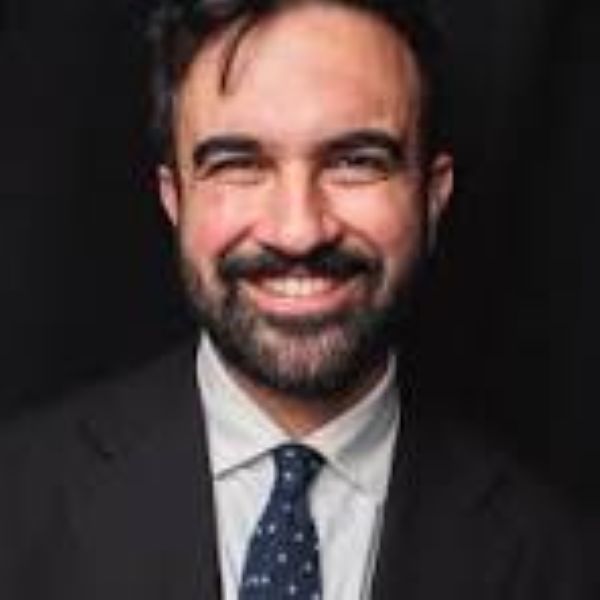
Before we reach Thanksgiving, another important celebration will take place across the nation: Farm-City Week. Observed annually during the week leading up to Thanksgiving, Farm-City Week honors the vital partnerships between rural and urban communities. It reminds us that the abundance we enjoy on Thanksgiving Day is the result of hard work, planning, and cooperation among farmers, processors, truck drivers, grocers, and consumers alike.
The foods that fill our Thanksgiving tables do not appear overnight. Farmers and ranchers begin preparing months in advance to make sure the ingredients for America’s favorite feast are ready in time. From the turkey to the cranberries, every dish tells a story of dedication, timing, and teamwork between farm and city.
Take the Thanksgiving turkey, for example. Poultry farmers start planning early in the year to ensure families across the country have their holiday centerpiece ready. Poults (baby turkeys) are hatched in the spring and raised for up to 20 weeks. During that time, farmers carefully manage housing, feed, and health to keep the birds growing strong. Long before we set our tables, farmers have invested months of care and attention to make sure the Thanksgiving dinner is possible.
Potatoes, another holiday staple, also require precise timing. Seed potatoes are planted in the spring and tended throughout the summer with careful irrigation and pest management. By early fall, the harvest is in full swing, and the crop is stored in temperature-controlled facilities to keep them fresh and ready for mashing, baking, or roasting.

Even the vegetables that add color to our plates, the green beans, sweet corn, squash, and cranberries, require coordination between farm and city. In states like Wisconsin and Massachusetts, cranberry growers flood their bogs in October to harvest the ruby-red berries that will soon become sauces and relishes. Vegetable growers plan planting schedules to ensure crops mature just in time for the fall harvest while keeping their soil healthy for the next season.
Behind every crop and animal is a network of people who make Farm-City Week worth celebrating. Truck drivers transport food from farms to processors, where workers package and prepare it for grocery stores. Urban planners, engineers, and business owners all play roles in ensuring the food system runs smoothly. It is a complex web of cooperation that connects the countryside to the city streets and ultimately to your kitchen table.
As we gather around the table this Thanksgiving, Farm-City Week reminds us to give thanks not only for the food itself but for everyone who made it possible. From the turkey barns of the Midwest to the cranberry bogs of New England and the potato fields of Idaho, it takes dedication, coordination, and a shared commitment to feed our communities.
Farm-City Week is more than a celebration; it is a reminder of the bond that unites us all. Whether you live on a farm or in a city, we each play a part in sustaining the system that allows us to share in the harvest with full plates and grateful hearts.
David Hafner’s opinions are his own and may not reflect Friends & Neighbors viewpoint.
Scooby’s Journey to a Forever Home
As the holiday season approaches, it’s a time for reflection, gratitude, and celebrating the moments that warm our hearts. This year, the Humane Society of the Treasure Coast (HSTC) has a story that embodies all of that - a story of patience, hope, and the magic of finding the perfect match. It’s the story of Scooby, a dog who spent over 1,000 days waiting for his forever home and finally found it just in time to remind us all the true meaning of the holidays.
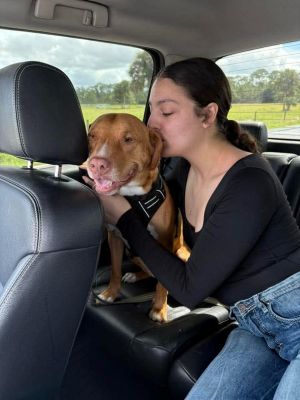 Scooby arrived at HSTC just before Christmas of 2022, after being left in the care of a neighbor by his former family. Unfortunately, that arrangement didn’t last, and Scooby found himself at the shelter, unsure of what the future held. At that point, he was still a young dog, full of life, energy, and hope, but the days turned into months, and the months into years. Scooby quickly became the shelter’s longest-running resident, a loyal and loving presence who won the hearts of staff and volunteers alike.
What made Scooby so special wasn’t just his intelligence and obedience, he knew a variety of commands and thrived when playing outdoors. Scooby was a certified cuddle bug, ready to lean into anyone for comfort and companionship. He got along wonderfully with people of all ages, yet there was one challenge: Scooby needed to be the only pet in his new home. Because of this, many potential adopters passed him by. Despite the setbacks, Scooby never lost hope, and those who knew him held onto the belief that the perfect family was out there, somewhere.
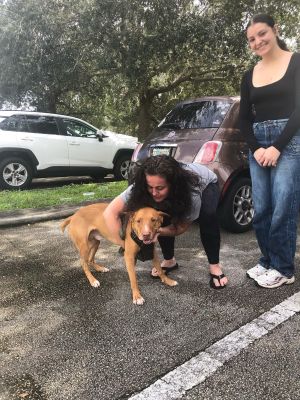 Finally, after more than 1,000 days in the shelter, Scooby’s patience and the dedication of those who cared for him paid off. He was adopted by a loving family, and the joy of that moment cannot be overstated. Today, Scooby enjoys every aspect of his new life: playful runs in the yard, snuggles with his people, exciting car rides for Pup Cups, and the simple comfort of having a home to call his own. His transformation from a shelter dog longing for love to a cherished family member is a true testament to perseverance and the power of kindness.
This holiday season, Scooby’s story reminds us why we give thanks, not just for the comforts in our own lives, but for the lives we can change when we open our hearts. Thanks to the support of the community and care of the shelter staff and volunteers, Scooby finally knows the warmth, security, and joy of a family that loves him unconditionally.
As we gather with loved ones this Thanksgiving, let Scooby’s journey inspire us all. Sometimes, the greatest gifts come in the form the unconditional love of a rescued pet.
Frank Valente's opinions are his own and may not reflect Friends & Neighbors viewpoint.
New information regarding autism
I recently listened to a fascinating episode of one of my weekly podcasts called "The Smartest Doctor in the Room" hosted by Dr. Dean Mitchell who is an immunologist and has a private practice in NYC. He was interviewing Professor Edward Quadros of SUNY Downstate who has done decades of research on Vitamin B and folate metabolism. As most people know pregnant women are encouraged to take high levels of Folate (vitamin B9) during their pregnancies to prevent neural tube defects.
The most common neural tube defect that people are familiar with is spina bifida where the spinal column doesn't close completely. Dr. Quadros was involved in research to determine why women were still having babies with neural tube defects despite having adequate folate levels in their system. He was the first to discover that some women were developing auto antibodies against the folate receptor! They discovered that 70% of women whose babies had neural tube defects had antibodies against the folate receptor.
While his paper was published there was another researcher, Dr Vincent Raemaker from Belgium, that was studying children who appeared normal at birth but over time they were showing signs of developmental abnormalities and behavioral issues (autism). This researcher found that these children had deficiencies of folate in their cerebral spinal fluid. Fortunately, this researcher happened to come across Dr. Quadros paper and put two and two together. They realized there was no gene that was causing autism but rather the majority of cases of autism were related to this folate receptor antibody! 70% of autistic children were found to have this autoantibody.
We now know that there is a connection between maternal antibodies, paternal antibodies and the child developing antibodies to the folate receptor and they all lead to developmental disorders. The prognosis is worse if both parents are positive for the auto antibody. Sadly, this auto antibody is not currently screened for parents who are planning to have children.
This is possibly a way to reduce the incidence of autism. If both parents are positive for this auto antibody they should both be placed on high dose folate prior to conceiving. In addition, they found that a pregnant mother drinking milk can be a trigger to develop these autoantibodies as milk contains a lot of folate receptors.
We know that children with autism usually have issues with their gut. They have inflammation of the gut which can disrupt the gut barrier (which is only one cell thick to begin with). In all babies the gut barrier does not develop until after the first year of life. They found when you eliminate milk from autistic children's diets they tend to have improvement in their symptoms.
Recently headlines were made about using leucovorin to treat autism. Leucovorin works because if the antibodies are blocking the folate receptor, then folate cannot penetrate the cells. Giving leucovorin at high doses activates another pathway called the reduced folate carrier which restores cerebral spinal fluid folate levels.
This treatment will only work on autistic children who fall into the subset of having this FRAT antibody and is best if it is started early. Most of the clinical trials have been done on children aged 6-12 where some of the damage is probably already permanent. Obviously, a lot more research is needed.
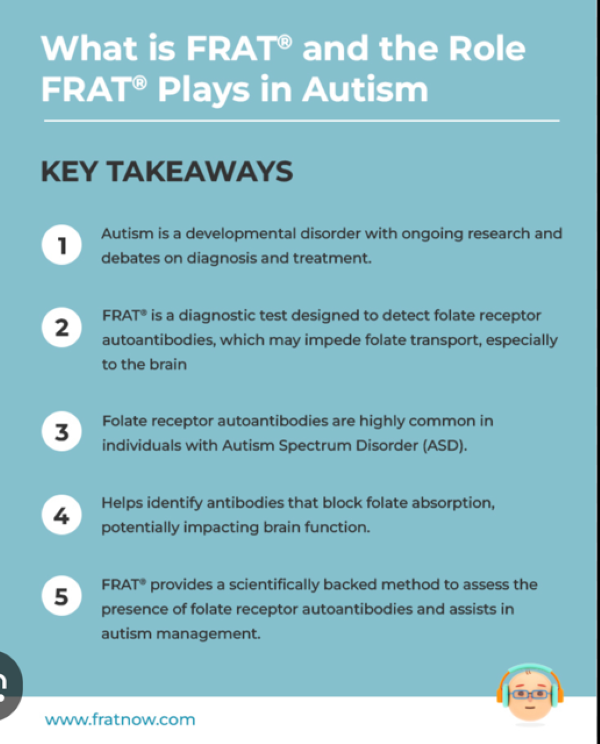
In summary it appears that there is a large subset of children with autism who have cerebral spinal fluid folate deficiency due to having this folate receptor antibody. Both parents and the child can be tested for this. If done before conception it may help lower the incidence of autism, we are seeing. It may also make sense to avoid dairy during pregnancy as milk appears to be a trigger for developing these autoantibodies (although more clinical trials are needed to prove this hypothesis).
For more information about this test please visit www.fratnow.com and discuss with your pediatrician and obstetrician whether this test is right for you and your family.
Michele Libman’s opinions are her own and may not reflect Friends & Neighbors viewpoint.
As I write this column, most public benefits programs operated by the federal government are on hold or greatly diminished. The Supplemental Nutrition Assistance Program (SNAP, also known as food stamps) has received the most publicity as it is the largest of these types of programs. 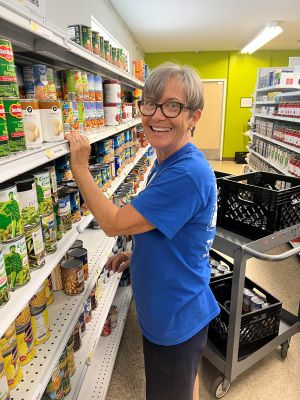 Nearly 40% of SNAP recipients are children, while 20% are seniors and another 10% are people with disabilities. In Martin County it is estimated that there are approximately 12,000 SNAP recipients. These are our most vulnerable residents. They are our neighbors, the classmates of our children, our friends and our family members.
In addition, over 4.7 million Floridians are facing huge increases in health care costs with the possible cuts to the Affordable Care Act. All of this turmoil comes during the holiday season, which brings its own increased levels of stress and financial challenges for so many people. Here at House of Hope, we see an increase in need at the holiday time each year. We also just completed our fiscal year on September 30th and distributed nearly 1.7 million pounds of food across the area, an increase of 500,000 pounds from the year before. We expect to see another huge increase in this fiscal year, as the need is even greater than usual.
But the response has also been far greater than usual. Our incredible community has so far risen to the occasion. I am proud and grateful to write that we have seen a huge increase in individuals donating food at our four food pantries across the county. In addition to the groups and businesses that we count on each year to do food drives for us, many new ones have come forward. Individuals, funders, and faith based partners have responded with financial contributions of all sizes. Residents and groups have reached out about volunteer opportunities (of which we have many) to lend a hand.

But we are certainly not out of the woods yet. As you may know, in addition to our four food pantries, we are also a food bank. We share food to over 30 other agencies such as soup kitchens, youth programs, shelters and more. Our partners are also seeing huge increases in the need for their services. With your help, all of our programs and services for clients and partners will remain at no cost, and we will meet the needs of our neighbors.
Our deep gratitude goes out to all who have found a way to help us this season. To those that are considering, please know that every pound of food and every dollar of support makes a difference in our efforts to provide healthy food to our neighbors in need. If you would like to learn more or to see how you may assist, or if you know someone who needs our support, please visit our website at www.hohmartin.org. Best wishes to all for a Happy Thanksgiving, and thank you for providing hope in our community.
Rob Ranieri’s opinions are his own and may not reflect Friends & Neighbors viewpoint.
Whether you’re a high school garage band or a team of professional partners, sometimes what you’re creating is in harmony. You’re hitting all the right notes and a growing audience wants—or in this case, needs—to hear more.
That’s when it’s time to load up the van and take the show on the road—which we’re quite literally about to do.
Boys & Girls Clubs of Martin County is in the process of partnering with the Martin County School District to creatively address literacy challenges at elementary schools where help is needed most.
Thanks to a great deal of hard work and dedication from its leadership and professional staff, the school district recently reclaimed its A-rating. We applaud this remarkable achievement and continue to do our part building upon such gains through our academic interventions—led by certified teachers—provided to the hundreds of children who attend our five area clubs.
This partnership employs a unique data-share agreement with the school district, ensuring the lessons reinforced during academic enrichment at BGCMC clubs after-school seamlessly reflect what the student is learning in the classroom. Such continuity is key to sustained progress.
Even still, challenges remain. Martin County’s six Title I elementary schools are at “C” ratings. To its credit, the district is committed to getting these grades up. And special shoutout to School Board Member Jennifer Russell, who’s spearheading an initiative to engage business and community partners like us in an all-hands approach to prioritizing improved student performance at Hobe Sound, JD Parker, Seawind, Pinewood, Port Salerno and Warfield elementary schools.
At the heart of the “C” rating is a lack of literacy proficiency. Together we have the means and will to bridge this vital learning gap. We plan to do so by:
- Focusing on areas of greatest need: K-5 students scoring at Levels 1 or 2 on the STAR/FAST assessments already enrolled in Extended Day
- Structuring the approach: Small group, teacher-led, concentrated, 20-to-30 minute sessions.
- Augmenting additional resources: High school student tutors, professionally trained in literacy and English-Language Learners support.
Finally, we’re securing the ideal vehicle to deliver the services to the elementary schools in question—an actual vehicle. The BGCMC Mobile Classroom, creatively wrapped in an eye-catching wow factor to capture the kids’ imaginations, will show up at the various elementary schools and bring the literacy support directly to them.
By teaming with our district partners, targeting support, providing certified teachers and professionally prepared student tutors—and delivering it all in a fun package—we can help individual children, raise school grades, and present a scalable, duplicable model to assist other schools facing varying learning shortfalls.
One of the best qualities about a project of this nature is that the goals are clear and measurable. We’ll be able to tell what works best and adjust as needed. We’re especially excited to take the model refined in our clubs right to the students.
Little wonder the lyrics to an old Willie Nelson song keep coming back to mind.
“On the road again. I can’t wait to get on the road again….”
Keith Fletcher's opinions are his own and may not reflect Friends & Neighbors viewpoint.
Many people don’t realize that nonprofits are, in fact, businesses. They may not exist to generate profit or maximize shareholder return, but they are structured, staffed, and governed just like any other business. They follow strict regulations, file annual reports, and are accountable for how they manage their finances and their missions. The difference is that their “shareholders” are all of us - the community they serve.
Here in Martin County, our nonprofits form an essential part of the local economy. They employ thousands of residents in full-time, part-time, and contract positions - from social workers and bookkeepers to maintenance crews and administrative professionals. They pay rent, purchase equipment, hire printers, caterers, accountants legal and technology expertise and in some cases, pay payroll and property taxes.
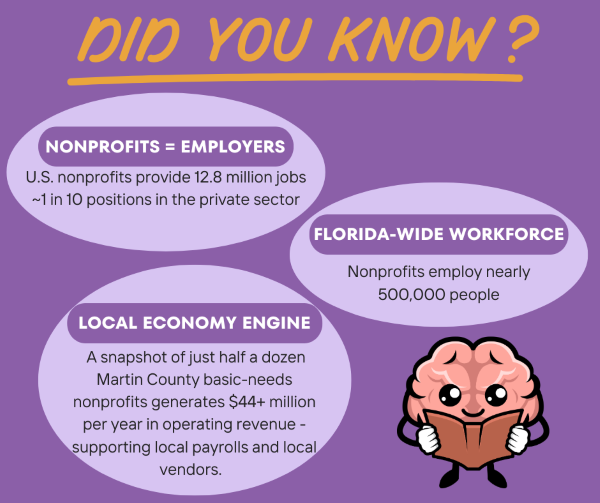
As an example, just six of our local core basic-needs organizations - including the Council on Aging, House of Hope, Boys & Girls Clubs, Volunteers in Medicine, LAHIA, and Habitat for Humanity - together represent more than $44 million a year in operating revenue. That’s money flowing directly into local payrolls, leases, supplies, utilities, insurance, and vendor contracts - the very definition of an economic engine.
And that’s before you consider the ancillary economic benefit nonprofits create by assisting tens of thousands of people, helping them become better equipped to be productive members of society. The people they assist now go on to become stable workers, engaged parents, reliable neighbors, and local consumers who support small businesses.
When you think about it, that’s an impressive engine humming quietly in the background, helping drive our local prosperity. But unlike a traditional business, the returns on investment from nonprofits aren’t measured in dividends, stock prices or profit margins. They’re measured in lives improved.
It’s easy to take for granted the invisible safety net these organizations provide until life hits close to home. When a senior can no longer drive and needs Meals on Wheels, when a pregnant mom needs prenatal care services from Martin County Healthy Start Coalition, or when a child in crisis needs counseling through Tykes & Teens - it’s our nonprofit sector that steps up. They fill the gaps government can’t (or won’t) fill.
Statewide, nonprofits employ nearly half a million Floridians. Across the United States, nonprofits provide 12.8 million jobs - nearly one in ten private-sector positions. These are disciplined, accountable, and community-focused corporations that contribute real economic value while delivering immeasurable social good.
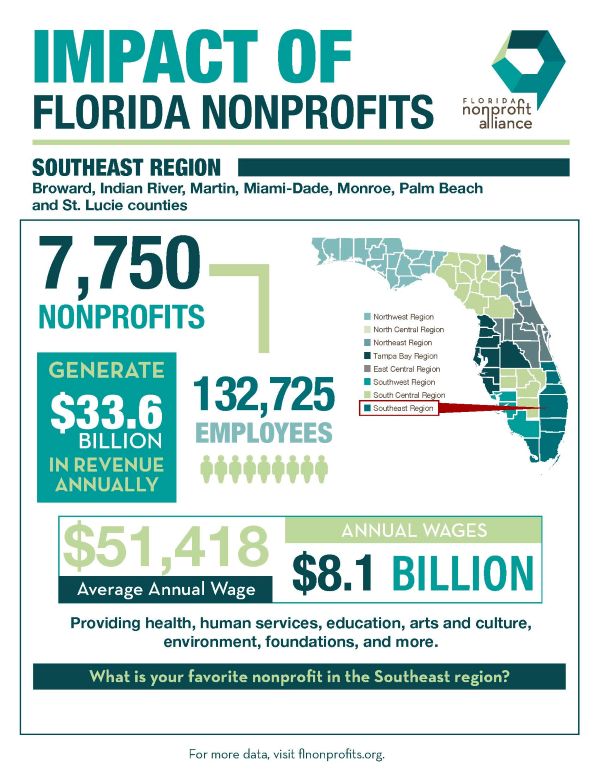
And yet, despite their impact, nonprofits are often dismissed as “charity cases” -something nice to support at a gala or golf tournament, but not essential to the economy. That couldn’t be further from the truth. Imagine Martin County without its nonprofits. No food pantries. No services for at-risk teens, seniors, or young pregnant mothers. No animal shelters. No arts programs or environmental stewards preserving our natural treasures. It would be a poorer community in every sense of the word.
So the next time someone tells you nonprofits aren’t businesses, remind them our local nonprofits are among Martin County’s most disciplined, accountable, and effective corporations -not only significant drivers of our economy but corporations whose dividends come in the form of dignity, hope, and a stronger, more connected community.
They may not be in the business of making money. But they are very much in the business of making Martin County a better place for all of us.
What’s YOUR favorite nonprofit in Martin County. Send me an email at stacy@fireflyforyou.com and let me know.
Stacy Weller Ranieri's opinions are her own and may not reflect Friends & Neighbors viewpoint.
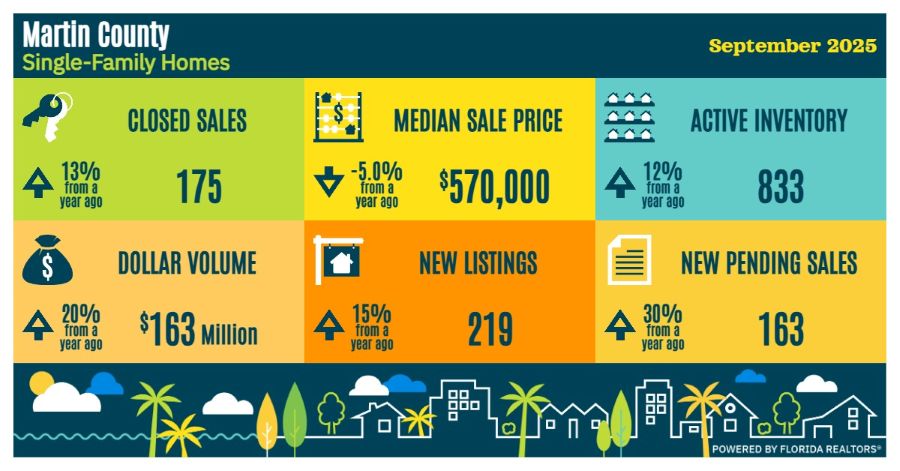
I keep reminding myself that I am writing a real estate column. It is my profession and passion. I spend most of my time trying to enhance my career and better the community I represent so I can be an expert in my job and a source for my clients and friends. Lately, my profession and my advocacy have been embroiled in some controversy that has forced me to explain why I take the stances that I fight for.
I firmly believe, and it is backed by countless studies and documented experience, that a town that fails to accept reasonable growth and new ideas will ultimately die or live as a wounded warrior. I have strongly supported our business community and smart growth not simply because it helps the real estate industry but because I love where I live and am willing to share it with reasonable newcomers.
 Florida now has the 15th largest economy, based on GDP, in the world. Larger than many countries around the globe. The truth is that workers, investors, retirees, wealthy families want to live in Florida for a wide variety of reasons. Some will want to migrate to Martin County and Stuart. Trying to stop their arrival by shutting down and stifling growth in the home sector and commercial real estate is foolish and dangerous.
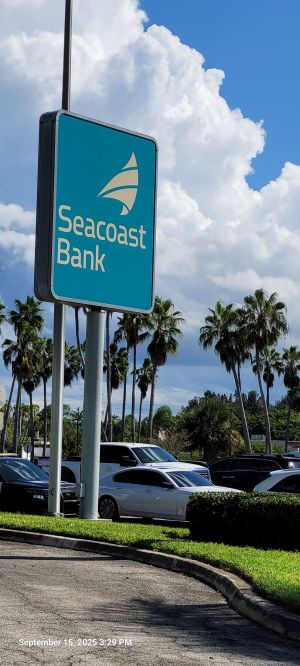
Recently, the City of Stuart considered denying the approval of the new headquarters of Seacoast Bank on the property that has housed their bank for nearly 75 years. Many citizens rallied and the multimillion dollar headquarters will be built and will employ hundreds of MC residents. Why did I fight for it – without good jobs and successful businesses in our community we could go the way of other antigrowth towns that have become ghost towns. Falling real estate values and empty buildings follow such mistakes. This is why I advocate for slow growth.
I would love to have less traffic, frankly, it could be worse. I have found that adding an additional 10 minutes to what I remember a trip took 30 years ago - serves me well. The traffic here does not come from the “massive growth” in Martin County or Stuart. It is generated by the communities to our North and South who want to come and see our lovely home. They come for lunch or dinner, visit to the beach or one of our museums – then they go home. Additionally, the traffic is people coming to service our homes or personal needs. Our plumber, electrician, barber, nail tech or mechanic likely live outside our somewhat unaffordable county. When they arrive in the morning or go home at night they create necessary traffic.
I love living here and bragging about our paradise. I will continue to advocate for a healthy and vibrant community that genuinely is the Treasure of the Treasure Coast and Florida.
John Gonzalez’s opinions are his own and may not reflect Friends & Neighbors viewpoint.
Food for Thought: I Hope You Like Pork
Dad was a Federal probation officer. I grew up steeped in an understanding of our justice system.
 His first job as a probation officer was with the State. I was 5 when he was appointed a Federal officer. He came home from the DC swearing in ceremony with his appointment certificate signed by the President.
His new letterhead had a watermark of the Coat of Arms of the United States. He explained the meaning of every component of the seal. The eagle, 13 stars, 13 arrows, olive branch, and E Pluribus Unum. “Out of many, one.” The distinctions and interactions between our State and Federal governments were clear at a very young age.
He also took me to the voting polls. He explained every candidate and his reasoning. Local government was becoming clearer.
As a probation officer, Dad was an advisor to judges. I traveled with him through North Florida visiting prisons and parolees. Places where it was not wise for a judge to go.
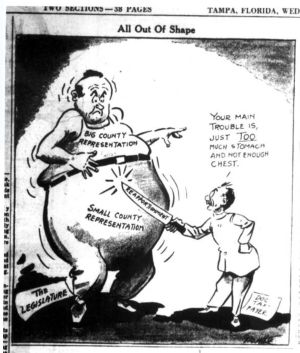
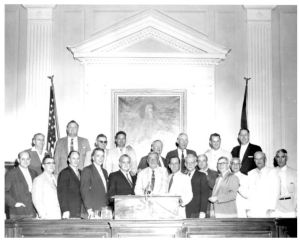 On our rides, Dad would talk about corrupt Florida politics in the ‘40s, ‘50s and ‘60s, an era some foolishly long for today. An era run by the infamous Pork Chop Gang, a hyper-conservative voting block. This group voted against the wishes of Florida residents for decades.
As an advisor, Dad would go into the “field” and report his findings. He was an expert the judge relied on to inform rulings. During a pre-sentence investigation, Dad relied on the expertise of educators, law enforcement, employers and others who had experience with the convict. He gathered facts, listened and wrote a report the judge could trust.
In my work, I frequently work with attorneys and other advisors. They should be both listened to and tested. I frequently challenge something then learn by listening to the response. You can get the desired outcome while improving results when you listen and adjust.
My first comments to this commission were to heed the advice of counsel. It was clearly being ignored then. Rather than listen, some closed their minds and ears.
There is a leadership crisis at the City. There will soon be legal and political crises. Expect multiple FDLE investigations into this commission’s actions. We should expect the Governor to then dismiss anyone charged.
Salt pork is the first thing in the pot when making swamp cabbage. Apparently, ours is one giant pork chop.
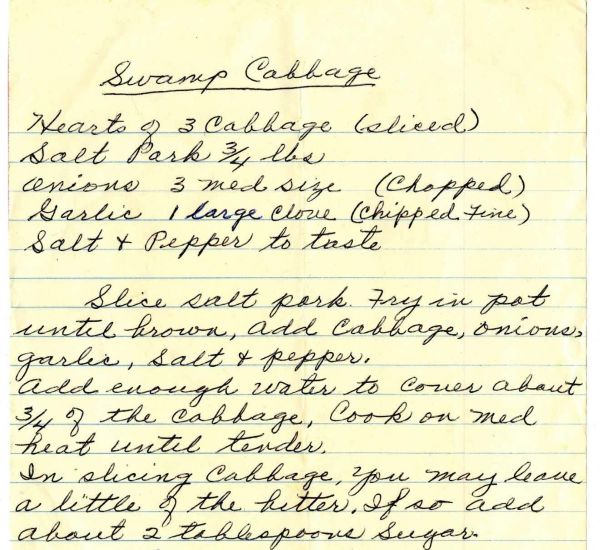
It is an old Florida recipe.
“Slice salt pork. Fry in pot until brown, add cabbage, onions, garlic, salt & pepper.
Add enough water to cover about ¾ of the cabbage, cook on medium heat until tender.”
As our friend Jimmy will tell you, “A hard head leaves a soft butt.”
I think I hear Dad calling me to dinner.
Bill West’s opinions are his own and may not reflect Friends & Neighbors viewpoint.
Eliminating Property Taxes in Florida: Visionary or Volatile?
Governor Ron DeSantis has proposed one of the most sweeping tax reforms in modern Florida history: eliminating property taxes on primary residences. For homeowners, the pitch is simply made - keep what you own, reduce government intrusion, and ease the growing burden of rising home costs.
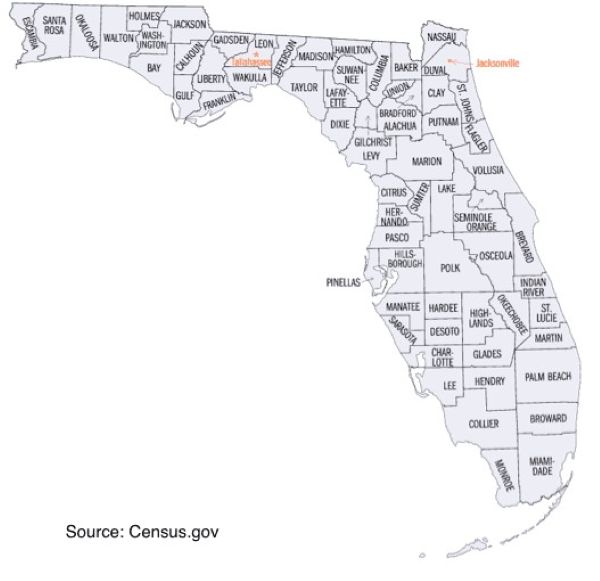
But can such a bold idea really make sense considering 82% of our counties have not even increased their millage rates in the past 5 years?
The Numbers: Big Relief, Bigger Hole
Florida’s local governments currently collect approximately $42.7 billion annually in property taxes. Importantly, only 36% of this comes from homesteaded primary residences - meaning DeSantis’ proposal would forgo around $15 billion per year in local funding. Florida now has a limit on how much the assessed value of a homesteaded property can increase each year due to the “Save Our Homes” amendment in place. This cap on increases is the lower of 3% of the prior year’s assessed value or the percentage change in the CPI (Consumer Price Index).
That money supports schools, police, EMS, infrastructure, libraries, and more. And while 64% of property tax revenue comes from non-primary residences - including commercial buildings, second homes, and short-term rentals - cutting the homesteaded share still creates a massive hole.
DeSantis and supporters suggest plugging it with an increase in the state sales tax, which currently generates $35.8 billion (about 75.6% of Florida’s total tax revenues) and costs the average Floridian $1,673 per year. Raising the sales tax by 2.5 to 3 percentage points, they argue, would capture additional revenue from tourists and snowbirds.
But Florida’s sales tax structure is selective. It exempts groceries, most medical items, and nearly all professional services - meaning higher rates disproportionately affect low- to middle-income families and businesses.
A More Feasible Path: The Hybrid Model
Rather than a full elimination, a hybrid approach may offer a more balanced, feasible solution:
1. Increase Florida’s base sales tax modestly (e.g., 2.5%) to bring in visitor-based revenue while maintaining exemptions for essentials.
2. Shift more of the local tax burden to commercial and non-homesteaded properties, which already provide 64% of property tax revenue and can better absorb rate changes.
3. Implement a statewide senior exemption for Floridians aged 60 or 65+ who live full-time on fixed incomes. This targeted relief protects the most vulnerable without gutting local budgets.

The Verdict: Reform, Not Ruin
The desire to ease the burden on homeowners is legitimate. But eliminating property taxes outright - without a detailed replacement plan - could cripple local governments, shift costs unfairly, and strain public services.
Instead, I believe Florida has the chance to lead with innovative tax reform that protects homeowners, funds local services, and future-proofs our economy. That path may not be flashy, but it’s far more likely to succeed - and stick.
Andy Noble’s opinions are his own and may not reflect Friends & Neighbors viewpoint.
PTSD
In every life there will be times of great pain and distress as part of our human condition. We experience trauma. There is no sentient life without it. Trauma and our response to trauma are documented in the historical record since antiquity.
 There are paleolithic cave paintings of warring cave dwellers raining horrific violence upon each other. The Assyrians described victorious soldiers being visited by the ghosts of soldiers killed in battle. Classical Greek historian Herodotus recounts how an Athenian soldier developed sudden psychological (conversion disorder) blindness after witnessing a fellow soldier being struck down in battle.
In recent history, the notion of psychological and moral injury following physical and psychological trauma has been codified as legitimate injury in mainstream medicine. As a species, we regularly commit horrible things upon each other: physical and sexual violence has been used as a method of humiliation and crippling of the human soul for a very long time. Even witnessing violence committed upon others can result in lasting intrusive memories and nightmares.
These experiences were called shell shock in the First World War, and it was not until the war in Vietnam that the DSM defined these physical and psychological experiences as posttraumatic stress disorder (PTSD). These ghosts can haunt for a lifetime. So, what can be done to alleviate the pain and distress?

The Diagnostic Statistical Manual of Mental Disorders, 5th edition defines PTSD through the cognitive, visceral, or psychological reexperiencing of trauma, avoidance of triggering stimuli, and affective reactivity in the form of subjective anxiety and depression.
The symptoms need to persist for longer than one month, but the symptoms may persist for years. Not all who experience trauma will have PTSD, so we must have mechanisms which protect us from developing PTSD impairments following trauma. Savagery has been so embedded into the historical repertoire of our species, that we are usually able to acknowledge and function through and after the trauma by using inherited capacities to dissociate and live mechanically to survive calamity and destruction.
PTSD occurs when the inborn survival capacities are overwhelmed. PTSD looks like persistent depression and multiple anxieties such as panic disorder, phobic avoidance, and irritability coupled with cognitively intrusive symptoms of flashbacks, nightmares, and daymares. Treatment entails addressing the underlying biology and cognitive intrusions. PTSD can respond to cognitive-behavioral treatment (CBT) and eye movement desensitization and reprocessing (EMDR) to decouple the triggers from the visceral and cognitive symptoms of PTSD, but the persistent baseline generalized anxieties, and depression may require treatment with medications or Transcranial Magnetic Stimulation (TMS).
 TMS is an FDA-approved somatic treatment for depression and obsessive-compulsive disorder that does not require medications (though medications are not contraindicated). PTSD can also be described as a complex disorder that encompasses both depression and intrusive thoughts and somatic experiences (such as panic or flashbacks) that are obsessive and compulsive in nature.
TMS offers the benefit of avoiding the use of multiple medications or at least making lower doses of medications possible for the symptoms described as PTSD. TMS stimulates the region of the brain which modulates mood and anxiety with a magnetic pulse over 36 treatments lasting 20 minutes. In contrast to medications, there is no risk of weight gain, sexual dysfunction, or metabolic derangements.
Also, pregnant and lactating women do not have to be concerned about exposing their baby to medication. TMS is particularly useful for individuals who have failed to response to medications and psychotherapy or whose medication burden for the treatment of medical illness already poses adversity from drug-drug interactions.
PTSD is a ubiquitous disorder. According to the 2016 National Epidemiologic Survey on Alcohol and Related Conditions-III (NESARC-III), the annual incidence of DSM-5 PTSD in the US was 4.7%, and the lifetime incidence was 6.1%. In times of great calamity, natural disasters, and war zones, the incidence of PTSD would be much higher.
Most individuals with lifetime PTSD (59.4% in the NESARC-III study) sought treatment, but treatment was delayed on average by 4.5 years from the onset of the traumatic event. These are years of dysfunction and unnecessary pain, especially when treatment is available.
Dr. Louis Velazquez’s opinions are his own and may not reflect Friends & Neighbors viewpoint.
Why Everyone Needs an Estate Plan, Regardless of Wealth
When you hear the term “estate planning,” you might think it only applies to people with large homes, investments, or significant savings. The truth is that everyone benefits from having an estate plan, no matter the size of their bank account or the value of their property.
Estate planning isn’t about how much you own. It’s about protecting the people you love and making sure your wishes are followed when you can’t speak for yourself.
Estate Planning Is About Control
Without an estate plan, the state decides how your assets are divided and who will make decisions for you if you become unable to do so. That can create unnecessary stress, confusion, and conflict among family members.
Having a plan in place gives you control. You decide who will handle your affairs, who will receive your property, and how those decisions are carried out. In Florida, a well-prepared plan can also help avoid the delays and expenses of probate, making things simpler for your loved ones.

It’s About More Than Assets
An estate plan covers more than what happens after you pass away. It also prepares for unexpected events while you’re still living.
Documents like a power of attorney and a healthcare directive allow someone you trust to make financial or medical decisions on your behalf if you can’t.
These tools can help prevent lengthy court proceedings and provide guidance during emotionally challenging times, ensuring your preferences are respected.
Wills and Trusts Work Together
A will allows you to outline how your assets should be distributed, while a trust can help your family avoid probate and maintain privacy.
Many families in Florida find that having both documents offers the most complete protection, especially when life circumstances change, such as marriage, divorce, the birth of new children, or the purchase of a home.
Regularly reviewing and updating your plan keeps it aligned with your current wishes.
Peace of Mind for You and Your Family
Creating an estate plan is one of the most thoughtful steps you can take for your loved ones. It reduces the burden on them during difficult times and gives you peace of mind knowing everything is in order.
You don’t need to be wealthy to plan ahead. You just need to care about what happens to the people and things that matter most.
Gene Zweben’s opinions are his own and may not reflect Friends & Neighbors viewpoint.
Help on the Long Journey of Alzheimer’s Care
A 36-hour day – that’s how some caregivers describe the experience of helping family members cope with Alzheimer’s and other forms of dementia. They do it out of love, but that doesn’t make it easy. It can be a very isolating and stressful time.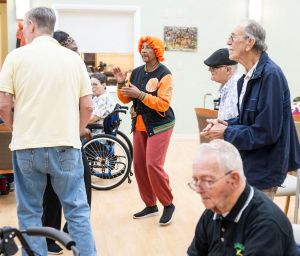
At the Council on Aging Martin County, we work with individuals coping with dementia and their families every day. Each situation is unique, but all of them benefit from the care, compassion, knowledge, and support that our many programs can offer. We are honored to be our community’s Hub for Senior Resources, including those for dementia care.
During November, National Alzheimer’s Awareness Month, we have focused several of our educational programs at the Kane Center on helping the community understand the different types and stages of dementia-related disorders.
Is it Alzheimer’s?
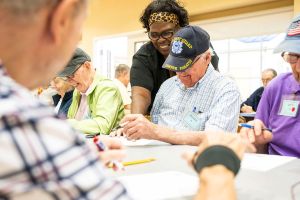 It’s easy to lump all memory issues into the category of Alzheimer’s, but that’s not always true. We urge people having memory loss issues to get an accurate diagnosis as soon as possible.
Our staff at Day Primary Care on our Kane Center campus is a good place to start for those who don’t have a primary care physician. Within the center, our GUIDE program can help people access available resources, including respite care.
How can we get through the day?
Our Adult Day Club is a life-giving option for both individuals coping with dementia and their families. Spouses give their loved ones a kiss good-bye and adult children give smiles of reassurance as our Adult Day Club members join us each weekday morning at the Kane Center. They know their family members will have a day of music, activities, food and friendship, all within a safe and welcoming environment. The Adult Day Club is a lifesaver for caregivers who need to work or take care of other responsibilities during the day.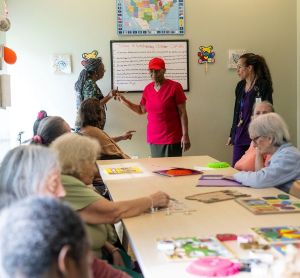
Where will I find help?
A Case Navigator who can guide families to resources, a Memory Enhancement Program to help people keep their brains sharp, and support groups for caregivers are all part of our team efforts to care for people coping with dementia-related illnesses and to support their caregivers.
Our whole community can help in that support. The HUGS program provides dementia-friendly training to businesses, organizations, and groups who want to do their part to understand the challenges of dementia and be supportive.
If you’re concerned about your own memory problems or those of people you love, please reach out to us. You’ll find programs and opportunities on our website www.coamartin.org, and please feel free to call us at any time at 772-283-7800. You don’t have to take this journey alone.
A Day at Adult Day Club
8:30 am: Kiss my spouse good-bye at the door.
8:45 am: Singing our morning song with my friends
9:00 am: Oops, I’m up and dancing
9:30 am: Memory games, and I’m doing pretty well
11:00 am: Outdoors on the patio for some relaxation
11:45 am: Lunch, always tasty
12:30 pm: My group is working on puzzles
1:15 pm: A guest singer, all the tunes I know!
2:00 pm: Snacks with my friends
2:30 pm: Playing card games, and I’m winning
3:30 pm: Some gentle exercises to keep my body moving
4:00 pm: Time to return home, glad to know I’ll be back tomorrow
Karen Ripper's opinions are her own and may not reflect Friends & Neighbors viewpoint.
It is November 10th and 2025 is flying by.
As far as our surf fishing activity from the past month it is finally starting to show signs of improvement. We are still dealing with some challenging conditions, but the frequency and duration times of the wind and the swells are starting to shorten. During this past week we had some chamber of commerce weather days with blue skies and light winds, and we actually caught some fish
The pompano have begun to show but not in big numbers as the bulk of the schools are still being caught from Jacksonville to Daytona Beach. Tonight, will bring our first real cold front of the season and with the dropping temperatures and the north to northeast winds these fish should start their migration into our area. The Spanish mackerel have been caught by the commercial fishermen the past few days and as the mackerel show so will the pompano.
I have not had any big number pompano days yet as three or four pompano per day have been recognized as a good catch. The beaches in Martin County like Tiger Shores, Stuart Beach, Santa Lucea, and Hobe Sound public beach have had the cleanest water recently and that is where the pompano and mackerel have been.
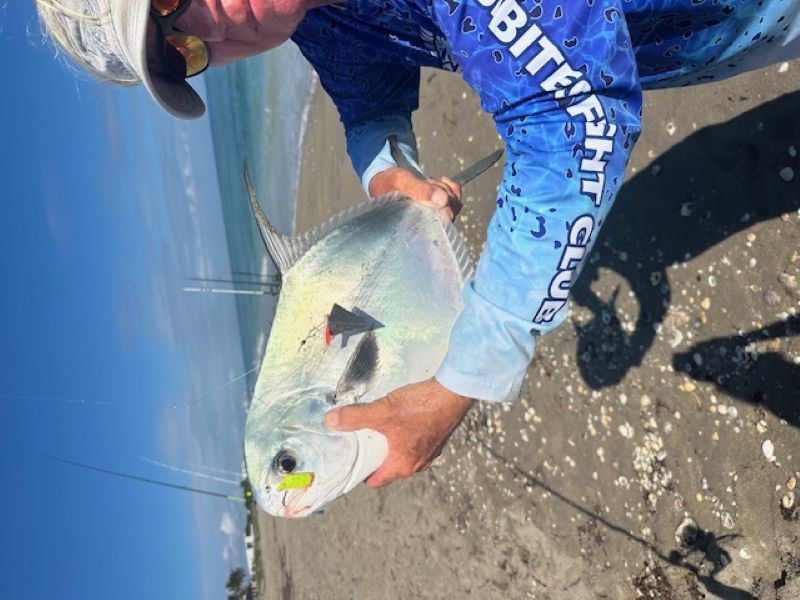
Fishbites new bait, EZ Flea Electric Chicken continues to outproduce any artificial bait and rigs set up with sandfleas, which continue to be present, tipped with the EZ Flea are producing 75 percent of all my pompano. The hour before high tide to two hours afterwords has been the time to be on the beach.
Other species like bonefish, whiting, jacks, mackerel, and permit have been on anglers catch list also. I managed to catch all those species yesterday with the exclusion of mackerel. As far as equipment I have a new od that the Fishbites company has sent me to use this pompano season and what a great product.
It is their new 13-foot Signature Series rod, and it is a game changer. During this fall and winter run one of the biggest reasons anglers did not catch pompano is you cannot cast far enough to reach them. This rod will put you in the game. It is super light and loads up to put you consistently 70 to 100 yards off the beach where these fish hang during the winter months.
The Snook Nook in Jensen Beach is the only tackle store that is carrying this rod, and they have a great inventory. I have been using them for the past month, and it is a quality product. The retail price is only $169 and that price point for a 13-foot pompano catcher is as reasonable as you will find. The holidays are coming and so are the pompano. I hope everyone has a great Thanksgiving.
Good luck and catch em up, this month.
Paul Sperco’s opinions are his own and may not reflect Friends & Neighbors viewpoint.
Early Access, Lifelong Impact: Expanding Mental Health Services for Young Children
November is Early Childhood Mental Health Awareness Month—a time to recognize the critical importance of supporting the emotional well-being of our youngest children. At Tykes & Teens, we know that early intervention can change the course of a child’s life. That’s why we are proud to announce that we have been awarded the Impact 100 St. Lucie County grant to expand our Walk-In Assessment Services into St. Lucie County.
This expansion builds on the success of our Walk-In Assessment model in Martin County, where families can access same-day mental health assessments without an appointment. These services are often the first step in connecting children and families to the care they need—especially during times of stress, crisis, or uncertainty.
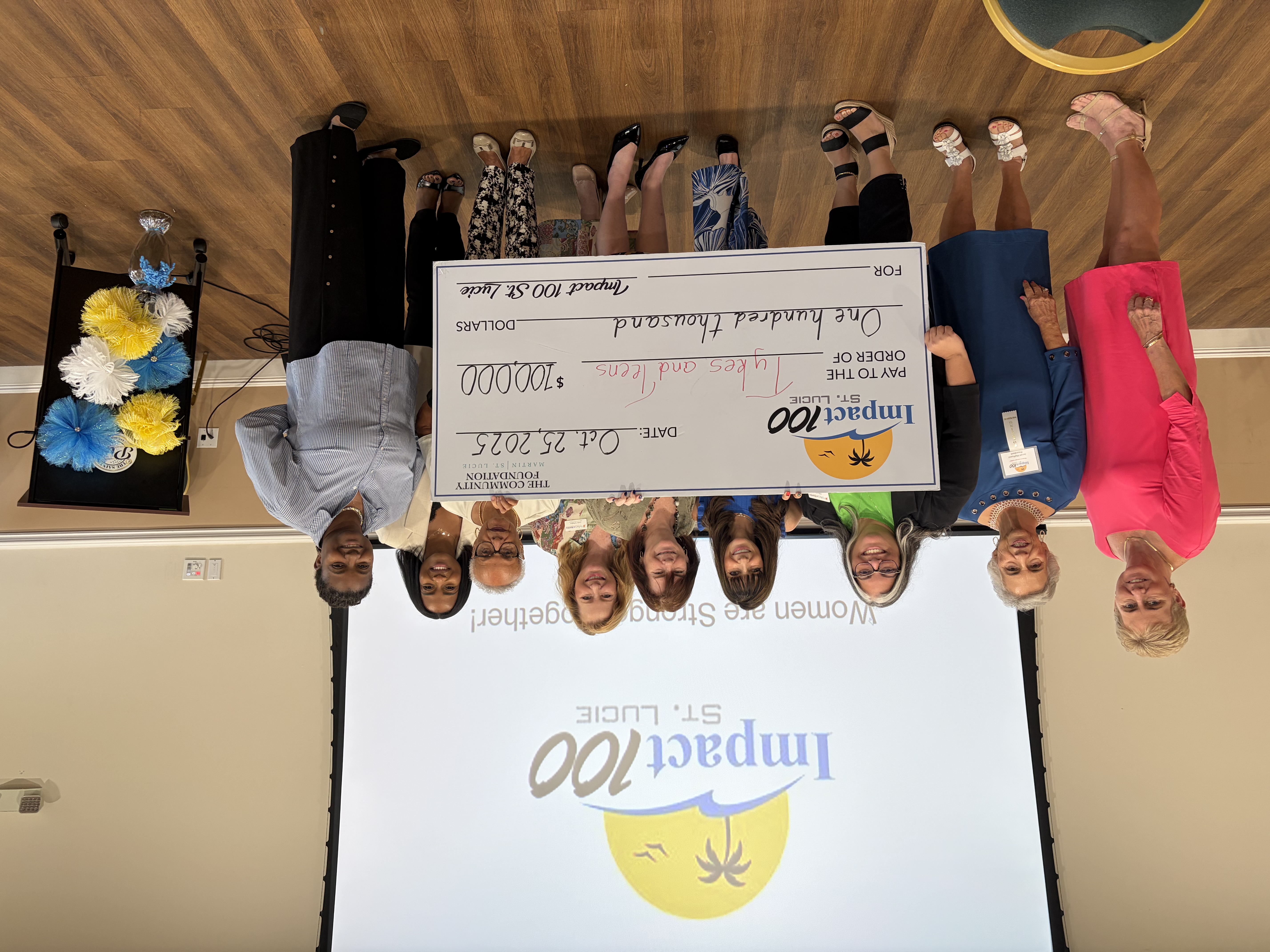
In addition to Walk-In Assessments, Tykes & Teens offers specialized programs that support early childhood mental health, including our Infant Mental Health program and our Mental Health Consultation services. These initiatives focus on strengthening the caregiver-child bond, supporting early emotional development, and equipping early learning environments with tools to foster resilience and well-being.
With the support of Impact 100, we are expanding access to these critical services in St. Lucie County, while maintaining the same services in Martin County—ensuring that more children can receive help when it matters most: early.
We are deeply grateful to Impact 100 St. Lucie for investing in the mental health of our community’s children. Together, we are building a stronger foundation for lifelong wellness.
To learn more about our programs or how to support our mission, visit http://www.tykesandteens.org.
Anne Posey's opinions are her own and may not reflect Friends & Neighbors viewpoint.
Oh look — a predictable “play stupid games, win stupid prizes” moment at the close of the last Martin County School Board meeting.
During “Open to the Board” on November 4th:
“...it’s of pretty grave concern. It's the Schools of Hope, the Mater Academy, and they’re starting to send letters to all of the districts letting them know that they want to come in and utilize unused space at our districts at our expense. No one will pay but us. We’ll pay for transportation. We’ll pay for any of the building work that needs to be done.
“I think we need to have a robust discussion about this and how we want to move forward with this.
“...it’s just alarming. So, I think we need to be on top of it because as we’re trying to be financially fiscal and trying to utilize our buildings to the max this would really put a stain on that if we would have to start worrying about giving our buildings to somebody else.”
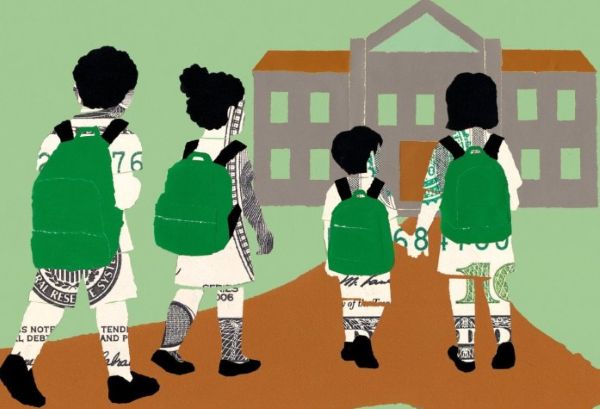
She’s suddenly mad that Mater Academy wants to move into our district?
Now she’s saying it’s “not fair” how charters can use public buildings and drain money from our schools?
Well... guess what.
She helped make this happen.
Our Moms for Liberty board member spent the last 5 years obsessed with book bans, rainbow stickers, and culture-war drama BS instead of paying attention to the laws quietly unlocking public education for private businesses. She cheered the politicians pushing all that “parental rights” stuff — meanwhile those same politicians were slipping in new rules that make it easy for big charter chains to set up shop inside district buildings.
Mater Academy isn’t a tiny startup charter with a bake sale budget. It’s part of a huge charter ecosystem tied to Academica — a for-profit company that gets paid through management fees, service contracts, and sometimes even real estate leasing deals. That’s the model. That’s the grift.
The charter lobby is very friendly with the same Florida lawmakers Moms for Liberty boosted, defended, and campaigned for. Local example — John Snyder profits directly from charter schools while supporting legislation about charter schools. So does Byron Donalds, to name just two.
They used the culture wars as a distraction. They capitalized on the ignorant bigotry. Book bans were the smokescreen. Meanwhile — the real prize was the ability to move public dollars into private pockets.
So yes — it’s frustrating to watch her panic now.
And now that the privatizers she empowered are trying to move into our district, suddenly she wants a plan.
Fine — here’s the plan:
Redirect your outrage to where the real harm is coming from — policy that bleeds public schools dry and hurts our lowest-income families. Put the finances on the table. Demand transparency on every lease, every management fee.
And stop letting culture-war outrage drown out the boring but crucial reality of funding — because that’s where public education lives or dies.
Book bans never protected our schools or kids.
Following the money would have.
Sydney Thomas' opinions are her own and may not reflect Friends & Neighbors viewpoint.
Hibiscus Children’s Center: Guiding Children Toward Brighter Futures
At just eight years old, Justin* has already faced challenges no child should ever experience. When he arrived at the Tilton Family Children’s Shelter, he was quiet, uncertain, and struggling with low self-esteem.
 With consistent care, guidance, and encouragement from Hibiscus staff, therapist, and his teachers, Justin began to feel more confident. Day by day, he learned to communicate more openly, build confidence, and develop the life skills that every child needs to thrive.
That support recently led to a proud milestone—Justin was named “Student of the Month” at his school. His teachers shared, “Justin has shown tremendous progress since the first day of school and our whole team is very impressed.”
For Justin, this recognition is more than an award. It’s a symbol of healing, perseverance, and possibility—the result of a community coming together to help children rebuild their lives.
 At Hibiscus Children’s Center, stories like Justin’s happen every day. Through professional counseling, educational and literacy services, life skills programs, and a nurturing environment, children and teens who have experienced abuse, neglect, or abandonment are given the opportunity to heal and dream again. Each milestone, big or small, represents a step toward a brighter, more hopeful future.
For more than four decades, Hibiscus has been a safe haven for vulnerable children. Thanks to the compassion of our community, Hibiscus continues to provide not only shelter and safety, but the tools and encouragement children need to reach their full potential.
Every child deserves to feel valued, supported, and capable of success—and at Hibiscus Children’s Center, that belief shines through in every story of growth and every smile of newfound confidence.
Matt Markley's opinions are his own and may not reflect Friends & Neighbors viewpoint.
Still an Awesome World
Do you sometimes feel like the world has become a bit too small? Or, maybe, that the thrill of traveling – discovering new destinations – is not what it used to be?
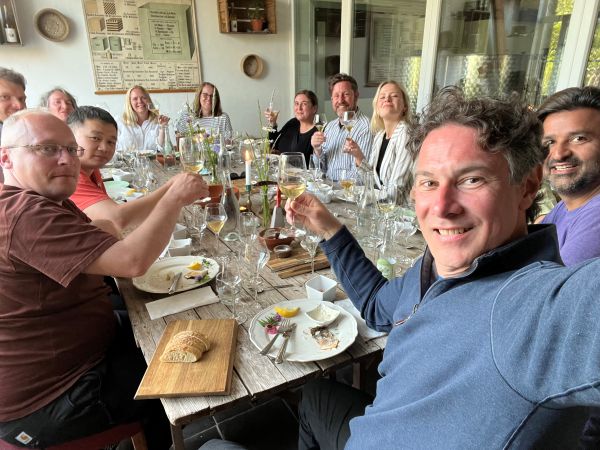
 Name any town, region, or country in the world. Then, search YouTube and you are sure to find a collection of videos dissecting the place, covering all its must-sees, can’t-misses, and top-ten lists. There is an army of Rick Steves- and Samantha Brown-wannabes out there, fighting fiercely for your attention and your clicks, promising you the most money-saving, mind-blowing, must-have-it, no-one-else-knows-this type of tips and insider-knowledge about the destination. They guarantee it!
“Where has the mystery gone?” you might ask.
The mystery, I argue, is where it has always been. It is carefully guarded by something in our nature, something quite human, a blend of fascination and excitement that is so unique to the travel experience. It is that frisson of discovery that takes over when you find yourself somewhere new. In fact, yearning for it even has a name: “wanderlust.” And no amount of YouTube diving – or any other virtual mimicry – can destroy it. To get the real thrill, you must be there.
 Moreover, we need it more than ever, I think. In our lives filled with polarization, information bombardment, screen-time overload and pseudo-connectedness, the healing that comes from putting it all aside and traveling can keep us grounded. Strong. Open. Even reasonable.
Reflecting on all of this led me to the name for my new column, here: Still an Awesome World. Yes, it is! Troubled, fast-moving, uncertain… but still “awesome.” Disclaimer: I know that “awesome” is, apparently, everyone’s favorite adjective these days. But here it really applies. Whether you are visiting a neighborhood 30 minutes from home or spending 3 weeks away, across the planet, the exploration comes with awe. It’s the dynamics in the corner cafes, the foreign sounds, the way people dress, eat, interact with one another. The architecture, smells, and tastes. It’s that rhythm to life which exists only there. That blank slate of a getaway, however long, gets filled with all kinds of imagery, thoughts, and sensations. Awesome, isn’t it?
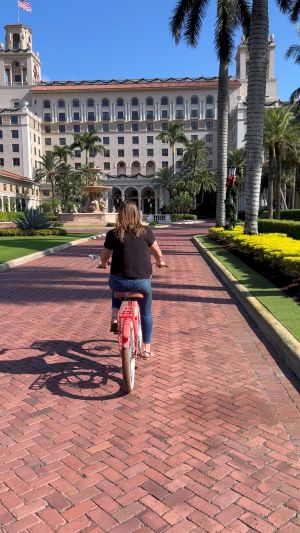
I will use this space to share with you my journeys near and far: from the joys of cycling all over Palm Beach, just down the street from us, to hiking the bogs of Estonia. From walking the cobblestone streets of southeastern Brazil to listening to Sami stories in northern Norway. I hope my stories and encounters awaken the wanderlust within you and inspire you to explore more often – discovering, creating memories, reflecting, laughing. Sometimes laughing at yourself, too, for doing something evidently touristy.
That’s one of the most fun parts of being out there.
And my tips… better than YouTube. I guarantee it!
Marcelo Guimaraes' opinions are his own and may not reflect Friends & Neighbors viewpoint.
My family and I relocated to Stuart—specifically Palm City—in 1974. Like many other residents, we soon discovered Kiwanis Park, where we spent countless hours swinging, running, and playing together. The park quickly became a center for making new friends and celebrating birthdays. This wonderful community resource provided so many opportunities for its citizens, although at that time, I did not give much thought to the organization behind it—Kiwanis.
 As I became more engaged with the community, I learned about Kiwanis in depth. The motto, "Kids Need Adults Who Care!", resonated with me and drew me in. By that time, I was enjoying Kiwanis Park with my second child. In 2006, I proudly became a Kiwanis member.
If you are wondering what Kiwanis is: The Kiwanis Club of Stuart was founded in 1938 and boasts a rich legacy of community service, projects, and dedication to the children of Martin County. Our signature project, Kiwanis Park, is a collaboration with the City of Stuart. Over the years, the club has provided, maintained, and improved all areas of the park, including the general playground, tot lot, barrier-free playground, and the new intermediate playground. For more information about the park and our other projects, I encourage you to visit the Kiwanis Club of Stuart website.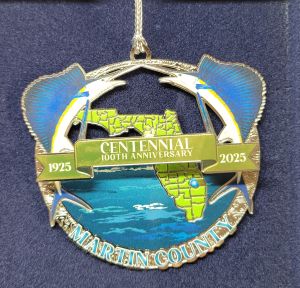
In future columns, I will share more about the Kiwanis Club and its projects. However, this column focuses on our Signature Christmas Ornaments. Since 1995, the club has annually offered an ornament that celebrates the history of Martin County. These ornaments are handmade in the United States and come with a booklet detailing the local history associated with each piece.
Past ornaments have commemorated Stuart High School, Stuart Centennial, Francis Langford, Ross Witham (“Turtle Man”), Palm City’s 100th anniversary, the Martin County Fair, and, naturally, Kiwanis Park. These and many others are available on our website, kiwanisclubofstuart.org. Ornaments can be purchased through our website, the Stuart Heritage Museum, the Stuart/Martin Chamber, the Palm City Chamber, or from a Kiwanis member.
This year, two special ornaments were produced: one celebrating the Centennial of Martin County and another commemorating a unique aspect of our local heritage—Stuart High School.
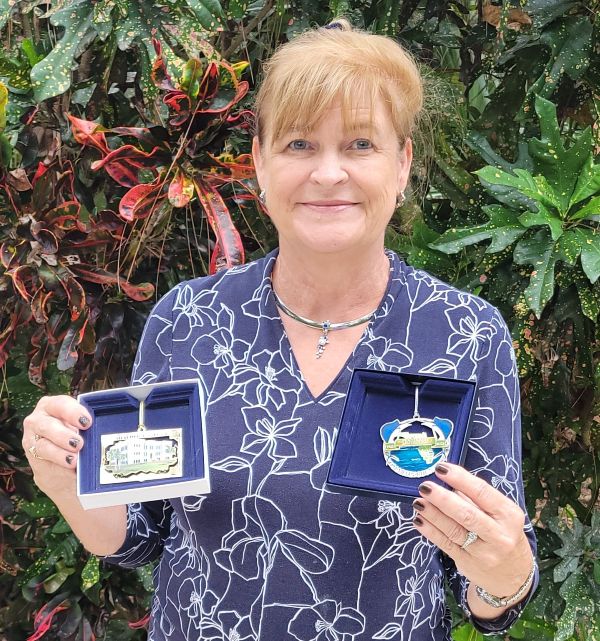
If you are searching for a gift that is local, meaningful, affordable, and special, the Kiwanis Ornament is an ideal choice for family, friends, colleagues, teachers, and many others.
The Kiwanis Club of Stuart warmly invites you to become a member. We meet on the first and third Tuesdays of each month at Manero’s in Palm City, from noon to 1:15 PM. Our meetings feature a guest speaker, project updates, and plenty of fun. Please consider joining us!
Suzy Hutcheson’s opinions are her own and may not reflect Friends & Neighbors viewpoint.
The Christmas holidays are a time for celebrating through carols, concerts, parties, decorations and family traditions. Start your holiday season with “Candles and Carols,” presented by the Treasure Coast Community Singers. Joined by the Youth Chorus and Middle School Chorus, they joyfully present this musical celebration on Saturday, December 6, 2025, at Stuart Congregational Church, 3110 SE Aster Lane, Stuart, and Sunday, December 7, 2025, at Trinity United Methodist Church, 2221 NE Savannah Road, Jensen Beach. Both concerts begin at 3:00 p.m. “Candles and Carols” will warm your heart and inspire your soul.
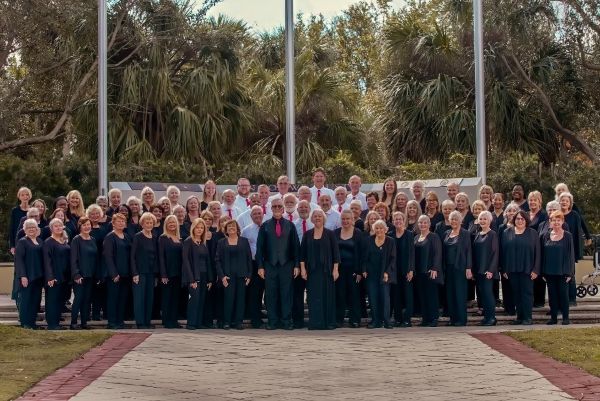
Directed by Dr. Doug Jewett, CEO and founder, the Treasure Coast Community Singers adult chorus will present many traditional and familiar holiday songs, including “Angels We Have Heard on High,” “Do You Hear What I Hear?” “Carol of the Bells,” and “I’ll Be Home for Christmas.”
The Youth Chorus, directed by Kay McDonald, will sing “One Little Candle” and “Children, Go Where I Send Thee.” Together with the Middle School Chorus, directed by Marguerite Krull, they will present a medley of Christmas carols including “Away in a Manger” and “The First Noel.” The Middle School Chorus will rock the stage with “All I Want for Christmas is You” and “Winter Wonderland.”
On Monday, December 22, 2025, at 6:00 p.m., the opportunity to sing George Frideric Handel’s magnificent and beloved oratorio, Messiah, is open to the entire community. TCCS will host a Messiah Sing-Along at Trinity United Methodist Church in Jensen Beach. If you have music for the Messiah feel free to bring it along. TCCS will have some music you can borrow.
Tickets for all events are available through the website, www.tccsingers.org.
TCCS is the largest non-profit organization on the Treasure Coast. Celebrating more than 20 years of “Keeping People Singing,” TCCS is supported by National Endowment for the Arts, The Arts Council of Martin County, Florida Department of State Division of Arts and Culture, St. Lucie Cultural Alliance, and Women Supporting the Arts. The organization is a 501(c)3, non-profit group with a Gold Guide Star rating.
Double the Love: Giving Tuesday Donations to Humane Society of the Treasure Coast Will Be Matched Up to $30,000
PALM CITY, Fla. — Supporters of the Humane Society of the Treasure Coast (HSTC) don’t have to wait until Giving Tuesday on December 2, 2025 for their impact to double. The big $30,000 Giving Tuesday Match at the HSTC has already begun.
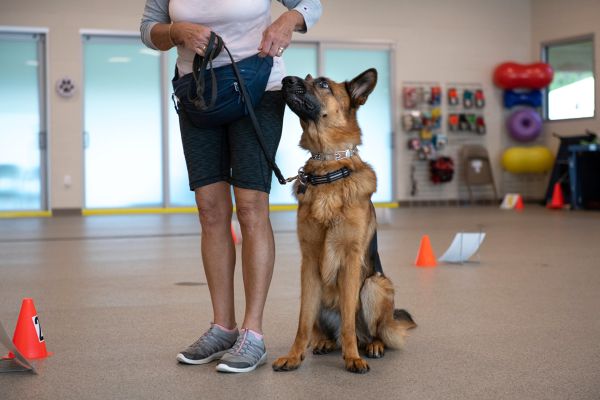
“Giving Tuesday” is a global generosity movement intended to unleash the power of people and organizations to transform their communities and the world. On this annual day of support, the humane society will be asking all animal lovers and philanthropic-minded people to join together to help raise funds to support low-cost pet obedience and behavior training classes for local people and their pets.
“Many families who love their animals struggle to care for their pet with behavior issues and they believe surrendering them to the shelter is their only option but it is not,” said Development Manager Ashton Sorrentino. “We want them to know our surrender prevention program, the Pawsitive Manners Club, is available at a discounted rate to provide the necessary resources and support to prevent pet surrenders from happening.”
The Pawsitive Manners Club provides necessary resources and support through a multitude of obedience classes to help a dog become the best version of itself. Funds raised during the Giving Tuesday campaign will make access to these valuable resources available at low cost – or even no cost – to those in need.
Dog owners can find out if they qualify for discounted classes by visiting hstc1.org/PawsitiveManners or contacting Tracy Steffen at tsteffen@hstc1.org.

There are several ways to donate: Over the phone, call 772-600-3216; visit the website hstc1.org/Giving-Tuesday; or mail in the donation to Humane Society of the Treasure Coast, 4100 SW Leighton Farm Ave., Palm City, FL 34990. Include “Giving Tuesday" on the check's memo line.
About the Humane Society of the Treasure Coast – The Humane Society of the Treasure Coast (HSTC) is a no-kill animal welfare organization located at 4100 SW Leighton Farm Ave. in Palm City, FL. Since 1955, it has been the leading advocate for animal protection and well-being in the Martin County area. A 501(c)3 private, nonprofit organization, the HSTC is independent and locally operated and relies on donations to support its programs and services. Follow the HSTC on Facebook at https://www.facebook.com/humanesocietyTC and Twitter at https://www.twitter.com/hstc1. For more information, visit https://www.hstc1.org or call (772) 223-8822.

Generous Donor Provides $1 Million Matching
Opportunity for Hibiscus Children’s Center
Treasure Coast – We are thrilled to announce a rare opportunity for our supporters! Thanks to a generous donor, every new or increased gift made to Hibiscus Children’s Center between now and September 30, 2026, will be matched dollar-for-dollar—up to $1 million! That means your support goes twice as far to help children in need.
For more than four decades, Hibiscus Children’s Center has been a beacon of hope for abused, neglected and abandoned children—offering them not just safety, but the opportunity to heal, grow and dream again. At our nurturing residential campuses, known as the Village and Shelter, children find more than a roof over their heads—they find a place to belong. Around the clock, master’s level counselors trained in Trauma-Informed Care are there to support each child, whether they’re facing a crisis or simply need someone to listen.
The goal is to strengthen Hibiscus programs, expand local support, and ensure life-changing care continues
for children removed from their homes due to abuse, neglect, and abandonment. Hibiscus faces four critical needs: Staff recruitment & retention challenges, Rising benefit costs, Facilities maintenance, and Growing demand for outpatient mental health services. Funds from this matching campaign will be specifically dedicated to strengthening these immediate needs, ensuring safe, consistent, and high-quality care for every child.
Here’s how you can help: Make your first gift and it will be matched! Or increase your previous donation and the difference will be matched! This match is only available for a limited time, so now is the moment to act. Together, we can unlock the full $1 million and amplify our impact like never before.
This extraordinary opportunity is made possible by a generous donor who believes in our mission. To learn more about Hibiscus and how you can double your impact for children, please visit HibiscusChildrensCenter.org or call Michelle King, CDO, at 561-452-5791. Thank you for your support!


Helping People Succeed is proud to announce the release of its annual “Art for Living” Calendar, a beloved Treasure Coast tradition that blends the creativity of local artists with the organization’s powerful mission to build successful families and futures, one life at a time. Each year, this meaningful fundraiser showcases the talents of local artists whose work captures the beauty and spirit of our community.
The 2026 Art for Living Calendar is available for only $25, with 100% of proceeds directly supporting Helping People Succeed’s life-changing programs for children and families across Martin, St. Lucie, Okeechobee counties.
Looking for the perfect holiday gift for your office staff or clients? Helping People Succeed’s Art for Living Calendar is a meaningful choice that gives back!
Each purchase supports local individuals and families on their path to success — and it’s a tax-deductible donation that makes a lasting impact in our community.
Give a gift that inspires all year long. Purchase your calendars today and help us continue Helping People Succeed.


THINK COMMUNITY FOUNDATION SPREADS HOLIDAY CHEER ACROSS THE TREASURE COAST WITH ANNUAL JINGLE BELLS AT THE BRANCHES EVENTS
‘Tis the season to give - join the celebration by donating to bring joy to local children in need
DELRAY BEACH, FL (November 6, 2025) – The iTHINK Community Foundation is spreading holiday cheer through its annual Jingle Bells at the Branches events,  bringing joy and festive fun to hundreds of local children in need. This cherished tradition features activities, treats, wrapped age-appropriate gifts, and a special visit from Santa Claus.
Community members are invited to share in the spirit of the season by donating online at ithinkfi.org/community/foundation, purchasing a paper bell, or dropping off an unwrapped toy for a boy or girl aged 4–5 at any iTHINK Financial branch.
100% of donations go directly toward creating holiday joy for local children served by the following Treasure Coast organizations: ALPI–Child Development in Port St. Lucie, GW Truitt Family Services Center in Fort Pierce, and EOC Head Start in Vero Beach.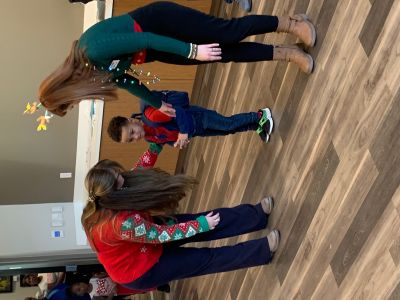
“With the holiday season upon us, Jingle Bells at the Branches is a wonderful opportunity to bring joy to children and families in our communities,” said Stephen Johnson, AVP of Administration and Marketing at iTHINK Financial. “Thanks to the generosity of our Members, employees, and partners, we’re able to make the holidays brighter for children who need our help the most.”
The mission of the iTHINK Community Foundation is to improve the lives of children and families in the communities it serves, and the holiday season is one of the most meaningful times to live out that mission.
For more information or to make a donation, visit ithinkfi.org/community/foundation or call 800-873-5100.
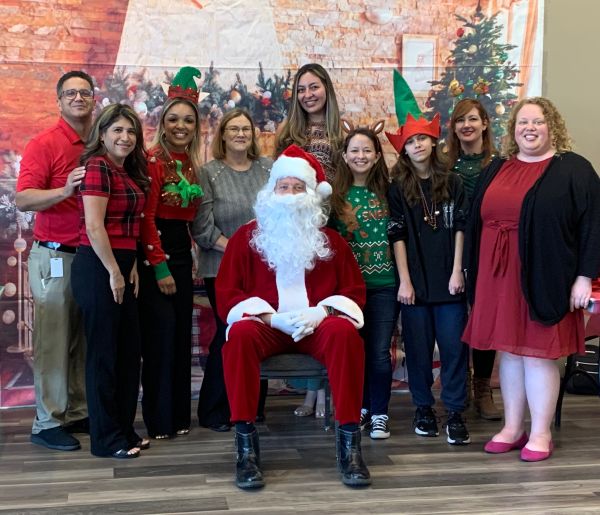
About iTHINK Financial:
ITHINK Financial, established in 1969, is a growing and dynamic credit union, with more than 100,000 Members worldwide and over $2 billion in assets. A credit union is a not-for-profit financial institution that is owned by its Members. Credit unions generally offer high-yield deposits, low-interest-rate loans, and low-fee structures. iTHINK Financial offers a complete range of products and services including: Checking and Savings accounts, Money Market accounts, Certificates, IRAs, First and Second Mortgages, Car Loans, Visa® Credit Cards, Business Accounts, Business Loans, Business Services, and much more.

LITTLE SMILES™ LAUNCHES 16TH ANNUAL HOLIDAY TOY DRIVE TO BRING JOY TO LOCAL CHILDREN IN NEED
Community invited to shop Little Smiles’ Amazon Wish List, donate online or by text, or drop off a new, unwrapped gift through December 25
Palm Beach Gardens, FLA. - (November 3, 2025) - Little Smiles™ has launched its 16th Annual Holiday Toy Drive, inviting the Treasure Coast community to donate new, unwrapped gifts for local children in need, from newborns to age 18, now through December 25, 2025.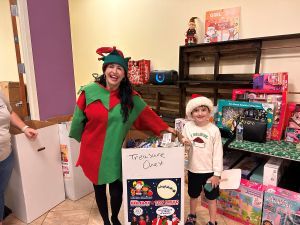
Virginia Sinicki with son Rocco
Community members can make a difference by shopping the Little Smiles Amazon Wish List, making an online donation, texting LITTLESMILES to 44321, or dropping off a new, unwrapped toy at participating locations or events listed on littlesmilesfl.org.
 For more than 25 years, Little Smiles has supported children facing illness, homelessness, and tragedy, helping more than 60,000 local children in 2024 alone. Serving communities from Daytona Beach to Miami, the organization partners with 33 pediatric facilities, including hospitals, medical daycare centers, hospices, shelters, foster homes, law enforcement agencies, and medical support organizations. Through these partnerships, gifts are placed directly into the hands of children in need, including those of our Treasure Coast partners, such as Advance Care Pediatrics, HCA Florida Lawnwood Hospital, and Treasure Coast Hospice.
 Santa visit to Advanced Care Pediatrics
“The need is greater than ever this year, and we rely on our community’s generosity to ensure no child goes without a smile this holiday season,” said Samantha Shepherd, Interim Executive Director of Little Smiles Florida. “Every toy donated helps remind a child that they are seen, valued, and loved during what can be a very difficult time.”
Your generosity not only powers the Holiday Toy Drive but also supports year-round programs at 33 partner facilities. From movie nights and arts and crafts to birthday celebrations and special requests, these gifts help create moments of joy and comfort for children and their caregivers when they need them most.
Businesses are encouraged to join the cause by becoming a toy drive sponsor or an official drop-off location. For more information about Little Smiles Florida and the Toy Drive, including drop-off locations and donation details, visit littlesmilesfl.org
 Toys at the North Pole
About Little Smiles Florida:
Little Smiles is a not-for-profit organization operating in Palm Beach County and the greater Southeast Florida region. The charity was founded in 1999 by local businessman Paul L. Donohue, who saw a need and inspired the community to bring comfort and joy to children and their caregivers at Palm Beach Children’s Hospital. Little Smiles now partners with 33 pediatric facilities, ranging from Daytona Beach to Miami, that include hospitals, medical daycare centers, hospices, shelters, foster care homes, and medical support facilities. Their mission is to help kids during difficult times. They provide smiles to children and their support staff with fun events, including movie night, arts and crafts, and snack breaks. They fulfill individual needs and requests, such as providing a toy to help distract a child after surgery, pajamas to stay extra comfy during their time at the facility, or even a cake and a present to celebrate a birthday during their time at one of the facilities.


SafeSpace Amethyst Gala Surpasses Fundraising Goal to Support Survivors of Domestic Violence
Stuart, Fla. – More than 175 guests gathered at Tesoro Club in Port St. Lucie on Oct. 17 for the 2025 Amethyst Gala, SafeSpace’s signature fundraising event benefiting survivors of domestic violence and their children. The elegant evening surpassed its fundraising goal of $175,000 with every dollar supporting SafeSpace’s mission to provide safety, shelter, and hope to families across the Treasure Coast.
 Rebecca Beckett and Jennifer Fox
Held during Domestic Violence Awareness Month, the event featured a moving keynote address by Rebecca Beckett, CFP®, CDFA®, Senior Vice President with HJ Sims – and a SafeSpace alumna and survivor – whose powerful story of courage and renewal reminded attendees that domestic violence affects people from every walk of life.
“Hearing Rebecca’s story brought home why we do this work,” said Jennifer Fox, CEO of SafeSpace. “Each survivor’s journey is unique, but what they all share is incredible resilience. The amethyst is said to represent healing and transformation – and that spirit was alive throughout the room. Our community’s generosity helps make that transformation possible every single day.”
 Donna Valin, Betsy Herold, Polly & Doug Delater
Guests enjoyed a cocktail reception, dinner, dancing to the Street Talk Band, and a spirited live auction that raised over $52,000. A highlight of the night came when Kyle Greene of Kyle G.’s Prime Seafood & Steaks surprised the crowd by donating three dinner packages – including a dinner for 10 that sparked an enthusiastic bidding war and raised over $20,000.
 James & Sandee Jo Crocker
The Sheriff’s Experience Packages for Martin and Indian River counties also inspired competitive bidding, ending in a tie and resulting in two sets of packages selling for $5,500 each.
The evening’s décor and ambiance received glowing praise thanks to the Gala Committee and community partners. Flowers by Susan donated all the exquisite floral arrangements, while Annie Cardelús Jones and Tesoro Club contributed to the event design. Gala Chair Emmelis Keaney – who, along with her husband Ernesto, also served as an event sponsor – was recognized for her leadership and dedication to making the event a success.
“The Amethyst Gala is a true team effort,” said Emmelis Keaney, Gala Chair. “The planning committee, volunteers, every sponsor, donor, and guest made an impact. Together, we’re ensuring that survivors on the Treasure Coast have the resources and support they need to find safety and independence.”
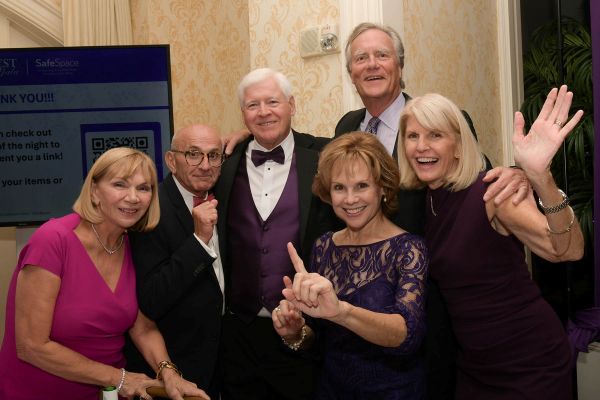 Angelo & Elle Trocchia, Lianne & John Halloran, Joan Blanco & Malcom Sina
Sponsors for the 2025 Amethyst Gala included:
GHO Homes, Gabby Petito Foundation, Keaney Financial Services Corp., Illustrated Properties, Level 4 Telecom, Croc Line, Truist, Legacy Private Care of the Treasure Coast, Elizabeth Herold, Lucky 13 Holdings, Ecclestone Signature Homes, Inspired Closets, Castle Group, Claudine Beron, Jonathan Burkard, Kara Wood, Marileide Freitas, Peter Jones, Schlitt Insurance Services, The S.E.E.K. Group – Morgan Stanley, The C.O.R.E. Program, and The Wong Family Foundation.
Those unable to attend can still support the SafeSpace mission by donating online at 2025Amethyst.Givesmart.com
Next up, SafeSpace will continue its mission of hope and empowerment with the upcoming Aim for Freedom Clay Shoot Competition on Saturday, January 31, 2026, at the Indian River County Shooting Range. For details on registration and sponsorship opportunities, visit www.safespacefl.org.
About SafeSpace
SafeSpace is the Treasure Coast’s only state-certified domestic violence center, serving survivors and their children 24/7. Since its founding, SafeSpace has provided more than 500,000 safe nights of shelter to over 40,000 victims and children. Its comprehensive programs include shelter, legal advocacy, financial literacy, counseling, prevention education, and specialized children’s services.
Funds raised through the Amethyst Gala will directly support these essential services, ensuring survivors find refuge, support, and the resources needed to build safe, independent lives.
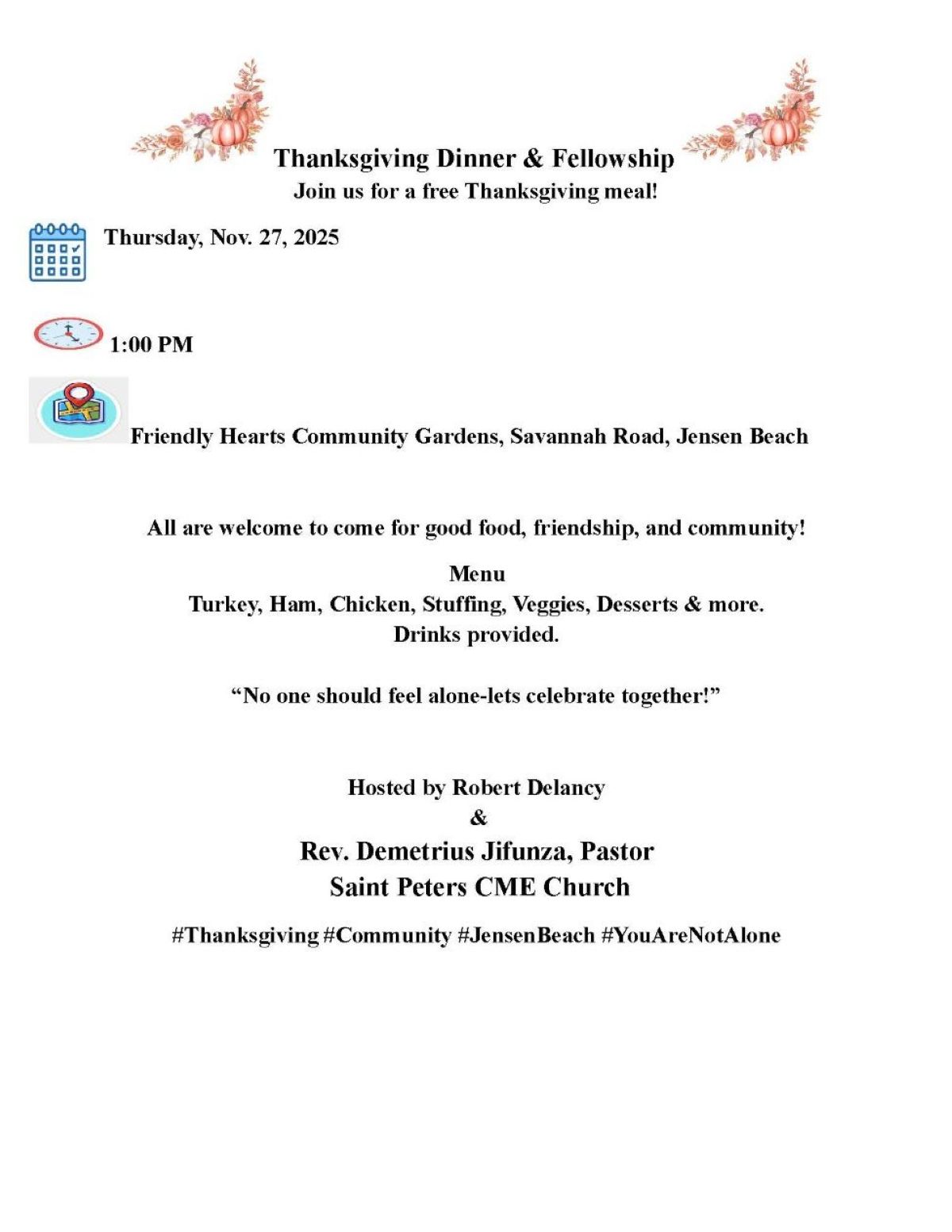
Saint Peters CME Church, 4840 NE Savannah Road, Jensen Beach, Florida, along with members of the Delancy family, will provide free Thanksgiving Dinners to the public. The event will be held at the Friendly Hearts Community Gardens, 1050 County Line Road, Jensen Beach, Florida, and starts at 1:00 pm Thanksgiving Day.
Traditional Thanksgiving meals of turkey, ham, and trimmings will be served, in addition to grilled chicken and fried fish.
Please feel free to share with the public, especially those who are in need, and our senior citizens who are alone during the holidays.
If there are any questions please contact Robert Delancy 772 342-8325.
Bank of America Announces $500,000 Grant to Community Foundation for Palm Beach and Martin Counties' African American Museum and Research Library Project
Funding will Help Preserve and Celebrate African American History and Culture Across Palm Beach County
WEST PALM BEACH, Fla. (November 4, 2025) – Bank of America has provided a $500,000 grant to the Community Foundation for Palm Beach and Martin Counties' newly established African American Museum and Research Library (AAMRL) Fund. The AAMRL will serve as a cornerstone for cultural preservation, and community engagement, creating opportunities for celebration across generations.
The grant, which will be distributed over the next two years, will directly support the AAMRL project and help preserve African American culture for residents throughout Palm Beach and Martin Counties.
Bank of America’s commitment to building thriving communities through strategic investments in economic mobility aligns seamlessly with the AAMRL’s mission. The Community Foundation for Palm Beach and Martin Counties is a nonprofit organization that leads partnerships with donors, nonprofits, and community members to address the region's chronic and emerging issues.
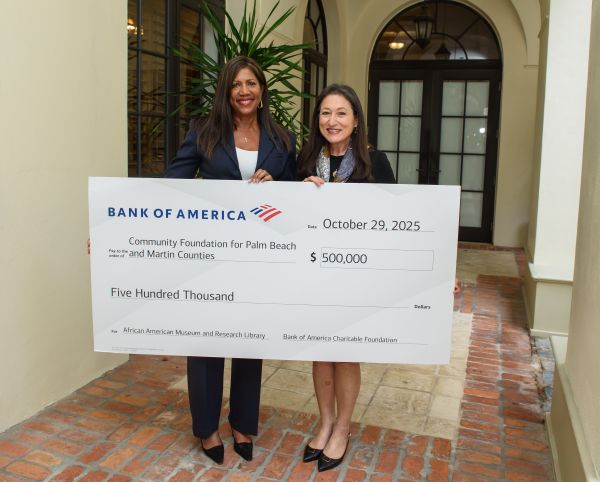 Danita DeHaney and Fabiola Brumley
“The African American Museum and Research Library will not only honor a vital piece of our shared history but also serve as a catalyst for opportunity,” said Fabiola Brumley, president, Bank of America Palm Beach County. “This investment reflects our ongoing commitment to advance economic opportunity and cultural understanding across the communities we serve.”
In 2024, the Community Foundation received approval for funding from the Palm Beach County Board of County Commissioners to plan and develop the new African American Museum at the historic Roosevelt High School site (1601 N. Tamarind Ave) in West Palm Beach. The project will include exhibit space, a research library, and extensive opportunities for community engagement through lectures, workshops, seminars, special exhibitions, cultural programs, oral history projects, research opportunities, and youth programs.
"The Palm Beach County African American Museum and Research Library initiative would not be possible without the generosity and vision of partners like Bank of America," said Danita R. DeHaney, president & CEO of Community Foundation for Palm Beach and Martin Counties. "We are honored by their $500,000 investment in the AAMRL project and their confidence in our organization’s leadership. Together, we will preserve and celebrate African American history while inspiring future generations through cultural exchange.”
The AAMRL will serve as a transformative anchor institution in the historic Coleman Park neighborhood, fostering community pride, economic growth, and cultural vitality while honoring the area's rich African American heritage. This initiative is a collaboration among the Palm Beach County Board of County Commissioners, Community Foundation for Palm Beach and Martin Counties, the School District of Palm Beach County, and numerous community stakeholders.
The site holds deep historical significance, once home to West Palm Beach’s historic Roosevelt High School before becoming the Roosevelt Full-Service Center. Roosevelt alumni and community members have long advocated for a meaningful transformation of the property. The Community Foundation joined the effort in June 2024, when the Palm Beach County Commissioners approved $1 million for the museum’s planning and development.
The School District of Palm Beach County, which owns the site, has already begun renovations under Phase I, with Phase II to include the research library’s restoration and the construction of a new two-story, 20,000-square-foot museum building. In June 2025, Bora Architecture & Interiors was selected as the project’s lead design firm.
To learn more about the African American Museum and Research Library project, visit https://yourcommunityfoundation.org/african-american-museum-and-research-library/.
COMMUNITY FOUNDATION FOR PALM BEACH AND MARTIN COUNTIES TO HOST
13TH ANNUAL FOUNDERS LUNCHEON ON FEBRUARY 11th AT KRAVIS CENTER
Event Will Feature USF Hunger Expert Dr. David Himmelgreen, Philanthropist Marshall Field V, and Nonprofit Partners Working on Reliable Access to Healthy, Affordable Food Across Our Region
West Palm Beach, FL (November 11, 2025) – The Community Foundation for Palm Beach and Martin Counties announced today that it will host its 13th Annual Founders Luncheon on Wednesday, February 11, 2026 from 11:30 a.m. to 1:30 p.m. at the Raymond F. Kravis Center for the Performing Arts’ Cohen Pavilion in West Palm Beach. Dr. David Himmelgreen, Director for the University of South Florida Center for the Advancement of Food Security & Healthy Communities (CAFSHC), will be keynote speaker; Marshall Field V, a noted philanthropist, will receive the 2026 McIntosh Award for outstanding service.
The Community Foundation, a nonprofit organization that leads partnerships with donors, nonprofits and community members to address the region’s chronic and emerging issues, holds its Founders Luncheon each year to rally hundreds of donors, nonprofit partners, and community leaders around a key community issue.
This year’s event, themed “Hope for Hunger,” will spotlight local donors and nonprofit partners working to ensure reliable access to healthy, affordable food across Palm Beach and Martin Counties. Co-hosts of the event are Jeffrey A. Stoops, Chair of Community Foundation’s Board of Directors, and Danita R. DeHaney, President & CEO of the Community Foundation.
“Food insecurity affects families in every zip code — often quietly, but with real and lasting consequences,” saidDeHaney. “Through this year’s theme, Hope for Hunger, we aim to shine a light on the incredible local organizations ensuring our neighbors have access to healthy, affordable food. Together, we can make meaningful progress toward a future where no one in Palm Beach or Martin County goes hungry.”
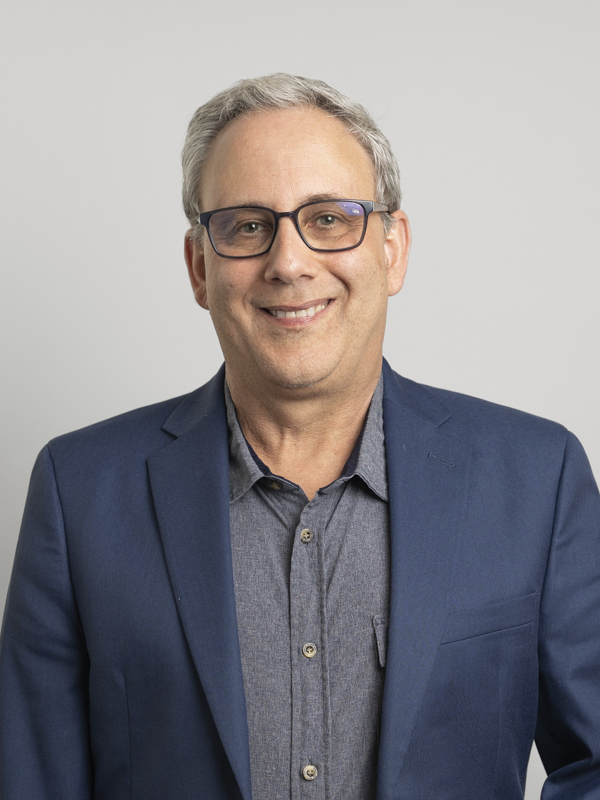 Dr. David Himmelgreen
Himmelgreen, Ph.D., is a biomedical anthropologist and professor in the Department of Anthropology at USF. Dr. Himmelgreen’s research focuses on food insecurity and health, food-as-medicine initiatives, and nutrition education. He has conducted research in the United States, Costa Rica, Puerto Rico, Lesotho, and India.
Dr. Himmelgreen founded and directs the USF CAFSHC, a statewide center recognized by the Florida Board of Governors. CAFSHC’s mission is to eliminate food insecurity through research, education, and innovative strategies that increase access to affordable, nutritious foods and create healthier communities. The center works closely with community partners to design and evaluate programs that improve food security, health, and well-being. He also co-organized the USF Future of Food Think Tank and is an active member of the Florida Alliance for Food Security which is part of the Florida Department of Agriculture and Consumer Services.
I look forward to joining the Palm Beach and Martin Counties’ giving community to shed light on what true food security means,” said Dr. Himmelgreen. “It's crucial in this moment to understand the ecosystem that sustains food access, the threats it faces, and proven ways to strengthen it, including approaches like ‘Food Is Medicine’ programs that not only stem hunger but improve health and reduce healthcare costs.
Marshall Field V of Hobe Sound, a longtime volunteer and advocate for the Community Foundation, has been named the 2026 McIntosh Award recipient. Named in honor of Community Foundation founders Winsome and Michael McIntosh, the award recognizes individuals or organizations that have made significant contributions to the community through leadership, generosity, and service.
Field — a fifth-generation philanthropist from a family celebrated for its civic leadership — is known for his enduring commitment to Martin County through volunteer service and strategic philanthropy. His lifelong passion for environmental conservation, education, healthcare, and the arts continues to shape and strengthen the community.
Tickets and sponsorship information are available at https://founders.yourcommunityfoundation.org.
2026 Event Sponsors Include (as of 11/10/2025): Marshall Field V, The Kolter Group, R&M Hagan Family Fund, Renay and William Meyer, Julie F. and Peter D. Cummings, Timothy and Karen Burke, Mary Pat and Darren Alcus, Sherry and Tom Barrat, Storage Rentals of America, Palm Beach County Sheriff’s Office, FPL, Findlay Galleries, Palm Health Foundation, Eileen Berman and Devin Krauss Family Foundation, Shawn M. Donnelley and Christopher M. Kelley, Bill and Fayre Mynatt, Beth Neuhoff and Steve Frank, The Everglades Foundation, Morgan Stanley Private Wealth Management, Max M. & Marjorie S. Fisher Foundation, Kevin and Marsha Powers, Hon. Sheree Davis Cunningham (Ret) and Earnie Ellison Jr., The Palm Beach Post LocalIQ, Palm Beach Illustrated, and WLRN NPR.
About the Founders Luncheon
Established in 2014 as the Founder’s Award Luncheon, the Community Foundation’s signature annual event was launched as an opportunity to convene donors and nonprofit partners on important issues facing the region and to celebrate their collective impact. In addition to raising awareness, the Founders Luncheon showcases the importance of philanthropy with a special award ceremony. The Founders Luncheon will be held at the Kravis Center for the Performing Arts’ Cohen Pavilion in West Palm Beach on Wednesday, February 11, 2026, from 11:30 a.m. to 1:30 p.m. For additional information, tickets, and sponsorship information, please visit https://founders.yourcommunityfoundation.org.
About the Community Foundation for Palm Beach and Martin Counties
The Community Foundation for Palm Beach and Martin Counties is a nonprofit organization that leads philanthropy locally. The foundation provides charitable expertise and vehicles to increase the investment options on behalf of individuals, family foundations, and corporations. Since 1972, the foundation has distributed over $275 million in grants and scholarships aimed at closing the area’s opportunity gaps. With its vast network of donors and nonprofit partners, the foundation supports initiatives that improve youth and education, economic opportunity, thriving communities, and crisis preparation and response. Learn more at https://yourcommunityfoundation.org.

A Century of Sparkle
64th Stuart Christmas Parade Celebrating 100 Years of Martin County Set to Light Up Downtown Dec. 5
STUART—Get ready for the holiday spectacle of the season as a beloved local tradition commemorates a major community milestone.
The 64th Annual Stuart Christmas Parade—presented by the Visiting Nurse Association of Florida—will take place at 7 p.m. Dec. 5 along scenic East Ocean Boulevard.
A pastime so popular members of the public arise early in the morning to secure prime spots on the sidewalk to see the show, this year’s Stuart Christmas Parade promises to celebrate a truly once-in-a-lifetime occasion—the county centennial.
The theme of this year’s parade is “Celebrating 100 Years of Martin County.” The occasion carries special significance for VNA of Florida as well. The award-winning home-healthcare provider will celebrate its own major achievement next year—50 years serving our community. The company, which employs nearly a thousand, serves more than 20 counties and has performed millions of home visits over the last five decades—actually got its start in Stuart.
“Stuart is where the VNA of Florida story started nearly 50 years ago when we began with one nurse,” says Jennifer Crow, President and CEO of VNA of Florida. “It has been where our home office is located as we’ve expanded over the decades, so we have a very special sense of gratitude and appreciation for this wonderful city. That’s one of the countless reasons why we love sponsoring the Stuart Christmas Parade. We’re especially excited that this year’s event coincides with Martin County’s centennial and we can’t wait to see all the creative ways the community honors this milestone.”
The rich history and unique characteristics of the county are sure to capture the imaginations of the parade participants and come alive in the creativity of their floats. As parades past attest, competition is intense for the most innovative float decorations and set designs.
The award categories recognize large and small floats separately for best illumination and best music. There are also the Classic Christmas Award, Judge’s Choice Award, People’s Choice Award and best high school and middle school marching bands.
The event attracts thousands of attendees and is by far the largest holiday event in the county. By teaming with the City of Stuart for logistical support, VNA of Florida’s role in putting on the parade is a natural extension of its longstanding commitment to the community. Having organized and sponsored several large scale community events, including launching the Stuart Air Show.
For parade registration, sponsorship opportunities or to volunteer, please visit www.StuartChristmasParade.com or contact StuartChristmasParade@VNAflorida.org or call Aleisha Coleman at (772) 286-1844..
About Visiting Nurse Association of Florida:
Founded 49 years ago, Visiting Nurse Association of Florida is a Medicare-certified home health and private care services agency that provides award-winning health care for patients in the comfort of their own homes, including post-surgical care, Alzheimer’s monitoring, post-hospital care, physical therapy, and much more. The company also owns and manages three assisted living communities—Grand Oaks of Palm City, Grand Oaks of Jensen Beach and Grand Oaks of Okeechobee, which are distinguished for providing superior healthcare, luxurious amenities and Alzheimer’s memory care.
Serving Martin County Since Its Earliest Days: REALTORS®
Mark 100 Years of Local Leadership
STUART— Martin County REALTORS® of the Treasure Coast (MCRTC) proudly
marked its 100th anniversary with a celebration honoring outstanding members and affiliates, welcoming new leadership, and reaffirming the association’s century-long commitment to professionalism, ethical standards, and exceptional local expertise in serving the Treasure Coast community.
With Martin County commemorating its centennial in 2025, MCRTC’s event program reflected on the association role’s “growing up” alongside the county. Founded in 1926 by roughly 30 local real estate brokers and agents as the Stuart Board of Realtors®, the association has evolved into a thriving organization of nearly 800 members. Today,
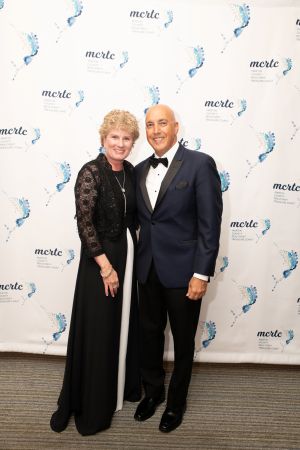 MCRTC empowers its members with cutting-edge technology, comprehensive training, and continuous professional development opportunities to strengthen their competitive edge and deliver exceptional service—whether helping clients find the perfect buyer or their next dream home.
“As Martin County and Martin County Realtors® each celebrate 100 years of prosperity, we Realtors® have the honorable distinction of having played an integral role in helping Martin County grow—slowly—into the exceptional community we all call home,” said Michael Ponte, President of Martin County REALTORS of the Treasure Coast. “We look forward to continuing to serve our neighbors and help shape the next 100 years of Martin County’s story.”
Congressman Brian Mast joined in the celebration, congratulating the REALTORS® on a century of service in Martin County. He commended the Association’s long history of advocacy on important community issues and its vital role in supporting a strong andthriving local economy.
Outgoing President Christy Bearse, Harbour Ridge Realty, was recognized for her exceptional leadership and service, receiving the evening’s highest honor—REALTOR® of the Year—for exemplifying “professionalism, integrity, and an unwavering dedication to helping others succeed.” For more than two decades, Bearse has been a tirelessadvocate for the real estate profession, lending her expertise and leadership to nearly every committee and task force. She continues to stand out as a true leader, mentor, and champion of her peers.
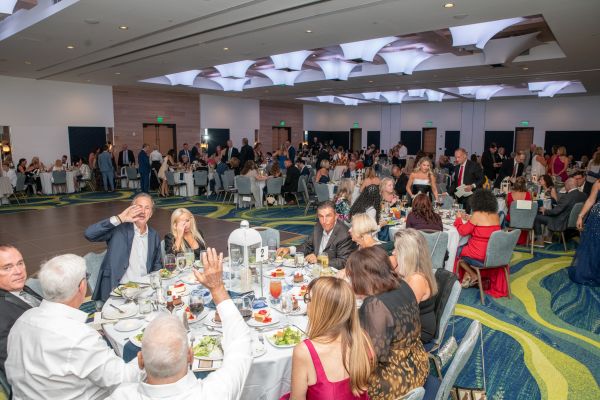
“We’ll continue to lead with transparency and integrity, always striving to serve our clients and community with the highest level of professionalism,” said Bearse.
Other award winners included:
Honored for more than 27 years of extraordinary service, Joan Rogers,
Berkshire Hathaway Florida, received the Distinguished Service Award for
her unwavering leadership, volunteerism, and dedication to the real estate
profession. A past president and longtime committee leader, Joan continues to
embody true servant leadership and the spirit of community that defines MCRTC.
Community Service Award: H.B. Warren, The Keyes Company, a tireless
volunteer, served as President of Habitat for Humanity’s board, is currently a
director on Martin County’s Housing Solutions Council, and has volunteered
countless hours with the Village Club and Preserve in Palm City. He has shown
outstanding dedication to both the profession and the community.
Affiliate Company of the Year: TC Palm Home Inspections, owned by Gary
and Terry Mulka, for their generous sponsorships and countless hours of
volunteer time at association events.
Affiliate Member of the Year: Rick Kozell, local attorney, for his positive impact on MCRTC members and support of fellow affiliates.
In addition to President Michael Ponte, the 2025-2026 Board of Directors includes
Janice Norman, President-elect, Tom Baker, Vice President, Bill Dean,
Secretary/Treasurer, Christy Bearse, Immediate Past President and At-Large directors
Jennifer Atkisson-Lovett, Marcia Benson, Dan Carmody, JPaul Moore, Steve Ngo,
Joan Rogers and H.B. Warren.
The event was made possible through the generous support of its sponsors, including Platinum Sponsors Fidelity Funding and Omega National; Gold Sponsors Detcom Home Inspections, Matthews Media, National Property Inspections, Realty One Group,RE/MAX of Stuart, Water Pointe Realty Group, and White Glove Moving Service & Delivery; Silver Sponsors Management Specialists, Manchester Insurance, and TC Palm Home Inspections; and Bronze Sponsors HBK CPAs & Consultants, Nationwide Mortgage Brokers, PrimeLending, and Your Ducks in a Row Marketing.
I urge those who are reading this newsletter to send an email expressing their opinions on subjects. When a reader sends one, it will be included if I find it relevant and I have adequate space. I may edit the letter because of length and clarity. You don’t have to agree with me to have your letter in Friends & Neighbors. All you must do is send it to TOM CAMPENNI or fill out the form on the website.
Jon Isley
Tom,
I enjoy reading your newsletter and am a financial supporter. I am not a resident of the City of Stuart but have a Stuart address and live near the city's southern boundary. I am absolutely baffled by the actions of the politburo. I was downtown last week with my daughter who was visiting from out of state and was appalled by the number of empty storefronts. I suspect some of the vacancies are due to the economy but mostly due to the actions (or non-actions) of the Commission. Is there a mechanism for the Commissioners to be recalled? What is and has been going on is absolutely ridiculous.
J Corey Crowley
Commissioners,
At the last BOCC meeting, a project was approved that calculated density using public rights of way as part of the total acreage. Commissioner Heard asked whether there was litigation concerning this issue, and staff referenced the Lacorte case.
I would like to clarify the proper interpretation of density as written in the Martin County Comprehensive Plan and explain why the County’s current position conflicts with both the plain language of the policy and established land development standards.
Throughout my career in engineering, land development, and regulatory review, I have learned that even highly qualified professionals can occasionally be mistaken. Titles can create an assumption of infallibility, but land use regulation is governed not by job titles, but by the text adopted in the Comprehensive Plan.
The Issue
The County is asserting that the density limitation of 15 units per acre applies to individual lots.
However, the Comprehensive Plan establishes density on a per acre of land basis, not a per lot basis.
Relevant Comprehensive Plan Language
Policy 2.1A.1:
No land uses or development shall exceed 15 residential units per acre.
Policy 18.2A.4:
Residential density in the CRA Center shall not exceed 15 units per gross acre.
Chapter 18 specifically uses the term gross acre. When language in the same policy document appears inconsistent, case law requires that:
- The more specific provision controls.
- Courts may not insert missing language to change the meaning.
Therefore, the controlling interpretation is:
15 units per gross acre.
By standard definition in planning, engineering, and development practice, gross acreage includes public rights of way. This is the method used historically in Martin County and in other jurisdictions. It is also the method used in the Modica project that was previously approved.
Illustration
Image 1 shows the correct interpretation. Density follows land uniformly throughout the County, including in areas where the maximum is 15 units per acre.
Image 2 represents the County’s current position. Only in the 15 unit areas does the method suddenly change, and density is calculated based on individual lots instead of gross land area. There is no language in the Comprehensive Plan supporting this special treatment.
Why This Matters
Mr. Lacorte is applying the standard industry definition of gross density, and the definition that the Comprehensive Plan actually uses.
If this interpretation is not corrected, the County risks:
- Losing the litigation
- Creating inconsistent and arbitrary density rules
- Hindering redevelopment in areas where the Comprehensive Plan intends to encourage it
Conclusion
I respectfully request that the Board direct staff to apply the Comprehensive Plan as written:
Density is measured as units per gross acre.
Gross acreage includes rights of way.
This standard is applied consistently throughout the County.
Correcting the interpretation now ensures consistent application of the Comprehensive Plan and reduces legal exposure for the County.
Thank you for your time and consideration.

Rio has been depressed and run down for so long that it was without much hope of change.
Lots were abandoned, streets left empty, and a waterfront with a view of Downtown Stuart that would make you gasp if the surroundings weren’t so pitiful. Much of the neglect could be laid at the feet of the many county commissions over the years. They refused to approve change.
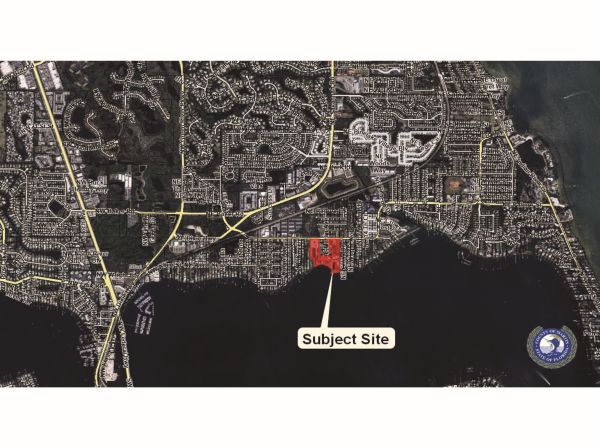
It was so bad about a decade ago that the erstwhile developers at that time wanted the City of Stuart to annex the Rio area. One of them actually spoke at a city commission meeting. As a commissioner, I was all for it, but there was Rio neighbor opposition and some in the city were against it.
Finally, about 6 years ago a new group looked at the area and began to formulate a plan. Unlike others they included lots of neighborhood input in their project. No gates fenced off areas or other features that would separate neighbor from neighbor. On the streets with empty lots, the developer formulated a plan known as Rio Marine Village.
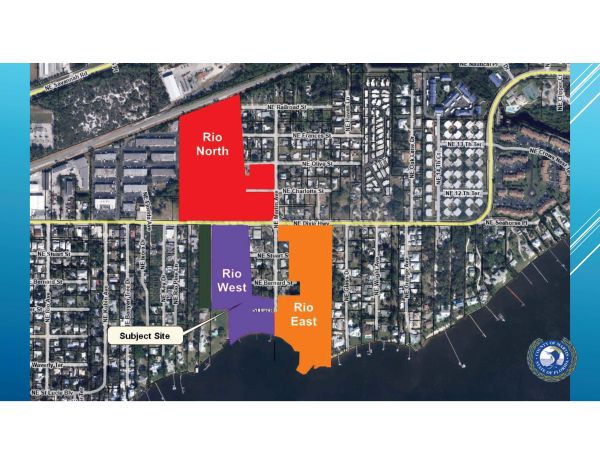
Since it was an assemblage of many different lots from many different owners, it took some time. This is the first time in a long while that the speakers were wearing identical tee shirts, which is usually a bad sign. In this instance they were there to support this project. Every speaker told the commission to vote yes.
The project was presented in three stages to the commission: Rio East, Rio West, and Rio Marine Village Preserve. Rio East Phase 1 is on the water. It has 178 apartments in 8 three story buildings. 4 townhouse units and 8 live/work units. A marina clubhouse, boat basin and docks are located here. The docks are not deeded but rented to anyone, not just residents.
Rio West Phase 2 is also on the water. There will be one retail building. There are two existing single-family homes which will remain. Two restaurant buildings are being added with outdoor seating. There will be additional docks and outdoor boat storage.
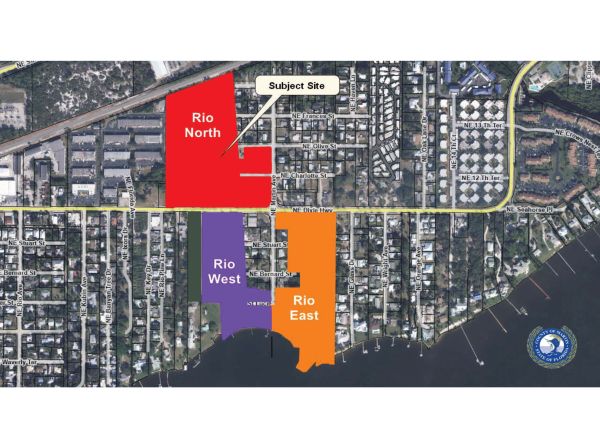
The Preserve at Rio Marine Village is on the opposite side of Dixie Highway. There will be 96 multi-family apartments in four buildings, 44 townhouses in six buildings, and 5 live/work units. In addition, there will be a dog park.
If this is built as anticipated, the Rio section of unincorporated Martin County will finally be more than just empty lots and closed businesses with a shade of disrepair. The commission voted 5-0 to approve.
You can see the presentation here
Staff presented to the commission a statistical analysis of our population using stats from the University of Florida’s Bureau of Economic and Business Research, better known as BEBR.
Here are some statistics. 33% of Martin County residents are over 65 years old as compared to 22% statewide. We rank 62nd out of 67 counties for residents under the age of 17 meaning that 15% of our total population is school age. We now have 4% fewer kids than we did in 2000. Our only growth area is in seniors by almost 5% more over the past 25 years.
We are a White county with only 6.7% of our residents being Black. There we rank 63rd out of 67 counties.16.1% of our residents are Hispanic. What I don’t see is whether any of those are counted under different ethnic groups. We have 303 people per square mile and rank 27th in density in Florida.
By 2050, Martin County is estimated to have 188,000 people. We currently have 165,000 residents. Since 2006 we have grown by less than 2% per year and in some years less than 1%. Even in Stuart, where Boss Collins and the Politburo would have you believe that growth is rampant, by 2050 the city is projected to have 23,000 people as compared with 20,000 today or growth of less than 1% per annum for the next 25 years.

Here is the problem…not only in Martin County but throughout the United States. We have set ourselves up to pay more in taxes or have fewer services. We will not have enough workers because our population is shrinking or not growing fast enough for our needs. I hope people like Collins want to hit the fields for a couple of months every harvest season. Otherwise, food is going to get really expensive. Think Mao’s Great Leap Forward. I digress.
All this data goes to create the 2025 Residential Demand Analysis which must be done according to Objective 4.1D of the Martin County Growth Management Plan. With that basic data, it tells us how many housing units there should be. This is where it becomes very political.
Because if the analysis shows we lack adequate supply, then more units need to be allowed to be built. There are 5600 units approved and not yet built in the Primary Urban Service District and 172 in the Secondary. The commission did not address the need but only accepted the report which was prepared by Metro Forecasting Models.
If you wish to look at all the documentation cited please go here
The same nonprofit that operates Indian River County’s bus service now oversees the MARTY system. The team was at the meeting to give a report to the commission.
Ridership in 2024 is 118,000 as compared to 2021 which had 73,000 passengers. The operators have three strategies to enhance the system. The first is Route Optimization, Funding, and Community Awareness.
Under Route Optimization, the first thing that jumped to my mind was the purchase of smaller buses. That is something that makes sense given the level of ridership. The problem is the larger buses now in use must remain in service for a period of time or otherwise the county would need to give back the grant money used to purchase those vehicles.
They gave many suggestions for how to achieve higher ridership. One is to stop charging money to ride the bus. There are added expenses to collect and deposit the proceeds. The federal grant of $2 million deducts the amount of any fare collected from what they give the county. So, by not collecting a fare, the county will save money and still have the same in operating funds. Getting rid of the fare is revenue neutral.
This plan is moving in the right direction. Will the system ever be self-sustaining? No mass transit system anywhere is. But if the suggestions for micro-travel and door-to-door service when feasible were implemented, more people would take the bus.
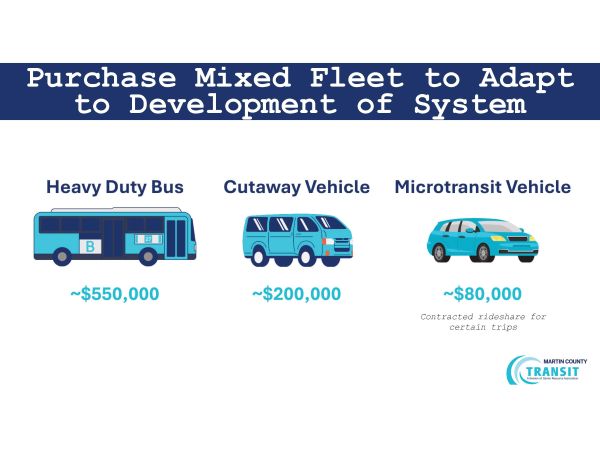
Capps made a motion to do away with the fare. It was seconded by Ciampi. The vote was 3-2 with Vargas and Hetherington voting no. I don’t think either of them understood that there was no economic disadvantage by not charging a fare. If you don’t have to pay, you will see an increase in ridership. Isn’t the point to make the service as user friendly as possible?
You can see the presentation here

Loyalty Oaths For Teachers
What is the purpose of a loyalty oath?
 The State of Florida wants to pass a law that teachers must take one. But that presupposes that teachers are going to teach disloyalty of what? If one were to say that the oath should be to defend the U.S. and Florida Constitutions, I am all for it. Even throw in that teachers pledge to obey the laws of Florida and the U.S.
I would not like to see other aspects of Florida House Representative Tom Fabricio’s bill that are to be included be part of the oath, such as being good educators. Teachers would swear they would teach in a professional, independent, objective, and nonpartisan manner with high ethical standards. They would also have to foster critical thinking, civic responsibility, and lifelong learning. Further they would have to serve as positive role models in conduct and character.
 Who exactly enforces those more ethereal standards? The school district, Department of Education, or will a student’s parent be the arbiter of whether a teacher is living up to their oath? Being a teacher is hard enough without placing additional arbitrary requirements. If the state decides, for example, that going forward 2+2=5, should the teacher just go along with the new “standard “or he could be in trouble if he does not.
In my own discipline, which was American History, it is easy to just give facts to students in the early years. But what about the subtleties and nuances that went into something such as the Constitution being signed? Supreme Court Justices are still arguing over interpretation of what the Founders meant. I guess the Federalist Papers would no longer be taught since they are an explanation of the thinking behind the document. It could be too subjective for some.
 Ask what Lincoln meant in the words he chose in his Gettysburg Address or 2nd Inaugural. Both have biblical references which shed different light on Lincoln’s meaning if read in that context. Without explaining the refenced passages as being inspired by several different Books of the Bible, much of what he meant would be lost. It isn’t just the literal meaning of his words. Explaining that history, teachers should be free to explain those Bible passages to their students.
Remember Thomas Jefferson had a Qur’an in his library. It is said he purchased the book when he was studying law to better understand the universality of justice. When Congressman Keith Ellis took his oath of office, he did so using that very Jefferson book. As the first Muslim congressperson, he later recited a verse from the Qur’an in a congressional interfaith service.
It is important that we not confuse the teaching of subjects, especially literature, history, and philosophy, as something which has right or wrong answers. Those subjects are more than just rote memorization. A good teacher will stir the passion within a student and no oath can accomplish that.
If the state wants to leave the teacher’s oath at upholding the laws of the land and constitutions, then fine. But once you introduce other more subjective criteria, then you open it up to abuse and misuse. Ultimately those trying to have conformity will end up with mediocrity. That is not how we should be educating our children or judging our teachers.
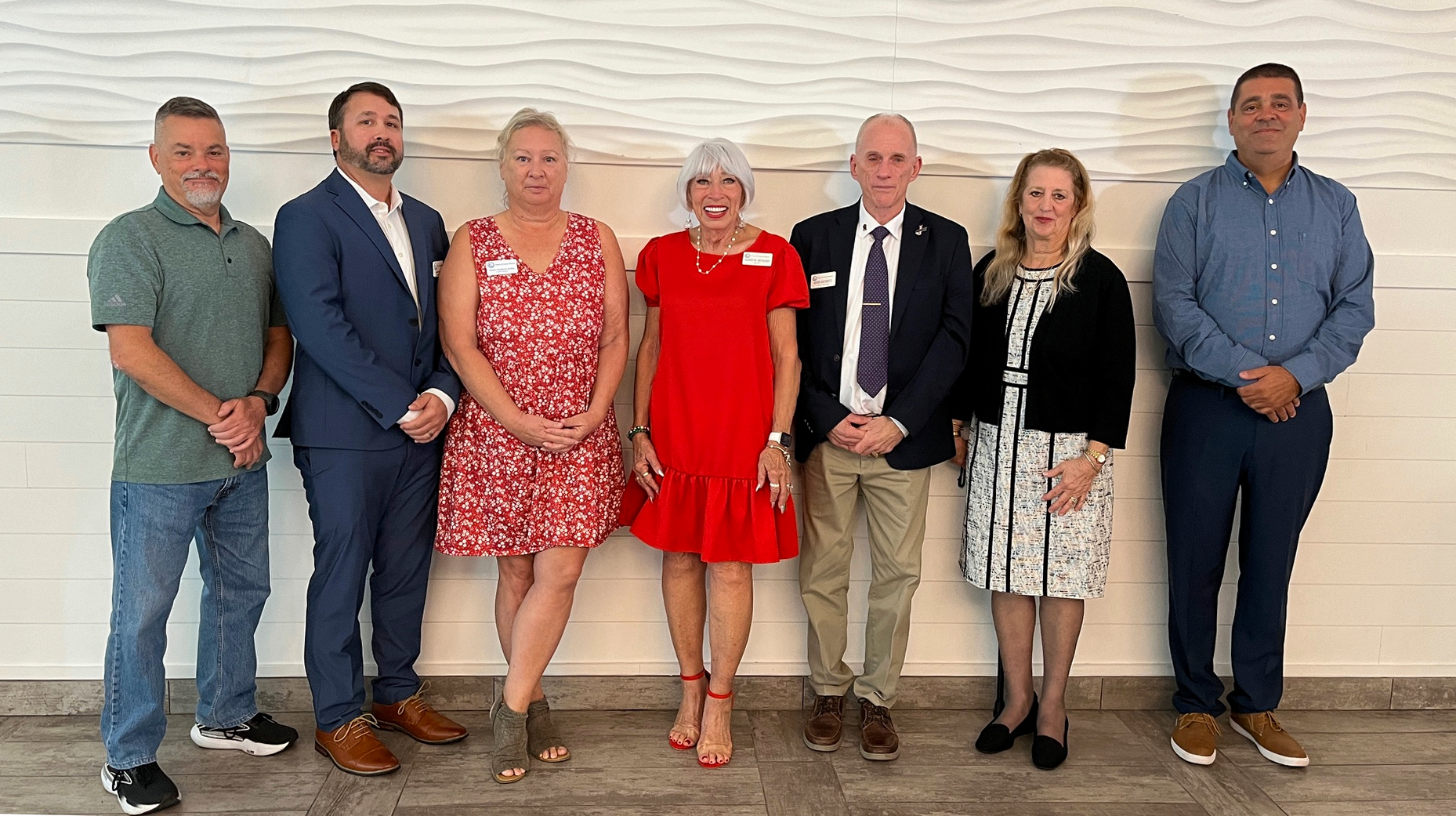
What do you do when everything about this town’s viability is predicated on the neighborhood you live in?
Kevin Docherty, Gail Balonga and Margaret Pugsley were elected to new two-year terms on November 4th. Docherty is the present council president while Balonga and Pugsley are first-time members. All three live in Ocean Breeze Resort. And that is a bone of contention.

Currently the council has three members from the resort and three from Sea Walk. Two who live in the development, Matthew Squires and Michael Heller, declined to seek re-election. The sole member left from Sea Walk is Sandy Kelley.
For the moment, the de-annexation of Sea Walk is on hold as they try and sort out the development close-out issues with DR Horton who built the homes. I am afraid that once that is done, the neighborhood will vote to become part of unincorporated Martin County. That will leave Ocean Breeze with a serious hole in its tax base.
There was some talk at past meetings to change the charter to allow for election districts. However, according to the U.S. Supreme Court, election districts must have almost the same number of people in each district. Currently, there are more residents in the resort so geographic districts alone would not stop the problem of equal representation.
The tension was easily seen today when someone from Sea Walk complained that he heard two council people at the polling place in the recent election talking to each other about town business. Suspicion of each group’s motives has now become ingrained. It comes down to money. Sea Walk pays the bulk of the real estate taxes.
Perhaps people like Docherty and Mayor Ostrand can convince enough Sea Walk residents to vote no to de-annexation. But just in case, they had better have a Plan B. The only way that may work is for them to make a deal with the property owners in downtown Jensen Beach to annex into the town so they can manage their own development in a highly underutilized area.
It doesn’t seem that anyone on the commission is happy with Kimley-Horn’s Comprehensive Plan update.
The commission has been vocal about their displeasure of the path the consultant has been taking. I believe Field summed it up best by saying that Jupiter Island is unique and they don’t want a boiler plate plan. If you hire a national firm that can do everything from transit systems to bridges, then they don’t invent the wheel for every plan.
Early in the process, Field didn’t believe the firm was going to give the town what it wanted. And what does it want? It sounded to me like they want the new plan to be the plan they have had in the past curtailing the ability for future growth. The plan should be “more Mayberry” as Field put it. Taddeo said they should just make the changes that are required by Tallahassee.
 Those are uncomplicated instructions. The commission wouldn’t even let them proceed further until something different was developed. Kimley-Horn has until the next meeting to give the commission what it wants. It was very clear what the sentiments of the commission were. Unless the commission has what they want, Kimley-Horn’s contract will be terminated.
Even with Anne Scott’s opposition, the rest of the commission moved forward with an ordinance to codify several changes to how the town approves variances. Scott would like to see each change as a separate ordinance. But after extensive discussion over months, the others see it differently. The vote was 4-1 with Scott dissenting.
Is Chris Collins What Voters Expected
It seems clichéd after this week’s election to say, but are the actions of Chris Collins what voters expected?
 I can understand the trepidations about further multi-family development in Stuart. I don’t agree with that assumption, but I understand it perfectly. But what about all the rest of the chaos, bad decisions, and law breaking that he and his minions’ actions have caused?
Development has stopped in the City of Stuart. There have been no new projects since Chris was elected. Success has been achieved if that was his objective.
 Did the majority of voters also want the firing of Mike Mortell, which was done in the worst possible way? Did they vote to block a Brightline Station even if not one penny of general fund money was going to be used while misinformation and lies were being spread by the three commissioners? How about the firing of 16 employees so that Chris could have an environmental attorney who is additionally working for a private law firm? How about Chris, DOGE man, achieving a dime reduction on every $1000 of real estate tax paid and calling himself a tax cutter. Is that worth 16 people’s jobs?
In the little over a year since Laura Giobbi and Sean Reed assumed office and gave Chris his majority, the actions of those three have wrecked our relationship with Martin County, our state legislators, and made Stuart the butt of jokes around the state of Florida in addition to the things outlined above. Did you vote for any of that?
 Then there is the little matter of the commission continuing to break the law. By refusing to follow statute, the city commission is allowing an illegal code to be enforced by every employee in Stuart’s Development Department, Interim City Manager, and City Attorney. Is this what you voted for…Stuart the Outlaw City?
There was a column in TC Palm that blamed business leader Ted Astolfi for asking our state representatives to support the governor removing the three commissioners for their actions ignoring state statute. The paper said we should have a recall election for the three instead and let the people decide. That is not sound advice when the commission continues to flout our state statutes every day.
 What if instead of using a Land Development Code to break the law, Collins, Giobbi, and Reed decided to ignore the laws about extortion and taking bribes from businesspeople. Would you expect the citizens of Stuart to have a recall or the state to step in and remove the three from office and bring charges? No, they are not accepting bribes or extorting our citizens, but they are refusing to be bound by the same laws the rest of us are.
I have been calling for their removal from the time they refused to comply with what is known as SB 180. Non-compliance of that law is not a suggestion that Tallahassee allowed. Elected officials must be role models not law breakers.

So, if this isn’t what you voted for, then drop an email to our legislators asking for them to have the governor remove the three. It is the least we can do to save our city from further malfeasance.
Senator Gayle Harrell HARRELL.GAYLE@FLSENATE.GOV
Representative Toby Overdorf TOBY.OVERDORF@MYFLORIDAHOUSE.GOV
Representative John Snyder john.snyder@myflroridahouse.gov
IF YOU ARE NOT A SUBSCRIBER DO SO FOR FREE HERE www.friendsandneighborsofmartincounty.com
GET THE WORD OUT
Friends and Neighbors of Martin County is your eyes and ears so that you know what is going on in Martin County’s municipal and county governments. I attempt to be informative and timely so that you may understand how your tax money is being spent. Though I go to the meetings and report back, I am no substitute for your attending meetings. Your elected officials should know what is on your mind.
Tom Campenni 772-341-7455 (c) Email: thomasfcampenni@gmail.com
.
Tom’s Articles
From Medium
"Trump Turns To The World But Continues To Be Trump"
Mamdani: A LaGuardia Or DeBlasio
"The Americanization of Mamdani"
From Martin County Moments
"A Better Way To Regulate Property Taxes"
Other Articles
Route Fifty: "Direct File won't happen in 2026, IRS tells states"
Florida Phoenix: "Young homebuyers lose more ground in housing market as states struggle to help"
Greenwich Time: "Housing vouchers can thwart D.C. dysfunction"
Medium: "How Much You Must Invest To Retire In Each EU Country"
The Economist: "Make America procreate again: among the MAGA fertility fanatics"
The Barron's Daily: "Musk's Tesla Pay Isn't the Biggest Concern Fron the Shareholder Meeting, This Is. And 5 Other Things to Know Today."
Wall Street Journal: "Can These Self-Flyin g Planes Transform the Skies?"
USA Today Network-Florida: "Report FL state workers see lowest pay in nation"
The Central Square: "Student cellphone prohibition improves test scores"
Wall Street Journal:"The Microchip Era Is About To End"
Wall Street Journal:" What Happened When Small-Town America Became Data Center, U.S.A."
The Central Square: Association: "Lowering, eliminating nonschool property taxes is math problem"
Wall Street Journal: "Tens of Thousands of White-Collar Jobs Are Disappearing as AI Starts to Bite
Copyright © November 14, 2025 Friends & Neighbors of Martin County, LLC., All rights reserved.