




We are confronted with all types of choices in our daily lives. That is simply a fact because we live in so many different arenas. We are spouses, parents, friends, workers, and citizens all requiring different and at times conflicting responsibilities. What we do not inhabit are separate worlds.
 Everyone of us are Americans, Floridians, and most Martin County residents. While we can enjoy the breath and vast scope of our country, state, and county, what we can’t do is ignore our civic responsibilities to any part of the three. 2026 is shaping up to be a watershed year for us on every front.
Now that the holidays have finally been put to rest, we are looking forward to bringing you the best year yet for Friends & Neighbors. This is an election year, and we want to bring you all the information we can for you to make an informed decision when you go into the voter booth. The county seems to be sailing along pretty well with the current crop of commissioners. The Village of Indiantown is emerging as an economic powerhouse. The City of Stuart is a mess and on its way to insolvency.
When people tell you that elections don’t matter, they are wrong. They certainly do. When you get rid of the professionals in your employ and elect unknowing demigods it doesn’t take long for the chaos to follow.
For some time, we have wanted to have a knowledgeable food columnist. We have found him in Brent Hanlon. Brent has worked in the food industry for 25 years from some of the most exclusive clubs to white cloth classic restaurants. He has trained front and back of the house staff, built kitchens, and even had sommelier training.
 Brent is someone who knows who Escoffier was and has his famous tome on his bookshelf. He also knows a great hamburger, taco, and pizza. His inaugural column appears today.
We haven’t heard much from the Martin County Taxpayers Association recently. I guess that is because they were busy auditing past and present commissioners spending on travel. Please read what they have uncovered and their recommendations that the BOCC should pass to control the excesses.
So, sit back. Pour another cup of coffee and settle in to a good read.
Have a great Sunday Morning!
After being alive for nearly ¾ of a century, here are some things I remember that not many others will.
 I remember shoveling coal into a furnace. The last time I did it was a late fall day in 1975 when I was a young property manager showing a new “fireman” at a building how to build a fire on his first day. You need to really wet the coal down, hopefully it is “pea” size grade, and then build your fire slowly when it is the first day of firing the furnace up.
Hot air rises and cold air sinks. In a cold chimney an inversion can be created where the smoke can’t go up to the top of the chimney. That is what happened that day. I and my new fireman ended up at Beekman Downtown Hospital for smoke inhalation. Getting out of a sub-basement building built in the 1850s was no easy matter. Some things you just can’t rush. My fault entirely.
 In the mid-1950s as a preschooler, I remember decorating the Christmas tree (I don’t think I was very much help) listening to Bing Crosby records of carols repeatedly. My mother or grandmother abruptly stopped the recording and turned on the television. We finished decorating the tree to Lee Marvin being a detective on the “M Squad.” Peace on Earth Goodwill toward men.
There was a candy store on the block owned by an old guy named Leo. He lived at the back of the store, and I don’t think the place ever closed. Newspapers, magazines, cigarettes, penny candy, soft pretzels, ice cream, buttered rolls, and fountain drinks were his specialties.
In the summer he had a big tin lined box filled with ice and bottles of soda. A fountain coke that Leo mixed with syrup and seltzer water from the tap cost a nickel. An egg cream was a dime. For many people, he also took phone messages since not all family had one in their apartments.
Adults could play their number or lay down a small bet on a horse at Leo’s place. There was one of these businesses on every street. Just like there were barber shops with their poles everywhere that always seemed to have customers. Small delis sold bread, milk, salads, and cold cuts. That is where you went to buy beer, the occasional can of beans or vegetables.
 By the time I was in 1st or 2nd grade, I would buy a Yoohoo and Devil Dog after school for 17¢ from the local deli. There was a 2¢ deposit on the bottle that the deli clerk would wave if you sat on the sidewalk outside and brought back the empty bottle when you finished.
I don’t shovel coal anymore. Nor do I decorate Christmas trees while listening to the dulcet tones of Lee Marvin. I haven’t seen one of those old-time candy stores since I first bought a home in Queens in the 1970s. The delis that were mostly German owned became the bodegas of today. I haven’t bought a physical newspaper in at least a decade preferring to read them on my iPad.
The country including New York has changed considerably over the years. The stores we go to are mostly impersonal chains where no one knows who you are. Kids are so tightly controlled that the freedom that I had to go buy a soda, walk to school, or go to the park is unheard of in Martin County or anywhere else.
 The other thing about being my age, most of the bad is not remembered. The nostalgic good is fondly recalled for sure. I lived in a sort of bubble that had almost disappeared by the late 1960s.
When my kids were young, I could send them across the street to an Italian market to buy bread or milk. I wanted to give them a taste of responsibility.
But then they closed the market and made it an auto parts store. For that brief time, they had a chance to see what a neighborhood truly was.
I am not a lover of the Trump administration’s immigration policies.
 In the Washington Post, I read that Homeland Security is spending $100 million to advertise for ICE agents. Their target market is those ready to “defend the homeland.” Over the next year, they will advertise mostly to gun rights supporters and military enthusiasts using a variety of media including geo-fencing and influencers.
As a member of an immigrant family, I don’t really have the fear of foreigners that some do. Yet aren’t we all members of immigrant families? I guess we sometime forget that the only natives are America’s indigenous people.
You often hear that people say that their mother, father, grandparent or even a more distant relation came here legally. In 1890 if you weren’t Chinese (who were excluded by law), then the immigrant parameter was easy. The four criteria for rejection were: 1) “Idiots and lunatics”, 2) Polygamists and those with dangerous contagious disease, 3) those that would be likely not to support themselves, 4) Convicts except political offenders.
 An immigrant also had to pay a 50-cent head tax. They would also have to have a brief medical exam and have about $40 in their possession. But if they could show they had a job waiting or relatives already in the U.S. ready to vouch for them, even the money requirement could be waived.
There was no need for passports, visas, or any papers. If you could book passage, you were almost guaranteed entry. The overall exclusion rate was about 2%.
 The 1917 Immigration Act introduced quotas based on the 1910 census. The quotas were determined by taking the percentage of the total population that each nationality represented and approving 3% of that number to immigrate. For example, if there were 100,000 U.S. residents of Italian descent living in the US at the time of the 1910 census, then 3,000 Italians would be allowed to immigrate (3% of 100,000).
 There was a literacy test in the immigrant’s native language. The other restrictions still applied, but the head tax was now $8. President Trump’s mother immigrated under those guidelines from Scotland in 1930.
When George W. Bush and Congress initiated the Department of Homeland Security after 911, the name always sounded un-American. It smacked of Hitler’s Germany and Putin’s Russia. Then placing so many disparate law enforcement agencies under one umbrella was very troubling.
If there is one thing that the United States has, is a lot of law enforcement agencies. I am a proponent of most of them being under local control. Crimes that we care about occur on city streets not in bureaucracies. A diffusion of police power is American and amalgamation of such breeds authoritarianism.

Now we have a national police force with supposedly very limited arrest authority blanketing the country reminding me of anything but the local cop on the beat. Could you imagine a local police department having officers wearing masks, covering their badges, and having no identifying patches or insignia. Now just imagine that one of these guys pulled you over and asked to see your papers? Whose ‘homeland” is it? Is this what you voted for?
 I do not mail many things anymore. But, when I tried to pay my real estate taxes for a property I own in Greenwich, Connecticut, online it was just impossible to decipher the steps necessary. Having become used to Martin County’s Tax Collector great services online, I was spoiled. In any event, I snail mailed the payment.
That could have been the first payment I made by writing and dropping a check in the mail in quite some time. With electronic billing and paying, physical mail is rapidly becoming a thing of the past. I like knowing my payment is not going to get lost in the mail.
Denmark has had a postal service for 400 years. As of 2026, they have stopped letter deliveries in the entire country. They will now only deliver packages. It is the end of junk mail as they know it.
As a nation, Denmark is one of the most digitized places on earth. Less than 5% of the population still receive government communication by snail mail. Letter writing has declined by more than 90% since 2000 according to PostNord, their postal service.
A recent survey of Danes reveals that most hadn’t sent a piece of mail in 18 months. However, for those who still prefer pen and paper, a private company will send and deliver their correspondence. It is a sign of the times.
In our own country, I can’t imagine such a drastic step. I don’t think the U.S. and Denmark are comparable. We have 340 million people, and they just reached 6 million. America has 200 times the land mass that they do if we don’t count Greenland as Denmark’s territory. (I am sure President Trump doesn’t.)
Danish post boxes have all been removed from the streets. I guess that is like what the USPS has done. Have you ever tried to find a post box recently?
If we did do away with letter delivery, our companies and governments would have to do a better job in digitizing what they do. All Americans would need either a smart phone or internet service. We are presently at 94% internet service penetration.
Before she passed, my mother gave back to me about a hundred letters and cards that I had written to her over the years. Many were from the late 1960s and early 1970s. That is from the era where long-distance phone charges could be prohibitively expensive. She wanted the letters to be given to my daughter, and I did turn them over.
I don’t know whether she ever read them or not. I never asked. I haven’t written a personal letter for decades and probably neither have you. Letters are a form of communication that has nearly passed into history.
 For those of us who lived through the turmoil of the Civil Rights and Vietnam War era, the tragic death of Renee Good seems tame. Talk about terrorism…Students for a Democratic Society (SDS) went from peaceful protest to revolutionary actions and violent occupation. Even that was not radical enough for some members of the organization.
The SDS spawned a splinter group known as the Weathermen who began to bomb public places and institutions to protest imperialism, Vietnam, and Civil Rights. They participated in bank robberies to fund their activities. Other groups that grew out of this chaotic period were the Symbionese Liberation Army who kidnapped Patty  Hearst, The Black Panther Party, and the Young Lords. The last two morphed into community organizations as the rhetoric died down. They were radical but peaceful as the 1970s progressed.
The difference between then and now is the government for the most part allowed nonviolent protest. There were millions in the street. Presidents Johnson and Nixon listened to their advisors and let much of the anger play out. These men had served their countries in World War II and did not let their egos completely take over their judgement. 
Federal Agents did not overreact then which is much different from now. Sure, there were the Kent State Shootings by the Ohio National Guard that killed four and wounded nine students, but that was by an untrained military force not a law enforcement agency. That is why the military and civilian government worlds are separated and have different functions.
 Nearly 60 years later we are once again at a precipice. The enforcement of civil rights was mostly done through legislation and then the federal government making sure the states complied. Vietnam was already a war that we entered in the 1950s but escalated with hundreds of thousands of soldiers in the 1960s. Where once few draftees ended up in Southeast Asia, by 1968, they almost all did.
Mothers hate seeing their sons die for ill-conceived and little understood reasons. This wasn’t World War II or even Korea. Remember the Vietnam era was an army of civilians. Government had better give the country a really good reason to bring our kids home in body bags even today.
The difference now is that we have a government that doesn’t care about what the American people want or think. If they did, ICE would not act the way it has been allowed to. All one must do is look at the harm this type of enforcement is doing to our country.
Each year, Florida’s legislative session moves quickly, but the impact of those few weeks can last for decades. By the time you read this article, the 2026 Florida Legislative Session will have already gaveled in. Hundreds of bills will be filed, debated, amended, and in some cases passed into law. Our way of life can change swiftly through the decisions made in Tallahassee over the next few months.
From property rights and land use to water quality, education, agriculture, insurance, and local government authority, legislation directly affects daily life here in Martin County. A bill can begin as a few paragraphs of legal language and, within weeks, reshape how communities grow, how businesses operate, and how families plan for their future. Often, these changes don’t feel immediate until they do.
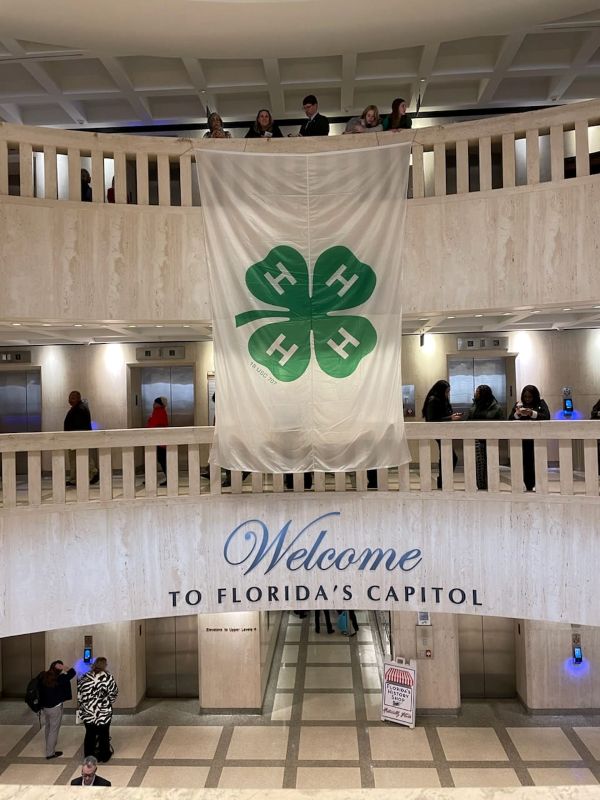
That speed is exactly why being informed matters. Many residents only learn about new laws after they have taken effect; when implementation begins and consequences become real. Staying engaged during the legislative process, not just after session ends, allows citizens to understand what is being proposed and why it matters.
Being informed does not require reading every bill cover to cover. It can be as simple as following trusted local news sources, paying attention to updates from community organizations, and subscribing to legislative alerts from groups aligned with your interests and values. Understanding the issues most likely to affect Martin County, such as growth management, environmental protection, agriculture, and infrastructure, will help you focus attention where it matters most.
Equally important is being involved. Elected officials rely on hearing from constituents to understand how proposed legislation will affect real people back home. Your voice matters, especially when it is respectful, informed, and timely. Lawmakers hear from lobbyists every day, but thoughtful messages from constituents stand out.
When communicating with your elected officials, clarity and courtesy go a long way. Identify yourself as a constituent, be specific about the bill or issue, and briefly explain how it affects you, your family, or your community. Personal stories are often more impactful than statistics alone. Whether you agree or disagree with a proposal, expressing your perspective calmly and constructively helps build credibility and relationships.
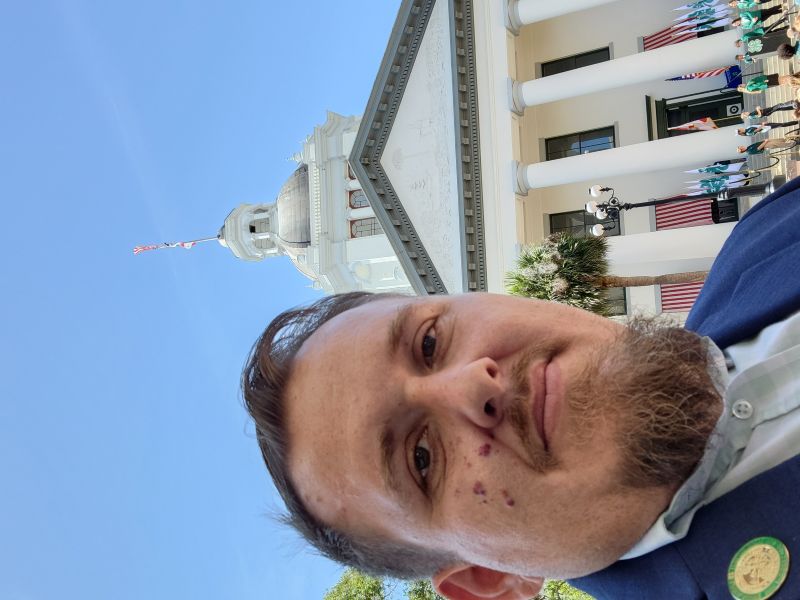
Phone calls, hand-written letters, emails, and in-person meetings all have value. During session, timing is critical. Reaching out early in the process can influence how a bill evolves. Remember, communication is not just about opposition; it is also important to tell legislators when they take positions that align with your needs. This will help the legislator build a platform on which he/she can debate and defend the legislation.
The 2026 legislative session will move fast, as they always do. But informed, engaged citizens can take part in shaping the bills and removing unintended consequences by paying attention, asking questions, and speaking up. In a county like Martin, where quality of life, natural resources, and community values are deeply connected, staying involved is not just civic duty, it is an investment in the future we want to preserve and the one we are shaping together.
David Hafner’s opinions are his own and may not reflect Friends & Neighbors viewpoint.
The start of a new year is often filled with fresh goals, hopeful intentions, and a desire to do something meaningful. At the Humane Society of the Treasure Coast, January is a powerful reminder that even the smallest resolutions can create life-changing impact for animals still waiting for their happily ever after.
While many pets found loving homes during the holidays, countless dogs, cats, and small animals like rabbits and guinea pigs are still here. For them, the new year is another chapter of waiting. That’s where you come in.
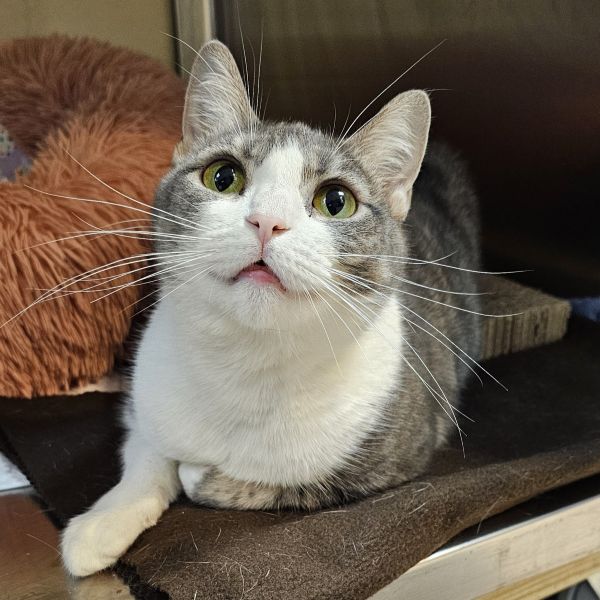
Volunteering is one of the most rewarding ways to make a difference. Volunteers at HSTC can be as young as 12 years old, making it a wonderful opportunity for students, families, and animal lovers of all ages. Whether you’re helping with dog walks, cat socialization, or at the thrift stores, every hour you give directly improves the lives of shelter pets.
For those looking for an even deeper connection, fostering can be truly life-changing, for both you and the animal in your care. Fostering provides pets with a safe, loving environment while they wait for adoption, and students can even earn foster hours for school requirements. It’s a flexible way to save lives without a long-term commitment, and the love you provide helps animals thrive.
Donations also play a vital role in keeping the shelter running strong. From one-time gifts to monthly contributions, there are many ways to give. Local businesses can make an even greater impact by becoming event sponsors, gaining community recognition while supporting a cause that truly matters. Your generosity helps provide food, medical care, enrichment, and comfort to animals in need.
Of course, there’s no resolution more life-changing than adopting. Opening your home to a dog, cat, rabbit, guinea pig, or other critter means giving a second chance to a pet who may have been overlooked during the holidays. Adoption doesn’t just change one life, it changes two!

And if time or space is limited, simply sharing a social media post can still save lives. A single share might be what connects an animal to their future family.
This year, choose compassion. Choose kindness. Choose small actions that lead to big change for the animals of the Humane Society of the Treasure Coast. To get involved or to learn more, please visit our website at www.hstc1.org. Happy New Year!
Frank Valente's opinions are his own and may not reflect Friends & Neighbors viewpoint.
Language has a funny way of evolving. Every generation invents new words, shortens old ones, and quietly lets some expressions fade away. And yet, a small group somehow stands the test of time. They move easily between grandparents and teenagers, coworkers and friends, parents and kids.
Those are the phrases that fascinate me. Not slang. Not buzzwords. But true idioms. Expressions whose meanings go deeper than the words themselves and carry a little history with them.
Here are five that are still very much alive today and why they continue to matter.
Break the ice
 We use this phrase when someone bravely speaks first in an awkward moment. A room full of strangers. A tense meeting. A silence that stretches just a little too long.
The idiom comes from literal icebreaking ships, built to smash through frozen waterways so others could follow behind. Over time, the image became social. Someone has to go first. Someone has to crack the surface so connection can move forward.
As a present-day example, a co-worker opens a meeting with a joke or finally asks the question everyone else is thinking. The “ice breaks,” and suddenly the room exhales.
Cut to the chase
This one feels modern, but it dates back to early Hollywood. Silent films often lingered on long, drawn-out scenes before finally arriving at the exciting part. The chase scene was what audiences came for.
So filmmakers began saying, “Cut to the chase,” meaning skip the buildup and get to what matters.
Today, it’s what we ask for in meetings, emails, and conversations. I have a dear friend, and he knows who he is, who loves to share all the little details in his stories and is painfully aware that I get impatient. So, he preempts me by saying, “I know, I know, you want me to cut to the chase.”
A blessing in disguise
This idiom has been part of English since the 1700s, and its power lies in what we do not see at first. A blessing is something good. A disguise hides what something truly is. Together, the phrase describes an experience that feels disappointing or unfortunate in the moment, only to reveal its value later.
It endures because it allows room for time and perspective. Meaning doesn’t arrive immediately. It waits until we’re ready to recognize it.
Maybe it was a job you really wanted that you didn’t get. At the time, it stung. Later, you land one that fits your life better and sends you on a happier path.
Don’t judge a book by its cover
This idiom gained popularity in the 19th century, when books were becoming common household objects. Their covers often signaled wealth, education, and importance. A finely bound book suggested value. A plain one was easily overlooked.
The phrase emerged as a reminder that appearances rarely tell the full story. What began as a literary observation became a moral one.
Today, we still make snap judgments based on appearances. This phrase reminds us to look past the surface and stay open to what we have not yet seen.
Light at the end of the tunnel
 This one comes from the 19th century, when long railroad tunnels were dark, disorienting, and sometimes dangerous. Seeing light ahead meant safety and an end to uncertainty.
Over time, it became shorthand for hope during difficulty. Not blind optimism. Just reassurance that the struggle will not last forever.
Someone working through an illness, financial hardship, or relationship challenge says, “I’m starting to see the light at the end of the tunnel.” They are not finished yet. But they believe progress is possible.
I love that these expressions remain part of our shared language. They remind us that while technology changes and slang evolves, human experience does not. We still feel awkward. We still want clarity. We still learn lessons slowly. We still hope for light ahead.
Which ones do you still say? And which feel especially true right now? Let me know at stacy@fireflyforyou.com.
Stacy Weller Ranieri's opinions are her own and may not reflect Friends & Neighbors viewpoint.
When I was an ER doc working in an inner-city hospital, we used to see patients all the time who were experiencing what is called a sickle cell crisis. Patients who suffer from sickle cell disease have a gene defect that affects the Hemoglobin protein in the red blood cell. Hemoglobin is a protein that carries oxygen to the tissues. Normally red blood cells are shaped like a disc and move easily through the blood vessels.
However, when someone has sickle cell disease, the red blood cells are abnormally shaped like a sickle, and they don't flow through the vessels so easily. This can lead to tissues not getting enough oxygen and similar to a heart attack when the heart is deprived of oxygen... whatever organ is affected will lose precious tissue.
Back then we were limited to what we could offer these patients... mostly oxygen therapy and pain meds along with blood transfusions to try to get them through the crisis. But now thanks to CRISPR technology there is hope for these patients.
Back in May there was a headline about a baby born with a rare metabolic disorder called Carbamoyl Phosphate Synthetase 1 (CPS1) deficiency. Due to this defect the baby was unable to metabolize ammonia which is a byproduct from the breakdown of proteins. When ammonia is produced our bodies usually know how to convert that ammonia to urea which then gets excreted in our urine.
However, this baby lacked the enzyme that is normally present in the liver to convert the ammonia to urea. When ammonia builds up in the body it can cause organ damage especially in the brain and the liver. The standard treatment for this disorder has been a special diet and then a liver transplant when the baby is old enough to handle it. Fortunately for this baby the doctors at the University of Pennsylvania decided to try a new treatment called CRISPR and after three treatments baby KJ is thriving at home!!

What is CRISPR? CRISPR stands for Clustered Regularly Interspaced Short Palindromic Repeats. You can think of it as a pair of molecular scissors for DNA. It can search for and find abnormal DNA and cut it out and replace it with normal DNA!! Back in 1987 Yoshizumi Ishino described unusual, repeated DNA sequences in bacteria but didn't know what their function was.
In 2005 a researcher realized these repeats were part of a bacterial immune system and named them CRISPR. In 2012 Jennifer Doudna and Emmanuelle Charpentier showed how the CRISPR-cas9 system could be programmed to edit DNA, turning it into a powerful gene-editing tool. They were awarded the Nobel Prize for this in 2020.
CRISPR is currently being used in many areas of medicine. As I mentioned at the beginning it has been approved by the FDA for treatment of sickle cell disease. Doctors use CRISPR on a patient's bone marrow cells to fix how hemoglobin is made. The edited cells are then infused back into the patient. These patients have been found to stop having sickle cell crisis and needing blood transfusions.
CRISPR is also being used for cancer treatment. Doctors remove a patient's T cells (immune cells) and edit the cells so they can better recognize cancer cells. These cells are then infused back into the patient where they will hunt down and destroy cancer cells.
Outside of medicine CRISPR is being used to make crops more resistant to drought as well as pests. This can eventually lead to no longer needing to spray our crops with pesticides and herbicides. CRISPR is also being used to save coral reefs and allow them to survive in warmer ocean temperatures.
Thanks to AI the uses for CRISPR are increasing rapidly and hopefully this new technology will help medicine advance at a very rapid pace!
Michele Libman’s opinions are her own and may not reflect Friends & Neighbors viewpoint.
For nearly 30 years, Michael Roberts has owned and operated Special Forces Restoration and Construction, growing the company from a small startup in Stuart into a respected restoration firm serving Florida’s southeast corridor. Built through decades of hands-on work, technical expertise, and relationship-driven leadership, Special Forces now manages complex restoration projects across coastal communities and employs dozens of skilled tradespeople.
 By the time Meredith Santeramo joined the company in 2023, Special Forces was well established in historical and concrete restoration and entering a period of accelerated growth. Following the Surfside condominium collapse, mandated inspections across Florida uncovered widespread concrete deterioration in aging coastal buildings. That demand quickly translated into active restoration work, and Special Forces was positioned to respond.
Meredith came to the company without a construction background, but under Michael’s direct mentorship, she learned the business from the inside out. Through months of shadowing, observation, and real-time problem solving, Michael taught her how projects move from engineering reports to execution in the field. She developed a deep understanding of the administrative systems, scheduling, coordination, and documentation required to keep complex, inspection-driven projects running smoothly.
As work expanded across the region—each project governed by permits, approvals, inspections, and carefully sequenced schedules—Meredith became responsible for managing the internal flow that supported the growing workload. Her ability to translate field realities into structured systems ensured materials arrived on time, crews were supported, and documentation met the standards expected by engineers, inspectors, and municipalities.
 In 2024, as project scale and complexity continued to grow, James Santeramo joined Special Forces to provide additional leadership in the field. Like Meredith, James came from outside the construction industry and spent months learning directly from Michael. Through close mentorship, he gained hands-on experience in concrete restoration, job sequencing, safety considerations, and site leadership. Gradually, Michael entrusted him with greater responsibility, allowing James to lead crews and make real-time decisions as conditions evolved.
Concrete restoration is highly coordinated, quality-driven work often performed in occupied buildings where judgment and communication are critical. Under Michael’s guidance, James developed the leadership skills necessary to manage crews and maintain consistency across job sites.
Over time, the leadership structure settled into a steady rhythm. Meredith oversees internal operations, James leads field execution, and Michael remains actively involved—supporting licensing, long-standing relationships, and continued mentorship. Importantly, Michael has committed to remaining with the company indefinitely, ensuring continuity and knowledge transfer as Special Forces looks to the future.
What ultimately sets Special Forces apart is not just the work it performs, but how deliberately the business has been built to last. Leadership transitions were cultivated through training, trust, and shared responsibility. Inspections turn into repairs. Crews arrive prepared. Work moves from report to resolution with minimal disruption. With experienced leadership, deep community ties, and an actively engaged founder, Special Forces is positioned to meet the next generation of restoration challenges with confidence and purpose.
Bill West’s opinions are his own and may not reflect Friends & Neighbors viewpoint.
California’s proposed Billionaire Tax Act as named, slated for consideration to pass this upcoming November 2026, has already begun to reshape behavior even before a single vote has been cast.
The measure would impose a one-time 5 percent tax on the net worth of individuals whose assets exceed $1 billion in California, to be applied retroactively to residents as of January 1, 2026. In practical terms, that means a $50 million tax bill for someone worth $1 billion - and substantially more for those who’ve earned a net worth of multiple billions of dollars! Many Silicon Valley tech entrepreneurs have accumulated significant wealth over these past 10-20 years and are targets of this regressive unprecedented taxation proposed.
Supporters view this as a fairness measure. Critics view it as a direct attack on capital formation, entrepreneurship, and wealth mobility. Regardless of one’s politics, one reality is becoming increasingly clear: wealth is mobile - and other no income tax states compete heavily for it.
And in that competition, Florida is positioned to be one of the largest beneficiaries.
The early signals are already visible. High-net-worth individuals are reportedly exploring major changes in residency, reorganizing asset structures, and, most importantly, buying real estate in lower or no tax states to establish domicile. Florida - with no state income tax, a business-friendly regulatory climate, great quality of life, and a luxury real estate market capable of absorbing ultra-high-value transactions - sits at the top of that list. California billionaires see Florida as a real viable and protective option for residency. One particular realtor in South Florida publicly stated he’s already talked with representatives and/or directly with over 100 of California’s approximate 204 billionaires about homes since late 2025.
Larry Page’s reported recent $100+ million Coconut Grove purchase is likely not an anomaly; it is more likely a preview of what’s to come in 2026.
If even a fraction of California’s billionaire population relocates or partially relocates, Florida stands to gain in multiple ways:
- Luxury real estate demand would surge, particularly in Miami-Dade, Palm Beach, Naples, and Tampa Bay, driving prices higher and increasing transaction volume
- Property tax bases would expand dramatically as billionaires convert financial wealth into tangible Florida assets
- Local economies would benefit from increased spending on construction, private staff, professional services, philanthropy, and lifestyle consumption
- Private investment could flow into Florida-based startups, funds, real estate developments, and infrastructure projects
- Political and philanthropic influence would increasingly shift toward Florida as wealthy individuals embed themselves socially and civically
In effect, California’s attempt to capture one-time revenue may inadvertently export long-term job-creating assets and revenue - and economic energy – away to other states.
This is the paradox of modern wealth taxation: it is designed as a static policy for a dynamic world. Capital, talent, and entrepreneurs respond to incentives. When the cost of staying exceeds the cost of moving, people will move.
California may well pass the tax this November. It may even collect meaningful revenue in the short term. But Florida appears positioned to quietly win the long game - absorbing new residents, new capital, new companies, and new influence that will shape its economy for decades.

The irony is striking: a law intended to redistribute wealth may ultimately redistribute where wealth resides and thrives hereafter. And in that redistribution, Florida is not just participating - it is poised to become one of the primary beneficiaries.
Andy Noble’s opinions are his own and may not reflect Friends & Neighbors viewpoint.
In an age of health gurus and influencers with the status of prophets of doom, we are flooded with messages to improve our health lifestyles, including watching what we put into our bodies. We are admonished to avoid processed foods or foods sprayed with herbicides or pesticides, BPA-free food containers, or genetically modified foods. As a psychiatrist, I also get requested for “something natural”. Psychiatric medications have always been held suspect, given the public’s historical perception and stigma of who takes psychiatric medications. In contrast to those who want something natural, there are those who want “better living through better chemistry”, a phrase coined by Peter Kramer in his 1993 book Listening to Prozac. Upon both these categories, we can superimpose those who engage in the wishful thinking that alcohol, tobacco, or cannabis are not contributory to their mental or physical health. There are experts of every stripe pandering whichever professional opinion you are searching for. Whom do you believe? Surely, something natural would be most innocuous!

Even our governmental and non-governmental health watchdog organizations, such as the FDA or CDC, are offering inconsistent opinions. The presence of the internet in every hand makes everyone an online sleuth, capable of searching for truths and disclosures. Consumers need to get a new kind of smart.
Consumers will need to become increasingly savvy about discerning true expertise and reviewing the available information regarding medical treatment options. Buyer beware.
As a psychiatrist, I will often need to negotiate carefully protected beliefs or distortions about medical reality regarding psychoactive substances such as alcohol, tobacco, or cannabis. There is a belief that anything in moderation is ok, and popular entertainment icons such as Bill Maher and Dave Chappelle regularly tell us that cannabis is not really a drug, followed by the litany of cannabis purveyors telling it that is, after all, medical and natural!
For those willing to embrace facts and legitimate scientific research, tobacco causes cancer, heart disease, and impotence. Alcohol has no health value, and excessive alcohol is always bad (https://www.niaaa.nih.gov/health-professionals-communities/core-resource-on-alcohol/basics-defining-how-much-alcohol-too-much).
 Regarding cannabis, the scientific evidence from around the world is irrefutable: chronic cannabis use causes the same ills as tobacco when smoked, and it also leads to cognitive loss, and a substantial increase in the risk of mood or psychotic disorders. Botanical cannabis contains over one hundred distinct cannabinoids, of which THC (tetrahydrocannabinol) and CBD (cannabidiol) are the only ones commonly considered. The concentration of THC has gone up from approximately 4% to over 25% in the last four decades, so users are getting loaded with the cannabinoid most implicated with mood and psychotic disorders.
 Cannabis is legal and “medical” by the will of voters or industry lobbies. Cannabis is using the Phillip-Morris playbook from the 1960’s when the tobacco industry tried to push back against the Surgeon General’s authority to require health warnings on tobacco products. In 1960, 42% of Americans smoked tobacco (53% of men); today, we are down to 12% of the American population smoking tobacco. In a 1969 Gallup poll, 4% of Americans reported having tried cannabis. According to the National Institute on Drug Abuse in 2024, 42% of adults from 19 to 30 have used cannabis in the past year. We have yet to see any government body require any warnings on cannabis products. Chronic cannabis use will exacerbate almost any underlying psychiatric illness. Twenty-seven percent of American and Canadian adults report having used cannabis for putative medical indications (https://jamanetwork.com/journals/jama/article-abstract/2842072); cannabis’ only medical role is stimulating appetite palliatively in the terminally ill. Pharmaceutical CBD has been approved for rare pediatric seizures, both most users seek botancial cannabis with its cocktail of cannabinoids.
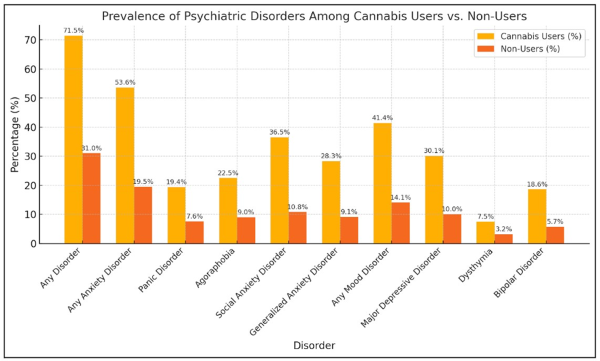
Additionally, a major Canadian population study published this year in the Journal of the American Medical Association reported that whole population data for Ontario from 2006 to 2022 demonstrated an 87% difference in the diagnosis of schizophrenia between non-users and users of cannabis. The study further noted an association between cannabis use and onset of schizophrenia tripled during the study period, coinciding with the legalization of cannabis.
Government bodies responsible for the public health have been remiss for not giving the public unwelcome data driven facts. State and federal governments should be communicating what is in the public interest. We need to empower math and science to construct meaningful health messages and require gurus and influencers to be liable for harmful misinformation without stating disclosures of non-expertise. Sometimes, it is a doctor’s job to interpret reality based on known facts, even when those facts may be unpopular.
Dr. Louis Velazquez’s opinions are his own and may not reflect Friends & Neighbors viewpoint.
The Martin County Taxpayers Association (MCTA) decided it was time to look at the commissioners’ use of tax money for their travel expenses for trips and conferences. It is not our purpose to single out any one commissioner but look at the practice in its entirety. We will offer guidelines and best practices for future commissioner travel spending and what needs to be done to implement it.
For the most part, we are pleased with just how little commissioners spent as a group with one notable exception which we will briefly delve into in this report.
We requested three years of travel and other individual commission expenses including those of former commissioners Doug Smith and Harold Jenkins. In both cases, the two truly treated county dollars as if they were their own. Parsimonious would be the word we use in connection with these former commissioners.
In many cases it appears both Smith and Jenkins just used their own funds at times to pay for travel and never sought reimbursement from Martin County. That goes far and beyond what should be expected of commissioners. We should complement Smith and Jenkins for their efforts in this regard.
MCTA also audited the current commissioners’ travel expenses. It is interesting to see what each asks to be reimbursed for. Commissioner Hetherington is a stickler for keeping track of her milage including locally. She uses her own auto and is reimbursed at the government per mile charge rate.
Commissioner Heard as chair is called upon to attend more events than other commissioners. When chair, a commissioner should be allowed to have a little more for their travel budget. Heard portends to be a fiscal conservative on the dais and follows through with her travel expenditures.
It appears that Hetherington always stays at the hotel where a conference is being held thereby saving the county added expenses of using Ubers to go back and forth. We see nothing in her spending that suggests a junket instead of county business.
In the past three years, Commissioner Ciampi has been to only one overnight conference. However, he has been to a multitude of local events. We would call him our least expensive commissioner when it comes to conferences and travel expenses. For those Martin County residents who are at local events, Ciampi is seen at dozens every year.
Commissioner Capps took his seat in November of 2024. He has gone to several conferences beginning in November of 2024. It appears he has taken classes offered both online and in person through the Florida Association of Counties.
It appears Commissioner Vargas enjoys attending conferences and travelling. Even if her amount of travel can be attributed to freshman enthusiasm, she is now in her second year, and it seems there has been no slow down in her travel. We ask that she show a little more restraint before thinking every opportunity to go somewhere should be explored.
For many years, there may not have been a reason to have a formal mechanism for how and when commissioners use county taxpayer resources. This can no longer be allowed to continue. There needs to be strict protocols on when, where, what, and how commissioners can spend taxpayer dollars on in this area.
The best way to do that is by limiting the funds available for conferences and travel. Each commissioner should have an equal dollar amount that they can spend for that purpose. The chair should be allowed an additional 15% because of their position and the need to represent Martin County more broadly.
Another protocol to be put into place is that commissioners should only go to events and conferences, especially those requiring overnight travel, that their commission assignments require. There is absolutely no reason for the taxpayers to pay for several commissioners to be at the same event. The policy will not stop individual commissioners from going at their own expense if they believe it is important enough.
Though not part of these recommendations, commissioners should not be representing Martin County on the same boards and organizations forever. By having term limits on the number of years that someone can serve, it would foster every commissioner having an opportunity to learn from these conferences which should be considered an educational event.
Travel arrangements are currently made by individual commissioners and their aides. Once arrangements are made, the county administrator perfunctorily signs off on the expense. That is rife for abuse.
All travel arrangements should be made by the Financial Services Department. A commissioner or aide would send a request to them outlining the purpose. That department would make all reservations for hotels, flights, any car rentals, and conference fees.
Any travel points would accrue to Martin County. Whenever possible, the policy should be that the commissioner must stay at the hotel where the conference is being held to minimize Uber and cab fees which ran into hundreds of dollars in one case. In the same vein, county Uber and/or Lyft accounts should be established in the county’s name that the commissioner may use. That would lessen the need for reimbursement to the commissioner’s personal account.
Whenever travelling by auto from Martin County, the commissioner should be required to use either a county owned vehicle or their own car at the federal government prescribed mileage rate. There is absolutely no reason to rent a car unless you fly. If the arrangements are made in time, county cars are always available.
Commissioners should be required to use their county-issued charge card (P Cards) for any miscellaneous expenses. The county receives thousands of dollars credited back because of their use. Commissioners are employees and should be required to do so to lessen county expenses.
Because of the growth in government, MCTA believes that what was once unnecessary must now have more formal guidelines. An expense item that in the past cost hundreds of dollars now is in the thousands. It is irresponsible of commissioners to say “tighten your belts” to staff and citizens and not do so themselves. Travel should not be looked at as a glamourous perk but rather an absolute necessity.
Commissioner budgets will do that. The amounts will still be in the thousands of dollars a year even if our recommendations are followed. Budgets administered by the Finance Department will keep track of individual limits and get the best overall deal for county resources.
MCTA will be looking to see whether our recommendations are adopted by the commission. If not, we may in the future publish commissioners individual spending invoices for travel as well as other expenses we deem excessive. The public does have a right to know.
Martin County Tax Payers Associates' opinions are his own and may not reflect Friends & Neighbors viewpoint.
Many people use the start of the New Year as a launching pad for personal improvement. Perhaps they want to improve their physical or mental health, reduce stress or build confidence. Maybe they want to make new friends, learn new skills or feel more connected to their community. Or maybe they just want to have more fun. There is a wonderful way to accomplish all of those things and more. VOLUNTEER!
At House of Hope we have a wide range of volunteer opportunities for individuals and groups. Last year, 1,188 volunteers donated 42,172 hours of service to our organization. Some came on a weekly basis to help our food pantries, thrift stores, gardens, farm, nutrition center enrichment centers and more. Others supported us through service projects such as sorting and packing food, planting and harvesting in our gardens or farm, or gleaning local commercial farms.

Gleaning is harvesting the produce remaining after a field has been professionally picked. We glean every Saturday (weather permitting) during the winter and spring seasons in partnership with CROS Ministries. This year we have new farm partnerships that will allow us to glean even more fresh veggies. Once harvested, the produce is distributed through our four food pantries and shared with our food partners instead of being plowed back into the soil. Without volunteers, we would be unable to participate in this activity. This is a great opportunity for groups and families, as children 5 and up are welcome to participate. We often get multiple generations of families, grandparents, parents and children, who use gleaning as a great way to spend time together and make a difference for the community.
House of Hope excels at finding the right fit in our organization for individual volunteers, or developing meaningful projects for group participation. So much of our success is driven by the tremendous support of our volunteer base. Last year, we distributed nearly 1.7 million pounds of food, provided over 237,000 items to our clients such as clothing, housewares and furniture through our thrift stores, produced and packaged over 25,000 meals in our nutrition center, expanded the footprint and capacity of our Growing Hope Farm, and more. Our amazing team of dedicated volunteers had their hands in all of that.

So are you are ready to be a part of something bigger than yourself? The gifts of your time and talent will help House of Hope continue to empower residents to overcome hunger and hardship in our community. To get your volunteer journey started, please visit our website at www.hohmartin.org/volunteers or call us at (772) 286-4673 ext. 1013. Thank you for providing hope in our community.
Rob Ranieri’s opinions are his own and may not reflect Friends & Neighbors viewpoint.
Happy New Year to all our readers. The last quarter of 2025 and Christmas were good to me and the real estate industry. I am confident that 2026 will be a good year.
I was in Orlando at the Florida Realtors mid year conference. My favorite part of this yearly meeting is the timely and informative presentation from the Realtors economists. Brad O’Connor (Florida Realtors) and Jessica Lautz (NAR) spoke on trends and expectations. Interest rates fell last week to a number that was under 6%. It is hoped that this will create buyer interest for the many buyers that have been sitting on the sideline. It is time to buy if you are financing a new home. Some interesting information coming from the economists included 30% of sales were all cash, first time buyers were at a low and 91% of sellers used a Realtor.
The state legislature is going into session this week. I will be going to Tallahassee next week to discuss upcoming legislation and Realtors hope for continued funding and incentives for first time buyers and first responders. Our legislative delegation is receptive to taking our meeting and listening to our talking points about proposed legislation. Florida Realtors want all families to be able to purchase secure, affordable and safe homes.
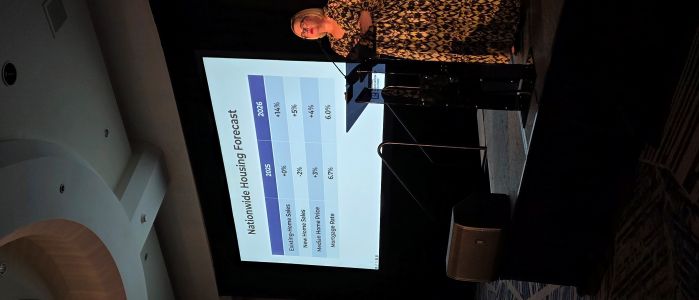 The biggest conversation in my world is the Governor’s call to eliminate the state property tax - a broad statement that is being discussed by many professions, governments and every lawmaker in Tallahassee. The idea is noble, assuming the elimination is only on homesteaded properties, however, the cost to local governments could be devastating. Smaller rural communities and even Martin County have less industry and business to pay the gap that will be created. The legislature’s committee, chaired by Representative Toby Overdorf, has done great work and is offering various ways to reduce the tax burden on homeowners. My concern is the massive implications of this project and the short period of time that has been invested in finding a solution. Any ballot initiative that ends up in the voters hands will be complicated. I hope we all pay close attention to the headlines and more importantly to the details of the amendments.
Florida’s Legislature is currently discussing the elimination of the Florida Real Estate Commission (FREC). Realtors are amongst other professions monitored by the Department of Business and Professional Regulation (DBPR). I personally do not see the rationale for doing away with this vital watchdog organization. DBPR licenses many professions in our State and periodically checks that they are performing the services they are licensed to perform. Our Realtors have continuing education requirements and can be subject to stiff fines and penalties if we are not following our industry standards, rules and regulations.
I wish everyone my hope that you have a wonderful 2026.
John Gonzalez’s opinions are his own and may not reflect Friends & Neighbors viewpoint.
If you’re looking for excellent entertainment—and who isn’t—hurry and reserve your Golden Tickets to an upcoming production of Charlie and the Chocolate Factory.
Being performed from Feb. 26 to March 1 at Jensen Beach High School, the production will showcase the talents, teamwork, creativity and leadership of the Boys & Girls Clubs of Martin County drama club.
 More than 60 of our members will comprise the cast and crew of Ronald Dahl’s Charlie and the Chocolate Factory: The New Musical. The story honors the original while introducing a few fresh twists and new music. It’s performed in conjunction with the Jensen Beach High School Drama Department, an incredible partner in our new club based at the school.
The Jensen Beach club members debuted their theatrical talents last fall, earning raves for a production of Clue in which they also designed and constructed the stage, conducted the lighting, and managed all backstage operations.
 The clubs help our nearly 1,000 members cultivate their creative talents in a multitude of ways. Soon, we’ll open the BGCMC Music Studio Clubhouse at our Greater Stuart Club. It will be facilitated by a full-time music director, provide music-production equipment, offer instrument workshops and welcome all members to enjoy.
Knowing that it’s not always easy for members of our Indiantown, Hobe Sound and Port Salerno clubs to make it to the Stuart studio, we’ll offer free transportation via our buses and vans. Still, budding musicians need frequent instructions, which is why we’re currently retrofitting a vehicle with studio equipment to serve as a mobile music maker so we can bring the beats to them.
The Music Studio Clubhouse will represent a partnership between BGCMC and the Music & Youth Initiative, a New England-based organization founded in 2004 and serving under-resourced communities. By offering a multi-year approach, the program will ensure our members receive the commitment necessary to discover any untapped musical abilities.
Our emphasis on the creative arts complements our ongoing coursework in the workforce development space.
From the achievements of our culinary team—which although composed of middle- and high-school-aged kids operates an expanding catering program and a food truck—to those undergoing training for HVAC, electrical, construction, coding, drone piloting and more, these young people are learning the skills to earn good jobs upon high-school graduation.
Considering how many of our members hail from struggling circumstances, these opportunities—some of which pay so they can help their families—equip them for the future they want rather than the one that could easily engulf them.
In shouldering such responsibilities, BGCMC members especially need regular encounters with the healing power of the arts. The more rounded their exposure, the more we uphold our clubs’ motto that “Great Futures Start Here.”

So, as you (please) come out and support their artistic talents in their production of Charlie and the Chocolate Factory, consider how you’re investing in the immense potential of some industrious, creative young people. It gives even more meaning to the words of Willie Wonka when he says, "We are the music makers, and we are the dreamers of dreams."
Keith Fletcher's opinions are his own and may not reflect Friends & Neighbors viewpoint.
January has a particular rhythm in the leisure travel segment of the travel industry. It’s the season of intention, perhaps driven by that end-of-the-holidays feeling and the return to the routine. Old plans come out, calendars open, and summer dreams begin to take shape. For many of the travelers we meet at SilverOpus, those dreams point north. Some lead to Iceland, a country that has enjoyed an extraordinary tourism boom over the past decade or so, with little sign of slowing down.
And yet, something curious happens again and again.
Most travelers say they want to avoid crowds, seek authenticity, and experience the “real” Iceland. Then they proceed to do exactly what millions of others do: base themselves in Reykjavík, visit the Blue Lagoon, drive the Golden Circle, and rush along the South Coast on packed day trips. There’s nothing inherently wrong with these places and they are popular for a reason, but they represent only a narrow slice of what Iceland truly is.
 As Iceland specialists, we often suggest a different approach. Not to skip Iceland’s highlights altogether, but to rethink how – and where – you experience them.
My favorite alternative is East Iceland, particularly the Eastfjords. Locals sometimes refer to this region as a “miniature Iceland,” and it’s easy to see why. Fjords carve deep into the coastline, small fishing villages cling to the edges, and hospitality feels personal and unhurried. The scenery is varied, dramatic, and quietly beautiful. It even harbors the only “forest” in all of Iceland. Most visitors miss it simply because it cannot – and should not – be done as a long day trip. East Iceland handsomely rewards those who slow down and commit to a thoughtfully designed, multi-day stay.
 Another compelling alternative is the Westfjords, the country’s most remote and least visited region. This is Iceland at its wildest: towering cliffs, endless summer light, and some of the richest birdlife in the North Atlantic. Roads are fewer, distances feel larger, and crowds thin to almost nothing. If solitude and raw landscapes are what you seek, few places in Europe deliver quite like the Westfjords.
 Then there is a third path, perhaps the most nuanced one. Visit the South Coast, but with intention. With a plan. Stay in a luxury countryside property rather than racing back to the capital. Pair the waterfalls and black-sand beaches with the Icelandic Highlands, where soft-core adventures like horseback riding reveal a gentler side of the country. Add the incredible Westman Islands, shaped by fire, history, and remarkable resilience. Suddenly, the South Coast stops being a checklist and becomes an authentic experience. It becomes Icelandic!
Iceland hasn’t become too popular. It has simply been approached too narrowly. It is a country to be visited multiple times if the tapestry of experiences it offers is to be fully appreciated.
The country’s true beauty still lies beyond the obvious routes, waiting for those willing to travel a bit differently. And that, to me, is a comforting thought. The world may feel smaller, but it remains, undeniably, an awesome one.
Marcelo Guimarães' opinions are his own and may not reflect Friends & Neighbors viewpoint.
A new year unfortunately brings more new scams to threaten the well-being of our seniors. Every day they are targeted by scammers, often online and without warning.
These criminals prey on kindness, generosity, and trust, taking not only hard-earned money but also the sense of security everyone deserves to feel.

The Council on Aging Martin County is repeating the advice we’ve given in the past because it remains relevant:
- Never answer the phone if you don’t know the caller.
- Never click on a link that you’re not familiar with.
- Never sign anything without reading it.
- Don’t share personal information.
- Get advice before you commit to any big financial commitment.
- Remember that if it’s too good to be true, it’s probably a scam.
- If you think you’ve been scammed, report it. Seniors may be reluctant to report, afraid that they’ll feel foolish feel foolish (they’re not: scammers are incredibly clever) or fear that their family may question their mental capacity (not so: anyone can be taken in by a scam).
You can learn more about the latest scams – financial, travel, telemarketers, tech support, romance, charity scams – at the website, www.seniorsvscrime.com, a project of the Seniors vs. Crime Project of the State of Florida. It offers a guide on what to do if you or a senior you love has been a victim of the lowest of the low – scammers of our seniors.
To help protect our community, the Council on Aging Martin County and Seacoast Bank are partnering to present a free educational program, Protecting Yourself From Fraud. This informative session will be held on Friday, February 13, from 11 a.m. to noon at the Kane Center.
Join us to learn how to recognize common fraud schemes, spot red flags early, and understand what steps to take if you or a loved one becomes a victim. Knowledge is one of the strongest tools we have in preventing fraud.
Space is limited. Please call 772-223-7800 to register.
Karen Ripper's opinions are her own and may not reflect Friends & Neighbors viewpoint.
A car accident can leave you shaken, confused, and unsure of what to do next. In the moment, it’s easy to focus only on the damage to your car. But what you do in the minutes and days after a crash can affect both your health and your ability to bring a claim later.
Here are the steps that can help protect you.
1) Start With Safety and Medical Care
The first thing to do is check yourself and others for injuries. If anyone is hurt, call 911 right away. If you can safely move to the side of the road, do so and turn on your hazard lights.
Even if you feel okay, don’t ignore symptoms. Some injuries, like whiplash or a concussion, may not show up until hours or even days later. Getting checked by a doctor as soon as possible protects your health and creates a medical record that can support your claim.
2) Report the Accident
You should call the police and make sure a report is taken. A police report can help later if the other driver changes their story or denies responsibility. If officers respond, ask how you can get a copy of the report.
3) Document the Scene
If you are able, take photos at the scene. These pictures can make a big difference when it comes to proving what happened. Try to capture the damage to all vehicles, the roadway, traffic signs, skid marks, and anything else that shows how the crash occurred.
You should also exchange information with the other driver, including their name, insurance details, and contact information. If anyone witnessed the accident, ask for their name and phone number.
4) Track Your Symptoms in the Days After
In the days after the crash, pay close attention to how you feel. Keep a simple note on your phone or a notebook where you track pain, stiffness, headaches, trouble sleeping, or missed work. Many accident injuries affect daily life in ways that are easy to forget later, but those details can be important in a case.

5) Call an Attorney Early
It’s common for insurance companies to reach out quickly after an accident. They may ask for a statement, offer a settlement, or pressure you to move forward before you understand the full cost of your injuries.
Speaking with an attorney early can help protect you. An attorney can handle communication, gather evidence, and make sure you are not pushed into accepting less than what your case is worth.
Avoid Common Mistakes
Some of the most common mistakes people make include delaying medical care, apologizing at the scene, posting about the accident online, or accepting a quick settlement. These actions may seem harmless, but they can weaken your case.
Gene Zweben’s opinions are his own and may not reflect Friends & Neighbors viewpoint.
School Choice? More like a Public Education Grift.
Charter schools can easily become a grift for powerful politicians — and I say that as a parent who trusted one with my own child.
What’s happening right now in Martin County shows how badly the charter system can be abused when politics, money, and public education mix behind closed doors.
Let’s walk through who’s involved, then what’s actually being alleged. This is VITAL for Martin County residents to understand.
The Key Players
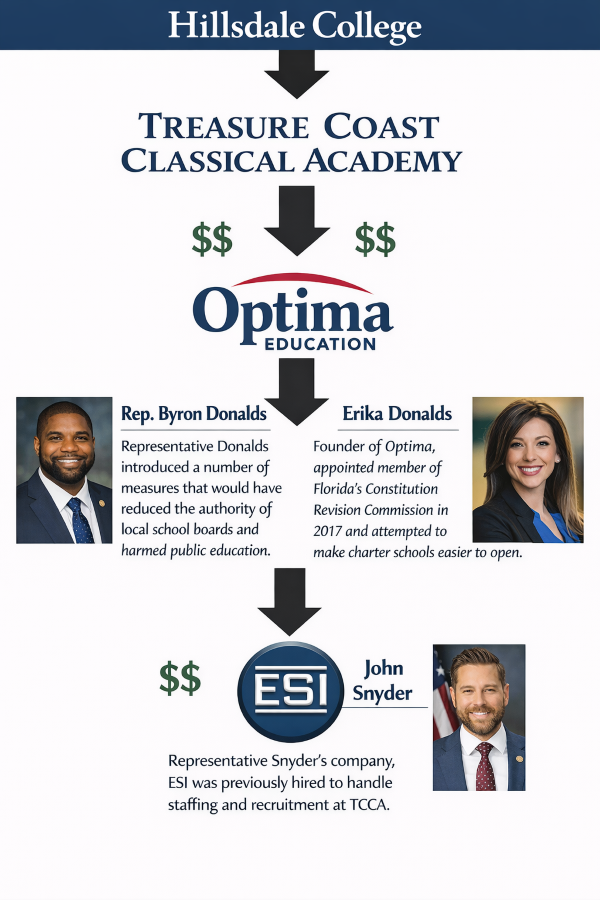
Byron Donalds is a U.S. Congressman and former Florida state legislator. In office, he has been a high-profile supporter of charter schools and school-choice expansion, voting for and promoting policies that weaken the authority of local school boards and shift public dollars toward privately run schools.
Erika Donalds, his wife, is a leading school-choice activist and the CEO of the Optima Foundation — the nonprofit that helped found, manage, and operate charter schools like Treasure Coast Classical Academy (TCCA). She also served on Florida’s Constitution Revision Commission, where she pushed for Amendment 8, which would have made charter schools easier to open statewide.
Hillsdale College is a private conservative college in Michigan that provides curriculum, training, and branding to “classical” charter schools across the country. Many of the Optima-affiliated schools, including TCCA, use Hillsdale’s model. Hillsdale is deeply connected to the same national political movement that promotes Project 2025 and the privatization of public education.
Optima Foundation, founded and run by Erika Donalds, exists to build and manage these charter schools — and to collect management fees from them.
Treasure Coast Classical Academy (TCCA) is a publicly funded charter school in Martin County, Florida.
John Snyder, a sitting Florida state representative, was hired through his private company (ESI / Educator Solutions) to provide staffing, payroll, and human-resources services to TCCA through an Optima-arranged contract.
What actually happened
TCCA entered into a formal management agreement with Optima. Under that contract, Optima was responsible for running major operational functions of the school — staffing, finances, facilities, and vendor management — in exchange for substantial management fees paid out of taxpayer-funded school revenue.
Over the life of that relationship, TCCA paid Optima-controlled entities more than $10 million.
In 2023, TCCA sued Optima and Erika Donalds.
The lawsuit alleges that Optima:
- Withheld school records and property when TCCA attempted to separate
- Steered contracts to affiliated companies, including Summit Construction
- Failed to properly disclose conflicts of interest
- Used its control over school operations to financially benefit connected entities
In other words, TCCA is accusing its own management company of abusing its power over a publicly funded school to enrich a politically connected network.
This is not a vague complaint. It is a formal lawsuit over money, contracts, and control.
Why the John Snyder connection matters
Separate from the lawsuit — but deeply relevant — is the role of Representative John Snyder.
Optima hired Snyder’s private company to run TCCA’s staffing, payroll, and HR.
That means a sitting Florida lawmaker was being paid — through his business — to help operate a taxpayer-funded charter school that was part of the same political ecosystem he was voting to expand.
So let’s be very clear:
A network tied to two elected officials — one shaping education law in Tallahassee and Washington, the other running the nonprofit that controlled the school — was simultaneously:
- Receiving millions in public funds
- Controlling school operations
- And influencing education policy
That is not “parent choice.”
That is a political-financial pipeline.
This is the real problem with “School Choice”
Charter schools should be free to innovate.
They should not be free to become private empires funded by public money and protected by political power.
This case exposes how Florida’s charter-school system allows:
- Public dollars to flow into private nonprofits
- Those nonprofits to hire politically connected vendors
- And lawmakers to vote on policies that benefit the very networks paying them
They sold this to us as School Choice.
They branded it as Parent Power.
But when $10 million in taxpayer money is cycling through a web of political insiders, that isn’t choice.
That’s a grift hiding behind a classroom door.
Sydney Thomas' opinions are her own and may not reflect Friends & Neighbors viewpoint.
New Year's resolutions offer a chance for personal growth and renewed motivation. They encourage us to reflect on our habits and set intentions for positive change, both individually and within our community.
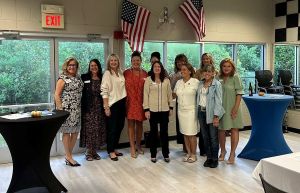 As we begin the new year of 2026, how many of us have not only made resolutions but are keeping up with them? Here are the statistics—Eighty percent of resolutions fail; 23% quit in the first week, 64% by the end of the first month, and 88% by the end of January.
With these wonderful quotes to guide us, why do we fail and how can Kiwanis help—
“This is a new year. A new beginning. And things will change.” – Taylor Swift
“What the new year brings to you will depend a great deal on what you bring to the new year.” – Vern McLellan
“The first step towards getting somewhere is to decide you’re not going to stay where you are.” – J.P. Morgan
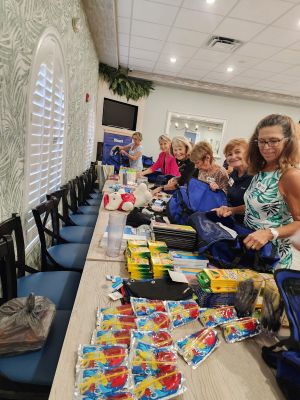 Kiwanis Clubs offer a structured, ongoing, fun and worthwhile volunteer avenue for keeping your resolution of “helping others”. Martin County is the home of three Kiwanis Clubs each uniquely designed to be available and welcoming to new members. Here’s a snapshot of the Clubs.
Kiwanis Club of Stuart is the oldest and largest of the three founded in 1938 currently with 50+ members. I am a member of this club. We volunteer to assist with many nonprofit organizations, work with KKids (elementary school)/Builders Club (middle school)/Key Club (high school) and a Circle K Club (college/university) is in development. Our major project is improving and expanding Kiwanis Park at Woodlawn in Downtown Stuart.
Plan to attend our Reading and Pancakes in the Park on March 7—it’s a great time—in addition to great food, we’ll have face painting, games and celebrities reading to the children attending.
The Kiwanis Club of Stuart meets on the first and third Tuesdays each month at Maneros in Palm City at noon. Please check out our website kiwanisclubofstuart.org or come as our guest!
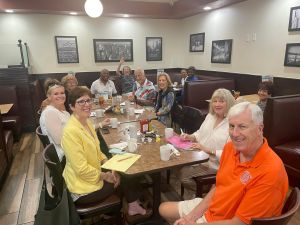 Kiwanis Club of Martin County is our second oldest club. The Kiwanis Club of Martin County focuses on the KKids/Builders Club/Key Clubs as well as providing scholarships annually. They also partner with Tent City Helpers to provide one meal a month for sixty of the people they serve.
The Kiwanis Club of Martin County meets on the first and third Friday every month at TooJays in Stuart at 7:30 am. You can find them through Kiwanis or on Facebook at Kiwanis Club of Martin County.
The Kiwanis Club of Indiantown is our newest club founded in the last two years. The Kiwanis Club of Indiantown has gotten off to a strong start! They focus on the KKids/Builders Clubs they sponsor. They also provide a “Kiwanis Closet” at Warfield Elementary where teachers can provide clothing for children on an emergency basis when needed.
Kiwanis Club of Indiantown meets the first and third Thursday monthly at 9 am in various locations. You can find them through Kiwanis or Facebook at Kiwanis Club of Indiantown.
Our current Lt. Governor Cher Fisher says “Kiwanis is more than a service organization; it’s a promise to our community that when there is a need, we will show up, serve and make a difference—especially for our children.”
Make that New Year’s Resolution last! Join Kiwanis—we make it easy!
Suzy Hutcheson's opinions are her own and may not reflect Friends & Neighbors viewpoint.
February isn’t just about hearts and flowers—it’s a month that reminds us of the power of kindness and healthy relationships. Two opportunities to participate in healthy relationships include Random Acts of Kindness Week (Feb. 11–17) and Valentine’s Day. These are the perfect time to talk about how kindness and love support children’s mental health.
Kindness builds resilience. When children practice kindness—whether by sharing a smile, helping a friend, or writing a thank-you note—they experience a sense of purpose and connection. Research shows that acts of kindness release feel-good chemicals in the brain, reducing stress and boosting mood. Encouraging kids to participate in Random Acts of Kindness Week can help them see how small gestures make a big impact.
Valentine’s Day offers another opportunity: teaching healthy relationships and emotional expression. While the holiday often focuses on romantic love, it’s also a chance to talk about friendship, empathy, and respect. Help children understand that love isn’t just about gifts—it’s about listening, caring, and supporting one another.
Here are a few simple ways families and schools can celebrate February while strengthening mental health:
- Create a Kindness Calendar: Challenge kids to do one kind act each day during Kindness Week.
- Write “Appreciation Valentines”: Instead of candy, encourage notes that highlight what they value in friends and family.
- Model Connection: Show children how you express gratitude and kindness in your own relationships.
These activities don’t just make February about hearts and candy, they teach coping skills, empathy, and emotional regulation, all of which are essential for resilience. When children feel connected and valued, they’re better equipped to handle life’s challenges.
By practicing kindness, together, we can make February a month of love, kindness, and stronger mental health for every child.
Anne Posey's opinions are her own and may not reflect Friends & Neighbors viewpoint.
As we begin 2026, Hibiscus Children’s Center moves forward with renewed purpose and unwavering commitment to the children and families we serve. For over four decades, Hibiscus has been a safe haven for children who have experienced abuse, neglect, or abandonment. Today, our mission to protect children and provide critical, life-changing services is stronger than ever.
The start of a new year brings reflection and hope—and at the Tilton Family Children’s Shelter, it reinforces our vision for the future. Every child who comes to us carries unique needs, challenges, and potential. Our role is to meet them where they are, surround them with care, and help guide them toward stability and healing. Through comprehensive services, dedicated staff, and a nurturing environment, we continue to ensure children are safe, supported, and given the opportunity to rebuild trust and confidence.
At Hibiscus, caring for children means more than providing shelter. It means offering structure, consistency, and guidance—essentials that help children feel secure and understood. Daily routines, supportive relationships, professional counseling services, and individualized care plans create a foundation where children can grow emotionally, socially, and academically. This stability allows children to begin imagining a future filled with possibility rather than uncertainty.
 The benefits of this care are profound. When children are surrounded by compassion and clear guidance, they are better equipped to heal, develop resilience, and discover their strengths. Hibiscus empowers children to build healthy relationships, develop life skills, and envision a solid future where they can thrive and reach their full potential.
In 2026 and beyond, Hibiscus Children’s Center stands strong in its promise to protect children, nurture their growth, and help them build brighter, safer futures. Together, we are creating a path forward—one child, one family, and one hopeful tomorrow at a time.
If you would like more information about Hibiscus and our programs, please visit us at HibiscusChildrensCenter.org.
Matt Markley's opinions are his own and may not reflect Friends & Neighbors viewpoint.
January 12, 2026, and here we go into the New Year.
The surf bite for our number 1 targeted species from the beach, the pompano, still has not materialized. The surf temperature is still hovering around 75 degrees, and I am convinced that is one of the major factors that still has these guys hanging to our north and in the Indian River Lagoon.
The surf water temperature is 71 degrees today and normally at this time of year it is 65 to 68 degrees. Talking to friends in Melbourne, Daytona Beach, and even St Augustine, they are still catching pompano. The other fact that the Spanish mackerel run that centers around Pecks Lake off Hobe Sound starting in December normally has not happened either. Intel from Vero Beach in the area known as Vero Cove, continues to hold the mackerel.
The one bright spot for the surf fishing contingency is the whiting bite. It has been as good as I can remember for the 14 years I have lived here and lots of tasty whiting are allowing us to bend a rod and have some great fish fry's. Unlike the majority of beaches from Vero north, we have a number of beach accesses that have a distinct drop off or trough right at our shore break. This allows us to use light action 7-foot rods and light spinning reels and have some fun with this great tasting fish.
A "pitch", not a cast is really the way to get your Fishbites tipped with a small piece of shrimp to the zone where these fish roam the beach . We have two different species of whiting here in St Lucie and Martin counties and they are really a type of kingfish.

We have one species named the Southern Kingfish and the other is the Gulf Kingfish. They are an unregulated species in the FWC and State guidelines which means there are no size or bag limits. You are allowed to retain 100 pounds of whiting per day, but I consider that overkill because no one needs to retain that many. I use the length of ones that I keep with the 11 inch length like the pompano. If it is smaller than that I let them go.
The pompano measurement is to the fork of their tail and with the whiting I use the total length as a guide. A cooler with ice is a must to keep them cool and nice and firm. My rigs are double hook Hi Lo setups with a size 4 or 6 style small J hook. Your best results will be by holding the rod, not casting, and putting in a sand spike like we do for pompano.
The two hours before high tide to the same duration after the tide changes will produce the best. Some Martin County beach accesses that you can try are Byn Mawr, Beachwalk Pasley, Glasscock, and Stuart Beach. Until the pompano start showing in numbers try your hand at the whiting bite that is currently going on.
Good luck this month and catch em up.
Paul Sperco’s opinions are his own and may not reflect Friends & Neighbors viewpoint.
I’m excited to be launching this new food column in Friends & Neighbors and want to share with you a little bit about my background and what I’m bringing “to the table.” I’ve spent more than twenty-five years working behind the scenes in some of the country’s top private clubs and restaurants, where great food, gracious hospitality, and memorable dining experiences are part of everyday life. I’ve watched dishes come to life in busy kitchens, tasted sauces at various stages of perfection, helped plan menus for holidays and big celebrations, and sat with chefs as they debated the exact right spice, garnish, or wine pairing.
I have overseen fine dining rooms where a plate arrives like a work of art, and I have also stood in a staff hallway eating a perfect slider that never made it to the menu. I’ve overseen multimillion dollar kitchen renovations and have slipped into the back to taste a new cheesecake that someone insisted I try before it even finished cooling. Food has been the heartbeat of my career, and it continues to be one of the great joys of my life.
But here’s the truth. As much as I’ve worked around high end cuisine, I love the simple stuff too. Give me a crispy fish sandwich, a slice of amazing pizza, or a taco from a little hidden spot, and I’m just as happy. Food doesn’t have to be fancy to be great. It just has to be honest, well prepared, and shared with people you enjoy.
That’s the spirit I’m bringing to this dining column. I’m excited to write about the places, flavors, and experiences that make our community delicious. Some weeks I may share stories from my club-life career. Some weeks I may highlight a local gem, explore a food trend, or offer wine tips that don’t require a sommelier dictionary. Other weeks I may share stories from my club and restaurant days, chase down a dish I think everyone should try at least once or share a recipe.
I’m not here to critique or judge. I’m here to celebrate. Good meals, good people, good stories. Martin County is full of all three.
So, I hope you’ll pull up a seat at my table. I’m glad you’re here, and I can’t wait to dig in.
If there’s a dish, tradition, or food moment in Martin County that deserves a little love or a restaurant you’d recommend, I’d enjoy hearing about it. Reach me at dinewithbrent@gmail.com.
Brent Hanlon’s opinions are his own and may not reflect Friends & Neighbors viewpoint.

There is more significance to “January 1” than
celebrating New Year’s Day!
When it comes to ad valorem property taxes in Florida, everything revolves around a date of assessment of January 1. When you receive your tax bill in November, those taxes are based on a snapshot of your property valuation which took place eleven months prior on January 1. As a result, the Property Appraiser studies the previous year’s real estate market activities and transactions to establish the current year values.
The illustration below shows this sequence, where 2026 property valuation, notification, and billing tie back to January 1, and in essence market activity taking place in 2025.

Under Florida law, the taxability of newly constructed improvements is determined based on whether those improvements were substantially complete as of January 1. For example, the addition of a new swimming pool which was not completed until February 2025 should not have been reflected on the November 2025 tax bill. Instead, the value of the pool will be added and the additional taxes will be reflected on the November 2026 tax bill.
The eligibility of all property tax exemptions is also determined based on whether you qualify on or before January 1. To qualify for the Homestead Exemption, an individual must own and occupy the property as a permanent Florida resident on or before January 1. Likewise, those wishing to apply for the Limited Income Senior Exemption, which has an age requirement of 65 years old, must be 65 or older as of January 1 and meet the income restrictions to qualify.
Agricultural classification is a tax savings benefit for property owners that use their land primarily for bona fide commercial agricultural use. This benefit results in the land being valued based on the probable income, which is often substantially less than market value. To qualify for this benefit, the agricultural use must be in place on or before January 1 of the year you apply.
It is important to note that the January 1 date of assessment greatly affects new homebuyers.
When a buyer purchases a home after January 1, their first-year tax bill is based on the previous owner. This may result in the new homebuyer inheriting the previous owners’ exemptions and Save Our Homes benefits, if the previous owner qualified as of January 1. Estimating a new buyer’s taxes based off the previous owner’s tax bill can lead to a significant discrepancy in the escrow payment and may not adequately reflect what the new buyer may expect to pay in taxes the following year. Since Florida law requires property values to reset to current market value on January 1 following the date of purchase, new homebuyers are encouraged to use their purchase price when estimating their taxes.
Please visit www.pamartinfl.gov to take advantage of a Property Tax Estimator and additional resources available to educate and assist new homebuyers and property owners. For additional questions, please do not hesitate to contact the Martin County Property Appraiser’s Office by phone at 772-288-5608 or email hx@pamartinfl.gov.

United Way of Martin County Mobilizes Critical Support During Crisis, Strengthens Community Safety Net Through Strategic Partnerships
STUART, FL — When crisis strikes, United Way of Martin County steps forward to ensure that local families are not left behind. Through strategic investments, coordinated partnerships, and rapid response efforts, United Way continues to strengthen Martin County’s safety net – especially during moments of uncertainty and hardship.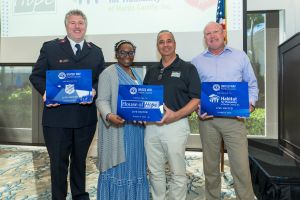
Live United: Recipients of the 2025 Live United Award in recognition of their leadership and collaboration during long-term disaster recovery efforts. (James Milner with Salvation Army, Lesley Frederick and Rob Ranieri with House of Hope, and Mike Readling with Habitat for Humanity)
In October 2024, a series of tornadoes compounded by Hurricane Milton caused widespread destruction across the Treasure Coast. Hundreds of homes were damaged or destroyed, and many low-income families were suddenly faced with unsafe living conditions, food insecurity, and lost income. United Way of Martin County quickly mobilized, working alongside trusted nonprofit partners to coordinate disaster recovery efforts and ensure essential resources reached those most in need.
 United Way provided $20,000 in supplemental funding to House of Hope to support expanded pantry services and emergency assistance for families
Through this coordinated response, United Way partnered with organizations including The Community Foundation Martin–St. Lucie, House of Hope, Salvation Army, and Habitat for Humanity to distribute food and supplies, support housing repairs, and help Martin County families bridge gaps created by lost wages. This collaborative, community-wide approach ensured resources were used efficiently and that help reached residents quickly during an unprecedented time.
In recognition of their leadership and collaboration during the disaster response, United Way of Martin County recently presented its Live United Award to House of Hope, Salvation Army, and Habitat for Humanity at its annual Community Leaders’ Celebration.
“Our community is stronger and more resilient when we LIVE UNITED,” said Carol G. Houwaart-Diez, CEO of United Way of Martin County. “United Way’s role is to bring partners together, identify urgent needs, and invest where support will make the greatest impact – whether during natural disasters or ongoing economic challenges.”
 United Way allocated $20,000 to the Council on Aging of Martin County to help ensure seniors have continued access to food, support services, and basic necessities
As the community continued to recover from storm-related impacts, additional pressures emerged. Federal budget cuts and changes to SNAP, WIC, and other safety-net programs significantly reduced food assistance for families, seniors, and individuals already struggling to make ends meet. These reductions created an immediate strain on local nonprofits and increased demand for emergency food and financial assistance.
In response, United Way of Martin County made targeted investments to stabilize critical services. The organization provided $20,000 to House of Hope to support expanded pantry services and emergency assistance for families impacted by the loss of federal benefits. United Way also allocated $20,000 to the Council on Aging of Martin County, ensuring seniors – many living on fixed incomes – continued to have access to food, support services, and basic necessities during this challenging period.
These investments reflect United Way’s commitment to proactively addressing gaps in the system and supporting partners who are on the front lines of service delivery.
“We’re grateful for United Way’s leadership and trust in our efforts to respond to community needs,” said Karen Ripper, CEO of Council on Aging of Martin County. “This partnership strengthens our ability to serve vulnerable neighbors and ensure critical support reaches those who need it most.”
Through disaster recovery, funding advocacy, and strategic partnerships, United Way of Martin County remains focused on its mission to improve lives by advancing education, financial stability, and health – especially when families face their greatest challenges.
For more information about United Way of Martin County and how to support its work, visit UnitedWayMartin.org.
###
About United Way of Martin County
Since 1972, United Way of Martin County has been dedicated to creating long-term social change and providing support to residents. With a mission to improve the education, financial security, and health in Martin County, United Way invests in impactful programs that enhance quality of life and ensure everyone has the opportunity to thrive. To learn more about United Way of Martin County, visit www.UnitedWayMartin.org.

Ho! Ho! Ho! Gifts for Kids in Need Donated at
Operation Hope Florida’s Holiday Toy Drive Cocktail Receptionat Orchid Island Golf & Beach Club
More than 200 toys collected for local children in need
– The spirit of the season was on full display as members of Orchid Island Golf & Beach Club came together to support families in need through their annual Holiday Toy Drive benefiting Operation Hope Florida.
On December 3, Orchid Island Golf & Beach Club hosted its highly anticipated, annual Operation Hope Holiday Toy Drive Cocktail Reception which featured creative bites by executive chef Chris Sozio along with holiday entertainment under the stars.
More than 150 Orchid Island members generously donated a treasure trove of holiday gifts, including toys, bicycles, electronics, and more. These donations support Operation Hope Florida’s ongoing mission to provide holiday gifts and joy to disadvantaged children year after year.
On December 18, Operation Hope Florida's president and founder Jesse Zermeno and his team of merry elves visited Orchid Island Golf & Beach Club to collect more than 200 unwrapped gifts. The toys were later distributed at the nonprofit’s annual Santa Claus Christmas Festival in Fellsmere, Florida.
“This is one of the most meaningful times of year for our community,” said Rob Tench, General Manager of Orchid Island Golf & Beach Club. “Partnering with Operation Hope Florida allows our members to come together and share the joy of the season with children and families who need it most.”
Orchid Island is located at One Beachside Drive, Vero Beach, FL. For more information, visit orchidislandfl.com.
Operation Hope Florida is located at 12285 County Road 512, Fellsmere, FL. For more information, visit operationhopefl.org.
ABOUT ORCHID ISLAND GOLF & BEACH CLUB
Orchid Island is a private and intimate residential golf course community, offering gracious waterfront and golf course homes, an award-winning Arnold Palmer golf course, a state-of-the art Tennis & Fitness Center and an intimate Beach Club perfectly suited for leisurely gatherings, club activities and exceptional dining. For two consecutive years Orchid Island has gained certification as being one of "America's Healthiest Clubs" from Prevo Health Solutions, as well as being awarded the designation of being a "Distinguished Emerald Club of the World." For more information, visit orchidislandgolfandbeachclub.com.
ABOUT OPERATION HOPE FLORIDA
Operation Hope Florida is a non-profit 501 (c) 3 organization dedicated to providing support, education, and assistance to families in need regardless of race, color, or religion. For more information, visit operationhopefl.org

Save the Date!
The 5th Annual Garden Expo
Bigger & Better Than Ever!
Saturday, March 7, 2026 – 9 AM to 3 PM
*NEW LOCATION*
Memorial Park, 300 SE Ocean Blvd, Stuart, FL
The Jensen Beach Garden Club’s much-loved Garden Expo is growing — literally! Now in its 5th year, the popular spring event is moving to Memorial Park in downtown Stuart, offering more space, more food trucks, and more fun than ever. Visitors can enjoy free parking, an easy shuttle service, and free raffle prizes every hour throughout the day.
With over 40 plant and garden vendors, this year’s Expo will showcase the best local vendors offering lush tropical plants, native species, vibrant orchids, and unique finds like bonsais, herbs, and outdoor art. Stock up on gardening supplies, learn from live presentations, and enjoy hands-on demos. It’s a fun and educational day for all plant lovers, from beginners to seasoned pros! Presenters include sessions on succulents, vegetable gardening, anthuriums and everything you wanted to know about the C-44 Reservoir and Storm Water Treatment Area. It’s a full day of shopping, learning, and celebrating everything green and blooming.
More than just a garden show, the Garden Expo helps the community grow, too, thanks to the many sponsors and volunteers. One hundred percent of Expo proceeds fund college scholarships for local students pursuing horticulture and environmental studies, as well as camperships for children attending the Florida Oceanographic Society and Environmental Studies Center summer programs. The Club also supports Junior Master Gardener programs and the House of Hope Community Gardens.
“This event has truly blossomed,” said Dana von Rinteln, JB Garden Club President. “Each year we see more people discovering the joy of gardening, learning from our experts, and taking home something beautiful.” Don’t miss this incredible day of plants, community, and fun—see you at the Expo! Follow the Jensen Beach Garden Club on Facebook and Instagram, or visit
👉 www.jensenbeachgardenclub.com/garden-expo


I urge those who are reading this newsletter to send an email expressing their opinions on subjects. When a reader sends one, it will be included if I find it relevant and I have adequate space. I may edit the letter because of length and clarity. You don’t have to agree with me to have your letter in Friends & Neighbors. All you must do is send it to TOM CAMPENNI or fill out the form on the website.
Zach Gazza
Paragraph 4: "The first property purchased using these conservation funds was the Bar B Ranch...."
Not only was Bar B Ranch property not purchased (a conservation easement was purchased), it was certainly not the first use of "these conservation funds", relating to the referenced tax approved by Martin County Voters.
However you want to correct that Tom, is up to you.
Thanks,
My Response Including to the columnist Kara Grace Muzia
Kara:
Zach is correct.
There are a couple of ways to handle it. I will definitely print his letter in the next edition. You can either take a look and correct your piece and I will run it as a correction today or you can write a comment and I will print alongside the letter. Let me know.
Kara's Response
Hi Tom & Zach,
Thank you for the feedback on the article. I strive to be as accurate as possible, and appreciate the check (and engagement!)
As for correcting, Tom, is it still possible to edit the article itself? If so, I've included an updated copy below to more faithfully reflect the initial expenditure of the conservation funds.
My comment to be printed alongside Mr. Gazza's letter:
I appreciate Mr. Gazza's close check and engagement on the accuracy of this article. According to the Martin County Forever website, the purchase of the Bar B Ranch conservation easement could be more correctly stated as one of the first uses of these conservation funds. If readers are interested, more details and information can be found on their website: https://www.martincountyforever.com/about/.
Have a great week!
-Kara
Kara's corrections were entered into her column.
Joe Paradise
How to get in touch with Noble Opinion regarding hurricanes? I see no mention of the 1949 hurricane that hit the Treasure Coast in late August of that year. Nearly wiped Stuart off the map.
We passed along your email to Andy Noble


Mayor Boss Collins’ Stuart has devolved into a dictatorship.
Perhaps in the past I didn’t want to acknowledge how maleficent he really is.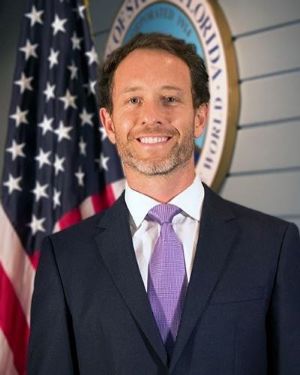 Apparently, Collins no longer needs the commission to help him do his bidding. Don’t get me wrong the Boss needs to hold on to his Politburo to make his actions legal, but he doesn’t even pretend that he acts in coordination with them.
At the last commission meeting I didn’t catch something at first. About 20 minutes after the meeting started, Collins announced that the interim city manager, Boglioli, was being replaced by the Director of Human Resources. When Boglioli was asked by Commissioner Rich if he had asked to step down from the position, 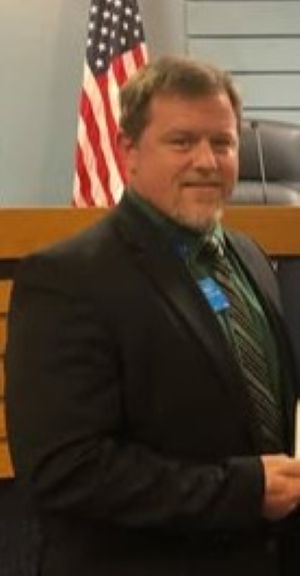 Boglioli answered no. So why was Collins pushing him out without first speaking to the rest of the commission at the meeting?
Regardless of the glowing statements from Reed and Giobbi, it was clear that he was being pushed aside and quickly. Clarke and Rich were taken by surprise, which was obvious by their facial expressions. Were Reed and Giobbi equally surprised? I don’t know if they knew beforehand, but they quickly fell in line. If they knew prior to the meeting, that would mean Mayor Boss Collins and the Politburo were in communication off the dais which would be in violation of sunshine.
If it were Collins’ idea alone, then when did he approach Boglioli and in effect fire him? Who authorized him to do so when it was a commission decision to hire him a few months earlier. Who authorized the Boss to reach out to the HR Director? When did Stuart change its form of government from a “weak commission and mayor” to a strong mayor? That is easy to answer…the minute Collins became mayor.
It is obvious that just like Mortell before him, Boglioli was refusing to tow the Collins line. He needed to be replaced before other things came out that would be in contradiction or even embarrassing to the Boss. Boglioli, as the Finance Director, knew where all the bodies were buried, including how expensive Collins had made running the fire department. And the HR Director is ill equipped to stand up to the bully tactics of the mayor on the dais. Boglioli is not such a pushover.
Mayor Boss Collins is firmly in control.
I have always been a supporter of Stuart Fire/Rescue Services in the past.
 The last time “consolidation” was proposed, I was a commissioner and along with former commissioner, Troy McDonald, fought it vehemently. With the help of Budget Director Louis Boglioli, we showed where the study Martin County was using was flawed. It was also obvious that for the residents and taxpayers of Stuart, our own department was several mills cheaper than Martin County.
I have been following the increase in hiring in the department over the past few years. With the additions, there are now 78 FTE according to Mr. Boglioli who I met with on Friday, January 9th. The purpose of that meeting was to discuss the increases that have added as many as 24 employees since 2024. He said he would get back to me with confirmation of those numbers. Since then, Collins has removed him as interim city manager.

It is my understanding that most of the additional employees have been hired because of Boss Collins believing that he would receive some political benefit in his race for county commission later this year.
Through a public records request, I obtained a series of emails from the interim manager to the commissioners. In a November 23rd email addressing concerns with Tallahassee’s upcoming session and their proposed real estate tax changes, Boglioli brought up the fact that Stuart Fire/Rescue was now more expensive to the residents than the county MSTU.
The pertinent paragraph reads as follows:
“One issue we need to address is a new reality of providing services in a reduced environment is what services we can reduce or consolidate without a noticeable change in service to the citizens. The most notable is our Fire service. For many years it was cheaper for us to provide the same level of service (in some instances better) than the County. The County charges 2.6XXX mills for fire service. However, our 2026 Fire budget (not actual) now represents 3.1 mills at $12,054,538. And with the upcoming addition of capital outlay for the 3 new apparatuses, and their debt service, the fire budget increases to over $15M, which is 3.9XXX mills (to put that in terms, our $16M of Ad Valorem we get to spend, Fire would be $15M of that; Fire would be 4 mills of the 4.9 mills we are charging). That is before any union negotiations concerning staffing, pay, benefits, or additional equipment. This does not include the 4 new firefighters we added to the 2026 budget. I am researching some additional revenue sources and will report on my findings before we begin the budget process as some of the scenarios would require action sooner, rather than later.”
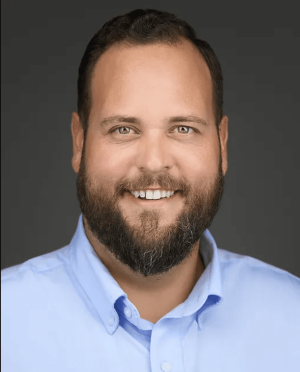 Without any doubt the commission knew of the seriousness of their budget predicament last year. Reed in a post on Facebook and on a subsequent email from the manager last Friday, claimed to have been broadsided by the revelation. Obviously, he either doesn’t read his emails or doesn’t comprehend what he reads. Of course, the 3rd alternative is that he is just plain lying.
Boss Collins must have been furious with Boglioli for broaching the subject of Fire expense. He has sold his soul and the city’s financial future to his fire buddies in the misguided belief they will somehow help in his county election. Keeping this secret is the only way he can navigate his election chances. He has utterly destroyed the city’s finances.
 After meeting with me on the 9th, Boglioli thought it prudent to once again write the commission regarding our meeting and to address all the chatter on social media. He said in the email that he was writing more as the Finance Director than manager. I quote:
“Then today I took a meeting with Tom Campenni, and the content of the meeting was about the 2026 budget, the size of the Fire department, their staffing levels, and how the cost is represented in the millage. I am the actual individual who dispelled the previous attempts over the last 30 years to consolidate fire because it did not make sense for the City, and those same factors are flipped the other way. I shared only the same public information that is available in the budget, and in public record emails.”
Before meeting with Boglioli I had already had the facts and figures available for any citizen to find. I wanted to meet with him strictly to confirm what I had in my notes before writing the story. I hold him in high regard and a straight shooter. We have in the past been on Florida League of Cities panels together, and he is well respected as a finance person throughout the state if not beyond.
My story was originally going to be about whether it was time to have Martin County provide fire/rescue for the entire county. That is obvious if it now costs 4 mills or more when the county is charging 2.6376. The savings to Stuart taxpayers would be 1.5 mills plus the fire fee. That could be thousands of dollars for some taxpayers per year.

This is just math. Perhaps to Collins and Reed 2+2=6 but to the rest of us it is still 4. The explanations for their behavior could be Reed just might like to ride around on a fire truck with a hat on. Collins is ripping off the taxpayers of Stuart for his own political ambitions.
Is that what you voted for?
The last thing Boss Collins put in place at the commission meeting was the qualifications for the city manager position.
 In my recollection, each of the past city managers had an advanced degree, either a law degree or a Masters. Boss Collins, with his three plus years as a city commissioner, decided that it wasn’t necessary. Also unnecessary was being a credentialed manager, having experience as a past manager, or for that matter living within 15 miles of Stuart’s borders for the first two years.
Even though the ad states you need a minimum of 4 years senior management experience in municipal government, I am sure for someone that the boss likes any old 4 years of experience would be enough…even a Doged federal employee who  never worked in a city anywhere.
And to ensure that the best possible candidate will skip Stuart’s current vacancy, Mayor Boss Collins dropped the salary to a range of $195,000 to $215,000. For context the average manager salary in Florida is $235,000 plus the perks. Who do you think is going to bother looking at the position when both the manager and interim manager were fired for not kissing the Boss’ “you know what”?
There will be unqualified people submitting resumes because running a city that has both fire and police is not an easy job. The city needs someone with experience of doing so in a smaller municipality before taking on being Stuart’s manager.
I believe Boss Collins already has the candidate and by making the qualifications so underwhelming and the pay below market, his guy can walk right into the position. The rest is all show.
You can see the job posting and qualifications here.
In the Boss Collins revenge tour, it was decided that Paul Nicoletti needed to go.
When the commission hired him as the interim attorney a few years back, you would think they snagged a municipal law Clarence Darrow. The praise, including Collins, was effusive. If you notice if Collins praises you the axe and gibbet are not far behind.
 I thought at the time that Nicoletti went on too many vacations to effectively represent the city during the interim period. It wasn’t his legal skills, which are very good, that I wrote about but the time away. As the former city attorney and manager, he was very capable and competent.
He did make one mistake…he got on the wrong side of one of Chris and Reed’s top advisors which made him a marked man. For if there is anything that the Boss and Politburo know, it is to appease “She Who Must Be Obeyed” as that “Old Bailey Hack,” Horace Rumpole, Barrister, would say in the “Rumpole of the Bailey” books.
Nicoletti had become the city’s magistrate. As such if a property owner runs afoul of the code and does not correct the situation, they can plead their case before the magistrate. Not a big deal but whoever is the magistrate needs to know city codes. Paul Nicoletti knows city codes inside and out. The Boss now Mayor Boss and “She Who Must Be Obeyed” carried the gibbet and the axe and wished Nicoletti a fond farewell.
That left the position open. There were two contenders. Attorneys Gemma Torcivia and Brett Lashley. Both are now alternates.
 Gemma Torcivia
In the past, picking a magistrate would have been on the consent agenda. The city attorney and manager would have handled it and presented their pick, and the commission would have endorsed it as routine. Besides, what expertise do commissioners have to make a good decision in this matter? But in the world according to Mayor Boss, he decides. And you had better conform to what he considers an acceptable look as an attorney.
 Brett Lashley
There was no material about Torcivia and Lashley in the packet. No bio, no photo, what their experience is, no information whatsoever. They could have included the fictional barrister, old Horace Rumpole in the mix without question.
 Since nothing was included, let me do so here for public edification. As you can see both are qualified. Though I don’t know how the commissioners would know. Reed, as we all know, “does his own research.” I bet he could tell the other commissioners the candidates’ alma maters.
The one thing that would impact my vote and I am sure yours as a taxpayer would be how much their hourly rate is. Lashley’s is $350 and Torcivia would charge the current rate of $200. Looking at their experience, I would even say that Gemma has more municipal experience. She currently is the attorney for among other governments such as Ocean Breeze and Okeechobee County.
Who do you think the Boss and Politburo picked…Lashley.
Look at the applicants’ two photos and that is all you need to know about why the taxpayers are paying twice as much for a qualified applicant than they need be. Mayor Boss Collins knows what lawyer he wants and the taxpayer pays the price.
If you are a friend or a friend of a friend, you can have any rule bent if you know the right person…Boss Collins. He now has reached down to bend police policy to accommodate the wife of his CRB appointee.
The former police chief made a bad deal to provide SROs for St. Joseph’s and Holy Redeemer schools. The city loses money by not being compensated adequately besides the loss of two officers to other duty. Because it is considered such a plum assignment, there is a waiting list of officers to become SROs.
Chief Tuminelli put in place a policy where a new officer would be assigned to the cushy job every few years. When our new chief found out he was ready to follow the policy and assign a new officer to Redeemer Lutheran as he did at St. Joseph’s. That is when Mayor Boss Collins stepped in because of a touch by Frank McChrystal to help out his wife, the principal, who wanted the School Resource Officer, Jordan Grose to remain.
I don’t have a problem with trying to accommodate friends but look at it from the officers that were waiting to take their turn for this plush assignment. It is a great assignment for Grose since I have been told his own kid attends the school. When the child graduates will the SRO then leave?
If the taxpayers are losing money, then isn’t it time to stop this nonsense when the contract is up? Or will Collins do to the police department what he did to fire and make it too expensive to keep.
What Collins did was put his finger on the scale for his swamp buddies. If you know the Boss, you can get a favor. Cross the Boss and you are out in the cold.
Is this what you voted for?
During the Sewall’s Point Special Commission Meeting, the focus was on approving contracts for construction work tied to grants.
If you live in Sewall’s Point, you should be very happy with the amount of money that has flowed here to do work from grants. Joe Capra, the contracted engineer for the town, has procured millions of dollars. It is for infrastructure projects from raising roadways, to sewers, to outfalls.
If the town has spent any of its own tax money, it has been very minimal. If you are a Sewall’s Point resident and taxpayer, you should be jubilant. But is it right to take so much state and federal money if you are as affluent as this town purports to be?
I have heard one of the current town commissioners rail against grants in other circumstances. He believes that it is still taxpayer money that is being spent. No one can argue with that assessment. It may not be Sewall’s Point doing so through their property taxes, but it is tax dollars never-the-less.
How does that same commissioner square his belief that grants should not really exist and his voting to accept millions of dollars in grant funding? I believe grants are important and, yes, all government spending needs to serve a public purpose. Sewall’s Point does spend tax dollars on a public purpose.
Another question to be considered is whether so much tax dollars should go to such an affluent community? The town is certainly no Jupiter Island or even Sailfish Point, but it isn’t East Stuart or New Monrovia either. Is it fair for those communities to compete with this much wealthier and more connected area for limited resources?
There is the question of why the outside taxpayers are paying to keep this town literally afloat. With rising sea level, is it best for our environment to try to keep water from intruding by propping up what may become something that shouldn’t exist. While it isn’t a barrier island, it does front the Indian River Lagoon.
Don’t get me wrong. The commission and town are fighting for what they perceive to be best. For the rest of us, I am not so sure. I certainly believe that it is time to send grant money to other places that do not have the ability to fund projects the way Sewall’s Point could.
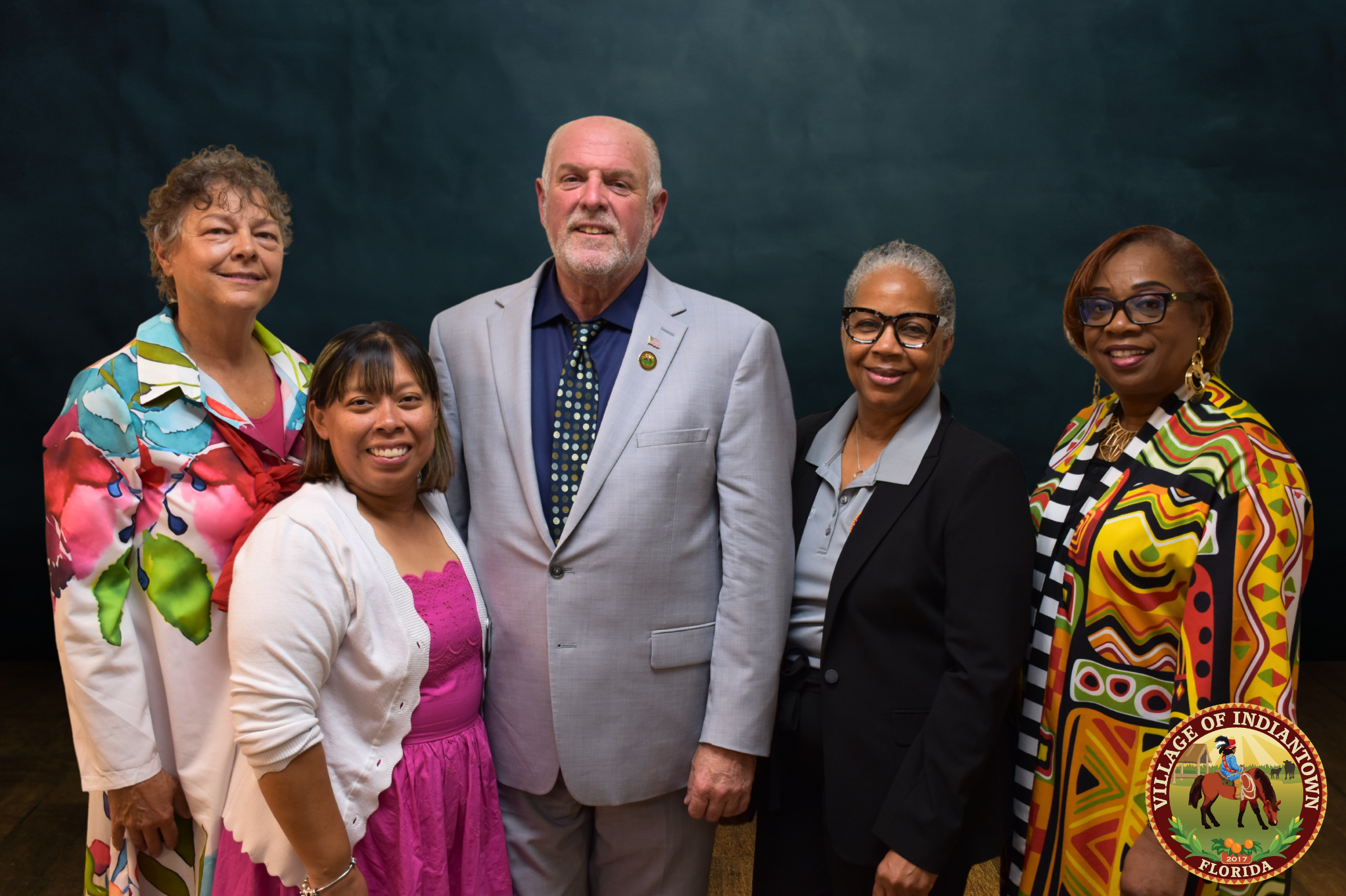
Taryn Kryzda, Village of Indiantown Manager
On January 6, 2026 Martin County Board of County Commissioners approved a joint venture for advanced waste residual processing and beneficial use recovery, in short a sewage-sludge (sludge) hauling and processing contract. Synagro South LLC, a nationally recognized sludge hauler, and Sedron Technologies who has developed an innovative Varcor system utilizing a mechanical vapor recompression process to essentially remove moisture from the sludge creating safe land-based or non-land-based solutions for sludge disposal. Another huge environmental benefit is the mitigation of forever chemicals: polyfluoroalkyl and perfluoro octane sulfonic acid substances (PFAS and PFOS). What this will provide is a new, lower cost, location for bio-solids, septage, porta-potty and FOG (Fats, Oil & Grease) disposal. With the development of septic-to-sewer programs, the waste byproduct of sewer systems needs to be addressed.
Why is this exciting for Indiantown? Sedron has secured a lease with I-Town Rail for 14 acres on property within the Village boundary. The location is referred to as the ‘Old Juice Plant’ previously owned and operated by Louis Dreyfus Citrus. The total site is roughly 77 acres of Village industrial property that has been repurposed with varying businesses and manufacturing companies. The economic impact for the County and Village with Sedron’s commitment will be over 150 construction jobs, once operational about 25 long term green-economy jobs, an estimated $2.6M in tax-based revenue for the County, School District, and other taxing authorities, and the Village realizing a tax benefit of almost $300K per year in new tax revenue.
Kudos to the Board of County Commissioners for recognizing this processing technique is necessary and environmentally safe and beneficial. Anticipated restrictions from the Legislature on how sludge can be processed or stored will escalate the price of managing sludge in the future. This ten-year agreement (with renewals) will provide the County and other entities with the ability for stability and predictability in how sludge is hauled and processed and the cost to do so. The County annually manages about 8,000 wet tons of sludge per year. The Varcor system will have the ability to manage over 330,000 wet tons, thus, allowing for regional positive environmental impacts throughout south Florida. Presently, most hauling trucks are traveling to our north, through Indiantown, to dispose of their sludge. Having the processing plant more centrally located and access from SR-710 will divert those trucks to a facility within a shorter distance, hence reducing carbon emissions and transportation costs.
Martin County has been a leader and tremendous example of great environmental stewards, and the taxpayers have been willing to tax themselves to address environmental concerns. Having this technology provides a holistic solution that solves nutrient pollution by stopping the land application of bio-solids while simultaneously producing renewable energy and providing the Florida agricultural industry with precision, climate-smart, nitrogen fertilizer or the ability to combust the dry Class AA Biosolids as renewable cement fuel. The Village is proud to host this type of processing facility that will be the first in the State of Florida, but surely not the last. The Village anticipates groundbreaking in the next month and is excited to see this project, which has been discussed within the County since 2018, finally come to fruition in Indiantown.
Two things about Indiantown amaze me.
First unlike Stuart which is in a death spiral, Indiantown is showing what being a city is all about. It is about diversifying your income stream, looking for jobs for your residents, and lastly making things better. The annexation and re-zoning of 5722 acres for FPL will accomplish that.

 The more that Karen Onsager speaks and tells us why she votes in a certain way, the more I like her. She doesn’t equivocate in what her position is but explains it in plain English. In some ways, she reminds me of Martin County Commissioner Blake Capps. He lays out his rationale and then votes.
I am also coming to appreciate Vernestine Palmer in how she addresses an issue. She is not as plain spoken as Onsager, but in the end, she follows the Indiantown codes and state statute. It just takes her a little while longer to get there.
Deena Freedman, the village’s development director, thoroughly explained why the voluntary annexation should be approved since it met what was required by state statute. If this were another jurisdiction like Stuart, sense, logic and especially following the law would have no bearing. In Indiantown they certainly do. And I believe much of that is due to Mayor Dipaolo, Council Members Palmer and especially Onsager.
At this juncture, FPL was asking for two things. The first was the annexation and the second was a mandatory rezoning from the three different county zoning categories that are incompatible with Indiantown’s. There was no talk from the company about what eventually would go on the property and how much of this vast acreage would be ultimately developed. Freeman stated that they would come in with their site plan under a PUD in the future.
Separate motions for annexation and rezoning were made by Onsager and seconded by Palmer. They passed 5-0.
The 71 single-family home project on 10.87 acres is in the heart of Booker Park on Charleston and SW Farm. It is in an established neighborhood, that at one time included both businesses and residential uses. It has been a vast stretch of open space for years used by kids and adults as an unofficial park.
Though it might seem that it is quite dense, it is far below what the comp plan allows. The proposed density is 6.5 units per acre, and the code allows for 15 units per acre. Even though people spoke against going forward, they offered no concrete evidence to vote against the project. As Waters Brown stated, the project meets code.

It looks to me that the homes will be about as affordable as homes can be today. This is similar to the Sea Walk project in Ocean Breeze. I hope they don’t suffer the same fate. Sea Walk in Ocean Breeze is an example of a project that can have quite a bit of trouble with their builder/developer. D.R. Horton, the country’s largest single-family builder, is the company on the two developments.
Things are caught when the town building inspector is the one approving the work. Under Florida Statute 553.791even as part of a PUD agreement, a builder cannot be forced to use local government inspectors to approve the work. DR Horton hired their own inspectors and that was where things began to fall apart at Sea Walk. After several years, Ocean Breeze, the homeowners and builder are just working things out now.
If anything, this would be the downside to this project. However, you cannot deny it because of trouble with another project. Onsager once again spelled it out quite clearly that there are land use regulations and the developer is meeting those. Waters Brown hoped they would meet with individual residents. It was approved 5-0
We saw that not much fraud, abuse, and waste were uncovered with the federal government’s DOGE efforts. I don’t know whether the same can be said of Florida local government.
 Blaise Ingoglia, Florida Chief Financia Officer, claims he has so far found $1.86 billion in alleged wasteful and excessive spending through his local government audits. He has had legislation introduced which would allow for a penalty of $1000 a day if a local government fails to comply with a request from his office on time. There is also a provision that his department could withhold state funds until the locality complies.
If it is found that local officials have committed “financial abuse,” they could be removed from office. The CFO could recommend removal if he finds an official has committed malfeasance, misfeasance, or financial abuse.
Earlier this year, Attorney General James Uthmeier threatened removal of some local officials for not signing what are known as 287(g) agreements with the state. Those agreements make local police agencies arms of ICE. The state also passed a law that requires local governments to help in enforcement of immigration laws. By not carrying out the statute, elected officials are not obeying the law. The governor has not been shy about removing local officials for not complying with their oaths of office.
 This is an unprecedented assault on home rule if you look at it from the local official’s part. However, there has been a refusal on the part of local officials to comply with state statutes. Local officials may disagree with a statute, but they do not have the right to ignore one. That is what is going on in Stuart.
Collins, Reed, and Giobbi enacted new codes in violation of state statute. The debate isn’t whether their new codes are good or not. Their enaction is in violation of the statute. What they have done is violate their oaths of office. Further, by using a code that was not properly enacted, they are further violating state statutes.
No government official should be able to ignore the law without paying a consequence. Collins and his Politburo took an oath to obey all the laws of the State of Florida not just the ones they agree with. The governor has more than enough evidence to remove the three of them.
We can debate the efficacy of the code changes. What can’t be debated is whether the changes are legal under Florida law or not. As it stands right now, they are not and therefore the code being used is illegal. That alone is enough grounds for removal.
IF YOU ARE NOT A SUBSCRIBER DO SO FOR FREE HERE www.friendsandneighborsofmartincounty.com
GET THE WORD OUT
Friends and Neighbors of Martin County is your eyes and ears so that you know what is going on in Martin County’s municipal and county governments. I attempt to be informative and timely so that you may understand how your tax money is being spent. Though I go to the meetings and report back, I am no substitute for your attending meetings. Your elected officials should know what is on your mind.
Tom Campenni 772-341-7455 (c) Email: thomasfcampenni@gmail.com
Other Articles
Florida Phoenix: "Court rules Florida Medicaid termination letters fly in the face of federal law"
The Economist: "Europe's generals are warning people to prepare for war"
The Wall Street Journal: "As Signs of Aging Emerge, Trump Responds With Defiance"
CT Capitol Dispatch: "In Focus: How Private Equity Drives Up Housing Costs"
The New York Times: "Nostagia in Denmark as Main Postal Carrier Ends Letter Delivery"
TCPalm: "Will Martin COunty get any input on proposed slaughterhouse project?"
Washington Post: "ADHD drugs work, but not the way experts thought"
The Economist: "The titantic task of catering on crusie ships"
Walt Street Journal: What Your Waiter Really Thinks of You"
Copyright © Jan 16, 2026 Friends & Neighbors of Martin County, LLC., All rights reserved.