






We are now one month into the War with Iran.
As of today, I still don’t know a rationale for being there. The president has yet to make his case to Congress or the American people. That is no way to get buy-in.
 Unfortunately, President Trump doesn’t care about what allies feel. Congress is as much in the dark as ordinary citizens only with a briefing that tells what is going on not why. And why is the one thing we all need to know for this to be sustainable and Americans to be willing to sacrifice…even a little.
Trump talks to the press all the time. It is usually gibberish and mostly lies. What he says at the beginning of an interview about something can and often will be contradicted by him by the end.
When he brings the country to a war costing us $2 billion per day, he owes it to us to tell us why. Not bombastically but the plain simple truth without blaming Biden, or England, or going off topic. How I miss those Oval Office addresses of other presidents.
 We have our columnists including David Hafner, Stacy Ranieri, Frank Valenti, Bill West, and Andy Noble. Our resident MDs, Michele Libman and Louis Velazquez, explain mind and body. Our newest columnist, Brent Hanlon, reviews Lynora’s in Palm City. The Martin County Taxpayers Association has Part III on real estate taxes.
Sit back, have another cup of coffee, and settle in with this week’s edition.
Have a great Sunday Morning!
You hear this constant buzz about Americans choosing to live elsewhere.
Portugal and Spain are the two countries receiving the most chatter by people including how inexpensive it is to live there as opposed to other countries. They offer a more sensible approach to daily living than what we are seeing in the U.S. right now.
 Throughout my life, I have thought about what it would be like to be an expatriate. I first became aware of Americans living abroad because of reading Ernest Hemingway in high school. It seemed kind of glamourous having a little Paris garret and drinking in cafés while writing a novel.
In some respects, most other first world nations have a better social system than we do. Years ago, when I was a member of a Lion’s Club in East Harlem, a lion from a Rome Italy Club visited one of our meetings. I was the only Italian American since the rest of the members were Hispanic, so I took our visiting friend on a fast-paced car tour of NYC seeing 4 boroughs and skipping Staten Island. We did it on a Friday night from 11pm-3am.
 Just as I had been impressed each time I was in his city, his eyes lit up as we perused Times Square of the early 1980s, Yankee Stadium, and the New York Skyline from Brooklyn Heights. I bet he too was asking what it would be like to live here.
About a decade ago my wife and I were in Paris. Every day we walked for countless hours trying never to see the same streets twice. I don’t know whether we could do it today, but I bet we would give it a try.
Another time when in Prague, we became not lost but bewildered. As we ventured further from the Charles Bridge, all I kept saying was we will just follow the Vltava River, which runs through Prague back to our starting point. We saw little neighborhoods, schools, and even a university no tourists would ever go through.
This was the days before the ubiquitous phone with maps leading the way. It was sort of just charming to do what we did. All the while in Prague or Paris, Rome, London, and dozens of other cities I have been to throughout the years, I have also asked myself whether I could live there.
I don’t ever think I was afraid to walk the streets of any city whether in the U.S. or abroad. I remember wandering in a few places like New Orleans where I felt momentarily uneasy strolling in some places, but it was the exception rather than the rule. San Francisco and Charleston too are great cities to wander around soaking up the sites. I thought I could live in any of those cities.
 My wife grew up in Niagara Falls. The housekeeper her parents employed lived in Canada right across the border. She would come from Canada every day to their home and then back. My wife would go back and forth as if the two cities bearing the same name were in the same country. As a teenager she would take the train to Toronto, a distance of about 80 miles to shop.
When we once vacationed in Toronto, I could see why it often stood in for an American city in films and television shows. Like New York, English is the official language but so many others are spoken on the city’s streets. We again wandered the streets. I said to myself I could live here.
I have lived in three states in my entire life, New York, Connecticut, and Florida. When I went to college for both my undergraduate and graduate degrees, I stayed in the city of my birth. Before I chose Fordham, I briefly thought about Seton Hall in New Jersey but then thought I didn’t want to travel that far. St. John’s in Queens was my backup school.
For 60 years, I thought I could live anywhere. Maybe I could have done so. I just didn’t. In this era where Americans are at least thinking of another country to live for either political or social reasons, how many will leave?

As I grow older, I want to be closer to family. Family dinners are becoming more important even if by the end of them, I just want to retreat to my recliner. When I was in Connecticut a week ago, my son came and we went out to eat together. To see my older daughter and her husband, we drove to Brooklyn to have a leisurely Saturday lunch. We see the youngest who lives a mile from us all the time and are mostly happy about it.
I could (at least in my mind) live anywhere. I choose to live here.
In 2025, more people emigrated from the U.S. than immigrated. The Trump administration’s plan has been to deport people and allow fewer new immigrants to come to the country. That plan has certainly proven true.
What also is true is that American citizens are leaving in record numbers. Not since the depths of the 1930s Great Depression has this rate of emigration occurred. There are now millions of Americans choosing to work, study, and retire in a foreign land.
 In some parts of Dublin, there is currently a higher percentage of Americans living than there were immigrant Irish residents in New York during the great migration which occurred after the famine of 1848. What is making this possible regardless of reasons is the value of the American dollar. Especially for those expatriates who are working remotely for U.S. companies and are still being paid as if they lived in the more expensive states.
Many Americans, especially those that are earning dollars, can have the foreign lifestyle without the American hassle. Health care is relatively inexpensive as compared to its cost in the U.S. even if Americans must purchase coverage. Communication is relatively easy since English is a universal language especially in business.
 The Association of Americans Residents Overseas, a nonprofit, states that there are now more than 1.5 million Americans living in Europe. Canada puts the figure of Americans living in their country at 250,000 and Mexico has 1.6 million Americans residing there. More Americans moved to Germany in 2025 than Germans to the U.S. It seems Europeans are not likely to leave their continent where healthcare, education, social services, and daily life in general is so much easier in order to move to what they consider a difficult life in the U.S.
 It isn’t just seniors, students, and childless couples making the move. Because there are so many more jobs and small businesses that can operate remotely, entire families are leaving America. For parents, too many of their young children face active shooter drills for America to feel safe. According to many emigrants, the quality of life is just higher in Europe.
Another factor is our politics. Europe is more democratic than the U.S. Their nations are more cohesive, and it seems socially fairer as compared to the oligarchy that is emerging in the United States. One thing that both the U.S. and Europe have are too many unproductive residents. Working age populations are shrinking.
 The difference is Europe recognizes the fact that they need more immigrants while the U.S. has embarked on just the opposite approach and are shoving productive immigrants out the door. As more of America is turning against science, embracing oligarchy, and gutting social services, there is a subset of U.S. citizens saying enough. Some Americans simply want to live in a civilized society.
U.S. colleges are turning away and not attracting foreign students because of how hard it has become to attend. Europeans are not only staying home, but American children already living in European countries are choosing to attend universities there. That is an entire generation of Americans who will call Europe home. They will continue to live in their adopted countries, start families, work and have jobs disconnected from the United States.
The World Travel & Tourism Council (WTTC) projects a reduction in spending of $12.5 billion in 2025 over 2024 in foreign travel to the U.S. The U.S. is the only nation of the 184 economies that the WTTC studied where 2025 foreign tourism spending declined. The U.S. Department of Commerce shows that inbound foreign travel has dropped significantly.
The UK, our most important European market, was down 15%. German travel plunged by 28% with South Korea at a 15% loss. Canada, our largest tourist market, is down over 20%.
Canadians are also one of our largest foreign owners of real estate. Because of our threats and unfriendliness, Canadians are selling their properties in the U.S. bringing down the values in many areas of states such as Florida and Arizona.

In 2024, travel and tourism contributed $2.6 trillion to the economy and more than 20 million jobs. The WTCC estimates that $585 billion in tax revenue comes from tourism which is 7% of all government income. They also predict that with America’s position as a top global destination shrinking, there will be similar reductions in trade, culture and business income.
It is our policies such as Trump’s threats against Canada and Greenland that is causing the reduction in the number of foreign visitors to the U.S. We have also detained tourists at the border, incarcerating a few visitors for days and weeks without justification. The U.S. may also roll out a program that scrutinizes the social media profiles of visitors before they are allowed to enter the country.

Because of ICE’s policies and gun violence, countries such as the UK, Germany, and France have issued travel advisories to their citizens about the U.S. Countries like Denmark and Finland note potential issues with gender markers in passports. Even Melania Trump’s homeland, Slovenia, has issued an advisory for their citizens travelling here. Gun crimes and mass shootings are often cited as a problem. Japan has identified hate crimes, race, sexual orientation, and religion as reasons to avoid our country.
What happened? The United States and a subset of our citizens have become a more crass, violent, and intolerable place that many 1st world nations equate to 3rd world nations. Tourists want a place that is safe and inviting to spend their money. They don’t want the intrusiveness of the state perusing their laptops and phones in order to go to Disney World or the Grand Canyon.

The America of democracy, civil rights, political freedom, and capitalism is no longer recognized by the nations of the world as part of the American core. We have gone from a beacon of light to a nation on the cusp of moral and political darkness. This is what the meaning of America is to the world.
Most Americans are too close to recognize the state of affairs that the U.S. has become. We call other countries derogatory names yet, are we worse? If you compare our society to Haiti, then of course we are not worse. What about comparing Denmark or Germany or Italy to America? How many want to immigrate to the U.S.? How many Americans are emigrating there? In some instances, more Americans are leaving than Europeans coming here.
Tourism is how others get to know our country. Going to the Liberty Bell or Washington D.C. is a learning experience. So too is being given a hard time when going through passport control or customs. Bad experiences always trump good ones. And those bad experiences are increasingly happening.
People’s views on many things are colored by when and where they were born and raised.
 Many of us think of the U.S. and Europe as having a common tradition. Marco Rubio said as much recently in a speech. He believes it is a bastion of folks who are Christian and White. That really was never the case in America, but it was more or less true in Europe. However, now there are fewer Europeans today that fit that description than in the past.
Since World War II, more Europeans have become Black and Brown. The former colonials are now colonizing the motherland so to speak. Their languages, cultures and customs are now as German as sauerbraten, French as wine, and English as fish and chips.
 Germany has 5.5 million Muslims with about 3 million holding German citizenship. France has about 6 million Muslims comprising about 10% of the population. Great Britain has more than 4 million Muslims which is about 7% of the population. That doesn’t include any other ethnic groups such as Hindus or Chinese.
The only way you can absorb and make immigrants become members of the nations in which they now live is by incorporating their traditions with the nations’ own. In many cases, that is what has happened either intentionally or organically. There is no way you can have an alien population living in a nation’s midst unless that happens. Israel’s failure to absorb the Palestinians is an example of how a nation can be constantly at war with not only external forces but internally.
 The United States was once very good at taking immigrants and making them Americans. That was before we as a nation became afraid of those who had a different color, language, or religion from the majority. We forget that Germans, Irish, Italians, Poles, and many others were considered inferior before assimilation into our country.
As a preceding companion article this week, we see that U.S. citizens are striking out to live in other countries. It is the biggest emigration since the Great Depression. Those emigrants, who will be considered immigrants in their places of arrival, are more fortunate than most. Less wealthy Americans don’t have the means to leave the U.S.
What is occurring is, if not a crisis, then a problem because most emigrants are our brightest and richest Americans. We have gone from a land of opportunity for all to being seen as one that is more sinister and darker. Some may think good riddance, but that is not what our Founders would say. They would think it is a tragedy and a stain on what was our American birthright.
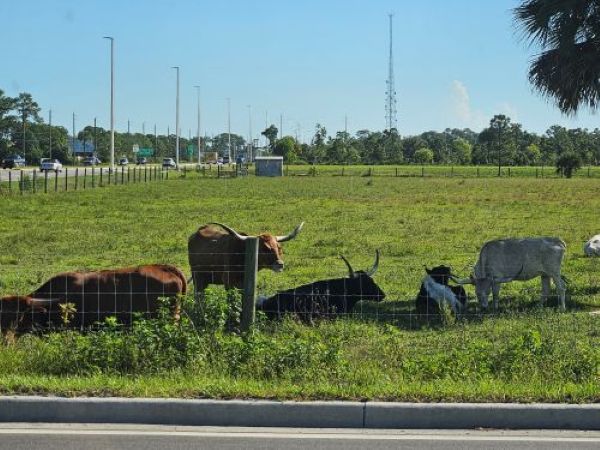
Across Martin County you will still find stretches of open land with cattle grazing, row crops, nurseries, and equine facilities that remind us of the area’s rich agricultural roots. But look a little closer, and you will notice something else: new developments pushing further west, more traffic on once-quiet roads, and familiar landscapes beginning to change.
 Growth is part of living in a desirable place like Martin County. People want to live here, raise families here, and build businesses here. But as our community grows, we face an important question: How do we grow without losing what makes this place special?
Agriculture has long been a cornerstone of Martin County’s identity and economy. Local farms and ranches do not just produce food, they preserve open space, support wildlife, and maintain the rural character that so many residents value. Yet development pressure is putting that farmland at risk.
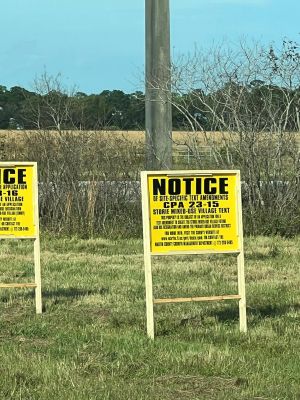 Across Florida, millions of acres of agricultural land are projected to be converted to non-agricultural uses in the coming decades. Here at home, that pressure is especially real as development expands westward into traditionally agricultural areas. Once farmland is developed, it rarely returns to production.
But one of the most important, and often overlooked, truths about farmland loss is by the time you see a “For Sale” sign, it’s often too late.
Farmers and ranchers rarely make the decision to sell overnight. It is often the result of years of financial pressure, rising land values, increasing taxes and regulation, development encroachment, and the challenges of staying profitable in a changing economy. If we want to preserve farmland, the time to act is not when land is listed; it is long before that moment ever arrives.
Supporting agriculture today is one of the most effective ways to protect farmland tomorrow.
This matters for more than just aesthetics. Preserving farmland helps ensure a stable, local food supply and reduces reliance on food transported from across the country or around the world. It also protects natural resources. Working lands often double as important environmental buffers that help manage water and support native wildlife.
In a county like ours, where water quality and environmental conservation are ongoing priorities, that connection is critical. Agriculture and conservation go hand in hand.
So what can we do as a community right now?
- Support local farmers and ranchers before they are forced to consider selling
- Buy local products and keep farms economically viable
- Stay informed about local land-use decisions and development proposals
- Participate in community meetings and planning discussions
- Encourage policies and programs that help farmers keep their land in production
Martin County has a strong history of thoughtful planning and land stewardship, but maintaining that balance requires ongoing community involvement and awareness.
Growth is inevitable. But the kind of growth we choose will define Martin County for generations to come.
David Hafner’s opinions are his own and may not reflect Friends & Neighbors viewpoint.
Countless pets go missing every year and the experience can be traumatic and overwhelming for families. Fortunately, a simple technological device, roughly the size of a grain of rice, can lead to joyful reunions.
Microchips are implanted under a pet’s skin through a simple procedure that takes just a few seconds, doesn’t require anesthesia, and lasts for the pet’s lifetime. It is a permanent form of identification, and paired with a traditional collar and tag, it forms a strong safety net that gives families peace of mind every day.

A microchip is a radio-frequency identification transponder that carries a unique identification number. When the microchip is scanned by a vet or shelter, it transmits the ID number that is registered in a secure database. This ID number is used to find contact information for the registered pet owner so efforts can be made to reunite the lost pet with its owner.
Beyond improving return to owner rates, microchips help ensure accurate identification. Even if a lost pet looks similar to another animal, the microchip provides clear confirmation of ownership. This can be crucial in situations involving natural disasters, accidents, or stolen pets.
However, a microchip is only as useful as the information tied to it, so it’s important to ensure contact details are up to date at all times. Be sure to update phone numbers, addresses, and secondary contacts, especially after moves or major life changes. Maintaining current information in the chip registry ensures that the call reaches the right person quickly when a pet is found.
The Humane Society of the Treasure Coast microchips every pet adopted from our shelter. During the adoption process, we register the pet's microchip on the 24PetWatch recovery database and add the owner's contact information. We also offer public microchipping for pets adopted outside of our shelter. Call (772) 600-3203 to schedule an appointment. If you had your pet microchipped outside of our shelter and don’t recall who the registrar is, you can key the microchip number into the Universal Pet Microchip Lookup Tool to find the registrar.
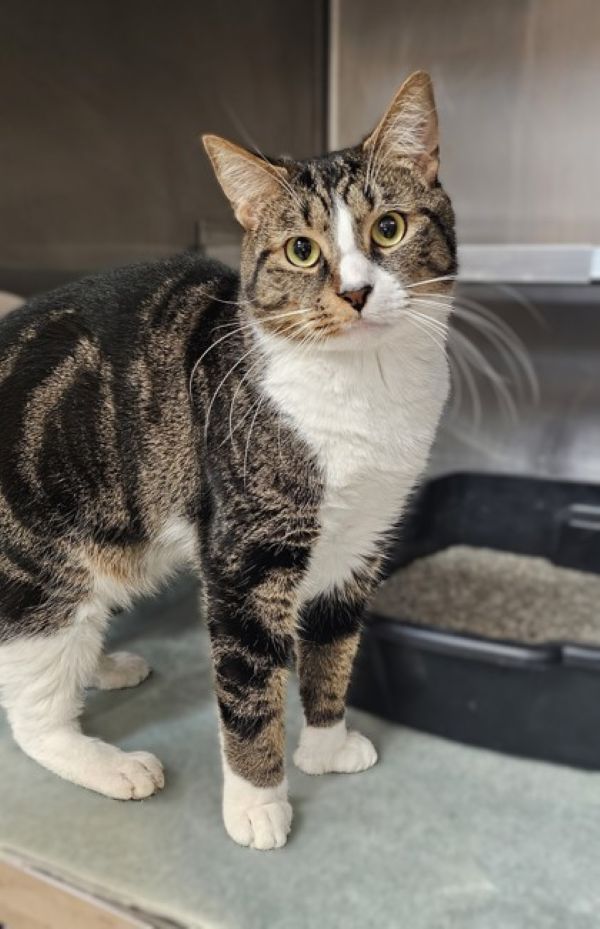
The Humane Society of the Treasure Coast also partners with Martin County Animal Control as the primary holding facility for impounded pets and strays, and we maintain a lost and found registry to help reunite pets with their owners. Anyone who loses their pet is encouraged to visit our shelter and submit a lost report with us and Martin County Animal Control.
For more information on what to do if you’ve lost, or found, a pet, visit https://hstc1.org/LostAndFound. To learn more about our microchipping and other public services, visit https://hstc1.org/Public.
Frank Valente's opinions are his own and may not reflect Friends & Neighbors viewpoint.
Every so often, a community meeting fills up so quickly that late arrivals end up lining the walls or standing in the hallway. You can feel the tension before anyone even speaks and the topic is almost always the same. Something new is being proposed nearby.
A subdivision. A storage facility. A Costco. A commerce park.
And the list of fears and objections is always the same.
Traffic. Noise. Flooding. Water use. Loss of habitat. Pollution. Declining property values. “This will ruin the character of our community.” “This is not why we moved here.”
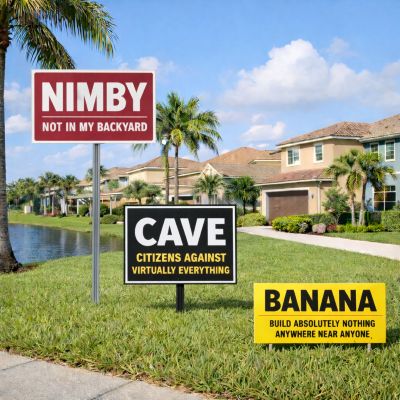 There’s a name for this phenomenon. Actually, several. NIMBY. Not In My Back Yard. CAVE. Citizens Against Virtually Everything. BANANA. Build Absolutely Nothing Anywhere Near Anyone.
The acronyms are amusing because they contain a grain of truth.
What makes it especially complicated in Florida, and in Martin County in particular, is that many of the people raising these concerns moved here themselves. Sometimes recently. They came for our beautiful waterways, the open space, the slower pace and the belief that Martin County is different.
Then, once settled, the instinct and desire is often to quietly close the gate behind them.
It’s understandable. When you finally find your little price of paradise, you want to preserve it. Change feels risky. Uncertainty feels threatening. But communities aren’t static. People keep arriving. Children grow up and need homes of their own. Businesses follow rooftops. Services follow people. Even the most carefully managed counties cannot freeze themselves in time. Nor should they.
There’s also a reality that rarely gets airtime in community meetings where emotions run high. Property rights still exist. If a landowner proposes something that complies with zoning, meets regulations, and checks the legal boxes, local government often cannot simply deny it because neighbors dislike it.
So the more productive question isn’t “How do we stop this project?” but “How do we shape and improve this project?”
In my professional life, I’ve seen what happens on both sides of that equation. I’ve watched neighbors arrive worried and leave cautiously reassured once their questions were answered. I’ve also seen how quickly misinformation spreads when people feel shut out or surprised.
When conversations happen early and directly, projects often change in meaningful ways. Access points shift. Buffers grow thicker. Lighting becomes less intrusive. Environmental protections are strengthened. More public benefits are added. None of those improvements appear by accident. They come from engagement.
When the first interaction is a social media pile-on or a room full of people shouting at strangers, those opportunities shrink.
Most neighbors are not unreasonable. They are worried. They fear being ignored or blindsided. And to be fair, not every proposal deserves automatic trust. Skepticism has its place. But assuming the worst from the start rarely produces the best outcome.
Another uncomfortable truth is that many of the dire predictions never materialize. Property values don’t decline. Communities don’t suddenly become unlivable. Life goes on, often with new amenities, jobs, or services that residents end up using.
None of this means every project is perfect or that growth should happen with no input from residents. But it does mean that blanket opposition can be as unhelpful as blind approval.
So here’s a gentle question for all of us:
Have you ever been a NIMBY, a CAVE, or a BANANA, even just a little?
Have you worried about what something new might mean for your street, your commute, your view, your peace and quiet?
Of course you have. We all have. Caring about where you live is not the problem. It’s a sign of pride and investment.
The opportunity is to channel that concern into engagement rather than rigid opposition. Show up early. Ask questions. Listen. Offer constructive ideas. Treat the people across the table as neighbors, not adversaries. Because in many cases, they are.
Growth is not going away. But thoughtful growth, shaped by informed citizens, can look very different from growth driven by fear and misinformation.
Paradise does not stay paradise by accident. It stays that way when the people who love it most stay involved, stay civil, and stay open to the possibility that someone else might be looking for their own piece of it too.
Do you have a NIMBY story you’d like to share with me? Send me an email at stacy@fireflyforyou.com.
Stacy Weller Ranieri's opinions are her own and may not reflect Friends & Neighbors viewpoint.
Inside our bodies, our cells are in constant communication with each other. They send signals to each other to help coordinate everything from healing wounds to fighting infections. Exosomes are one way of accomplishing this mission!
Exosomes are extremely small bubbles released by cells. To help visualize the size of them, thousands of them can fit across the width of a human hair! Even though they are tiny, they play an important role in how the body works.
Exosomes are like tiny delivery packages that cells send to one another. Each exosome is wrapped in a protective outer layer made of fat, similar to a cell membrane. Inside the package are important biological materials such as proteins, lipids (fats) and genetic information like RNA. These materials carry instructions or signals from one cell to another.
When a cell releases exosomes, they travel through bodily fluids such as blood, saliva, or urine. Eventually they reach other cells and attach to them. Once the exosome connects with the target cell, it delivers its contents. This message can tell the receiving cell to change its behavior, activate certain functions, or respond to stress or injury.
Scientists now believe exosomes play a role in many important processes in the body. For example, they help regulate the immune system by allowing immune cells to coordinate their response to infections. They are also involved in tissue repair and regeneration, helping the body heal after injury.
Researchers are studying exosomes for their role in diseases. In cancer for example, tumor cells release exosomes that can influence nearby cells and even prepare other parts of the body for cancer to spread. Because exosomes carry information from the cells that release them, researchers are investigating whether they can be used as early warning signals for diseases. By analyzing exosomes found in blood or other bodily fluids, doctors may soon be able to detect illnesses earlier and more accurately.
Another exciting area of research involves using exosomes as delivery vehicles for medicine. Because they naturally travel between cells, scientists are looking at ways to put drugs or genetic therapies into the exosomes and send them directly to specific tissues. This approach can make treatments more precise and result in fewer side effects.
You may have already heard about exosomes being used in the fields of aesthetics and regenerative medicine. Plastic surgeons and many Medi spas are already incorporating exosomes into their treatments as they have found them to improve skin health, reduce inflammation and speed up healing. They are also being studied for wound care. While early research is promising the FDA is still evaluating their efficacy and safety profile.
As research continues, exosomes may lead to new ways to diagnose diseases, deliver treatments, and better understand how our bodies maintain balance and heal themselves. Sometimes the smallest structures turn out to be the most powerful!!
Michele Libman’s opinions are her own and may not reflect Friends & Neighbors viewpoint.
A few weeks ago, I had the honor of attending Inc. Magazine’s Vet100 awards at the Veterans Edge conference in Dallas. The conference is put together by Syracuse University’s D’Aniello Institute for Veterans and Military Families. IVMF is a world class business support organization dedicated to those who served.
 The Vet100 awards recognize veteran-founded companies whose growth places them among the fastest-growing firms in the country. Many also appear on the Inc. 5000 list. The founders gathered there represent the leadership and discipline veterans bring into American enterprise.
Across the United States, roughly 1.6 million veteran-owned businesses operate today. Those companies employ about 3.25 million people and generate more than one trillion dollars in economic activity. The companies recognized through Vet100 demonstrate what happens when the habits learned in service move directly into building teams and organizations.
Martin County has our own roster of veterans whose leadership shapes this community every day. Business owners, civic leaders, professionals, and public servants who stepped out of uniform and continued serving through their work.
A few notable names:
- Jim Allen
- Robert Barfield
- Casey Cass
- Cecilia Dayo and her team of veteran leaders
- Mike Dadko
- Monica Dirr
- Jorge Duarte
- Kevin Farrell
- Josh Folds
- Michael Matakaetis
- Brian Mast
- Kim Melzer
- Jim and Tanya Mitchell
- Dr. Tim Moore
- Doug Mustapick
- Paul Nicoletti
- Mike Priest
- David Rosendahl
- Steve Sarno
- David Snyder
- John Snyder
- Ryan Strom
- Tom Whittington
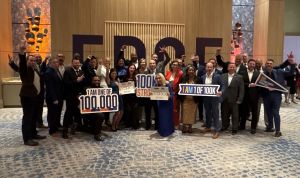 Of course there are many more. Martin County should start its own Vet100 honor role.
To a person, these veterans represent the highest standards of honesty. Each lives by the values learned in uniform and continues to lead with service over self.
I hear we have another veteran joining our ranks. Stuart recently selected a new city manager following a national search. The commission chose Michael Giardino, a Navy veteran who served twenty-six years as a naval aviator and later held executive leadership roles in public infrastructure and airport management, most recently at LaGuardia Airport.
Mr. Giardino understands responsibility. He understands teams. He understands service.
Sir, we welcome you.
Martin County has many veterans who recognize the path you have walked. We are glad you are here and look forward to your leadership.

Bill West’s opinions are his own and may not reflect Friends & Neighbors viewpoint.
For decades, the City of Stuart has built its reputation on thoughtful governance, responsible growth, and a civic culture that balances economic opportunity with preservation of the community’s character. That balance has helped make Stuart - and Martin County as a whole - one of the most desirable places in Florida to live and do business.
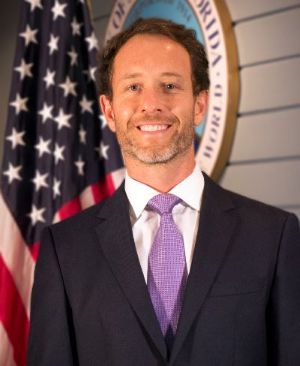 Today, however, the political climate at Stuart City Hall has grown increasingly unstable under the leadership of Mayor Chris Collins. The turmoil surrounding the removal of two city managers in less than six months has raised significant questions about the direction of the city and the current leadership guiding it.
In October 2025, Collins joined Commissioners Shawn Reed and Laura Giobbi in a 3–2 vote to remove longtime City Manager Mike Mortell. The decision stunned many residents and local business leaders. Mortell had served the city for years, yet the dismissal occurred without documented performance issues and with little public explanation. Critics quickly 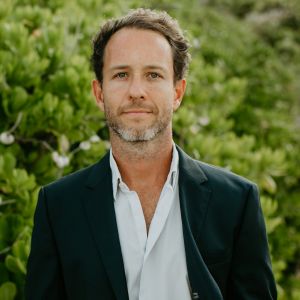 labeled the vote an “ambush.”
Because Mortell was terminated without cause, Stuart taxpayers were required to fund a severance package estimated now between roughly $85,000 and $225,000 on the backs of Stuart taxpayers and businesses.
The instability only deepened afterward. Finance Director Louis Boglioli, III was appointed interim city manager but lasted just 63 days before leaving the position under duress. Boglioli later said he was pressured to step down and alleged that he had been asked to carry out actions he believed were “illegal, immoral, and unethical” while naming Mayor Collins. Those allegations - whether ultimately substantiated or not - should have triggered immediate transparency and an investigation. Instead, attempts to launch a formal inquiry failed when the corrupt commission majority declined to support it.
Meanwhile, the consequences inside City Hall have been profound. Following Boglioli’s departure, multiple experienced finance department staff members resigned. According to Commissioner Campbell Rich, the city lost more than 50 to 60 years of institutional knowledge in the process - experience that cannot easily be replaced.
For a small city of just seven square miles, this level of administrative upheaval is more than political disagreement and abnormal for public offices. It is a governance crisis.
The stakes extend far beyond the walls of City Hall. Stuart sits at the economic center of Martin County, a region experiencing steady population growth and increased investment. Businesses considering expansion, relocation, or redevelopment depend on predictable, professional local government. When city leadership appears consumed by internal conflict and controversy, confidence in that stability begins to erode.
Even more concerning are reports that Chris Collins may be seeking higher office, potentially running for the Martin County Commission as some believe? Given the ongoing controversies surrounding leadership decisions in Stuart, voters across Martin County should take a very close look at the record he’s created and is being created (still) today.
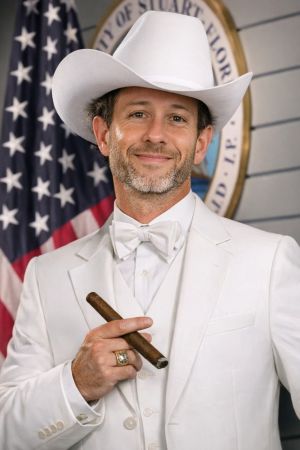 Effective leadership carries responsibility - not just to supporters, but to the entire community.
At a moment when Stuart much needs stability, transparency, and professional governance, the city instead faces deepening division, fiscal uncertainty, and an obvious lack of economic growth since this trio hijacked the City Commission (Collins, Giobbi, and Reed). For the good of the broader community and the credibility of its established institutions, Mayor Chris Collins should seriously consider stepping aside and allowing Stuart to move forward under leadership capable of restoring trust. Damage has been done – and I don’t believe Chris Collins cares nor has an interest long-term in Stuart as much as his own delusional aspirations in Martin County politics – God please help us all!
The future of Stuart - and the broader trajectory of Martin County - deserves nothing less than what it’s received from this historic failed leader.
Andy Noble’s opinions are his own and may not reflect Friends & Neighbors viewpoint.
Epigenetics is the study of genetic information encoded in DNA and how it can be driven by environmental, behavioral, and biological factors to result in alternate expressions of the same genetic code. The influential factors can include nutrition, toxins, stress, and stage of life. According to the Centers for Disease Control, these changes can begin before birth. All cells in your body have the exact same genetic code, yet cells differentiate by type. Pluripotent stem cells are how most tissues begin, a blank slate cell waiting for instructions on how to express the code; stem cells can become bone, muscle, nerve, and other tissues that compose your body. There are multiple genetic switches which decide how to interpret the genetic code.
Twin studies in medical research were the first tool for studying epigenetics. Two genetically identical individuals could have different genetic expressions of health traits and disease states depending on multiple environmental and nutritional exposures. These studies were most useful when twins were adopted into different environments. Epidemiological studies have also demonstrated how health can be directly impacted by environmental exposures.
A 2025 Finnish twin study1 demonstrated that suboptimal dietary patterns are associated with accelerated biological aging in young adulthood. This study measured known DNA markers associated with biological aging and compared six diets; the results are no surprise. Diets high in sugar sweetened beverages, processed red meat, and fast food accelerated aging.
A 2019 review of the research literature2 calculated that in the US “annually, 2939 cases of very low birth weight, 1725 cases of very preterm birth, and 41 cases of neural tube defects [spina bifida and related birth defects] could be related to nitrate exposure from drinking water. For cancer risk, combining nitrate-specific risk estimates for colorectal, ovarian, thyroid, kidney, and bladder cancers results in a range of 2300 to 12,594 annual nitrate-attributable cancer cases”. Add to this other substances put into our food: glyphosates, nitrites, benzoates, yellow dye #5, red dye #40, and the variety of processed and refined sugars and synthetic sweeteners. Multiple layers of exposure can exert an additive effect on an organism.
Epigenetics has also been used to further our understanding of almost all psychiatric disorders. Epigenetics in psychiatric disorders are described in terms of neuroplasticity, suggesting that the brain is susceptible to plasticity provoked by toxic, nutritional, and social environmental factors. This plasticity can occur at any level of the structural integrity of all of the various cell types which make up the brain. Food dyes have been associated with psychiatric disorders such as ADHD. Metabolic disorders driven by poor and uniformed dietary choices may hasten cognitive decline at any stage of life. A depleted gut microbiome caused by the Western diet, low dietary fiber, smoking, and alcohol use may result in depletion of serotonin production and biological substances which only the gut microbiome can make and are necessary for the health of the brain. The human gut produces 90% of the body’s serotonin through tryptophan metabolism. The brain is entirely dependent on dietary tryptophan to make its own serotonin, which functions as a neurotransmitter in maintaining a healthy mood and controlling anxiety. When this pathway is impaired by depletion of the microbiome, an alternate pathway is turned on and produces substances which cause neuroinflammation. Neuroinflammation is associated with various psychiatric disorders, from depression to dementia. Additionally, a depleted microbiome may cause leaky gut syndrome and release multiple inflammatory substances which can deplete the cells that make up the blood-brain-barrier, the filter and gaiting mechanism that controls what substances can enter the brain and spinal cord.
The health of the brain is the paramount role of the rest of the body. The genetic code gives instructions to every non-brain cell in the body to do the utmost to protect and preserve the brain, but the body can only muster the resources it is given through sustenance and environment. Every cell in the body is provided with energy by cellular organelles called mitochondria. A healthy microbiome produces substances such as urolithin A which facilitates mitochondrial health. Research in the last few decades has discovered that the brain does not do its best on the Western diet, especially when obesity or diabetes is the result. These metabolic disorders increase the risk of dementia, cardiovascular disease, and cancer.
A macroscopic view of health is one in which all possible factors which contribute to the health of an organism are considered. We cannot treat the disorders of the mind without also addressing diet, lifestyle, and toxic exposures. The forward-looking recommendation is to review how best to provide your entire organism with the best chance of health. Treating psychiatric disorders is never as simple as picking the medications advertised on TV. Pharmaceuticals do not exist to prevent illness; they exist to promote medications to treat illnesses. Mental health falls under the teleological and biological umbrella of general health. A healthy body is more likely to have a healthy mind.
1. Clin Nutr. 2025 Feb:45:10-21. doi: 10.1016/j.clnu.2024.12.018.
2. Environ Res 2019 Sep:176:108442. doi: 10.1016/j.envres.2019.04.009.
Dr. Louis Velazquez’s opinions are his own and may not reflect Friends & Neighbors viewpoint.
Part III Let's Get A Little Wonky...
Now that we’ve discussed wants and needs and the difficulty with those in the last 2 parts, let’s move on to the WHY NOW of the Elimination of Property Taxes in Florida.
Well, the state is swimming in funds. Florida’s 2026 budget maintains $15.7 billion in reserves. Regardless of your politics, the Governor wants to be known as the fiscally conservative Governor. He claims to have cut fat and spent less to achieve more. He wants to bring that philosophy to the 67 counties.
Florida’s property taxes have risen rapidly, increasing by nearly 40% in the last 3 years and more than doubling in the last 10, according to Florida TaxWatch. These taxes totaled $59.2 billion in the most recent fiscal year, the non-profit reported. Yet, many counties, even though they are bringing in more revenue because values have increased, have only kept their ad valorem rate flat or even increased it! Insatiable!
Martin County ranks around 30th in population size among Florida’s counties with approximately 164,000 residents. Divide that into the County’s budget of $763,193,437 and it spends $4,653.62 on every man, woman and child ANNUALLY! This is nearly what Maimi/Dade spends. They are the largest county with over 2.7 million residents.
The general fund of Martin County’s budget has increased by 46% over the last 5 years from $146,895,226 to $273,586,989 while our population has increased by less than 2% (except in 2024 when it increased by 2.1%) every year since 1996. It’s true. A lot of the traffic, beach crowd etc. that you experience is due to the behemoths to our north and south. So, even if you allow for a 10% increase, the general fund should have only increased to $161,584,748. But, wait what about inflation? We must account for that. Statistically, inflation accounts for an overall price increase of about 25% since 2020. Ok, let’s add another 25% to our budget figure. The general fund should still be only $201,980,935. It is therefore reasonable to say that our budget is $71,606,054 over what it should be.
Are you getting angry yet? Maybe confused? Go back and read the first 2 parts.
It is evident that WE, the people who reside in Martin County like our luxuries. We have a multimillion-dollar clubhouse on a public golf course, Sailfish Splash Waterpark which has an operating loss of $272,362 and Indian Riverside Park was in the hole $368,918 last year. MARTY rides are free and the County has a list of non-profits that they give your tax dollars to every year. Many of these employ professional fundraisers and the latest addition, Special Olympics is a global organization to which the Commission gave $85,000 of OUR tax dollars. Keep in mind that we also have an independent taxing authority to help fund children’s services called the Children’s Services Council oddly enough. Do other entities like Sand Dune Café make money. Yes, but do they make up for year after year losses on other entities? And, the bigger point is why didn’t we know? So, we can decide if we need to cut our losses?
Much of our tax revenue goes to Public Safety which will not be included in the elimination of property taxation for obvious reasons. But, that doesn’t mean that fire/rescue and sheriff’s services shouldn’t be looked at for cost saving efficiencies from time to time. Perhaps they can’t see the forest for the trees. An evaluation by outside entities qualified in assessing these particular institutions could either reveal some cost savings or validate such large increases in expenditures and responsibilities. There will be future articles on this issue.
MCTA has instituted an INSIGHTS series of events which will feature a prominent issue or speaker of importance to you the taxpayer. And, of course, there is our monthly newsletter which will report on Commission meetings etc. To get invitations to the INSIGHTS events or to sign up for the newsletter go to www.mctaxpayers.org. Email us at mctaxpayers1950@gmail.com
Martin County Tax Payers Associates' opinions are his own and may not reflect Friends & Neighbors viewpoint.
|
In Martin County, as well as across the state and the nation, true affordable housing remains in short supply. One of the main reasons that so many businesses are struggling to fill open positions is that there is no place for workers to live. Last month, the Martin County Board of County Commissioners added a new tool to the tool box to help with this challenge by adopting changes to the Land Development Regulations that, among other things, allow for the construction and rental of Accessory Dwelling Units (ADUs) at private residences. The County staff did a fantastic job in researching, reviewing and suggesting the proper changes to policy. Of course, the usual building codes and requirements, including but not limited to zoning, setbacks, parking requirements, and others must still be met. Whether it’s a converted garage, an addition to a home, or tiny home set apart on the property, ADUs provide safe, affordable, dignified spaces for our local workforce, seniors, and young adults to call home without changing the character of our neighborhoods. These policy changes, championed by House of Hope's Housing Committee (HOME), are the perfect companion to House of Hope’s HOME Sharing program. As next steps, our HOME committee (Housing Opportunities Made for Everyone) will work with County staff to raise community awareness, develop a checklist to help homeowners determine if their property is suitable, and develop a plan to hold "housing open houses" for the public to learn more about this new opportunity. |
|
Whether you have a spare room to rent today or are considering building an ADU tomorrow, our Housing Coordinator is available to facilitate the background checks, credit checks, and compatibility matching that will serve to increase the likelihood of HOME Sharing success. It’s more than just shelter - Home Providers gain extra income to offset rising costs, safeguard and potentially increase retirement saving, and companionship. Home Seekers gain safe and stable housing, affordable rent, and companionship. If you are interested in more information about House of Hope and our programs, please visit our website at www.hohmartin.org, or contact housing@hohmartin.org. Thank you for helping to grow hope in our community. |
Rob Ranieri’s opinions are his own and may not reflect Friends & Neighbors viewpoint.
I have recently been focused on the age-old debate about growth versus no growth or slow growth. Many assume that I must be in favor of uncontrolled growth and giving developers anything they want in order to build their project. Nothing could be further from the truth. I am a staunch believer in the importance of property rights and the importance of a civil society. Sadly, I do not believe that many share my beliefs in the practical application of these principles.
The growth of a town or county is inevitable and necessary for the long-term survival of the community. As a real estate professional I have read and reviewed many studies that will verify this statement. I have yet to see a study that encourages stagnant or declining growth for sustainability and overall community health. With growth, slow or uncontrolled, there will be hiccups and pitfalls that will ultimately need to be addressed and corrected. Any correction should be as carefully planned and debated as the process to approve it took to complete.
I am from a historically important family in Florida, on both my father and mother’s sides. My ancestors have been lawyers, legislators, developers, landowners, railroad workers, timber farmers and more. They were entrepreneurs and knew that attracting new people to Florida for its sunshine or soil was vital for them to create a long and prosperous society. They built homes, stores, churches and created towns and communities. The people read about Florida and came by boat, car, train and plane. Many never left.
So, here we are with thriving neighborhoods, vibrant commercial areas and traffic. People complain about the traffic, lack of restaurant seating, higher rents and so much more throughout Florida and here locally. I remember when the City of Stuart and Martin County were struggling economically and there were less than desirable places to live and there were few jobs within our boundaries. Our leaders, with a tremendous amount of community support, developed a comprehensive plan to grow reasonably and slowly. It was mandated by the State and put together with input from environmentalists, retirees, business leaders, farmers and developers. It was a great effort, and many elements were considered sacrosanct (4 story height limit) while other elements were meant to grow and flex over the decades to follow.
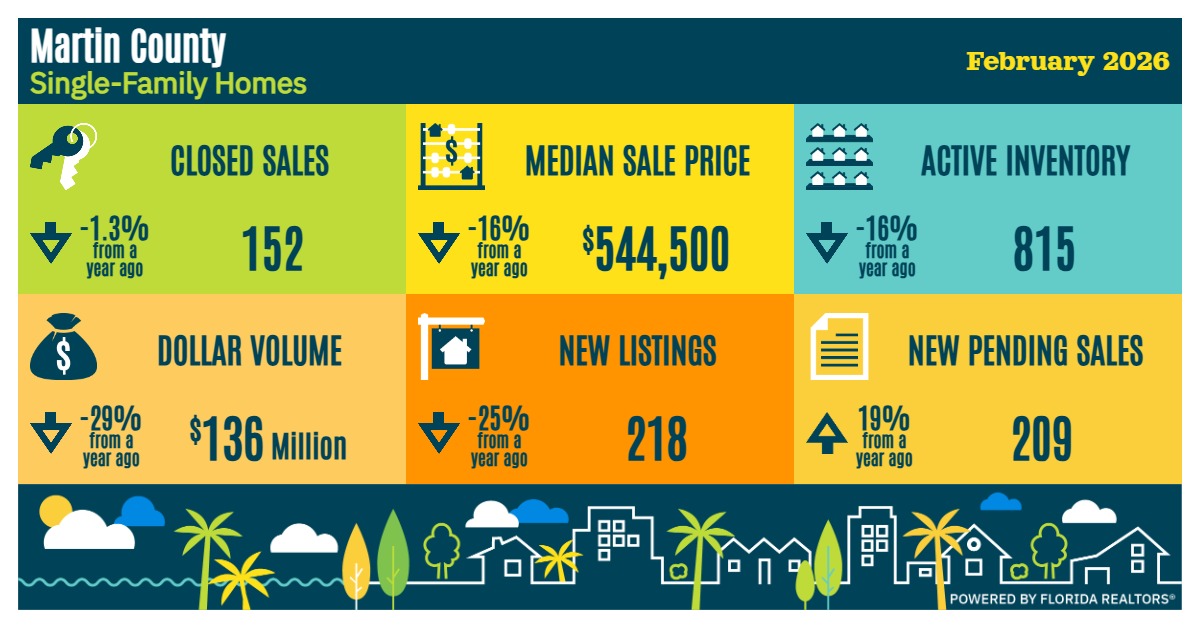
I believe our leaders have, by and large, done an excellent job keeping a sustainable level of controlled/slow growth. The statistics prove this point. We have created a great place to work and play. Home prices are stable, businesses thrive, schools educate and we are not a place to retire - we are a place to live. Does it take me a few minutes longer to get to Palm City in the late afternoon, find my next parking spot or get to the beach - the answer is yes. Is it an acceptable problem - yes. I can now have dinner at a variety of restaurants, shops, and stroll a vibrant downtown, go to the theatre or enjoy an amazing park. I can buy a home or sell my existing residence and know that I am living in paradise for decades to come.
John Gonzalez’s opinions are his own and may not reflect Friends & Neighbors viewpoint.
It didn’t take long for Palm City to fall in love with Lynora’s.
Drive past the plaza on Mapp Road any evening and the scene tells the story. The parking lot is full, the dining room is buzzing, and the bar area is packed with people enjoying happy hour. Most nights there’s a wait for dinner, but no one seems to mind. In fact, the steady line at the door has become part of the rhythm of the place.
 Lynora’s opened its Palm City location last year, and in the process helped breathe new life into a plaza that sits right in the heart of Palm City’s Community Redevelopment Area. What was once a quieter corner of town now feels like a gathering place right across from The Patio.
For me, Lynora’s was already a familiar favorite long before it arrived in Martin County.
Years ago, when I lived in the Jupiter and Tequesta area, the Jupiter location became one of my regular stops. It was the kind of place you could count on for a lively atmosphere and consistently good Italian food. If someone asked where to go for a relaxed dinner with friends, Lynora’s was always an easy answer.
 The restaurant’s story starts in the 1970s, when Raffaele and Maria Abbenante immigrated to South Florida from the small Italian island of Ponza. They began selling pizza by the slice in Lake Worth using Maria’s family recipes. Over time, that small operation grew into a well-known family-run restaurant group with locations across South Florida.
What’s impressive is how much of that family spirit still comes through.
On a recent visit to the Palm City location, we started with the meatball appetizer, which has become something of a staple on the menu. The meatballs arrive tender and generously sauced, with the kind of flavor that reminds you why simple Italian comfort food has endured for generations.
 One of the restaurant’s signature dishes, Snapper Lynora, is a favorite among regulars. The fresh fish is prepared with bright Mediterranean flavors that keep the dish light but satisfying. It’s a great example of how Lynora’s blends traditional Italian cooking with the coastal ingredients that make sense here in South Florida.
I’m also partial to the veal dishes, which are done particularly well. Tender, flavorful, and balanced with classic sauces, they’re the kind of entrée that makes you slow down and enjoy the meal rather than rush through it.
The food is certainly the draw, but the atmosphere plays an equally big role in Lynora’s success here. Happy hour brings a lively crowd, the dining room stays full deep into the evening, and the outdoor seating offers a nice option when the weather cooperates.
If there’s one minor critique, it’s the bar area. It’s almost always overflowing with people, which speaks to how popular the restaurant has become, but it probably could have been designed with a little more space. When the happy hour crowd arrives, it fills up fast.
Still, that’s a small trade-off for the kind of energy Lynora’s has brought to Palm City.
Restaurants like this don’t just serve food. They become part of the community. They’re where neighbors run into each other, where friends gather at the end of the day, and where the dining room hums with conversation night after night.
Judging by the crowds on Mapp Road these days, Palm City is more than happy to have Lynora’s at the table.
Lynora’s is located at 3215 SW Mapp Rd in Palm City, Florida as well as other locations in Palm Beach Gardens, Jupiter, West Palm Beach and Boca Raton.
Do you have a favorite restaurant you’d like to share? Email me at dinewithbrent@gmail.com.
Brent Hanlon’s opinions are his own and may not reflect Friends & Neighbors viewpoint.
Dealing with parents divorcing, deportations of close family members, moving across the country to a community where you know no one, or moving across the world to a country where you neither know anyone nor speak the language.
Yet even amid such obstacles, still exceling academically, volunteering to serve others, and working to help support your family.
In the previous “Fletch’s Perspective,” I introduced you to our finalists for Youth of the Year. If you attended the recent awards dinner Boys & Girls Clubs of Martin County invites the community to enjoy for free, then you heard firsthand the stories of Angie, Jacqueline, Doan and Oisin. You saw the power of their stage presence, speeches and quality of character—forged from investing consistent effort to be their best despite contending with heavy circumstances.
For more than 75 years, the Boys & Girls Clubs of America has celebrated outstanding members nationwide through the Youth of the Year program. Contestants must win state and national levels to claim the top prize. On April 9, Angie will represent Martin County’s five clubs in Clearwater as she competes for state.
The 16-year-old member of our Port Salerno club is such a strong student she’s already earned the esteemed Copper Key Scholarship, securing her four-year scholarship to any Florida university. She not only volunteers at her club, with her church and in the community, she also serves on our culinary team, which cooks nearly 2,000 meals per day.

The youngest of five, Angie learned her way around the kitchen early on. She used to work alongside her father (who’s also part of the BGCMC culinary program at Stuart Yacht Club), as part of his business, Daddy @ Daughter Barbecue, in Hobe Sound.
“That company helped me become who I am and keep the lights on when money was low,” she remembers.
Angie calls her mom, who works at Cleveland Clinic, “one of the keys to my success” in sharpening the commanding delivery of her speech, which moved many award-show attendees to tears.
Angie plans a career in real estate and is already studying for her license while also taking college courses on business and entrepreneurship. Witnessing her confidence and poise, it’s surprising to hear her admit to being an introvert when first joining the club more than 10 years ago.
Recalling in her speech those years struggling to find her voice, Angie drew an analogy to a chameleon finding comfort in camouflage and concealment. She credits the club with introducing her to opportunities that awakened her sense of hope, purpose and determination to lead.
“I learned that being a chameleon does not mean hiding, it means adapting and rising,” she said. “Thanks to the Boys & Girls Clubs of Martin County, I am learning not just to fit in, but to stand out—confidently, proudly and unapologetically as the person I am becoming.”
Congratulations, Angie. We can’t wait to cheer you on as you shine on the state stage.
Keith Fletcher's opinions are his own and may not reflect Friends & Neighbors viewpoint.
It’s March, so you would probably expect me to write about Ireland, green things, etc. Firstly, if you have expectations, it means that you read this column and care, so you already have my gratitude. But, you see, the problem is: my birthday is March 16th, so my affection for March 17th ranks very low. It marks the painful, humbling beginning of a year-long journey back to feeling special again.
Oh, yes, travel! Allow me to take a detour from my beloved Nordics and go south. Way south. I will take you to Argentina, today. Why Argentina? Because it offers a blend of cultural, gastronomic, urban, active and scenic experiences that is beautifully unique and hard to replicate.
Culture
 Argentina’s culture is experienced in its music, dance, and rural traditions. In Buenos Aires, evenings often end in a tango house, where dancers perform the dramatic, close-embrace style that emerged from the city’s immigrant neighborhoods. Outside the capital, the culture shifts to the traditions of Patagonia. At estancias near El Chaltén and El Calafate, the legacy of the gaucho – Argentina’s horseman – remains visible in the way ranches operate, the meals served, and the stories told.
Gastronomy
 Food in Argentina revolves around grilling, wine, and regional ingredients. In Buenos Aires you encounter classics like empanadas, mate, and Malbecs served during long dinners. In Patagonia, estancias prepare traditional meals built around churrasco: large cuts of beef cooked slowly over open fire. Bariloche adds another dimension with local breweries, chocolate makers, and meals shaped by the lake region’s produce and seafood. The result is a cuisine that ranges from urban restaurants to rustic country cooking.
Urban
 Argentina offers two very different urban settings. Buenos Aires is a large, historic capital with grand boulevards like Avenida 9 de Julio, the Obelisco at its center, and European-rooted neighborhoods such as Recoleta and San Telmo. Far to the south, Bariloche feels like an alpine town. Wooden architecture, lakefront promenades, chocolate shops, breweries, and views of the Andes give it the character of a mountain city rather than a Latin American metropolis.
Active
 The landscapes of southern Argentina invite exploration. In El Chaltén, trails lead to waterfalls and viewpoints facing Mount Fitz Roy. Near El Calafate, visitors stand before the immense Perito Moreno Glacier and can approach it by boat or even walk across the ice with guides. In Bariloche, activities shift to the lake district: boat crossings of Lake Nahuel Huapi, forest walks on Victoria Island, and time outdoors in one of the most scenic mountain environments in South America.
Scenic
 Few countries present such varied landscapes in a single journey. Around El Calafate, the Perito Moreno Glacier rises in a massive blue wall of ice inside Los Glaciares National Park. Nearby, the La Leona Petrified Forest preserves ancient, fossilized trees scattered across the Patagonian steppe. El Chaltén sits beneath the granite peaks of the Fitz Roy massif, while Bariloche is surrounded by deep lakes, pine forests, and Andean mountains. All of this lies in the far south of the continent, part of the vast region that stretches toward Antarctica.
Argentina’s personality, richness and way of life impressed me so much that it inspired me to design a journey around it. The result is a 10-day program we, at SilverOpus, named Southern Silhouettes, and now you can enjoy it, too.
And in time, if it happens to be your birthday today… or tomorrow… have a very happy one!
Marcelo Guimarães' opinions are his own and may not reflect Friends & Neighbors viewpoint.
What does it truly mean to age well? It means living with purpose. Being treated with dignity. Waking up each day with a sense of belonging and connection.
That is the future we believe in – and the future we work toward every day for the seniors of Martin County.
Each spring the Council on Aging Martin County has the wonderful opportunity to pause and focus on individuals who are outstanding examples of successful aging. Our Sage Awards event brings attention to seniors who continue to enrich the world around them and prove that age is not an indicator of how much a person can contribute to his or her community.
Our honorees each year are over 60 years of age and yet ageless. They lead purposeful, engaged lives, using their experience, skills, and compassion to strengthen our community and leave a legacy of service.

This is a special year for the Sage Awards – our 10th anniversary! Ten wonderful years of showcasing individuals who are the embodiment of aging well. They come from all walks of life and have incredibly diverse backgrounds. They are amazing in the depth and breadth of what they have done and what they continue to do to improve the quality of life for all of us.
The 2026 Sage Award Honorees
Chairman’s Award: Suzy Hutcheson
Charlie Kane Award: Jim Snedeker
Arts & Culture: Neil E. Capozzi
Education: Marian Carpenter
Health, Science & Medicine: Sandie Cox
Military & Veterans Support: Robert Shurts, honored posthumously
Faith-Based: Noreen Perez
Community Service: Bernice T. Simpson
In honor of our 10th anniversary, we created an additional award this year, the Unsung Hero. We received lot of nominations from the community for seniors whose contributions often happen behind the scenes. These are individuals who volunteer faithfully, mentor generously, and uplift others through consistent acts of kindness, leadership, and service, often without public acknowledgement.
We’ll reveal the Unsung Hero at the annual Sage Awards event on March 25 at Piper’s Yacht & Country Club as we celebrate our 2026 honorees.
If you want to add joy to your day, visit our website, www.coamartin.org, and read the biographies of our 2026 Sage Award Honorees and also those of past honorees. Their stories are an inspiring guidebook in how to live well and age well.
Karen Ripper's opinions are her own and may not reflect Friends & Neighbors viewpoint.
Co-parenting after a divorce or separation can be challenging, especially when emotions are still fresh. But clear and respectful communication can make a big difference for everyone involved, especially your children.
When parents work together to keep communication calm and focused, they create a more stable environment and reduce stress for the entire family.
Here are a few strategies that can help make co-parenting communication smoother and more productive.
Keep the Focus on Your Children
The most important rule in co-parenting communication is to keep the focus on your children. Conversations should center on schedules, school activities, medical appointments, and anything else related to their well-being.
It can be tempting to bring up past disagreements or frustrations, but those discussions rarely lead to positive outcomes. Keeping communication child-focused helps prevent unnecessary conflict.
Be Clear and Direct
Misunderstandings often happen when communication is vague or emotional. Try to keep messages short, clear, and respectful.
For example, instead of sending a long message about multiple issues, focus on one topic at a time. Clear communication helps both parents stay organized and reduces confusion about plans.

Choose the Right Communication Method
For many parents, written communication, such as email or a co-parenting app, can be helpful. Written messages give both parents time to think before responding and create a record of schedules and agreements.
Phone calls or in-person conversations may work well for some families, but the goal is always the same: respectful communication that keeps the focus on the children.
Plan Ahead When Possible
Many co-parenting conflicts happen because of last-minute changes. Planning ahead for school events, holidays, and activities can help avoid unnecessary stress.
When both parents share calendars or confirm plans early, it becomes much easier to manage busy schedules and avoid misunderstandings.
Stay Calm During Disagreements
Disagreements are a normal part of co-parenting. When they happen, try to pause before responding and keep the conversation respectful.
If emotions start to rise, it may help to step away from the conversation and return to it later. The goal is not to “win” an argument but to find solutions that work for your children.
Know When Legal Guidance Can Help
Sometimes communication challenges continue despite everyone’s best efforts. If ongoing conflict is affecting schedules, decision-making, or the children’s well-being, it may be time to revisit your parenting plan.
Clear legal guidance can help establish boundaries, clarify responsibilities, and reduce future disputes.
Gene Zweben’s opinions are his own and may not reflect Friends & Neighbors viewpoint.
“Saturday in the Park” is one of the band Chicago’s biggest hits and it certainly hits home with the Kiwanis Club of Stuart’s recent Pancakes in the Park event. The Kiwanis Club of Stuart’s annual Pancake Breakfast has evolved into Reading and Pancakes in the Park, a lively community event combining food, literacy and fun. This year’s celebration held on Saturday, March 7, welcomed more than 500 children, families and community members to enjoy pancakes, green eggs and ham, games and learning activities.
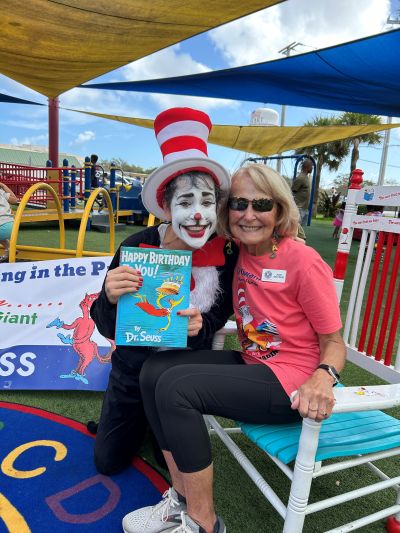 The addition of the literacy programming transformed the event into an engaging experience filled with guest readers, painted rock hunts, sidewalk chalk art and educational booths. Volunteers included Kiwanis members and students from K-Kids, Builder’s Club and Key Club who supported the event from start to finish.
Our Dr. Seuss favorite books and guest readers included—
“Sam I Am” read by Milly Blanco, Crystal Lake Elementary Media Specialist
“The Cat in the Hat” was read Dr. Christine Varsace of Cleveland Clinic; Becky Schleek, Family Literacy Outreach Specialist from the Martin County Library System; and, finally, by Steven and Edie Klassen reading in both Spanish and English.
 Guest readers brought beloved Dr. Seuss stories to life, and community partners helped make the day a success. Guests also enjoyed Kiwanis ornaments, Little Free Library Books and displays of Kiwanis Bookshelves which provide books to families through local nonprofits.
We also couldn’t have made such an impact without our Community Partners including--Cleveland Clinic, HIPPY—Family Empowerment Project, 4C’s Caring Children, Clothing Children, Children’s Museum of the Treasure Coast, Helping People Succeed and Healthy Families, Martin County Supervisor of Elections, Martin County Library System, Martin Library System with Paws, and DAR.
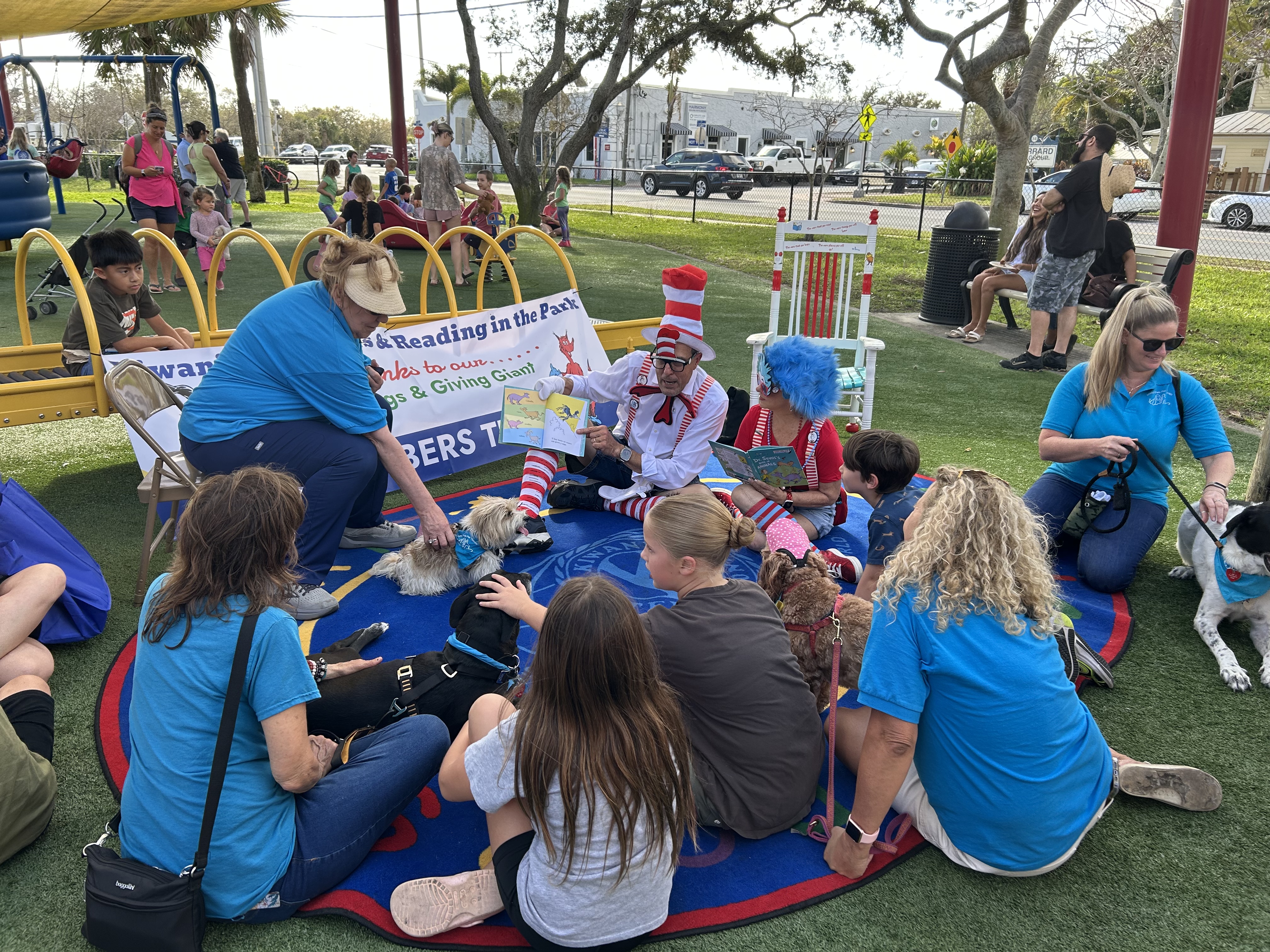
We also had a table of our beautiful Kiwanis Ornaments available for purchase, books from our three Little Free Libraries in the park and samples of our Kiwanis Bookshelves filled with books which are given to families through our local nonprofits.
With perfect weather and a joyful atmosphere, the event highlighted Kiwanis’ commitment to literacy and service. The Kiwanis Club of Stuart has proudly served the children of Martin County since 1938 and looks forward to welcoming the community again on March 6, 2027.
We invite you to consider becoming a member of the Kiwanis Club of Stuart. We meet the first and third Tuesdays at noon at Manero’s in Palm City. Our meetings are filled with guest speakers, planning and a bit of fun—Reading and Pancakes in the Park is just one example of our projects. Please join us.
Suzy Hutcheson's opinions are her own and may not reflect Friends & Neighbors viewpoint.
Each March, Tykes & Teens proudly celebrate National Social Work Month,. This is a time to recognize the awesome individuals who devote their lives to supporting the well‑being of children, families, and communities. For those of us working in children’s behavioral health, this month holds special meaning. Our clinicians are not only the backbone of our services—they are often the very first source of hope for a child or family in crisis.
Social workers bring a unique blend of compassion, clinical expertise, and unwavering advocacy to their work. They meet children and families at some of the most challenging moments of their lives, providing guidance, stability, and healing. Whether supporting a child experiencing trauma, partnering with schools and community organizations, or guiding a parent during a difficult time, their work transforms lives every day.
In the field of children’s mental health, social workers do far more than provide therapy. They listen, build trusting relationships, and create safe spaces where children can begin to heal. They help caregivers strengthen their capacity to support their children, advocate for necessary resources, and ensure that every child has access to services that promote resilience and long‑term well‑being.
This year’s Social Work Month theme—“Empowering Social Workers!”—highlights the importance of investing in those who invest so much in others. Empowerment means providing training, resources, supportive workplaces, and opportunities for growth. It also means recognizing the emotional weight social workers carry and prioritizing their own mental health.
At Tykes & Teens, we are proud to stand alongside these dedicated professionals who embody empathy, integrity, and perseverance. Their work strengthens families, improves outcomes, and builds healthier communities across our region.
During National Social Work Month, we extend our deepest gratitude to every social worker who chooses this challenging and meaningful profession. Your impact is immeasurable. Your compassion changes lives. And your commitment ensures a brighter future for the children and families we serve.
Thank you for all you do—this month and every month.
Anne Posey's opinions are her own and may not reflect Friends & Neighbors viewpoint.
The strength of any community can often be measured by how it cares for its children. When children are safe, supported, and given opportunities to thrive, the entire community benefits—not just today, but for generations to come.
Investing in children is about far more than meeting their immediate needs. It is about creating stable foundations that allow young people to grow into healthy, productive adults. When children have access to safe homes, supportive relationships, education, and caring mentors, they develop resilience and the confidence needed to build positive futures.
Unfortunately, many children face difficult circumstances that threaten their stability. Family crises, financial hardship, trauma, or lack of support can place tremendous stress on parents and caregivers. Without help, these challenges can escalate and impact the safety and well-being of children.
That is why organizations like Hibiscus Children's Center exist—to step in when families need support and to provide children with a safe place to heal and grow. From mental health services that help families cope and overcome difficulties, to residential services that protect children who have experienced abuse or neglect, our mission is rooted in one simple belief: every child deserves the opportunity to feel safe, valued, and hopeful about their future.
At Tilton Family Children’s Shelter, we see the impact of that investment every day. We see children rediscover their confidence, learn to trust again, and begin to imagine brighter futures. These transformations are possible because our community believes that children deserve every opportunity to succeed.
 When we invest in children, we are also investing in the future of our workforce, our neighborhoods, and our local economy. Children who grow up in stable and supportive environments are more likely to succeed in school, pursue meaningful careers, and contribute positively to their communities. They become the teachers, nurses, entrepreneurs, and leaders who shape the next generation.
When we invest in children, we are not only changing individual lives—we are building stronger, healthier communities for us all. Because when children thrive, communities thrive.
To learn more about Hibiscus Children’s Center and how you can get involved to help children, please visit us at HibiscusChildrensCenter.org.
Matt Markley's opinions are his own and may not reflect Friends & Neighbors viewpoint.
It is March 16 as I write this column, and our temperatures have soared back into the 80's here on the Treasure Coast.
The water temperature right outside of St Lucie Inlet is 76 degrees so I am officially declaring the Spring surf fishing season open. The pompano have started to show in Hobe Sound on the public beach and the National Wildlife Refuge beach accesses so things are happening.
The pompano have been showing in dribs and drabs at beaches like Tiger Shores, Stuart Public Beach, Santa Lucea, and Beachwalk Pasley right here in Martin County. This fishing is only going to get better as we get into Daylight Savings Time and the prime fishing hours will be in the afternoon when we get the high tide cycle between 1 and 4 pm.
The long rods that we have used all winter to put your baits out 70 to 100 yards will still be used by the serious pompano anglers, but it is time to shorten the areas you fish and stagger your baits from 60 to 100 yards because the pompano definitely move in closer during the spring. As far as bait choices Fishbites remains the number one choice on the artificial side with EZ Flea Electric Chicken, EZ Flea Orange and White, Pink and white Crab, and a new color, Jingle Bites Green and Red. Sand Fleas continue to show, especially in the afternoon so bring the rake to collect these baits and as usual it will remain the number natural bait, alive or dead.
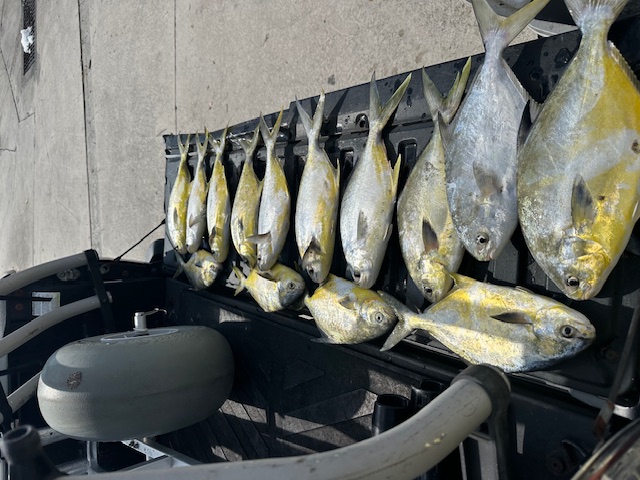
On your rigs that you use with a sandflea always remember to tip it with a small piece of Fishbites. The other bite that shows no sign of letting up is the whiting and now croaker action. This has been the best season I can remember in the 14 years I have lived here for the whiting,
The bit almost all winter and now as the waters warm and the days get longer look for this fishing to get incredible. Whiting and croaker are my favorite fish to eat as far as all of the saltwater species that I target. Short rods, 7 feet or less with a small spinning reel loaded with 12-pound monofilament will be the tackle to use to have some fun and catch some "groceries" as we call them.
Check your ocean tide tables as you will want to fish around high tide two hours afterward for best results. A small piece of fresh or frozen shrimp tipped with a piece of Fishbites Jingle Bites, Bloodworm, or Pink Shrimp will be the ticket. Remember, if you cast more than 20 yards from the edge of the surf you will probably overcast them.
A cooler with ice is a necessity to keep them chilled until you can get to the fillet table. March and April are the two premiere months to catch limits of pompano so head to the beach, bend a rod, and have some fun.
Good luck this month and catch em up.
Paul Sperco’s opinions are his own and may not reflect Friends & Neighbors viewpoint.

COMMUNITY FOUNDATION FOR PALM BEACH AND MARTIN COUNTIES HOSTS 3RD ANNUAL BLACK PHILANTHROPY RECEPTION
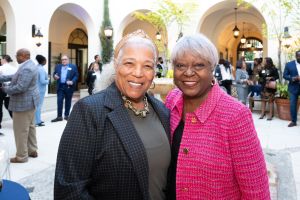 Alberta McCarthy, Verdenia C. Baker
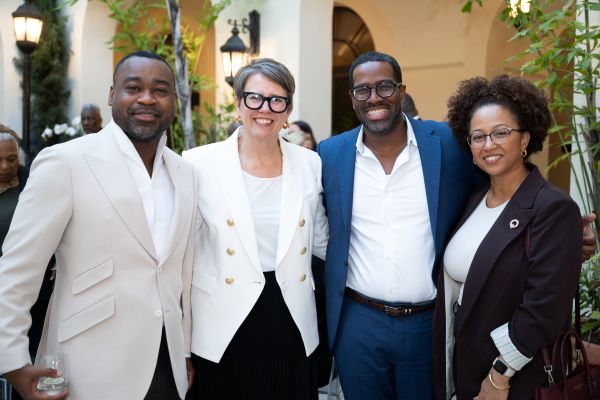 Everald Colas, Amy Donohue, Corey Murphy, Elsa Blanco-Bridgen
The Community Foundation for Palm Beach and Martin Counties, a nonprofit organization that leads partnerships with donors, nonprofit organizations, and community members to address the region’s chronic and emerging issues, hosted its third annual Black Philanthropy Reception on February 25, 2026 at the Center for Philanthropy in West Palm Beach.
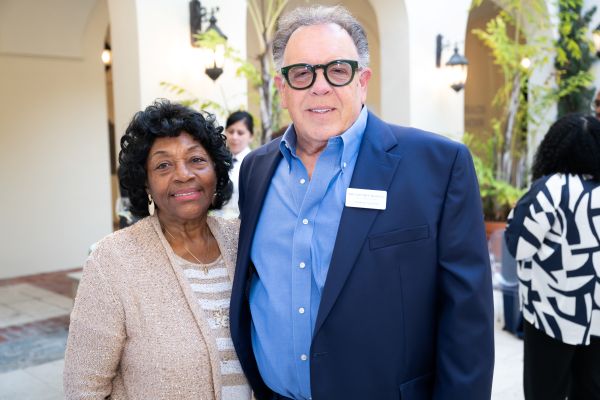 Cora Perry, Bill Watson
This annual, exclusive reception celebrates Black Philanthropy in Palm Beach and Martin Counties during Black History Month. It was attended by 97 people.
 Anita Farrington, Rosalyn Sia Baker-Barnes, Christina Clements Thompson
Photos courtesy of Tracey Benson
About the Community Foundation for Palm Beach and Martin Counties
The Community Foundation for Palm Beach and Martin Counties is a nonprofit organization that leads philanthropy locally. The foundation provides charitable expertise and vehicles to increase the investment options on behalf of individuals, family foundations, and corporations. Since 1972, the foundation has distributed over $275 million in grants and scholarships aimed at closing the area’s opportunity gaps. With its vast network of donors and nonprofit partners, the foundation supports initiatives that improve youth and education, economic opportunity, thriving communities, and crisis preparation and response. Learn more at https://yourcommunityfoundation.org.
Council on Aging Martin County Announces
2026 Sage Awards Honorees
Stuart, FL – For the past decade, the Sage Awards has honored outstanding seniors in Martin County who continue to enrich the world around them. They prove that age is not an indicator of how much a person can contribute to his or her community.
The Council on Aging Martin County, the sponsor of the Sage Awards, has announced this year’s honorees:
Chairman’s Award: Suzy Hutcheson
Charlie Kane Award: Jim Snedeker
Arts & Culture: Neil E. Capozzi
Education: Marian Carpenter
Health, Science & Medicine: Sandie Cox
Military & Veterans Support: Robert Shurts, presented posthumously
Faith-Based: Noreen Perez
Community Service: Bernice T. Simpson
They will be honored at a dinner on Wednesday, March 25, at Piper’s Landing Yacht & Country Club.
“All of our honorees have an impressive record of accomplishments for all they did throughout their working lives,” said Council on Aging Martin County CEO Karen Ripper. “They come from every walk of life but share a remarkable dedication and deep compassion for others. Each of them is creating a legacy of service to the community in their senior years, and we’re delighted to recognize them with a Sage Award.”
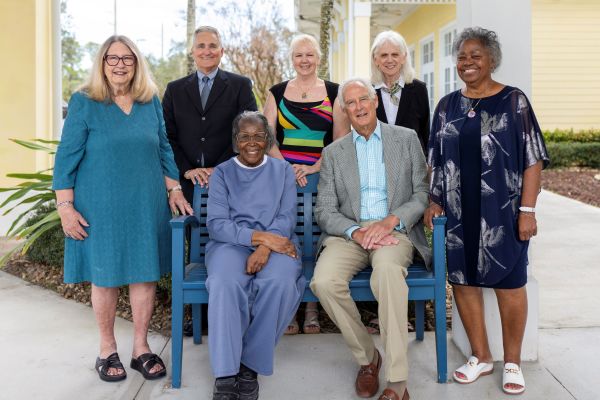 The 2026 Sage Award Nominees: seated,( l to r): Marian Carpenter, Jim Snedeker. Back (l to r) Suzy Hutcheson, Neil Capozzi, Noreen Perez, Sandi Cox and Bernice Simpson. Robert Shurts, also a 2026 honoree, is receiving the award posthumously.
A special Lotus Society recognition will also take place at the Sage Awards dinner. The William and Helen Thomas Charitable Trust and the United Way of Martin County will be saluted for their ongoing support of the mission and programs of the Council on Aging Martin County.
In celebration of the 10th Anniversary of the Sage Awards, the Council on Aging Martin County is introducing a new and meaningful honor this year: the Unsung Hero Award. The community was invited to help identify seniors whose contributions often happen behind the scenes. These are individuals who volunteer faithfully, mentor generously, and uplift others through consistent acts of kindness, leadership, and service, often without public acknowledgment. The honoree will be announced at the Sage Awards dinner.
Dr. Reza Khatib, an internationally renowned neurosurgeon and resident of Palm City, is the Presenting Sponsor for the Sage Awards. Sponsors include: Dinner Sponsor: Richard A. Zappala Family Foundation; Honoree Sponsors: The Community Foundation Martin-St. Lucie, Nearing & Dallas Wealth Management at RBC Wealth Management, Edward J. Yen, CIMA, CPWA, Senior Vice President/Investments, Stifel/Palm Beach Wealth Advisory Group; Wisdom and Worth Sponsors: Dadko Wealth Management of Janney Montgomery Scott LLC, Nancy Goethel, CFP®, CIMA®, CRPC®- Vice President of Investments at Raymond James, Ross Earle Bonan Ensor & Carrigan, P.A., Sandhill Cove Retirement Living, The Saelzer/Atlas Wealth Management Team of Raymond James; Sage Sponsors: HBK CPAs & Consultants, South Florida Orthopaedics & Sports Medicine, Water’s Edge Health Care, Rehabilitation, Assisted Living at Sandhill Cove; Supporters of Sage Sponsor: Berger, Toombs, Elam, Gaines & Frank.
To purchase tickets, learn more about the Sage Awards, and read the biographies of current and past honorees, visit www.coa.org, or contact Michele Leigh Jacobs at 772-223-7803 or mjacobs@coamartin.org.
###
About the Council on Aging Martin County
For seniors, their families, and caregivers, the Council on Aging Martin County is their trusted and comprehensive hub for senior resources. We work with the community to reduce anxiety, depression, loneliness, and hunger. Together, we help seniors live a safer, healthier, and happier life.
From our Adult Day Club, Day Primary Care Center, case management, and memory enhancement programming, to our nutrition and exercise classes, games to improve memory, concerts and social events, the Council on Aging’s Kane Center on Salerno Road is a beehive of activities. Services also take to the road – like Meals on Wheels, providing a hot meal and a warm smile to more than 580 homebound and needy Martin County senior residents in their home each day, or Senior Dining Centers at locations throughout the county in Stuart, Jensen Beach, Indiantown and Hobe Sound. The Elder Care Mobile Outreach Bus brings knowledgeable and compassionate staff directly to seniors in local neighborhoods.
For 51 years, the Council on Aging Martin County has been working tirelessly to inspire a community that embraces, uplifts and encourages seniors to maintain lives of quality and purpose. Stay healthy. Be active. Eat well. Get help when you need it from the Council on Aging Martin County. Please visit us in person, online at coamartin.org, or on social media, and learn more about the many services of the Council on Aging Martin County. Our staff and volunteers are ready and eager to help.
Community delivers almost $300,000 for shelter animals at Paws and Claws Gala
STUART, Fla. — The Humane Society of the Treasure Coast raised more than $290,000 at its annual Paws and Claws Gala, its highest grossing event and most attended since COVID-19. Presented by the Catsman Foundation, 216 guests attended the gala, themed “Kool Cats & Diggin’ Dogs,” which was held at the Willoughby Golf Club in Stuart.
 Auctioneer Michael Izzolo conducting the live auction (photo by Doreen Poreba)
Six Misty's Pals Teams, consisting of a trained pet therapy dog and its owner, greeted guests as they arrived. Volunteers Diane Coakley and Allola McGraw co-chaired the gala. Their volunteer committee members were Carol Dippy, Debbie Hansen, Shaun Kelly, Michele McCambridge, Sarah Ralicki, Wendy Talbot, Melony Zaravelis and Kay Ziegler.
In addition to specialty cocktails and flavorful fare, event highlights included a silent auction with 129 packages featuring everything from art, jewelry and dining excursions to spa escapes, vacations and unique experiences. Auctioneer Michael Izzolo conducted the live auction and cash shout out, and The Catsman Foundation offered a $75,000 matching gift.
 - Back row/Jacqueline Patane, Lisa Kieffer, Jenna Ellison. Front row/Kelly Langford, Susan Croop, Beth Vassale (photo by Doreen Poreba)
The Legendary “Diana Ross,” aka Goddess Smith, emceed the event, right in tune with the band, The Essence of Motown, which kept people dancing all night long!
Guests also had the opportunity to enter a raffle in hopes of winning one of three seats on the “American Bandstand” Rate a Record judge's panel. Jessica VanValkenburgh, Tamar Quantz and Anita Misantone won this raffle and rated two surprise songs performed by The Essence of Motown. VanValkenburgh won a private dinner cruise for four people on the luxurious Food Yacht in Jupiter and the other two judges won a $50 restaurant gift card.
 DSC_05305 - Mylo Carbia and the Legendary “Diana Ross” having fun dancing to The Essence of Motown (Photo by Liz McKinley)
The Humane Society extends its heartfelt thanks to the presenting sponsor, the Catsman Foundation, along with major sponsors Apex Pavers & Pools, Acentria Insurance, Integrity Garage Door Services, Stuart Magazine, TC Palm, The Saelzer Atlas Wealth Management Group of Raymond James, JetLoan Capital, Team Parks, Transmarine Chartering and the Eberst Law Firm.
About the Humane Society of the Treasure Coast – The Humane Society of the Treasure Coast (HSTC) is a no-kill animal welfare organization located at 4100 SW Leighton Farm Ave. in Palm City, FL. Since 1955, it has been the leading advocate for animal protection and well-being in the Martin County area. A 501(c)3 private, nonprofit organization, the HSTC is independent and locally operated and relies on donations to support its programs and services. Follow the HSTC on Facebook at https://www.facebook.com/humanesocietyTC and Twitter at https://www.twitter.com/hstc1. For more information, visit https://www.hstc1.org or call (772) 223-8822.
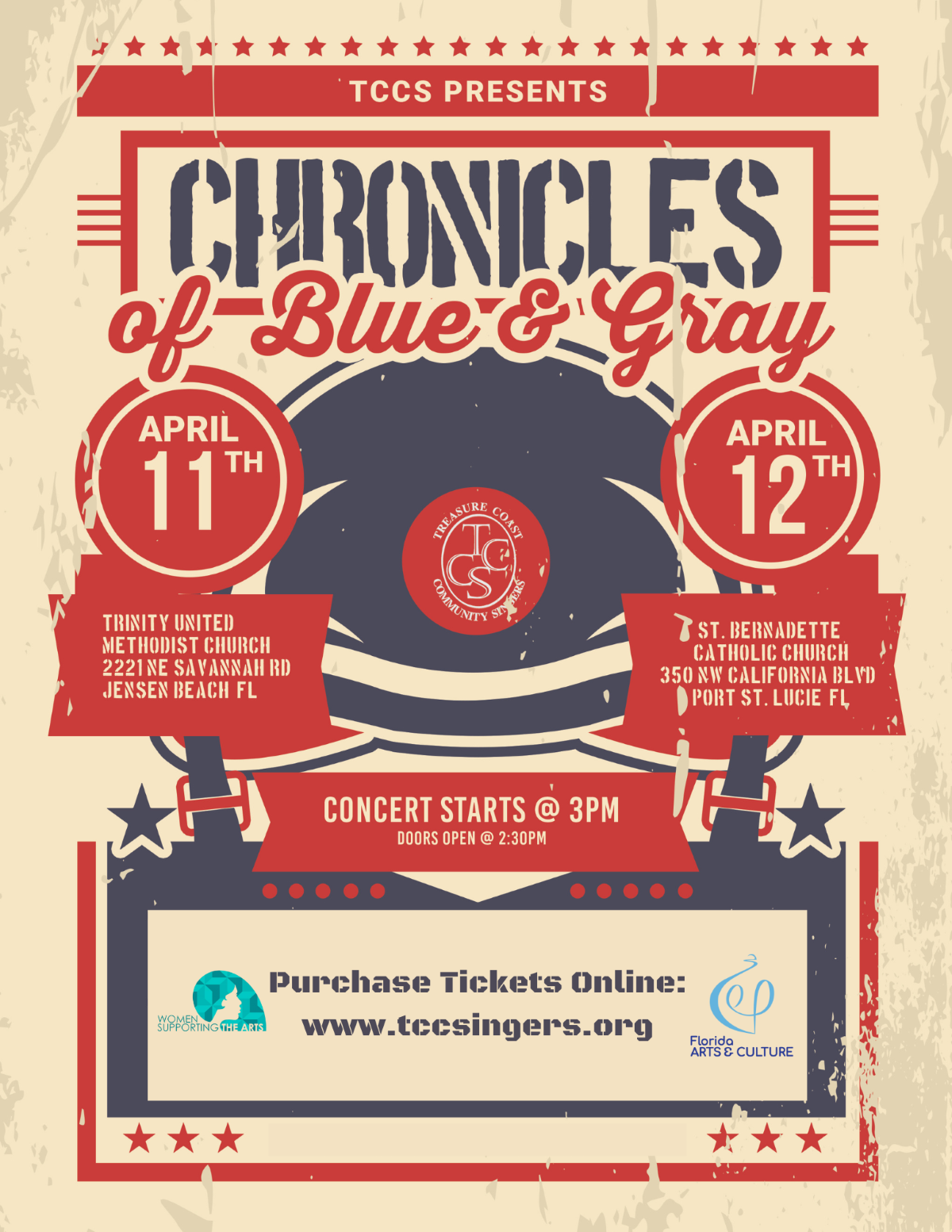

“Everglades on Trial”: Eve Samples to Speak March 26 at Rappaport Speaker Series
Stuart, Fla. – The future of the Everglades and the water that sustains millions across South Florida and the Treasure Coast is being shaped right now in courtrooms, policy chambers, and development hearings across the state.
On Thursday, March 26 at 7 p.m., environmental leader Eve Samples, Executive Director of Friends of the Everglades, will present “Everglades on Trial: A Test for Environmental Policy in America,” the final program in this year’s Rappaport Speaker Series at Temple Beit HaYam in Stuart.
Samples will examine the powerful forces shaping the Everglades today, from restoration progress and water management decisions to development pressures and ongoing legal challenges that will determine the region’s environmental future for generations.
For communities along the St. Lucie River, Indian River Lagoon, Lake Okeechobee, and coastal waterways, these issues are not theoretical. They directly influence when and how water is released, what flows into our estuaries, and whether the fragile balance between growth and conservation can be sustained.
The Rappaport Speaker Series brings nationally and regionally recognized thought leaders to Stuart each year to inform, challenge, and inspire meaningful community dialogue on issues that matter. Few subjects are more consequential to this region than the fate of the Everglades, often called the “River of Grass” and widely regarded as one of the most unique ecosystems on Earth.
Eve Samples spent two decades as an award-winning journalist before becoming Executive Director of Friends of the Everglades in 2020. She previously served as statewide opinion editor for the USA TODAY Network-Florida, a columnist for Treasure Coast Newspapers/TCPalm, and a reporter for The Palm Beach Post and Pittsburgh Post-Gazette. Her work has focused on environmental policy, growth, and the intersection of politics and natural resources in Florida.
This program offers residents a rare opportunity to hear directly from one of the state’s most influential environmental advocates about what lies ahead for South Florida’s water, wildlife, and way of life.
Veteran journalist Michael Williams will bring his skills as a moderator and his knowledge of the issues gained from years of covering South Forida to this discussion and question-and-answer session.
Program Details
Date: Thursday, March 26
Time: 7 p.m.
Location: Temple Beit HaYam (home of the Rappaport Center) in Stuart
Tickets are $20 and available now at www.RappaportSpeakerSeries.com.
More information about the Rappaport Center, the Speaker Series, and past presenters can be found at: www.RappaportSpeakerSeries.com and on Facebook: www.facebook.com/RappaportCenterSpeakerSeries
About the Rappaport Foundation
The Phyllis & Jerome Lyle Rappaport Foundation partners with leading institutions in Boston and beyond to cultivate emerging leaders in public policy, mental health, neurodegenerative research, and the arts. The Foundation has a long and proud history of supporting emerging leaders, including civic leaders who improve the lives of their constituents and communities, medical researchers who have unlocked the mysteries of the brain, mental illness and Alzheimer’s disease, and artists who enrich lives, ignite imaginations, and challenge us to see the world in a new light. In Stuart, Florida, the Foundation sponsors the Rappaport Center Speaker Series to promote informed dialogue on issues of national and international importance.

Fundraiser with background advancing the futures of overlooked youth joins Boys & Girls Clubs of Martin County
HOBE SOUND—Mary Beth Mudrick has joined Boys & Girls Clubs of Martin County as its chief philanthropy officer.
Mudrick brings diverse professional experience and an impressive educational background to the nonprofit, which cares for more than a thousand children daily in its five clubs across Martin County and reaches more than 8,000 more annually through its programs.
“It’s an honor to join the Boys & Girls Clubs of Martin County, which is staffed by a high-performing, big-hearted, ambitious team of professionals,” says Mudrick. “The sheer ambition of five clubs covering the county and equipping kids to develop into their very best selves—regardless of their circumstances—inspires a level of motivation that you can’t manufacture. It’s genuine, it’s infectious and it’s achieving a record of real results. Those are the essential ingredients to raising funds.”
Most recently, Mudrick served as senior director of development for Path to College Fellowship in West Palm Beach, helping raise millions of dollars to enable low-income high school students to gain college acceptance without incurring debt. Mudrick’s organizational abilities fortified the program with essential structures for naming policies and endowments.
Prior, she dedicated more than a decade to Florida Atlantic University—serving in both development and communications—raising awareness and funds for scholarships and the Charles E. Schmidt College of Science.
“Mary Beth’s is a welcome addition to our team,” says Keith “Fletch” Fletcher, president and CEO of BGCMC. “Her experience, achievements and success advocating for college educations for young people from limited means nicely complements our youth workforce initiatives and will enrich how we shape and expand the effort going forward.”
BGCMC’s workforce programs offer instructions and training in such fields as HVAC, welding, drone operation, coding, electrical and construction, with the objective of empowering local young people to achieve earning possibilities previously unimagined in their respective communities.
A graduate of The Lily Family School of Philanthropy at Indiana University, she also holds a certificate for Executive Nonprofit Leadership from Duke University, the Furqua School of Business. Mudrick is also a fellow of the Milton Murray Fund of Philanthropy.
Mudrick’s work experience is broad and comprehensive in its scope and depth. She illustrated and co-authored a pattern book for Federal Style Architecture. She served as a consumer reviewer for the Department of Defense’s Congressionally Directed Medical Research Program. She also volunteers for the Ovarian Cancer Research Alliance for its program Survivors Teaching Students program, which helps third-year medical students gain insights to advance early diagnoses.
About Boys & Girls Clubs of Martin County
Boys & Girls Clubs of Martin County is committed to enabling all young people, especially those who need us most, to reach their full potential as productive, caring, responsible citizens. Through a wide range of programs focused on academic success, healthy lifestyles, and good character, BGCMC provides a safe and nurturing environment where youth can thrive and build a great future.

Education Foundation’s sold-out Mah Jongg Tournament raises funds to benefit local students and teachers
PALM CITY, Fla. — The Education Foundation of Martin County’s sixth annual Mah Jongg tournament recently raised $25,000 to benefit local students and teachers. Held at Harbour Ridge Yacht & Country Club, and presented by Sandhill Cove Retirement Living, the charity event was once again a sell-out with more than 100 players participating.
 Tournament participants Annette Theriault and Lois Fraser
The Mah Jongg tournament is held each year to support the many educational enrichment programs provided by the Education Foundation to benefit the students and teachers in Martin County’s public schools. The theme of “Make a Hand and Give a Hand to Education” lets participants know they’re playing for a worthy cause while having fun at the same time.
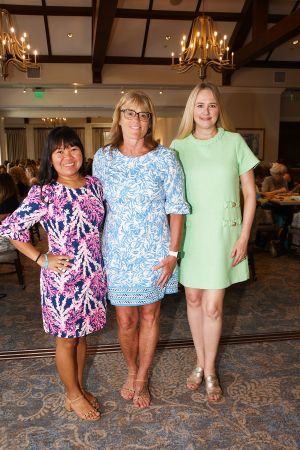 Gina Ackleson and Michele Davidson with Waters Edge Health & Rehabilitation and EFMC Executive Director Lisa Rhodes
Part of the event’s proceeds were generated by guests bidding on a variety of silent auction items, including spa treatments, jewelry, gift baskets, restaurant gift cards and golf outings.
When the tournament finished, Karen Weisberg was declared the first place Mah Jongg winner, followed by Sharon Rosenthal, Lori Finnerty, Eileen Terry and Janet Profeta.
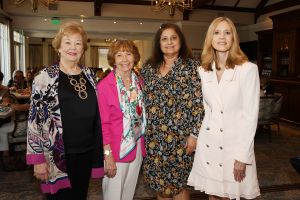 Gina Ackleson and Michele Davidson with Waters Edge Health & Rehabilitation and EFMC Executive Director Lisa Rhodes
Tournament Committee Chair Lois McGuire organizes the event each year. She said, “It was heartwarming to watch 104 women play a game they love to help students and teachers in Martin County. I am honored each year to be a part of the Education Foundation of Martin County's Mah Jongg Tournament.”
Lisa Rhodes, executive director of the Education Foundation of Martin County, expressed her appreciation to McGuire for organizing this event since its inception.
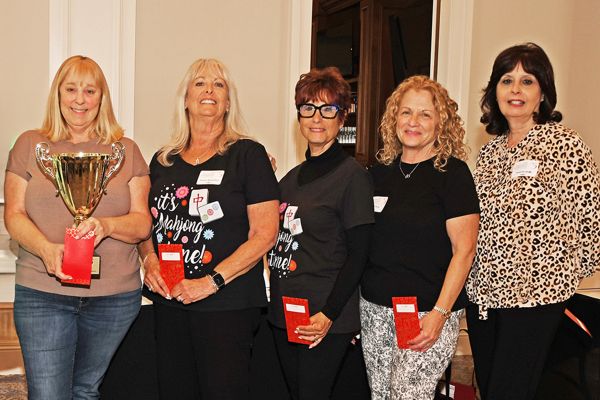 Tournament Winners Sharon Rosenthal, Lori Finnerty, Eileen Terry and Janet Profeta
“We are grateful for Lois’ leadership skills and dedication in organizing this event for so many years,” said Rhodes. “Lois will be stepping down from this role in 2027 so we are looking for a tournament director to fill her shoes.”
Rhodes also acknowledged the event sponsors and players who come together to support education. The sponsors were Sandhill Cove Retirement Living, Water’s Edge Health Care. Rehabilitation. Assisted Living, Ann Vossekuil, Hobe Sound Veterinary Clinic and Vanessa Gumm PA of Berkshire Hathaway Home Services.
Photo Credit: Doreen Poreba
The Education Foundation of Martin County is the Martin County School District’s strategic non-profit partner with the mission of enriching and enhancing educational opportunities and support for students and teachers in Martin County’s public schools. As an independent group, the Foundation promotes this effort by raising and distributing private and corporate funds through several established programs, including classroom enrichment grants, literacy programs, professional development for teachers, special initiatives, scholarships and programs to recognize outstanding teaching. For more information, please visit www.EducationFoundationMC.org.

Hibiscus Children’s Center Celebrated Children at the
33rd Annual Jo Covelli Luncheon “Mad Hatter Tea Party”
Martin County, FL – Over 175 guests were not late for this very important date! The 33rd Annual Jo Covelli Luncheon & Fashion Show was held at the enchanting Sailfish Point Country Club on March 9th. Our “Mad Hatter Tea Party” was a whimsical afternoon! Guests were greeted by talented students from the Jensen Beach High School Band. The affair included a delicious lunch, lovely fashion show, and a Mad Hatter–worthy hat contest! Every bit of merriment supported this very important cause with all proceeds benefiting the children living at Hibiscus Children’s Center.
For more than four decades, Hibiscus has been a place of safety, compassion, and healing for children who have experienced the unimaginable — abuse, neglect, and abandonment. Since 1985, our mission has remained the same: to protect, educate, and nurture each child so they can rediscover trust, hope, and joy. Hibiscus provides mental health counseling, education and literacy services to help build a brighter tomorrow for children.
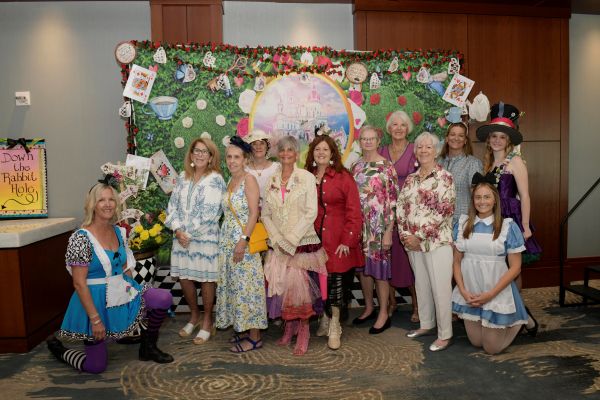
Our delightful Co-Chairs, Patrice Morgan and Diana Baker, and their devoted committee brewed up a most curious afternoon of joy and wonder. Guests went down the rabbit hole with us and discovered special artwork created by the Hibiscus children, whimsical raffle baskets, and a lively marketplace full of treasures by local vendors!
We extend our deepest gratitude to our incredible Grand Benefactor, Jo Covelli, whose unyielding dedication has been a steadfast source of strength for the children we serve. Thank you to our generous sponsors: Fashion Show Sponsor - Elizabeth Herold; Mad Hatter Sponsors - Joan Damson, Deborah Kessler, The Jules and Gwen Knapp Charitable Foundation, Pat Tiemeyer, Kathleen Walgreen, and Robert Weissman Foundation; White Rabbit Sponsors - Sally Batz, Robin Berger, Nancy Cassell, Marilyn Hessler, Jeanne O’Neil, and Mary Zottoli; Tea Party Sponsors - Muffin Adamiak, Boots’ Beach Bakery – Lilly Freese, Molly Hoffman, Marge Hohman, Kerri Ramsey, Julie-Ann Kress, and Donna Lee Valin.

Thank you to all the supporters of the Mad Hatter Tea Party, you have helped to change children’s lives! Please visit us at HibiscusChildrensCenter.org to learn more about Hibiscus events and programs.
Mary’s Home Breaks Records at 15th Annual
Fashion Show & Luncheon
Stuart, Fla. – For 15 years, the Mary’s Home Fashion Show & Luncheon has been known for dazzling fashion, good food, a lively silent auction and basket raffle filled with themed baskets, and inspiring real-life stories.
 Sarina Dadko, Sally Rose and Marissa Dadko
This year, with a sold-out crowd of 300 guests, Mary’s Home added one more distinction to the list: a record-breaking amount of funds raised.
“We’re amazed and grateful,” said Mary’s Home Executive Director Alean Timm. “Our committee always ensures that we have an outstanding event, full of delight and joy, but this year’s luncheon reached a new high. An astounding $189,000 was raised to support our mission.” That impressive total represents a significant increase from last year’s $150,000.
Cheryl Lampard and Alean Timm
 Lorraine Bradley and Jodie Burke
The annual event brings together supporters of the nonprofit, faith-based transitional maternity home that “Saves Lives Two at a Time.” Located in Stuart, Mary’s Home is open to women who are 18 years or older and are either pregnant or have an infant under four months old and are experiencing homelessness. Mary’s Home provides the support and guidance these women need to become self-sufficient and make good choices for themselves and their children.
Gina Thompson and Anastasia Benjamin
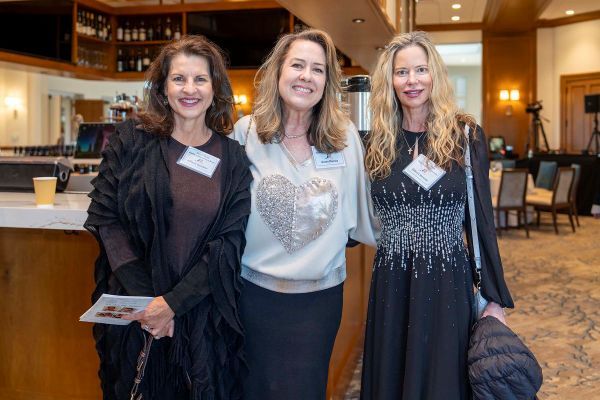 Allison Gardner, Karen Mumcy and Rebecca Marante
The event, held on February 23 at Willoughby Golf Club, featured powerful stories from three remarkable women whose lives have been transformed by Mary’s Home:
Anastasia was filled with uncertainty and fear before the birth of her daughter. “Mary’s Home gave me a safe place to stay while preparing for my daughter’s birth. It gave me something more powerful: hope. From the moment I walked through those doors, I was treated like someone who mattered. Like a mother whose future — and whose baby’s future — was worth investing in.”
Jetia came to Mary’s Home as a single mom after leaving an emotionally abusive relationship. “I found a community of people who believed in me at a time when my own belief in myself was fragile. Mary’s Home provided a safe environment where I could raise my baby while slowly rebuilding my life piece by piece. During my time here, I have accomplished things that once felt out of reach.”
Erica described how she arrived at Mary’s Home after calling six different maternity homes in search of help. When Mary’s Home accepted her, staff arranged transportation, welcomed her with a safe place to live, and supported her through the birth of her son. “Mary’s Home gave me the chance to start over,” Erica said. “While I was there, I took English classes, found a job, and saved enough to move into my own apartment. Four days after I moved in, I was able to bring my daughters home. None of that would have been possible without Mary’s Home.”
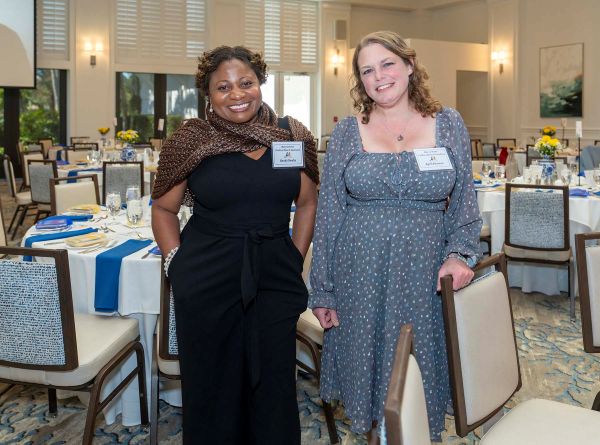 Sandi Swaby and April Pearson
In addition to ticket sales, sponsorships, and auction items, the event also featured a Call to the Heart. “Two of our current residents were pregnant and living behind Kohl’s in Jensen Beach before they came to Mary’s Home,” Timm shared with the guests. “This is the reality in our own community. Please help us be ready for the next woman who reaches out — the one who may be sleeping in her car… or on the street… wondering where she will go.” In response, attendees donated more than $73,000, another record-setting amount.
Mary’s Home volunteer Cheryl Lampard, a long-time volunteer and financial supporter of Mary’s Home, was honored with the very first “Mary’s Queen of Hearts” award during the luncheon for her extraordinary efforts on behalf of the organization and its work in the community.
Lynda Hartley-Urban coordinated the event’s signature fashion show, and Mary’s Home Operations and Event Manager Kim Gaudet served as Committee Chair. Gina Thompson, Board President, thanked the committee and many sponsors of the event but called out two Premier Sponsors – Dadko Wealth Management and Riverview Cosmetic Dentistry and Implant Dentistry in particular.
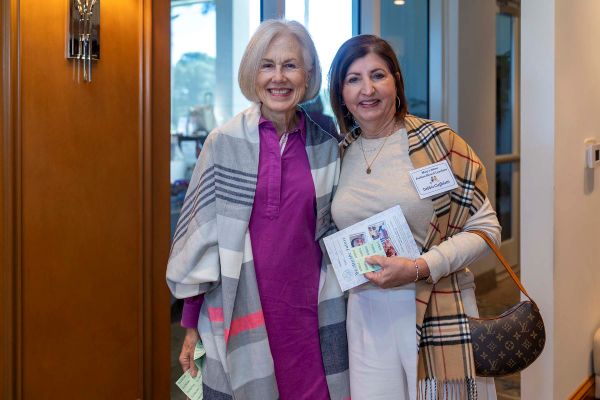 Ann Trowbridge and Debbie Cioffoletti
Mike Dadko’s daughters, Sarina and Marissa, spoke eloquently about why Dadko Wealth Management continues to support Mary’s Home year after year. Anastasia, a former resident of Mary’s Home, a graduate of its Women-In-Transition Program, and now an employee of Riverview Dentistry, gave her first-hand, heartfelt testimonial of how important Mary’s Home has been in her life and why Riverview is proud to be a premier sponsor.
“These generous businesses have supported Mary’s Home and our mission for many years in countless ways,” Thompson said, “and we encourage the entire community to support them in return.”
To find out more about Mary’s Home and see photos from the event, visit www.maryshome.org, its Facebook page, or Instagram.
About Mary’s Home
Mary’s Home is a faith-based transitional maternity home that provides residential and non-residential programs for pregnant women who lack suitable housing or favorable family relationships. Mary’s Home provides a pathway leading women to a life of self-sufficiency and dignity for themselves and their babies. The goal is to break the cycle of poverty for themselves, their babies, and generations to follow. To learn more, follow Mary’s Home on Facebook or Instagram.

House of Hope Named Nonprofit of the Year by
Palm City Chamber of Commerce
STUART, Fla. – House of Hope was taken by surprise at the 47th Installation Dinner of the Palm City Chamber of Commerce when it was singled out as “Nonprofit of the Year.” In presenting the award, Palm City Chamber Board Chair Rebecca Beckett noted that, “Through their leadership in combating food insecurity, expanding housing support, and strengthening families, House of Hope exemplifies service in action. They are truly deserving of this year’s Nonprofit of the Year award.”
“We have a long and valued relationship with the Palm City Chamber,” said House of Hope CEO Rob Ranieri. “They have been outstanding supporters of our mission for decades, both as a chamber and through the involvement of their members. We’re very grateful for this recognition and ongoing partnership.”
House of Hope has a significant physical presence in Palm City. Its Growing Hope Farm on Citrus Boulevard includes almost 100,000 cubic feet of hydroponic growing space, a newly added 40-foot freight farm, outdoor gardens, an orchard, and a packing house. The farm operations make it possible for House of Hope to grow and distribute fresh fruits, vegetables, leafy greens and herbs to all four of its food pantries in Martin County and an additional 35 area food bank partners.
House of Hope has a 42-year legacy of empowering members of the community to overcome hunger and hardship. It now touches the lives of more than 43,800 people each month, helping with basic needs such as food, clothing, furniture, financial assistance, as well as longer-term case management services that help build life skills for a more self-sufficient future.
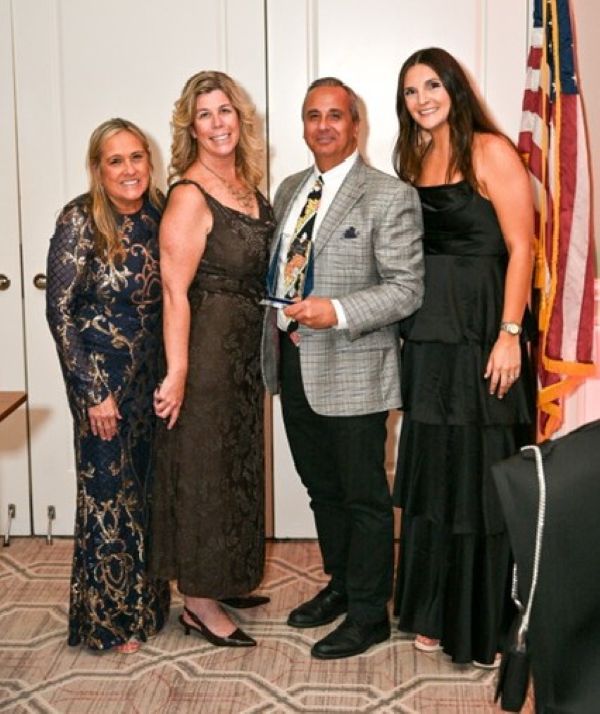 Executive Director Liz Ciampi, Board Chair Rebecca Beckett, and Marketing and Sales Director Christiana Masterson present House of Hope CEO Rob Ranieri with the Palm City Chamber’s 2026 Nonprofit of the Year Award. Photo by David Brown Photography
“This award belongs to every volunteer who gives their time, every donor who believes in our mission, every partner who stands beside us, and every staff member who works tirelessly to serve our neighbors,” Ranieri said. “Together with them and our business community, like the Palm City Chamber of Commerce, we are eager to continue making a positive impact on the people we serve.”
To learn more about House of Hope or make a donation, visit House of Hope’s website at www.hohmartin.org or call 772-286-4673.
About House of Hope
Founded in 1984, House of Hope is a 501(c)(3) nonprofit organization that empowers Martin County residents to overcome hunger and hardship. House of Hope touches the lives of more than 43,800 people each month, helping with basic needs such as food, clothing, furniture, financial assistance, as well as longer-term case management services that help build life skills for a more self-sufficient future.
The organization has service centers in Stuart, Hobe Sound, Indiantown, and Jensen Beach, with thrift stores in Stuart, Hobe Sound, and Indiantown. House of Hope’s Centers for Enrichment at Golden Gate in Stuart, in Jensen Beach, and at KinDoo Family Center in Indiantown offer free programs, technology, and workshops designed to enhance life skills, earning potential, health, and overall well-being.
House of Hope also operates the Growing Hope Farm in Palm City and several nutrition gardens that provide sustainable sources of fresh produce for clients as well as nutrition education and vocational opportunities to the community. For more information, visit hohmartin.org or call 772-286-4673. Updates and announcements can also be found on Facebook, Instagram, and X.
Palm Beach Community Raises Over $740,000 for Mental Health and Family Services at Alpert JFS “No Excuse for Abuse” Evening
Nearly 500 Community Leaders Gather at the Kravis Center as Demand for Mental Health, Disability, and Senior Services Continues to Grow
West Palm Beach, FL – March 10, 2026: Ferd & Gladys Alpert Jewish Family Service of Palm Beach County (Alpert JFS), one of the region’s leading providers of community-based mental health and social services, raised more than $740,000 during its 22nd Annual No Excuse for Abuse Evening, held February 25 at the Cohen Pavilion at the Kravis Center for the Performing Arts.
 Dr. Elaine Rotenberg, Reuben Romirowsky, Francine Wunder
The event welcomed nearly 500 community leaders, philanthropists, and supporters, reflecting the growing recognition of the critical role Alpert JFS plays in addressing mental health challenges, supporting vulnerable families, and strengthening the safety net for seniors and Holocaust survivors across Palm Beach County.
 Proceeds from the evening support Alpert JFS programs that provide mental health counseling, psychiatric services, residential support for adults with mental disabilities, emergency financial assistance, food security programs, and specialized services for older adults and Holocaust survivors. Each year, the organization serves more than 12,000 individuals and families across Palm Beach County.
PBC Commissioner Maria Marino, Karen List
“Demand for mental health and family support services continues to grow across our community,” said Dr. Reuben Romirowsky, Interim Chief Executive Officer of Alpert JFS. “Alpert JFS exists so that no one facing mental health challenges, crisis, or aging alone falls through the cracks. The extraordinary generosity shown at No Excuse for Abuse ensures that thousands of individuals and families will continue to receive the care, stability, and dignity they deserve.”
 Gary and Jennifer Lesser, Lesley Sheinberg, Erin Guy, Zelda Mason, Amy and Jeffrey Devore
The evening featured a special headline performance by Broadway star Mandy Gonzalez, known for her roles in Hamilton, Wicked, and In the Heights. Her performance brought energy and inspiration to the evening, reinforcing the event’s themes of resilience and hope.
A moving highlight of the program came when a resident of the Levine JRFS Residential Program shared her journey from homelessness and instability to independence through the support of Alpert JFS clinicians and caregivers.
The program also honored Hope Hoffman and the late Gary Hoffman (z”l) with the Luminary Award, recognizing Gary’s transformative leadership and lasting legacy of service to the organization and the broader Palm Beach community.
“Alpert JFS is a vital part of the safety net that protects and strengthens families in Palm Beach County,” said Jennifer Lesser, Board Chair and President of Alpert JFS and Levine JRFS. “The generosity of our supporters ensures that individuals and families facing mental health challenges, financial crisis, or the vulnerabilities of aging will always have somewhere to turn.”
 Mindy Nichols, Robin Gonzalez, Mandy Gonzalez, Mark Nichols, Diane Steiner
Former Board Chair Zelda Mason proudly served as Presenting Sponsor of the evening. Amy and Jeffrey Devore, Lesley Sheinberg, and Carolyn and Michael Yasuna served as Event Co-Chairs.
The event also reflects the strong partnership between Alpert JFS and the Jewish Federation of Palm Beach County, which together work to ensure that essential mental health, family support, and emergency services remain accessible to the community.
About Alpert JFS
Founded in 1974, Ferd & Gladys Alpert Jewish Family Service (Alpert JFS) is one of Palm Beach County’s leading providers of mental health and social services. The organization strengthens families, promotes mental wellness, and supports vulnerable members of the community through counseling, psychiatric services, residential programs for adults with mental disabilities, food security programs, emergency financial assistance, and specialized services for seniors and Holocaust survivors. With more than 100 professionals serving over 12,000 individuals annually, Alpert JFS is a trusted lifeline for children, families, and older adults across Palm Beach County. For more information, visit www.AlpertJFS.org or call 561-684-1991.
Photos courtesy of Tracey Benson
The mission of Play Treasure Coast Sports Tourism, formerly known as the Treasure Coast Sports Commission, is to promote the Treasure Coast region as a premier sports destination. The organization works to attract sporting events that enhance community engagement and generate economic benefits for Indian River, St. Lucie, and Martin Counties. Rights holders and tournament directors have access to top‑tier sports facilities, special hotel pricing, and grants to support their events.
Upcoming March Events
- 3/1–4/26: Jackie Robinson Training Complex Spring Training
– Jackie Robinson Training Complex, 3901 26th Street, Vero Beach, FL 32960 - 3/6–7: NJCAA Swimming & Diving National Championship
– Anne Wilder Aquatics Center at IRSC, 1200 Avenue M, Fort Pierce, FL 34950 - 3/6–8: South Zone Artistic Swimming Championship
– Sailfish Splash Waterpark, 931 SE Ruhnke Street, Stuart, FL 34994 - 3/7–8: Treasure Coast Paddle Battle
– Jaycee Park, S. Ocean Drive & Melaleuca Drive, Fort Pierce, FL 34949 - 3/7–8: Optimist Sunshine State Championship
– U.S. Sailing Center of Martin County, 1955 NE Indian River Dr, Jensen Beach, FL 34957 - 3/7–8: Florida Half Century Softball
– Fran B. Adams North County Regional Park, 9450 CR‑512, Sebastian, FL 32958 & Richard Bird South County Park, 800 20th Ave SW, Vero Beach, FL 32962 - 3/9–4/5: Florida Elite Spring Training
– Lawnwood Baseball Complex, 1302 Virginia Ave, Fort Pierce, FL 34950 - 3/11–15: ISSA Treasure Coast Championship
– Richard Bird South County Regional Park, 800 20th Ave SW, Vero Beach, FL 32962 - 3/12–15: Youth Soccer World Cup
– Halpatiokee Park, 8303 SW Lost River Rd, Stuart, FL 34997 & McChesney Park, 1585 SW Cashmere Blvd, Port St. Lucie, FL 34986 - 3/12–15: Northern Kentucky University Spring Fling Collegiate Golf Invitational
– Sandridge Golf Club, 5300 73rd St, Vero Beach, FL 32967 - 3/14–21: International Sunfish Class Association Masters
– U.S. Sailing Center of Martin County, 1955 NE Indian River Dr, Jensen Beach, FL 34957 - 3/15: Game On Races Treasure Coast Triathlon
– Jaycee Park, S. Ocean Drive & Melaleuca Drive, Fort Pierce, FL 34949
-
- 3/27–28: Sunshine State Swimming Showcase
– Anne Wilder Aquatics Center at IRSC, 1200 Avenue M, Fort Pierce, FL 34950
- 3/27–28: Sunshine State Swimming Showcase
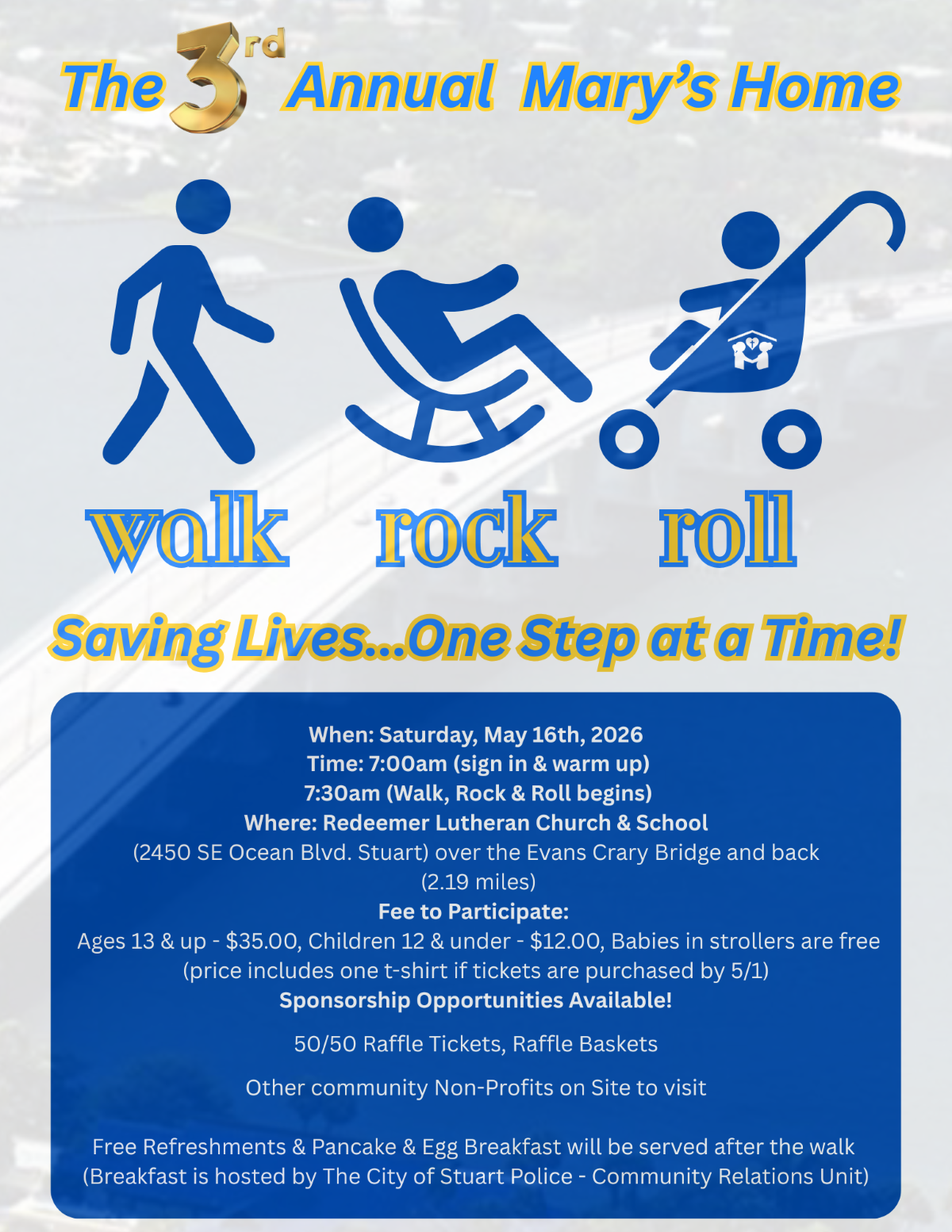

I urge those who are reading this newsletter to send an email expressing their opinions on subjects. When a reader sends one, it will be included if I find it relevant and I have adequate space. I may edit the letter because of length and clarity. You don’t have to agree with me to have your letter in Friends & Neighbors. All you must do is send it to TOM CAMPENNI or fill out the form on the website.
Audrey Taggart
Question:
Did Congress approve any of the following wars:
Korean, Vietnam, Gulf, Afghanistan, Iraq?
Korean, Vietnam, Gulf, Afghanistan, Iraq?
Answer:
No, not since WW11 has Congress had any say in wars the US fought. In fact, Congress has approved no wars since WW11.
No, not since WW11 has Congress had any say in wars the US fought. In fact, Congress has approved no wars since WW11.
Do you wonder, as do I, why Trump is being attacked by mainstream media over his action on the vicious, evil Ayatollah Ali Khamenei?
What say you?
What say you?
Richard Marino
Hi Tom,
I have been reading your newsletter for a number of years now, and I know you will not print my opinion. You keep proving you are a Trump hating democrat asshole that refuses to give the man any credit whatsoever. Please tell me about all the great accomplishments of Barack Obama and Joe Biden.
Although I do like the local coverage, I will be unsubscribing because of your tainted liberal attitude.
My Answer
Dear Richard:
You can tell much about a person’s intellect by his email address. That is one of the few things we pick for ourselves. You don’t get to choose your phone number or postal address, but your email is quite unique and expresses your views, manners, and decorum. I would print your handle so that others would understand, but it would violate two of our rules; one is we do not release emails for any reason and two this is a family publication.
FYI when calling someone a “democrat” uncapitalized “d” means that the person believes in democracy. Thanks, I do. As to party affiliation, I am a Republican and have been for more than 40 years. And as to giving the present president credit for something, he has done a magnificent job on closing the borders to illegal crossings. Something that previous presidents could have done but didn’t.
My first vote for president was for Richard Nixon amid Vietnam when who was president had a direct impact on my life. I never voted for Barack Obama nor Bill Clinton. I did vote for both Hillary Clinton and Joe Biden. Biden was a mediocre president that should have known better than to run for a second term.
I am far from liberal when it comes to the markets and capitalism. Mr. Trump has proven himself someone that has no problem having the government own the companies also known as the “means of production” or Socialism as it is known.
Nor do I believe that democracy (notice uncapitalized d) is cult-like devotion no matter what to one person. That is anti-democratic and would have been anathema to Republicans in the past. Adherence to our constitution and our laws is what a president and his leadership should be all about, not a photo on every street corner, North Korean “Dear Leader” style.
If I were you instead of unsubscribing, I would just read the local content that you like and not anything else. You won’t save any money one way or the other and I won’t be one cent richer or poorer regardless of your action.
You see, I will print your letter.
Richard's email is because he is in the lubricant business.
George Tully
Well the opening piece about Iran, war, Nobel Peace Prize, Trump etc. is flat out wrong and a lack of view of the future and the big picture. Period.
I hope the slaughter house does not occur because a mini preview occurred here in Stuart, at the Marriott Resort on Hutchinson Island, in fall 2024. A large group of the Jewish faith rented out the hotel and slaughtered many animals for weeks... the stench from the remains and such in the parking lot was brutal to us who lived in the Indian River Plantation. Who knows how much leaked into the lagoon.
Have a good day and regards,
Ronald Larock
Hi,
I guess you are in favor of Illegal immigrants. Its ok for Chinese and Iranians and Russians vote in our elections. Its OK that there are terror cells that have crossed the border. Its OK that countries have let their criminals to come here and kill citizens. Its ok children were trafficked Its OK Somalies are stealing money from us and 80 percent are on welfare in Minnesota. As investigations go on, there will be more bad stuff from what the Traitor Myorkas did by not following law to protect the border. Chinese have bought farm land next to Military bases, what up with that. There is nothing good about Illegal Immigration. Legal immigration is good. Farm help in the past was done with Green cards where they went home after the work was done, that was working.
You talk about the cost of these detention centers. I am a snow bird from Massachusetts. In Massachusetts we pay between $2400 and $3800 a week for each Illegal Immigrant family. They are in hotels, taking up housing creating a shortage in housing and housing costs have gone up to the point young people can't afford a home. An accurate amount would be possible, but although citizens voted for an audit, the state congress refuses to allow the audit. Talk about corruption.

During commissioner comments, Chair Heard brought up Pal Mar.
Lawlessness still exists. People are destroying ecologically sensitive lands. She showed photos of 4X4 recreational vehicles tearing up the wetlands. They are still shooting at Trailside. All in all, in the intervening months and years since I first wrote about this problem, nothing has changed.
Until we can close access to these vehicles, this type of behavior will continue. As Heard stated, there is no enforcement. It is a sheriff-free zone.
We can say all we want about how safe we are with our current sheriff. In most of the county, that is true, but when it comes to areas like Pal Mar, it is far from true. People firing semiautomatic rifles pose a threat and danger that hasn’t gone away. And no one cares to do targeted enforcement in Pal Mar to stop the shooting.
Commissioner Ciampi said that he agrees with everything Heard said. However, he believes the off roaders should have a place to drive their vehicles. He has mentioned that before, and I think the county should explore giving these residents a place to do so. Wouldn’t that be better than alternatives such as Pal Mar?
But why did he? That is the answer we need.
Back in 1989, the county and the owner of the entire corner of Federal Highway and Bridge Road entered into a PUD Agreement. The development encompassed a little under 50 acres. Over time, the main part of the center had Publix and other stores as well as out parcels with a bank and other businesses.
What remained and was the subject of this application was known as Out Parcel A. It is on Bridge Road with S.E. Florida Avenue serving as the entrance to “A” and to an existing housing development in the rear. There are existing wetlands and an upland preserve area on the parcel. The owner is going to create an additional half acre of upland preserve on the site.
The owner is asking for his 2-story self-storage building to be 99,000 square feet altogether. He is also providing a turn lane on Bridge Road and giving Hobe Sound Historical Society $25,000 to preserve the old train station. According to staff, he is allowed to build up to 92,000 feet on the site. I have rounded the square footage to make calculations easier.
The zoning would allow a restaurant or an office building. How about a CVS or another high occupancy user? This is a self-storage building. It could be 3 or 4 stories. Even the homes to the rear of the building asked that it be passed. Why did Capps say no?
 He brought out an old measurement known as GLA (Gross Leasable Area) that is a measurement in the old code and is no longer used. Commissioner Capps wants to base approval on that number which is no longer in the code.
The applicant then decided to adjourn the application until April 7th. It is not often that everyone agrees that a project is a good use. It has low impact on the neighbors and is apparently needed. The LPA (I am a member) approved it unanimously. No one spoke at the commission meeting or the LPA against the project. In both meetings, the neighborhood located behind the proposed building spoke in favor.
If something more is going on that has not been brought out at the meeting, then Mr. Capps should make it known to the public and his fellow commissioners. We all have a right to know the motivations of commissioners.

Do you know when Tallahassee steps in and removes land use decisions from local government? When local governments act as if they don’t have a responsibility to act in a sane manner.
A bill known as the “Blue Ribbon Projects” Bill probably won’t affect Martin County much. The bill will give 90 days to review development projects on 10,000 acres or more and then be automatically approved. The House sponsor claims that the bill will lead to more affordable housing and encourage land conservation. What utter nonsense. (The bill did not pass in this session but will be back.)
When politicians such as Boss Collins hold town halls about moratoriums, the opening it gives big developers in Tallahassee is amazing. New residents are what the economy of Florida is built on. More and more housing means more and more people coming to the state. You think Tallahassee and developers are going to allow Boss Collins to shut down the pipeline?

Within the next couple of years, I predict zoning and land use is going to be like our building code…written in the capital and the locals will just have to carry it out. Local government can always make the code less restrictive but never more so. Much of this will be due to money going into the pockets of legislators but some will be because of people like Collins who are more interested in stirring up residents than solving problems.
In this bill 20% of apartments must be available for affordable housing. Those who have 80% of the median income qualify for affordable housing. In our county, a family of four with an income of $87,000 would qualify. Those are the ones who will qualify for these special housing units that are to be built as part of the Blue Ribbon Projects. The affordable part can also be satisfied by multi-family and town houses.

The bill calls for clustering of development on 40% of the property with 60% as reserve areas. That sounds like good planning practice to me. However, while local codes usually must show a need for housing, the bill has no such requirement. Build them and they will come.
For a state that wants growth, local control is an impediment. Developers want one stop that fits all and Tally is so much easier to navigate. And that is where we are headed.
What makes a guy drive hundreds of miles to speak for three minutes to his former bosses in a public setting?
Obviously one who believes he has been done wrong. That is what the prior interim manager and finance director of Stuart believed. Louis Boglioli was ready to stand up even though he knew he would be ridiculed by the Boss and his Politburo. Worse yet, what if no one, except a few people, listened to his words or understood where he was coming from?
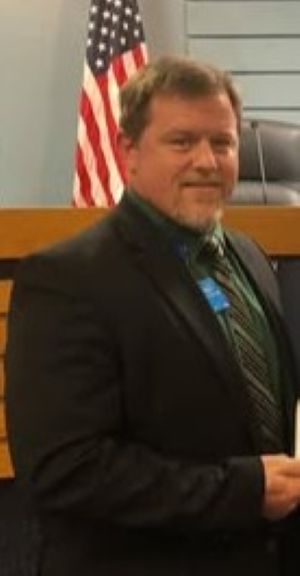 Boglioli found a home at Stuart City Hall for many years. He, along with Stuart, grew up together. His mother was a city clerk. Jolie was steeped in government service his entire life. His family knew Governor Graham, and Boglioli remembers him eating his mother’s spaghetti at her home.
Many things have changed in the ensuing years. The camaraderie of government workers with each other and elected officials has changed. The culture of everyone looking after each other has been lost mostly in the past decade. Fear has taken over.
You often hear that Stuart is just a small friendly town. Small maybe but not always friendly, especially if you become an enemy of our current exalted leader. The serpent in the Garden of Eden comes to my mind. You don’t have three managers in 6 months and soon to be four if Stuart really is a friendly little town.
 Mayor Boss Collins has that forked tongue of a serpent speaking in glowing terms even as he twists the knife. What normal person would drive from Alabama to Stuart in order to speak for three minutes if he didn’t believe he was stabbed in the back.
Boglioli couldn’t have worked for as many Stuart city managers as he has if he was incompetent or any of the other things the Collins rumor mill was circulating. He wouldn’t have felt compelled to say his piece if he hadn’t felt betrayed for his loyalty to Stuart over loyalty to the Boss.
Here are Boglioli’s remarks to the commission:
The Commission has allowed me to be smeared as well as they are even now actively trying to discredit me, so I am here to give my side of the story.
They praised me publicly until I said no, then I had to go. Three City Managers have said no, but we’re the problem. In January, Thursday the 8th and Friday the 9th, were my biggest No’s. Then Monday the 12th, I was told I was going to be replaced that night; coincidence? I stepped down the 26th, the coordinated attack started the next morning, and I made the only move not expected; resign.
Working full time, some remote, is not a crime. You just don’t like the sound of it, which is why it was mentioned so many times publicly.
The Commission knew about my remote work, and that I was sleeping at “Duffy Boats.” They put me in it for months appointing me the City Manager. And if sleeping in a City-owned office building in an 8 x 10 room with roach poop on the bed every night, no microwave, no refrigerator, no TV, and sharing a bathroom with a rowing club is a “waterfront condo” there are some real estate agents about to make a lot of money.
The 3M settlement was not settled.
To the Fire union, what you don’t know is I was told by one Commissioner to send the first email about the cost.
My job was transparency. My work was audited every year by external certified CPAs, I'm not allowed to pick by law. We won the award for transparency and reporting 28 years in a row, including "remote".
Thursday no, Friday no, Monday you have to go.
Thursday night the 8th, I said no to firing an employee over the SRO policy for a school whose principal is related to a board appointee. I overrode the policy the next morning; immoral, unethical, illegal, and violation of City policy.
Friday the 9th, I was told by one Commissioner to ask about buying School Board property to demo a building and make a park, a violation of City policy.
I was told to not meet with Tom Campenni and Robin Cartwright (yep you too Robin). I was told Robin is just a leach trying to get access for a better story. I can't say what was said about Tom. I said no, and I met with both of them on separate occasions; on the calendar, not secret. I met Tom on Friday the 9th. Later that same day I was told to ban Tom from City Hall; I said no, it's illegal and a violation of City policy.
I fought for Robin and got attacked as thanks.
I was reminded by one Commissioner how important my remote work was to me, how much I needed it, and was told no new City Manager would stop it, right before I was replaced; a threat.
Looking for corruption? How about backroom deals, favors for friends and "important people", intimidating employees, and threatening them with their jobs if they don't comply, orchestrating public attacks on them, and creating an environment where employees are afraid to speak up, hesitate, and look for approval from the dais before answering public questions?
 Boglioli’s statement is pretty much inside baseball. But the commissioner mentioned can all be traced back to one character…Chris Collins. In the city-manager form of government Stuart has adopted by charter, commissioners are not at all involved except in policy that is decided on the dais with votes. Quiet office meetings with threats by commissioners on how the city operates are not the way things should go.
Mayor Boss Collins needs to go. This is not a policy debate about growth or no growth. It is about good and evil. Collins is evil. He doesn’t deserve to be an elected official.
I will fight all day with Commissioner Heard over her development policy. Guess what? I am probably voting for her because I think on all other matters, she is right. Collins is destroying Stuart and if he runs for the county (which I would bet on), he will try and do the same thing of increased cost, corruption, and chaos.
I didn’t think Collins was evil when he was first elected. He just had a different perspective. Well, he does, his is one of destruction. There have been three city managers in less than six months with a fourth soon to be installed with a divided vote of 3-2. No experienced city manager would take a job where 2 out 5 don’t want you.
An election is coming, and I wouldn’t want to be in the new manager’s shoes if the tide turns.
Mayor Boss Collins lost one more court battle regardless of how he spins it.
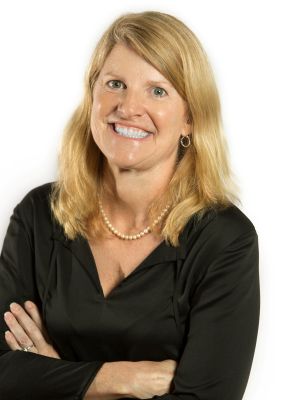 Judge Angela Dempsey set aside 5 of the 6 defenses in his expensive and useless lawsuit regarding SB 180’s constitutionality. The lawsuit is supposed to set aside that law and stop changes to the Comp Plan and LDRs until next year. What the heck…the Boss has ignored the law anyway by implementing changes in direct violation of the statute. He has said he doesn’t care because “what can they do to me.”
So far, he is right that the State of Florida has done nothing. No letter, no investigation, no nothing. He and his Politburo are getting away with disobeying the law.
But it isn’t only them, it is also the city attorney who is charged with upholding every statute not just the ones a commission agrees with. By not making sure that his city complies, the city attorney is also complicit in the unlawfulness. Starting a lawsuit with a claim does not relieve Stuart of the burden to comply until either the statute is overturned by the court or changed by the legislature.
Think about the absurdity of the Collins’ argument that because they believed the statute was unconstitutional, they didn’t have to follow the law while the court was deciding. If carried to an extreme, then any law you believed was unconstitutional would not have to be followed while a court decided. Have you ever heard anything more bogus?
The court has dismissed with prejudice five of the six counts that Collins raised in the pleadings. The only cause which is still valid to proceed in court is Count IV which is the Violation of the Unfunded Mandate Provision. There is such a provision under statute. Failure to dismiss doesn’t mean that Collins won, it means this can be litigated further.
However, if the court believed that Collins was likely to prevail, the judge would have issued the stay until after the trial as Collins asked. She did not and all parts of SB 180 are in full force and effect including those sections that Collins and his crew are ignoring right now. A lawless commission which has not been addressed by Florida.
 Boss Collins as well as any citizen has the duty and obligation to follow all statutes regardless of personal animus toward any in particular. Most citizens who want “home rule” find SB 180 an infringement of a local government’s rights. It doesn’t matter. We must follow the statute while it is still on the books, and our elected leaders must especially follow it.
The state may look at this and think Stuart doesn’t matter in the larger scheme. But it does. It shows that elected officials can get away with breaking the law and there are no penalties. No matter what the Boss says, this was a big defeat. Read it for yourself.
You can read the judge’s decision here
If it weren’t so laughable, it would be considered tragic.
 When the voters of Martin County overwhelmingly voted to pass a sales tax to buy environmentally sensitive lands such as in CERP or the headwaters of the Loxahatchee, they couldn’t possibly imagine that the money would be used to purchase the old Martin County High School Building. That is Mayor Boss Collins’ idea of a good use for that money. And it goes against the spirit of what the voters expressly wanted.
Unfortunately, the language of the referendum and the enabling ordinance that Martin County must follow is not strictly binding on municipalities. Sales taxes of all stripes are divided up per capita. Since Stuart is 10% of the Martin County population, it will receive about $2 million per year for the next ten years from the environmental tax.
 So are the Boss, Little Boss Reed, and the Ever-Faithful Giobbi looking to do something environmentally friendly in the spirit of what the taxpayers voted for? No! Under Boss Collins leadership, they want to buy the old high school. And why you may ask…for the ridiculous reason that the Martin County School Board may sell the property to a developer.
For the past several years, the board and Arts Council/Foundation have been negotiating a lease for the foundation to take possession with perhaps the intent to buy the property. The building itself is an ecological disaster. I always thought it was a bad idea full of lawsuit potential for both the owner and tenant.
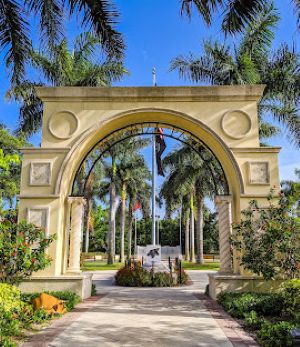 Collins originally suggested that the building be knocked down and replaced with a park. If Collins had his way, Stuart would be one big park. We have so many parks that a few years ago, the city had to stop charging a park impact fee because we are so overbuilt with parks according to what our Comp Plan calls for. Collins then flipped flopped on that idea and said that the city could buy it and allow the Arts Council to lease it.
 So, we are going to buy a property then lease it to the Arts Council because we have money from sales tax to buy sensitive lands. First, isn’t that what the School Board and Arts Council are currently hashing out? How are the taxpayers better off from the Collins’ plan? Second, it is idiotic to buy a building loaded with asbestos and other toxic elements and take on that environmental headache for the Stuart taxpayer.
 If we really want to tackle an environmental nightmare, Stuart already owns a toxic dump that Collins killed the sale of last year. As you remember, Ashley Capital was going to pay the city to buy the site, remediate the site, and then build industrial capacity on it which would have brought taxes and jobs to the city. The Boss poo-pooed it because he wanted to spread out plant debris to dry out there when we have storms before hauling it to the landfill. Ashley was going to give the city a site closer to the dump to do just that.
Collins purports to be an environmentalist. He is far from it. He is an egotist and narcissist that wants to take over the county and do what he has done in the city there. He wants to spread increased costs, corruption, and chaos across Martin County.
 We shouldn’t let his maniacal evil plans subvert the will of the voters and get his way because he controls Reed and Giobbi. Let the Martin County School District and the Arts Council move ahead, and Stuart should stay out. The sales tax should be used for its intended purpose and not be subverted because of Collins’ wild fears about development
Mayor Boss Collins picked a new city manager.
 He anointed Michael Giardino, currently the Deputy General Manager of New York’s LaGuardia Airport. His experience in municipal government is limited to a brief stint as the Village Manager/Treasurer of Brockport, New York, a municipality of 8500 for a year in 2011. He is a Navy veteran that attended SUNY Brockport, Naval War College, Naval Postgraduate School. He is a trained naval aviator.
His main experience is in running airports. We were told that Giardino has had a house in Rocky Point since 2011. As a military man, he knows how to follow the chain of command. Or at least Boss Collins believes so. Collins believes it so much that he said it a half dozen times when extolling Giardino’s praises.
 Being the city manager of Stuart is not the same as a general officer taking orders from the president. Collins does not sit atop of a pyramid barking orders downward through the ranks. What the Boss has never understood is that he isn’t the boss.
This is not the first military man we have had as city manager. Paul Nicoletti was a Colonel. He didn’t manage the city by taking orders from commissioners. The manager’s job was to make sure the staff did their jobs as efficiently as possible. There was no chain of command as if this were the 101st Airborne.
When the manager/ council form of government began to take hold a little over a hundred years ago, it was to prevent politicians from getting into the weeds of government operations. In essence, good government types were trying to stop corruption. It was thought and has proven successful that professional management would be best.
It isn’t as if there is no place for commissioners, but their place is on the dais making policy decisions not hiring fire fighters, as the Boss did last year. The result was to blow a hole in the budget and probably make sure that Stuart Fire/Rescue ends up as part of Martin County’s much bigger department.
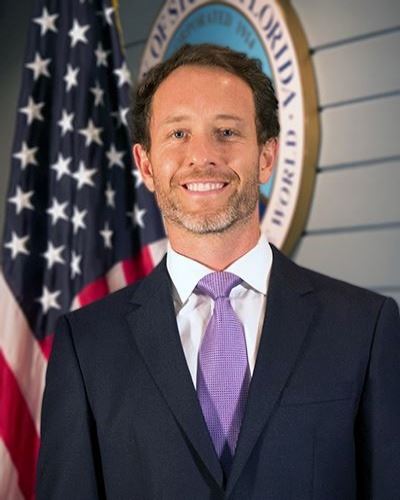 It doesn’t matter who the manager is if the Boss and the Politburo continue down this path of interference, and staff continue to allow them to get away with it. The Boss thinks that he was elected to be the top of the heap instead of one of five making policies for the city. It doesn’t matter if he thinks that, because he was elected, he can dictate how the city runs (and we have plenty of evidence to that affect) because of his mystical tie to the “people”. If Giardino is smart, he will make sure that commissioners can only talk to his staff through him.
Giardino will have a big learning curve because Florida is so different than most places. It isn’t that he can’t do it. He seems to be more than capable of handling a new set of challenges.
Mr. Giardino only had Collins and Reed in his corner completely. Somehow for the first time since being elected, Giobbi broke with Collins. She wanted someone else as manager. Clarke also spoke about others.
Clarke ended up seconding Reed’s motion for Giardino, and the vote was 3-2 in favor with Rich and Giobbi voting no.

Most people wouldn’t accept a job like this with such a slim vote. Most would want a 5-0 to move forward especially when one of the commissioners kept talking about other candidates for the job. Giardino should realize that Collins probably won’t be there since he will step down to run for the county commission.
Unless desperate, most wouldn’t go anywhere near Stuart with an election coming up in five months where if the majority changes, the manager could be out on his ear.
An Earlier Version had Nicoletti as a Lt. Colonel it has been changed to read his correct rank as a Full Colonel
I don’t always agree with Frank Fender. I did this time when he said that the Sewall’s Point Commission has had the same discussion for 10 years. Never had truer words been spoken.
It is about connection fees for both the gravity and grinder systems going into the homes of the town. The commission was given two options for how to charge the residents doing the connection. Do they share in the expenses equally, or will they charge the gravity users more.
Of course, if you ended up being one of those homes that has a gravity connection, you want it spread equally. And I don’t know whether it is a bad idea to do that. But by the time all are hooked up, the price will be higher, and then is that fair? It may take decades since there is no mandatory hook up until your septic system fails.
Tidikis wants to spread the costs equally with the base rate the same for all. Any shortfall will be made up by what a future commission decides. They admitted it was a bit of kicking the can down the road. It passed 3-2 with Kurzman and Barile voting no.
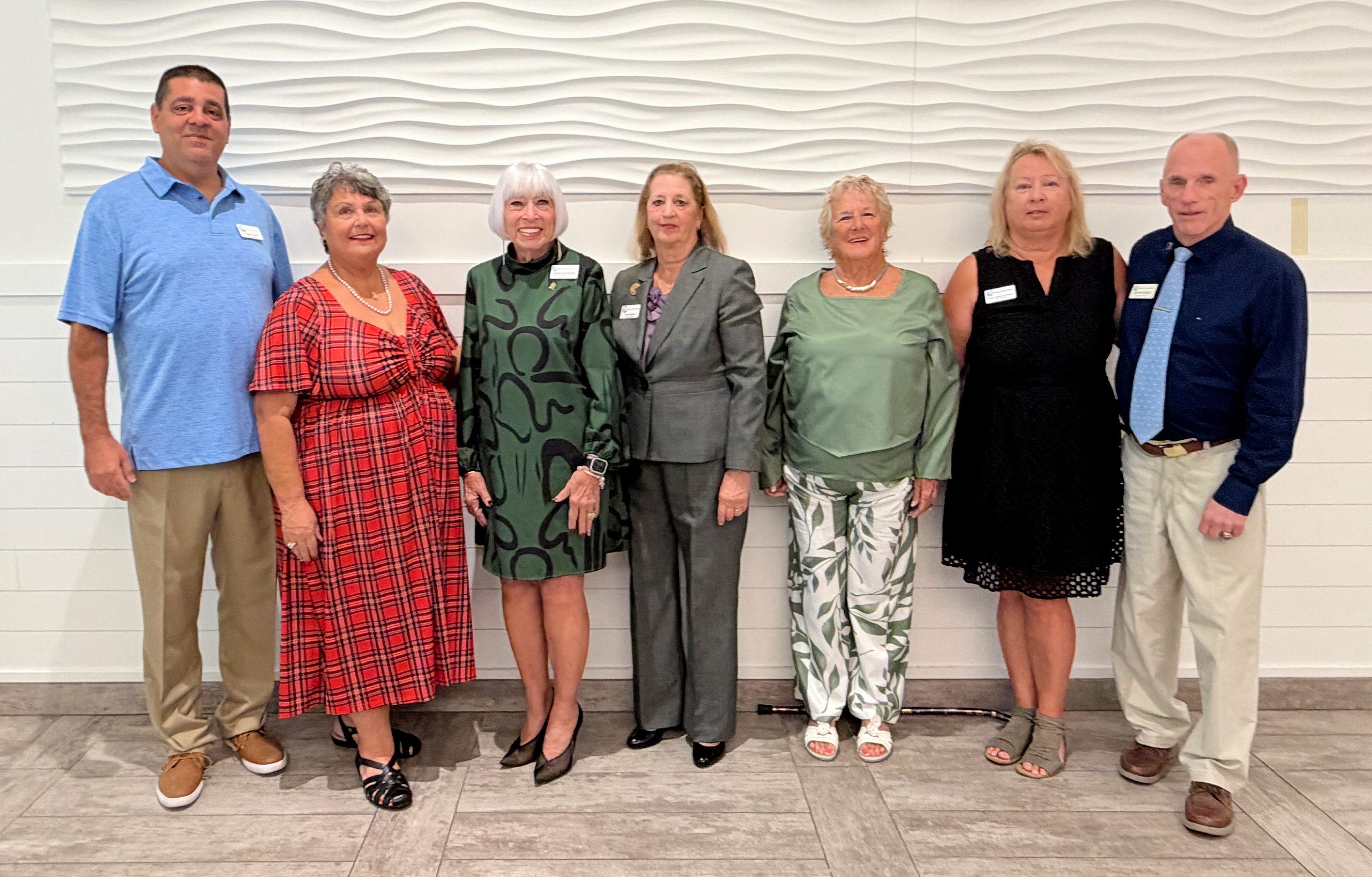
The council has begun reviewing their charter with Town Consultant Dan Hudson leading the discussion.
As of now, the only thing I can say for sure is that Ocean Breeze’s council is going to shrink from 6 to 5 members. They spoke about compensation, but for both council and mayor, they decided not even to allow it in the charter. They are also thinking about holding elections in August when most other Martin County elections are held.
There was some discussion about how many meetings a council member could be missed before losing the seat seat. A detailed explanation of town consultant and manager and the difference of each was discussed. The current description of consultant is more apt than town manager.
There were many more subjects that needed to be addressed which will be carried over to the next meeting.
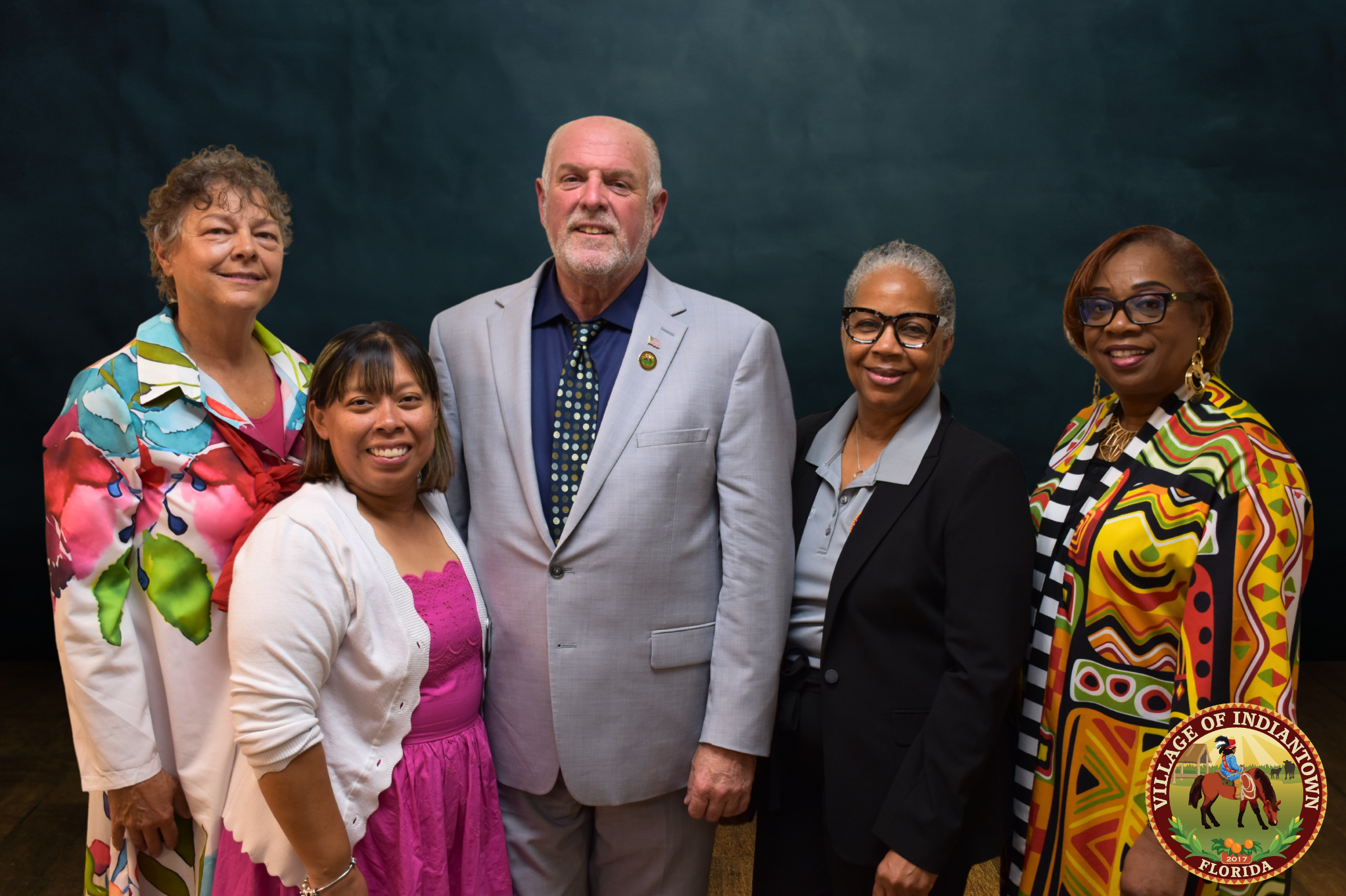
Council Member Brown wrote a note giving me some information she thought I should have after the last meeting.
Good afternoon Mr. Campenni,
You stated that Friends & Neighbors is designed “to give information about what is happening within our County and to inspire people to get involved.” In your recent article, you shared your opinion about me and what you believe I should or should not be doing as a Council Member for the Village of Indiantown. While you certainly have the right to your opinion, some of your presumptions about me and what occurred at that council meeting are incorrect.
First and foremost, I take the duties for which I was elected very seriously. On the evening in question, Village Hall was filled with community members who attended because they wanted and needed answers from their council and staff. After a week of social media discussions, questions, and confusion surrounding data centers, many residents arrived seeking clarity.
My intention in asking questions during the meeting was to help ensure that accurate information was shared publicly. Staff members were present and prepared to address these questions, and providing those answers during the meeting would have benefited the community members who were there specifically to learn more.
In fact, prior to the meeting I had already spent more than an hour on the phone with our Village Manager, Taryn Kryzda discussing the matter. During that conversation, I shared five questions that reflected concerns I had heard directly from residents. The purpose of that conversation was to ensure that we could be prepared with accurate information to help educate the community and calm the anxiety that had become quite palpable.
I also had several conversations with residents who were confusing the FPL annexation with the proposed Silver Fox data center project. It was clear there was significant misunderstanding, and my goal was to help clarify those differences and provide reliable information.
Your suggestion that my actions were an attempt at a “gotcha moment” or that I was “playing to the crowd” is simply incorrect. That approach benefits no one, not the residents, not staff, and not the council. I make it a priority to communicate with staff in advance whenever questions or concerns arise. In fact, of the five council members, only two maintain regular weekly—sometimes daily—communication with the Village Manager, and I am one of those two. I have a standing meeting with the Village Manager every Wednesday morning. This is not opinion; it is fact.
During our conversation prior to the meeting, the Village Manager even suggested the possibility of holding a Town Hall meeting to further educate our citizens about the issue. Unfortunately, due to the direction the council meeting took that evening, that suggestion was not brought forward at that time.
You certainly do not have to agree with how I conduct myself during council meetings or the questions I raise on behalf of residents. However, it is important that the public understands that those questions were asked with the intent of bringing the community along, reducing confusion, and ensuring that our residents have access to accurate information.
Too many people want to tell the Indiantown Village Council that they should not approve the data center. There is only one problem as Karen Onsager stated…there is nothing before them to approve or deny. No drawing, particulars, site plan, or anything else.
That doesn’t mean that a data center isn’t coming. It just hasn’t rolled up to the council stage as of the last meeting in February. It seems most people are afraid of the water table being affected and water pollution. Will the aquifer be able to provide enough water without going dry or saltwater intrusion?
At some point, the proposed data center will come forward. It seems to me though it should be looked on as a benefit for the village, not a curse. Staff and the council must be careful to make sure they understand what they are approving. I am hoping that they hire the right consultants so that whatever is proposed is beneficial to the entire village.

Until the actual project comes forward, everyone should take a deep breath and wait to be for or against something that is more likely to be beneficial than not. That is why I don’t understand either side rushing to judgement before the facts are in. But rush they are.
Let me be clear…no center has been approved. It hasn’t even been through the pre-approval process. Everyone who wants to bring a project forward has that right. If all the conditions have been met, then it moves forward to the board and council.
But politics and NIMBYism rear their ugly heads. Eric Miller, who happens to be an Indiantown resident, is holding a town hall with his special guest stars our very own Mayor Boss Collins and She Who Must Be Obeyed Robin Cartwright, both City of Stuart residents. Why are they sticking their fingers into Indiantown…politics.
It wasn’t enough that the Boss and Cartwright have just about ruined Stuart. Now they are heading to the other end of the county to mess up another place. They were supposed to have County Commissioner Blake Capps there, but he thought better of it and decided not to attend. What will the attendees learn?

From the flyers and posts, there are no scientists or data center experts. It seems Collins, Cartwright and Miller will just be there spouting off stuff. What a way to learn about a subject. Don’t tell me Mayor Boss Collins isn’t running for county wide office. He can’t bamboozle Stuart any longer, so he is looking to Indiantown to sow his increased costs, corruption, and chaos there.
Reasonable people will take the time to understand what is really proposed. I do know that data centers have come a long way in the past year or two. And if this center is up to date, it may be beneficial for the village by providing new jobs.
But I am still not ready to say it is all hunky dory either. I want to see everything go through the approval process. Let experts make sure it is vetted. There is no rush to condemn or approve something that is this controversial without good information and time to build a consensus.
Over several meetings the Jupiter Island Commission came up with an ordinance banning gas powered leaf blowers.
I wish more places would do so. The constant noise boggling decimal machines can drive a person crazy. And all for what… a blade of grass on an outside patio. It looks like the ordinance was all for naught.
The Florida Legislature passed SB 290 which is known as the “Farm Bill.” One of the provisions is that counties and municipalities cannot ban gas powered leaf blowers. Really?

The legislature must have a member or friend of a member that owns a landscaping company. Do the politicians of Tallahassee have nothing more important (such as passing a budget) to do? In Martin County only Jupiter Island has an ordinance banning gas powered leaf blowers, but it wasn’t that the commission didn’t give it much thought before enacting it.
Property rights issues are one thing but ordinances for leaf blowers are what local government should be about. It isn’t as if local landscapers were being harmed by the phaseout of gas powered over electric. In this case the commission worked with the largest landscapers on the island to have their input into the process.
This is a preemption without a good reason. The only reason this is being done is as a sop to an industry. It also makes the case for stopping all preemption even when the legislature may have a good reason to implement one.
Having come of age in the tumult of the Vietnam War and Civil Rights Era, most of the music we heard as kids was somehow tied to those two events in history.
 Last week an icon of the Vietnam War protest movement died. “Country” Joe McDonald who had probably the best-known protest war song with his band Fish passed away of complications of Parkinsons Disease. His song “I-Feel-Like-I’m Fixin’-To-Die Rag” captured the anti-war movement especially by those least likely to go to fight in Vietnam.
Today, the army is a volunteer force mostly of the working class. Then it was a rag tag ensemble of America. Most rich white kids found a way to avoid serving in Southeast Asia, such as Donald Trump and George W. Bush, while others were being shipped off and dying in a war that seemed to go on for an eternity.
With the “Rags” refrain of:
“And it's one, two, three,
What are we fighting for?
Don't ask me, I don't give a damn,
Next stop is Vietnam;
And it's five, six, seven,
Open up the pearly gates,
Well there ain't no time to wonder why,
Whoopee! we're all gonna die.”
It was played to 400,000 people at Woodstock with the infamous “F” Chant.

I remember how my classmates and I thought that we would soon be part of Vietnam. By then, Americans couldn’t understand why we were there. Why had so much of our blood and treasure been spilled to help governments that were so very corrupt?
Americans like short wars. As a nation we were all gung-ho on Afghanistan and even Iraq. But as the years slipped by and the death toll mounted, we asked ourselves why we were there. Perhaps if there had been a draft, then those wars would have been much shorter.

I saw the towers fall almost 25 years ago. There was no doubt in my mind the bastards needed to pay. If we had just kept it to where Bin Laden had been training in Afghanistan, then we would have blown “you know what” out of the Taliban and left. No nation building or pacification or teaching democracy where it never was. In that 20-year period, the only thing we succeeded in doing is making a few corrupt government officials rich.

Now for some reason we are blowing up Iran. It costs us between $1-$2 billion per day. We seem to be able to afford war but not Medicaid, Medicare, and SNAP. Americans go without so that bombs, missiles, and drones can be sent over there, and the president can build a ballroom to entertain his wealthy friends.
Vietnam cost Americans 52,800 lives plus many more wounded both physically and psychologically. We ended up with Communist regimes anyway that now have become some of our largest trading partners. You see that they found capitalism all on their own. They didn’t need any instructions.
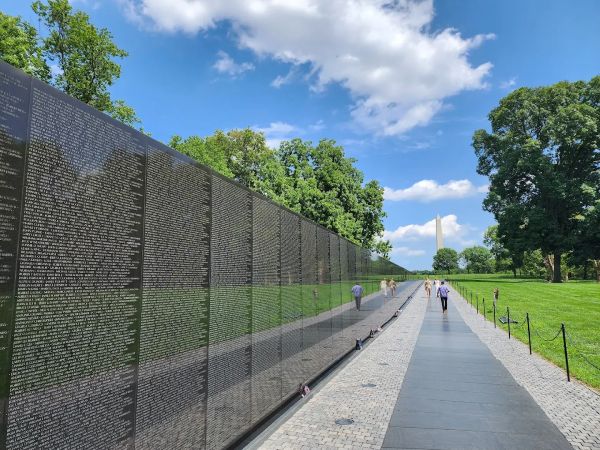
World War II and Korea were not my wars but a history lesson. Vietnam, Cambodia, Laos, Panama, Gulf War, Grenada, Somalia, Bosnia, Afghanistan, Iraq, Syria, Yemen, Venezuela, Iran and probably a dozen other places where we lost men and women, and the American people didn’t even understand the reason or objectives of most of those incursions. You can call them undeclared actions, but they are military interventions.
Perhaps we need to bring back Joe McDonalds’ Rag and give it new lyrics for Iran especially if we end up with boots on the ground. This time we can write lyrics naming who we are fighting for. It certainly isn’t the American people.
IF YOU ARE NOT A SUBSCRIBER DO SO FOR FREE HERE www.friendsandneighborsofmartincounty.com
GET THE WORD OUT
Friends and Neighbors of Martin County is your eyes and ears so that you know what is going on in Martin County’s municipal and county governments. I attempt to be informative and timely so that you may understand how your tax money is being spent. Though I go to the meetings and report back, I am no substitute for your attending meetings. Your elected officials should know what is on your mind.
Tom Campenni 772-341-7455 (c) Email: thomasfcampenni@gmail.com
Tom’s Articles
From Medium
"Who Hates Renewable Energy"
From Martin County Moments
"How To Circumvent The Law"
"What Makes A Guy Drive Hundreds of Miles To SPeak For Three Minutes"
"The Data Center That Isn't Here Yet"
Other Articles
Wall Street Journal: "Trump Administration Set to Receive $10Billion Fee for Brokering TikTok Deal"
News From The States Iowa: "Farmers shouldn't need permission to fix what they own"
The Capitolist: "Florida Senate Backs Election Bill Tightening Voter Registration Rules"
Florida Phoenix: "Florida Sheriffs rebel against Trump's, DeSantis' mass deportation efforts"
Medium: "Individuals over 70s, Brimming With Vitality, Ofter Share These 6 Lesser-Known Practices"
The New York Times: "Lucky,Heroic, Profane: The Story of N.Y.P.D. Shield No 13558"
Washington Post: "Why Adam Smoth Disdained The British Empire"
The New York Times: "Data Centers Are A Distraction. The Real Fight Is Elsewhere"
Hometown News: "Stuart commissioner fails to win investigation"
Florida Phoenix: "Fiilish legislators decide Florida Forever meand 'Florida Never'
The New York Times: "Senate Moves Toward Passing Sweeping Housing Bill, but Challenges Lie Ahead"
Wall Street Journal: "Senate's New Housing Bill Would Force Large Investors to Sell Homes"
Wall Street Journal: "What Is a City When Its Wealthies Leave?"
The New York Times: "Don't Call It a Wedding. It's a Domestic Partnership Party."
Copyright © Mar 20, 2026 Friends & Neighbors of Martin County, LLC., All rights reserved.