





Martin County is a peculiar place.

Our residents are always saying how unique we are. But is that true? Is there a difference between Martin County and the rest of the world?
We have been indoctrinated by our politicians and mostly ourselves to believe that. I don’t think it is true. We almost use it as an excuse to hide from our problems instead of confronting them.
There are many silos here. And they really don’t speak to each other. It is an endless loop that we are part of.
Some people have figured that out. Chris Collins has masterfully used it against the very people who believe in that uniqueness as if it were doctrine. And now those same people are paying the price.
Collins wants you to believe he is an environmentalist, a no-growth crusader, and will cut taxes. Yet until becoming a politician almost four years ago (and he is a skilled one), who ever saw him do anything for our community. He parrots back the “uniqueness doctrine” that so many believe.
 In Matthew 7:16-20, Jesus warns us about the Chris Collins’ of the world. “16 By their fruit you will recognize them. Do people pick grapes from thornbushes, or figs from thistles? 17 Likewise, every good tree bears good fruit, but a bad tree bears bad fruit.
18 A good tree cannot bear bad fruit, and a bad tree cannot bear good fruit. 19 Every tree that does not bear good fruit is cut down and thrown into the fire. 20 Thus, by their fruit you will recognize them.”
That is something we all need to remember.
This week we have some great columnists to give us their angles. I want to point out Dr. Michele explaining Hanta-Virus. Marcelo Guimaraes telling us about a unique Norwegian Village. And Brent reviews the Black Marlin.
So, settle back, pour yourself another cup of coffee and dig into Friends & Neighbors.
Have a great Sunday Morning!
There was a brief article in The Economist about whether children are pickier about their food choices now than in the past.
 If my granddaughter is any indication, the answer is yes. I remember when she was about two, we were at a restaurant, and she was eating calamari. We were amazed. Today at 8 she wouldn’t touch it for all the bribes I could think of offering.
As a kid in the 1930s, my father would eat Italian bread and butter with sugar on top for a snack. I too would eat Italian bread but without the sugar and butter. On my way home from the store with a loaf or two, I had to be careful that I didn’t only eat the heel but consume the rest of the loaf too.
 My grandmother would make “minestra sandwiches.” They consisted of the ever-present Italian loaf with cooked greens (usually escarole) in olive oil, garlic, and red pepper flakes. My mom stuck to bologna or salami sandwiches with mustard.
 Depending on our economic straits, meat was not always around but rice and pasta were. In the summer we would have bushels of peppers or corn. Stuffed peppers, pepper sandwiches, and roast peppers were great. Fresh corn was sometimes a meal by itself. As were salads with summer tomatoes. It is not like we had a farm or even a garden but being in the food business, we had great supplies for little money.
 When times were tough, my grandmother would bake the bread. Nothing was wasted. Anything that was left after two days was toasted in the oven and placed in a brown bag. That was what we ate in the morning with a little butter.
When times were good, we had sausages for breakfast and dinner. They were cooked in an old cast iron skillet. My grandmother would put a couple of cloves of garlic, a little water and make a pan gravy scraping up the bits, finishing with a touch of butter. I still have that skillet.
The only things I absolutely hated were canned peas, canned green beans, and canned spinach. A lot of tears were shed as I sat refusing to eat what they called a vegetable. During those battles, gagging wasn’t a reflex as much as a strategic move.
 Those cans may be called many things but not vegetables. If they were fresh and as more frozen vegetables were used in the winter, I would eat my greens no problem. I still consider canned vegetables their own food group. I never served them to my kids. But my kids never ate escarole sandwiches until they were teenagers.
 Sometime for dinner in the summer when the basket of peppers was becoming older, we would make omelets consisting of peppers, onions, potatoes, and eggs. A frittata with the ubiquitous loaf of Italian bread. Besides the regular bell peppers, we had a wreath of hot peppers hanging in the kitchen that we would crumble into our food. It wasn’t until I was working that I discovered the wonderful world of Tabasco.
Today, fresh vegetables are easily obtainable most of the year. What they are not is tasty.

Taste has been sacrificed for supermarket convenience. It is like trying to find a perfect peach. Maybe you eat three all summer long.
Are kids choosier today? Maybe but if they are it is not because they lack variety. It is because parents don’t really make meals any longer. Chicken tenders, jar sauce, a box of macaroni and cheese are what they want because it is in the house and easy for mom and dad.
Give me a good old minestra sandwich anytime.
Much has been written about the value of a college education today.
The costs for attending college are astronomical, and it is logical the consumer should ask if it is worth the time and expense? The question has more than one answer depending on who the consumer is. It isn’t the same answer for everyone.
Instead of trying to contain the cost of a degree, some state universities and the federal government are trying to eliminate majors such as sociology and philosophy. Their reasoning has been to ask how many people with an undergraduate degree in those disciplines can get a job. That line of reasoning would be correct if the purpose of a bachelor’s degree is to learn a trade.
College is not a trade school. I am not saying that trade schools are not needed, and they are a vital element in our educational system. Just as a B.A. is not for every high school graduate, neither are trade schools.
If I had become a tradesperson, I would have starved. While my friends and classmates were learning how to work with metal and wood starting in junior high and were actually making some incredible products, I was relegated to learning how to set type which was outdated even then because of my lack of talent in other shop class areas.
Both my metal and wood shop teachers in 7th grade gave me a “Gentleman 65” allowing me to pass. In the 8th grade, my guidance counselor waived my taking shop but instead made sure I was in music department classes 5 days a week which I was much better suited for. In those days boys took shop, and girls took home economics. And neither sex was allowed to venture from that course of study. I wish that they were. I was always a standout in the kitchen.
I pursued a liberal arts degree with majors in history and English literature. For those who say college should prepare the student for the world of work, I would agree but with a big BUT.
 Many of the same people who believe in college as a trade school subscribe to a classical education in K-12. If that is the case, then those poor kids will be even less prepared than I was…at least I tried my hand in metal and wood shop and found out the truth. They will never even see that in a classical education.
Education prepares people for the working world by giving individuals the tools to logically think. If you can master deductive reasoning or Aristotelian logic, you learn how to solve problems. The problems can be varied and different, but you have a framework to test solutions and find answers.
Reading books allowed me to see different points of view and then compare them to what I was facing as a businessperson or even a father. It shows what people faced and that they had to solve similar questions throughout time. The same for studying history. How can you understand many of the questions America is facing today if you have never read the works of Locke, Burke, or Diderot? Never mind what the Framers thought about the presidency or Congress.
Every lawyer uses a form of syllogistic logic to build a case or to defend one. Every doctor employs deductive logic to diagnose illness in their patients. Engineers apply deductive logic in calculating stress loads in buildings.
 For many of us, a classical education regardless of whether we ended up in the sciences, business, or law was critical. A basic course in philosophy, sociology, or anthropology allowed us a tool to apply to the real world. At work I often diagramed problems like I learned to do with a sentence in English class or applied an algebraic formula to solve a problem.
Ethics is a part of philosophy. Maybe we shouldn’t be eliminating that discipline from college campuses but expanding it and making it mandatory given where so many people are today.

Library of Alexandria
 College should not be considered a trade school. It is a place to mature and learn. It is a place not only to gain knowledge but also wisdom. What government should be doing is making sure that whether you are learning a trade from cooking to welding or are receiving a bachelor’s degree, it is affordable for the students. You shouldn’t be 45 years old and still paying off student loans.
San Francisco and New York City are progressive havens with vast budgets where only the rich can afford to live. At least that is what is portrayed in the media.
In California the one time 5% wealth tax on those that have a net worth exceeding $1 billion will be on the ballot in November. Polls show about 50% of California voters support the tax. But it seems that support is soft, and right now the vote could go either way.
Mayor Mamdani in New York wants a pied-ā-terre tax on property over $5 million in value to pay for universal childcare. It creates two classes of real estate owners. Those who live in New York and those that don’t. The people who have an apartment but are not residents already use much fewer services than those who do.

Real Estate taxes have been turned into another form of income tax instead of ad valorum which should solely be based on the value of the property. Mamdani used Ken Griffin’s 24,000-sq-ft apartment at 220 Park Avenue South which he purchased in 2019 for $238 million as the poster boy for his proposed tax. Griffin also is constructing a new office building to house his Citadel Hedge fund in Manhattan.
Though founded in Chicago, Citadel moved its headquarters to Miami in 2023 for tax reasons. Griffin also set up residency in Miami. When the new office tower in New York City is completed, Citadel will occupy 850,000-sq-ft, and the current employee count of 2500 people will balloon to 6,000. Many of those employees will be earning millions of dollars and paying taxes to both the state and city. I understand that Mamdani wants to provide universal childcare for all, but taxes like the real estate tax can kill the goose that does lay the golden egg.

Over the past 40 years, the very idea of paying income tax became a nonstarter with regular working people as well as with billionaires. There are two ways to finance the government people want. The federal government can just run huge deficits. All other local and state governments must have balanced budgets or use deception to appear to have a balanced budget.
I like the idea that real estate taxes remain as ad valorum ones. Tax rates for all properties remain the same across the board, and there aren’t extra fees for those who have decided to buy property even though they are residents of different places.
Income should be taxed equally for all. What we have now is the wealthiest paying nothing in income taxes in many cases. In my opinion, the best way to solve that is to eliminate all deductions and pay a flat rate on all incomes of any type.
 Jeff Bezos employed the "Buy, Borrow, Die" Strategy. Like many ultra-wealthy individuals, Bezos historically funds his lifestyle by taking out low-interest personal loans backed by his massive stock portfolio rather than taking a taxable salary or selling shares. Amazon pays no dividends so that his 9% holdings of all Amazon stock generate zero in dividend income. According to ProPublica, his true tax rate between 2014 to 2018 was less than 1%. His tax strategy was perfectly legal.
Ken Griffin, according to ProPublica, paid an average 29% federal rate on his average annual income of $1.7 billion between 2013 and 2018. Though domiciled in Florida where there is no income tax, he still paid state taxes to New York and Illinois where most of his income was earned.
 Why the difference between what two billionaires pay? Because the tax code is not very equitable and needs to be changed. The rich need to pay more so that things like universal childcare can be implemented.
A one-time wealth tax is just as unfair as an extra tax for those owning second homes. The money used to buy that second home had already been taxed when it was earned. There is nothing hard or complicated about charging a flat tax rate that everyone pays on all income. And do away with illusory dodges like the Bezos income dodge.
It is amazing that some of the richest people hate market capitalism.
 There is nothing new about that. Rockefeller, Carnegie, and every other “robber baron” was in favor of controlling competition through the use of trusts, monopolies, and political influence. They didn’t want the government to enforce what was necessary to ensure free and open markets.
Price fixing, industrial integration, and crony capitalism along with political bribes were just as important for the 19th century “titans” as they are for today’s masters of the universe. Their riches didn’t come from market capitalism as much as from market manipulation and government prevention of competition.
Today it is even worse.
The foundation of today’s billionaires is not because of the dint of hard work as much as sweetheart deals through government contracts and favorable rulings. The United States long ago stopped being a place where great fortunes were accumulated by serving the  markets in a competitive way. Elon Musk has had $38 billion in federal contracts, most of them coming within the last 18 months.
Jeff Bezos has had about $16 billion. If Trump’s “Golden Dome” happens, Blue Origin, Blue Ring, and Blue Moon (the Bezos defense and space companies) will have contracts for $151 billion from the government. No wonder Bezos can pay $45 million for the ridiculous “Melania” documentary, $35 million to promote it, and several million more for Trump vanity projects. A bribe by any other name…
Robber Barons, “Techbros,” and billionaires in general are anything but free market capitalists. They expect the politicians that they so earnestly bought to pay back. They don’t expect the government to give them a level playing field.
 Trump himself, the self-promoting master deal maker, has turned the federal government into an extortionist. A company that wants permission to sell overseas gives a share to the U.S. A proposed merger between United and American Airlines would only happen if some shares in the new company went to the government
Before going under, Spirit Airlines almost received $500 million from the Trump administration. The company offered 80% of the equity to the government. Trump wanted 90% before the bondholders balked at the deal which would have made Spirit a government-owned airline for all intents and purposes.
According to the Wall Street Journal, Trump has announced there are at least 10 companies that the U.S. government has at least a 10% stake in…including 10% ownership of Intel. This is socialism. In socialism, the state owns the means of production.

In the merger field, Trump decides what is a monopoly and what isn’t. If you are a friend like the Ellisons, then Paramount buying Warner Brothers is not a big concern. Crony Capitalism is alive and well in the U.S. under that free market billionaire, Donald J. Trump.
As communities across the country celebrate the Class of 2026, I would like to recognize the outstanding graduates from Martin County. Graduation is more than a ceremony and a diploma. It is the closing of one chapter and the exciting beginning of another. Whether graduates are headed to college, technical school, military service, the workforce, or pursuing a dream that is uniquely their own, this moment represents years of hard work, perseverance, and growth.
To the graduates: congratulations on reaching this milestone. You have navigated challenges, overcome obstacles, and achieved something worthy of celebration. Along the way, you have learned lessons both inside and outside the classroom, lessons that will continue to guide you long after graduation day. The future may feel uncertain at times, but it is also full of opportunity. The skills you have developed, your determination, adaptability, leadership, and resilience, have prepared you for the road ahead.
As you step into this next season of your life, remember that you are not walking alone. Your family, teachers, mentors, friends, and community are cheering for you every step of the way. Communities like ours are strengthened by young people who are willing to dream big, work hard, and make a difference. We believe in your potential, and we are here to support you as you continue to grow and pursue your goals.

Graduation often brings excitement, but it can also bring questions about the future. That is perfectly normal. Life does not require you to have every answer today. What matters most is that you continue to learn, stay open to new opportunities, and believe in your ability to succeed. Some paths will be straightforward, while others may take unexpected turns. Through it all, know that your experiences have equipped you with the tools needed to face challenges with confidence and courage.
I send a special congratulations to the graduating members of Martin County 4-H. Your years in 4-H have helped shape you into capable leaders, dedicated volunteers, skilled communicators, and responsible citizens. Through livestock projects, public speaking, community service, leadership activities, and countless hours of learning by doing, you have developed skills that will benefit you for the rest of your lives. More importantly, you have made a lasting impact on your community and served as role models for younger members who now look up to you.
As you move forward, carry the 4-H pledge and spirit with you. Continue using your hands for larger service, your heart for greater loyalty, and your health for better living. The lessons and friendships built through 4-H do not end at graduation, they become part of the foundation for your future success.
Congratulations, Class of 2026. Your community is proud of you, excited for you, and ready to support you in all that comes next.
David Hafner’s opinions are his own and may not reflect Friends & Neighbors viewpoint.
The Humane Society of the Treasure Coast’s mission is to provide compassionate care and nurture the bond between people and pets, and we do that in part by inspiring the next generation through humane education.
Teaching children responsible pet ownership is about much more than learning how to care for an animal – it’s about helping them develop empathy, accountability, and respect for living beings.
Pet ownership begins with understanding that animals have needs just like humans do. Children can learn early that pets rely on their caregivers for food, fresh water, exercise, medical care, and a safe, loving environment. Explaining that pets are a long‑term commitment helps kids grasp the importance of consistency and responsibility.
Involving children in daily pet care is an opportunity to teach these values. Younger children can help measure food, refill water bowls, or gently brush a pet, while older children can take on tasks like walking the dog, cleaning habitats, or helping with training routines. These activities teach accountability while also building a strong bond between children and their pets.
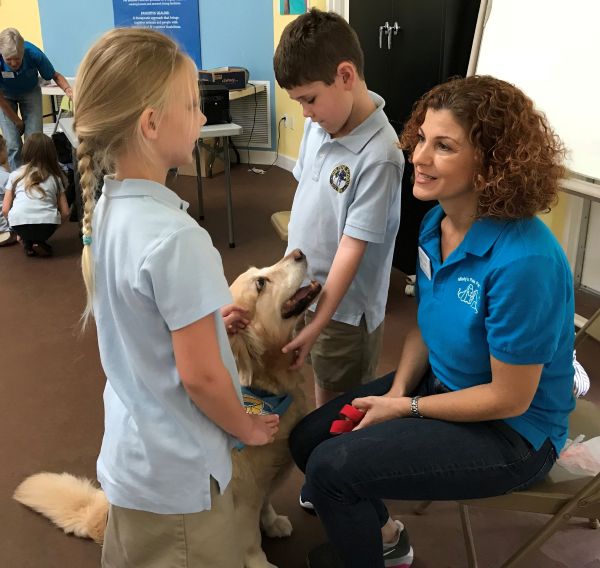
Education also plays a key role in safety and respect. Teaching kids how to properly approach animals, recognize body language, and understand when a pet needs space helps prevent injuries and builds empathy. Children learn that animals communicate feelings like fear, excitement, or discomfort, and that listening to those signals is a form of kindness.
Another important lesson is the necessity of veterinary care. Parents can explain why pets need regular checkups, vaccinations, and preventive care, showing children that keeping a pet healthy is part of being a dependable guardian. Including kids in vet visits, when appropriate, helps normalize medical care and reinforces the idea that every animal deserves proper treatment.
Pet ownership also extends to kindness beyond the family pet. Teaching children about adoption, spaying and neutering, and the challenges faced by homeless animals encourages compassion for all animals in the community. Simple acts such as donating supplies, reading about animals, or volunteering as a family, help children see how they can make a positive difference.
Teaching kids to be responsible pet owners helps shape caring, thoughtful adults. The lessons learned such as patience, empathy, commitment, and respect extend far beyond the household pet. By nurturing these values early, families help ensure a future where animals are treated with the care and compassion they deserve.
We’re happy to help your family navigate the pet care journey through our Lessons in Kindness program. These free classes about pets and pet care are available for grades K-12 and can be brought to your classrooms, scout troops, after-school programs, and more. And best of all, we bring certified pet therapy dogs along! Learn more by visiting https://hstc1.org/humaneeducation or emailing LFaber@hstc1.org
Frank Valente's opinions are his own and may not reflect Friends & Neighbors viewpoint.
The Hantavirus Outbreak... Do we need to worry?
On May 18th, 2026, the doomed MD Hondius Cruise ship reached its final destination in the Netherlands where it will undergo a complete disinfection. What happened on this ship and why was the world panicking about another global pandemic?
On May 3rd the world learned that 3 people had died aboard the ship from a virus called Hantavirus, which normally shows no known human-to-human transmission. So, what is actually going on? To begin with, Hantavirus is a very rare virus. Usually, only a few cases are reported each year. In fact, when Gene Hackman and his wife were found dead, the official cause of death for Mrs. Hackman was Hantavirus. Hantavirus lives in rodents. The virus normally spreads when people inhale particles from infected rodents' droppings or urine. It is not typically spread person to person. But it is a nasty virus. It usually kills between 40-60% of the people it affects.
The cruise ship situation is unique because there are multiple cases and the passengers are all stuck together in close quarters. The strain of the virus brought on the ship, known as the Andes Strain, is the only type found in Argentina that can spread person-to-person. However, unlike Covid it requires very close person-to-person contact, such as a healthcare provider caring for a sick person or people sharing a sleeping space. In fact, the doctor on the cruise ship was one of the people who got infected. However, there is a very long incubation period—up to 45 days. That means someone may have been exposed to the virus and not yet show any symptoms. This is problematic because people had already disembarked from the ship before the crew was aware of the Hantavirus on board. These people flew to multiple countries, which sparked the fear of another pandemic.

However most health officials feel very confident this won't happen. Unlike COVID, which is easily transmittable through the air and can be spread before a person even develops symptoms, Hantavirus is much more challenging to transmit. People with Hantavirus only transmit the disease after prolonged close contact with a symptomatic patient. A person who is ill with Covid could infect two or more people just through casual contact. This is not the case with Hantavirus. There must be a perfect storm: a symptomatic patient and prolonged contact with that patient. This is because the spike protein on the Covid virus latches onto what is called an ACE2 receptor on the outside of human cells that are abundant in our noses, mouths, and throats. Covid can easily replicate while attached to these ACE2 receptors and when someone coughs or sneezes numerous copies of the virus gets expelled and can easily latch onto these ACE2 receptors in the next person’s nose, mouth, or throat. The Hantavirus on the other hand don't bind to ACE2 receptors but rather to a receptor known as B3 integrins. These receptors are not located superficially in our upper airway but rather deep in the lung tissue and on the inner lining of blood vessels… As a result, hantaviruses primarily infect the lower respiratory system and the blood vessel lining, causing leakage and serious illness there. So, if a person is infected with a hantavirus sneezes or coughs, their droplets might contain some virus but generally not very much, which helps explain why human-to-human spread is rare.
Additionally, COVID-19 is a positive-sense RNA virus. This means that upon entering a human host, it immediately starts to replicate. Hantaviruses are negative-sense RNA viruses, having to go through an extra step to become positive-sense viruses before they can start replicating.
COVID-19 has a short incubation period, from two to 14 days, allowing for rapid spread. Hantaviruses have a longer incubation period, from one to eight weeks, which also slows down transmission.
Although the early symptoms of both viruses are very similar… body aches, fever, nausea and fatigue, Hantavirus can progress to Hanta pulmonary syndrome which is an inflammatory reaction in the lungs making it difficult to breath and has a high mortality rate... up to 40%!!
Fortunately, when the infection was identified as Hantavirus the ship was off the coast of Africa where some of the world's best and most experienced epidemiologists work. They quickly quarantined the ship and everyone remaining on board has been flown into quarantine in their respective countries. There are currently 11 known cases of Hantavirus from this cruise ship... 9 confirmed and two suspected. The most recent case was revealed on Saturday May 16th for a passenger who resides in Canada. However, since the incubation period can be up to 6 weeks we may continue to hear about more cases.
Michele Libman’s opinions are her own and may not reflect Friends & Neighbors viewpoint.
A recent article about the Sansone family commissioning a bronze sculpture called Tree of American Dreams for Legacy Park in Tradition caught my attention this week. The family described the piece as a way to honor their father while giving something meaningful back to the community.
It immediately made me think about the sailfish statue in downtown Stuart — because it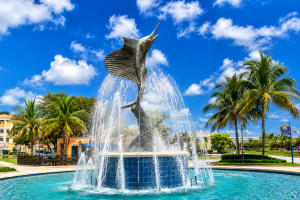 came from the same impulse: someone quietly deciding a community deserved something beautiful.
The beloved bronze sailfish sculpture at the roundabout on Joan Jefferson Way was donated to the City of Stuart in 2003 by longtime businessman Ed Sellian and created by artist Geoffrey C. Smith. Over the years, it has become so woven into the identity of Stuart that many people probably no longer think much about how it got there at all.
I do.
Every time I pass it, I think about Ed.
My children grew up calling it “Pop Pop’s statue” because Ed was a grandfather to them in every sense of the word. Long before they understood anything about philanthropy, public art or civic legacy, they simply associated the sculpture with someone they loved.
 And maybe that’s what made me start thinking more broadly about all the invisible fingerprints that shape a community over time.
A century ago, the Hancock family built the Lyric Theatre because they believed a growing fishing village deserved music, movies and a gathering place.
Decades later, Edwin A. Menninger helped fill Stuart with flowering tabebuia trees that still stop traffic every spring in explosions of yellow blooms.
And just this month, local resident Louise Yeiser pledged nearly $10 million worth of environmentally sensitive land to Martin County so future generations will inherit preserved scrub habitat, wetlands and open space instead of development.
Most people enjoying those gifts someday may never know her name either.
And maybe that’s the point.
There’s an old proverb that says society grows great when people plant trees whose shade they know they will never sit beneath.
Maybe communities grow the same way.
One generation builds the theater. Another plants the trees. Another preserves the land. Another commissions the statue. Decades later, people they will never meet simply enjoy the beauty as though it had always been there.
Lately, local discourse can make it feel as though communities are shaped entirely through conflict — public hearings, social media arguments, outrage cycles and endless suspicion about one another’s motives.
But places like Stuart are also shaped quietly over time by people who do things for the best possible reason: because they genuinely love this community and want to leave it better than they found it.
Long after many names fade, the gifts remain woven into the identity of a town.
And that's what legacy really is.
Is there a place in Martin County that means something special to you because of the people who helped shape it? I’d love to hear about it. Email me at stacy@fireflyforyou.com.
Stacy Weller Ranieri's opinions are her own and may not reflect Friends & Neighbors viewpoint.
I am in the swamp. I have been my entire life, and I am proud of it.
When I think of Florida, I think of water first. The Indian River Lagoon. The St. Lucie River. The forgotten coast south of Tallahassee, where I spend every moment I can. The light comes off the water in a way that reminds you why people came here in the first place. I have lived in this state through heat and hurricanes, through boom cycles and corrections, through every version of the argument about what Florida is supposed to become. My answer has not changed.
West of Indiantown, 450 acres of old-growth bald cypress sit inside the cooling pond of Florida Power & Light's Martin County power plant. The oldest trees are more than a thousand years old. FPL recognized what it was and began protecting it voluntarily — a mile of boardwalk through the heart of it by 1980. In 2008, I co-founded the Treasured Lands Foundation — built on donated funds, business sponsorships and donated land, not tax dollars — and we partnered with FPL to restore public access. The swamp protected the swamp. That instinct is not new to this county. It is not new to this country.
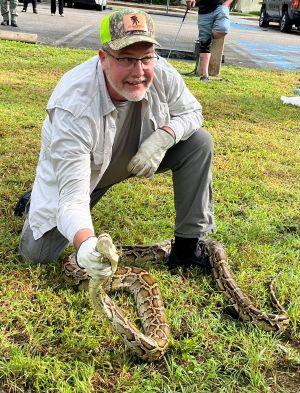 Our nation's founders were deliberate about what a free republic required of its citizens. Honesty. Industriousness. Self-restraint. Economic independence cultivated through property ownership and productive work. They also warned what happened when those virtues were absent — that selfish appetites would fall prey to the blandishments of demagogues and charlatans.
Martin County was not created this way by accident. Stuart's thriving downtown on the St. Lucie. The beaches and scrublands held in public trust through decades of development pressure. The marine sector that employs thousands. The aerospace work at Witham Field. These are not gifts — they are what civic virtue looks like after decades of patient, unglamorous work. Power Systems Manufacturing was founded here, left, and came back — 180,000 square feet at the South Florida Gateway — because what made it possible the first time was still intact. Daher Aerospace produces aircraft components in Stuart and plans to assemble planes here. Companies do not make those bets on places that are being taken apart.

Bill West’s opinions are his own and may not reflect Friends & Neighbors viewpoint.
There is a growing problem in local politics that has little to do with roads, taxes, development, or water quality. It has to do with conduct.
Our publicly elected officials are elected to represent entire communities - including the people who disagree with them. That responsibility requires a level of professionalism, restraint, and decorum, especially in the age of social media where public discourse can quickly devolve into theater.
Unfortunately, Stuart’s former Mayor and Commissioner, Christopher Collins, who recently resigned to pursue bigger political ambitions this summer, continues to lean heavily into that theater.
Over the past several years, many residents, business owners, and civic leaders have witnessed what happens when someone publicly challenges Collins’ views or methods. Instead of constructive debate disagreement is often met by Collins with ridicule, mockery, personal attacks, and online grandstanding designed more to entertain supporters than to elevate public conversation.
Recently, I’ve crazily become one of his favorite public targets on social media after criticizing his tactics and leadership style. Frankly, I am not offended by it. Most of Collins displays are laughable, and public criticism comes with the territory when you speak openly about politics and governance. What is disappointing, however, is watching an elected official repeatedly choose personal attacks over substantive discussion.
Even more concerning is that this behavior is not isolated. Collins has also publicly targeted respected community leaders, including individuals connected to organizations like the Chamber of Commerce, simply because they support economic development or a broader vision for Martin County’s future than the one he promotes.
And that is the larger issue.

Collins has built much of his political identity around a rigid “no-growth” philosophy that often portrays developers, investors, and business advocates as threats to the community rather than contributors to it. Certainly, residents should remain vigilant about overdevelopment, traffic, environmental impact, and preserving quality of life. Those concerns are legitimate and important.
But there is a meaningful difference between reckless overdevelopment and responsible economic growth.
The reality is that communities do not thrive without investment. Real estate developers, entrepreneurs, and business owners are often the very people willing to risk capital, create jobs, expand the tax base, improve infrastructure, revitalize neglected properties, and generate economic opportunity that benefits entire communities. Government itself does not create prosperity - productive private investment and responsible growth do.
Without growth, communities stagnate.
Without economic expansion, younger families leave, businesses struggle, tax burdens increase, and opportunities shrink. Even many of the local businesses and political voices advocating strict no-growth policies rely indirectly on the very economic activity and expanding population they criticize.
Martin County’s future depends on balance while preserving what makes this area special while also recognizing that communities must evolve if they expect to remain economically healthy and competitive. A permanent no-growth mindset may sound appealing emotionally, but in practice it is often shortsighted, economically limiting, and harmful to long-term community vitality.
Healthy communities also depend on healthy civic discourse. That means leaders should be capable of disagreeing without attempting to publicly humiliate, belittle, or intimidate people who hold different opinions.
Strong leadership persuades. It does not perform publicly to degrade others.
As Collins now seeks a seat on the Martin County Commission, voters should pay attention not only to his policies, but to his temperament and conduct. Because character matters. Personal decorum amongst public leaders matters and should be a strong criterion for election. And the tone set by public officials inevitably shapes the tone of the community itself.
We elect the government we deserve always – this, we do not deserve or want further.
Andy Noble’s opinions are his own and may not reflect Friends & Neighbors viewpoint.
Black Marlin: Refreshed, Not Reinvented
One of downtown Stuart’s longtime restaurants proves you can evolve without losing what made people love you in the first place.
Black Marlin has been part of downtown Stuart since 1993 - before downtown Stuart became downtown Stuart. Before restaurants spilled onto sidewalks and before weekend crowds, walking food tours, and all the talk about revitalization. Back when parts of downtown still felt sleepy and uneven.
And somehow, it’s still here. That alone says something. 
Last week, Stacy and I had an opportunity to dine at Black Marlin. It used to be one of those tucked-away locals places with dark wood, a cozy bar and reliable seafood. A little easy to miss if you didn’t already know where it was.
Tourists looking for a waterfront view could walk right past it without ever noticing it was there.
But when we walked in this time it felt different.
We arrived with no reservation and were greeted immediately with warm smiles and genuine hospitality. The hostess happily accommodated our request for a booth, explaining it would just take a few minutes to clear and reset the table. It was simple, professional, and welcoming - the kind of interaction that sets the tone for the evening.
The restaurant has clearly gone through a refresh over the last several years, and they handled it the right way. The space feels brighter, cleaner, and more open without losing its personality. They updated it without turning it into a trendy clone of every other modern restaurant trying too hard to look trendy. That balance is harder to achieve than it sounds.
Years ago, people overlooked worn interiors because character carried the place. Nobody cared if a restaurant looked like it hadn’t changed since the Reagan administration as long as the food was good and the atmosphere felt authentic.
Today, people expect more. They still want character, but they also want the experience to feel fresh and cared for. A lot of longtime restaurants never make that transition. Others overdo it and lose what made them special in the first place. Black Marlin seems to have found the middle.
Once seated, our server was equally friendly and knowledgeable. Within minutes, she had us feeling like we were in for a great evening. She knew the menu inside and out and confidently recommended a few house-crafted cocktails.
We started with the grilled portobello caprese, then moved into seafood. Stacy ordered the swordfish special topped with fresh crab meat, while I went with the grouper française finished with a perfectly balanced lemon butter sauce. The seafood was fresh, simply prepared, and cooked to perfection. Our plates had plenty of color and not overly crowded.
As we sat there, I kept thinking about endurance. How many restaurants can honestly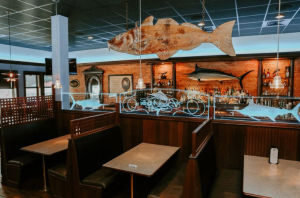 say they’ve survived more than 30 years in a small downtown area? Not many. Especially restaurants that aren’t sitting directly on the waterfront.
Black Marlin survived because it built a loyal local following long before downtown Stuart became a destination. And now, it feels like the restaurant has quietly matured alongside the town itself. Not reinvented. Just refreshed.
So next time you’re heading downtown, give Black Marlin a try. You won’t be disappointed.
Do you have a favorite downtown Stuart restaurant? I’d love to hear about it. Send me an email at dinewithbrent@gmail.com.
Brent Hanlon’s opinions are his own and may not reflect Friends & Neighbors viewpoint.
We can all recall the challenges of early adolescence. The strong desire to fit in and the sting of insecurity when you felt left out. Something as simple as wearing the “wrong” brand of sneakers could easily impact your social standing.
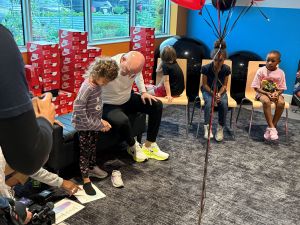 But at the Boys & Girls Clubs of Martin County, many of our members would be happy to have ANY brand of sneakers.
Coach Steven Binder—founder and CEO of Project New Step Foundation, a nonprofit organization dedicated to inspiring confidence, hope and opportunity for undeserved children—is a longtime basketball coach, skills trainer, mentor, and youth advocate.
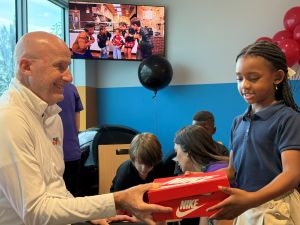 Steven created the foundation after recognizing something simple yet profound: A new pair of sneakers isn’t just a physical necessity; it can lift a child’s spirits, raise their self-esteem and confidence, and increase their sense of belonging.
Coach generously volunteers his time at our Hobe Sound Club to teach our members the game he loves. He noticed that many of the kids lacked sneakers suited for running the floor, pivoting, jumping and properly enjoying the game. Some only had off-brand Crocks. Others had shoes so inadequate they resorted to playing in their socks.
So, Coach stepped up—in a big way.
Marshalling his network of contacts in the athletic sportswear industry, he teamed with his foundation’s outstanding board of directors. Then, with support from dedicated BGCMC donors, he secured nearly 1,500 pairs of shoes for every one of the members in the daily care of our five clubs.
To help make the event a lifelong memory, BGCMC staff and his foundation created “Sneaker Celebrations.” They refashioned sections of each club to resemble a sneaker store at the mall. When the kids arrived at their respective clubs after a day at school, they experienced world-class customer service.
First, they got measured for their perfect fit. This was a little for show as our team had already secured the ideal size for every child. Still, it was no small task. As any parent of multiple children can attest, kids’ feet grow fast. Imagine trying to get pairs for 1,500 kids.
This lifted a significant financial burden off our families. Nearly nine in 10 of our kids hail from households that are economically constrained. Most members qualify for free/reduced lunch. We provide them with a healthy snack and meal daily, two meals a day during the summer, and backpacks full of food staples over the weekend and holidays.

Thanks to the kindness of our community, we’re able to help our members with academics, workforce training, job opportunities through our culinary program, specialized vocational training and apprenticeships, and more.
Now thanks to Coach Steven and Project New Step, we were able to give them something that’s pretty spectacular—the simple sense of satisfaction that comes with a new pair of cool shoes. Nike Dunks, in case you’re wondering, one of the most popular styles of retro sneakers available right now. Ideal for making sure our members can confidently put their best foot forward.
To help make this free sneaker program an annual event, please visit ProjectNewStep.org.
Keith Fletcher's opinions are his own and may not reflect Friends & Neighbors viewpoint.
There are places you visit professionally, and then there are destinations that quietly dismantle you. Lofoten is the latter.
 Last month I attended the Norwegian Travel Workshop, held this year in the Lofoten Islands – a jagged spine of peaks and fishing villages rising improbably from the Arctic Sea. Beyond the workshop sessions and partner meetings, I had the rare luxury of actually exploring the region. Here's what stayed with me.
I arrived by sea. An overnight cruise aboard the Havila ship from Trondheim delivered me to Svolvær, Lofoten's compact, walkable hub, in the evening. I'll spare you the hyperbole: just know that no photograph does it justice.
 The signature experience of the trip was a RIB boat eagle safari. Suited up in full-body overalls against the sea spray, our guide navigated us deep into the archipelago, threading between islands until we reached the territory of the white-tailed sea eagles. What followed was one of those rare travel moments that erases all context. The eagles circled barely overhead – wingspans that seemed impossible, movements unhurried and sovereign. The guide tossed fish into the water; the eagles plunged and snatched them mid-surface. We learned to tell young birds from old by the color of their tails. No one spoke much. We didn't need to.
The same excursion brought us ashore at Skrova, a village of just 200 souls with an outsized place in Norwegian history. Before oil transformed this country from one of Europe's poorest to one of its wealthiest, cod was everything. Skrei. the migratory Arctic cod, was Lofoten's currency, its identity, its entire reason for existing. The locals have a motto about it: “In Cod We Trust.” Our guided tour wove together the lives of generations of fishermen and their families, the drying racks still silhouetted against the sky, the weight of a pre-petroleum Norway still palpable in the wooden walls.
Then: a local café, a long table, and seven – yes, seven – cakes baked specially for our group. Our hostess was as warm, charming and radiant as the room itself; she had made every one of those cakes with her own hands, greeting us with the quiet pride of someone sharing something deeply personal. The New Nordic Cuisine movement has done remarkable things with ingredients that shouldn't, by any logic, produce great food this far north. Reader, the food was extraordinary.
A candid note before I close: Lofoten has become genuinely popular in summer. Its accessibility from mainland Norway means the roads and villages fill quickly, and some of the magic can thin when you're sharing a viewpoint with a hundred other cameras. It's worth knowing this.
Our Answer: The South of the Archipelago, in September
That's precisely why our luxury program pairs Alta with the southern reaches of Lofoten: a region even more remote and visually stunning, designed for travelers who want the real thing. We run a single annual departure in September: low crowds, mild temperatures, and a genuine shot at the Northern Lights.

Lofoten doesn't let you go easily. Long after you've left, the eagles are still flying somewhere above that cold, glittering sea, and part of you is still watching them.
If you would like to learn more about visiting Norway, contact me here: info@silveropus.com
Please mention that you read this article here and I will personally respond to you.
Marcelo Guimarães' opinions are his own and may not reflect Friends & Neighbors viewpoint.
How you think about aging affects how you experience aging.
A recent study from Yale made this point, backed up by research. Dr. Becca Levy, a professor of social science and behavioral sciences at the Yale School of Health, studied seniors’ health for more than a decade. She found that nearly half of adults aged 65 and older actually showed measurable improvement in cognitive function, physical function, or both, over time.
What makes the difference between aging well and aging poorly? Researchers found that those with more positive age beliefs were significantly more likely to show improvements in both cognition and walking speed, even after accounting for factors such as age, sex, education, chronic disease, depression, and length of follow-up.

At the Council on Aging Martin County, we agree wholeheartedly with this study. Our four simple rules for healthy aging fit right into the study’s results:
- Stay healthy.
- Be active.
- Eat well.
- Get help when you need it.
Our programs are built around helping people follow these simple rules. Our Day Primary Care, for example, offers personalized medical care to help patients stay healthy. Our Kane Center is always buzzing with activities to keep seniors active and engaged, building a social network, and avoiding that terrible sense of loneliness that can overcome some people as they age. And both our Meals on Wheels program, Senior Dining Centers, and Kane Cuisine help people to eat nutritious meals while interacting with friendly volunteers.
There are times, of course, in the aging process when seniors need help. Our Care Navigators are eager to assist individuals and their families tap into the resources that we ourselves or our community partners provide. They link seniors and families to our Adult Day Club, GUIDE Program, Memory Enhancement Program, and so many more.
Each year our Sage Award honorees demonstrate that seniors in our community can and do continue to lead healthy, productive lives well beyond 60, 70, 80, or even 90. They give back to their community at any and every age, sharing their talents and their wisdom. And they find joy in aging.
It’s their mindset that makes the difference! Check out our website, www.coamartin.org, or call us at 772-286-7800 to read about our Sage Awards honorees and find programs and resources that can help you, your family or friends to age well.
Karen Ripper's opinions are her own and may not reflect Friends & Neighbors viewpoint.
Most people do not like thinking about medical emergencies or difficult healthcare decisions. But having a plan in place can make a significant difference for you and your family during a crisis.
A living will is one of the most important documents a person can have. It gives clear instructions about the medical care you want if you become unable to speak for yourself.
More importantly, it can provide peace of mind during some of life’s most stressful moments.
What a Living Will Covers
A living will explains your wishes for certain medical treatments if you are seriously injured or facing a terminal condition. It may address decisions about life support, breathing machines, feeding tubes, or other treatments that could keep you alive.
This document helps guide doctors and loved ones when difficult choices need to be made.
Without written instructions, family members may be left trying to guess what you would have wanted.
Reducing Stress for Loved Ones
Medical emergencies are emotional enough on their own. When family members disagree about care decisions, the stress can become even greater.
A living will helps remove uncertainty by making your wishes clear ahead of time. Instead of debating what you may have wanted, your loved ones can focus on supporting each other and honoring your decisions.
For many families, that clarity brings comfort during a difficult time.
The Role of a Healthcare Surrogate
Along with a living will, many people choose a healthcare surrogate. This is someone you trust to make medical decisions for you if you are unable to communicate.
Your surrogate can speak with doctors, review treatment options, and help ensure your wishes are followed.
Choosing the right person is important. It should be someone who understands your values and can remain calm during stressful situations.

Why Adults of All Ages Should Have One
Many people assume living wills are only for older adults, but unexpected medical situations can happen at any age. Illnesses and accidents can affect anyone, including young adults and parents with children at home.
Having these documents in place early can help avoid confusion and protect the people you love most.
Reviewing and Updating Your Plan
A living will is not something you create once and forget about. Life circumstances can change over time.
Marriage, divorce, health changes, or the birth of children are all good reasons to review your documents and make updates if needed. Keeping your plan current helps ensure it continues to reflect your wishes.
Gene Zweben’s opinions are his own and may not reflect Friends & Neighbors viewpoint.
Florida politicians have told us that expanding vouchers and charter schools is all about “school choice.” It sounds good. Who wouldn’t want to have more options for their kids?
But if you work in public education, or even just pay attention, you know the truth: this isn’t really about choice. It’s about money. (ie. Byron Donalds/Erika Donalds)
That’s why the lawsuit filed by Florida educators, school districts, and public school advocates matters so much.
They’re suing the state over the massive expansion of private school vouchers, arguing that Florida is taking billions of taxpayer dollars away from public schools and sending it to private schools with far less oversight and accountability.
And they are.
Florida’s Constitution says the state has a responsibility to provide a “uniform, efficient, safe, secure, and high quality system of free public schools.” Instead, under Governor DeSantis, public schools are being treated like they’re optional.
Now almost any family can get state money for private school tuition—even if their child never attended public school in the first place. Every time that happens, funding leaves the public school system.
All of those families with kids in expensive private schools are now SAVING $8,000 per child in tuition, and that money is coming out of the pockets of taxpayers and public education. I’ve met families saving $24,000 a year in private school tuition.
That means fewer teachers, bigger class sizes, less support staff, cuts to arts and music programs, fewer bus routes, and less help for students with disabilities or other challenges.
Public schools still have to serve every child who walks through the door, but they’re expected to do it with less and less.
And here’s the part no one is surprised about…or SHOULD be surprised about: a lot of politicians benefit from this.
Charter school expansion is big business. There’s money in management companies, construction contracts, land deals, and real estate leases tied to charter schools. And virtually no checks and balances to prevent backroom handshakes from happening.
Follow the money with TCCA. Follow the money with Indiantown High School.
The profit isn’t in teaching kids—it’s in owning the buildings, selling the land, and controlling the contracts.
The same lawmakers pushing these policies often get campaign donations from charter school operators, privatization groups, and political organizations that profit from weakening public education. Some even have direct ties to education consulting, charter management, or lobbying groups connected to school privatization.
Private schools taking voucher money don’t have to play by the same rules public schools do. They can reject students. They can avoid many transparency requirements. They don’t always have the same testing standards, teacher certification rules, or accountability measures.

Public schools do.
So taxpayers are funding two separate systems—except only one is required to serve everyone.
This lawsuit isn’t just about budgets. It’s about whether Florida still believes public education is something worth protecting.
Public schools are one of the few places built for all children, not just the ones who fit neatly into a private school’s admissions standards. They are the foundation of communities, not a business model.
We should be strengthening them, not slowly starving them so someone else can make a profit.
This isn’t school choice.
It’s school privatization.
Sydney Thomas' opinions are her own and may not reflect Friends & Neighbors viewpoint.
The Kiwanis Club of Stuart has much to be grateful for.
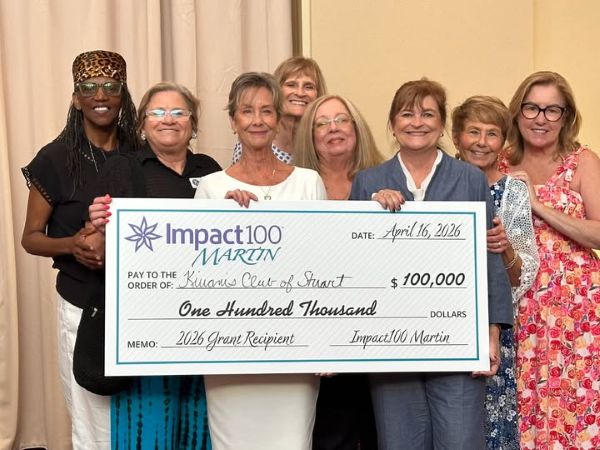
 On April 16, 2026, the Kiwanis Club of Stuart was chosen for one of the five Impact 100 Martin grants of $100,000 for our project “Music in the Park” and the ADA Swing Project at Kiwanis Park at Woodlawn.
This generous funding allows us to bring two transformative projects to our community. Soon, visitors can experience "Harmony Highway," a premier musical adventure designed to spark creativity and play in the heart of the park. Along the “5th Avenue” sidewalk, a new musical wonderland awaits. This interactive soundscape features:
- Harmony Serenade: A 15-note chime set color-coded for all skill levels—just follow the colors or notes in the included songbook!
- Whimsical Melodies: Ringing "Tenor Trees," musical butterflies, flowers, and mushrooms.
- Rhythmic Beats: A set of five professionally tuned drums for budding percussionists.
- The Musical Caterpillar: An adorable 7-bell friend adding a dash of whimsy to every stroll.
 Additionally, we are installing accessible turf under our swing sets, ensuring that every piece of equipment is 100% accessible for children of all abilities. Watch the playground come to life as lush artificial turf extends from the Destination Playground through the swing sets, creating a seamless and inviting landscape for older children to explore.
We look forward to seeing everyone out at the park enjoying these new, inclusive spaces!
Building for a brighter, more musical 2026!
Our hearts are full of thanks to the members of Impact 100 Martin.
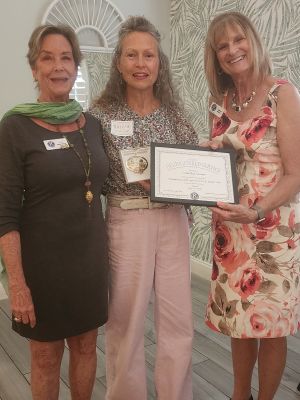
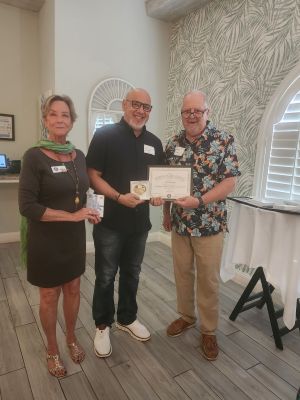
As the school year is ending, we recognized the Teacher Sponsors for our Service Leadership Projects—K-Kids, Key Club, our brand-new Circle K International Club and Aktion Club.
K-Kids provides elementary school students to begin to discover their passion to serve, desire to lead and their ability to engage and collaborate with others on various projects. We proudly recognize Martha Saum with Palm City Elementary School and Kendra Cameron with Crystal Lake Elementary School for their leadership, kindness, and hard work!
 Key Club is a student-led high school organization making our community and the world through service. Key Clubbers gain leadership skills and develop the courage to serve. We proudly recognize Christina Bennett at South Fork High School for her leadership, guidance, and engaging way of working with high schoolers.
Circle K International empowers college students through service to local and global communities. Students work with other students to develop leadership skills and make lifelong friendships; all is an inclusive supportive environment. This program is in the development stage, and we recognize Julio Burgos with Indian River State College for his leadership and dedication to making Circle K a reality.
Aktion Club is the only service club for adults with disabilities. Adults with disabilities gain leadership skills through participation and inclusion in community projects, thereby becoming successful members of the community. We proudly recognize Anastatia McIntosh of the ARC of the Treasure Coast for her leadership, understanding, and recognition of the abilities of everyone.
As the summer progresses, we will provide additional information about each of the school-based opportunities so students and their parents to consider.
The Kiwanis Club of Stuart invites you to consider becoming a member! We are an organization of volunteers dedicated to improving the world one child and one community at a time!
We meet monthly on the first and third Tuesdays at 12:15 pm at Maneros, 2851 SW High Meadow Avenue, Palm City, FL 34990. For additional information, please take a look at our website kiwanisclubofstuart.org.
Suzy Hutcheson's opinions are her own and may not reflect Friends & Neighbors viewpoint.
May is a month of transition for children and families in our community. The school year is winding down, routines are shifting, and summer expectations are just around the corner. While this season often brings excitement, it can also increase stress, anxiety, and emotional uncertainty—especially for children who rely on structure, consistency, and support.
At Tykes & Teens, we see how these transitions affect children of all ages. End-of-year testing, changes in teachers, peer relationships, and worries about the next school year can show up as irritability, withdrawal, changes in sleep, or physical complaints like headaches or stomachaches. Younger children may act out their feelings, while teens may mask them or withdraw from connection.
Families can support children’s mental health during this season by focusing on three key strategies: connection, routine, and communication. Prioritizing connection—through shared meals, brief check-ins, or intentional time together—helps children feel safe and valued. Maintaining routines, even as schedules change, supports emotional regulation and reduces anxiety. Consistent sleep, meals, and expectations matter.
Open communication is equally important. Encourage children to talk about what they are excited about and what feels stressful. Listen without judgment and validate their emotions. Statements like, “That sounds really hard,” or “I’m glad you told me,” let children know they are not alone.
May is also Mental Health Awareness Month, making it an ideal time to remind families that help is available. If emotional or behavioral changes are interfering with daily life, reaching out for support early can make a lasting difference.
Tykes & Teens offers walk-in mental health services in both Martin and St. Lucie counties, providing families with timely access to assessments and care without a long wait. These walk-in options are designed to reduce barriers and ensure children and adolescents receive support when concerns first arise.
At Tykes & Teens, our mission is to improve the emotional well-being of children and strengthen families through accessible, high-quality mental health services. By supporting children now—during moments of change—we help set the stage for resilience, healthy development, and a stronger future.
Anne Posey's opinions are her own and may not reflect Friends & Neighbors viewpoint.
May is Mental Health Awareness Month, a time to recognize the important role mental and emotional well-being play in overall health. Stress, anxiety, and depression don’t just affect how people feel - they can also impact sleep, energy levels, immune function, and the ability to manage physical conditions. Bringing more awareness to mental health helps encourage early support, reduce stigma, and reinforces that emotional well-being is just as important as taking care of physical health.
Preventive care is one of the most effective ways to protect long-term physical health, focusing on early detection, routine screenings, and everyday habits that reduce the risk of serious illness. Many conditions - like high blood pressure, diabetes, and certain cancers - can develop quietly, without noticeable symptoms. Regular check-ups, lab work, and recommended screenings make it possible to catch concerns early, when they are often easier to treat and manage.
Because mental and physical health are closely connected, addressing both together leads to better outcomes. When mental health challenges go unaddressed, they can make it harder to manage chronic conditions, follow treatment plans, or maintain healthy routines. On the other hand, strong emotional well-being can improve resilience, support recovery, and enhance overall quality of life.
Taking a proactive approach can include monitoring blood pressure and cholesterol, staying up to date on cancer screenings, and being open about changes in mood, stress levels, or sleep patterns. Small steps - like improving sleep habits, staying connected with others, and finding healthy ways to cope with stress - can make a meaningful difference over time.
Volunteers in Medicine (VIM) is guided by this approach, viewing physical and mental health as fundamental parts of care. In addition to primary care, preventive screenings, specialty services, diagnostics, surgeries, cancer treatment, and medications, VIM also provides mental health screenings and services. This allows providers to identify concerns early and connect patients with the support they need.
VIM provides comprehensive healthcare services at no cost to eligible Martin County residents. The clinic serves uninsured adults ages 18 to 64 who live in Martin County and fall at or below 250% of the Federal Poverty Level. In 2026, that means an income of up to $39,900 for an individual, $54,100 for a household of two, $68,300 for three, and $82,500 for four, with higher limits for larger families. There is no waiting list, helping patients access care when they need it most.
For those without insurance who are struggling to afford healthcare, VIM is here to help. To learn more or support their mission, call 772-463-4128 or visit vimclinic.net
Jordan Bromberg’s opinions are his own and may not reflect Friends & Neighbors viewpoint.
May is recognized as Mental Health Awareness Month — a time to shine a light on the importance of emotional well-being and the life-changing impact mental health services can have on children and families. For children who have experienced trauma, mental health support is often the key to healing, hope, and a brighter future.
Childhood trauma can take many forms, including abuse, neglect, domestic violence, grief, homelessness, community violence, or family instability. While every child responds differently, trauma can deeply affect a child’s emotional, behavioral, social, and physical development. Many children who experience trauma struggle with anxiety, depression, anger, fear, difficulty trusting others, low self-esteem, and challenges in school or relationships.

Without proper support, the effects of trauma can follow children into adulthood, impacting their future relationships, education, health, and overall quality of life. That is why early intervention and access to mental health services are so critical.
Hibiscus Mental Health Services provide children in Tilton Family Children’s Shelter and in the community, a safe and supportive environment where they can begin to process painful experiences, learn coping skills, and build resilience. All services are provided by master’s-level clinicians trained in trauma-informed care who help children understand that what happened to them is not their fault and teach them healthy ways to manage emotions, stress, and behaviors.
Counseling and therapeutic support can help children:
- Improve emotional regulation and coping skills
- Build confidence and self-esteem
- Reduce anxiety, depression, and behavioral challenges
- Develop healthy communication and relationships
- Strengthen family relationships and support systems
Mental health services also help caregivers and families better understand the effects of trauma and how to support a child’s healing journey. When children feel emotionally supported and connected to caring adults, they are more likely to thrive academically, socially, and emotionally.
Healing from trauma does not happen overnight, but with compassion, consistency, and professional support, children can overcome incredible challenges. Hibiscus helps give children the tools they need to heal, grow, and believe in themselves again.
During Mental Health Awareness Month, we are reminded that mental health is just as important as physical health. Every child deserves to feel safe, valued, heard, and supported.
For more information about Hibiscus Children’s Center and our services, please visit us at: HibiscusChildrensCenter.org.
Matt Markley's opinions are his own and may not reflect Friends & Neighbors viewpoint.
We are halfway through May, and the summertime surf bite has started for all of the surf anglers here on the Treasure Coast.
As April was ending, I had the pleasure and honor of taking the Limbardo family on the beach as part of a family reunion. These great people hail from NJ and have a residence here in Martin County that they use during the winter. This was the largest group of anglers I have ever taken on the beach as I think the number was 11 or 12.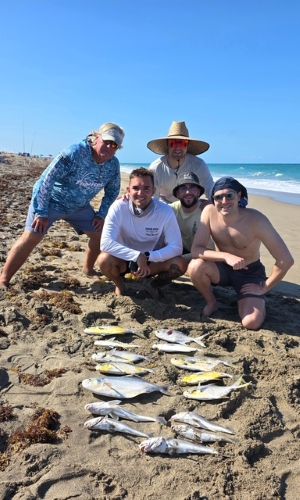
The great news is the pompano were chewing that day and everyone managed to land a pompano or a whiting. The reason I am sharing this is the pompano have thinned out as they head north but the whiting bite has been as good as it gets. The Limbardo family had the opportunity to time it right as we started to transition from late spring to early summer.
The whiting and croaker fishing on the beach is normally excellent during June and July. After this past two weeks this is shaping up to be a great one so break out the light rods, whiting rigs, Jingle Bites Fishbites, and small pieces of shrimp and catch yourself a " Hutchinson Island" fish fry.
The key to catching these tasty fish is fish around the high tide mark and do not cast, just pitch your bait in that first trough. Look for the snook to start making their presence in that 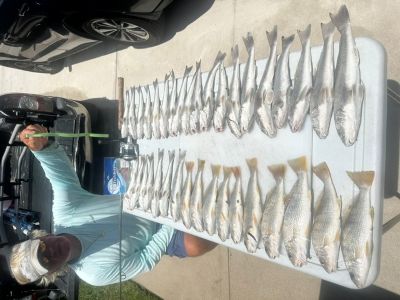 first trough also as they begin their summer spawning season and chase the croakers.
Please remember the snook fishing becomes a catch and release fishery from June 1 to September 1 in our region. They will be fun to catch but release them asap so they can spawn. The sun will be at its peak starting in June so bring lots of water and Gatorade with you and stay hydrated.
The other item I like to bring up is the afternoon thunderstorms. They will become quite common as we jump into summer so be safe and leave the beach as soon as you hear thunder or see a lightning bolt. This is fun fishing, so I hope everyone puts a few in the cooler.
Good luck and catch em up.
Paul Sperco’s opinions are his own and may not reflect Friends & Neighbors viewpoint.
In an effort to meet the demand for affordable housing, state lawmakers are reviewing and proposing ways in which to incorporate the use of accessory dwelling units, or smaller secondary homes, as well as additional living spaces within existing dwellings to meet the demand. Even on a local level, there are organizations considering the launch of home sharing initiatives to meet this need.
For permanent Florida residents who currently claim homestead exemption, or who intend to apply for homestead exemption, it is imperative that they understand how changes in the laws and/or participating in a home sharing program may impact their homestead exemption, property values, and tax bill.
Here are a few things to know when renting property that has the homestead exemption.
1.) Florida Statutes classify properties that are rented for longer than six months as being used for commercial purposes. Whether it is a single room, a guesthouse, or the entire property being rented, commercially used property does not qualify for homestead exemption.
2.) It is permissible to rent a single room, a small portion of the home, or a guesthouse while retaining the homestead exemption so long as the rental does not exceed six (6) months.
3.) It is permissible to rent all or a significant portion of a property so long as:
· The property is not rented on January 1st of the tax year.
· The property is not rented for more than thirty (30) days per calendar year for two (2) consecutive years.
Any rented portion(s) exceeding the statutory time frames noted above would be removed from the homestead exemption, the proportional Save Our Homes assessment limitation would be lost, and the value on the rented portion(s) would reset to current market value.
If the homesteaded owner is also claiming a Limited Income Senior exemption, it is important to note that rental income may have to be reported, which could affect your adjusted gross household income.
A homesteaded property owner, who elects to rent all or a portion of their property while desiring to maintain the homestead exemption, must ensure that all their residency-based documents (i.e. Driver’s license, voters’ registration etc..) continue to reflect the homesteaded property address.
Members of the United States Armed Forces who are deployed on an active military assignment may be protected from losing their homestead exemption, even if they choose to rent their homesteaded property, during their mandatory deployment.
Florida law and state statutes regarding how to maintain eligibility for a homestead exemption

while renting the property can be complicated and this article is not meant to be an exhaustive review. Each situation is often unique, so property owners who have additional questions are encouraged to contact the Martin County Property Appraiser’s Office. Our team of professionals can be reached by emailing info@pamartinfl.gov or calling 772-288-5608.
Scan the QR code to view our Homestead Rental Guideline Handout
Jenny Field’s opinions are her own and may not reflect Friends & Neighbors viewpoint.

By Dawn McCormick
WM Director of Communications
WMFloridaStorm.com offers timely information when a storm warrants service updates
In order to prepare for hurricane season, and enable our drivers to restart essential services as soon as a storm passes, WM offers the following tips to its residential and business customers in Florida:
BEFORE THE STORM:
• Trim your vegetation now. You must stop all yard maintenance and tree trimming activities when a projected Florida landfall is announced. Avoid placing yard waste at the curb once a hurricane watch has been issued.
• Move all trash and recycling container to a safe, enclosed area to prevent them from being displaced by wind or storm surge.
• Secure, bundle and tie down all loose trash such as tree limbs, wood planks or building and roof tiles. Place these materials in a location where debris cannot become hazardous in high winds. Avoid placing bulk waste at the curb once a hurricane watch has been issued.
• WM will continue to collect household trash and recycling materials in the neighborhoods it serves according to regular schedules until sustainable winds reach 35 miles per hour or local authorities instruct WM to suspend service due to the closure of landfills or other disposal sites.
AFTER THE STORM:
• Separate your regular household waste from any storm debris caused by high winds and rain. Storm debris including tree limbs, carpet, aluminum and wood fencing, and household appliances should be placed curbside in a separate pile.
• Separating normal household waste from storm debris will allow WM employees to collect your household trash safely and more quickly.
The separation is also necessary because other collection companies independent from WM may be authorized to collect your storm debris in accordance with arrangements made by local municipalities and/or your County.
• Place storm debris at the curb without blocking roads or drains, and away from trees, poles, mailboxes or other structures.
- WM will restart curbside trash collection of normal household waste as soon as local authorities deem it safe for our trucks to be on the road and disposal sites are open and operational. Initial focus will be on streets that are passable. The company will expand its routes to additional areas as more streets become clear of debris and other impediments.
Once a storm strikes and is severe enough to warrant service updates, go to www.WMFloridaStorm.com for timely information about your service.
“Following a powerful tropical storm or hurricane, one of the most essential needs for a community to begin recovery is the reliable return of its most vital services,” said Dawn McCormick,WM Florida Director of Communications. “WM does everything we can to prepare before a storm so we can return to service and help our valued residential and business customers recover quickly and safely.”
More tips for hurricane preparedness are available on www.ready.gov.

Dawn McCormicks’s opinions are her own and may not reflect Friends & Neighbors viewpoint.


 SUMMER FUN STARTS AT THE MUSEUM ON MAY 30TH!
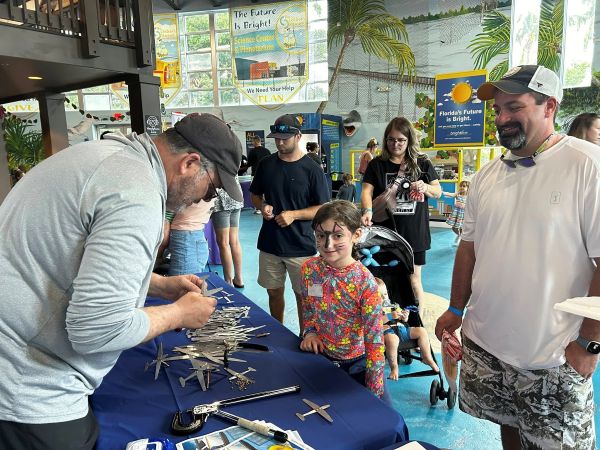
The countdown is ON for the 3rd Annual Summer Palooza at The Children's Museum of the Treasure Coast, and trust us, this is the event families will be talking about ALL summer long! 
 Pony Rides ($5 per pony ride)
 Petting Zoo
 Magical Ladybug Release sponsored by Truly Nolen Pest & Termite Control and David Schupp
 Dunk Tank
 Inflatable Obstacle Course
 Cheese Muenster Food Truck (Not Included with Admission)
 Carvel Ice Cream (Not Included with Admission)
 Special activities with community partners
…and SO much more!
This is not your average museum day — it’s the BIGGEST kickoff to summer fun, packed with unforgettable memories for the whole family. Families LOVE this because there is nonstop excitement around every corner!
 Don’t wait until the last minute!
Advance tickets save you $5 per person and are ONLY valid for May 30th. Once the day arrives, general admission applies!
 Grab your tickets now before everyone else does:
https://givebutter.com/summer-palooza-2026-jgoxas
 Museum Members get in FREE as part of their membership!

 Mark your calendars NOW and make plans to join us — because missing this would mean missing one of the BEST family events of the summer!
 Questions? Contact community@childrensmuseumtc.org
 772-225-7575 ext 205
 Please note: If anyone comments claiming to be a vendor or representative from the museum, they are NOT affiliated with us. The contact information above is the ONLY safe and accurate way to get event information.

Childcare Resources Named Recipient of Record Gift from
Orchid Island Family 5K Walk & Run
VERO BEACH – Community spirit was on full display at Orchid Island Golf & Beach Club’s 24th Annual Family 5K Walk & Run, where Childcare Resources of Indian River was named this year’s charitable beneficiary.
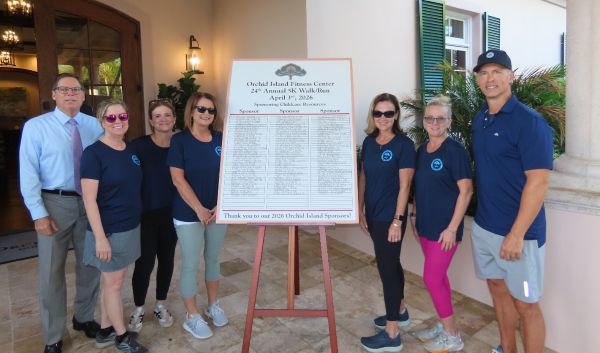
Caption: Pictured at the Annual Family 5K Walk & Run (left to right): Orchid Island General Manager Rob Tench; Childcare Resources directors Monica Cheslak, Tara Beard, and Tracey Griffis; Executive Director Shannon McGuire Bowman; Childcare Resources director Michele Harr; and Orchid Island Fitness Director JohnMark Jenkins.
More than 185 participants, including members, their families and guests, and Childcare Resources staff, took part in the April 3 event, enjoying a scenic course, breakfast, and awards ceremony. In total, more than 120 members contributed through sponsorships and donations, helping to raise a record $35,000.
this year’s proceeds will directly support Childcare Resources’ Transforming Tomorrow Capital Campaign, funding the organization’s new downtown campus of early childhood excellence. The investment will expand access to high-quality early learning, strengthen wellness and early intervention services, and create new opportunities for educator training and support across Indian River County.
“We are incredibly grateful to the Orchid Island community for their belief in our mission,” said Shannon McGuire Bowman, Executive Director of Childcare Resources. “This support is an investment in our future campus and in the children, families, and educators we serve. It allows us to meet the growing needs in our community by offering the resources, support, and early learning families depend on.”
Afterward, Orchid Island General Manager Rob Tench, Fitness Director JohnMark Jenkins, and Club President Timothy McWilliam presented a check to Childcare Resources.
“Seeing more than 185 members and families come together—both as participants and sponsors— to raise $35,000 for Childcare Resources speaks volumes about the heart of our Orchid Island community,” said Jenkins. “I’m grateful for the opportunity to be part of the Orchid team that promotes and organizes an event that directly supports children and families throughout Indian River County.”
About Childcare Resources of Indian River
Childcare Resources, a partner agency of the United Way of Indian River County, Indian River County Children’s Services Advisory Committee, and the Indian River Hospital District, elevates and promotes the highest quality early childhood development and education in Indian River County, focusing on economically challenged children and families. To learn more about Childcare Resources, visit ChildcareResourcesIR.org or call 772-567-3202.
About Orchid Island Golf & Beach Club
Spanning from the Atlantic Ocean to the Indian River, Orchid Island Golf & Beach Club is highly sought-after for its laidback waterfront lifestyle. The Beach Club serves as the heart of the community, with a resort-style pool, world-class fitness center, salon and spa, and multiple dining venues overlooking the azure Atlantic Ocean. Residents also enjoy nearly a mile of a secluded beach, an Arnold Palmer-designed championship golf course, and an Audubon Cooperative Sanctuary. Located along Florida’s Treasure Coast, Orchid Island is home to a wide variety of premier riverfront and oceanfront estates, courtyard homes, cottages, and mid-rise condominiums. Orchid Island Golf & Beach Club is located at One Beachside Drive, Vero Beach. For real estate inquiries, call 772-388-3888 or visit OrchidIslandFL.com.

Christmas is coming early, and you’re invited!
Join Martin County PAL as they kick off Operation Nutcracker with a festive Christmas in July celebration. You’ll enjoy cocktails, light bites, good vibes, and great company while learning how you can support local youth programs through Operation Nutcracker.
Get ready to purchase your nutcracker and be part of something magical for the kids and families PAL serves.
Thursday, July 23, 2026
6:00 PM – 9:00 PM
Location to be announced - stay tuned!
Come celebrate, connect, and help us make a meaningful difference in our community!


ARC of the Treasure Coast Awarded $20,000 Grant from First Citizens Bank
Stuart, FL - (May 18, 2026) The ARC of the Treasure Coast is honored to announce it has been selected as a recipient of a $20,000 Community Development grant from First Citizens Bank. The funding will support Alice’s Caring Cafe Workforce Development Program, which focuses on job training and career opportunities for individuals with intellectual and developmental disabilities (I/DD) in the food service industry.
Alice’s Caring Cafe is a fully operational restaurant offering a menu of breakfast and deli fare while providing paid employment training for individuals with intellectual and developmental disabilities. While the ARC has long provided job training opportunities for this population, Alice’s Caring Cafe represents an expansion into food service training, equipping participants with practical, hands-on skills to prepare them for long‑term employment in the culinary and hospitality workforce.
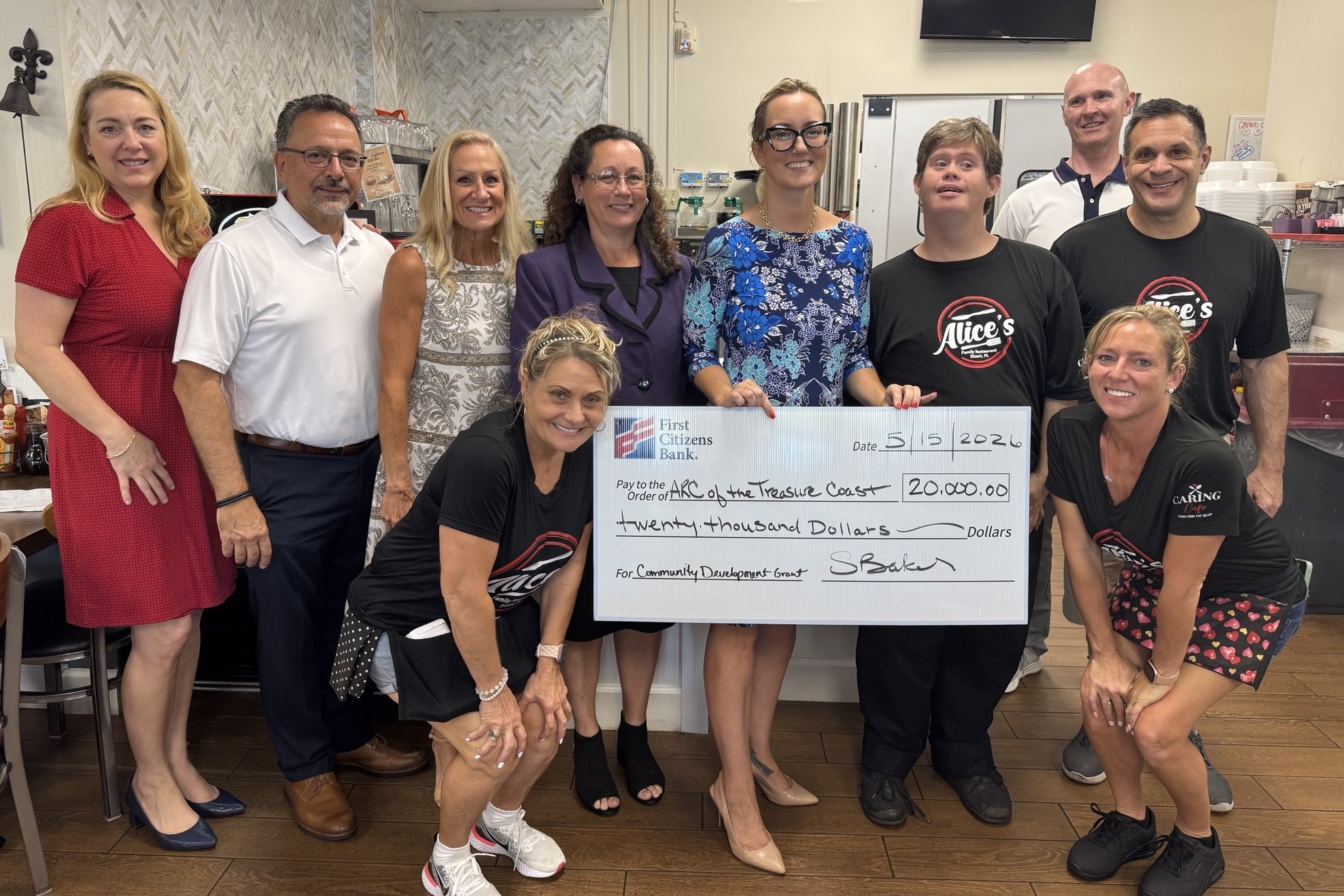
“First Citizens Bank is committed to building long-term stability in the communities where we live and work,” said Mike Atkinson, Senior Director of Community Affairs at First Citizens. “We are thrilled to support ARC of the Treasure Coast and join its efforts to foster community participation, job skilling and independence. First Citizens’ legacy of strength and stability over the long term enables them to contribute to the social and economic well-being of the neighbors and communities it serves. Associates volunteer with local organizations supporting causes close to their hearts, including ARC of the Treasure Coast.”
For more information about the ARC of the Treasure Coast and its programs, please contact (772) 283‑2525 or visit www.arctreasurecoast.org. For more information about First Citizens Bank, visit firstcitizens.com.
About ARC of the Treasure Coast: ARC of the Treasure Coast (Advocates for the Rights of the Challenged) is a 501(c)(3) nonprofit organization dedicated to empowering children and adults with intellectual and developmental disabilities to achieve their fullest potential through residential, vocational, educational, and therapeutic services. ARC of the Treasure Coast—Inspiring Success Through a Lifetime of Achievements.

Promise Fund to Host Free ‘Mammography Screening Days’ in Martin County
Since 2024, more than 470 Treasure Coast women have been screened
Stuart, FL (April XX, 2026) – Promise Fund, a South Florida-based nonprofit dedicated to increasing survivorship from breast and cervical cancer, will host free Mammography Screening Days on the following dates:
- May 13 at 3441 SE Willoughby Blvd, Stuart 34994 from 8:00 am- 2:00pm
- June 4 at 13636 SE Warfield Blvd, Indiantown, 34956 from 8:00 am- 2:00 pm.
- June 17 at 3441 SE Willoughby Blvd, Stuart, 34994 from 8:00 am- 2:00 pm.
Since expanding to the Treasure Coast in 2024, Promise Fund has provided breast and cervical cancer screenings to more than 470 women, delivering early detection and, in some cases, lifesaving intervention.
The screening event is presented in partnership with Florida Mobile Mammography, Florida Breast and Cervical Cancer Early Detection Program, and Florida Community Health Centers, Inc.
“The Promise Fund is here to make screenings accessible for everyone, especially those who might otherwise go without care,” said Patricia Ferrer, Promise Fund’s Martin County Navigator. “Early detection can make a real difference. Treatment is often easier to manage, and people are able to focus more on their health, their families, and their everyday lives.”
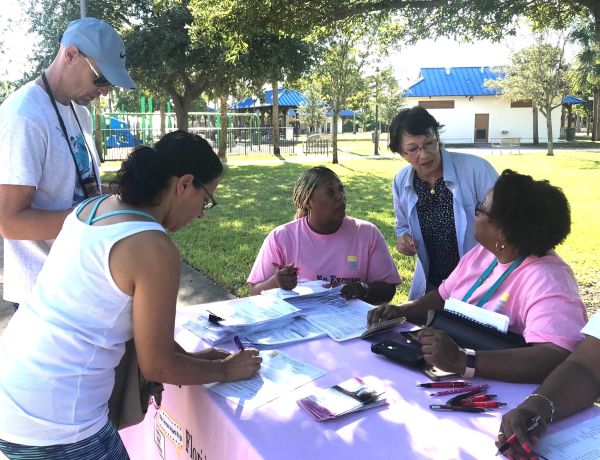
While Promise Fund’s program reaches women across Palm Beach, Broward, and Martin counties, it currently operates four co-located screening programs within partner sites in Palm Beach and Broward, and is actively working to secure funding to establish a co-located program in Martin County.
Appointments are required. To register, call 305-389-5850.
Promise Fund reaches tens of thousands of women in Palm Beach, Broward and Martin Counties who are uninsured, under insured or have limited or no access to healthcare. The organization, founded in 2018 by Ambassador Nancy G. Brinker, is dedicated to increasing survivorship from cervical cancer and breast cancer by providing guided support and access to screenings, as well as early detection, treatment, and beyond.
To date, Promise Fund has reached more than 145,000 women in South Florida through education and advocacy, and has impacted the lives of over 27,000 women through access to screenings, diagnostics, and care. Promise Fund has helped 286 women who were diagnosed with cancer navigate getting treatment.
ABOUT PROMISE FUND
Promise Fund, founded in 2018, is a non-profit organization dedicated to increasing survivorship from breast and cervical cancer by providing guided support and access to screenings, as well as early detection, treatment, and beyond. To learn more, visit thepromisefund.org. Follow on Instagram @thepromisefund and on Facebook @PromiseFundofFL.



Helping People Succeed’s inaugural Strides to Success 5K Run/Walk held Mother’s Day weekend on May 9, 2026, at Clover Park home of the St. Lucie Mets was a tremendous success, raising nearly $10,000 to support local individuals and families in our community.
With more than 200 attendees including race participants, volunteers, sponsors, and families cheering on their loved ones, the morning was filled with energy, encouragement, and community spirit. The event brought people together for a meaningful cause while creating an unforgettable experience for everyone involved.

Many racers were proudly greeted at the finish line by Helping People Succeed Board Chair Tom Campenni, who personally handed out finisher medals in support of the organization and all who participated. Special recognition also goes to Board of Directors members Marco Valionte and Artie Manfredi, who volunteered their time at the first and last turn of the course helping direct racers along the route and ensuring the event ran smoothly.
Helping People Succeed also extends a sincere thank you to MCM Timing and Snyder Marketing Solutions for their incredible support for the race and for ensuring every detail went off without a hitch. From arriving before the sun came up to begin laying out the course to being among the last to leave, their dedication and professionalism helped make the event a seamless success for participants and spectators alike.
Helping People Succeed extends heartfelt gratitude to everyone who ran, walked, volunteered, donated, sponsored, and supported the event. Special thanks to our generous sponsors for helping make this inaugural event possible: Bowman Consulting, Certified Payroll Advisors, Seacoast Bank, Max Bossis Health Insurance Agent, The Gym Administrator, Fleet Feet Stuart, Improved Motions, SE Logo, Finish Strong CPR, and Snyder Marketing Solutions. A special thank you to Max Bossis for additionally supplying the post-race refreshments.

The success of this first-ever event reflects the power of community coming together to help individuals and families of all ages and abilities turn their challenges into success, and organizers look forward to building on this momentum for years to come.


Spring is Almost Over — Summer Is Almost Here!
Things have been buzzing at Banner Lake Club as we wrap up an exciting spring season and look ahead to summer fun!
Academy Award Ceremony
 Recently, Banner Lake Academy students were recognized during a special award ceremony
celebrating their hard work, achievements, and growth throughout the school year. Families,
staff, and students gathered together to honor academic accomplishments, positive attitudes,and outstanding effort in the classroom.
The ceremony was filled with proud smiles, applause, and memorable moments as students
walked across the stage to receive their awards. Teachers shared encouraging words and
celebrated the progress each student has made this year. Events like these remind us how
important it is to recognize student success and encourage confidence as they continue
learning and growing.
 We are incredibly proud of all of our students and the dedication they have shown this school
year! We are also excited to announce that Banner Lake Academy will be expanding to 5th
grade this fall. We look forward to watching our current 4th grade students step into their new roles as 5th graders and continue their educational journey with us.
Traveling Nutrition Garden Visits BLC
Students at Banner Lake Academy recently enjoyed a visit from the Traveling Nutrition Garden presented by House of Hope. Kindergarten through 4th grade classes had the opportunity to explore a variety of plants and learn how vegetables help keep our bodies healthy.

The nutrition garden teacher explained the different parts of plants, including roots, leaves, and stems, while also teaching students about helpful insects found in gardens. Students learned that worms are beneficial because they burrow through the soil, allowing rainwater to reach plant roots more easily. They also discovered that ladybugs help protect plants by keeping harmful insects away and that butterflies taste with their feet!
During the visit, students were invited to sample small pieces of vegetables and take a closer
look at the plants by touching and examining them. The traveling garden featured tomatoes,
bananas, chives, celery, collard greens, aloe vera, rosemary, lantana, colorful flowers, and
many more plants.
Although it was a hot day outside, students thoroughly enjoyed the hands-on experience and
were excited to learn more about gardening, nutrition, and nature.
Thank you to House of Hope for bringing this fun and educational experience to our students!

VPK Western Prom
Banner Lake Early Learning Center VPK students and staff recently kicked up their boots for a western-themed prom celebration! Students of all ages were invited to join the fun and came dressed in their best western attire, ready for an unforgettable evening.
 The dance featured a DJ, two dance floor areas, dinner, and plenty of excitement throughout
the night. The DJ kept the crowd entertained with a mix of popular songs and fun remixes of
children’s music that had everyone out on the dance floor showing off their best moves.
Staff members loved watching the students laugh, dance, and enjoy this special event
together. The evening wrapped up with the exciting announcement of Prom King and Queen,
making it the perfect way to celebrate the end of a wonderful school year.
Looking Ahead to VPK Graduation
As the school year comes to a close, we are also gearing up for one of our favorite celebrations of the year — VPK Graduation! We look forward to celebrating our amazing graduates and all they have accomplished as they prepare for their next big step into kindergarten.
Thank you to all of our families, staff, and community partners for making this season so
special. We’re looking forward to an exciting summer at Banner Lake Club!
Pickle for Paws combines friendly competition with support for shelter animals
Palm City, Fla. — Almost 100 women and men served, dinked, volleyed, rallied and more at the Humane Society of the Treasure Coast’s 4th annual Pickle for Paws charity event. They raised nearly $23,000, which benefits the humane society’s shelter animals.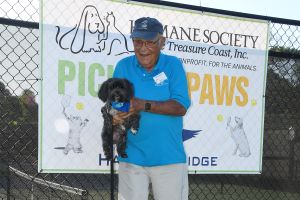
Players and spectators were greeted by Misty’s Pals pet therapy teams and they had the opportunity to interact with some of the shelter’s adoptable animals. Attendees also were able to participate in a 50/50 raffle and win a variety of raffle baskets and auction items.
Ramona Floridor-White sang the national anthem followed by 92-year-old Ralph Wakeam hitting the ceremonial first serve. Then play began and continued into the early evening.
 The humane society is grateful to have the support of its sponsors, donors and committee members for making this event possible. Michael and Kimberly Izzolo, Robbie Jacobs and Jessica Agee-Bradshaw organized and managed the event.
Custom Pickle for Paws shirts and tank tops are still available for those who wish to provide more support by visiting this website: https://www.bonfire.com/2026pickleforpaws/.
About the Humane Society of the Treasure Coast – The Humane Society of the Treasure Coast (HSTC) is a no-kill animal welfare organization located at 4100 SW Leighton Farm Ave. in Palm City, FL. Since 1955, it has been the leading advocate for animal protection and well-being in the Martin County area. A 501(c)3 private, nonprofit organization, the HSTC is independent and locally operated and relies on donations to support its programs and services. Follow the HSTC on Facebook at https://www.facebook.com/humanesocietyTC and Twitter at https://www.twitter.com/hstc1. For more information, visit https://www.hstc1.org or call (772) 223-8822.

Sweet Success: Charlie and the Chocolate Factory-themed gala raises funds for Martin County education
PALM CITY, Fla. — Hundreds of people who support local schools, students and teachers recently went on a fantastical tour of their own at the Education Foundation of Martin County’s Evening of Excellence | Bids for Kids gala. Presented by Morganti, the event featured Charlie Bucket and Willy Wonka’s magical chocolate factory. This elegant fundraiser, held at Harbour Ridge Country Club in Palm City, attracted a sell-out crowd and raised $200,000.
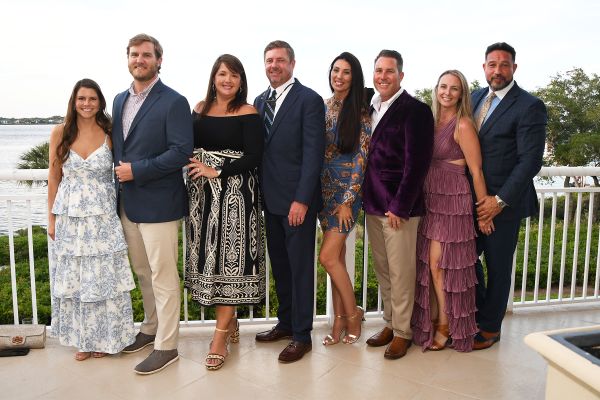
Brittany and Joel Spiece, Jessica Sines, Stephen Sines, Terra and Brent Martin, Kalie and J. D. Lewis of the Morganti Group (photo by Doreen Poreba)
“It’s incredibly rewarding to see so many people come together to support our students and teachers,” said Lisa Rhodes, executive director of the Education Foundation of Martin County. “Nights like this remind us that when a community invests in education, everyone benefits. The impact of this gala will be felt long after it ends.”
The evening began with cocktails and hors d’oeuvres, sponsored by Hedrick Brothers Construction, as guests walked through the candy-coated wonderland while perusing the largest silent auction on the Treasure Coast. They bid on more than 500 extraordinary treasures before professional auctioneer KC Daniel conducted an exclusive live auction that featured once-in-a-lifetime experiences. Auction items included gift baskets, vacation getaways, spa treatments, golf packages, jewelry, artwork, fishing charters and restaurant certificates. All proceeds support educational enrichment programming for students.

Paul Meola, Nancy Loveless, Jennifer and G Millhollin of the Meola Group (photo by Paul Careccia)
Other top event sponsors included CROC Enterprises LLC; Gehring Group Brown & Brown Public Sector; Jacquin & Sons Construction; Keiser University; Proctor Construction; PBK; Sandhill Cove Retirement Living; AT&T; Tami Karol Insurance; FPL; Anthony D. George, Jr. P.A.; Meola Technology, Inc.; Treasure Coast Psychiatry; Conchy Joe’s Seafood; The Dolphin Bar & Shrimp House; UDT; Florida Blue/USABLE; STS Aviation Group; Ocean Breeze Animal Hospital and SwissMango.
For information about the Education Foundation of Martin County, visit the website, www.EducationFoundationMC.org or call the office at 772-600-8062.
The Education Foundation of Martin County is the Martin County School District’s strategic non-profit partner with the mission of enriching and enhancing educational opportunities and support for students and teachers in Martin County’s public schools. As an independent group, the Foundation promotes this effort by raising and distributing private and corporate funds through several established programs, including classroom enrichment grants, literacy programs, professional development for teachers, special initiatives, scholarships and programs to recognize outstanding teaching. For more information, please visit www.EducationFoundationMC.org.
May is Leave a Legacy Month:
A Legacy of Hope for Hibiscus Children in Need
Treasure Coast - Every day, hundreds of nonprofit organizations quietly shape the heart of our community—providing vital services, preserving dignity, and creating pathways to brighter futures. For more than 40 years, Hibiscus Children's Center has stood as a beacon of safety, healing, and hope for children who have experienced abuse, neglect, and trauma. Our mission is clear—but we cannot fulfill it alone.
While Hibiscus receives some government funding, it covers only a portion of the care and support our children need to thrive. The generosity of compassionate individuals who believe that every child deserves to feel safe, loved, and valued, is essential to fulfilling our mission.
One of the most powerful ways to ensure this mission continues long into the future is through Planned Giving. Planned Giving allows donors to make a lasting impact by including charitable contributions in their estate plans. Whether through a will, trust, charitable gift annuity, or other financial vehicle, planned gifts create a legacy of kindness that extends far beyond one lifetime. During this month of recognizing Leave a Legacy, we invite you to consider leaving a legacy for children and families for generations to come.

Planned Giving is not only an act of generosity, it’s also a smart financial strategy. Many planned gifts can provide a lifetime stream of income to the donor or their family, yield tax benefits including reduced estate and capital gains taxes, enable larger contributions than might be possible during one’s lifetime, and ensure peace of mind that your values will live on through charitable impact.
Each year, Hibiscus serves more than 1,800 children and families with critical services—safe haven, mental health counseling, prevention and intervention programs, educational services, and career training. Your planned gift helps ensure these vital services will be here for future generations in need. It can provide safety where there was danger, hope where there was despair, and opportunity where there was none. When you include Hibiscus in your estate plans, you become part of something greater - a legacy of compassion, protection, and transformation for vulnerable children.
Michelle King, CDO, shared, “Let your lasting gift tell a story of hope. Partner with us to build a future where every child can dream again. Together, we can create a legacy of hope, healing, and resilience for children who need it most.”
To learn more about Leaving a Legacy, please visit HibiscusChildrensCenter.org or contact Michelle King, CDO, at (561) 452-5791.

I urge those who are reading this newsletter to send an email expressing their opinions on subjects. When a reader sends one, it will be included if I find it relevant and I have adequate space. I may edit the letter because of length and clarity. You don’t have to agree with me to have your letter in Friends & Neighbors. All you must do is send it to TOM CAMPENNI or fill out the form on the website.
Martin Jacobson
Several years ago, part of my assignment as a Stuart Police officer was CPTED (Crime Prevention thru Environmental Design.) Tri-Rail was running experimental service up to Stuart. I reviewed plans for a train station (depot) in the location proposed for Brightline. I looked at the impact on public safety. Ridership did not meet expectations and service was discontinued. The proposed public supported $85 million dollar train station for Brightline has no measurable or quantifiable economic impact especially as Brightline has yet to show a profit.

Railroads have been around since the early 19th century.
 The first public railway in the U.S. was the Leiper Railroad in 1810. The tramway was drawn by horses along a track in Pennsylvania. The Baltimore and Ohio, which was chartered in 1827, became the first “common carrier” because it was designed for both passengers and freight.
 Many of the first roads were state funded and owned. With the Panic of 1837, many railroads in the country to fail, forcing some states like Maryland and Pennslyvania to sell those ventures to private investors to avoid state bankruptcy. The bankruptcies unnerved state governments from continuing as heavily with their financial involvements.
From the 1850s to 1880s, millions of acres were given to private railroad companies by the federal government as they built tracks west of Chicago. The railroads were allowed to sell the land or use it to pay loans and bonds to finance the expansion. It is estimated that more than 200 million acres were involved and transferred to rail lines and then individuals and banks. The companies paid nothing. Washington also loaned cash, most of which was never repaid for every mile built to help with operating expenses.
 With the Panic of 1873 (panics were what we now call recessions or even depressions), more than 100 railroads across the country failed. Railroads were seen as economic growth engines as the nation moved west. That was the price the U.S. government paid for our westward expansion which could only be characterized as subsidies to private companies.
Railroads have always failed, and the government has always bailed them out. From the early 20th century but accelerating after WWII, rail freight and passenger lines went bankrupt at alarming rates. Today, long range passenger rail service is almost exclusively handled by Amtrak, a federally chartered government corporation.
 Though mandated to be managed as a for-profit entity by law, Amtrak has not turned a profit since 1970 when it was created by Congress. Similar to most commuter railroads such as Tri Rail, Metro North in New York and Connecticut, BART in San Francisco, and Metra in Chicago, they are all subsidized and owned by the government.
Every large commercial airport, seaport, and highway is either owned by the government or highly subsidized. There is no sustained profit in mass transit. For that matter, without government ownership, there would be no highways or even streets for cars to run on.
Brightline has proven itself to be able to operate a needed public conveyance. What it has failed to do, like every other private transport company, is operate profitably and pay for the construction of the infrastructure. As I have shown above, that is far from unexpected.

When Brightline first wanted to run the line, every public official didn’t believe it would happen. A train from Miami to Orlando seemed impossible. We knew that it was a money loser simply because of the debt that was being proposed. The Feds and Florida came up with tried-and-true schemes to allow it to be built and obtain rolling stock.
Once it started to run, its initial route ran between Miami and West Palm. Taking it was a no brainer given the always-prevalent traffic on the highway. And when the cost of parking at a hotel is figured in, the decision became even easier. How to go to a ball game for an afternoon became even clearer. The number of passengers riding the train has and will continue to increase.

Even with a default now and repeated defaults and bankruptcies later, I believe Brightline is here to stay. In the future, it may be part of Tri Rail or even Amtrak, but for the people of South Florida, it is needed. We are being smothered by our own cars.
If Brightline goes away like some believe, we won’t need a station in Stuart. But if Brightline remains because people want it, we will be at a disadvantage because the trains will still be whizzing by, and we will have no way to take advantage of that easy trip to Orlando or Miami.

Henry Flagler On His Rail Car In Florida
The deal that the county signed almost a decade ago from the very beginning as part of the settlement was to give Brightline the land and put $15 million toward the station and the Feds and Florida would kick in the rest. That hasn’t and shouldn’t change. Because at the end whether it is called Brightline or Amtrak, it doesn’t matter at all. A station with people getting on and off a train is all that matters.
There were so many speakers advocating quiet zones, I am surprised that any commissioner could withstand the pressure to vote against the idea. The question in my mind is why should they?
One reason might be that there may be millions of dollars in costs to implement and maintain crossings that no longer require train horns to blow. These costs have not even been discussed in any public meeting so far. Why?

Another thing that no one has mentioned is that the costs are borne exclusively by the local government. That means taxpayers. Right now, my research indicates that federal and state grants do not cover one cent of the additional expenditure needed.
While there may be a quality-of-life issue and a safety issue that should be in the equation of whether to have these zones or not, there is also a monetary issue. The Federal Rail Administration (FRA) would determine what would be needed at every crossing before the horns could stop. It can be anywhere from hundreds of thousands to over a million dollars per crossing. In crossings like Confusion Corner in Stuart, the engineering of the streets may make it impossible for it to ever be a quiet zone.

Yet no commissioner or staff member brought that up. And in Stuart, where several of the crossings are close together, does it make sense for the spending of tax dollars if any of the city crossings, for example, Confusion Corner, can’t meet FRA guidelines. The same can be said for Jensen Beach Blvd.
Another facet of having quiet zones is the installation of what are known as wayside horns that are mounted at quiet zone crossings to direct the horn sound to go down the tracks instead of radiating through an area as a train horn does. They cost about $80,000 each. Though not needed at every crossing, they could be used at some instead of installing much more expensive equipment. There would still be noise but not as loud.
In our last edition we wrote about Hetherington’s town hall held at Harry’s regarding this issue. The turnout of about 200 people was impressive. Coupled with the number of public speakers at the commission meeting, it is obvious that there is public support.
Though Capps still has concerns for safety, it may be too much of a political stretch to stand in the way. The same can be said for Vargas and Heard. I don’t understand why you would not want quiet zones...except for the money part.

Yet the people so adamantly in favor should have all the facts before moving forward. That includes the millions of dollars that will be needed for implementation and ongoing maintenance. It could come to several thousands of dollars per person…even to those taxpayers living far from the tracks.
You must have sympathy for the owners of the Floridays Mobile Home Park in the Hobe Sound CRA.
 For the past 3 years, they have tried to increase the number of RV spaces. The Grahams, who own the park, have gone through the process of getting this done. They were able to bring residents and others to speak on their behalf. At times, it seemed as though Commissioner Ciampi was a paid spokesperson in his defense of the park. He said he spent about three hours there touring and interviewing the residents.
The big sticking point seemed to be the county attorney’s opinion that if there was a change to 15 units per acre instead of 10 and 1500 sq-ft lots instead of 2000, it would trigger the ability of the health department to regulate RV parks in the Hobe Sound CRA instead of the county. That would be taking one more facet of local government and pre-empting it.
The local NAC voted against allowing expansion. The CRA voted against it also. The LPA voted no 3-0.
As a member of the LPA, I voted no. A small part of my decision was because of the CRA and NAC votes. It is their neighborhood so I believe their preferences should be given weight. During the presentations, I did listen to staff’s interpretation about the preemption though the applicant’s attorney who had been at the county attorney’s office for 40 years previously, did not share the same opinion.
 I felt that the applicant was not getting everything they should have from staff. So, I repeatedly asked if they were having excessive code inspections or any other forms of harassment. They honestly answered they were not.
I thought that the codes as written were being applied to them fairly. I didn’t mean that I agreed with them…only that staff were equitably applying the codes that the commission had passed. I don’t believe an LPA member should just ignore the code which is only changeable by the commission.
What is stupid is that the commission continues to use density calculations as the standard. If the code states there should be 10 units per acre, then there should be 10 units per acre. At any time, the LDRs can be changed to make it 15 units or 25 units. It is a commission decision.
Commissioners Heard and Capps believe it should be 10 units and agree with the preemption argument. Ciampi, Hetherington, and Vargas do not. They prevailed. It was a good outcome. I only wished I could have voted in favor too.
The Grahams get their increased spaces and the Hobe Sound CRA are allowed to have 15 units per acre for the two parks within the boundaries. There is a remote possibility that the state will swoop in and demand 25 units per acre if requested, but having seen the park, the RVs would have to be like those freight train cars that are stacked one on top of the other.

Does Florida continue to erode Home Rule slowly, or will the legislature just rip off the band aid all at once?
For the last several years, the Florida Legislature has been taking away Home Rule authority from local government. Every session, legislators institute a bill to take away another slice of authority from counties and cities. And it isn’t going to stop.
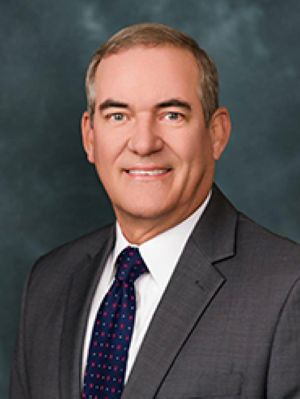 Senator John McClain from Ocala, a homebuilder, has filed many bills dealing with development and housing. Now he wants to rewrite Chapter 163 of the code which deals with the state’s growth management regulations. He may have a point.
The statute still mentions the Department of Community Affairs which was eliminated in 2011. He is trying to build consensus to have more things approved administratively. McClain wants to see much more mixed-use development.
There does need to be a rewrite of the statute to stop the constant preemptions. A problem does exist at the local level with too many localities that just say no regardless of what development proposals look like. Sitting down with all the parties concerned may result in a better deal for counties and cities.

 One thing is for sure…the way land use decisions are made now need to be more uniform across the state. Martin County is a place known for always being a no to development. There is a way to have Home Rule and development, but we need to spend some time in rewriting our LDRs and zoning to have a Form Based Code.
Then not every project needs to be argued about between developers, the public, and local government. Once the shape of what can go on the parcel is determined by code, what goes in the space will change over time. For a moment, Stuart had such a code but then it went back to the old way of all the parties arguing over each project.

McClain and the legislature will eventually succeed in making sure local governments are restricted in what they can do. Do local governments want to help in drafting what those restrictions are? Or will they be imposed from the State of Florida without local input?
For some reason out of the blue, it was determined by the manager, attorney, or mayor that a referendum needed to go on the ballot in August that ballfields for soccer, lacrosse, football, and baseball could not be sold or leased without a referendum like the one about waterfront property that is in the current charter. It could be a good idea but what is the rush?

Is there some nefarious developer in the wings looking to scoop up the fields that no one knows about while Little Boss Reed is the mayor. Does someone have an idea that Reed and Giobbi have a plan to dispose of Sailfish Ball Fields by sale in the next couple of months? Because they control the levers of government along with Boss Collins who still operates behind the scenes.
 To my knowledge there is nothing out there that would demand the city act in haste in this matter. Besides, what was drafted as the referendum language was so poor that it would open more doors than would be closed. It would oblige city taxpayers to do something forever which is directly in violation of the Comp Plan.
Policy 6.A1.1 of the Comp plan states that there be an inventory of its programs and should identify which parks and real property are considered recreational ball fields. 6.A1.1(c) requires an analysis of the capital needs required to maintain the city’s recreational level of service, and it requires DETERMINATION OF THE NON-RESIDENTIAL IMPACT on city recreational facilities.
Here is the real point. If the city wants to make sure the Sailfish Ballfields cannot be sold, all that needs to be done is apply and receive a FRDAP (Florida Recreation Development Assistance Program) grant. Once a local government is a recipient of a grant to acquire or use the proceeds for outdoor recreation, then the local government signs away the right to sell the property and must maintain it for recreation.
That is why it is so hard to rent the little building located in Shepherd Park. It must have a recreation component. When Duffy Boats had it for a decade, they rented boats to the public for recreational purposes.
 Why is Manager Giardino and Attorney Baggett bringing something forth that is not only in violation of the Comp Plan but a nefarious way of trying to make sure the ballfields stay as such…not for the kids of Stuart but for others.
This isn’t about recreation for all but about recreation for those that can afford it. The little clause about leasing the field to others makes it hard for the kids of Stuart, especially those in East Stuart who can’t afford hundreds and thousands of dollars to play in the big leagues of kids’ sports. They are out in the cold. A survey done by the then aptly named Recreation Department a decade ago found about a dozen Stuart children enrolled in the leagues using the fields which were dominated by Palm City and Jensen Beach kids.
 Currently it costs Stuart taxpayers more than $250,000 to maintain those fields so that nonresidents can pay the Big Little Leagues thousands for coaching etc. All on the city’s dime.
If Stuart is going to do anything, they need to follow the Comp Plan and then get Martin County involved as stated in the plan. But Little Boss Reed and apparently the city attorney and new manager have their own agenda and that is to follow Boss Collins instructions instead of the law.
Over a year ago Boss Collins, Little Boss Reed, and the Ever-Faithful Giobbi changed the Stuart codes in violation of state statute and the Comp Plan. They have yet to address the needed changes to the Comp Plan. Why? And staff that should know better are allowing it without a word.

Article VII, Section 10 of the Florida Constitution: Pledging Credit: Neither the state nor any county …municipality…or agency of any of them, shall become a joint owner with, or stockholder of, or give, lend or use its taxing power or credit to aid anycorporation, association, partnership or person.
Because Sailfish Ballpark has been a park since 1943, it was and is intended to be open to the public. This referendum will allow a contract to be entered wherein the ballfields can be leased to a private corporation. That will violate the Florida Constitution because the park will remain designated as a tax-free park while the Stuart taxpayer must insure it and maintain it. Even if the private company says it will cover all costs, that doesn’t matter. If it remains a park, then it must be opened to everyone and should not be leased to any private operator or league.
 Further the city has used Park Impact Fees and General Fund Dollars to develop baseball fields for everyone and allowing a private company to take over the park would be taking it away from the public and violating the Florida Constitution because it would be using the City of Stuart’s taxing power and credit to aid the private company.
Either one or both of the following facts are the reasons for this referendum rush. Boss Collins, with Little Boss Reed and the Ever-Faithful Giobbi’s help, is paying back a favor to members of big little league by the lease carve out or Boss Collins feels that the election will swing a different majority on the city commission and he will have no political sway and must get his way now.
 Two other staff issues I noticed. It seems to me both Baggett and Giardino are more interested in appeasing the little-missed Collins than doing what is right for the city. Perhaps the manager will use this brief sojourn as a way to have a few more dollars put away for his retirement if the voters make the change on the commission. Baggett can only be hoping that Matheson, Clarke, and Rich are defeated.
The second staff issue is that Baggett stated that Holmes, the environmental attorney, helped him prepare the ball fields item. I thought she had been hired as some sort of environmental guru. After a year and hundreds of thousands spent on her salary and for consultants, I know she has applied for one grant yet to be received. Why does Baggett need another attorney to assist?
The recently fired City Manager Mike Mortell was the city attorney for a decade, and he didn’t have any other attorney on staff to help. He also handled most of the litigation for Stuart while Baggett handles none. It is all done by outside attorneys.

Just because Boss Collins has departed to run for the county doesn’t mean he isn’t still at the city causing increased costs, corruption, and chaos. His legacy lives on.
Little Boss Reed and the Ever-Faithful Giobbi must believe that Commissioners Rich and Clarke are stupid or at the very least incredibly naïve.
 In order to run for the county commission, Boss Collins had to step down from his seat on the Stuart commission. He voluntarily chose ambition over his obligation to the citizens of Stuart who elected him. After less than one term, he abandoned the city for the county. He alone created the vacancy.
For less than three months, the commission will have four members. After this meeting, there will be 6 commission meetings left before the August 18th election. There are three seats on the ballot: Collins’ vacated seat, Clarke, and Rich. It is also the slowest time of the year for things to come before the commission.
This is a crucial election for the future of Stuart. Three votes are needed to pass ordinances, resolutions, and the budget. For the past two years, the city has suffered because of the incompetence of Boss Collins, Little Boss Reed, and the Ever-Faithful Giobbi. Employees, local businesses, and citizens want a change, and I would bet they want the future to look more like the past before the three were on the scene.
That will be decided on August 18th by the voters of Stuart. The faux world of Facebook and the misinformation of other social media, the lies, the outsiders who are nothing but Collins shills, and the nonsense won’t matter. Until then Clarke and Rich are not going to allow a Chris Collins plant to be appointed to the commission. That would be foolish, and they are not foolish.
While Giobbi and Reed may think that a Collins plant should be chosen, then Clarke and Rich would think that Merritt Matheson should get the nod. In both instances, it would be 2-2 and therefore no one would accede to the seat. The remnants of the Politburo should stop sounding as if Clarke and Rich are idiots who don’t care about the city.

If anything, Clarke and Rich care too much to allow another “Charley McCarthy” to mouth words that Boss Collins is saying as he has fed Giobbi and Reed behind the scenes in their roles as commissioners. It is unacceptable. Let the people vote and decide who will be on the commission.
The motion failed to appoint Deana Peterson 2-2.
Whether you live within the Village of Indiantown’s borders or not, everyone has an opinion. It seems outsiders just have bigger ones.
This is something that the City of Stuart has had to deal with forever. What is happening now in Indiantown is that people who never wanted to be included within the village boundaries have big opinions about how the village should develop. Most of those nonresidents would say no development at all.
The entire reason the village was incorporated less than a decade ago was because Martin County had no problem ignoring the welfare of the residents of Indiantown. Open a factory…no. Build a new housing development…are you kidding? Lots of outsiders telling Indiantown residents what to do. Finally, the Village of Indiantown came into existence.
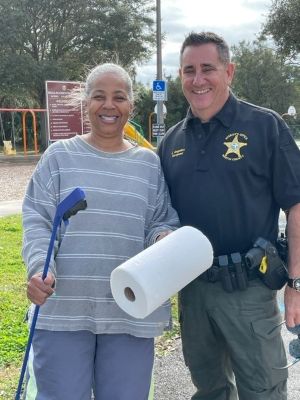 Now Indiantown is facing the NIMBYs. It seems most of them live outside the village boundaries. Some of them even made sure they were unincorporated from the evil village. Now they have all kinds of ideas about what comes next for a place they fought not to be a part of. Mostly it is to keep everything the same.
If you must travel to have a job now, that is okay with them. Maybe you don’t even have a job, which is fine also. NIMBYs only see things from very narrow perspectives. Their own. Nothing should change and everything should stay the same…even folks living in poverty because of lost opportunity.
 Indiantown had better become used to outsiders wanting to tell them what to do. The City of Stuart has had it forever from people who live in unincorporated Martin County and pay no taxes to the City. The NIMBYs from outside the city line have big opinions about what is best and even about who should be elected.
Village Council members need to remember that most of the complainers don’t pay taxes to the village. They don’t vote in council races so don’t give them much credence when they speak. Village residents should be good neighbors, but remember they are neighbors and not part of the Indiantown family.
Terra Lago presented the 6th Amendment and revised Master Site Plan for their PUD to the village council.
It changes exactly where and what residential units are built. It does not increase the number of units by keeping the residential cap. They have only had construction on areas 1A and 1B so far. Changing phasing is quite common in developments of this size.
The plan calls for a new fire station site, 100,000 sq feet of commercial/mixed-use space and up to 28 multifamily units. It also eliminates the previously approved 70’ lot types from the housing mix. Garcia Drive is re-aligned to improve the connection to Allapattah Road.
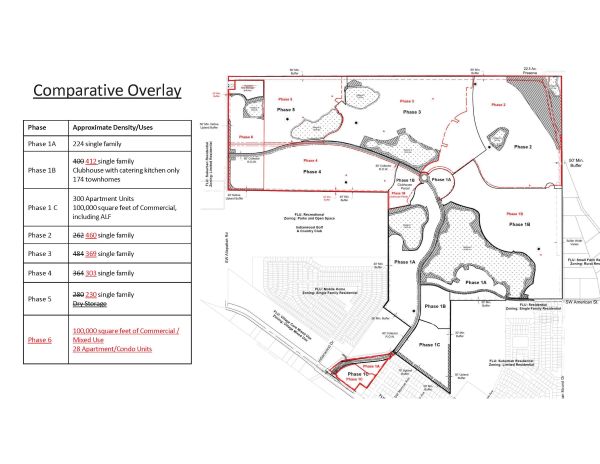
There was one neighboring parcel owner outside the village that claimed the new drainage canal that was dug is not allowing his ponds to refill. It was pointed out that our area is in an unprecedented drought. The canal was permitted by the state and SFWMD. However, Terra Lago engineers will meet with the owners and go over the hydrology.
Another owner from outside the village claimed they had bought their land in 1970 and had moved from Dade County because of the development there. They didn’t want it to happen here. I can attest that development happened down south. In the 1940s and 1950s, my grandparents had a small farm in Broward where I spent summer vacations that is long gone. They sold it in the early 1960s and moved to the country in Lake City, which has since developed a bit too.

One other outsider, who worked tirelessly to unincorporate from Indiantown, wants his agrarian lifestyle too. He claimed his farm is self-sufficient. And even though he is not in the village, he threatened lawsuits for the umpteenth time against Indiantown.
The council unanimously approved the 6th Amendment and Site Plan. You can see it here
I know I will never convince Trump’s MAGA how thoroughly corrupt this administration is.
 Even they should think that Trump settling a lawsuit with himself that requires the creation of a $1.8 billion slush fund to be distributed to those who Donald deems should be compensated. The fund will be administered by “commissioners” that he can fire for any reason at any time.
This is just plain stealing of government money. On top of that, the recipients will never be known to the public. It will be a secret distribution of taxpayer dollars. Also buried deep within the settlement agreement between President Donald J. Trump and Citizen Donald J. Trump is a clause that states that Trump, his family, and businesses are shielded from any I.R.S. claims from any audits to date.
In 2024, The New York Times reported that an I.R.S. audit could cost Trump $100 million. I.R.S. procedures call for every president to undergo a yearly audit while in office. The Trumps and their entities that make billions of dollars every year even if not in office would probably be audited.

If this isn’t evidence of the grift that is emblematic of the Trumps and Trump administration, I don’t know what would be. Donald Trump is stealing from every person in the U.S. Where is Congress who is supposed to keep this president or any president in check? I usually reserve this line for Boss Collins, but now it is time to apply it to Emperor Donald. Increased costs, corruption, and chaos go wherever he does.
All restraint has been pushed aside by him and his family. The question is why. The answer is the same as a murderer gives when he kills repeatedly. “They can only hang me once.”
There is no doubt in my mind that he is the most corrupt president if not the most corrupt politician ever elected. Putin has also stolen billions but at least he sort of does it surreptitiously. Trump does it in the open. He just doesn’t care. Why would he with his pardon power, supine Republican Congress, and Supreme Court immunity?
The slush fund is for those who will do his bidding as they did on January 6th. They will have pardons and now money to be his storm troopers in the 2026 and 2028 elections. The Trumps will have no choice but to continue their corruption spree. What they can’t do is easily give up their power out of fear.

Emperor Caligula
At some point, no matter what the Supreme Court orders or the issuing of pardons by the Emperor, the people may be very close to no longer caring what orders a corrupt and chaotic government gives. I can see desperation appearing on all sides. Then…watch out
IF YOU ARE NOT A SUBSCRIBER DO SO FOR FREE HERE www.friendsandneighborsofmartincounty.com
GET THE WORD OUT
Friends and Neighbors of Martin County is your eyes and ears so that you know what is going on in Martin County’s municipal and county governments. I attempt to be informative and timely so that you may understand how your tax money is being spent. Though I go to the meetings and report back, I am no substitute for your attending meetings. Your elected officials should know what is on your mind.
Tom Campenni 772-341-7455 (c) Email: thomasfcampenni@gmail.com
.
Tom’s Articles
From Medium
"Political Redistricting"
"The Defeat of Alcatraz"
From Martin County Moments
"Rail Subsidies"
https://medium.com/martin-county-moments/rail-subsidies-22dda4938cf0Here
Other Articles
City Journal: "Congress should repeal this wasteful program"
The New York Times: "Federal and State Officials Discuss Closing Florida's 'Aligator Alcatraz'
Greenwich Sentinel: "Hopeful Truths about Parkinson's Disease"
Washington Post: "ICE raids reduce jobs for both U.S.-born and undocumented workers, study finds"
Washington Post: "DeSantis'snew House map sparks bipartisan anger in Puerto Rican hub in Florida"
TCPALM: "Stuart Brightline station may be dead without FEC approval"
The Economist: "That ugly ballroom epitomises the story of Donald Trump's presidency"
Washington Post: "This $1.3 trillion industry deserves to be taxed"
Foriegn Policy: "The end of America's soft power"
The New York Times: "U.S. Schools Face a Crisis as the Number of Children Drops"
Washington Post: "What Trump's NYC public golf project could mean for D.C. courses"
Washington Post: "Why young and old men are leaving the labor force at record rates"
Wall Street Journal: "China's Best and Brightest Tech Talent Is Going Back to China"
The WashingtonPost: "The cost of cpllege degree is a tax on your future net worth"
The New York Times: "Duffy's Great American Road Trip Prompts Ethical Concerns"
The Capitolist: "Florida sets cash-rounding rules after federal phaseout"
Wall Street Journal: "Frictionless Security and Supersonic Flights: What Travel Might Look Like in 20 Years"
Wall Street Journal: "Used EVs Are Now the Most Affordable Cars. Here's How To Buy a Good One."
Wall Street Journal: "Rex Reed and the Legacy of American Openness"
Copyright © May 22, 2026 Friends & Neighbors of Martin County, LLC., All rights reserved.