






Tom Campenni 772-341-7455 (c) Email: thomasfcampenni@gmail.com
The elections are over. There are a few more wrinkles to resolve like the two school board races that now will have runoffs in November. There were a few upsets, such as Indiantown, where the three incumbents lost their re-elections. And of course, the election of Chris Collins to the District 2 Martin County Commission.
It is no secret that Mr. Collins is not my favorite elected official. But I have hope that with the bigger job, he will elevate his game. For the time being until he settles into his county role, I will refrain from using terms like “Boss” or “Machine” to describe him. Time will tell whether this leopard can change his spots.
I sincerely hope that the heat breaks before too much longer. When temperatures are in the mid-90s and the “feel like” temperatures are in the low one-hundreds, it is way too hot.
We can report that the language for Amendment 3 has been rewritten by the Attorney General to be more understandable and not sound like a political ad. It will be on the November ballot. It is up to the voters to decide. I will be explaining the amendment and separate the fiction from fact in subsequent editions.
 This week we will explore the local election results. Stuart looks like it will revert to a different majority. The city received the last piece in funding for the new railroad bridge. In another matter, the county commission overruled the administrator regarding the issuance of a permit. You can read about it all here.
 Dr. Michele gives her take on adaptogens, Frank of the Humane Society on working cats, Stacy regarding her father’s collectables, and Doctor Lou regarding the mind. These and other columnists have written their words for your reading pleasure.
Look at our Constitutional Officer announcements. We have nonprofits filling us in on their organizations plus a list of great articles for you to read.
Sit back, pour yourself another cup and spend Sunday morning with us.
Have a great Sunday Morning!
When I was taking my walk this morning, even at 5am, it was hot and humid.
I began to hum to myself the song “Heat Wave.” The chorus goes like this:
“We're having a heat wave
A tropical heat wave
The temperature's rising
It isn't surprising
She certainly can can-can”
 As the words and music sunk deeper and swirled in my head, I found myself singing and humming the song the entire day. I realized I knew very little about the origins of the song, and I knew only the words from the chorus. I decided to do a little Googling to ferret out its origins.
The song was from a 1933 Broadway Review “As Thousands Cheer” with words and music by Irving Berlin and the book by Moss Hart. It was a review with the music and score representing the sections in a daily newspaper. “Heat Wave” was the weather report.
Ethel Waters, a talented African American performer, sang “Heat Wave” in the production along with introducing another number “Supper Time.” That song depicted a mother fixing supper for her children right after she learns her husband had been lynched. Both numbers were risqué for the Broadway stage in 1933. Waters was the first Black performer to integrate Broadway receiving equal top billing with her White costars.
 Both Berlin and Waters fought to keep “Heat Wave” and “Supper Time” in the show which would force audiences to confront real-world situations. Ziegfield star Marilyn Miller, Clifton Webb before his movie stardom, and comedian Helen Brodrick were her White co-stars. Webb introduced another Berlin song “Easter Parade” to close Act 1.
I have always enjoyed music that was written by Irving Berlin. He is credited with inventing 20th century American music. Without him, the songs of the Great American Song Book would never have been written.

Along with Louis Armstrong, they invented all that became American Pop Music. Even today, modern song writers and performers are using the techniques and styling of these icons. Perfection doesn’t go out of style.
Long ago I decided that the music of the 1920s, 30s and 40s was the music for me. I don’t know why music by Berlin, Porter, the Gershwins, and others of that era were my lodestone. I would rather watch Fred and Ginger dance to “The Continental” on TCM than do most other things.
Since 5am this morning I had a song stuck in my brain, and even as I write this, it is playing that chorus over and over. Nothing better.
Throughout the country, shortages of workers are developing in construction and healthcare.
 With the end of Temporary Protected Status (T.P.S.) for one million immigrants, states including Florida have begun to see many job vacancies in hospitals and nursing homes. Around 350,000 Haitians have been notified that their status will not be renewed. Until now, if they were here under the program, they could legally work. Many went into healthcare as aides, home and hospital attendants, nursing assistants, or even nurses.
They paid taxes, built lives, had children, but by the very nature and rules of the program most could not become green card holders. Unfortunately, T.P.S. was created to allow for a place of sanctuary for people who were caught in war, but the war never ended. Haiti is even more unstable today than it was 25 years ago.
There is no Hattian government only roving armed gangs holding territory and terrorizing the people. Sending many of these people back could be tantamount to allowing them to die. T.P.S. Haitians are like those condemned on death row. Now after 25 years the stays for their executions have run out.
The difference between T.P.S. individuals and death row inmates are that T.P.S. holders committed no crime. They just paid their taxes, kept their noses clean, and became members of their community. They took the jobs that no American wanted.
The proof is that Americans are not racing to fill their positions as employers are forced to let them go since they no longer have worker authorization. Who is going to clean the hospitals, change the linen, and bathe the elderly and sick? What about spouses and children? Many are American citizens. Do we separate families?
The Trump Administration is saying that it was always meant to be temporary. They are right, the program was. Yet we are not any weaker as a nation by allowing hard working immigrants to remain 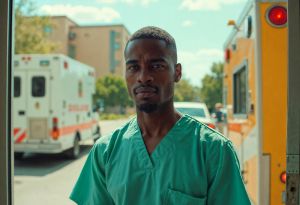 and pay taxes and be members of the American community.
We should convert those with T.P.S. to green card status especially after decades in the U.S. If these immigrants committed crimes, then deport them. If they haven’t paid their taxes seize any property and bank accounts. Why would you want to exile hard working men and women who have done nothing wrong except have the misfortune of being born outside of the U.S.
Does our king, Donald I, have a form of dementia?
That is constantly being asked by America’s friends and foes alike. But trying to figure that out from the sidelines is impossible. I am sure that his family, friends, and close advisors would notice if it were true. Of course, I would be very surprised if they would let the public know even if it were true.
I think you can assume Trump, like most 80-year-old individuals, is not as sharp as he was at 50 or even 60. It is the exceptional person that would be. It doesn’t mean that no matter how much people might like to see him removed by exercising the 25th Amendment it is going to happen for dementia.
I don’t really believe his behavior has changed very much at all since he came down the escalator in 2015. I wouldn’t say he is suffering from dementia, but he has always been a bit delusional. His delusions may just be more pronounced now.
 Most of the other leaders on the world stage never thought of him as anything more than what he has always been, a bully. I think as his second term goes on, our allies as well as our enemies will disregard his pronouncements more and more. After one of his rants, they will politely nod and then totally disregard what he said.
What he has shown is that the United States is currently more to be pitied than feared. It may be taking on the role of the Ottoman Empire in the 19th Century. While it was once a great power, it had been made weak by trying to remain great past its prime. The Austro-Hungarian and the British Empires suffered the same fate…thinking they were strong when the rest of the world saw them as weaklings. All three empires saw their demise during a war.
 On the current battlefield, the United States has shown that the amount of defense spending doesn’t equate to success. The Iranians have decided they can take a punch and therefore negate any advantage that the U.S. has with their sophisticated weapons. What we have shown is that our weapons and tactics are from a different era.
When the Germans invaded Poland in 1939, the Polish Cavalry were fighting with lances and horses. The Germans had tanks. The Poles were just rolled over. Likewise, we have seen the Ukrainians hold there own with the Russians by adopting and manufacturing drone weapons. In the Iran War, we are shooting down $30,000 drones with million-dollar missile systems. Which country is more sustainable?
 Trump is doing everything to kill wind and solar power. He wants coal to be king. If he isn’t gumming up the works to help his contributors, then why would he want to see the U.S. fall further behind China and the rest of the world?
His sickness is delusions. He has deluded himself into believing weird things and because he is president, Trump wants to include 350 million Americans in supporting his delusions. He constantly lies for no particular reason. How many of us just ignore anything he says.
Unfortunately, unlike the rest of the world, Americans can’t close our ears to his pronouncements. The U.S. for the remainder of his term will continue to lose prestige and respect. I guess that is to be expected.
I don’t know whether he suffers from dementia, but I am convinced that he is mentally ill. The world knows it. And we will suffer long term damage as a nation because of Trump. Any country that can elect that man twice will never be trusted again by the world for a very long time.
We speak about making local governments more accountable. The entire purpose of Amendment 3 is to rein in costs. Most of the expenses of local government are payroll and benefits. While the Florida Legislature is at least publicly brow beating cities and counties, they keep making the benefits for employees more and more lucrative. Local governments must pick up those additional costs. This is especially true for the state operating Florida Retirement System which includes local government employees but is managed by the state.
I believe there is nothing more abusive under that system than the Deferred Retirement Option Program, simply known as DROP. For example, an employee began working as a fire fighter 30 years ago. He wasn’t very ambitious and didn’t want further responsibilities, so he has stayed within the same classifications with bumps for seniority and COLAs. His current gross salary is $120,000. If he enters the DROP program and remains for 8 additional years (the maximum), he will have accumulated more than $1 million dollars in a tax deferred account, all while working and not contributing any more money.

Further the Florida Retirement System requires a 3% contribution a year by the employee. Under this system, he would no longer have to contribute, so he will see an immediate raise of $3600 per year. Without the DROP program payout, his lifetime pension will be $108,000 per year indexed for inflation. When they retire, most would take the DROP benefit of $1 million plus and roll it over into an IRA or back into the FRS system, Otherwise, they must pay taxes on that money.
It isn’t just police and fire employees that can do this…but every employee in the system would be eligible with slightly different parameters. I have never come across anything like this in the private sector. But there are additional perks if you work for the government.
One of the best is that after 6 months, you can return to work for your old boss or any Florida government within the Florida Retirement System. Initially, there may be some limitations about collecting your pension. However, 12 months after “retiring,” there are no limitations about receiving both your salary and your pension.
These are just examples. Each employee would have slightly different outcomes. Law Enforcement and Fire employees have a better deal than the guy in Public Works.
Local governments didn’t come up with this system. The Florida Legislature did. The same people who now are saying pass Amendment 3 to keep taxes down. About half of local government spending is because of schemes like DROP and other unfunded mandates. All of them coming to us from our friends in Tallahassee. They are the hypocrites. Or should I say the wolves in sheep’s clothing?
They buy your votes with your money and subterfuge. Local government taxation and spending should be in the hands of local people. We should have the power to elect and boot government officials that are spending money in ways that the voters deem unnecessary. Instead, like so much in America today, we are just a bunch of whining babies looking for someone to save us from ourselves.
The lawsuits that challenged Amendment 3 have been settled.
A judge ruled that the plaintiffs’ contention that the ballot language was inaccurate and misleading was upheld. The language now is plain and simple, and voters should be able to discern whether passage is a good idea or not. In my opinion, it is still not a good idea.
What Amendment 3 does not do is protect any one category of spending over another. There are no carveouts for police or fire. It will raise all non-school tax homestead exemptions to $150,000 in 2027 and $250,000 in 2028. It will be indexed for inflation thereafter.
If you are not a Florida resident on December 31, 2026, you will receive the current homestead exemption, but then after 5 years you may be eligible for the larger exemption. There is a caveat depending on how the courts interpret that clause considering the U.S. Constitution. In my opinion, it is probably unconstitutional.
It also reduces the annual cap on assessments from 10% to 5% for non-homestead properties.
 There are provisions for using taxes for a broad range of categories; public safety, education and schools, infrastructure, natural resources, bond debt services, retirement benefits for employees, operations and administration, and, except as prohibited by law, other expenditures approved by county officers and governing bodies.
The problem is after the second year; Martin County alone will have a revenue reduction of more than $60 million. There is no getting around it…deep cuts will have to be made. If you vote for it, where will the cuts come from?
It is incumbent on any yes voters to tell the commissioners what specifically they want to see eliminated and not just say things like “waste, fraud, and abuse.” The budget is online on the county’s website.
There is nothing in the amendment that prohibits fees from being charged for everything from parks to parking. We should become accustomed to having to pay for the use of public resources. Is it time to charge for the use of our parks and fields for leagues and clubs that use them?
If Amendment 3 passes, citizens should come to a commission meeting with ideas about what should be eliminated because programs certainly will have to be.
In both the District 2 and District 4 county commission races, third candidates made a difference. In District 2, Althea Wiley ended up with 10.68% of the vote. Susan O’Rourke, jumped into the race late once the incumbent, Stacey Hetherington, decided at the last moment not to run against Chris Collins. Susan had 40.33% and Collins had 48.99% of the vote. Wiley, who had early on been a vocal critic of Collins as a city commissioner, played the spoiler in this race in my opinion.
 I am almost certain that every vote she received would have gone to O’Rourke if Wiley had dropped out. It would have been a much tighter race. One that O’Rourke could have pulled out if she had another few weeks and it was a two-person race.
District 4 was a much tighter race between John Dial, Sarah Heard, the incumbent, and John “Kaz” Kazanjian. Dial received 44.93%, Heard 47.53% and Kazanjian 7.53%. Kazanjian is the leader of the PBA which represents deputies and police officers in the county. Would his voters had gone to Heard or Dial if he wasn’t in the race?
 In the City of Stuart, both former Mayor Merritt Matheson and current Commissioner Eula Clarke won their races. Matheson had 58.2% against his opponent, Derreck Ogden’s 41.8%. Clarke had a three-way race garnering 52.12% with her opponents Kylie Micciche receiving 15.8% and Dayne Oldenborg 32.08%. Would Clarke have picked up more votes if it were a two-person race…maybe.
In his race against Will Laughlin, current Stuart Commissioner Campbell Rich won by less than ½ %. This triggers an automatic recount that as of this writing has been scheduled for Friday. They are still looking at a few provisional ballots which could determine whether the election goes to a recount or not.
On August 20th the provisional ballots were counted, and Rich avoided a mandatory recount. The final percentages were Rich 50.27 and Laughlin 49.73.
 Both Matheson and Clarke had successful social media strategies where Rich had no presence, not even a Facebook page. That could have been the difference between a recount and an outright win. Social media is not everything, but it is a component in a successful campaign.
The District 1 School Board race was a three-way contest between the incumbent Christia Li Roberts, Cherie White, and Chuck Winn. Roberts was at 49.69%, White at 26.98% and Winn 23.33%. If either White or Winn had decided not to run, would Roberts have found herself in a November runoff with White.
In nonpartisan races to avoid a runoff one candidate must receive 50% of the votes. The runoff is in November at the general election. There will be two school board races that will be decided there.
The second runoff will occur in the District 4 School Board Race. Amy Pritchett, the incumbent, had 42.76%, Tony Anderson, the person she beat 4 years ago for this seat, had 41.37% and teacher Milly Blanco had 15.87%. If Blanco was not in the race, I am certain that Anderson would have pulled off a return to the Martin County School Board. Now he still might if, as I believe Blanco’s votes go to Anderson in November.

In Indiantown the incumbents, Carmine Dipaolo, Angelina Perez, and Karen Onsager were soundly defeated by Anthony Dowling, Janet Hernandez, and Christa Miley. It seems the pace of development was too rapid for some. While the current council brought in over $190 million in state grants primarily for the new water plant, voters didn’t seem to care. I would not doubt that going forward there will be huge changes at Village Hall.
The real travesty in this election was the turnout of less than 29%. I am sure more people complain about everything on social media than actually voted in Martin County. This was their chance to pick leaders, and for more than 70% of voters, they didn’t care enough to exercise their privilege and responsibility to cast their votes in a consequential election.
For many Americans, the journey from farm to table is something they rarely think about. Today, the average American is estimated to be two to three generations removed from the farm. As our population has become increasingly urban and suburban, fewer families have a direct connection to agriculture. For many children, the food they eat begins at a grocery store rather than on a farm.
This distance can create a significant gap in understanding. Many young people, and even adults, have little idea what it takes to grow crops, raise livestock, manage natural resources, or produce the food that eventually makes its way to their dinner table. Agriculture is much more than planting a seed or feeding an animal. It involves science, technology, business, environmental stewardship, hard work, and countless decisions made throughout the production process.
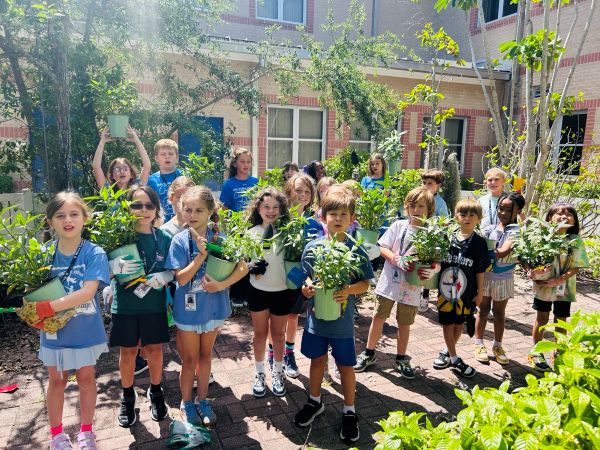
Connecting children to agriculture is important because it helps them understand and appreciate the food system that supports their families and communities. When young people have opportunities to plant a garden, care for an animal, visit a farm, participate in a livestock project, or learn where their food comes from, agriculture becomes something they can experience rather than simply something they read about.
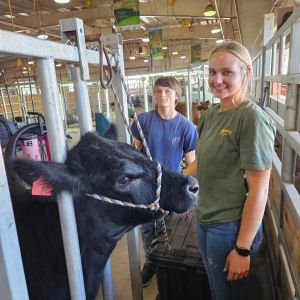 Youth development programs such as 4-H and FFA play an important role in building this bridge. Hands-on learning gives young people the opportunity to develop skills while also learning about agriculture and natural resources. Through projects and experiences, youth begin to understand the effort, knowledge, and responsibility involved in producing food.
The impact extends beyond the young person. When we educate children, we often educate the entire family. A child who comes home excited about a gardening project may get a parent involved. A young person who learns about livestock may begin asking questions about where meat and other animal products come from. A youth who visits a farm may share that experience with siblings, grandparents, and friends.
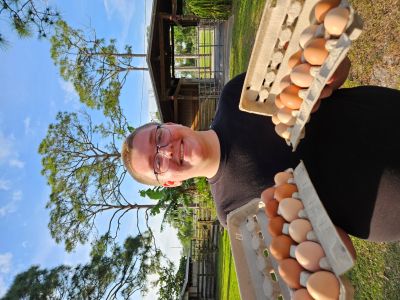 This creates a valuable ripple effect. Youth become a bridge between agriculture and families who may no longer have a direct connection to farming. They can help start conversations about food production, natural resources, sustainability, and the people who work every day to feed our communities.
Agriculture is fundamental to all of us, whether we live on a farm, in a rural community, or in the middle of a city. Helping children understand that connection is an investment in the future of agriculture and informed and engaged citizens.
By giving young people meaningful opportunities to experience agriculture firsthand, we can help ensure that the next generation understands not just where their food comes from, but the people, knowledge, and work behind it.
David Hafner’s opinions are his own and may not reflect Friends & Neighbors viewpoint.
Not every cat dreams of curling up on a couch or spending their days lounging in a sunny window. Some cats are happiest when they have a job to do. That's where the Humane Society of the Treasure Coast's Barn Buddy Working Cat Program comes in.
Barn Buddy cats are healthy, independent felines who may not be suited for traditional indoor homes but thrive in outdoor environments such as barns, farms, stables, warehouses, plant nurseries, and other properties. These hardworking cats provide natural pest control while enjoying the freedom to live in a setting that matches their personalities and instincts.
For years, HSTC's Barn Buddy program has created successful matches between working cats and property owners throughout our community. These cats receive a safe place to live, daily food and water, shelter from the elements, and a caregiver who looks out for their well-being. In return, they help keep rodent populations under control and often become beloved members of the property they call home.
Today, the need for Barn Buddy adopters is greater than ever.
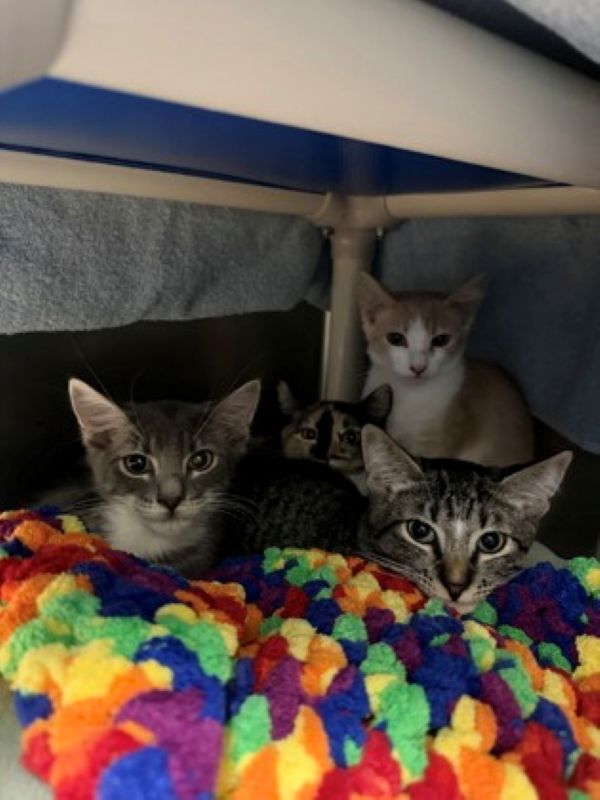
HSTC is experiencing high intake numbers and caring for more animals than ever before. While our team is committed to providing every animal with quality care, shelter space is limited. Every Barn Buddy adoption helps free up valuable space, allowing us to rescue and care for even more animals in need.
Adopting a working cat is also an opportunity to save a life. Many Barn Buddy cats have few alternatives because they are not comfortable living as traditional house cats. By providing them with a safe working environment, adopters give these animals the chance to thrive in a setting where they can be successful.
Whether you own some land or even a business, you may be the perfect match for one of these deserving cats. Many adopters discover that Barn Buddy cats quickly become an indispensable part of their operation while bringing personality and companionship to the people who care for them.
Even if you're unable to adopt, you can still make a tremendous impact by spreading the word. Tell family, friends, neighbors, and anyone you know who may benefit from a hardworking feline resident about the program. A simple suggestion could help connect a working cat with the perfect home.
Together, we can create second chances for cats who deserve them most while helping our shelter make room for the next animal in need.
View our working cats that are available for adoption at www.hstc1.org/cats.
Frank Valente's opinions are his own and may not reflect Friends & Neighbors viewpoint.
Adaptogens seem to be everywhere. in those fufu drinks you buy at the supermarket, in your coffee and in smoothies... but what are they?
Adaptogens are herbs, roots, or other plant substances, like mushrooms, that help our bodies manage stress and restore balance after a stressful situation. Any kind of stress. Physical, emotional, hormonal and even things we eat and drink affect our bodies systems. Experts think that adaptogens affect the body’s Hippocampal-pituitary-adrenal (HPA) axis which initiates your bodies response to stress and plays a big role in keeping your body in balance.
The rise in popularity of adaptogens is literally where Eastern medicine and Western medicine meet. In parts of Asia and India, people have been using adaptogens for centuries to treat a variety of ailments. In the United States experts are beginning to recognize the value of these supplements as the research grows.
Not all herbs work as adaptogens. To be considered an adaptogen, an herb or plant substance must be nontoxic at normal doses. It must support the entire body’s ability to cope with stress. It must help the body return to a stable state.
Adaptogens help the body regulate in many ways including improving mood, balancing hormones, fighting fatigue and boosting the immune system. Several studies have shown that adaptogens can be successfully used alongside standard treatments to help with post-surgical recovery, congestive heart failure and COPD.
Some common adaptogens include
1. Ashawaganda- this herb has been shown to reduce anxiety and depression. It also plays an important role in keeping cortisol levels stable.
2. Ginseng - used to help combat fatigue
3. Reishi - a type of mushroom used to boost the immune system and fight cancer
4. Rhodiola - used to reduce fatigue, depression and pain
5. Schisandra - used for improved concentration, coordination and endurance
6. Tulsi - used to increase focus, decrease anxiety and boost the immune system

Before starting an adaptogen it is best to discuss with your primary care provider as some adaptogens can interact with certain medications. It is also important to make sure you are buying your supplements from a reputable source as supplements are not regulated by the FDA and there have been many instances of bottles of supplements not containing what the company claims is in the product.
Adaptogens can be taken as teas, tinctures or capsules. You should check the dose of anything you buy and check with your health care provider to make sure it is a reasonable dose.
Adaptogens are happen,to be taken for a short period of time … less than 6 months…because your body can build up a resistance to them and their intended effects.
Side effects are rare but when they do happen they can include abdominal pain, nausea, vomiting or constipation.
Michele Libman’s opinions are her own and may not reflect Friends & Neighbors viewpoint.
Why do we collect things?
Thirty years ago, it might have been stamps, coins, baseball cards or porcelain dolls. Today, it might be Pokémon cards, LEGO sets or vinyl records. The things people collect may have changed, but the psychology behind it has not.
Sometimes it's nostalgia or the thrill of the hunt. Sometimes a collection becomes part of our identity, a record of what we've loved. But for people who experienced scarcity or instability early in life, acquiring, organizing and protecting things can sometimes provide a sense of security and control.
I've been thinking about this a lot lately because my dad, who died over four years ago at the age of 81, was a collector. A serious one.
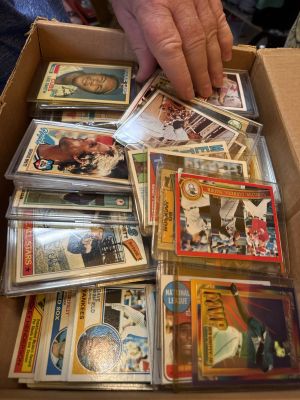 Dad grew up poor in Brooklyn, New York. I remember him telling me he went to school with holes in his socks. His mother had a "strong personality," and his home life could be volatile. He grew up to become an electrician, married my mom, raised a family in Queens and built a comfortable middle-class life for us.
And for more than 60 years, he collected things. Lots of things! Baseball cards from the 1970s through the 2000s (with a particular love for Mickey Mantle), as well as Hess trucks, model airplanes, stamps and coins. I even helped the collections grow over the years without thinking much about it. I'd buy him his annual USPS commemorative stamp collections or boxes of Topps baseball cards because they were easy gifts for a man who loved them.
My mom recently told me she was ready to let his collections go, and I promised her I would help. So I went to her house in St. Lucie County and met with a husband-and-wife team who specialize in collectibles. They came highly recommended, which mattered to me. If we were going to dismantle something my father had spent a lifetime building, I wanted to do it thoughtfully.
For more than two hours, the four of us pulled cardboard boxes and plastic bins out of closets and down from shelves and cabinets, opening them to find one surprise after another. We barely scratched the surface.
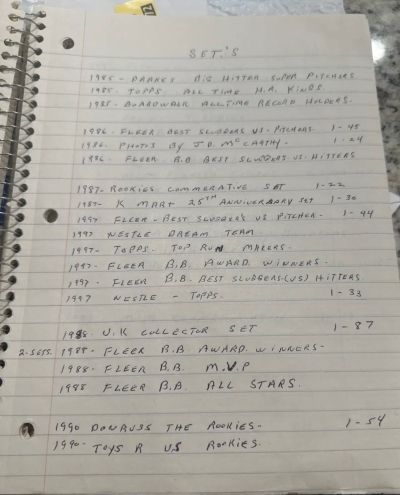 The coin collection was especially fascinating. We found coins dating back to the 1800s, beautiful silver dollars in pristine condition, commemorative coins and proof sets still in their original packaging. But what struck all of us wasn't simply what Dad had collected. It was the care he had taken with it. Everything was so well organized and preserved.
Then, just as we were becoming overwhelmed by the sheer magnitude of it all, my mom pulled out an ordinary but weathered spiral-bound notebook. It was filled with my dad's scribbled handwriting and notes about the things he'd purchased. Dates, descriptions and prices.
That notebook really got me choked up. Today, I can pull out my phone and find almost anything I want to know about a collectible in seconds. But Google and ChatGPT can't give me my father's handwriting.
Four years after losing him, there it was again. His little chicken scratch. His numbers. His system. Suddenly, I wasn't looking at boxes of stuff he'd accumulated. I was looking at the pride he had taken in something he loved for most of his life.
 Now we're discovering that tucked among thousands of cards could be a rookie card or another find worth hundreds, or even thousands, of dollars. There is real monetary value in portions of Dad's collections. But this isn't about money. My mom doesn't NEED to sell Dad's collections. She's simply ready to let them go, and we want to honor his lifetime of collecting by giving it new life. Somewhere there's another Mickey Mantle fan who will be thrilled to own one of Dad's old cards. A coin collector will gently open a velvet case and appreciate his 1976 Bicentennial Eisenhower dollar. A philatelist who will delight in his USPS 1993 Legends of American Music collection with its Elvis Presley commemorative stamp.
I love the idea that something Dad searched for, bought and carefully protected decades ago can become someone else's exciting find. His collection won't disappear. It will scatter, becoming part of other people's collections. And I find that really comforting.
Which brings me back to the question I started with: Why do we collect things?
 I can't know how much Dad's childhood influenced his collecting. But it's hard not to wonder about the little boy who once had so little growing into a man who took such pride in acquiring things he loved and keeping them safe.
Maybe collecting gave him a sense of security or control he didn't have as a child. Maybe, in ways I never understood at the time, it was even therapeutic for him. Or maybe he simply loved it.
Whatever the reason, I'm glad he had these collections that brought him lifelong joy. Something that was entirely his to search for, build and treasure. Now, it's time for those things he treasured to find their next homes.
Well, almost everything.
I'm keeping the notebook.
________________________
Do you or a loved one have a favorite collectible? Email me at stacy@fireflyforyou.com
Stacy Weller Ranieri's opinions are her own and may not reflect Friends & Neighbors viewpoint.
The ballots have been cast. Campaign signs will disappear, winners will celebrate and others will contemplate what went wrong. But the morning after this election presents Martin County with an existential question:
Who will lead us now – and toward what?
Casting a ballot is the easy part. The harder work is defining what the next Martin County Commission and Stuart’s frequently “do-nothing” City Commissioners will actually accomplish this year remaining and in 2027 – 2028? Managing meetings, responding to controversies and repeatedly saying “no” are no longer governing agendas after this election. They produce activity and controversy, not achievement.
Martin County and Stuart need more than officeholders. They both desperately need leadership.

Will one key commissioner (leader) on either board emerge with the experience, temperament, and vision to build that growth consensus beyond just saying no to growth? Or must leadership come from a broader collective of business owners, environmental advocates, educators, healthcare executives, entrepreneurs, developers, nonprofit leaders and longtime residents? Leadership 2050: Martin County?
My answer is that both absolutely need to happen.
Our elected commissioners possess the legal authority and public accountability to govern. But no five-member commission contains all the knowledge required to prepare an entire county for the future. Martin County should establish an independent, nonpartisan leadership council – a civic brain trust charged with developing recommendations, measuring results, and keeping long-term priorities from disappearing between each election cycle. A role C-PAC and the Chamber of Commerce could possibly assist or participate?
Its purpose would not be to override elected officials. It would give them something often missing from local government: sustained expertise, institutional memory and measurable expectations.
What should our collective agenda be for the county and for Stuart, Florida?
First, produce an authentic economic-development strategy focused on higher-paying employers, entrepreneurship, advanced manufacturing, healthcare, marine industries and professional services. Protecting our quality of life should not require exporting our children and young professionals because they cannot build careers here.
Second, resolve major infrastructure questions instead of endlessly studying them. Roads, water, traffic, passenger rail, resiliency and public safety require timelines, funding plans, and accountable leadership.

Third, confront housing affordability. Teachers, first responders, nurses, hospitality workers and young families should have a realistic opportunity to live in the community they serve.
Fourth, preserve Martin County’s environmental identity through disciplined planning, conservation, and responsible development – not through the fantasy that a desirable Florida county can permanently freeze itself in time.
Finally, prepare honestly for property-tax reform. With approximately $41.6 billion in taxable property value and a major constitutional amendment approaching this November, local leaders must distinguish essential services from comfortable spending habits. Taxpayers deserve both relief and competence on this issue from their government.
These priorities should include public benchmarks. How many higher-wage jobs were created? Which infrastructure projects were completed? Was government spending controlled? Did housing opportunities improve? Were waterways and natural lands measurably protected?
Without defined outcomes for the above, “success” becomes whatever politicians claim it to be?
This election will determine who occupies the seats. Yet, it will not automatically determine who leads? That distinction depends upon whether commissioners merely react to the next controversy or assemble the talent, courage, and cooperation necessary to build something lasting.
The legacy of the next Martin County and Stuart commissions should not be how many proposals they stopped, meetings they held or opponents they criticized. It should be what they accomplished.
Martin County does not need another political hero. It needs a leadership culture – and citizens willing to remain in the room after the votes are counted.
Andy Noble’s opinions are his own and may not reflect Friends & Neighbors viewpoint.
Earlier this summer, the University of California, Berkeley, School of Law reported that 37.5% of students received accommodations for disability, mostly attention deficit hyperactivity disorder. This allows them greater time for exams and flexibility overall in completing coursework. Five years ago, only 3% of Berkeley Law students received disability accommodations. Forbes Magazine reported in 2025 that greater than half of Gen Z self-identifies as neurodivergent, a non-medical term that encompasses idiosyncrasies in neurobehavioral or neurocognitive functioning such autism, dyslexia, dyspraxia, and including ADHD. Some social media influencers and the sea of uncontested information online have created the societal belief that self-identification should suffice for the acquisition of an identity accessory which can confer protected group status in education and the workforce. These identities can be superimposed on other intersectional identities in pursuit of greater protected group status. After all, who would contest the courageous efforts of the disabled in seeking acceptance at all levels of society at large, and yet, the glaring numbers at Berkeley Law do beg clarification.

The criteria for school disability or neurodivergent status are increasingly accommodating. It used to be that diagnosing ADHD needed more than a one-page inventory easily found online. Actual neuropsychological or educational testing can take hours and cost thousands of dollars; such testing discerns the complexities of educational challenges in addition to ADHD. Also, response to a stimulant medication (e.g., Ritalin, Focalin, Adderall) is not diagnostic. Everyone focuses better and has greater cognitive stamina on a stimulant, but stimulants do not compensate for learning disabilities or lack of motivation. This category of medication consists mostly of controlled substances which runs the risk of inducing anxiety, sleep disturbance, and even psychosis at high enough doses. These drugs are also habit-forming as they target the same primary mechanism in the brain as cocaine by binding to dopamine transporters and flooding dopamine receptors, including a region of the brain known to induce euphoria and pleasure, the nucleus accumbens, a key neurocircuitry switchboard for behavioral reinforcement. These drugs are highly sought by long-distance truck drivers, college students, and as chaser for those who use sedating and cognitively blunting substances such as cannabis or alcohol. The misuse of stimulant medication for cognitive enhancement without a clear diagnosis of clinical inattention constitutes academic doping or smartmaxxing. It is now quite easy to obtain a prescription for a stimulant online following a perfunctory evaluation and transaction, but buyer beware.
Another diagnosis which has enjoyed tremendous celebrity rebranding is autism. Historically, autism is defined as a varied and complex constellation of developmental deficits: impairment of human relatedness, language disorders, and intellectual disability. There are now individuals who call their late life diagnosis or self-described autism a superpower. The label has been appropriated by extraordinarily successful celebrities who in no way appear to be autistic: Dan Ackroyd, Anthony Hopkins, Darryl Hannah. The specific collection of cognitive skills, emotional intelligence, and superior command of spoken language required by thespians are an overt contradiction of the diagnosis. Certainly, there is a such a thing as high functioning autism in which there is no intellectual disability or language impairment, but the impairment in human relatedness is unequivocal. Eccentric and reclusive geniuses such as Nikola Tesla and Elon Musk have been described as autistic due to their inability to form close and meaningful relationships, but we might also consider describing these individuals as having a narcissistic or avoidant personality disorder with a fragile temperament.

One of the most glaring deficits in the evolution of mental healthcare is the increasing unwillingness of some clinicians to make unpopular diagnoses for fear of being disliked or accused of a bias for which social and professional opprobrium should follow. Clinicians also sometimes collude with the desire of the patient to receive a popular and face-saving diagnosis to obfuscate the identification of a diagnosis which requires that the patient accept responsibility for natural consequences of poor choices. The unfortunate death on August 15, 2026 of Professor Jason Arday of Cambridge University in the UK is a cautionary tale. Professor Arday was a modern day Walter Mitty. He crafted a mythical identity and biographical narrative which resulted in being named the youngest black professor in the history of Cambridge University at age 37. Professor Arday claimed to have been mute until age 11 and illiterate until age 18. He claimed to be autistic with a history of seizures, locked-in syndrome, testicular cancer, and brain cancer. He also claimed to be world-class athlete who ran 600 miles in six days; he claimed to run 30 marathons in 35 days, suffering a seizure and a fractured leg in marathon 21. Upon public scrutiny, none of his claims were ever verified. The coup de grâce was his inevitable academic defrocking when it came to the fore that much of his doctoral work was plagiarized. Cambridge University and Professor Arday engaged in kabuki theater by supporting his preposterous narrative until public disclosure was made of his fabulist life. Cambridge called him “the best in the world….a once-in-a-generation talent”, but he was not. Earlier attempts at confirming his claims were cowered into silence with claims of racism. In the end, Professor Arday claimed that his autism was the reason plagiarism occurred in his academic work, but there is no evidence that he was autistic. Competent diagnoses require a clear presentation of valid criteria. One of the most august institutions of learning in the West failed miserably in their mandate to engage in truth and pursuit of knowledge and instead folded to sociopolitical pressure not to be accused of racism or bias against autism.
Like the oncologist who must deliver bad news of terminal illness, mental healthcare providers need to be able to deliver painful and unwanted news about the causes and course of a psychiatric illness, including addictions and personality disorders. Some of the most important conversations in life can be difficult and painful.
Dr. Louis Velazquez’s opinions are his own and may not reflect Friends & Neighbors viewpoint.
Collaboration. It is a core principle here at House of Hope. We proudly work with nearly fifty different nonprofit agencies and government partners across Martin County and throughout the Treasure Coast, and even into Palm Beach County. Simply put, collaboration is when two or more people or groups work together to share ideas, skills, and resources to reach a shared goal. It means joining forces to create or do something that is better than what one person or entity could do alone.
A wonderful example of collaboration is the Copper Key Scholarship Promise. When The Community Foundation Martin-St. Lucie reached out to House of Hope over seven years ago to develop this program together, we jumped at the chance. At the same time, Nina Haven Scholarships, Inc. joined the team. Together, we developed the framework for a unique approach to scholarships. The Copper Key Scholarship Promise selects talented Martin County 6th and 7th grade students with financial need and a dream of post-secondary education for full scholarships to one of 40 Florida colleges, universities or vocational schools.
It is not just that we identify scholars at a young age that makes this program different, it is what the scholars and families accomplish during these years in the program. The cost of college or trade school is an obvious barrier to entry for students in lower income households. But there is also the pressure on students to work and contribute financially to the household, as well as care for younger siblings that keeps many students from pursuing their dreams. The Copper Key partners surround the scholar and their families with an array of programs and services during the years leading up to high school graduation and beyond, to empower everyone in the household to reach their full potential. The scholars have access to volunteer opportunities, tutoring resources, SAT prep, career coaching, resume writing, and more. Parents or guardians are able to access all of the services under the House of Hope umbrella, including and especially case management and family centered coaching.

We were proud to see our first three scholars graduate high school at the end of the last school year and head off to pursue their dreams at the collegiate level. As we sit today, we have 24 scholars and their families in the program, and will add more during this school year. We do not accept unsolicited applications to this program, instead even that process is about collaboration. House of Hope, the Boys and Girls Club of Martin County, Hope Rural School, and Martin County PAL (Police Athletic League) all are able to refer students and families for consideration. These agencies have a real relationship with the families that they refer, and have confidence that the families are ready to commit to the program and do their very best. All of this energy and effort by the scholars, their families, the partners, and of course, the funders and donors breaks the cycle of poverty for many, makes college or trade school attainable, and makes dreams become reality.
If you want to learn more about the Copper Key Scholarship Promise, please email us at empowermentservices@hohmartin.org. If you or someone you know needs House of Hope services, or you want to learn more about how you may help, please visit our website at www.hohmartin.org. Thank you for spreading hope in our community.
Rob Ranieri’s opinions are his own and may not reflect Friends & Neighbors viewpoint.
I was a newcomer to Martin County in 1981 - I was working for a developer. Surprisingly, to today’s newcomers, I was welcomed to this wonderful community. I have lived here ever since I returned in 1990 to build my business, home and start a family. All of Florida was in a growth mode, we needed homes, jobs and opportunities. I have watched Martin County embrace the concept of controlled, smart and responsible growth for the last 45 years.
 Today’s Martin County is entirely different from my early days. In the 80’s there were 4 traffic lights on US 1 - Kanner/Colorado, Indian, Salerno and Bridge Road. A few car dealerships, strip malls and vacant land was all you saw. Most people left town to work or they had already retired. This was no place for a young single man who grew up in the big city (W. Palm Beach).
In the mid-80’s the community began a process to legally and successfully develop a plan to keep Martin County a small town amongst the more aggressive growth models of the neighbors. The keystone was a four story height limitation and a vision of the future land development and growth for years to come. Leaders and citizens knew that people would come but the overall amount could be controlled and managed.
Few people who read this article will remember the protests surrounding Martin Downs - the beginning of modern day Palm City. Many feared that Palm City would become exactly what we have today. Palm City is a great community with a variety of housing from apartments, affordable houses and even ultra high net worth homes in amazing developments. Palm City has schools,restaurants, shopping, walkability, healthcare, starter neighborhoods and even assisted living homes. Developers invested in the land and infrastructure to bring Palm City and its neighborhoods to life. Traffic in Palm City ebbs and flows primarily with rush hour and at the height of the “season”. All of this was approved and developed after careful and thoughtful consideration.
 I am the “son of a developer”. I have heard and studied every argument regarding growth. I personally embrace the Martin County difference. I believe ‘we” got it right despite conversations to the contrary. We have an abundance of parks and recreation land and generally better traffic flows than all our neighbors along the coast of Florida. With a fabulous mix of residents from all walks of life. The life here is what attracted all of us. The people who believe that we have over developed Martin County all came here after me. Shutting the door on the possibility of living here is not the answer.
For nearly 50 years people have worked hard to balance growth, property rights and the economy to make our county liveable, workable and special. The plan is working - we have a wonderful place to live. Let’s keep our eye on the prize - continuing a long range plan that will allow our community the ability to look around the state and say - we got it right - welcome to Martin County, the best jewel on the Treasure Coast.
John Gonzalez’s opinions are his own and may not reflect Friends & Neighbors viewpoint.
AmeriCorps is back and looking for a few good mentors.
Boys & Girls Clubs of Martin County proudly introduced this acclaimed national service program to our community in 2019. It made a significantly positive impact before federal funding cuts forced a local hiatus.
Its return is timely. AmeriCorps members are needed to compose the core of our elementary school literacy program. They’ll provide individualized and small-group support directly with kindergarten through fifth graders at four BGCMC clubs.
We don’t have to guess about the benefits of investing focused attention into a child’s reading and comprehension skills. Over a six-year period, AmeriCorps members worked with thousands of local schoolchildren. Literacy rates, English Language Arts grades and assessment scores improved dramatically.
Among some cohorts, we saw nearly eight in 10 students elevate their reading from Level 1 to Level 4 with about the same percentage maintaining or improving their ELA grades.
Although self-evident, it’s impossible to overstate how drastically literacy rates shape life trajectories. Everything from lifetime earning potential to propensity toward incarceration trace back to literacy rates.
We’re happy to echo the good news shared earlier this year by Martin County School District of local kindergarteners tying for fourth place statewide in readiness scores, which include literacy assessments. This is the kind of success that AmeriCorps is uniquely positioned to build upon.
AmeriCorps members will experience the joy of creating meaningful connections with our members, contributing to their growth in self-confidence and equipping them for future success.
BGCMC AmeriCorps members will also take part in community service projects. Previously, our AmeriCorps members invested nearly 60,000 hours annually in our community and organized nearly 50 service projects.
So, what does it take to become an AmeriCorps mentor—besides a lot of energy, eagerness to help, and a heart for those in need? You must be at least 17 years old, pass a national service criminal background check and be a U.S. citizen, U.S. national or lawful permanent resident-alien.
Benefits, beyond the happiness that accompanies acts of service, include a biweekly living allowance, healthcare insurance, childcare assistance, the chance to receive bonuses for hours completed, and a Segal AmeriCorps Education Award upon completion.
Full-time mentors serve 1,700 hours and part-time mentors perform 900 hours. It’s usually a one-year commitment.
AmeriCorps traces to bipartisan roots. The national program was inspired by the late President George H.W. Bush’s initiative to renew national service. President Bill Clinton launched the program through the 1993 National Community Service and Trust Act.
The members service beings by taking an oath that reads:
I will get things done for America – to make our people safer, smarter, and healthier.
I will bring Americans together to strengthen our communities.
Faced with apathy, I will take action.
Faced with conflict, I will seek common ground.
Faced with adversity, I will persevere.
I will carry this commitment with me this year and beyond.
I am an AmeriCorps member, and I will get things done.
If this sounds like you, please apply by visiting BGCMartin.org/AmeriCorps or emailing AmeriCorps@bgcmarting.org.
Keith Fletcher's opinions are his own and may not reflect Friends & Neighbors viewpoint.
Other travel plans hadn’t materialized, and we needed a week away – my wife, our nine-year-old daughter, and me. Colombia had been floating around as a candidate for a while: none of us had been, and getting there turned out to be easier than we’d imagined. Avianca flies direct to Bogotá from Miami, and – a pleasant surprise – from Fort Lauderdale as well. Three hours and twenty minutes. By the time you’ve settled in, you’re already there.
One small detail worth knowing: the descent feels noticeably shorter than the climb out of Florida. Which makes perfect sense once you remember that Bogotá sits at 8,660 feet above sea level. We’re at water level here. The air in the city has a quality to it: cool, thin, clarifying, which you notice from the first breath.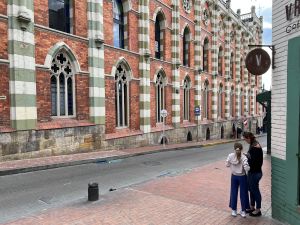
We spent three nights at Hotel Coco, in the Chapinero neighborhood, one of Bogotá’s more upscale districts. The question everyone asks comes next, so let’s address it directly: is Bogotá safe? It is, if you’re sensible about it. Avoid areas with a sketchy reputation, stay aware of your surroundings, skip the flashy jewelry, and keep nighttime walking to zones like Chapinero where the answer to that question is more comfortably yes. None of this felt burdensome. It’s simply how you travel in a major Latin American city.
We caught a Sunday street market, vibrant and local, with the easy energy that good street markets always have. The Museo del Oro (Museum of Gold) was quite nice, though go on a weekday if you can: it’s free on Sundays, which means it’s packed. The collection documents the extraordinary goldsmithing traditions of pre-Columbian cultures across Colombia, with thousands of pieces ranging from delicate figurines to ceremonial masks. It is one of the finest museums of its kind in the world, and it earns that reputation.
Our full-day excursion to Zipaquirá and its famous Salt Cathedral was the most surprising day of the Bogotá portion. The cathedral was carved entirely by hand into the tunnels of a working salt mine, 600 feet underground. What began as a modest shrine for miners in the 1930s became, over decades, an elaborate subterranean church with arched passageways, dramatic lighting, and enormous sculptures of the Stations of the Cross cut directly into the salt walls. Touristy? Certainly. Fascinating? Completely. We hired a guide for the day, who also gave us a brief tour of the charming colonial town above ground and a lunch of traditional food. You can also get there by train from Bogotá, which would be an experience in itself.
My personal highlight in Bogotá, though, was Monserrate. A sacred mountain that rises dramatically above the city to 10,341 feet, it is reached by funicular or cable car, offering a ride that is equal parts practical and theatrical. At the top sits a white-towered sanctuary, a handful of restaurants and cafes, and views of Bogotá that stretch in every direction as far as the eye can reach. Eight million people live in that city below. From Monserrate, it looks like a grey-green carpet rolled out between the mountains. The three of us sat at one of the cafes up there and shared almojábanas – warm, slightly sweet cheese bread rolls that are deeply traditional in the capital – with coffee and hot chocolate. It was one of those unremarkable moments that somehow becomes the one you remember most.
On day four we flew from Bogotá to Armenia, capital of the Quindío department, and from there a private driver took us into the mountains to Salento: a small, colorful town in the heart of Colombia’s Coffee Region, the Zona Cafetera. We stayed four nights at Kawa Mountain Resort, a luxury bungalow property that managed the difficult trick of feeling both remote and perfectly comfortable.
Salento draws tourists, but it hasn’t been hollowed out by them. It remains the “real” Colombia. We toured a cacao farm and made chocolate from raw beans, a process that is simultaneously more physical and more alchemical than you’d expect. We rode horses up into the hills to a coffee farm, where we followed the full arc of production from cherry to cup. We hiked the Valle de Cocora, a valley of impossible beauty where wax palms – Colombia’s national tree – rise 200 feet from the mist like something from another planet.
And we walked the streets of Salento itself, repeatedly, because they are awesome. The painted wooden balconies, the fondas spilling music onto the cobblestones, the unhurried pace of a town that knows exactly what it is.
The food across the trip was excellent. Bogotá’s restaurant scene has become more cosmopolitan, which has its pleasures. But in Salento we ate more traditionally, and more cheaply, and more happily. If you go, order the Bandeja Paisa: a generous, unapologetic platter of beans, rice, ground beef, chicharrón, fried egg, plantain and arepa that is essentially Colombia on a plate. It requires no apology and no explanation.
One honest note on coffee: I didn’t love it. My Brazilian instincts run toward dark, strong, and dense. Colombians prefer a medium roast, lighter and fruitier. Both are legitimate. They are simply different philosophies of the bean. I respected theirs. I missed mine.
A practical word on language: English is not widely spoken in Colombia, even in hotels. Life becomes considerably easier if you have some Spanish. My wife and I do, which helped. But even where we couldn’t bridge the gap entirely, people were patient and warm in a way that made the effort feel worthwhile rather than stressful.
The people, in the end, were the best part. In both cities, without exception.
The formula – three nights in Bogotá, four in Salento – was close to ideal. Nothing felt rushed. A possible return will see us in Cartagena and Medellin. Colombia, it turns out, is not a country you see once and consider finished.
Marcelo Guimarães' opinions are his own and may not reflect Friends & Neighbors viewpoint.
Every day should be Senior Citizens Day! Our seniors have shaped our communities and our society, raised families, built neighborhoods, created businesses, and shaped the culture and traditions we now enjoy.
But if we have to pick just one day to honor them, it is August 21, declared by President Ronald Reagan in 1988 to be National Senior Citizens Day.
This special designation gives us a reason to stop for a moment and recognize the wealth of knowledge, skill and experience that seniors offer to us today and to the next generation. It begs us to listen to their stories, offer them support and respect, and express our gratitude.
At the Council on Aging Martin County, we love to hear the stories shared by our clients and admire the incredible experiences they bring to any discussion. We stand in awe of all they accomplished in life, often under trying circumstances. And we delight in what they are doing with their lives today.
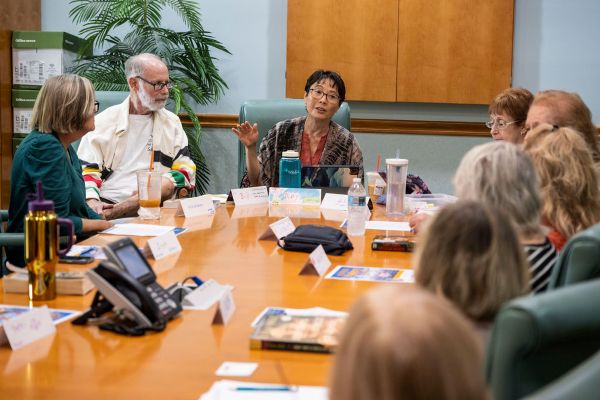
Many of our seniors join us at the Kane Center, where they find a wide range of opportunities to keep seniors engaged, from lectures and luncheons to card games, book clubs, and exercise sessions. We know that our seniors stay young by being part of the action. And we also know that loneliness and isolation are the surest ways to make someone age prematurely.
Even with that kind of outreach and involvement, though, we know that life can be difficult for some seniors. They often face health challenges or financial strains. They are victimized by online scams and may suffer elder abuse. Simply finding or maintaining safe housing can be an almost insurmountable challenge.
So we’re not just celebrating seniors. We’re assisting them through our Care Navigators and our many programs that help them to live out their lives with dignity.
What can you do to help us celebrate National Senior Citizens Day?
- Volunteer at a senior center or living facility.
- Donate gifts of essential items to seniors in need.
- Advocate for seniors with our local, state and national leadership.
- Make it personal by spending quality time with grandparents, parents, or older neighbors. Listen to their stories. Ask questions about their experiences and their viewpoints. Offer to help if you’re needed, or simply enjoy the experience of getting to know them better.
If you take time to celebrate seniors in our community on National Senior Citizens Day, you will find, as we do, that we receive so much more from them than we give!
And if you know seniors who are experiencing challenges, be sure to tell them about the Council on Aging Martin County. We are easily reached through our website www.coamartin.org, and by phone 772-223-7843.
Karen Ripper's opinions are her own and may not reflect Friends & Neighbors viewpoint.
The start of a new school year brings homework, sports, activities, parent meetings, and plenty of scheduling. For divorced or separated parents, it can also bring new decisions that need to be made together.
When communication is clear, and children know what to expect, the school year can feel more manageable for everyone.
Handle School Decisions as a Team
Questions about schools, tutoring, extracurricular activities, or other educational needs can sometimes lead to disagreements.
Before making a major decision, review your parenting plan and understand which decisions must be made together. When possible, keep conversations focused on your child’s needs rather than past disagreements. If you do not agree, try to identify the specific issue and discuss possible solutions rather than letting one disagreement escalate into a larger conflict.
Keep Everyone on the Same Calendar

Between school events, practices, games, appointments, and special activities, important dates can easily get missed.
A shared digital calendar or co-parenting app can help both parents stay informed. Add important dates as soon as you receive them and communicate schedule changes early. This can reduce last-minute surprises and help children know where they need to be.
Communicate With Teachers and Coaches
Both parents should have access to important information about their child’s education and activities when appropriate. Make sure the school, teachers, and coaches have current contact information.
Whenever possible, communicate directly with teachers and coaches rather than relying on your child or the other parent to pass along messages. This helps prevent misunderstandings and keeps children from feeling caught in the middle.
Create Consistency Between Two Homes
Moving between households during a busy school week can be difficult for children. Simple routines can make the transition easier.
Parents may not have identical rules, but consistency with homework, bedtimes, school supplies, and morning routines can help children feel more settled. Keeping essential school items at both homes can also prevent unnecessary stress.
Know When Legal Guidance May Help
Not every disagreement requires legal action. But if parents repeatedly disagree about important school decisions or an existing parenting plan no longer works for the family, it may be helpful to speak with an attorney.
As children grow, their schedules and needs change. Sometimes a parenting plan needs to change with them.
Gene Zweben’s opinions are his own and may not reflect Friends & Neighbors viewpoint.
If you could make money educating children, which children would you want in your school?
Would you choose the child with complex disabilities who needs specialized staff, therapies and accommodations? What about the student dealing with behavioral issues, homelessness or a language barrier?
Or would you choose the kids who show up ready to learn, test well and require fewer resources?
We know the answer. And that’s what worries me.
In 2023, Florida lawmakers passed HB 1, making taxpayer-funded scholarships available regardless of family income. It also expanded education savings accounts for home-educated students.
By 2024–25, an estimated $3.9 billion was going toward private-school and home-education scholarships. For 2025–26, a Florida Senate analysis puts total scholarship funding at nearly $5 billion.
Mind you, a LOT of these funds went to families already paying high tuition for private schools. A subsidy for the wealthiest families.
Charter schools are public schools. But let’s not pretend that means no one can make money from them. Private management companies, landlords and vendors can profit through public contracts.
Private schools are different. They can set admissions requirements. They don’t have to provide the same services and protections required in public schools. Public schools, meanwhile, have to educate the child who walks through the door. Not just the children who are easiest—or cheapest—to teach.
 In Martin County, the state’s latest calculation includes an $11.2 million Family Empowerment Scholarship deduction tied to our county. After related offsets, the net adjustment is closer to $8.7 million. Either way, that matters for a district still responsible for transportation, staffing, campuses and specialized programs.
And NOW I’m hearing the state’s priority is to increase the amount allocated for each student.
Funny how that’s coming at a time when the most fortunate families have started to benefit from sending their kids to private schools.
Sydney Thomas' opinions are her own and may not reflect Friends & Neighbors viewpoint.
Have you ever thought about what traits children need to become independent, successful, emphatic and kind adults? Now that school has started, it becomes important to know what might be available to assist. Before I talk to you about how Kiwanis can help develop these traits, let me share with you what my AI had to say:
 “To thrive as independent adults, children need core character traits like self-regulation, resilience, empathy, and adaptability. These traits help them manage life's daily stress, build healthy relationships, and bounce back from inevitable setbacks.
Emotional and Mental Traits
- Self-regulation: Managing big feelings, staying focused, and calming down without losing control.
- Resilience: Bouncing back after a failure, bad grade, or lost friendship.
- Perseverance: Working hard through difficult tasks instead of giving up right away.
- Self-confidence: Trusting one's own abilities and knowing how to handle new situations.
 Social and Interpersonal Traits
- Empathy: Understanding how other people feel and treating them with kindness.
- Teamwork: Working well in groups, sharing, and listening to feedback from others.
- Integrity: Doing the right thing even when no one is watching.
Practical and Adaptive Traits
- Flexibility: Adapting quickly when plans change or mistakes happen.
- Curiosity: Asking questions, wanting to learn, and staying open to new ideas.
- Accountability: Accepting responsibility for actions and fixing errors when possible.”
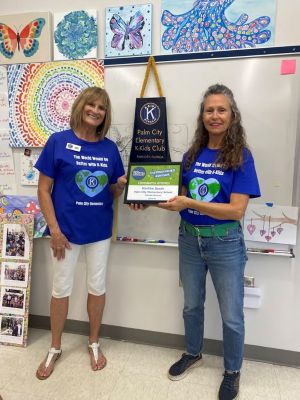
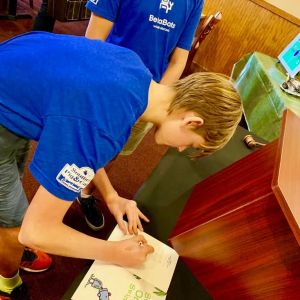
The Kiwanis Club of Stuart, The Kiwanis Club of Martin County and the developing Kiwanis Club of Indiantown have Service Leadership programs including KKids for elementary school age students; Builder’s Club for middle school students, Key Club for high school students and Circle K for college students. Each of these programs help develop the skills and traits that are needed for successful adulthood. Each of these programs has a Kiwanis Advisor in place. Please see Kiwanis.org for more information about each of these programs.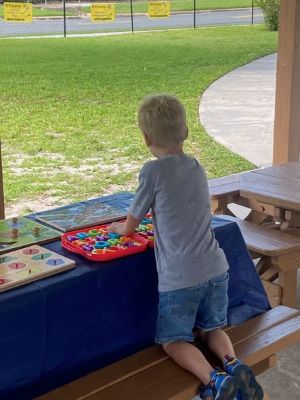
The Kiwanis Club of Stuart provides the following programs:
Key Club—Southfork High School
KKids—Palm City Elementary, Crystal Lake Elementary
The Kiwanis Club of Martin County provides the following programs:
Key Clubs--Jensen Beach High School, Martin County High School
Builder's Clubs--Stuart Middle School
K-kids--Bessy Creek, Felix Williams, Jensen Beach, J. D Parker Elementary Schools
For information about any of the above programs, feel free to call me at 772.530-6481 or Suzy.Hutcheson@outlook.com and I will put you in touch with the appropriate person.
IMPORTANT: If you feel your child needs professional help in any of these areas, there is help through several mental health organizations including Tykes and Teens, Helping People Succeed, Hibiscus Children’s Center, New Horizons of the Treasure Coast and the State of Florida’s Children and Families. Please call them for their expertise.
Suzy Hutcheson's opinions are her own and may not reflect Friends & Neighbors viewpoint.
As neighbors, parents, grandparents, teachers, and community members, we all want the same thing: for our children to grow up healthy, happy, and prepared for the future. While we often think about physical health, a child's mental health is just as important.
Children today face many challenges, from academic pressure and social media to family stress and community hardships. When young people have access to support early, they are better equipped to handle life's ups and downs, build strong relationships, and succeed in school and beyond.
One reason our community is fortunate is the support provided through the Children's Services Council (CSC). Many residents may not realize that CSC funding comes from a dedicated property tax approved to support programs and services for children and families. Those locally generated funds stay in our community and help make resources available that promote emotional well-being, resilience, and healthy development.
These investments support a wide range of services, including prevention programs, family support, early intervention, counseling, and other initiatives designed to help children thrive. For families facing challenges, access to these services can make a meaningful difference during critical stages of a child's development.
Strong communities are built by people who care for one another. When we support children's mental health, we are not only helping individual children and families, we are strengthening the future of our entire community.
After all, every child deserves the opportunity to reach their full potential, and every community benefits when they do.
Tykes & Teens would like to thank our local Children’s Services Councils for the work they do on behalf of the children of our communities.
Anne Posey's opinions are her own and may not reflect Friends & Neighbors viewpoint.
When people think about economics, they often think about dollars and cents. In healthcare, however, the greatest value is measured in healthier lives, fewer emergency room visits, and the ability to prevent illness before it becomes a crisis. Investing in preventive healthcare benefits not only the individual patient but also the entire community.
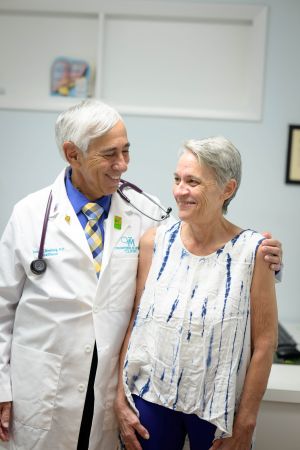 Many chronic conditions such as high blood pressure, diabetes, and high cholesterol can be managed successfully when they are detected early. Regular primary care visits, preventive screenings, and access to necessary medications help patients remain healthy and productive while reducing the need for costly hospitalizations and emergency care. Preventive medicine is not only good healthcare—it is also a wise economic investment.
At Volunteers in Medicine Clinic, we see this every day. What makes our model unique is that every financial contribution is multiplied many times over through the generosity of volunteer physicians, nurses, specialists, and community partners who donate their time and expertise. Diagnostic imaging, laboratory services, specialty care, surgeries, medications, and other medical services are provided through a network of healthcare professionals committed to improving the health of our community.
 The result is an extraordinary value. A relatively modest investment, through private donations, grants, and support from Cleveland Clinic Martin Health, allows VIM Clinic to provide millions of dollars in comprehensive medical care each year to uninsured adults in Martin County. Patients receive primary care, preventive screenings, specialty care, mental health services, medications, and care coordination that helps them avoid more serious illness while improving their quality of life.
Access to quality healthcare is one of the strongest investments a community can make. Healthy individuals are better able to care for their families, remain employed, and contribute to the community around them. When barriers to healthcare are removed, everyone benefits.
 For 31 years, Volunteers in Medicine Clinic has been providing comprehensive medical care, including primary care, preventive screenings, specialty care, diagnostics, surgeries, cancer treatment, mental health services and medications at no cost to uninsured Martin County adults ages 18 to 64 who live at or below 250% of the Federal Poverty Level. In 2026, 250% of the Federal Poverty Level equates to $39,900 for a household of one, $54,100 for a household of two, $68,300 for a household of three, and $82,500 for a household of four, with eligibility increasing for larger households.
If you are uninsured and struggling to afford healthcare, VIM Clinic is here for you with no waiting list. For more information, or to support the Clinic, call 772-280-3882 or visit vimclinic.net. The Clinic's impact is made possible by the generosity of volunteer healthcare providers, nurses, specialists, and community members who donate their time, talents, and resources to improve the health of our community.
Jordan Bromberg’s opinions are his own and may not reflect Friends & Neighbors viewpoint.
For children who have experienced abuse, neglect or other traumatic circumstances, feeling safe is an important first step toward healing. At Hibiscus Children’s Center, the Sanctuary Model helps create an environment where children feel understood, supported and empowered to move forward.
The Sanctuary Model is a trauma-informed approach that recognizes how difficult experiences can affect a child’s emotions, behavior, relationships and ability to trust others. Instead of focusing only on a child’s behavior, Sanctuary encourages caregivers to consider what the child may have experienced and how those experiences are affecting them today.
Simply put, the approach shifts the question from “What is wrong with you?” to “What happened to you, and how can we help?”
The Sanctuary Model is not a separate program at Hibiscus. It is an organization-wide framework that is incorporated into the daily care of children and the overall culture of the agency. It emphasizes physical, emotional, social and psychological safety, along with communication, respect, teamwork and shared responsibility.
For children living at the Tilton Family Children’s Shelter, these principles are especially important. Many have experienced instability, loss and trauma that can make it difficult to trust adults or manage challenging emotions. A consistent, nurturing environment can help children begin to feel secure and develop positive relationships.

Children are also encouraged to identify and express their emotions, manage stress, solve problems and develop healthy coping skills. These important tools can strengthen resilience and help prepare them for challenges they may encounter throughout their lives.
The Sanctuary Model also benefits Hibiscus staff by providing a shared understanding of trauma and a consistent approach to caring for children with complex needs. This also gives staff members the knowledge and tools to recognize and address trauma in their own lives.

This year, Hibiscus Children’s Center is undergoing Sanctuary Model recertification, demonstrating the organization’s continued commitment to maintaining these principles throughout its programs, services and workplace culture. All Hibiscus staff are trained in the Sanctuary Model.
For Hibiscus, the Sanctuary Model is more than a certification. It is a commitment to creating an environment where children are not defined by what has happened to them, but are given the safety, support and opportunities they need to heal, grow and build brighter futures.
For more information about our services and programs for children and families, please visit us at HibiscusChildrensCenter.org.
Matt Markley's opinions are his own and may not reflect Friends & Neighbors viewpoint.
It is the end of August and the first "scout schools" of mullet made their appearance this past week at the Public Beach in Hobe Sound.
We always seem to get a few shots of 50- to 75-yard-wide schools of mullet in August and let's hope this is a preview of things to come. The snook, tarpon, and big jacks were hammering these mullets and if you have never witnessed a "bait blow-up "like this, it is a sight to behold.
Do not bring a knife to a gun fight so gear up with an eight-foot spinning rod paired with a 6000 sized spinning reel with 25 lb. monofilament or 40 lb. braid. Some of these jacks will top the scales at thirty to forty pounds along with the tarpon that can break the 100-pound mark. Live mullet is obviously the perfect live bait to put on a 5/0 to 7/0 circle hook and just free line it around the big bait schools.
Target the edges of the bait pods as one with a hook in his back or through his lips will swim "hurt" or erratically and will get picked out of the pod. Other live baits to use are large shrimp or pilchards because these big fish will hit them too. As far as timing, early morning or late day time slots are obviously the best but if there is enough bait and fish midday you can hook up too.
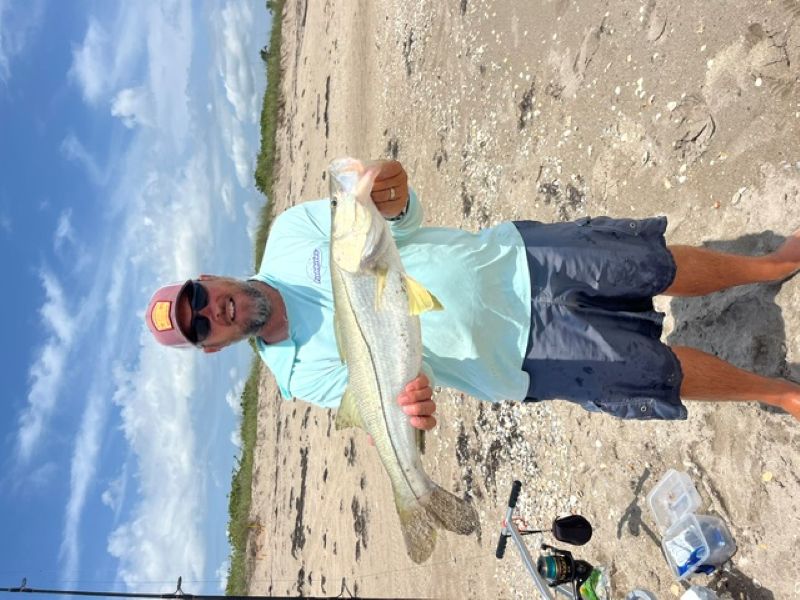
The anglers that like to catch their fish on artificials will throw 4-to-5-inch NLBN'S in black or white, Yo-Zuri Crystal Minnows, DOA Bait busters, and Tsunami Mullet imitation swim baits. Just like fishing the live baits, present your lures along the edge of the bait schools to enjoy the best land-based hook-ups of the year. The past few years our Mullet Run fishing has been somewhat disappointing mainly due to conditions.
Dirty water, weeds, and a few large weather systems had made the surf conditions impossible to fish so let's hope the abundance of Sahara Dust, some continuing westerly breezes, and El Nino effects let the mullet migrate into our local accesses and provide some great fishing. The whiting and croaker bite should also pick up this month and if we start seeing the large schools of glass minnows some of the largest yellowfin croakers will make it into the coolers. The trick here is pitching your whiting and croaker rig into the middle of the minnow schools the croaker will be directly below them.
Do the normal Fishbites tipped with a piece of shrimp bait configuration and catch these tasty guys. Quantum Fishing leading the tackle manufacturers in combo sales again this year and they offer a complete lineup of great price point quality rods and reels. The Merit, Strive, Benchmark, and Cabo are all great products to take on the beach this fall to get you hooked on our mullet run fishing.
Paul Sperco’s opinions are his own and may not reflect Friends & Neighbors viewpoint.
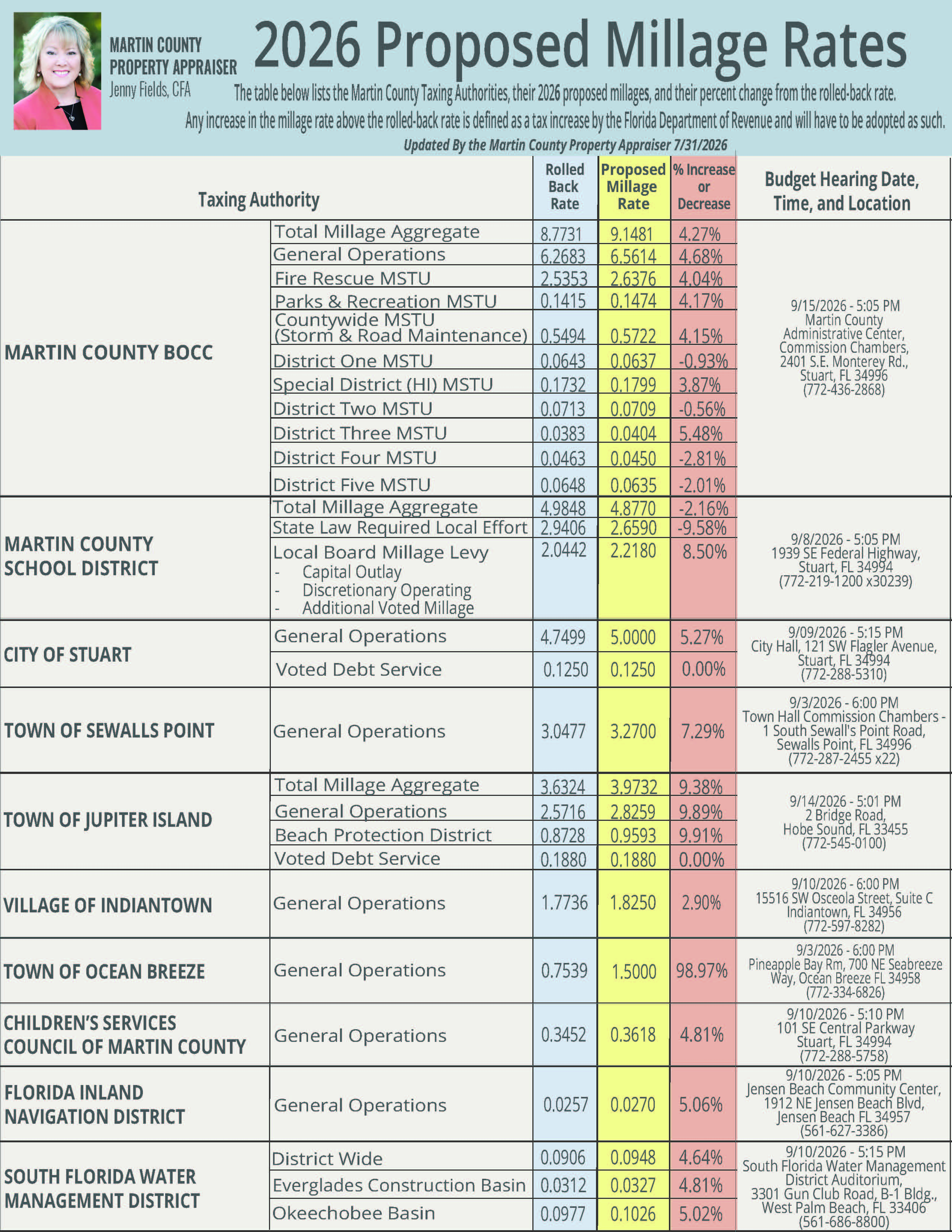
Martin County’s ten (10) Taxing Authorities (who levy property taxes against your property) have submitted their 2026 proposed millage tax rates. Soon they will hold PUBLIC HEARINGS to adopt their budgets and their proposed tax rates. The purpose of the PUBLIC HEARINGS is to answer any questions from the public PRIOR TO TAKING FINAL ACTION. Once the proposed rates are adopted, they will be used to calculate your final property taxes that will be reflected on your November tax bill
The handout above illustrates the 2026 proposed millage rates and their percent change from the rolled-back rate. Any increase in the millage rate above the rolled-back rate is defined as a tax increase by the Florida Department of Revenue and will have to be adopted as such.

iTHINK FINANCIAL CELEBRATES GRAND OPENING OF PORT ST. LUCIE BRANCH IN TRADITION
‘We LOVE Tradition’ event brings community together for financial services and fun
PORT ST. LUCIE, FL (August 7, 2026) – Hundreds of community members gathered on July 29 to celebrate the grand opening of iTHINK Financial’s new Tradition branch in Port St. Lucie. Attendees included local residents, dignitaries, and business leaders. The “We Love Tradition” event marked the opening of the credit union’s second location in St. Lucie County and expanded its personalized financial services to the growing Tradition community.
 Ribbon Cutting
“We are proud to become part of Tradition, a thriving community that continues to experience tremendous growth, with new homes, businesses, and families putting down roots here,” said Mike Miller, President and CEO of iTHINK Financial. “With children and grandchildren living in the area, this community has a personal connection for me. We appreciate the warm welcome and look forward to serving the Tradition community for many years to come.”
 Conrad Ekstrom, Celine Selgado
The ribbon-cutting ceremony included remarks from Terissa Aronson, President and CEO of the St. Lucie County Chamber of Commerce; Mike Miller; and Tradition Branch Manager Celine Selgado. Aronson welcomed iTHINK Financial to the community and recognized the credit union for offering the personal service and community connection of a hometown financial institution. Miller introduced members of the Tradition team who will serve local residents and businesses.
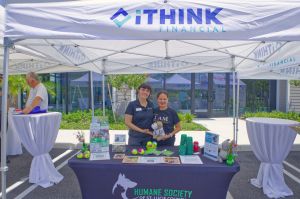 KC Toimil, Marisol Guntkowski
The celebration featured a live appearance by Heath West of Wave 92.7 FM, a complimentary lunch provided by local iTHINK Financial member Keke’s Breakfast Cafe, raffle drawings, giveaways, and opportunities for guests to tour the new branch and meet the iTHINK Financial team.
Nicholas Scalice, Nicole Heffelfinger
Located at 10706 SW Village Parkway, the Tradition branch joins iTHINK Financial’s existing St. Lucie West branch, Hutchinson Island branch, and Fort Pierce branch as the credit union’s fourth location in St. Lucie County. The new branch offers a full range of personal and business financial solutions, including checking and savings accounts, loans, mortgages, credit cards, wealth management, and business banking services.
iTHINK Financial is a member-owned, not-for-profit credit union known for personalized service and its commitment to the communities it serves. Members and area residents are invited to visit the new branch, meet the team, and learn more about the benefits of membership. For more information, visit ithinkfi.org.
About iTHINK Financial:
iTHINK Financial, established in 1969, is a growing and dynamic credit union with more than 119,000 Members worldwide and over $2.3 billion in assets. As a not-for-profit financial institution owned by its Members, iTHINK Financial offers a full range of personal and business financial services, including deposit accounts, loans, mortgages, credit cards, wealth management, and business banking solutions.
36 border collies now in Humane Society care after Palm City hoarding case
PALM CITY, Fla. — The Humane Society of the Treasure Coast is providing urgent care for 36border collies, including three puppies up to six months old, after the dogs were removed fromanother hoarding case. The Martin County Sheriff’s Office arrested Paige O’Donnell yesterday, andshe is facing felony charges for animal cruelty and improper confinement, according to Sheriff JohnBudensiek.
Upon intake, the dogs were fed and given water after arriving in deplorable conditions, covered infeces. Most have skin infections, several have eye infections, and many appear withdrawn andcatatonic. Some are being shaved under mild sedation due to their emotional distress and physicalpain. In some dogs, sharp pieces of metal and glass were found within the matted hair.
Given the dogs’ medical condition and emotional state, the humane society is not projecting whenthey will be available for adoption. Many will need foster care first as they recover.
There are many ways the community can help. Monetary donations are HSTC’s biggest need nowas the cost of care continues and the time needed to place these animals remains ongoing. Todonate, go online to
www.hstc1.org/emergency-
medical-fund.
Although the border collies are not yet available for adoption, many other animals are ready to findtheir “fur-ever” homes. Adopting or fostering a current dog, cat, guinea pig or rabbit helps makeroom for rescued animals while they are being treated.
The humane society’s “Name Your Price” adoption special is continuing.
FOLLOW UP
Humane Society of the Treasure Coast seeks community support after Martin County’s worst animal hoarding case
- More animals continue to arrive as welfare checks increase; donations, adopters, fosters and rescue partners are urgently needed
PALM CITY, Fla. — Employees and volunteers of the Humane Society of the Treasure Coast (HSTC) are still working around the clock after Martin County Sheriff John Budensiek described a recent animal hoarding case as the worst in the county’s history.
Brianna Novy, HSTC’s canine team lead employee, holds a gift receipt from a generous person.
In all, 108 animals were recovered and taken to the HSTC for immediate medical attention and care after 77-year-old Gail Giustino was arrested on July 20, 2026. So far, 10 cats and 17 dogs have been adopted from this case, and five microchipped cats have been reunited with their owners.
Since this case, the sheriff’s department has reportedly received an influx of calls requesting welfare checks, each of which is being taken seriously. Last Thursday, 26 cats from another situation were taken to the HSTC along with five dogs from yet another case.
“We expect more animals in the coming weeks due to the calls that have come in requesting animal welfare checks and the initial information we are receiving from Animal Services, which is following up on these calls,” said HSTC Director of Operations Lori Tucker. “Many calls have been cleared, but there are cases that are requiring further follow up.”
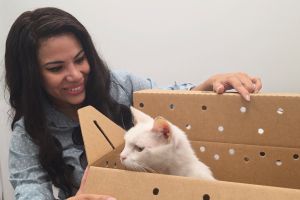 There are many ways the community can still help. Monetary donations are the HSTC’s biggest need right now as the cost of care continues and the time needed to place these animals remains ongoing. To donate, go online to www.hstc1.org/emergency-medical-fund.
The HSTC is also asking people to adopt and foster. Normal operations have not slowed down during this situation, which doubled the animal inventory. Adopting or fostering a current dog, cat, guinea pig or rabbit makes room for the rescued animals while they are treated and made available for adoption.
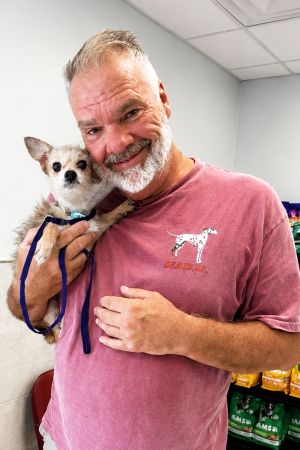 “We are still in need of people to adopt working cats, that is cats that are suitable for safe outdoor living,” said Tucker. “We also are in desperate need of adopters and rescue groups willing to help take some of our animals.”
The HSTC is doing a “Name Your Price” adoption special until further notice. Adoptable pets and real-time availability may be viewed at www.hstc1.org/Adopt. Short- and long-term fostering opportunities also are available. Learn more at www.hstc1.org/foster.
For more information about adopting, call 772-223-8822. For more information about fostering, email catfoster@hstc1.org or dogfoster@hstc1.org, or call 772-600‑3220.
The HSTC is also offering public microchipping services from 10 a.m. – 3 p.m. on August 23 to help keep pets safe. Register at www.hstc1.org/Clinic.
About the Humane Society of the Treasure Coast — The Humane Society of the Treasure Coast is a no-kill animal welfare organization located at 4100 SW Leighton Farm Ave. in Palm City, Florida. Since 1955, it has been the leading advocate for animal protection and well-being in the Martin County area. A 501(c)(3) private nonprofit organization, the HSTC is independent and locally operated and relies on donations to support its programs and services. Follow HSTC on Facebook at https://www.facebook.com/humanesocietyTC and X at https://x.com/hstc1. For more information, visit https://www.hstc1.org or call 772-223-8822. # # #

Economic Council of Indiantown Announces the Youth Athletics Foundation of Indiantown (YAFI)
New foundation to rally business community investment in youth sports facilities, programs, and opportunities across Indiantown
INDIANTOWN, Fla. — The Economic Council of Indiantown (ECI) today announced the launch of the Youth Athletics Foundation of Indiantown (YAFI), a new nonprofit initiative created to mobilize business community investment in youth sports and recreation throughout the Village of Indiantown.
YAFI was formed in response to a need the Indiantown business and civic community identified firsthand: young people without enough organized sports opportunities, athletic facilities in need of upgrades and improvements, and untapped space that could support more sports and activities for local families. ECI believes a strong, healthy community starts with a strong investment in its youth, and YAFI is designed to turn that belief into action.
The foundation's mission includes rehabilitating existing athletic facilities within the Village of Indiantown, expanding access to a variety of athletic activities and events for school-age children, and supporting organizations working to grow youth sports locally. YAFI will provide charitable and financial support to organizations such as the Indiantown Youth Sports Association (IYSA), which is developing a program to support youth sports organizations across the community through coach training, and communication, ultimately bringing more youth sports teams and opportunities to Indiantown residents.
“Indiantown has incredible potential and a business community that wants to invest in it. What’s been missing is a clear, organized way to channel that support directly into our kids and our athletic facilities,” said Kloee Ciuperger, CEO of the Economic Council of Indiantown. “YAFI gives local businesses a trusted vehicle to fund real, lasting improvements: better fields, more programs, and stronger organizations like IYSA that are doing the hard work of building youth sports into this community.”
Beyond facility improvements, YAFI's purpose is to help every youth participant build a strong and healthy mind and body, learn sportsmanship and respect for the rules of the game, develop teamwork and character, and gain the confidence to reach their full potential, on the field and off. The foundation will also support coaching and educational training opportunities designed to strengthen youth athletics programs community wide.
About the Economic Council of Indiantown (ECI)
The Economic Council of Indiantown (ECI) is a Florida-based organization dedicated to sustainable economic growth, small business support, and community development in Indiantown, Florida. ECI works alongside local government, business leaders, and residents to advance initiatives that strengthen the local economy and quality of life for the Indiantown community.

Banner Lake Teachers Conscious Discipline Training
Last week, before the school year began, our Banner Lake Academy and Early Learning Center teachers attended a training on Conscious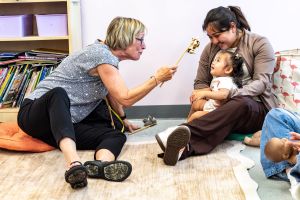 Discipline, a research-based approach to social-emotional learning developed by Dr. Becky Bailey. Rather than controlling behavior through rewards or punishments, Conscious Discipline builds self-regulation skills through connection, clear boundaries, and adult leadership, with safety, connection, problem-solving, self-regulation, and discipline forming its foundation. It's an inside-out program: teachers first learn to manage their own emotional responses, then use that same skill set to help children manage their own. During the training, teachers broke into smaller groups tailored to their classrooms, including a Baby Circle Time session for our Early Learning Center staff.
In the classroom, this looks like teachers modeling calm responses to conflict, helping children name their feelings, and offering tools like breathing exercises or a safe place to reset before problem-solving together. Many of our teachers are also using "Managing Emotional Mayhem: The Five Steps for Self-Regulation" by Dr. Becky Bailey as a companion resource, which lays out how adults' responses to children's fits, backtalk, and defiance either build or block their ability to self-regulate. The book breaks self-regulation into five clear steps for both adults and children to handle strong emotions and move toward problem-solving. We're excited to bring these tools into our classrooms this year!
Banner Lake Back to School Day
 Despite the rain, we had a great time! Students and families came out to pick up book bags, gently used clothing, and shoes ahead of the first week of school. By the end of the day, we handed out 200 book bags to students in our community. Families also selected from 70 pounds of donated clothing, including 40 pairs of shoes and 175 pieces of clothing.
A huge thank you to everyone who donated, volunteered, and showed up despite the weather; it made a real difference for our students. They're ready to start the year looking and feeling their best!
Community Partner Seacoast Bank Donates to Students at Banner Lake Academy
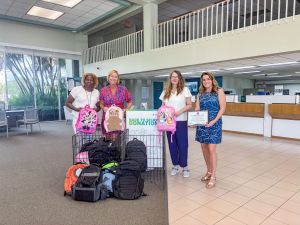 A big thank you to Seacoast Bank's Hobe Sound branch for their generosity in collecting 171 back-to-school items for our students. Their donation included book bags, pens, paper, pencils, folders, and more! All of it will go a long way in helping kids start the school year ready to learn. We're grateful for community partners like Seacoast Bank who continue to show up for our kids.
COMMUNITY FOUNDATION FOR PALM BEACH AND MARTIN COUNTIES HONORS
CHRISTINA AND BENJAMIN MACFARLAND III WITH 2027 MCINTOSH AWARD
Macfarlands Will Be Recognized at Community Foundation’s 14th Annual Founders Luncheon in February 2027
West Palm Beach, FL (August 18, 2026) – The Community Foundation for Palm Beach and Martin Counties, a not-for-profit organization that leads partnerships with donors, nonprofits and community members to address the region’s chronic and emerging issues, has announced that dedicated Palm Beach County philanthropists and community leaders Christina and Benjamin Macfarland III will receive the 2027 McIntosh Award.
Named in honor of Community Foundation founders Winsome and Michael McIntosh, the prestigious award is presented annually to an individual or organization who has made significant contributions to the community. The Macfarlands will be recognized at the 14th Annual Founders Luncheon, taking place on February 24, 2027, at the Raymond F. Kravis Center for the Performing Arts in West Palm Beach. This year’s event, themed “Hope for Community Health,” will spotlight local donors and nonprofit partners who are working to ensure reliable access to healthcare across Palm Beach and Martin Counties.
“Through both their leadership and charitable giving, the Macfarlands exemplify the power of giving where you live and inspiring others to do the same,” added Michael J. Bracci, Chair of the Board for the Community Foundation for Palm Beach and Martin Counties. “Together, they represent exactly the kind of engaged, forward-thinking philanthropy that will keep our community strong for generations to come. We look forward to celebrating their impact on the community at the Founders Luncheon."

Christina M. Macfarland has devoted more than two decades to strengthening communities through philanthropy, nonprofit leadership, and civic engagement. She served on the Board of the Community Foundation for Palm Beach and Martin Counties from 2013 to 2022, including as Chair and Co-Chair of the Community Impact Committee from 2014 to 2021 and as Board Secretary for the 2021-2022 fiscal year. During her tenure, she also served on the Foundation’s Development, Audit, Scholarship Advisory, Covid-19 Fund, Racial Equity and Inclusion, Strategic Planning, and MacArthur Advisory Committees, and helped guide the Foundation’s asset growth by 77 percent, from $141 million to more than $250 million, while it provided more than $112 million in grants and scholarships to the community. Christina currently serves on the Board of Trustees of Palm Beach Day Academy and the El Cid Neighborhood Association Board, and remains actively involved with the Flagler Museum and the Ann Norton Sculpture Gardens. A graduate of Leadership Palm Beach County (Class of 2013), she earned a Bachelor of Arts in English from the University of North Carolina at Chapel Hill and a Master of Public Administration, with a Certificate in Nonprofit Management, from American University.
Benjamin Macfarland III is Founder and Chief Executive Officer of SROA Capital, a vertically integrated real estate equity firm focused on self-storage. A lifelong resident of Palm Beach County, Ben has invested more than $5 billion in real estate over the past two decades, building Storage Rentals of America into one of the industry’s leading self-storage platforms, with more than 700 locations across the United States and a growing presence in the United Kingdom. As SROA continues to expand, it is also evolving into a leading global investment manager, guided by a disciplined investment strategy, operational excellence, and a strong emphasis on technology and data. Ben remains deeply connected to Florida State University, where he first launched a valet parking company as a student, and later donated commercial space in West Palm Beach to help establish the university’s local footprint. He is a member of the Real Estate Roundtable in Washington, D.C.
Ben and Christina live in West Palm Beach, Florida, with their five children, and are active supporters of a range of local organizations, including the Community Foundation for Palm Beach and Martin Counties, the Flagler Museum, the Ann Norton Sculpture Gardens, the Real Estate Roundtable, Florida State University, Florida Atlantic University, Palm Beach Day Academy, Saint Andrew’s School, the Orange Bowl Committee, and the Business Development Board of Palm Beach County.
"The Macfarlands are dedicated philanthropists and community leaders whose generosity has helped strengthen Palm Beach County for years," said Danita R. DeHaney, President and CEO of the Community Foundation for Palm Beach and Martin Counties. "When the community calls, Ben and Christina are always among the first to raise their hands, from our Rebound and Recovery program to so many other initiatives that have changed lives throughout our community. We are proud to celebrate them with the 2027 McIntosh Award in recognition of the indelible philanthropic impact they have made."
About the Founders Luncheon
Established in 2014 as the Founder’s Award Luncheon, the Community Foundation’s signature annual event was launched as an opportunity to convene donors and nonprofit partners on important issues facing the region and to celebrate their collective impact. In addition to raising awareness, the Founders Luncheon showcases the importance of philanthropy with a special award ceremony. The Founders Luncheon will be held at the Kravis Center for the Performing Arts’ Cohen Pavilion in West Palm Beach on Wednesday, February 24, 2027 from 11:30 a.m. to 1:30 p.m. For additional information, tickets and sponsorship information, please visit https://founders.yourcommunityfoundation.org.
About the Community Foundation for Palm Beach and Martin Counties
The Community Foundation for Palm Beach and Martin Counties is a nonprofit organization that leads philanthropy locally. The foundation provides charitable expertise and vehicles to increase the investment options on behalf of individuals, family foundations, and corporations. Since 1972, the foundation has distributed over $300 million in grants and scholarships aimed at closing the area’s opportunity gaps. With its vast network of donors and nonprofit partners, the foundation supports initiatives that improve youth and education, economic opportunity, thriving communities, and crisis preparation and response. Learn more at https://yourcommunityfoundation.org.
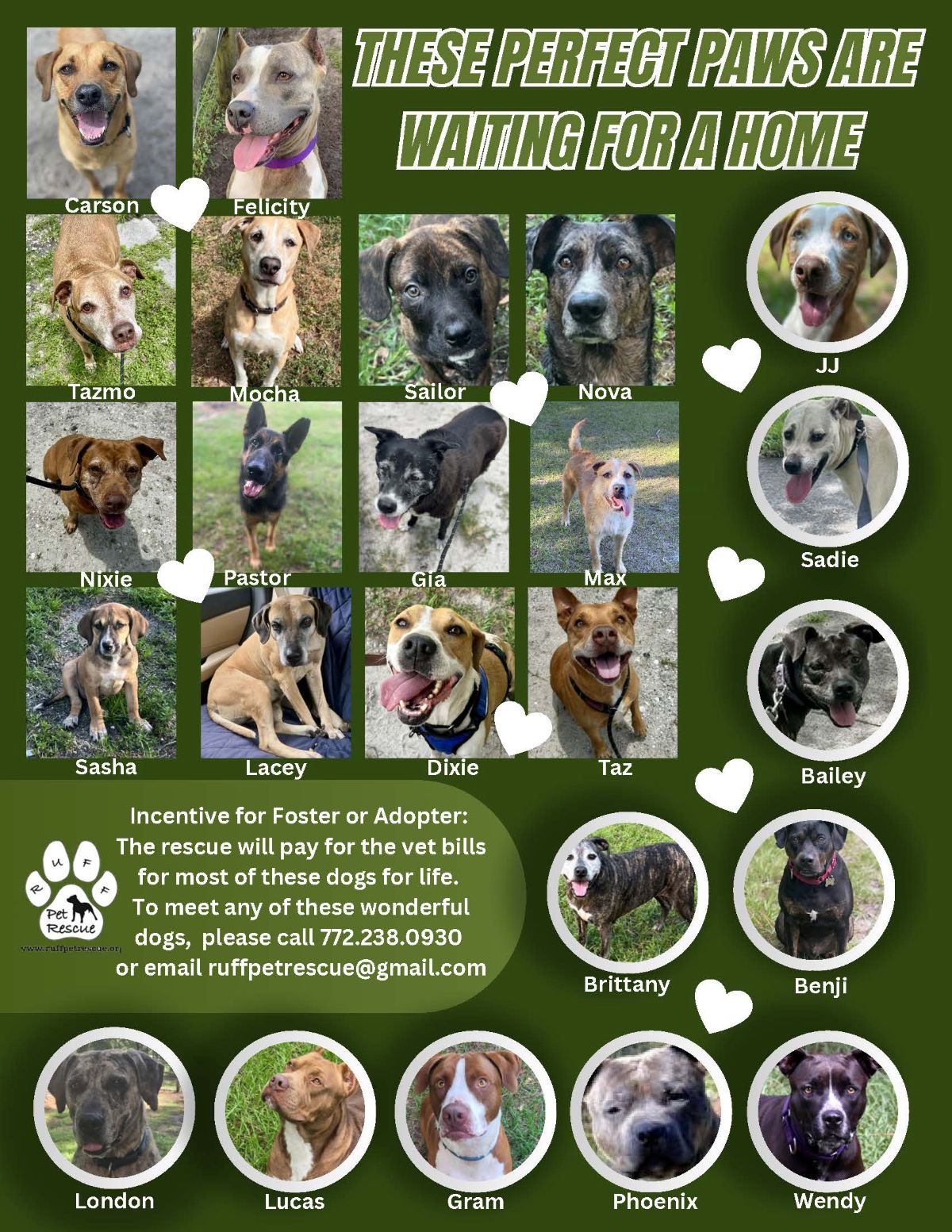
Education Foundation of Martin County Expands Team to Deepen Support for Students, Educators and Schools
STUART, Fla. — The Education Foundation of Martin County, the Martin County School District’s strategic nonprofit partner, is strengthening its ability to support students, educators and schools with three new team members bringing expertise in education, fundraising, communications and community engagement.
“Each of these new team members brings a unique set of talents and experiences thatwill help us reach more students, support more educators and strengthen our impact across Martin County,” said Lisa Rhodes, executive director of the Education Foundation of Martin County. “Together, they expand our capacity to connect our schools with the resources, relationships and opportunities our students and teachers need to thrive.”
 Nikki Hackett, program specialist, brings more than a decade of public school teaching experience on Florida’s west coast, as well as firsthand knowledge of Martin County schools. A Martin County School District graduate, Hackett returned to her hometown and remained active in local education as a volunteer, including serving as president of the PTSA at Seawind Elementary School.
Hackett earned a bachelor’s degree in early childhood education from the University ofSouth Florida. She lives in Hobe Sound with her husband and two children, who both attend Martin County public schools.
 Terri Smith, organizational support assistant, brings experience in educational development, fundraising and event coordination, including organizing annual auctions supporting school fundraising efforts. A Penn State University graduate with a degree in Hotel, Restaurant, and Institutional Management, Smith adds expertise in organization, coordination and relationship-building. She lives in Stuart with her husband and is the
proud mother of two daughters, both graduates of Jensen Beach High School who are now pursuing their college education at Penn State University and Cornell University.
 Dave Bohman, communications specialist, joins the Foundation following a 47-year career in local television news. An anchor, reporter and investigative journalist, Bohman earned more than 100 broadcast awards, including six Emmy Awards. He spent the final six years of his television career as an investigative reporter for WPTV in West Palm Beach. A Syracuse University graduate, Bohman brings extensive experience in storytelling, interviewing, investigative reporting and community engagement. He has two daughters who both live and work in New York City.
Together, the new team members expand the Foundation’s capacity to connect community resources with the needs of local schools and share the stories of its impact.
About the Education Foundation of Martin County
The Education Foundation of Martin County (EFMC) is the Martin County School District’s strategic non-profit partner with the mission of enriching and enhancing educational opportunities and support for students and teachers in Martin County’s public schools. As an independent 501(c)(3) nonprofit organization, the Foundation promotes this effort by raising and distributing private and corporate funds through several established programs, including classroom enrichment grants, literacy and STEAM (Science, Technology, Engineering, Arts, & Math) programs, professional development for teachers, special initiatives, scholarships and programs to recognize outstanding teaching. For more information, visit www.EducationFoundationMC.org.

Treasure Coast Hospice Launches New Website to Make Hospice Referrals Easier
for Families and Healthcare Providers
Simpler Online Referral Experience Makes Connecting with Hospice Easier
STUART, Fla. (Aug. 12, 2026) – Treasure Coast Hospice has launched a newly redesigned website featuring an enhanced online referral experience that makes it easier for healthcare providers, patients, and families to connect with hospice care.
The new website was developed to remove common barriers people may face when searching for hospice information and to make the referral process more accessible, efficient, and easy to understand.
“One of our greatest responsibilities is making sure patients and families can access the care and support they need without unnecessary obstacles,” said CEO Jackie Kendrick, CHPCA. “This new website is another way we are making hospice care more approachable and accessible for our community. By giving families and healthcare professionals a simpler way to connect with us, we can help people get answers sooner and focus on what matters most - providing comfort, support, and quality of life.”
One of the most significant updates is a new online referral form with two distinct pathways: one for healthcare professionals and another for patients and loved ones.
Healthcare providers can submit key patient and clinical information, along with supporting documentation, directly through the website. Patients, caregivers, and family members can also reach out on their own through a simplified referral experience designed to help them take the first step toward learning whether hospice care may be appropriate.
“For families, the decision to reach out for hospice care often comes during an emotional and overwhelming time,” said Marketing and Brand Director Crystal Pisani. “We wanted to create a website that removes unnecessary barriers and makes it easier to get answers, understand available services and connect with our care team. Whether someone is a physician referring a patient or a daughter looking for help for a parent, the process should feel simple and supportive.”
The new online referral experience also reinforces an important message: families do not have to wait for a physician or healthcare facility to begin the hospice conversation. Patients and loved ones can contact Treasure Coast Hospice directly with questions, request more information or begin the referral process themselves.

For healthcare professionals, the updated process provides a more streamlined way to send referral information and documentation to Treasure Coast Hospice, helping support timely communication between providers and the hospice care team.
“Our healthcare partners are caring for patients in fast-moving environments, and families are often trying to make important decisions quickly,” said Chief Operating Officer Shannon Cooper, RN, MPH, CHPN. “Creating a more direct digital pathway helps us meet both groups where they are and connect them with the right support as efficiently as possible.”
The redesigned website also makes it easier for visitors to learn about hospice eligibility, what to expect from hospice care and the wide range of services available to patients and families.
In addition to hospice care information, visitors can explore Treasure Coast Hospice programs and resources, including pediatric services, grief support, veterans care, complementary therapies, spiritual care, volunteer opportunities, community events, Foundation programs, and locations throughout the Treasure Coast.
The website redesign reflects Treasure Coast Hospice’s continued commitment to improving access to care while providing patients, families, and healthcare professionals with clear, trusted information when they need it most.
To explore the new website or begin a hospice referral, visit treasurehealth.org.
About Treasure Coast Hospice
Treasure Coast Hospice is a non-profit community organization of skilled professionals and dedicated volunteers whose mission is to provide access to compassionate, caring, expert and professional hospice and grief support services to patients and families at the end of life. Founded in 1982, Treasure Coast Hospice has grown to serve more than 4,000 patients annually in Martin, St. Lucie, and Okeechobee counties. Thanks to the generous support of our community, the Treasure Coast Hospice Foundation is able to fund comprehensive hospice and grief support programs for Treasure Coast Hospice, including three Inpatient Units for those who need a higher level of care, the specialized pediatric program Little Treasures, music therapy, massage therapy, virtual reality experiences, individual and group bereavement services, and Camp Good Grief for children who have experienced the loss of a loved one.
House of Hope and Old Havana Cafe Invites Community to Build 400-Foot Cuban Sandwich in Palm City on September 12.
STUART, Fla. – More than one hundred eager and energetic community members are ready to take a “Bite Into History” on Saturday, September 12 and build the world’s largest Cuban sandwich.
A 400-foot Cuban sandwich will be constructed in L. Cpl. Justin Wilson Memorial Park in Palm City to create community spirit, bring awareness to the work of House of Hope, and bring bragging rights to Martin County. The current record was set in 2024 in Tampa at 365 feet. At 400 feet, the Martin County Cuban sandwich will beat the record and be longer than a football field.
“This is a really bold way to build awareness of our work in empowering our community to overcome hunger and hardship,” said House of Hope CEO Rob Ranieri. “It’s also going to be great fun. Our teams are intent on breaking the current world record for the longest Cuban sandwich, and I believe we’re going to do it!”
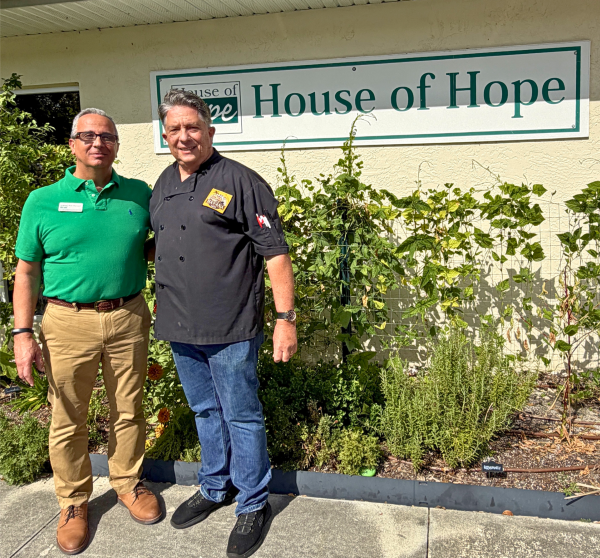
House of Hope CEO Rob Ranieri and Old Havana Cafe Chef Chuchi Rivero
Teams will assemble the sandwich with its traditional ingredients of Cuban bread, meat, pickles, and mustard.
The sandwich building project, “Bite Into History: The Longest Cuban Sandwich Ever Made,” is co-hosted by Old Havana Cafe in Stuart and House of Hope. “We love food, we love people, and we love the work of House of Hope,” said Chef Chuchi Rivero, owner of Old Havana Cafe. “This is a perfect project to bring the community together for a great cause. It’s going to be truly historic.”
The official sandwich construction starts at Noon. The event opens to the public at 11 a.m., with free on-site activities including face painting, salsa dancing, dominoes, nonprofit booths with kids’ activities, and refreshments. Sections of the Cuban sandwich will be for sale to the public once the judging has taken place. Paige Meyer, reporter for CBS 12 News, will emcee during the sandwich-building action and the official judging of the sandwich length.
The Doris M. Carter Family Foundation is the event’s Presenting Sponsor, with additional support from County Commissioner Ed Ciampi. The Foundation pledged a dollar for dollar match for the first $15,000 raised.
Proceeds from registrations, sponsorships, donations, and sandwich sales from” Bite Into History” will support House of Hope’s programs, including healthy food access, nutrition education, financial assistance, and workforce development. “Every registration, sponsorship and donation helps keep these vital programs available for local individuals and families in need,” Ranieri said.
In keeping with House of Hope’s mission, there is one more way to be part of the festivities and help feed the hungry. Attendees can “Buy One, Give One” by purchasing a sandwich on site and donating an additional one for someone in need. For those who want to donate but can’t attend, the donation can be made through the website hohmartin.org/sandwich.
To learn more about House of Hope or make a donation, visit www.hohmartin.org or call 772-286-4673.
About House of Hope
Founded in 1984, House of Hope is a 501(c)(3) nonprofit organization that empowers Martin County residents to overcome hunger and hardship. House of Hope touches the lives of more than 30,000 people each month, helping with basic needs such as food, clothing, furniture, financial assistance, as well as longer-term case management services that help build life skills for a more self-sufficient future.
The organization has service centers in Stuart, Hobe Sound, Indiantown, and Jensen Beach, with thrift stores in Stuart, Hobe Sound, and Indiantown. House of Hope’s Centers for Enrichment at Golden Gate in Stuart, in Jensen Beach, and at KinDoo Family Center in Indiantown offer free programs, technology, and workshops designed to enhance life skills, earning potential, health, and overall well-being.
House of Hope also operates the Growing Hope Farm in Palm City and several nutrition gardens that provide sustainable sources of fresh produce for clients as well as nutrition education and vocational opportunities to the community. For more information, visit hohmartin.org or call 772-286-4673. Updates and announcements can also be found on Facebook, Instagram, and X.
It is never a good idea when someone is deprived of the right to build a home on their property. But that doesn’t mean staff were wrong to deny a permit to do so in this instance. The bad decision that was made was all on those three commissioners, Ciampi. Hetherington, and Vargas from beginning to end. And not only about this parcel but about other denials that could happen in the future and may well be decided by the commission instead of administratively.
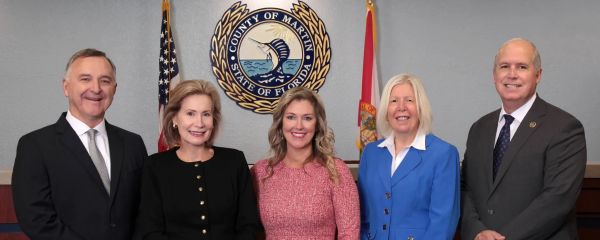
Cory Beaton, the owner of a parcel on the Loxahatchee River, applied for a building permit to erect a single-family home on a plot of land that is zoned two acres. Mr. Beaton in his filings said that his lot was two acres. If you counted a bit of property that is under the water of the Loxahatchee River, it certainly would be.
He also claimed he owns that land, pays taxes, and it is in his meets and bounds. There was also evidence that the State of Florida is claiming ownership of the submerged lands. Florida claims ownership of most submerged lands. The appellant was unable to refute that claim.
Since it is minimum two-acre zoning, Mr. Beaton’s lot falls short of that at roughly 1.7 acres. It appears that the county was correct in its denial. Even if you bought Beaton’s argument that he owned the land under the Loxahatchee, both the LDRs and more importantly the Comprehensive Plan states that you can’t count submerged lands:
“In cases where land abuts the waters of the Atlantic Ocean, St. Lucie River, Indian River, Loxahatchee River, Intracoastal Waterway, Lake Okeechobee or any tributary or manmade canal, the boundary of the land shall be delineated as established by State Statutes. No submerged land areas waterward of the boundary described above shall be included under this definition.”
The administrator made the right call in denying the application.

It would be heartbreaking if the appellant couldn’t build his home. Staff wanted him to apply for a zoning change to one acre. It is true that he would have to notice his neighbors, but no matter what he could only build one home on the lot, and he could tell his neighbors that. He was not looking for a lot split. Why wouldn’t he avail himself of that when it was staff telling him to do so?
The BOCC had an easy job here and they blew it. Their job was to look at the competent substantial evidence that Administrator Donaldson had before him, and if his conclusion was based on that, then they must uphold the decision. If they had upheld the decision, then the appellant would go to circuit court to hear the case and for a final determination.
The entire proceeding fell apart. According to the explanation by the county attorney, the commission was supposed to hear the appellant first plead his case, then ask any questions of him. Next, they were to hear staff’s reasons for denial asking any questions and then deliberate. That didn’t happen.
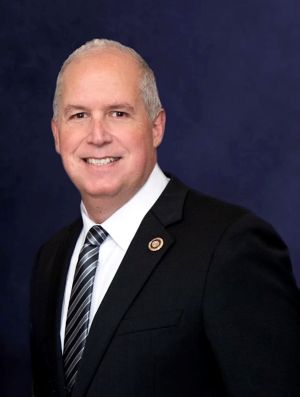 Instead, Commissioner Ciampi hogged the floor for an hour ignoring the protocols set forth by Article 10 for the hearing. The commissioners weren’t to continue debate but decide if the decision Donaldson rendered met the code using competent substantial evidence. The applicant was not supposed to speak after his time was up. The same for staff. Chair Heard let it get completely out of hand with the back and forth.
Staff made some errors. They admitted that other development employees said things when they should not have, and in fact, if not testifying, should not have been in the hearing at all. That wasn’t supposed to happen. Paul Schilling, the Growth Management Director, admitted one of the three homes in this un-platted subdivision (this would be the fourth) was approved for two-acre zoning when it shouldn’t have been.
The entire process was sloppy. However, the county cannot tear down an existing home that they gave permission to build. That landowner received something he was not entitled to. That doesn’t mean Beaton should receive the same benefit.
If there are two cars speeding, if a can cop can only stop one the other gets away without the ticket. I believe this is a similar analogy. Because a mistake was made somewhere else, no one should receive a ticket. If that were the case, let’s just forget about the Comp Plan, zoning, and building codes because mistakes are going to be made.
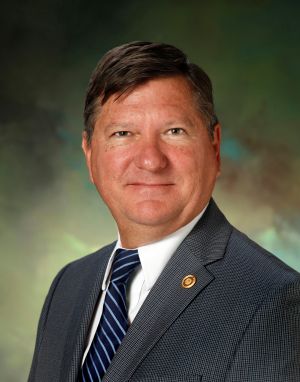 Ciampi made a motion for it to go back to Donaldson and staff for reconsideration. Donaldson rightfully said in a very respectful way that their decisions with this fact pattern were not going to change. What Ciampi was asking them to do was break the law, and the commission’s fingerprints wouldn’t be on the evidence.
Ciampi was forced to make another motion to direct that a building permit be issued. That passed 3-2 with Heard and Capps voting no. Hetherington tried to claim private property rights as her argument for voting yes but that has nothing to do with the denial in this case. You must follow the code. And Vargas was the other yes, but I couldn’t make heads or tails out of the little she said for her justification.
That motion is illegal. No commission or governing body can order that a building permit be issued that contradicts an adopted comprehensive plan. Under standard planning laws, such as Florida's Local Government Comprehensive Planning Act, comprehensive plans have supreme legal status, and no public or private development or building permit may be issued unless it strictly conforms to that plan.
The commission created a mess. The applicant was given an easy out by just requesting a zoning change to one acre and he could build the house. Staff would have supported that request. I just don’t understand why Beaton didn’t do that. If he had, his house would probably be completed by now.
I have been around the government of the City of Stuart for more than 15 years. I have been part of it at times and at others merely an observer.
I have been a resident for more than 20 years. I was the chair of the 100th anniversary committee more than a dozen years ago. Even now when I write about Stuart, I have to catch myself because I often speak of the city possessively and not in a dispassionate manner. While I wasn’t born here, nor grew up here, nor even worked here, I will always consider Stuart mine.
Last week the commission had a budget workshop. A budget is not a work of fiction. Though when I read through the Finance Director’s presentation and then the more complete budget that was attached, it was closer to a novel than a nonfiction numbers document. It seemed to me that the numbers were just pulled from the air.
In this time where taxpayers are asking for relief from bloated budgets, the city certainly has no problem adding positions. Nine new positions to be exact. Three additional for the Fire Department after adding positions last year. It now is more expensive for Stuart taxpayers to keep this department in house than buying the service from Martin County and paying the MSTU. Thanks Boss Collins for destroying a 100 year plus institution.
I also see that they are counting a lot on receiving state revenues. That may be a faulty plan because as of now they haven’t filed their 2025 audit that was due several months ago. Not only are they in violation of the law, but the penalty is also no state revenues are given out by Tallahassee!
Michael Giardino, when he was in the navy, was a pilot and I am sure he was a very good pilot. He trained for years before he was allowed to go up in a plane. He even trained for more years as he advanced through the ranks. Giardino was probably an exceptional pilot, leader, and commander.
Boss Collins didn’t want an exceptional city manager. He wanted one he could control even after resigning to run for the county commission. Collins found in him someone that had no experience in Florida government and very, very little in any civilian government but supposedly always wanted to be a city manager. It seems to me that Giardino sold his soul to have his dream come through.
Mike Mortell knew everything about Stuart. He knew where people lived, what they did for a living, and who they were. He was a commissioner, mayor, and city attorney before ever becoming the city manager. He knew the law as well as the people and personalities. What he would not do past a certain point was allow Boss Collins to destroy the city. Because of that Mortell had to be gone from city government.
Mortell was fired in a vote of 3-2 with Rich and Clark dissenting. Giardino was hired in a vote of 3-2 with Rich and Clark dissenting. The Boss and his Politburo added another member to the Chris Collins Machine. The Collins Machine is still going, and, after the election in a week, we will know whether he will destroy the county. Because wherever Collins goes, he brings increased costs, corruption, and chaos.
In the meantime, the budget is a work of fiction. City staff are on their own. And the manager and finance director are play acting at their roles. As Annie Hall would say… "La-de-da, la-de-da, la-la."
Try your hand at filling in the budget numbers, maybe yours will be more realistic. You can find it here
The commissioners of Stuart decided they were not to be trusted to decide whether ballfields should be leased or sold and that an earlier referendum on the fate of Haney Creek should be discussed again.
The Sailfish ballfields on Martin Luther King were under no threat of being sold. While some have expressed fears that a developer may come along to buy the ballfields, the city commission must vote for such a sale. Will Laughlin, who was running for the commission, apparently has no idea that the fields could not be sold without the commission agreeing to do so. The land is owned by the city.
A decade ago, an unsolicited proposal was received to buy the land from Stuart. Hundreds of people turned out to voice their opposition at different commission meetings. That proposal went nowhere. The commission refused to sell at the time, and nothing happened.
In 2011 a referendum of Stuart voters was held regarding the two acres on the Haney Creek land that was set aside on Federal Highway to lease for a commercial purpose to offset the huge costs of maintaining the other 50 plus acres in the preserve. The voters overwhelmingly supported such a move then.
This commission wants to make a trail head on the property with parking as another way of entering Haney Creek. Because of the 2011 referendum, they cannot. The only way to do so is to have another referendum. I guess the voters only get to exercise their will for so long with this Stuart Commission.
The vote for the ballfields was 4-0 to have a referendum and Haney Creek 3-1 with Rich dissenting.
Congressman Brian Mast has been working on the last piece of funding for the railroad bridge across the St. Lucie in Downtown Stuart for the past few years. He has been successful in bringing home the final $80 million for the $262 million replacement. That is amazing and everyone in Martin County, but especially in Stuart, should say THANK YOU, Congressman.
The 100+ year old bridge is the only single-track part of the railroad left in the over 200-mile corridor. The new height when down will be 17 feet instead of the 6 ½ feet now. The existing bridge has been an impediment to the commercial boating industry as well as just everyday boaters trying to get to the inlet from western Martin County. The biggest fear of course is that if the bridge were to be stuck in the up-position, trains heading north would block the streets of Stuart including emergency vehicles.

But who didn’t think it was so good to receive the grant was Stuart’s Mayor Sean Reed. When he was contacted by TCPalm, he said to reporter Keith Burbank, “Taxpayers shouldn’t be funding 90% of the bill. Why are taxpayers subsidizing companies that are turning a profit?” It was amazing that Reed didn’t even know about the money being awarded.
If the current City Manager, Michael Giardino, didn’t tell the commissioners, then that was a big mistake. But maybe the Feds or Florida Inland Navigation District which applied for the grant with the city as a partner, didn’t think this administration needed to know anything as is evidenced by the Reed remark.
 Reed declined to say to Burbank how much federal funding would be appropriate. He also declined to state if using money for a railroad bridge is different than millions being used to improve airport infrastructure. Well, how is Reed supposed to answer a question when his mentor, Boss Collins, didn’t give him the words to answer.
Reed received “railroad language” from Boss Collins, but apparently it was only about the possibility of a station not a bridge… a bridge that is vital to the entire Treasure Coast but especially the City of Stuart. Reed, like the good Politburo member that he is, equates any mention of East Coast Railroad, Brightline and train station as one and the same. Collins only gave him one index card with the talking point.
I reached out to Stuart Commissioner Campbell Rich for comment. He was unaware of the federal grant being awarded. There is a pattern here that I would describe as a failure to communicate.
Rich’s statement was, “I can’t believe how fortunate the city is to receive these funds for the replacement of a bridge that is way past its natural life. It could have been both economically and more importantly dangerous if the bridge was stuck in the up position for several days before being repaired. As a commissioner and as a resident, I want to thank Congressman Mast for securing the funds for this important infrastructure improvement. “
Who is a better elected official? Reed, the parrot, who can’t differentiate between a bridge and a station. Or Rich who knows how to be grateful as a resident and elected official. No question in my mind!
I always thought we elected political leaders to make decisions.
That is why it is so important that we elect the best people for the job of representing our interests. Last Monday night, the current Stuart City Commission turned that on its head. They acted just like so many politicians do…they decided to punt.
 It may sound like a good idea to have referendums to decide what to do with issues. One of the referendums is to undo what voters had already agreed upon. Thus undermining the argument about letting voters decide.
Sometimes as in when you are deciding about the ability to have a limitation on property taxes which would require a change to the Florida Constitution referendums make sense. It isn’t a good idea when the decisions at hand are routine matters. Because of politics, the supposed political danger about making a decision was blown completely out of proportion.
 New England is known for direct democracy. For centuries beginning in the 1620s and 1630s, towns and villages convened yearly usually in the town church for their voters (property owning men) to decide on ordinances, taxes, and all other local affairs having to do with government. That is direct democracy.
As times changed and decisions needed to be made more frequently, direct democracy became representative democracy. Yet there are two types of representative democracy. About a hundred years ago in New England, they began forming elected Representative Town Meetings (RTM).
Where I have a home, our RTM has 230 elected members from 12 districts. There are about 65,000 residents in my town and it encompasses 67 square miles of which 50 square miles are of land and the rest water.
Some of the RTM’s responsibilities are:
- Approve all expenditures by the town over $5,000.
- Approve, reduce, and eliminate appropriations,
- Approve or reject nominations to town bodies as made by the selectmen,
- Decide whether the town shall accept federal or state funds for town projects,
- Create special committees to deal with particular subjects such as labor contracts, claims, and redistricting,
- Pass "sense of the meeting" resolutions urging that other branches of government initiate desired legislation, or expressing disapproval of actions that have been taken; act as the final planning authority on municipal improvements,
- Initiate and pass ordinances.
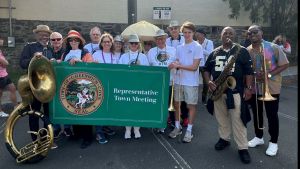 There are also other elected bodies to deal with schools, the budget, and a 3-member Board of Selectmen to operate the town on a daily basis. There are appointed boards and committees, but most are nominated by the Selectmen and approved by the RTM.
I bring this up because in Stuart as in much of the country outside of New England, we don’t elect very many people on the local level. And the elected bodies we have don’t pay much attention to the advisory boards where citizens are appointed to serve. So instead of increasing the number of citizens we elect, we concentrate more and more decision making into the hands of the few.
I started this piece off by writing that deciding things by referendum is not a good idea. And it isn’t. How many of us really study an issue thoroughly enough to make good decisions? Not many. Yet if citizens run for a position, they would be knowledgeable about a particular area of government. I want to expand the elected bodies in Stuart and in Martin County. I believe that is the missing key to better government.
Our answer is not to let the commissioners off the hook for difficult decisions, which is what was done by setting up a referendum. By using this tactic, they don’t anger any side to an issue and just say that the referendum lets the people decide. I think I have a better solution than that and it harkens back to our earliest days. How about more democracy and civic involvement?
It still works in New England. Why not in Florida?
There Is No “Normal”
The one thing I have learned in the last few weeks is that “Normal” is over.
Take the weather. It was always hot in August in Florida. As I write this, my weather app shows Stuart at 97 degrees. We once would receive a daily afternoon thunderstorm to cool things down. In the past few days of mid 90s temperatures, we have only had one such thunderstorm.

Europe is even less able to cope because there is not much A/C. I usually travel in the early spring or late fall. I would have no reason to change my pattern now.
Weather events as well as national reputation once took decades to change. Not anymore. It happens in the blink of an eye.
Even at our most chaotic during Vietnam, there was never ever any doubt that we militarily had eaten the lunch of the North Vietnamese. We just couldn’t win any Vietnamese hearts and minds, which was a popular saying then. You could apply that same scenario to all of our more recent wars…even Afghanistan and Iraq. Militarily not even close. But we were trying to change cultures, make western democracies, Hometown U.S.A. out of Mosul. No way.

With Iran, something different has happened. America went from the Theodore Roosevelt foreign policy of “speak softly and carry a big stick” to bluff and swagger. My mother would be appalled if we bragged about ourselves as kids. Our president has no qualms in using his “bully pulpit” to bully and tell everyone how great he is.
“Normal” once was George H.W. Bush joining the fight as a teenager in World War II. He would use self-deprecating humor to make a point. Now the president has a series of make believe “sir” stories of people telling him how great he is always beginning the story with “Sir….”

I guess the weather and our politics are the new “Normal.” And that is too bad for our society, our nation, and the world.
IF YOU ARE NOT A SUBSCRIBER DO SO FOR FREE HERE www.friendsandneighborsofmartincounty.com
GET THE WORD OUT
Friends and Neighbors of Martin County is your eyes and ears so that you know what is going on in Martin County’s municipal and county governments. I attempt to be informative and timely so that you may understand how your tax money is being spent. Though I go to the meetings and report back, I am no substitute for your attending meetings. Your elected officials should know what is on your mind.
.
Tom’s Articles
From Martin County Moments
"More Campaign Illegality"
"The Fairgrounds, Station, And Boss Collins"
"Stuart's Budget Is A Work Of Fiction"
"Three Commissioners Own This Mess"
Other Articles
The Economist: "AI agents lie, cheat, and steal. That is putting off users"
The Capitolist: "Court Orders Rewrite of Florida Property Tax Amendment Summary"
Florida Politics: "Amendment 3 loses its slogan: James Uthmeier delivers rewritten ballot language"
The Capitolist: "Centra; Florida Tourism Generates $98.6 Billion in Economic Impact"
Treasure Coast Newspapers: "Cocoa Brightline station gets major boost"
Wall Street Journal: "Data-Center Backlast Leads to a New Land Rush in the Texas Oil Patch"
NYU/TANDON: "Inside the Urban Machine: Where America's Data Centers Actually Live"
Wall Street Journal: "Everyone Dreams of Island-Hopping Through Greece-Until They Board the 'Vomit Comet' "
Florida Phoenix: "Popular DROP program could be dropped for new public employees"
Wall Street Journal: "If You Get in a Car Crash, the Risk Is Growing Your Insurance Won't Pay"
The Capitolist: "Poll: 74% support Florida property tax amendment"
The New York Times: "Should Letting Children Play Alone Outside Be a Crime?"
Wall Street Journal: "Red States Are Racing to Roll Back Property Taxes"
Copyright © Aug 21, 2026 Friends & Neighbors of Martin County, LLC., All rights reserved.