








Tom Campenni 772-341-7455 (c) Email: thomasfcampenni@gmail.com
In the days before the November election, some of us have a level of anxiety and anticipation.
Anticipation for what some may think will come and anxiety for what some of us fear will happen. After two horrible years, the City of Stuart may be ready for a turnaround. Right now, we don’t have any idea how bad the last year has been to the city’s finances…but it is bad.
Mortell coming back may at least give local business a level of comfort that it won’t become worse. His presence will instill confidence with some staff just knowing a professional is in charge and who will look out for those that were there when the city needed them. There will be other employees who will have a way to go to restore that confidence. Mortell cannot afford to be forgiving to the few that did not put Stuart over their own petty ambition or who are just incompetent.
One person that really did step up and did a great job was Jim Chrulski as interim manager. During a very bad time without really having a finance department, he managed to complete a basic budget, reconcile the city’s accounts that had not been done in months, initiated a hiring freeze, and generally righted the ship. Thanks, Jim.
 In this week’s edition, we have Dr. Michele tell us about cancer vaccines. Our fishing columnist, Paul, thinks we finally have conditions for some great beach casting. Along with Andy on politics, Marcelo on Croatia, Frank about the Humane Society, and Rob on his big beautiful Cuban Sandwich, we are more than ready for you to have an enjoyable morning.
Don’t forget that in October, November, and December, we will have only one issue a month. However, consider it a double issue because all of our columnists will be there for you. And we will continue to report on Martin County, Stuart, Indiantown, and all the government news.
We publish articles, notices, and press releases on our Facebook page three or four times a week. You should be checking it daily to receive all our coverage.
So, sit back, relax, have another cup of coffee and take a look within our pages.
Have a great Sunday Morning!
In the past couple of days, there were two newspaper stories that reminded me about my school days.
One of the articles was about student bus passes on public transportation. For a period in junior high school, I had a bus pass. Anyone going to school more than a certain distance from his home was eligible.
 At the time, the bus fare was fifteen cents a ride. The driver would have a change dispenser and a wad of small bills. He would make change and then the rider would drop the bus fare into the farebox. This was pre-crime-ridden New York where everyone just played by the rules and actually paid the fare.
My pass was held in a clear plastic pouch with a string that I could hang around my neck. Usually, I would just keep it in my pocket. The bus driver in the morning and the one in the afternoon were the same ones I would have had most days. After the first week, I didn’t even need to show the pass. The morning driver was a bald small guy who wore a short uniform jacket and a captain-like cap. He would smoke a Camel cigarette with his side window open most days.
 If you got the right driver, you could even use your pass in the evening and if challenged claim you were going to a school event. I would use it on Sunday morning to go to church where I was in the choir.
The 2nd newspaper story was about New York State doing away with Regents Exams. New York instituted those exams at the end of the Civil War. Every subject in high school would have an exam on the subject matter at the end of a course. I can’t remember not having one in all four years except in religion.
 In my high school, there was no choice as to whether you took the Regents Exam or not. You couldn’t pass the course if you didn’t pass the exam even if you had passing marks throughout the year. And passing in my school was 75%.
If you had a Regents Diploma, it meant you had a rigorous education. It may have caused angst when taking the tests, but when you applied to college, it was one step closer to acceptance. You could always retake the SATs but not the Regents Exams once you had your grade.
About 20 years ago, New York dumbed down the Regents Exams, but they made passing those tests a prerequisite to graduating for all seniors. Before that, you could receive a general diploma, which meant that you were not on the college track but still showed that you passed your other courses and exams. In the 1960s and early 1970s, 25% of New York high school seniors had Regents Diplomas.
Now the state wants to lessen them as a graduation requirement. You can’t compare the Regents Exams from 60 years ago to those of today. They are meant to show students’ different strengths and weaknesses.
The funny thing is I don’t remember teachers teaching to the test. After our regular exams, we then would spend a week taking practice Regents Exams to get an idea of the questions. Since we were so emersed in the subject matter from September to the end of May, the practice wasn’t at all so difficult.
Perhaps it was because most of my teachers were Franciscan Brothers and didn’t become frantic that they would lose their jobs if the outcome wasn’t good. I remember having more fun with practice than it being a drill to dread. Different times and different outcomes.

There is nothing wrong with curtailing spending or taxes at the local level. Every citizen and voter should be examining the budgets to see where that can occur. And we should be vocal at local government meetings as to why we believe spending and tax levels are too high.
As voters, if we are ignored then we should vote the local officials out of office. In Indiantown and Stuart, we have seen how easy it is to do so.
If passed, Amendment 3 will strip the citizens’ rights to control the level of spending and taxation. Tallahassee will decide what and how much of your local tax money may be spent instead of you. It is far from a panacea to control taxation and more like a pair of handcuffs.
The irony is you are being asked to give up your right to control local government. Amendment 3 supposes that citizens cannot decide on the issue of local taxation and are powerless to do so. Only with the help of big government in Tallahassee can locals do so.
Voters and citizens have the most control over spending and taxation at the local level where they can speak directly to their elected officials. Go to any commission meeting and at least one usually two or more commissioners will know the person that is addressing them during public comment. Of course, your opinion and that of other voters and taxpayers matter. That is much less so on the state and federal level.

The amendment is an invalid syllogism based on a faulty major premise that only state politicians can rescue locals from taxation. That is false. We are the people who demand taxation to pay for the programs we want. If enough of us do not want those programs and make sure we remove local officials who do not follow through by voting against them, our taxes will only fund the things that a majority want.
Good government to a high degree demands active citizen participation. Voters are not powerless, nor should we be given false choices as our option. We deserve better than mandates from the Florida Legislature wrapped in the cloak of choice and false promise.
Vote NO! Preserve your choice in how your local government should operate.
In 1775, American forces under Colonel Benedict Arnold invaded Canada. They took Montreal but failed to conquer Quebec City during a blizzard on December 31st of that year. Arnold and his men retreated and failed in the conquest.
That wasn’t the only time Americans invaded Canada. During the War of 1812, American forces marched into British Canada several times even burning the provisional capital of York (present day Toronto) in 1813. That may have precipitated the English doing the same to Washington a year later.

A boundary dispute in the 1840s in what was known as the Oregon Territory encompassing modern day Oregon, Washington State, British Columbia, and parts of other states brought us once again to the brink of war. In history, it is known for its slogan as 54⁰-40' or fight. Canada at this point was still called British North America. The 1846 treaty between the U.S. and Britain settled the border at the 49th parallel.
There were several other disputes where the U.S. and modern-day Canada almost came to blows. But by the beginning of the 20th century, the two nations became respected allies and friends, sharing mutual defense and plenty of trade and commerce. Canadians have fought with us in every war except Vietnam since World War I.

For the most part, it is hard to tell the difference between our two people. In 2025 there was nearly $640 billion in trade between us. The U.S. imported $382 billion and Canada $262 billion. While the U.S. had a trade deficit, that would be expected if we compare population. We have 345 million people and Canada has 42 million. We are about 8 times larger.
There are no words to describe how foolish Trump sounds to most of the world. He has no idea how economics and trade work. Nor does he grasp alliances or how the U.S. reached the economic and military pinnacle it has. It is as if he stopped learning anything more than he knew as a young ten-year-old bully in the school yard.
A collection of novels written by T.H. White on the cusp of WWII that I read when I was a high school freshman has had a profound effect on me to this day. White’s novels were consolidated into one volume with four parts called “The Once & Future King” in 1958. It is predicated on the Arthurian legends encapsulated in Sir Thomas Mallory’s “Le Morte d’Arthur.”

The legendary King Arthur based the Round Table, his knights, and the Code of Chivalry on a simple concept. Instead of the creed of Might Makes Right, Arthur turns it on its head and introduces the concept of Right Makes Might. Arthur’s Kingdom of Camelot becomes the Kingdom of the Just.

The concept isn’t something that was introduced by White. It goes back to antiquity. Abraham Lincoln addressed the concept of might and right when speaking about slavery in his Cooper Union Address in 1860. If something is not right such as slavery, then there is an ethical imperative to prevent it from spreading to the unincorporated American territories was the basis of his speech.
Arthur’s Camelot comes undone not becauseit is attacked by an outside foe but because internally the court destroys itself by bickering and ignoring its moral compass. We are witnessing that with Trump’s America. Might Makes Right means the subjugation of allies and friends. Machiavelli’s “Prince” believed the ruler should be feared more than loved.
Until Trump, America’s premise was the opposite. We had allies, trading partners, and friends. It is true we mostly got our way, but our way made all our allies, trading partners, and friends more secure and richer. It was to their benefit to be in our circle. Only in the Trump ten-year-old school yard is his way better.
It is amazing how tragedy sears things into memory. I remember two things most clearly that happened in my lifetime. Those two items are where I was when I heard that President Kennedy was assassinated and September 11th.
I remember things like when my children were born and when I heard my parents had died. Weddings, graduations, christenings are all there, but I see those events through the lens of old sepia tinged photos instead of the clear crisp pictures that are ingrained about Kennedy and the World Trade Center Towers coming down.
I was in school when Kennedy was assassinated. When the news came over the school PA system, there was a collective gasp in the classroom. We were let go early but it wasn’t much earlier than our regular dismissal time. Walking home, some people were crying in the street.
On September 11th I was driving to my home in Greenwich from an early medical appointment in Westchester. I had the car radio on and just as I was crossing over the state line, an announcement was made that a plane had crashed into the 2nd tower. It was a clear day and on clear days you could see the outline of the World Trade Center towers from the I-95 bridge over the Mianus River which leads into Long Island Sound at that point.
I looked fleetingly at lower Manhattan clearly visible as I was racing by on the bridge. I believe I saw the towers still standing in that brief moment, but I could never swear to it. The doctor’s appointment was a follow up to a surgical procedure a year before. Funny how I remember that.
When I got back home, I went into my office where I listened to the radio. I called my wife at work. My kids telephoned me because they wanted to make sure I wasn’t in the city that day. I then spent the rest of the day calling the building managers of the properties I managed in New York City to find out what was going on.

Two days later I took Metro North into Manhattan to physically check myself on the properties I was responsible for. The subways were working but they were intermittent. I don’t think anything was running below 14th Street.
There were police checkpoints on 14th Street and only those that lived or had business could proceed further south. At first the cop didn’t want to let me go further but then his sergeant looked at me and gave him the OK. On my walk back to Grand Central to catch the train, I remember being depressed and just wanting to leave and get back home.
Then in the coming days and weeks we heard about the casualties that had died on that day. High School and college classmates, work friends and acquaintances, your children’s friends’ parents and your friends’ friends and acquaintances. Years later, you heard that Bill or Cindy died of cancer after being at “ground zero” that day.
I wasn’t alive when Pearl Harbor happened, but for years many people of my parents’ and grandparents’ generations remembered where they were when they heard that news. December 7th was my father’s birthday, and he was having a birthday party that day. It was a day that will and has lived in infamy ever since, but fewer and fewer Americans remember where they were on that day. Fewer are still alive now that 85 years have passed.
The same will occur about my 2 pivotal memories…November 22nd (Kennedy’s assassination) and September 11th. Even now with each passing year after the assassination, the TV news or the newspapers retell the story further and further from the top of the lead. Our vivid memories are and will be someone else’s vague historical fact.
When most Americans hear the words Farm Bill, they may picture farmers, tractors, and livestock. But the Farm Bill is about far more than farming. It is the most important piece of legislation shaping America's food system, rural communities, conservation efforts, and nutrition programs, and it affects everyone.
Every five years, Congress is expected to revisit this broad package of agricultural and food policies. The most recent comprehensive legislation, the 2018 Farm Bill, was designed to cover programs through fiscal year 2023. Yet nearly three years after its expiration, Congress is still working toward a new comprehensive farm bill. Why does this matter to you?

Agriculture is an industry built around uncertainty. Farmers and ranchers face changing weather, rising input costs, market fluctuations, labor challenges, and international trade conditions. The Farm Bill helps establish the policies and programs that farmers rely on to manage some of those risks and plan for their farm’s future.
For agricultural producers, the legislation can influence farm safety-net programs, crop insurance, conservation assistance, rural development, and agricultural research. These policies can affect decisions about what to plant, how to manage land, and whether a farm can remain economically viable for the next generation.
But the Farm Bill is not just about farmers. Food and nutrition programs are a major part of the Farm Bill, connecting agricultural policy to the lives of millions of American families. Conservation programs help support efforts to protect soil, water, and natural resources. Rural development provisions support communities that depend on agriculture and related industries. This is why the delay in passing a new comprehensive bill deserves public attention.
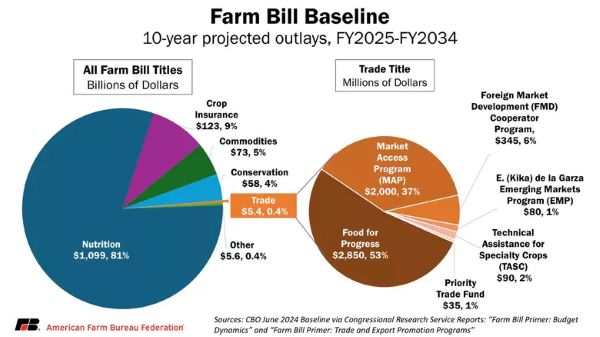
Congress has continued extending portions of existing farm bill policy while lawmakers work on a replacement. In September 2026, the Senate Agriculture Committee advanced the Agricultural Act of 2026, a proposed new farm bill, demonstrating that legislative work is continuing. However, committee action is not the same as final passage of a comprehensive law. The challenge is that the Farm Bill covers many different interests, programs, and priorities. Reaching agreement requires lawmakers to make decisions about how federal resources should be allocated and how agricultural and nutrition policies should evolve. Those decisions have practical consequences for producers, consumers, and communities.
Understanding agricultural policy is an important part of agricultural literacy. I encourage young people and adults alike to learn how the policies affecting food production and rural communities are developed. The Farm Bill may be debated in Washington, D.C., but its impact extends across the country. It affects the people who grow our food, the resources we depend on, and the communities where agriculture remains an important part of our economy and identity.
Agriculture deserves action on the Farm Bill so farmers can have the security and confidence they need to make the decisions necessary to grow the food we all depend on. With the extensions to the 2018 Farm Bill set to expire on September 30, we need that action now.
David Hafner’s opinions are his own and may not reflect Friends & Neighbors viewpoint.
As part of HSTC's broader humane education mission, we connect people and pets in meaningful ways to help build a more compassionate community and improve quality of life for those in need.
Our Pet Therapy sessions serve a diverse range of people, including seniors, patients who are sick or injured, children with special needs, and others who may benefit from the unconditional companionship animals provide.
And our Behavior & Obedience Training classes help your dog become the best version of itself!
This fall season is full of innovative programs that demonstrate the many ways animals enrich our lives.
We are excited to once again offer our award-winning Paws to Read program, which combines literacy development with the calming presence of trained therapy dogs. This unique initiative helps children build confidence while strengthening their reading skills.

Experience has shown that reading to therapy dogs can improve reading comprehension, language fluency, and self-esteem. Children often feel more relaxed reading to an attentive canine companion than in traditional settings, allowing them to practice and grow without fear of making mistakes. Paws to Read is currently available through the Martin County School District, the Boys & Girls Clubs of Martin County, and select branches of the Martin County Library System, including Blake Library.
Additionally, our Canine Connection team offers 15 different classes to help pet owners build stronger relationships with their dogs through education and training. The program is designed to meet the needs of dogs and their families at every stage of life. From private lessons and basic obedience training to pet therapy preparation and agility classes, Canine Connection provides valuable guidance that helps dogs become confident, well-mannered companions.
Each year, the Canine Connection team serves close to 900 dogs, equipping pet parents with the tools and knowledge needed to promote positive behaviors and lifelong bonds with their pets. These educational opportunities not only improve the lives of individual animals and families but also contribute to a safer, more pet-friendly community.
HSTC’s programs strengthen the human-animal bond and inspire compassion throughout our community. With every lesson taught, every book read, and every tail wagged, we strive to nurture the bond between people and pets.
Frank Valente's opinions are his own and may not reflect Friends & Neighbors viewpoint.
Last month Moderna released data from its phase three clinical trial on a new cancer vaccine for melanoma. The word vaccine is a little bit misleading as it is not a vaccine to prevent cancer but one that actually helps treat it! It is given after the tumor has been surgically removed. The vaccine helps find any microscopic cancer cells left behind and clear them from the body. The amazing thing is it is personalized to each individual patient. Doctors sequence the DNA of your specific tumor and then compare it it to your healthy cells, and identify the mutations unique to your cancer. Machine learning (or AI) then ranks around 34 of those mutations as the best targets. These mutations produce abnormal proteins called neoantigens that appear on cancer cells but on no other cells in your body. The chosen targets get encoded into mRNA which instructs your cells to display these markers so your own immune system .. the T cells specifically.. will recognize them and attack them. In this study in patients with melanoma the vaccine was given in conjunction with the drug Keytruda. Keytruda is in a category known as immunotherapy.. It is used in many different types of cancers and is a breakthrough all on its own.. It also works by attacking a specific protein on cancer cells that allows your body’s own immune system to target cancer cells and leave healthy cells alone. In this study they found that this vaccine given with Keytruda reduced the risk of melanoma recurrence or death by 49% over a five year period compared to giving just Keytruda alone. It also reduced the risk of the cancer spreading to other organs by 62%!
As these vaccines are individualized to each person it does take several weeks for it to be made. Once it is injected into your body, the messenger RNA (mRNA) instructs your own cells to briefly display the cancer’s fingerprints. Your T cells then learn to recognize this antigen and they patrol your body for months hunting down any cancer cell that has this tag. The vaccine doesn’t fight the cancer itself but rather it turns your own body into the machine that is fighting the cancer! When paired with an immunotherapy drug the trial is showing that your body can recognize the cancer cells that get left behind and eventually become the cells causing cancer recurrence.

In the past we would treat cancer with chemotherapy.. drugs that would poison the cancer cells but unfortunately would also kill many healthy cells in our body . Sometimes the treatment was worse than the disease. With the technological advances of the past decade we are now entering an era of precision medicine where treatments are targeted to just kill the abnormal cancer cells and leave the healthy cells alone. This is exciting times as although this vaccine was used just in Melanoma patients other studies are starting where they are looking at using this technology in other types of cancer as well. There are currently stage 3 studies being done in lung cancer as well as bladder and kidney cancers.
In terms of safety.. once you are injected with this vaccine the lipid nanoparticle concentrates first at the injection site and then drains to the nearby lymph nodes. That is the plan as the lymph nodes are where your immune system is trained. The particles that reach the bloodstream get distributed mostly to the liver and the spleen which is why the researchers are monitoring those organs. The mRNA itself is transient. Your cells read the instructions encoded in it and make the target proteins and then break it down within days. It does not enter the cell nucleus and does not integrate into your own DNA. It is pro inflammatory, that is how it gets the immune system involved. That is also what causes people to have reactions including fever, fatigue , swollen lymph nodes and on occasion some more serious responses as we saw with the Covid mRNA vaccine. There is also a risk of an auto immune response if the target protein closely resembles a normal protein. There is a hypothetical risk that the normal protein on normal tissue can be attacked. This is minimized by heavy computational screening but the risk isn’t zero. That is why this must be a personalized decision between the patient and their oncologist if the benefits of this vaccine outweigh the risks. However when dealing with cancer patients, it is a different risk reward ratio than vaccinating millions of healthy individuals against a virus that probably won’t kill them.
We are watching in real time.. medicine shift from managing cancer to hunting cancer.. what an amazing time to be alive!!
Michele Libman’s opinions are her own and may not reflect Friends & Neighbors viewpoint.
Over Labor Day weekend, Brent and I traveled across the country to Washington state for a special pilgrimage, one affectionately known among Dave Matthews Band fans as “Labor Dave Weekend.” Each year, tens of thousands of fans descend on the Gorge Amphitheatre for three nights of music in one of the most spectacular concert settings in the country.
Our week included a cross-country flight, renting and provisioning a 30-foot RV and then making the three-hour drive from Seattle to the Gorge. We traveled through forested mountains, watched the scenery change dramatically to golden hills, enormous wind turbines and wide-open desert as we approached the Columbia River.
We arrived at the Gorge campgrounds and settled in for five days of camping and three nights of concerts. The trip flew by. But by the time we returned home, that one week felt bigger than entire months at home.
A few days after returning home, I read an article by retired neurosurgeon Dr. Brian Hoeflinger about why life seems to speed up as we get older. His explanation was fascinating and gave me a new way to think about our week away.
Our brains don’t measure time in the same direct way that we measure many physical things. We can measure distance with a ruler and sound in decibels, but the brain has no single sensory organ for detecting the passage of time. Seconds, hours and calendars are systems humans created to organize something we cannot see, hear or touch. Instead, our experience of time is shaped by attention, emotion, change and memory.
Our brains also don’t remember our lives as one continuous recording. They are more likely to preserve moments that are new, unexpected, emotional or different from what came before. When most of our days follow familiar patterns, fewer individual experiences stand out. Weeks and months begin to blur together.
That doesn’t mean nothing happened. It means much of what happened looked a lot like what happened the day before. And the day before that.
Think about an ordinary week. You wake up around the same time, drink coffee from the same mug, drive the same roads and sit in the same chair at work. You answer emails, run errands, prepare meals and watch TV. The individual days may be full, but when you look back several months later, how much of that week can you actually recall? A busy week isn’t necessarily a memorable one.
Our time at the Gorge was different. Nearly everything required our attention because almost nothing was routine. I can already replay our afternoon at the winery next door, meeting our neighbors around the campground, making coffee each morning with a French press and creating delicious and complete dinners with limited supplies on a tiny grill. Even taking a shower became a new experience. Then there were the concerts themselves, with more than 27,000 people gathered in an extraordinary place known as “Heaven’s Amphitheater” for three nights of Dave Mathews Band. The nights don’t blend together, either. Each one had its own unique set list of music, mood and memorable moments. The entire week is already vividly imprinted in my memory. No wonder one week felt like so much more.
There’s apparently a name for this phenomenon: the “holiday paradox.” Time can feel as though it’s flying while we’re enjoying an experience, yet that same period can feel surprisingly long when we look back on it. New surroundings and experiences create more distinctive memories, giving us more mental landmarks to revisit later.
The connection between novelty and memory also helps explain why so many childhood experiences stay with us. As children, so much of life was new. The first days of school, learning to ride a bike, getting your first job or driving somewhere alone for the first time became a landmark in your memory. We were constantly encountering things we had never seen, done or understood before.
As adults, we move through much of life on autopilot. Because our days follow familiar patterns, our brains have fewer reasons to record them as distinct experiences. The weeks don’t just blend together. Many barely register at all.
The good news is that memorable experiences don’t require a cross-country adventure. But they do require more than simply changing our routine. Choose something different enough to hold your attention. Take a morning walk on the beach and stop to watch the sun rise. Notice  the colors, listen to the waves and take in the morning air. Give your brain a reason to remember where you were and how the moment felt.
When you spend time with an old friend, put down your phone and be fully present in the conversation. Take the photo, not simply to post it, but to preserve it. Pause and consciously tell yourself, “I want to remember this moment.” That kind of attention matters. We’re so often physically present while our minds are somewhere else, thinking about what we need to do next. Slowing down time begins with noticing the life we’re already living.
As I approach a milestone birthday, I’m more aware of how quickly the years seem to pass. I don’t want to spend them on autopilot. I want to be more deliberate about creating and noticing moments that stand apart from all the others. That’s how we give our brains more to remember. And that may be the closest we’ll ever come to slowing down time.
Do you have ways to help you imprint your own special moments? What is your most vivid memory? Email me at stacy@fireflyforyou.com
Stacy Weller Ranieri's opinions are her own and may not reflect Friends & Neighbors viewpoint.
Stuart Commissioner Sean Reed is quoted as saying he is concerned about professionalism, accountability and taxpayer money? Reed has recently criticized the new majority’s procedures and professionalism. He has challenged the handling of agendas and raised concerns about transparency.
Those are worthy concerns. Yet, they also invite an obvious and very important question: How does Reed’s own record measure against the standards he now demands of others?
Reed entered office in August 2024 after campaigning as a lifelong Martin County resident and small-business owner who promised “strong and decisive leadership.”
 Just fourteen months later, Reed unexpectedly asked longtime City Manager Mike Mortell to resign.
Reed began politely enough: “I totally respect you Mike (Mortell) for what you’ve done for the city,” before publicly requesting his resignation. Mortell responded that no commissioner had previously called him to discuss termination or explain what he supposedly had done wrong.
Two weeks later Reed made the motion to fire Mortell without any stated cause. Mortell’s termination also came with significant contractual severance costs. Then came the search for Mike Mortell’s replacement.
Reed, Laura Giobbi and Christopher Collins supplied the three needed votes. Campbell Rich and Eula Clarke both voted no against the majority who wanted Mike Mortell gone. Mortell had worked for Stuart for more than 20 years and firing him triggered a six-figure contractual severance obligation to the taxpayers. Consistency does cut both ways, right Sean Reed?
Asked afterward about his concerns, Reed said, “There were things that caused me concern,” but declined an on-camera interview to elaborate further. Ever – even as of this date.
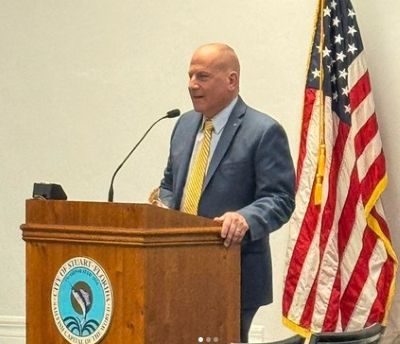 That decision launched a city-manager search that attracted 82 applicants. Michael Giardino ultimately received the job. Giardino primarily possessed an extensive military and airport-management résumé, incomparable to Mike Mortell’s specific years of experience running a city, so Giardino simply lacked Mortell’s decades of Stuart-specific municipal experience. Reed himself served on the committee that screened those 82 candidates.
Then voters changed the composition of the commission with the August 2026 election.
After Merritt Matheson joined Eula Clarke and Campbell Rich in a majority, Reed was removed via legal vote as mayor, Giardino was terminated as unqualified, and Mortell eventually was rehired 3-2. It should also be noted: the City of Stuart is significantly behind under Michael Giardino in filing required financial reports under state law.
Reed responded by declaring: “Professionalism at the city of Stuart has gone out the window.” He also accused the new majority of “colluding behind public officials’ backs.” Yet, a transparent public discussion and vote were taken on these matters – just not posted in advance? Was the planned and schemed termination of Mike Mortell fully transparent and made public in advance? Should it have been? Mike Mortell says he wasn’t ever communicated with by Reed, Giobbi, or Collins in advance.
Regarding Mortell’s return, Reed said: “So if that’s professionalism, I mean, I guess I’m on the dissenting side.”
 Why, Commissioner Reed, did you dissent? Why did you create all of this mess and cost to taxpayers in the first place, but you couldn’t even state publicly in the past or present why it was even being done – creating a ‘cause’ for the decision to terminate Mortell, and now you, “guess” you’re, “on the dissenting side” of bringing back an over-qualified City Manager-candidate (Mike Mortell), who didn’t even file financial statements in arrears, who’s served Stuart for over 20 years in various public roles? You felt hiring a replacement (Mike Giardino), with NO RELEVANT CITY MANAGER EXPERIENCE, was/is a better decision worth costing taxpayers a collective $175,000++ ?? Now, we’re all supposed to have confidence in your leadership and judgement still, right?
Then came perhaps the most curious proposal of all – from no other than Commissioner Sean Reed.
After Stuart accumulated more than $175,000 in severance costs from now terminating both Mortell and Giardino by the commission, Reed recently proposed that all five sitting commissioners surrender their approximately $20,000 annual part-time salaries for two years each?
So, why should Commissioners Eula Clarke, Campbell Rich, and Merritt Matheson bear equal responsibility for Reed’s poor judgments and decisions (votes) he hasn’t even been transparent about himself. Government accountability cannot mean distributing responsibility equally after responsibility was not exercised equally beforehand?
Clarke and Rich voted against firing Mortell. Matheson wasn’t even a commissioner when Mortell was terminated.
Reed now conveniently speaks about fiscal responsibility, proper procedure, and professionalism. Those principles should apply universally – including to Sean Reed’s, Laura Giobbi’s, and Christopher Collin’s decisions that began this entire episode in the first place. Fair?
Political disagreements are inevitable. Accountability of public officials should not be.
 Stuart residents can examine the votes, the severance checks, the management turnover, and even Sean Reed’s own words as a sitting city commissioner. I’m starting to wonder what Reed’s qualifications are for even serving the City of Stuart residents?
Taxpayers shouldering the bill for all this mess can decide for themselves whether the past two years represent the “strong and decisive leadership” Sean Reed promised and says needs to exist. Before asking everyone to pay for government mistakes, Commissioner Reed, perhaps Stuart voters should first ask a much simpler question:

Who made them?
Commissioner Reed, you are not here simply observing and judging recent events. YOU largely helped create the mess you’re attempting to judge -
Andy Noble’s opinions are his own and may not reflect Friends & Neighbors viewpoint.
Deeply embedded into the earliest genetics of not just our species but of mammals overall is the instinct to protect our young. There is a universal imperative to protect and care for children, and whenever this evolutionary directive is violated it provokes visceral wrath and disgust in most people. When the public square is suffused with daily discussion of infanticide or filicide, we are both disgusted and morbidly curious. How is this possible? How broken must a brain be to carry out the killing of one’s own child? The answer is far from simple. Weeks ago, Lindsay Clancy’s trial in Massachusetts ended in a mistrial.
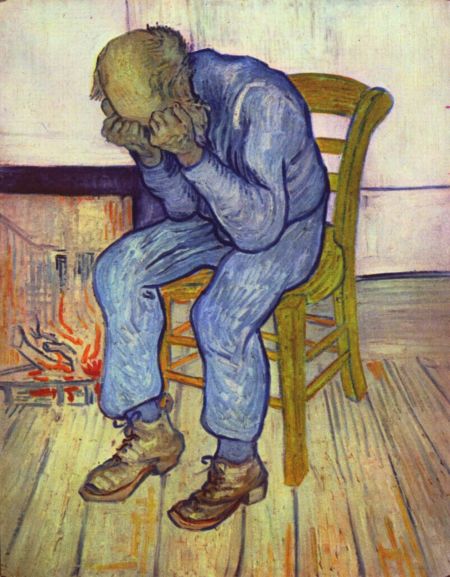 On January 24, 2023, Lindsay Clancy strangled her three children, ages 5 years, 3 years, and 8 months. She had sent her husband to get takeout and Pedia-Lax, and then strangled them with an exercise band. She then jumped out of a second story window in a suicide attempt, resulted in paraplegia from a spinal injury. Lindsay grew up in a functional family and did not report any developmental trauma or adversity. She graduated college and then went to nursing school. At age 22 while in nursing school, she was first prescribed Prozac for public speaking anxiety and depression, and later she was prescribed Wellbutrin for depression. She reported a good response without side effects. She graduated nursing school and became a labor and delivery nurse at the Massachusetts General Hospital (MGH). She married and had three children, and with each successive pregnancy and birth, she became more anxious and depressive postpartum. By all accounts, she had been a healthy and upstanding member of her community and a valued labor and delivery nurse at the MGH. There was no premorbid history of sociopathy, narcissism, or antisocial behavior which might be the background of a volitional filicide in the absence of psychosis, a state of mind during when there is a break from reality defined by hallucinations, delusions, or extreme thought disorder during which the individual cannot make rational decisions. Since Lindsay Clancy ended the lives of her children in 2023, seven other women in the US have committed filicide, ending the lives of sixteen children under the age of ten.
In a Systematic Review and Meta-Analysis of the Prevalence of the Maternity Blues in the Postpartum Period ( Obstet Gynecol Neonatal Nurs. 2020 Mar;49(2):127-136.) the prevalence of baby blues in the 26 reviewed studies was 13.7% to 76.0%. The American College of Obstetricians and Gynecologists (ACOG) estimates that one in seven women (14%) experience postpartum depression, with 27% reporting onset before pregnancy, 33% during pregnancy, and 40% postpartum. The prevalence of perinatal mood and anxiety disorders has risen substantially in the U.S. between 2006 and 2015 as per a National Inpatient Sample analysis, from 18.4 to 40.4 per 1,000 deliveries.
 While American medicine discusses all forms of depression through the criteria of the Diagnostic and Statistical Manual of Mental Disorders, 5th ed., postpartum psychosis (PPP) is not a distinct diagnosis in the DSM5. PPP is defined as a psychosis with postpartum onset, actually presenting either during pregnancy and most commonly within the first four weeks postpartum, though persistent and later presenting PPP has been reported up to twelve weeks postpartum. The ACOG defines PPP as acute-onset, presenting most often 3 to 12 days after birth. PPP occurs most often in women who have bipolar I affective disorder (BPAD I); the risk of PPP is 74% higher in women with BPAD I. It is further believed that frank PPP is not an exacerbation of postpartum depression, though postpartum depression can also exhibit psychosis.
While many women who have committed filicide have been psychotic while committing the atrocity of killing a child, not all women who commit these acts are psychotic. Floridians may remember Casey Anthony, a woman tried for the murder of her two-year-old daughter in 2008, whose premorbid history was replete with narcissistic, antisocial, and other personality disordered behaviors which would be consistent with the pattern seen in woman who kill their children and are not psychotic. Casey Anthony reported that her daughter was the product of a rape, and one witness testified that she resented being a parent and not being free of parental responsibility. Casey Anthony was acquitted. In April 2026 Janette MacAusland of toney Wellesley, Massachusetts strangled her six-year-old daughter and seven-year-old son and took flight to Vermont where she considered suicide; she had been seeking full custody in a contentious divorce with her estranged husband. There is a court hearing later in September to determine whether the case will be sent to a Grand Jury. Though she had confessed to Vermont police, she is pleading not guilty in Massachusetts.
Society struggles to differentiate between criminally insane and simply criminal. The Lindsay Clancy case demonstrates cultural ambivalence in trying to make sense of events that do not make sense to the cogent and clear eyed. There has been a cultural shift to neutral euphemisms for mental illness and/or bad behaviors, making it difficult to have a frank discussion about behavior versus biology. The public response is fractured, with organized support for Lindsay Clancy on one side and calls for justice on the other. Lindsay Clancy led a normative and happy life until she was postpartum. Her psychiatric providers failed to identify the gravity of her condition and address it appropriately; PPP has an excellent prognosis with treatment. She was seen by crisis evaluators in the weeks prior January 24, 2023 and sent home because she denied being acutely suicidal, homicidal, or psychotic. Could the eventual psychosis and filicides have been foreseeable? How often was she scheduled to see her psychiatrists? There was no premorbid history of bipolar disorder, and the onset of BPAD is usually between ages 15 and 25, though later onset is certainly possible.
In spite of a universal desire for diagnostic objectivity and uniformity, diagnoses and treatment recommendations can be disparate between medical bodies such as American Psychiatric Association(APA) and the ACOG. Many psychiatrists recognize that the DSM5 is a common parlance, sometimes no more objective than science by committee. In a sound diagnosis of BPAD, most psychiatrists adhere to the Canadian Network for Mood and Anxiety Treatment and the International Society for Bipolar Disorder (CANMAT / ISBD) guidelines. These guidelines recommend avoiding traditional antidepressants in patients with bipolar depression, as their use may accelerate the patient into mania or psychosis. Instead, the first-line recommendations for bipolar depression are lithium, anticonvulsants, and third generation antipsychotics (which are also FDA approved for bipolar depression, mania, and psychosis). Lindsay Clancy received the diagnosis of BPAD retrospectively. In November 2022, she was given three antidepressants. There is no known premorbid motive for which Lindsay Clancy could be accused of wanting to be rid of her children, unlike Casey Anthony or Janette MacAusland, both of whom had backstories and never claimed to be psychotic or postpartum. Regardless of the verdict of a retrial, Lindsay Clancy’s life is irreparably changed. She lives with the knowledge of what she did. She lives in a wheelchair. She lives knowing that she will never know a normal and anonymous life. It is unclear how she can reinvent herself to have a life of meaning.
In cruel irony, the Massachusetts General Hospital Postpartum Psychosis Project, where Lindsay Clancy had once worked a labor and delivery nurse, published a ten-year retrospective study in December 2024 on the phenomenology of postpartum psychosis.
=========================================================
Suicide & Crisis Lifeline: call/text 988
National Maternal Mental Health Hotline: 833-852-6262 / 833-TLC-MAMA
Dr. Louis Velazquez’s opinions are his own and may not reflect Friends & Neighbors viewpoint.
When you buy a piece of property, you don’t just acquire the land. You acquire the legal rights that come with it.
Your neighbors may not know what the property is zoned for. They may never have looked at the future land-use map or considered what could someday be built there. But their lack of awareness doesn’t erase your rights. And it doesn’t give them veto power when you decide to use or develop your land in a way the law allows.
Put more bluntly: You don’t get to tell your neighbor they can’t develop their property simply because you assumed it would remain unchanged or you don’t like what they’re proposing to do with it.
That doesn’t mean property owners should be able to do anything they want. Development can affect traffic, water, the environment, public services and the quality of life of surrounding residents. Communities have rules for a reason, and neighbors have every right to ask questions, raise concerns and demand that those rules be followed.
Therein lies one of the most difficult questions facing any community: Where do individual rights end and community decisions begin?

It’s easy to defend property rights when we’re talking about our own land. The issue becomes more complicated when we’re talking about the property next door, down the street or along the route we drive every day.
A family that has owned agricultural land for generations may decide to sell or develop a portion of it. Nearby residents may worry about traffic, changes to the landscape or the loss of open space. A business owner may need to expand. Conservation advocates may want to protect natural resources. Young families may hope to find housing they can afford in the community where they grew up.
So, whose priorities should prevail?
All of those interests deserve consideration. But concern about change doesn’t automatically outweigh the legal rights of the person who owns the land.
That’s why land-use decisions are rarely as simple as they appear on social media or at a public meeting. Elected officials must listen to residents while also considering property rights, environmental impacts, economic realities, infrastructure needs and legal requirements.
Public input is essential, but public opposition is not the same as legal authority. A crowded meeting, an angry Facebook page or a stack of identical emails doesn’t give neighbors veto power over someone else’s property. If it did, nearly every meaningful change could be stopped by whoever shouted the loudest.
At the same time, property rights are not unlimited. If every property owner could do whatever they wanted without regard for the surrounding community, the result would be chaos. Local government’s responsibility is to apply the rules fairly and find the appropriate balance.
Development proposals typically go through professional staff review, technical studies, public hearings and votes by elected officials. Residents have the right to ask questions, challenge assumptions and advocate for improvements. Property owners have an equally important right: to have their proposal judged according to the rules governing their land, not according to whether the loudest opponents want it to remain untouched.
Too often, land-use debates stop being about the actual proposal and become exercises in assigning motives. Supporting a project that follows the rules doesn’t mean an elected official is “in the pocket of developers.” It may simply mean that official understands that personal opposition is not a legal basis for denial. Accusations may generate attention, but they don’t produce better decisions.
Martin County has never been frozen in time. Every neighborhood, school, park, business center and conservation area we value today exists because previous generations made decisions about how land should be used and developed.
The challenge isn’t to stop change. It’s to manage change responsibly.
That means judging each proposal on its merits. Does it follow the rules? Does it fit the surrounding area? How will it affect traffic, water, the environment and public services? Can it be improved? Will it leave Martin County better or worse in the years ahead?
Those questions require more thought than simply declaring ourselves “for” or “against” development.
Protecting what makes Martin County special matters. But that cannot mean treating privately owned land as permanent open space simply because the people living nearby would prefer it that way. Respecting this community also means respecting the rights of the people who own property here.
The real question isn’t whether Martin County will change. Communities always do. The question is how we allow it to evolve while protecting the qualities that make this community worth calling home.

Rick Hartman’s opinions are his own and may not reflect Friends & Neighbors viewpoint.
So, if you have not heard the news, House of Hope, in partnership with our amazing friends at Old Havana Cafe, set a new record for the longest Cuban sandwich ever made. It measured 400 feet long, required over 140 builders, and nearly 180 volunteers in total. It was quite a spectacle and absolutely tested the limits of our event and logistics planning. This column is about a few of the lessons learned and reinforced from a 400-foot sandwich.
- Audrey Hepburn famously said, “nothing is impossible, the word itself says I’m possible.” When chef Chuchi Rivero, owner of Old Havana Cafe, first approached us with the idea to break the record, it would have been easy to decline the offer. There were so many reasons to say no. Obviously it had never been done before. The cost of accomplishing this monumental task in dollars and staff time were significant. In addition, lots of logistical challenges were present. There was no playbook on Google or AI about how to break this record. Instead, we all looked at this as an opportunity and rose to the challenge. We embraced what is possible over what is impossible.
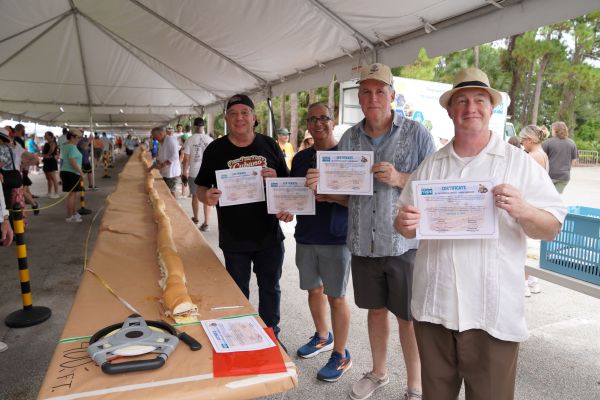
- Positive relationships built on trust and respect are the key. They are central to all that we achieve in our community, our businesses, and with our friends and family. I say this to my colleagues often when we are faced with a challenge and we need help. So we leaned heavily into our community, our relationships. The results were literally record-breaking. Several vendors donated much of the food and supplies needed to complete the build. Commissioner Ed Ciampi and county staff assisted us in selecting the right location that could safely hold the sandwich, over 400 feet of tents, nearly 200 volunteers, over 300 spectators, agency partners, vendors, parking and more. Many community partners stepped in to sponsor the event. The Doris M. Carter Family Foundation offered a matching grant. Several nonprofit partners came and set up booths with kid’s activities. All of the volunteers signed up weeks before to build that sandwich and make history. Whether the need is a fun and quirky opportunity to set a record, or a vital program to empower residents to overcome hunger and hardship, our community always steps up to help us, and for that we are incredibly grateful.
- Margaret Mead’s most famous quote is “never doubt that a small group of thoughtful, committed citizens can change the world. Indeed it is the only thing that ever has.” The team at House of Hope personifies this quote. The record-breaking sandwich is a great personal reminder of how fortunate I am to work with such an incredible group of people, and how proud and grateful I am for all that they do. It is also a reminder of how impactful this team is every day, and how fortunate we all are that they are focused on improving the lives of our most vulnerable neighbors. Over 43,000 residents across the Treasure Coast and beyond are positively impacted by our passionate, compassionate, hardworking team. It is like Miss Mead had them in mind when she uttered those famous words.
If you or someone you know needs House of Hope services, or you want to learn more about how you may help, please visit our website at www.hohmartin.org. Thank you for spreading hope in our community.
Rob Ranieri’s opinions are his own and may not reflect Friends & Neighbors viewpoint.
The most important and often discussed amendment to the Florida constitution is the controversial Amendment #3. The pros and cons are significant. The discussion points are numerous and some are highly complicated. I am a taxpayer and want lower taxes but I am also the President of a local not for profit (Tykes and Teens) which relies on government funding (tax dollars). I have spent much of my time studying the amendment and hopefully can give some information that will help you make an informed decision. However, please study this issue before you vote.
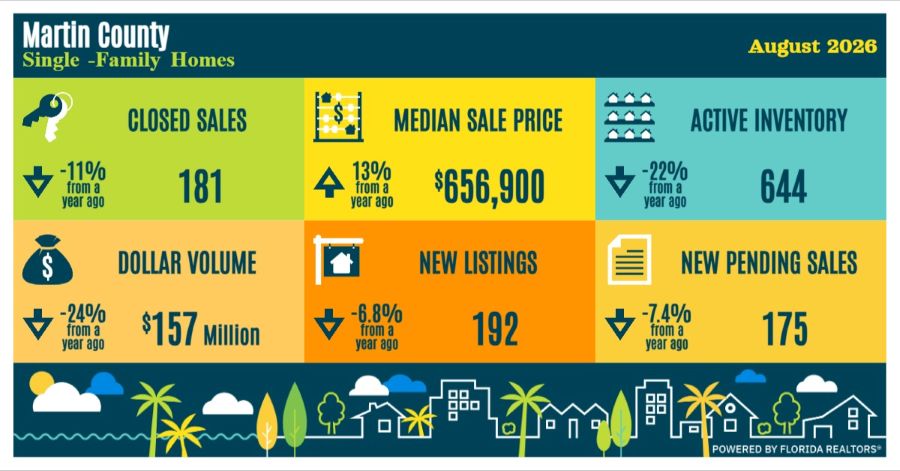
As a working Realtor - lower taxes will help me sell homes, however if the roads are not repaired and police are not present - will I really be getting the job done? The Florida Realtors Association are in support of #3. The logic and discussions have been easy to follow and make perfect sense. Our job is to advocate for our homeowners, buyers and sellers, and to help make Florida homes more affordable. Raising the homestead exemption will make homes, especially lower priced homes, more affordable to the average Floridian. It is important to note that #3 is for homesteaded properties, only. There are provisions in the amendment that address landlords, commercial properties and second homes which will help them manage their property taxes better, as well. There will be widespread tax relief.

As a not for profit leader - lower taxes may mean less money for the children we serve. The homestead exemption will not necessarily affect the revenue or the special taxing districts that we rely on to fund our Children's Services Council. The firefighters, law enforcement and many government agencies are strongly opposed to this amendment. If the county has less money to spend - cuts may be inevitable. I have also learned that 100’s of millions of dollars will likely be taken away from Medicaid, which is vital for our children and economically challenged families.
The reason we are all voting on this amendment, PLEASE GET OUT AND VOTE, is that since the pandemic (I hate that phrase) property values have increased significantly and tax revenue has grown at an especially high rate. The State has a huge surplus, a full emergency fund and has been generous in their spending. If you review the data, property tax revenue has soared, prices of homes have increased but the government revenue has outpaced homeowners and the government has appeared to spend like a impaired sailor. Hence the appetite for amendment #3.
If it fails I truly hope our legislature will work hard next session to develop a plan that reduces our property taxes and finds better solutions to the over taxation of Floridians. If it passes I pray the implementing language will address the major concerns of the most affected by the cuts. I highly recommend that you review the entire proposed amendment and vote with reason and logic not simply with your wallet.
John Gonzalez’s opinions are his own and may not reflect Friends & Neighbors viewpoint.
Everyone benefits from structure and consistency. Fundamentally, that’s what Boys & Girls Clubs of Martin County provides for our more than a thousand members as it’s what’s missing in many of their lives.
This is particularly true of the most vulnerable, which the social services industry sometimes refers to as “the disconnected.”
“Disconnected” describes young people—aged 16 to 24—who in many cases endured the difficulties of the foster system, come from low-income households, dropped out of school, and got in skirmishes with the law.
Introducing them to structure is the beginning of sparing them a spot among society’s most depressing statistics; in fact, it’s often lifesaving. That’s why we’re particularly proud to have obtained a highly sought-after federal grant to launch a program uniquely aimed at permanently and positively altering the trajectory of their lives.
YouthBuild, funded by the U.S. Department of Labor and Employment and Training Administration, is the latest BGCMC initiative and among our most important. Created with a comprehensive, phased-in approach, YouthBuild serves a total of 66 young people over the course of 40 months.
The participants dedicate 40 hours per week to the program. Half of that time goes to their academic education, with the opportunity to earn a high school diploma or equivalent. Our education partners in the process are Indian River State College and Martin County School District’s Stuart Adult Learning Center.
Knowing how critical it is for the participants to clear this hurdle, we do everything possible to position them for success. Using our Greater Stuart Club as the meeting place and BGCMC certified teachers as additional support, IRSC Remedial GED instructors will provide lessons as needed. They’ll help participants improve their literacy and math skills, providing small-group academic support and individualized planning so they’re more confident in the classroom.
Forty percent of the YouthBuild program is reserved for hands-on construction skills training. This includes up to 150 hours of the National Center for Construction Education and Research’s Introduction to Basic Construction curriculum. Participants can get credentials on aerial lift and forklift operations. In addition to pre-apprenticeship certifications, they can work toward a registered apprenticeship and get experience on active residential construction projects through our partnership with Habitat for Humanity of Martin County.
Finally, 10 percent of the program emphasizes leadership development and community service. Many of these young people are natural leaders. Their circumstances and choices may have obscured or distorted this fact, but once invested in and equipped to succeed, they can really shine.
The program provides, as needed, additional support services for participants. This included assistance with daycare, transportation, drug or mental health services, mentoring, financial literacy, digital literacy, and more.
The structure of YouthBuild continues beyond the active-programming period. There’s a 12-month follow-up phase that assists with employment, apprenticeships and postsecondary job placement. A member of our team will maintain contact with frequent touchpoints, tracking and measuring progress and assisting as needed.
BGCMC is honored for the opportunity to deliver to local young people the benefits of this program. Through thoughtful effort and investment, we can all help reengage, reenergize and remake the futures of the once disconnected.
That’s how YouthBuild truly lives up to its name: Creating the next generation of builders by first building them up to overcome the obstacles what once held them back.
Keith Fletcher's opinions are his own and may not reflect Friends & Neighbors viewpoint.
My wife and I got back from Croatia just three days ago, and it has already vaulted onto our short list of favorite European destinations. That’s not a sentence I write lightly. Here’s how it happened.
We began in Zagreb, staying two nights at the Hotel Esplanade, the grand old dame of the city and still, comfortably, its finest hotel. A city bike tour on our first morning turned out to be the perfect introduction: it hit every major highlight efficiently and gave us our bearings. Instructive and very fun. After that we explored on foot, wandering between the Lower and Upper Towns and surrendering to Zagreb’s famous coffee culture, which is less about the caffeine than about the ritual: sitting, watching, letting the morning stretch. We stopped often. It felt like the correct way to understand the place.
After two days in the capital, a private driver took us south toward Split, with two stops that turned the transfer into a highlight in its own right. The first was Plitvice Lakes. We saw only the lower lakes, which was the right call, leaving us time and energy for everything else without sacrificing the beauty. The second was Šibenik, a town about half an hour from Split with a remarkable cathedral and, refreshingly, few crowds. We had a long lunch there with beautiful views and no sense of hurry. We learned that crowds start to diminish in mid September, but that still doesn’t signify “uncrowded.”
That transition was one of the trip’s genuine pleasures. When you cross the range that separates continental Croatia from Dalmatia, the whole atmosphere changes: the architecture, the light, the pace, the food. You leave a Central European café culture behind and arrive somewhere that feels distinctly Mediterranean. Same country. Two different worlds. Croatians are quite aware and proud of that duality, a reality shaped by their rich (and difficult) history.
Split became, unexpectedly, our favorite base. There's a natural calm to the town that we both felt immediately. We stayed three nights at the outstanding Hotel Ambassador, in a room with a spacious balcony that gave us a perfect view over the city. We explored Diocletian's Palace, the Roman emperor's retirement complex built seventeen centuries ago and now a warren of restaurants, souvenir shops, and intriguing alleys – an ancient place, still very much full of life.
On our last day in Split, we took a boat out to UNESCO-protected Trogir, then on to a bay marketed – for obvious reasons – as the "Blue Lagoon," where we swam in the Adriatic. That swim was a highlight of the trip. The water here is something else: a blue-green so clear and luminous it barely looks real, among the most beautiful either of us has ever seen. Expensive yachts sat anchored in every direction, and it was easy to see why they'd chosen this spot. Back on land, a nature bike tour of Marjan Hill – the green lung rising right above the old town – delivered stunning views at every turn.
For the final leg, another private drive delivered us to Dubrovnik, but not before two excellent stops. One was a winery. The other was Ston, where we toured an oyster farm, visited a salt mine and ate lunch pulled more or less straight from the water. If you’ve never had an oyster minutes after it left the sea, I recommend arranging it.
In Dubrovnik we walked the famous city walls, which – a useful tip – are considerably less crowded than the beautiful maze of the old town they enclose. That’s because gaining access to the walls requires climbing a lot of steps and paying 40 Euros per person. We also did another bike tour outside the city that took us to a winery and to a cluster of UNESCO sites, including a striking medieval necropolis with its distinctive-carved tombstones from the fifteenth century. Three nights there rounded out the trip.
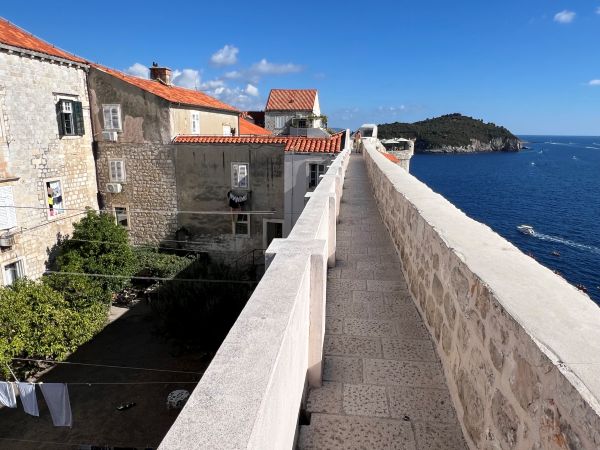
One honest note: smoking is still very common in Croatia, and as a non-smoker I found it intrusive at times. It’s the one thing I didn’t like, but it barely dented an otherwise superb week: the scenery, the food, the history, and above all the people, who were as good company as any we’ve met in Europe.
If I'd change one thing, it's the clock: ten days across three bases was a bit tight. Fast. Fourteen would have been the minimum for a truly relaxed pace, with room to breathe between the moves. Some trips confirm a place is nice. This one made us want to return before we'd even flown home. We'll be back.
Marcelo Guimarães' opinions are his own and may not reflect Friends & Neighbors viewpoint.
“As long as I’m here, count me in.” Bob Weissman, a generous philanthropist who has left his mark in countless ways throughout our community, summed up the golden rule for living a productive and meaningful life in just those few words: “Count me in.”
Sadly, we recently lost Bob at 90 years of age. He was not the kind of person, though, who would want us to dwell on his passing. He would certainly have told us to pull ourselves together and get back to work making the world a better place to live in. That’s what he did for all of his 90 years.
Much loved by his family and everyone who knew him, Bob had had an incredible career in the textile industry before moving to Martin County. He and his wife Carol quickly became respected members of the community, eager to share their good fortune with others and willing to put their talent, energy and treasure into projects and organizations that benefited others.
The Weissman Cancer Center, part of Cleveland Clinic Martin, stands as one of the lasting tributes to his generosity, compassion and support for the residents of the Treasure Coast.
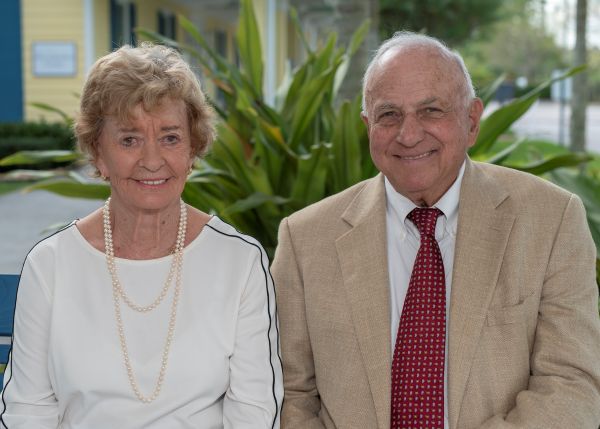
Carol and Bob Weissman at COA’s Sage Awards celebration
In 2019, the Council on Aging Martin County was delighted to honor Bob and Carol as Charlie Kane Award honorees at the Sage Awards, for the many ways in which they demonstrated how people can lead purposeful lives well into their senior years by offering their experiences, professional skills and compassionate hearts to others.
Age is not an indicator of how much and how long an individual can enjoy a meaningful life. As Bob and other Sage Award honorees have proved, attitude is everything. The commitment to be counted in, to engage with others, and to keep making life better for those who need help– those are the indicators!
For more than 50 years the Council on Aging has served the residents of Martin County as their hub for senior resources. We work to ensure that our seniors are able to maintain vibrant and purposeful lives, aging with dignity and a sense of belonging. So be like Bob. Measure your life not in years but in what you do with the years you have.
We already miss Bob and Carol so much and appreciate them for all they have done to help improve the lives for seniors in Martin County.
Karen Ripper's opinions are her own and may not reflect Friends & Neighbors viewpoint.
The school year is underway, which means our roads are once again filled with school buses, parents rushing through drop-off lines, and children walking or biking to class.
For drivers, this is an important reminder to slow down and stay alert. Children can be difficult to see, and one moment of distraction can have serious consequences.
Why School Zones Require Extra Attention
School zones and bus stops bring cars, buses, bicycles, and pedestrians into the same area, often during the busiest times of the day.
Children may cross unexpectedly, step between parked cars, or misjudge how quickly a vehicle is approaching. Younger children may also be less aware of traffic dangers. Drivers should reduce their speed and be prepared to stop, especially near crosswalks, schools, and bus stops.
Watch for Children Walking and Biking
Accidents involving young pedestrians and bicyclists can happen for many reasons. A driver may fail to yield at a crosswalk, back out of a driveway without seeing a child, or make a turn without checking for someone crossing the street.
Morning and afternoon traffic can make these situations even more dangerous. Giving yourself extra time can help reduce the temptation to rush through busy school areas.
Put the Phone Away
Distracted driving is especially dangerous around children. Reading a text, adjusting directions, or looking down at a notification takes your attention away from the road.
Even a few seconds matter. In a school zone or neighborhood, a child could enter the roadway before a distracted driver has time to react.
If Your Child Is Hit by a Vehicle
For a parent, few calls are more frightening than learning that your child has been struck by a vehicle. In that moment, your child's health should come first.
Seek medical attention, even if the injuries do not initially appear serious. Some symptoms may take time to develop.
If possible, make sure the accident is reported and gather information about the driver and any witnesses. Photos of the scene, vehicle, bicycle, crosswalk, traffic signs, and visible injuries may also become important later.

Why Early Documentation Matters
Memories fade, physical evidence can disappear, and injuries can change over time. Keep copies of medical records and write down symptoms, appointments, and changes in your child's daily activities following the accident.
Good documentation can help provide a clearer picture of what happened and how the injury has affected your child.
Gene Zweben’s opinions are his own and may not reflect Friends & Neighbors viewpoint.
A new WalletHub study ranked Florida 17th among the best states for teachers.
Not terrible, right? Look closer.
AFTER being Adjusted for cost of living, Florida ranks dead last in average teacher pay. Since 2016, teacher salaries here have dropped nearly 10% after inflation. Every raise you've heard about from Tallahassee got swallowed at the grocery store and now the gas pump.
Florida's starting pay is actually decent — 15th in the country. So we're pretty good at attracting new teachers, but lousy at keeping them. The study ranks Florida 49th in projected teacher turnover.
Martin County knows this story. It's why we have kept voting to tax ourselves. Three times (2018, 2022, 2024) voters approved a special school tax. The latest renewal, worth $82.6 million, funds school safety, mental health services, and retention pay that gives teachers anywhere from $500 to $10,000 on top of their salaries, so they don't run for Palm Beach or St. Lucie.
So what happened this month at the school board?
In September, the board approved next year's budget and lowered the tax rate from 5.177 mills to 4.877. (A "mill" is $1 of tax per $1,000 of your home's taxable value.) They even went below the "rollback rate" (the rate that would've collected the same dollars as last year) for the second year in a row. Meanwhile, the general fund, the big pot that pays salaries and benefits, decreased from about $257 million to $238 million. Ouch.
To be fair, the board doesn't control all of this. The biggest slice of the school tax rate is set by the state, not the board. And the board's own biggest cuts have come from the capital budget: buildings, buses, maintenance. By law, that money can't pay teacher salaries anyway. This isn't a case of board members raiding teacher paychecks to hand out tax breaks. It's not empty classrooms either. Enrollment may be holding steady this year, despite a large decline over an extended period of time.
But the system is running out of room. The state sets most of the rate. The capital fund can't touch salaries. The general fund is shrinking. Which means the only real money keeping experienced teachers in Martin County is that voter-approved referendum — a fund that expires every four years and lives or dies at the ballot box.
Think about that. In the worst-paying state in America for veteran teachers, the thing standing between our A-rated schools and the exit door is a tax we have to keep re-approving. Tallahassee built that system. Tallahassee should fix it, but we know they’re privatizing education right now.
I don’t feel optimistic about the vote this time. After seeing the online discourse about other public services and Amendment 3, this November makes me nervous.
Sydney Thomas' opinions are her own and may not reflect Friends & Neighbors viewpoint.
Exciting times for the Kiwanis Club of Stuart!
Tremendous changes are coming to the Kiwanis playground!
Starting August 17, a portion of the playground will temporarily close for about three weeks while we begin exciting Impact 100 improvements! A safer, more accessible swing area will provide easier access for everyone. We are also introducing Harmony Highway — a new accessible musical path featuring drums, colorful chimes, and a 15-note instrument where kids can make their own music!
A Grand Opening Ribbon Cutting planned for Saturday, October 17 at 9 am. Mark your calendar! We cannot wait to see—and hear—our community’s children enjoying these amazing new additions! Thank you for your patience while we make our playground even better for everyone!
 Along with many organizations, our club members participated with House of Hope and Old Havana Cafe, and others to build a record-breaking 400-foot Cuban sandwich that also raised $42,000 to support House of Hope programs and services! Working with others reminded us of how fortunate we are to live in this community where working together is the norm. Congratulations to Rob Ranieri and House of Hope for this incredible opportunity.
Our Club along with other clubs in Division 16—Kiwanis Clubs of Ft. Pierce, Vero Beach, Indiantown, Okeechobee and Port St. Lucie—are donating 100 Blessing Bags to Place of Hope. Place of Hope provides Blessing Bags to children of all ages who are entering the foster care system. Many times the children enter with little—the Blessing Bags provide not only the necessary items such as clothes and hygiene items but also journals, books, toys and other items to help this transition.
“Kiwanis Reads—Storytime Reading Initiative” gives us the opportunity to read to children at Gertrude Walden, Immanuel Lutheran, First United Methodist Church in Stuart/Palm City and Banner Lake in Hobe Sound. We have a truly fun time while helping instill the love of reading at an early age. We welcome our club members as well as community members. Please let me know if you are interested—contact information at the end of the column.
A few congratulations are in order—
Congratulations to Gary Hawken, a new Robert W. Thal Fellow! The Robert W. Thai Fellowship recognizes outstanding individuals who share Robert’s lifelong dedication to the children for Florida. The program was created in homage and appreciation to his vision that resulted in the creation of the Florida Kiwanis Foundation.
For 48 years, Gary has served Kiwanis with extraordinary dedication—as a club president, secretary, lieutenant governor, board member, committee leader, and so much more. Gary, thank you for your decades of service and your lasting impact on Kiwanis and the children of Martin County. We are proud to recognize and welcome you as a Robert W. Thal Fellow!
Congratulations to Cher Fisher who was honored with the 2024/2025 Outstanding Kiwanis Lieutenant Governor for the Florida District of International. She was also recognized as 2023/2024 Outstanding Lieutenant Governor of the year. She was recognized for exceptional leadership, Service and dedication to Kiwanis’ mission of community service and youth Development.
During her time as Lieutenant Governor for District 16, she was instrumental in the development of two new clubs—Kiwanis Club of Indiantown and Kiwanis Club of Port St. Lucie. She assisted with the District 16 Blessing project as well as being a presence in all the clubs providing grant information and general information about Kiwanis. We are proud to recognize Cher for her outstanding efforts and success!
Finally, congratulations to our new leadership beginning October 1—President Janice Brady, President Elect Becky Bruner, Vice President David Dees, Treasurer Michael Lofley and Immediate Past President Liz Milner. Liz was recognized for her outstanding service and Janice was congratulated and welcomed!
We invite you to join the Kiwanis Club of Stuart. We meet the first and third Tuesdays at Manero’s in Palm City at noon—we welcome visitors as well as prospective Members. You can find additional information on our website KiwanisClubofStuart.org.
Suzy Hutcheson's opinions are her own and may not reflect Friends & Neighbors viewpoint.
September is both Suicide Prevention Awareness Month and a time when many Florida families are paying close attention to discussions about property tax reform. While these may seem like separate issues, both highlight an important truth: community decisions can have a meaningful impact on children's mental health.
Across our state, children and teens continue to face increasing levels of anxiety, depression, trauma, and social isolation. For many young people, stress does not come from a single event but from the uncertainty surrounding them. When families worry about finances, housing costs, school funding, or access to community services, children often feel that stress as well.
As Floridians learn more about potential property tax changes, it is important to understand how local funding affects schools, parks, libraries, after-school programs, and other supports that contribute to healthy childhood development. These community resources provide safe spaces, trusted adults, opportunities for connection, and early intervention when children begin struggling emotionally.
During Suicide Prevention Awareness Month, we are reminded that prevention starts long before a crisis occurs. It begins with creating environments where children feel safe, connected, and supported. Parents, educators, healthcare providers, community leaders, and policymakers all play a role in building those protective factors.
There are several ways families can support children's mental health this month:
- Make time for regular conversations about feelings and stress.
- Watch for changes in mood, behavior, sleep, or social engagement.
- Encourage healthy routines including exercise, sleep, and limited screen time.
- Seek professional support early when concerns arise.
- Remind children that asking for help is a sign of strength, not weakness.
As communities discuss important policy decisions, let's remember that children's mental health should remain part of the conversation. Every child deserves access to supportive schools, strong families, safe communities, and quality mental health care. Together, we can create a future where every young person knows they are valued, connected, and never alone.
Anne Posey's opinions are her own and may not reflect Friends & Neighbors viewpoint.
“The idea is to die young as late as possible.” Ashley Montagu
Aging and its inevitable effects on the body are a part of life. But that doesn't mean that there aren't things that we can do to combat the aging process and stay healthy for as long as we can. So what can we do to try and stay well?
 Regular medical visits allow us an opportunity to screen for diseases that, if found at an early stage can be positively impacted. Some examples of this include high blood pressure, diabetes, high cholesterol and the thing that everyone dreads, cancer. Currently we are able to screen for colon cancer, lung cancer, cervical cancer, breast cancer, and prostate cancer. If found early on screening tests there is a good chance these former killers can be cured.
Smoking is the number one cause of self-induced preventable disease. It increases the risks of multiple cancers, heart disease, lung disease, stroke, and vascular disease among others. The best thing we can do is to never start smoking. But for those who do, quitting has been shown to add years to your life.
Obesity is epidemic in the United States. This increases the risk of multiple diseases including diabetes, heart disease, high blood pressure, stroke, gallbladder disease, degenerative arthritis, sleep apnea, and depression to name a few. Although there are medications to combat this, the cornerstones of prevention and treatment are diet and exercise. Healthy eating guidelines emphasize fruits, vegetables, whole grains, fat-free or low fat milk, seafood, lean meats, legumes, nuts, and seeds. Even modest amounts of weight loss are likely to produce health benefits. An important part of any weight control program and a part of healthy living in general is exercise. People who exercise regularly live longer and live better. Ask your provider for an exercise prescription that is right for you.
Get a good night's sleep. Current recommendations are between 7 and 9 hours per night. Take care of your mental health and seek help for problems with anxiety or depression. Have some hobbies and engage in mentally stimulating activities; these have been shown to decrease the risk of dementia and provide an overall increased sense of well-being.
Access to quality primary care becomes increasingly important as we age. At Volunteers in Medicine Clinic, patients receive high-quality, comprehensive care in a supportive, patient-centered environment tailored to their individual needs. Each patient is established with a primary care provider who provides preventive screenings, annual wellness visits, chronic disease management, and coordination of specialty care when needed. At VIM Clinic, we partner with our patients throughout their health journey, helping them stay well, identify concerns early, and maintain their health and independence.
For 31 years, Volunteers in Medicine Clinic has been providing free comprehensive medical care, including primary care, preventive screenings, specialty care, diagnostics, surgeries, cancer treatment, mental health services, and medications to uninsured Martin County adults ages 18 to 64 who live at or below 250% of the Federal Poverty Level. In 2026, 250% of the Federal Poverty Level equates to $39,900 for a household of one, $54,100 for a household of two, $68,300 for a household of three, and $82,500 for a household of four, with eligibility increasing based on family size.
If you are uninsured and struggling to afford healthcare, VIM Clinic is here for you with no waiting list. For more information, or to support the Clinic, call 772-463-4128 or visit vimclinic.net. The Clinic’s impact is made possible by the generosity of volunteer healthcare providers, nurses, specialists, and community members who donate their time, talents, and resources to improve the health of our community.
Jordan Bromberg’s opinions are his own and may not reflect Friends & Neighbors viewpoint.
For many of us, “normal” is something we take for granted—family dinners, school routines, birthday parties and the comfort of a consistent bedtime. But for children in foster care, normalcy can feel like a distant dream. These children often come from unstable and traumatic environments. They’ve experienced things no child should, and in many cases, they’ve had to grow up far too fast.
At the Tilton Family Children’s Shelter, we give kids permission to be just that—kids. It’s at the heart of what we do—creating a safe, stable environment where children experience the everyday moments that help them feel seen, valued and cared for. We call this normalcy, and for children in foster care, it’s a powerful step toward healing.
Normalcy means helping children feel like they belong. It’s being able to go to school each day and have help with homework when they return. It’s having access to behavioral health services that help them cope with trauma and build resilience. It’s enjoying after-school activities like sports, art or clubs—things that spark joy, creativity and self-esteem.
At Hibiscus Shelter, we provide these opportunities because we know how important they are. The availability of counselors, academic support, structured routines, caring staff and volunteers who listen and encourage, creates a sense of normal that many children have never known. Like celebrating a birthday with cake and a party, learning how to play a musical instrument or having a quiet space to read before bed. These moments aren’t extravagant—but they are everything to a child healing from trauma.
 Normalcy means giving children a voice in their own lives—offering choices, honoring their interests and encouraging their dreams. It’s helping them see that their future can be bright, safe and filled with possibility.
Every child deserves that sense of stability and belonging. At Hibiscus, we’re committed to providing it—one day, one smile, one moment at a time. Because when children experience normalcy, they begin to believe in something even greater--hope.
For more information about Hibiscus and our services, please visit HibiscusChildrensCenter.org.
Matt Markley's opinions are his own and may not reflect Friends & Neighbors viewpoint.
It is the end of September as I am writing this column, and things are happening along all of our beaches here on the Treasure Coast.
Yes, the mullet are starting to show and the weather conditions that have been holding for the past few weeks appear to be setting the stage for a great fall mullet run. The sargassum weed has finally backed off and if we can get rid of the red and purple slime weed that has been showing, local surf action is going to explode. This past week the mullet schools have increased in numbers and volume and periodic "blowups" of tarpon, snook, big jacks, Spanish mackerel, and ladyfish on these schools is increasing.

In addition to all of these predatory species the pompano are making an early showing so get your gear ready. If you have never witnessed or fished our fall mullet run, you are in for an experience you will not forget. This is the time of year when you can hook a 100 pound tarpon 20 to 40 yards from the edge of the surf.
One word of caution do not bring a knife to a gun fight. 8 TO 9 foot spinning rods paired with 6000 to 7000 sized spinning reels will be your "go to" set up. The thrill of hooking one of these silver beauties and fighting a fish of a lifetime should be your goal. As far as bait , obviously a live mullet fished on the edge of one of these big schools of bait will be the most popular but for anyone who like to cast artificials to the entire list of above mentioned species, NLBN, Yo Zuri, DOA, Tsunami, and Hogy all make mullet imitations that will draw strikes.
Another lure that will bend the rod is a 1 ounce silver spoon. Make sure you pack your cast net and bait bucket with an aerator so you have the ability to keep a bunch of the mullet alive once you net them. Low light periods, dawn and dusk , are the most popular time periods to plan your trips but this time of year things can erupt in the middle of the day also.
The early arrival of keeper sized pompano is a pleasant surprise also and I have been dropping off some nice fish off to New England Seafood for them to sell. The early pompano have already settled into their fall/winter pattern of biting early in the morning and the hot baits have been the EZ Flea Electric Chicken and Orange and White colors.

One other tip I want to share with everyone is take a look at the beach access you are targeting before you get all of your gear out of your car or truck. These mullet schools are easy to spot and if your location is not showing any life from the bait schools, move on to the next beach. The fact is not if the bait is on the beach, the question is where. We have a lot of beaches in Martin County so put a little time in hopefully you will see the action of bait being hammered by all of these fall predators.
Good luck and catch em up.
Paul Sperco’s opinions are his own and may not reflect Friends & Neighbors viewpoint.
Historically, one of the largest sources of confusion for an individual purchasing a new home has involved property taxes and the value reassessment that takes place following a transfer of ownership. To add to the complexity, many websites featuring online residential real estate listings often reflect the seller’s current, or most recent, tax bill. This often creates a common misconception that the buyer can expect to have a similar tax bill.
In Florida, the homestead exemption is administered based on an individual meeting the ownership, occupancy, and permanent residency requirements on January 1st. When a home buyer purchases a property after January 1st, they typically inherit the seller’s values, exemptions, and tax savings for the current year. That is why the Notice of Proposed Property Taxes (TRIM Notice) and tax bill for the current tax year closely compares to the information the buyer had seen online when searching for a new home.
Under Florida law, property values must reset to current market value on January 1st following the date of purchase. If the seller had owned the property for any length of time, benefitting from either the Save Our Homes Benefit or a non-homestead 10% cap, the removal of those savings can be quite shocking! This can often lead to an underfunded mortgage escrow account that, when rebalanced, may result in an increase of the overall monthly mortgage payment.
Over multiple legislative sessions, the Property Appraisers’ Association of Florida (PAAF) has championed for change. This has resulted in the Disclosure of Estimated Ad Valorem Taxes legislation, which became law on June 29, 2026.
Under this new law, beginning on February 1, 2027, websites featuring online residential real estate listings must now use a standard methodology based on the purchase price. If they fail to provide this information, rather than providing the seller’s current tax bill, the website will now be required to direct a prospective buyer to the county property appraiser’s tax estimator or website.
Here at the Martin County Property Appraiser’s Office, we encourage prospective buyers to contact us, so we can help them better understand the valuation process. We are committed to taking whatever time is necessary to discuss a property tax estimate, the qualifications and process of applying for homestead exemption, and answering the questions that a new homebuyer, their real estate agent, or their mortgage lender may have. We can be reached by phone at (772) 288-5608, by email at info@pamartinfl.gov, or in-person at either our Stuart or Hobe Sound location.
Jenny Fields’ opinions are his own and may not reflect Friends & Neighbors viewpoint.

Chuck Czajka,CF2,CEP RFC Major Money Concepts
More Americans are tapping into their home’s equity as a source for cash. Home Equity Lines of Credit (HELOC) balances hit $459 billion during the second quarter of 2026, according to the Federal Reserve Bank of New York. In Florida, the average HELOC balance grew 12% over the past year, reaching $62,131 in 2026, according to Experian.
For those with low mortgage rates, taking a home equity loan or line of credit provides quick access to funds without disrupting the original mortgage. But borrowing against your home’s equity isn’t ‘free.’ And it comes with risks of its own.
It’s easy to look at the amount of equity you’ve built and assume that’s the full amount you’ll be able to borrow. However, lenders typically limit how much total debt you can have against the home’s value, which includes both the new loan and the existing mortgage.
For example, if your home is worth $400,000 and you still owe $250,000 on your mortgage, an 80% borrowing limit would allow you to take up to $320,000 out against the home. After subtracting the existing mortgage balance, you’ll have roughly $70,000 left to borrow from.
Borrowing limits vary by lender and borrower and factors such as the home’s value, the amount still owed on the mortgage, credit score, income and existing debts can all impact how much a lender is willing to approve.
As for accessing that equity, homeowners have two options: a HELOC or home equity loan.
HELOCs work similarly to a revolving line of credit, allowing you to borrow as needed and potentially make multiple withdrawals. In many cases, they also have variable interest rates, which means the monthly payments can rise or fall over time.
Home equity loans are different. The money is accessed via one lump sum and usually comes with a fixed interest rate and monthly payment.
For someone who knows exactly how much they need for a one-time expense, the predictability of a home equity loan might be more preferable. However, someone who needs more flexibility when expenses occur or aren’t sure how much they need might find a HELOC is better.
Before jumping into either one of these options, consider what you plan to do with the money and whether taking on more debt is worth the cost and risk.
If you’re looking to make major home improvements such as a kitchen or bathroom remodel, borrowing from your home’s equity might make sense. These projects can increase the home’s value over time. Tapping into your home’s equity might also make sense to help pay for higher education or cover an unexpected medical expense.
Some people borrow the money to pay off high-interest credit card debt. This makes sense because you’re potentially replacing expensive debt with lower-interest debt, but there is a tradeoff. With this arrangement, you’re using your home as collateral, meaning if you become unable to make the payments, the home is at risk. Home equity should be used cautiously, for situations that offer a financial benefit or addresses a significant need. Not for discretionary spending.
Before borrowing, consider how an additional monthly payment fits into your overall financial plan. If you’re looking at a variable-rate HELOC, determine whether your budget could handle the payment if interest rates rise.
Taking on more debt might also mean less money is available for other priorities such as retirement savings or everyday expenses. And, if home equity debt doesn’t get repaid, it could leave you with less money if you choose to sell the home in the future.
Before borrowing from your home’s equity, explore other ways to cover the expense without putting your property at risk. Depending on the situation, simply adjusting your budget, using available savings, or considering an unsecured personal loan might be the better option.
As HELOC balances top $459 billion, this latest report marks the 17th consecutive quarter where HELOC balances have increased, according to the Federal Reserve Bank of New York. While this option is available, homeowners should first consider the reason and whether it’s possible and practical to take on another payment.
Chuck Czajka’s opinions are his own and may not reflect Friends & Neighbors viewpoint.

Publix Market Exhibit at Children’s Museum of the Treasure Coast Reimagined and Celebrated with Grand Opening
The Children’s Museum of the Treasure Coast celebrated the grand opening of its reimagined Publix Market exhibit with a ribbon cutting and exhibit reveal on Friday, August 28. The updated space welcomed children and families with new opportunities for imaginative play, exploration, and learning.

Building on the exhibit’s long-standing popularity, the refreshed Publix Market provides an engaging environment where children can explore, create, imagine, and learn through play. Children and families loved the new layout and the variety of opportunities to learn through hands-on experiences.
The child-sized registers, counters, shopping carts, and other interactive elements encourage pretend play while helping children explore concepts such as goods and services, creativity, communication, and problem-solving.
 “When children come to the museum, they come to play. What they don't often realize is they are learning in the process,” said Tammy Calabria, CEO of The Children's Museum of the Treasure Coast.
"Children learn best when they can explore, create and imagine. Publix Super Markets Charities is honored to support the Children's Museum of the Treasure Coast and the reopening of the Publix Market exhibit, which will provide children with interactive opportunities to learn, grow and discover in a fun and meaningful way," said John Doran, Executive Director of Publix Super Markets Charities.
The grand opening celebration was made even more special through the generosity of Publix and Boar’s Head, who provided an amazing spread of food for guests to enjoy as they celebrated the reopening of the beloved exhibit.
The museum also extends its sincere appreciation to additional community partners who helped make the transformation a success, including Kent’s Painting & Epoxy, Inc. and Tsarnas and Sons Painting. Their generous donations of time, resources, and services are deeply appreciated and played an important role in bringing the updated space to life.
The reimagined Publix Market reflects the Children’s Museum of the Treasure Coast’s continued commitment to creating meaningful experiences that encourage children to learn, grow, and thrive through play, while highlighting the positive impact of strong community partnerships.

Hibiscus Children’s Center Presents
“Roaring 20’s Casino Gala” to Benefit Children
Martin County, FL – Get ready to step back into the Roaring ’20s when jazz was hot, speakeasies were the place to be, and glamour filled the night! Join Hibiscus Children’s Center on November 13 at Mariner Sands Country Club for an unforgettable “Roaring ’20s Casino Gala”. Try your luck at the casino tables, enjoy an evening of dazzling fun and entertainment, and help create brighter futures for children in our community. It’s sure to be a roaring good time —all for the children!
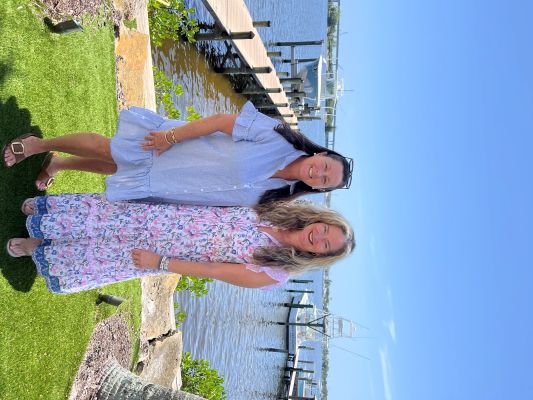 Co-chairs Jennifer Campbell &Monica Tillett–Olsen
Guests will be swept away by the thrill of the casino tables, savor a gourmet dinner, and dance the night away to the beats of DJ Brian Lemen. The festivities begin at 5:30pm with cocktails and hors d’oeuvres, then head to the Casino to roll the dice! Each guest will receive a $100 voucher for chips and additional vouchers can be purchased throughout the evening. Everyone will get a chance to win the incredible raffle baskets!
All proceeds from the evening directly benefit children living at Hibiscus Children’s Center—providing them with educational and literacy programs, medical and dental care, and critical mental health counseling. Your support ensures children can heal from trauma, access life-changing opportunities, and build a brighter future instead of becoming another statistic. Your generosity makes healing possible.

We are deeply grateful to our generous sponsors, whose support helps make this evening extraordinary. This unforgettable night is also made possible thanks to the dedication of Event Co-chairs Jennifer Campbell and Monica Tillett Olsen and a passionate committee of volunteers who are creating an evening of glitz and glamour that you won’t want to miss! We are grateful to all our supporters who make a difference in the lives of children and families.
Tickets are $250.00 per person and sponsorship packages are available with great recognition opportunities for your business. Contact us today for more information and to purchase your tickets at HibiscusChildrensCenter.org or Lori Swift at lswift@hcc4kids.org. Join us for the Roaring ’20s Casino Gala and help bring safety, hope, and healing to Hibiscus kids!


House of Hope and Old Havana Cafe Smash Record for World’s Longest Cuban Sandwich
STUART, Fla. – Martin County did it! In a tremendous demonstration of community spirit, hundreds of Martin County residents gathered on Saturday, September 12, and set a new world record for the longest Cuban sandwich at a whopping 400 feet.
House of Hope and Old Havana Cafe joined forces to pull off the logistics challenge in L. Cpl. Justin Wilson Memorial Park in Palm City. It required 400 feet of Cuban bread, meats, cheese, pickles and mustard and a finely organized plan for 20 teams to complete each 20-foot section at the same time.
 Robert Nicholas, trustee of presenting sponsor Doris M. Carter Family Foundation, helps build the sandwich alongside members of the House of Hope Board of Directors.
“What a day, truly, for community spirit,” said House of Hope CEO Rob Ranieri. “We had hundreds of people involved, from the sandwich builders, grill pressers, health and safety supervisors, sponsors and folks from all around the community who came out to support us.”
The event took place during Hunger Action Month. The challenge was fun, but it also called attention to the food insecurity that so many people are feeling in these difficult economic times. “We know there are individuals and families in our area who are never sure of where their next meal will come from or how they will afford groceries,” Ranieri said. “That’s a situation we address through House of Hope every day.”
 Martin County Commissioner Edward Ciampi, Judge Darren Steele, House of Hope CEO Rob Ranieri, and Chef Chuchi Rivero of Old Havana Cafe.
The judges at the event took careful measurement of the long stretch of sandwich and confirmed that the old record, set in Tampa at 365 feet, had been broken. “What I loved even more than breaking the record,” said Chuchi Rivero, owner of the Old Havana Cafe, “was the spirit everyone brought to event. This is how a community comes together!”
During the event, which was free and open to the public, attendees could enjoy dominoes, salsa dancing, kids’ activities like face painting, and community booths featuring fellow local nonprofits. Many attendees also participated in the “Buy One, Give One” option, directly providing a piece of the sandwich to someone in need. The sandwich helped feed local individuals and families through House of Hope pantries and partner soup kitchens.
At the end of the sandwich-building and official judging, all of the 20 teams shared in the sandwich, and extra sandwiches were made available to the public for purchase. Profits benefit the House of Hope mission to empower the community to overcome hunger and hardship.

The Doris M. Carter Family Foundation was the event’s Presenting Sponsor, with additional support from Martin County Commissioner Ed Ciampi. The Foundation pledged a dollar for dollar match for the first $15,000 raised.
Additional event sponsors included n2 architecture + design; Harrison Real Estate; Fred and Pat Bartlett; HBKS Wealth Advisors; House of Hope Board of Directors; The Firefly Group; Baird Private Wealth Management; Frazier Creek Brewing & Distilling Co.; Holy Redeemer Catholic Church; Julia Perry; The Dan Bongino Show; and Zoomin Grooming Mobile Pet Spa.
House of Hope also thanks the nonprofit community partners, including the Humane Society of the Treasure Coast, Palm City Chamber of Commerce, Children’s Services Council of Martin County, and The Children’s Museum of the Treasure Coast, who shared their missions, provided activities for children and families, and joined in celebrating a shared commitment to supporting Martin County residents.
Event vendors added to the day’s food and fun while generously donating a portion of their sales to House of Hope. Participating vendors included Designz by Friday Face Painting, Kona Ice, Beachside Lemonade and Breath of Cuba.
Special thanks also go to Brigite Babine of Babine Solutions for managing the event’s sound system and to Paige Meyer of CBS12 for serving as emcee and helping promote the event through television and social media.
“We met our goal to break the record,” Ranieri said. “More than that, we proved once again that Martin County cares deeply about its people and will take action to help those in need.”
To learn more about House of Hope or make a donation, visit www.hohmartin.org or call 772-286-4673.
About House of Hope
Founded in 1984, House of Hope is a 501(c)(3) nonprofit organization that empowers Martin County residents to overcome hunger and hardship. House of Hope touches the lives of more than 30,000 people each month, helping with basic needs such as food, clothing, furniture, financial assistance, as well as longer-term case management services that help build life skills for a more self-sufficient future.
The organization has service centers in Stuart, Hobe Sound, Indiantown, and Jensen Beach, with thrift stores in Stuart, Hobe Sound, and Indiantown. House of Hope’s Centers for Enrichment at Golden Gate in Stuart, in Jensen Beach, and at KinDoo Family Center in Indiantown offer free programs, technology, and workshops designed to enhance life skills, earning potential, health, and overall well-being.
House of Hope also operates the Growing Hope Farm in Palm City and several nutrition gardens that provide sustainable sources of fresh produce for clients as well as nutrition education and vocational opportunities to the community. For more information, visit hohmartin.org or call 772-286-4673. Updates and announcements can also be found on Facebook, Instagram, and X.


A Toast to Tails: Whiskers for Whiskey Benefits Treasure Coast Shelter Animals
STUART, Fla. — The Humane Society of the Treasure Coast’s Whiskers for Whiskey Tasting event is returning on Wednesday, Sept. 30, at 6 p.m. at The Chef's Table, 2313 SE Ocean Blvd.
 Cindy & Ken Weiss
Presented by Water Pointe Realty Group, the Whiskers for Whiskey Tasting features exclusive, top-shelf whiskey with a four-course food pairing. A Chicken Cock Whiskey representative will take guests on a guided experience through an aromatic and flavorful tour designed to unlock their senses.
John & Dianne Bingham
While savoring every sip, guests will also enjoy chef-prepared cuisine to accompany and complement each pour.
The cost is $165 per person and all proceeds benefit the shelter animals. This is an exclusive event with limited seating. Tickets may be purchased online at https://hstc1.org/post/Whiskers-for-Whiskey. The deadline to buy tickets is September 17.
 Brian & Trina Bingham
“The food pairing, plus specialty cocktail, is bound to leave a lasting impression on all who attend!” said Community Events Manager Alyssa Bean, who is organizing the event for the Humane Society.
Raffle tickets also will be on sale for a chance to win dinner for two at The Chef's Table, including a bottle of whiskey. Raffle tickets cost $20 each and will only be made available to those in attendance. No more than 100 will be sold.
Additional sponsors are The Chef’s Table, Libations Mobile Catering Co., Honu Compliance Solutions and Stuart Magazine.
For more information, email Alyssa Bean at abean@hstc1.org.
 James & Irma Fahy Myrna Widmer
About the Humane Society of the Treasure Coast — The Humane Society of the Treasure Coast is a no-kill animal welfare organization located at 4100 SW Leighton Farm Ave. in Palm City, Florida. Since 1955, it has been the leading advocate for animal protection and well-being in the Martin County area. A 501(c)(3) private nonprofit organization, HSTC is independent and locally operated and relies on donations to support its programs and services. Follow HSTC on Facebook at https://www.facebook.com/humanesocietyTC and X at https://x.com/hstc1. For more information, visit https://www.hstc1.org or call 772-223-8822



The joy of singing in 2026-2027 continues with the 24th season of the Treasure Coast Community Singers. Founded by Dr. Doug Jewett in 2003 with the mission of “Keeping People Singing,” this non-profit organization has grown and become one of the Treasure Coast’s largest musical groups. With three adult choruses (the Community Chorus, the Chamber Singers, and the Ensemble), and two children’s choruses (the Youth Choir, grades K-5, and the Middle/High School Chorus, grades 6-10), this year will bring eight concerts with varying styles of music to Treasure Coast audiences.
Kicking off the year will be the Community Chorus’s “Ol’ Time Religion” concert, which will be a celebration of faith and hope. It will include favorite hymns such as “Amazing Grace,” “Down by the Riverside,” “How Great Thou Art,” and “Oh, Happy Day.” These concerts will be performed on October 10, 2026, at Trinity United Methodist Church, 2221 NE Savannah Rd., Jensen Beach, and on October 11, 2026, at First Baptist Church, 201 SW Ocean Blvd., Stuart. All concerts begin at 3:00 p.m. Tickets can be accessed through the TCCS website, www.tccsingers.org.

The 2026-2027 season continues in November with the Chamber Singers’ performance of Luigi Cherubini’s “Requiem in C Minor,” a classical work in Latin with orchestra accompaniment. December brings the Community Chorus concert, “Season of Joy,” and both youth choirs singing in “Here Come the Holidays.” In the new year “Melodies of Spring” by the Community Chorus (March 13-14), Hagenberg’s “Illuminare” by the Chamber Singers (April 17-18), and “A Celebration of Singer-Songwriters” by the Community Chorus (May 15-16). The youth choruses will also perform a concert in May.
The Treasure Coast Community Singers organization also mentors musically talented students through a stipend program which offers high school juniors and seniors the opportunity to rehearse and perform in concerts with the group throughout the year. In addition, scholarships are awarded to graduating seniors interested in pursuing a career in music. Over the past twenty years more than $50,000 has been awarded to Treasure Coast students.
Mark your calendars now for this season’s selection of concerts and join with audiences who, over the past 23 years, have loved the music of the Treasure Coast Community Singers. The TCCS website gives all the details you need, www.tccsingers.org.

Be Part of Their Story
We invite you to be part of this meaningful celebration of creativity, possibility, and community.
This year, participants of Helping People Succeed are working side by side with local artists to create original works inspired by what Helping People Succeed means to them.
Consider becoming a sponsor or joining us for the 12th Annual Pinot & Picasso on November 21st to experience these original works of art and the stories behind them. Every sponsorship, every auction bid, and every act of generosity helps create opportunities for individuals of all ages and abilities to grow, connect, and thrive, while strengthening the families who walk alongside them.
Interested in becoming a sponsor? Email Cheree Ramirez at cramirez@hpsfl.org to request our sponsorship packet.
Ready to join us? Purchase your tickets and learn more about Pinot & Picasso at hpsfl.org/pinot-picasso/.
Come see what is possible when we give people the opportunity to express their story, their way.

iTHINK COMMUNITY FOUNDATION HELPS 640 TREASURE COAST CHILDREN GET SCHOOL READY
School Ready Days initiative and community partnerships provided backpacks, school supplies, and back-to-school support to children throughout the region
Vero Beach, FL (September 8, 2026) – The iTHINK Community Foundation helped 640 children across the Treasure Coast prepare for the new school year through its annual School Ready Days initiative and partnerships with local community organizations.
Throughout July and August, iTHINK Financial team members and community partners distributed backpacks filled with essential school supplies at events throughout the Treasure Coast, including ALPI Queen Townsend and ALPI Child Development in Fort Pierce; EOC Head Start St. Helens and EOC Head Start Schools in Vero Beach; the Gifford Aquatic Center in Gifford; the City of Fellsmere; and LAHIA in Stuart. Together, the events helped local children begin the new school year prepared, supported, and ready to learn.

“Starting a new school year with the right supplies and clothing can make a tremendous difference in a child’s confidence and ability to succeed,” said Stephen Johnson, AVP of Administration and Marketing at iTHINK Financial. “Every child deserves to walk into the classroom feeling prepared, supported, and excited to learn. We are deeply grateful to our members, sponsors, and employees whose generosity makes this initiative possible.”
The Treasure Coast distributions were part of a broader series of School Ready Days held across Florida and Georgia. Through the annual initiative, the iTHINK Community Foundation provided back-to-school support to more than 1,500 children in need.
School Ready Days advances the iTHINK Community Foundation’s mission to improve the lives of children and families in the communities served by iTHINK Financial. The Foundation set a $10,000 fundraising goal to help cover the cost of backpacks, school supplies and other back-to-school essentials.

iTHINK Financial is dedicated to investing in the future of children. School Ready Days is one of several iTHINK Community Foundation programs supporting children and families throughout Florida and Georgia.
To learn more about the iTHINK Community Foundation, its programs and ways to get involved, or to find an iTHINK Financial branch, visit ithinkfi.org
About iTHINK Financial:
iTHINK Financial, established in 1969, is a growing and dynamic credit union with more than 118,000 Members worldwide and over $2.3 billion in assets. As a not-for-profit financial institution owned by its Members, iTHINK Financial offers a full range of personal and business financial services, including deposit accounts, loans, mortgages, credit cards, and business banking solutions.
The iTHINK Community Foundation Inc. is a 501(c)(3) nonprofit organization registered in the state of Florida, Registration #CH47200.
A COPY OF THE OFFICIAL REGISTRATION AND FINANCIAL INFORMATION MAY BE OBTAINED FROM THE DIVISION OF CONSUMER SERVICES BY CALLING TOLL-FREE (800-435-7352) WITHIN THE STATE. REGISTRATION DOES NOT IMPLY ENDORSEMENT, APPROVAL, OR RECOMMENDATION BY THE STATE.
Palm Beach and Martin Counties Both Proclaim September as Big Brothers Big Sisters Month, Honoring 40 Years of Mentorship
Both county commissions recognize Big Brothers Big Sisters of Palm Beach and Martin Counties for four decades of one-to-one youth mentoring
PALM BEACH AND MARTIN COUNTIES, Fla. — Big Brothers Big Sisters of Palm Beach and Martin Counties (BBBSPBMC) has received back-to-back honors this month, as both the Palm Beach County and Martin County Boards of County Commissioners formally proclaimed September 2026 as “Big Brothers Big Sisters Month,” recognizing the organization's 40th anniversary of one-to-one youth mentoring across the region.
Palm Beach County Board of County Commissioners
At its Regular Board Meeting on Tuesday, September 1, the Palm Beach County Board of County Commissioners honored BBBSPBMC with an official proclamation in recognition of the organization's 40th anniversary of serving local youth through one-to-one mentoring. The proclamation was presented to BBBSPBMC President and CEO Yvette Flores-Acevedo and Board Members, and formally designates September as “Big Brothers Big Sisters Month” in Palm Beach County, encouraging all residents to recognize the importance of mentoring and get involved in supporting efforts that help young people achieve their fullest potential.
It cites the organization's 40 years of creating and supporting one-to-one mentoring relationships that “ignite the power and promise of youth,” and notes that, through the commitment of volunteer mentors, families, and community partners, BBBSPBMC has fostered confidence, improved school performance, and promoted lifelong success for young people across the county.
“As we celebrate this milestone, we are proud to have been part of the stories of more than 40,000 Bigs, Littles, alumni, board members, and families across Palm Beach and Martin counties over the years,” said Flores-Acevedo. “I would also like to recognize our board members for their commitment to helping us grow and expand our impact. We look forward to serving our community for many years to come.”
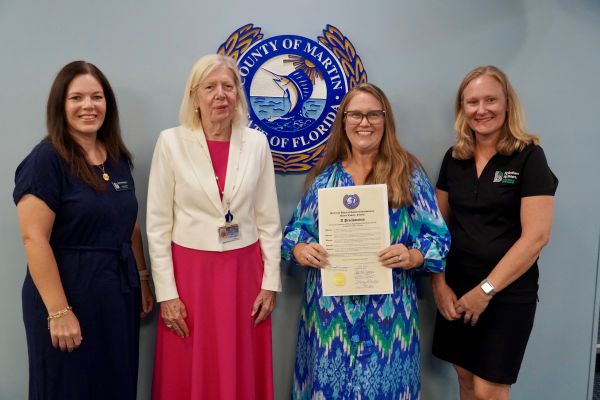
The proclamation also recognizes the long-term economic impact of mentoring, noting that Big Brothers Big Sisters relationships enhance earning potential, increase financial independence, and help close two-thirds of the socio-economic gap for the young people served.
Kristy Shore, Advisory Chair for BBBSPBMC, initiated the recognition on behalf of the organization.
“This year, our organization is proud to celebrate 40 years of creating and supporting one-to-one mentoring relationships that empower the youth of our community,” said Shore. “Through the support of dedicated mentors, families, and community partners, we have continued to provide meaningful connections that inspire confidence, strengthen academic outcomes, and promote long-term success for young people throughout Palm Beach County.”
Shore was joined at the meeting by fellow BBBSPBMC Board members Stacey Russell, Dr. Mary White, Kimmi Denesha, Sylvia Huff, PhD, MBA, Andrew Leace, Jeff Lichtenstein, and George Chandler, who attended in support of the organization and its milestone recognition.
Martin County Board of County Commissioners
In a companion proclamation, the Martin County Board of County Commissioners also officially proclaimed September 2026 as Big Brothers Big Sisters Month. Vice President of Programs Katie Knapfel represented BBBSPBMC and accepted the proclamation before the Martin County Board, recognizing the transformative power of mentorship and its profound impact on the lives of local young people.
The Martin County proclamation likewise highlights the organization's 40 years of service and its commitment to creating and supporting one-to-one mentoring relationships that ignite the power and promise of youth. Through the dedication of volunteer mentors, families, staff, and community partners, Big Brothers Big Sisters has helped countless young people build confidence, improve academic outcomes, and develop the skills needed for lifelong success.
The Martin County Board also recognized the lasting economic impact of mentoring: research continues to show that mentorship can enhance earning potential, increase financial independence, and help close socioeconomic opportunity gaps, creating benefits that extend far beyond childhood.
A Shared Milestone
Together, the two proclamations underscore a simple truth: positive, supportive relationships can change the trajectory of a young person's life. Every mentor who shows up, listens, encourages, and believes in a child helps create stronger futures and a stronger community.
This dual recognition is especially meaningful as BBBSPBMC celebrates its 40th anniversary this year — a milestone that reflects four decades of empowering youth and building brighter futures throughout the region. The organization extends its sincere gratitude to both the Palm Beach County and Martin County Boards of County Commissioners for this honor and for recognizing the critical role mentoring plays in helping young people reach their full potential.
Throughout September, BBBSPBMC will mark Big Brothers Big Sisters Month with community outreach, volunteer recruitment, and events aimed at growing its roster of adult mentors and connecting more children on the organization's waitlist with a Big. Community members interested in becoming a mentor, or in supporting BBBSPBMC's mission as a sponsor, can learn more at mentorbig.org.
###
About Big Brothers Big Sisters of Palm Beach and Martin Counties
For 40 years, Big Brothers Big Sisters of Palm Beach and Martin Counties has provided children facing adversity with strong and enduring, professionally supported one-to-one relationships that change their lives for the better, forever. Through community-, site-, and school-based mentoring programs, BBBSPBMC matches youth ages 6 to 18 with volunteer mentors who help them reach their full potential. Learn more at mentorbig.org.

The Business Development Board has announced the resignation of Executive Director William T. Corbin effective immediately. He has left to pursue other opportunities. He thanked the board for allowing him to add and promote several new initiatives.
Corbin was appointed as Executive Director in September 2024 succeeding Joan Goodrich. Under his leadership, the BDB focused on industrial expansion, business retention, and workforce development. He expanded the “Pulse Program” by initiating in person appointments with local employers to see and troubleshoot any obstacles the business might be having.
Corbin streamlined much of what the board did in his brief tenure. He believed one of the county’s key industries was aeronautics. For the first time ever, Martin County had a representative at the Paris Air Show last year whose attendance was funded by sponsorships.
No interim director was announced at the board’s executive committee meeting that accepted Corbin’s resignation. An announcement will be forthcoming at the next meeting.
There were some people at the 5:05 budget meeting but the chamber was far from filled.
Most spoke about the need to not cut 4-H. The children were dragged out, and even though no one had suggested such cuts, it didn’t hurt to have them there. At some point, beginning in about a year they will lose their home at the current fairgrounds. The developer of the Ranches has offered to build space for them in that development but that is still several years away. That battle is for another day.
A few speakers stated how much the budget has grown over the past few years, much more so than the population. They are right. Both the Fire/Rescue Budget and the Sheriff’s Department are unsustainable. They consume 66% of the total. Yet at the same time while our population increased by about 6% over five years, the number of visitors and guests going through the county has increased exponentially.

Insurance and fuel costs have also increased much more than the rate of inflation. You cannot give the same levels of service year after year and then cut taxes. That is an impossibility.
Saying “let’s go to the Rollback Rate” is not feasible unless you cut expenses. That tax rate states that you will collect the same amount as the year before. If that is done, then you need to make cuts equal to roughly 5% because of increased costs to provide the same level of service. I heard no one during commissioner comments or public comments make any concrete suggestions.
Commissioner Vargas  keeps wanting to “tighten the belt” but gives no suggestions how the belt should be tightened. A good start would be to postpone the Jensen Beach café. I didn’t hear that from her.
I also heard from the audience the same empty talk about cutting the budget, yet no one could say where. Somone said that the commissioners must decide where to cut the budget. They did already…. which was the budget presented last evening.
In order to pass the budget without going to rollback, you needed 4 out of the 5 commissioners to vote in favor. That is the law. I imagine next year if Amendment 3 passes, there will have to be $42 million cut. Even if Amendment 3 doesn’t pass, there won’t be 4 votes not to go to rollback with Vargas and Collins.
Most of the tax rates and budget passed on 4-1 votes (the bare necessity of votes needed) Vargas voted no most of the time. Next year it will only be worse. You can see the rates and final budget numbers here
The Hobe Sound Business Park LLC requested that their 108 acres which are currently A-1 “Small Farms” (about 3 acres) and the rest is M-1 “Industrial” be rezoned to GI (General Industrial). Currently both are “C” Districts. “C” Districts predate the 1981 adoption of the Comprehensive Plan. They are antiquated and obtuse zoning classifications in what would be allowed and do not conform to the FLU (Future Land Use).
When the applicant came before the LPA (I am a member), they requested a GI District zoning. After hearing staff, the public, an intervenor, and the property owner, the LPA recommended Limited Industrial (LI) zoning in a 3-1 vote. That seemed to make the intervenor and public happy. And the applicant didn’t seem disappointed.
There is very little difference in what uses are permitted between GI and LI. Unless the applicant was going to place a biofuel facility or an airport, the two zoning districts use categories are very similar. The applicant said two things during their presentation to the commission. One was that they would have no problem with the LI zoning. The neighbors were all happy as was the intervenor. The other thing the applicant said was the land had been designated industrial for 60 years, so they were not asking the commission to change from agricultural to industrial.
That is when politicians exhibited what pandering is all about. Blake Capps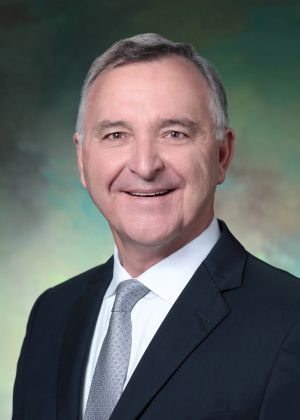 stated he wanted it to retain the old zoning of M-1 and he introduced a motion for that. Then he explained that in both GI and LI, data processing services could be built according to the use table. Capps went on to say that even though this applicant wouldn’t put a data center there, maybe they would sell to someone that would.
Not to be outdone, Sarah Heard passed the gavel and seconded the motion. Eileen Vargas showed common sense by introducing a substitute motion to accept the LI zoning.
It seems that “DCDS” or Data Center Derangement Syndrome has invaded at least two commissioners in the county. Capps and Heard are willing to leave an old zoning district alone that is not in line with our Comp Plan and also allows for other “C” uses under a 60 year no longer used code such as B-1 and B-2 which could introduce other types of businesses such as restaurants with drive throughs.
Heard was just re-elected and Capps has two years before he stands before the voters. Ciampi said it best when he said, “I thought this would be easy when the applicant, neighbors and the LPA all come up with the same solution.” Yet leave it to the politicians to make something from nothing.
The motion by Capps failed 2-3 with Hetherington, Ciampi, and Vargas dissenting. Hetherington seconded Vargas’ motion for the LI district, and it passed 3-2 with Capps and Heard dissenting.
During campaign season in Stuart, there was a flurry of accusations that Sailfish Ball Park would be sold to developers.
There had been no inquiries by developers. Nothing was in the offing but sitting commissioners and those who wanted those seats up for election fanned the flames of stupidity. One, Will Laughlin, confused and conflated what SB 180 and 102 were. He claimed someone would just build on the fields if they wanted. He was wrong and it showed why he didn’t deserve to be elected.
That didn’t let off those who were eventually elected, Rich, Clarke, and Matheson, as well as Giobbi and Reed who were not up for election, from their pandering. They were responding to a Facebook story that had been posted and not any real threat. It was a profile in cowardice by all. So, to soothe the angry masses that were nonexistent and voters that couldn’t care in the least, they decided to have a referendum on whether, even in the distant future, these properties can be sold without voters’ consent.
At the same time, the same spineless group of “leaders” decided to also have a referendum on whether 2 acres on Federal Highway north of the Roosevelt Bridge should be incorporated into the Haney Creek Preserve.
 About 15 years ago those same two acres were carved out of the preserve to use for a long-term lease to a business that would provide income for the maintenance of the rest of Haney Creek. It was done by referendum. Now because of the whim that began with Boss Collins when he was still on the commission looking to shine up his non-existent environmental credability, it is once again going to referendum to try and achieve a different result from what the voters had earlier chosen.
Politicians would do anything not to make decisions. They like the perks of being elected officials, but they hate the hard work and criticism, most of the time unfairly, that comes with the job. This results in a pass the buck philosophy that is rampant today not only in Stuart but everywhere.
It sounds good to say, “let the people decide.” What that really means is “let us off the hook.” Each commissioner makes nearly $30k a year including benefits for this less than part-time gig. If commissioners never had to decide anything, they would be happy. What they fail to realize is that we are a representative democracy. Elected leaders decide and the voters decide on their leaders.
Don’t let them off the hook in one case and avoid a decision that has already been made by the voters in the other. Vote No on these two referenda.
The chaos that was just put to rest in the City of Stuart is now resulting in hopefulness.
Mike Mortell will return on September 14th for his second time as city manager. Let me give you the entire truth…he was not a perfect manager. Mortell allowed both commissioners and his staff to act in ways that were not totally appropriate. In this next iteration, he should largely follow that format of the manager/council form of government that the city has in its charter.
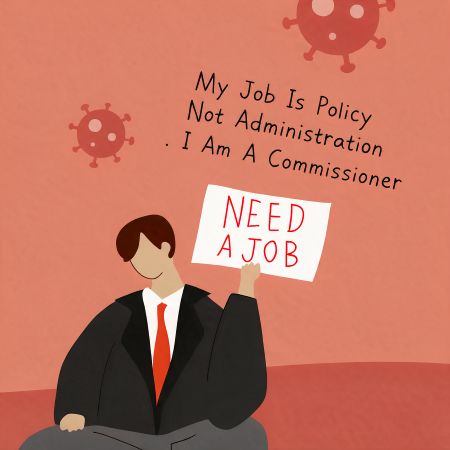 The commission is a policy making body and approves the budget and level of taxation. In every other way, they are ceremonial. In some cities, a commissioner cannot even speak to a staff member without the manager’s permission. It’s worked differently here, allowing commissioners to ask questions of department heads but not instructing them on what should be done.
For the most part, it has worked until the last majority under Collins began thinking they ran the city and Mortell did not step in to stop it until it was too late. That is ultimately why he was fired. This time with the new majority for at least the next four years, the manager should have the ability to actually be the manager.
But being the manager means not allowing staff to go in a different direction than what the manager wants. Mortell needs to enforce more discipline than the last time. Much more.
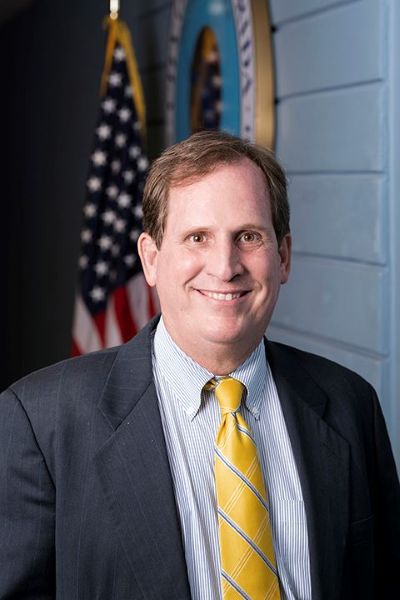 Perhaps Mike Mortell learned that it isn’t so hard getting another job. He seemed to have landed on his feet as the administrator of the 19th Judicial Circuit…not an insignificant job. That should give him the confidence to know if he can’t be the manager, then perhaps the job isn’t worth it.
Who Collins and his Politburo hired as the Stuart manager was more concerned with taking PTO than running the city. One thing you learn as an executive is you answer your cell phone even when on vacation. I was told the last manager didn’t do so. Maybe that can work in the navy but not in local government.
But I think the telling feature of Michael Giardino’s tenure was what happened at the finance department. He was not responsible for the mass exodus from the department. They left when Collins fired Louis Boglioli, the interim city manager and permanent finance director. He wouldn’t play ball with the Collins Fire Rescue hiring spree. Once he was let go, then most of those under him left.
Then came the next interim manager, the Human Resource Director, who couldn’t do anything but the Collins and his Politburo’s bidding. She ignored the minority and the city under her watch shrank into the morass. As the HR Director, she should have known better. Perhaps she should be on the endangered list in the city.
 Next came the surprise pick of Michael Giardino by Collins. What??? Why??? No experience, nothing. A cypher. Somehow, there was something that Collins saw. Maybe it was his utter lack of a spine. When Collins pulled the chain, Giardino did what he was told.
But during his brief tenure as city manager, Giardino told the story of how he had always wanted to be a manager. Then why didn’t he become one until he was 63 years old?
According to the resume he submitted to the city when he was looking for the job, he spent less than a year as manager and treasurer in Brockport, NY, before moving on to being the Director of Monroe County Airport. His civilian work was as an airport manager. Why didn’t he stay in Brockport government or get a job at other municipalities?
But with the help of Collins, he landed in Stuart 15 years later to fulfill his dream. His lack of experience was obvious from the first day. I asked community leaders if they had ever met him. Almost unanimously they said no, and those who had said yes, it was no more than an introduction.
 Giardino left the state of Stuart’s finances in such severe distress that it is a good question whether or not the city is charging the correct millage rate. There are other state requirements that he failed to follow which could result in the city losing state funds for the coming year. Any employee in the city that is laid off can blame Giardino for the pink slip but ultimately can blame Collins and Reed.
Commissioner Rich laid out the case for Giardino being fired for cause at the last meeting. The original motion didn’t give a cause but that should be revisited. Remember he received or will receive severance of about $100,000 for a couple of months’ work while some employees will receive very little when they lose their paycheck to make up for it. He doesn’t deserve a dime.
You can read Rich’s comments here
Reed’s idea of not taking a salary for two years has merit. He believes that the commissioners should pay for the severance that was given to fired managers. Couldn’t agree more.
I would go further and state that no local elected official receives any salary or benefits for doing community service. The position of commissioner, even at the county, was never meant to be a full-time job. Commissioners are there to approve budgets and set policy…not become one more person at the government trough.
Before 1961 and Tallahassee becoming involved, county commissioners were paid a per diem at most for meetings. Prior to 1973 many charters prohibited compensation to local municipality elected officials. Stuart offered a small stipend beginning in 1925.
As recently as 2017, Stuart paid commissioners $11,650. Then in a vote of 4-1 by the commission (I voted no), the salary was increased to $18,000 in the 2017/2018 budget, a 55% increase. Today the salary has continued to increase so that presently it is $20,631 plus medical, retirement, and life insurance.
When the commission received a 55% increase in 2017, I donated $1500 to a local nonprofit every month. No commissioner has done anything like that since. Mr. Reed, there is an idea for you.
I doubt whether your fellow commissioners will go along with your idea. It would give you an opportunity to shine. I understand and you have told us that you are a successful operator of day care centers and therefore shouldn’t need the money. Just look at the publicity that would engender. A photo with a big check to a local charity every month.
Reed and I finally found something we can agree on…compensation. But why stop at two years? Government service should not be another part-time gig. It should be done for a couple of years and then step down. The intention is that elected officials should be there for the good of the community not their egos and pocketbooks.
The August election is behind us, but there are still local issues that will be on the November ballot.
There are two school board races to be decided in this election. The first is a runoff between the incumbent, Chrystia Li Roberts, and Cherie White, who is new to running for elective office. Both have been involved in Martin County for years.
Roberts has been a steady and knowledgeable presence on the school board for a long time. If re-elected, Roberts will be prohibited from running next time because of term limits. Roberts studies every document before her and understands them. She is not shy about pointing out inconsistencies or errors made by staff or anyone else.
White has held many local government jobs. She is very competent when it comes to following procedures and instructions. I do believe she will diligently read her agenda packet and be prepared.
However, Roberts is the stronger candidate. The Martin County School Board can benefit greatly with her staying on for another term. White should try again in 4 years. Roberts has my vote.
The other school board race is between incumbent Amy Pritchett and former board member, Anthony Anderson. Pritchett rose to fame defeating Anderson four years ago as the local leader of “Moms For Liberty.” She had a point of view that was on the ascendency then.
While every sitting member is trying to take credit for Martin County becoming an “A” rated district, I would say no member was responsible as much as Superintendent Maine and his team. Pritchett was a junior supporting player in spite of the campaign hype.
I thought Anderson was too much a teachers’ representative in his prior school board term and not enough of a citizens’ representative. Then when he lost to Pritchett, his swan song was a sore loser’s tirade for an hour at a school board meeting. It was quite unbecoming.
That was the last election.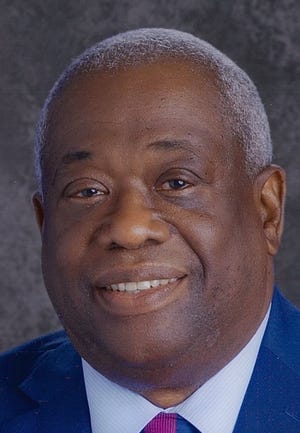
Pritchett has an unseemly habit of appearing at other government meetings to speak about things that are before those boards and have nothing to do with her job. You do not see other school board members or elected officials speaking at other local government meetings. If she wants to be a gadfly, then being in elected office is not the place.
Anderson is an accomplished educator and understands what needs to happen in the classroom. I believe he has learned that his job is to be an advocate for the citizens, children, and taxpayers and not for any one group such as teachers. My vote will be for Anderson.
Putting police officers in schools may keep some students safe. But anytime law enforcement interacts with teenagers, there is the possibility that a minor disciplinary problem becomes a criminal matter.
Interestingly those states with the laxest gun laws are the ones where armed officers are the most prevalent. Florida and Texas lead the pack with Tennessee and Utah following closely behind.
Besides the billions of dollars that school districts are forced to spend on protecting schools and students, what are the overall psychological costs to our kids being in such a setting? Where is the line between school discipline for kids and their behavior becoming a law enforcement matter?
While not every school yard fight ends in an arrest, if an officer is present when one breaks out, it becomes the officer’s discretion to elevate it to a student being charge or not. Many teenagers have poor impulse control…should an arrest follow them for the rest of their lives for a school yard scuffle? And remember the entire reason for law enforcement’s presence is to supposedly keep teachers and students safe. They are not there to be guards and disciplinarians.
We have once again made a problem worse by not addressing the root cause… the proliferation of guns. Florida allows 18-year-olds to own firearms. Pistols, shotguns, rifles, it doesn’t matter. No cigarettes or alcohol can be consumed by a 19-year-old but owning a gun is no problem.
Only Texas has more firearms in circulation than Florida. Which gets us back to my original premise that the billions of dollars being spent on school security is a direct result of not attacking the root cause of the problem.  And it isn’t the good guy with a gun protecting us from the bad guy with the gun. It is the gun itself.
I am not advocating for abolishment of guns. Owning and carrying one is a serious responsibility that demands forethought, training, and a resolve that is absent in many instances. My children were shooting both handguns and rifles from early ages but always under adult supervision. They were thoroughly trained in gun safety. How many adults received anywhere near the training my kids did?
The only answer can’t be to continue arming more and more people, especially to be stationed in schools. It appears police officers and SROs will continue to be deployed at least in Florida. It now costs taxpayers hundreds of millions of dollars and employs thousands. It has become its own industry and job creator.

How much is too much to be able to have the freedom for almost anyone to carry a gun?
There is a case making its way through the Nebraska courts that claims public schools are unconstitutional.
It stems from the fact that the state only provides an educational subsidy to public education and not private schools. Two families are being represented by the New Civil Liberties Alliance that contends that compulsory education and public-school only funding are unconstitutional. The plaintiff’s position is that the system is unconstitutional because families are forced to have their kids adopt the views of the public schools over those of the parents who are the ones who should determine what is best for their children.
 Their complaint rests on three theories. First, education is inherently speech, and parents hold the primary right to speak for their children or decide who speaks for them. To them, an education mandate is criminal, if providing funding only to government schools. That directly abridges free-speech rights under the First Amendment. Second, the same facts hold under the Nebraska Constitution. Third, the present arrangement creates an unconstitutional condition using a valuable public benefit on a surrender of a constitutional right.
According to them the state has no compelling interest in government-run education specifically, as opposed to education generally. It could still fund universal education by using tax dollars to follow the child instead of the use of those funds only in public schools.
That sort of turns hundreds of years of public education doctrine on its head. There is an out for a parent home schooling their child. But what happens if a parent states that their child should have no education at all? In their view, education will only make the child less compliant and obedient to the will of the parents. That isn’t addressed in the complaint.
It is too late now to stop the distribution of funds to private, religious, or home schooling along with traditional public schools. There is a societal need to have an educated population. The state should concentrate on universal standards that schools and children must meet.

The days of their being only a government-run school system with state supported taxes are over. States now need to license and treat all schools equally regardless of what they are called. 80% of all children attend traditional public schools with 7% in public charters. Another 10% attend private schools.
The state should see itself as the one that sets standards for all education. Every child needs to meet the standard. State money needs to be spent on the child and not the type of school a child attends.
When reading the manager’s evaluations from the commissioners, it is as if there were two different people being evaluated.
 Is Daniels a good manager? It depends on which commissioner you ask. Mayfield, Kurzman, and Fender believe he is. Is he perfect in their minds. The answer would be no. However, they see the limitations under which he works (e.g., the number of staff at the town and whether someone else would frankly work and wear all the hats that Daniels does in a week) as the reason to evaluate Daniels as they did.
Mayor Barile seems to be saying that he is not onsite enough to really know. That is a fair answer when evaluating someone in the course of his duties regarding personnel or office demeanor.
Frank Tidikis does not seem pleased at all with much of Daniels’ performance. Frank has a point for some of the identified issues like his mailbox being full and his slowness in answering residents’ questions as quickly as he should. However much of that is due to his not having enough personnel to even accomplish basic stuff.
What Daniels does is prioritize well. He makes sure the grant work is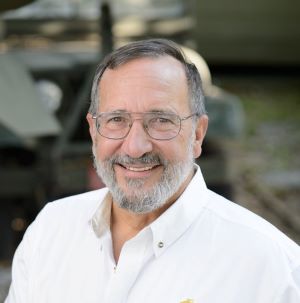 accomplished and done on time instead of whether two sections of code are in conflict. He has no assistant to take messages and empty his voicemail.
The entire town is run by very few people. I am not sure if many managers would stick around. I am kind of surprised that Maria Pierce, who is the Municipal Clerk, Finance Director, and HR specialist is still there. Many years ago, someone described Sewall’s Point as a homeowner’s association with a police force, and they weren’t totally wrong.
If Amendment 3 passes Sewall’s Point will be down $300,000 in the first year and $300,000 more the second with additional cuts to come. That is about 20% of the current ad valorem. There is very little commercial space to help make up the revenue. About 85% of the residents are homesteaded.
Mr. Tidikis believes that much can be contracted out…like the building department functions can be contracted to the county. If Amendment 3 passes, the county will be scrounging also. But that is yet to be seen. At some point, without providing services, the town does become an HOA with a police department. Perhaps that is all that is needed.
You can see the evaluations here
One of the hardest concepts in real estate taxation is understanding what a mill is.
A mill is one tenth of one percent. It is expressed as .001 or .1%. In Florida for every $1000 of taxable value, you will be charged in real estate taxes $1. It isn’t as if the concept is hard to understand but applying it in a formula is what trips up most folks.
In Sewall’s Point the median home’s taxable value is $1,200,000. The current tax rate is .327 mills which for mathematical purposes is .00327. The amount of tax the median home generates for Sewall’s Point is $3,662.40. ($1,200,000 *.00327).
Commissioner Tidikis did a thorough analysis of the budget. According to his reckoning, the budget will have $400,000 more in collections than it needs. Therefore, he proposed that $200,000 be reduced from the taxes collected. That would mean the millage rate would be reduced by .00017.
However, when Tidikis was explaining his reduction, he kept saying .017. I knew that was wrong because it did not give his desired results. After speaking with the finance director, we concluded that if he wanted to get to the desired number, he meant to say a reduction of .00017.
That would be a millage rate of 3.1 mills. The median home then would pay $3472 or $190 less per year. The other commissioners didn’t believe that was enough of an individual savings to warrant the reserves having $200,000 less.
The vote to keep the millage at 3.27 was 4-1 with Tidikis dissenting.
It is a shame that Frank Tidikis and the other commissioners can’t seem to “sync.”
Tidikis would be a valuable member of the body if he could find a way to make his views known without what the rest consider a great deal of animosity. They feel he has a continuous battle with Daniels and staff. He has at times shown that he can be an asset in his delving deeply into how the town operates. Unfortunately, his delivery of the information has been antagonistic and not helpful.
Daniels has been instrumental in garnering $27 million in grants for town projects. Along with his team, they have done so without having the town spend their own tax dollars to achieve the necessary road and stormwater work. Yet at the September 17th meeting, Tidikis was nitpicking what he considered inaccuracies on four grants for $17.5 million in total.
 Grant applications sometimes have very short windows between announcement and their closure. They also must conform to certain formats that change from grant to grant and agency to agency. An application is not the final contractual document because if the town is rewarded with one, there will be much more detailed paperwork to follow. In other words, the filing is tailored to what the particular agency wants, and sometimes when speaking to the agency, they even indicate what the town needs to write on the application.
Even if Sewall’s Point receives a grant, the town commission must approve of accepting the money. So far, any grant received and accepted has gone through the required grant administration process. There are no inaccuracies in the final product including any paperwork.
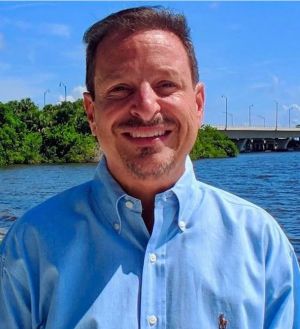 Both Kurzman and Fender are especially put off by what Kurzman calls the knocking of staff on the dais instead of behind closed doors. Mayfield uses the term micromanaging. Even Barile seldom supports Tidikis and Vinny has years of experience in how the town has been and is currently managed.
Both Barile and Kurzman are up for election this November. John Tompeck, a former commissioner, has also decided to run. There are two seats available. Friends & Neighbors has not taken a position since we believe all three have made good commissioners for Sewall’s Point in the past and will continue to do so if elected in the future.
Without doubt, to be an effective commissioner, Tidikis must work with whoever else sits on the dais. So far in his term, he has either been inclined not to do so or by his nature cannot. It is too bad since he has much to offer.
It is interesting to note that if the empty parcel now known as Seawalk had stayed in unincorporated Martin County, it would never have been built as a 143-unit single family development.
The severe roadblocks that are inherent in the Martin County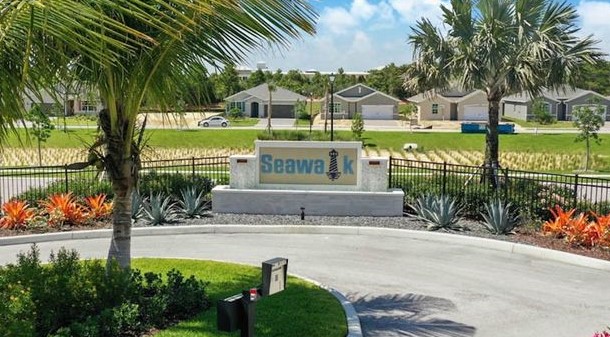 Comprehensive Plan never would have allowed the lot sizes that made the development possible for D.R. Horton. The 143 units would have been only 92 homes maximum. That doesn’t take into consideration the other preservation rules that exist in the county. That may have even lessened that total.
Under Martin County regulations, the development would never have been built, or because there were so many fewer homes that were built they would have had to be sold for $250,000 to $400,000 more for Horton to have made enough of a profit. Many of the current residents would have been priced out of the market.
But this is business and there is no sentiment in real estate either by developers or homeowners.
At the meeting on September 14th there wasn’t a quorum so no votes could be taken. It was decided that the town would send a letter to the Seawalk homeowners’ association to conduct a survey to see how many voters want to de-annex. If enough decide in the affirmative, then the vote will be held and Seawalk will become part of unincorporated Martin County after talking with the county to iron out details.
I don’t blame Seawalk residents for thinking of their pocketbooks first. The annexation was done because the town hoped to expand and really have a purpose. All the development did was give a lot of work to a lot of attorneys and consultants.
 The Seawalk HOA, if it had been in unincorporated Martin County, would never have had any of the help it received from the town to make things right regarding the construction issues. Martin County would have taken the position that the builder was well within his rights to hire private contractors to conduct inspections. It would have been up to the homeowners to sort this out.
Once unincorporated, the added police patrols that the town pays for will go away. If they want more than everyone else in the county, the HOA will have to hire private security.
But there is also no particular benefit from being in the town going forward either. That is the conundrum of Ocean Breeze.
Michael Giardino may not know a thing about managing Florida municipalities, but he sure knows how to play the severance racket also known as the “Manager Racket.”
 After being fired from Stuart after 4 months, he shows up at Indiantown the next week against the ethics code of the ICMA (International County/City Managers Association) which forbids a member from being present when another manager is being publicly terminated. He proclaimed that night he was ready and willing to become the interim manager after the real professional in the room, Taryn Kryzda, was canned.
Without missing a beat, he immediately gives his spiel of “Ah shucks” and takes over as interim.
That was last meeting. At this one, he was proud to accept Kryzda’ s contract including the clause about severance. Most people from the corporate world would know if you are an interim anything you don’t get full benefits, a contract, or severance. In Indiantown the “Manager Racket” is alive and well because you get all three.
Technically you are a fill-in until a permanent replacement is found. In Martin County, the interim guy who has been tapped to fill in where needed for years has been Dan Hudson. When someone is needed to step in, he is the person most called. And he does a very credible job of it.
Giardino used a very naïve council to play the racket against. His argument was that since he was assuming Kryzda’ s contract (another mystery since interims don’t usually have contracts), he was contractually required to give 60 days’ notice if he left and therefore deserved 20 weeks of severance if he were let go. WHAT????
Dowling at first stated he was opposed to any severance. It looked like he would stay firm but the other crack council negotiators except Mayor Brown agreed to give him 20 weeks if they had their way. Finally, Giardino, being magnanimous, decided that 8 weeks would suffice but he would only have to give 30 days’ notice if he decided to leave. Everyone thought it was a feat imitating the negotiating acumen of Trump. All except one. The vote was 4-1 with Mayor Phyllis Waters Brown voting no to being part of a ridiculous scam.
Then there was a motion from Janet Hernandez to begin the RFP process for a permanent manager in 6 months. Why wait? No answer was really offered. I can only think that Dowling, Hernandez, and Miley’s first choice, Howard Brown, needs a little time in his present permanent position to max out his severance and benefits.
 At the same time the political Svengali, Chris Collins, will need a few months roaming the county’s halls once he takes his seat before he can safely place Giardino in his next position. Indiantown will have terminated Giardino for Brown and paid him his severance. and then signed a contract for full severance of 20 weeks with Brown. For informational purposes, the most severance allowed by FL state law is 20 weeks.
On July 1st, 2011, Section 215.425 of the Florida Statutes went into effect that placed a maximum of 20 weeks of severance if there is a contract and 6 weeks in the absence of a contract. There is no severance if you are fired for cause. Before that statutory change, the racket was really out of control.
It may be time for the state to step in again. They need to have a graduated severance payment schedule. Giardino, being in one place for four months in Stuart should not trigger severance, which will be more than the pay he received for time served. Giardino, like Brown and like most managers, are usually much savvier especially when negotiating for themselves against the elected officials they report to. I think not only severance, but other conditions of employment and contract terms should be codified.
Until then, guys like Giardino will just continue using the “Manager Racket.”
When people say they can have no effect on government by voting, they are 100% wrong. What we have seen recently in both Stuart and Indiantown is that elections do matter.
 When a majority changes on a board, the tone and tenor of the local government changes. Stuart’s began to change with the election of Chris Collins four years ago. The drumbeat of too much development was piped out by Collins and his allies, but most of what they said was not true. With the election of Sean Reed and Laura Giobbi two years later the Stuart Commission became Collins’ experiment in bad government.
 Once in control the three had very little remorse in doing everything possible, for Stuart became a dead place. They passed an illegal development code. Chris Collins, pretending he wanted fiscal responsibility, went on a hiring spree with Stuart Fire Rescue breaking the bank. This is in spite of having no authority to do so.
Then he and his group fired a competent city manager who stood in their way and hired one that, to say the least, was most incompetent. So much so that while he was there, no one reconciled the bank statements since last February, the state mandated yearly audit was not completed on time, and the millage rate was not properly set according to Florida law. The Collins manager, Giardino, decimated the Finance Department staffing and then hired an incompetent director who knew nothing about government finance.
 After the recent election, a new majority took charge and immediately began to set the place on the road to recovery. The first thing they did was fire the incompetent city manager. The interim they appointed was the community services director.
Even though he had not ever been a government finance employee, the community services director knew that the budget posted by Giardino or his staff on the website had been corrupted and was inaccurate and had to be fixed. The interim manager immediately began having the bank accounts reconciled…something that Giardino didn’t apparently even think about. I guess he didn’t care to see whether money was being stolen or missing. He also sent the requested items that the auditors needed to finish their work.
Then on September 9th the majority on the commission righted a wrong and rehired Michael Mortell as city manager. Stuart had a terrible year of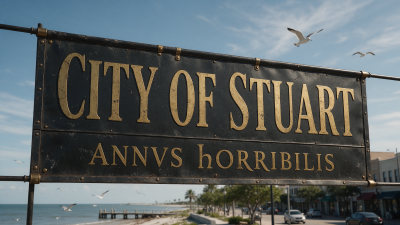 employees leaving, local businesspeople in shock and despair, and a city government that was at a standstill especially when it came to trying to get even a simple permit out of the development office. As Queen Elizabeth once called 1992 the year her family suffered quite a bit of heartache “annus horribilis,” the City of Stuart had a similar year.
But bad actors seldom disappear, they just migrate to the next disaster. The Village of Indiantown had a change election also. It brought back two former council members who came close to breaking the village before. Anthony Dowling and Janet Hernandez were voted out of office a few years ago. Now they are back with Christa Miley as their third.
 The village began their dissent into chaos when they terminated Taryn Kryzda as manager and then appointed the person that Stuart had just fired, Michael Giardino as interim. Their attorney resigned the night of the election knowing that chaos and corruption was about to descend once again on the village.
The first director to leave was contracted Development Director Deanna Freeman. She gave 30-day notice to Giardino as her contract stipulated. At first, he wanted her to stay because she is the only planner the village has. Then he heard from the next real boss of Indiantown, Dowling, who wanted her out immediately. Why? Giardino said the village was going in a different direction.
 Giardino, who has no idea how the council-manager system works, takes his marching orders and falls into line. He has yet to understand that the manager runs the city not the council. But why would he learn anything because I have a feeling that he has his sights on the county next and needs to follow Collins’ orders to achieve that.
 Sitting in the audience at the last meeting was Chris Collins orchestrating the entire thing including the elevation of Giardino to village manager. Giardino, who is not certified but a member of ICMA (International City/County Management Association) broke their Code of Ethics by being at the meeting where an existing manager was going to be fired. But let’s face it…ethics was never something that Collins or his cronies cared very much for.
When people tell you that voters can’t determine how local government operates through voting, point them to the election of Indiantown and Stuart. Stuart under their new commission is clawing its way back. Indiantown is just beginning its descent into chaos, corruption, and increased costs.
On August 18th Judge Brian Sandor of the 9th Circuit issued a Final Summary Judgement in favor of the Plaintiffs Lake Pickett North, LLC, a Delaware limited liability company, Rolling R Ranch, LTD, a Florida limited partnership, and Mary Rybolt Lamar vs. Orange County, Florida.
Judge Sandor found that Orange County could not change their Comp Plan to be more restrictive or burdensome which would have been in violation of what is commonly known as SB 180. It declared that local government cannot even entertain doing so until October 2027. He found that Orange County’s contention that SB 180 could be in doubt is without merit.
“Governor DeSantis signed Senate Bill 180 into law on June 26, 2025, and it took effect immediately. Senate Bill 180 has not been repealed, invalidated, or otherwise amended, and this Court is obligated to adhere and apply the same as written to the Plaintiffs’ claim.”
Judge Sandor goes on to cite Karell v. Miami Airport/Miami Hilton, a 1996 decision, “Our task is to interpret and apply statutes as written…and not as one party…would like to have them written.”
What does the decision mean for trying to rewrite Comp Plans in Indiantown where centers are allowed now to even put a moratorium in place? Orange County is a different circuit and as of now there hasn’t been an appeals court decision. However, it was very definitive as to SB 180 forbidding changes until next year.
Of course, attorneys have no problem rearguing cases in different venues. And maybe the 19th Judicial Circuit, which is where Indiantown is located, will go a different way, but I doubt it. There are two or three data centers with applications in the village development department…would a moratorium stop these applications? I doubt that too.
What about other property in the village where there is a right to have data centers? If there is no application, then usually the answer would be the moratorium would stay the seeking of the development. SB 180 may prohibit even a moratorium.
There will be litigation for sure if the village attempts not to process the applications that are already in the pipeline. Ethan Loeb, a land use litigator, has been to the last two Indiantown meetings and is ready to go. His position is only buttressed by the decision cited above.

However, Indiantown is determined to go ahead and present an ordinance on the moratorium that should be ready to go by the end of October. I bet Mr. Loeb will be in court by the end of November. This election changed a dynamic future for Indiantown into a litigator’s home run. It could very well bankrupt the village.
Generally, this allows more things to be covered without the endless discussions that so often derail other meeting chairs. Scott has proved that you do not need to have every item go on forever.
The most interesting part of the meeting was County Chair Heard’s presentation about what is going on in the county. In Scott’s introduction, she praised Heard for being slow growth and a friend. It is interesting that she was happy to see Heard re-elected but then backed Chris Collins by fundraising thousands of dollars for him.
Heard and Collins truly dislike each other. Even as slow-growth compatriots, it is unclear how they will ever be very good allies. Heard really is someone who will follow the Comp Plan. Collins marches to his own tune and I believe is much more situational in the positions he takes.
According to Heard, the latest plan from Harmony, now known as Story, has received a recommendation of denial from the growth management department. Story is the development where the owners want to put an entire new town in Hobe Sound. She didn’t know whether they would pursue a lawsuit or not.
Then there is the Kolter Home development. After last year’s denial, Kolter Homes went to Tallahassee and had SB 686 passed which states that owners can fast-track development bypassing strict local zoning laws. This can only be done if farmland is surrounded by urban development. There is a 90-day clock within which the project must be approved or denied.
Growth Management received an application for 1200 homes…many more than the regular zoning would allow. After denying the application based on non-compliance of the law, the applicant withdrew. You can bet a lawsuit will happen here.
The Jupiter Island Commission and Heard were jubilant that the growth management department has “stopped” the projects. But did they really? Lawsuits are only good for lawyers and are never good for taxpayers. I could think of many reactions to have instead of jubilant.
Heard also was happy to report that the county commission probably will pass a data center moratorium at the meeting later this month. Again, the joy couldn’t be more misplaced. Only Commissioner Field said that we should be working with the centers. He believes that the federal government will preempt everything and declare it a national security issue.
I don’t know about that, but I believe the state will remove local control of the issue in the next session. There is too much revenue to lose by thinking you can entirely close off this industry. SB 484, which passed last session regulating data centers, is a good start. It probably needs to go further. However, I wouldn’t doubt that if Amendment 3 passes, Martin County will be looking for money. Data centers bring in millions in TPP taxes from the equipment housed at the centers.
In her presentation, Heard said that 44% of Martin County’s Ad Valorem comes from homesteaded properties. $42 million will be lost in the first year, $75 million in the 2nd and $170 million in the third. That is out of $360 million total. No government has that much waste and fraud in its budget.
 Henry David Thoreau said, “It’s not enough to be busy, so are the ants. The question is, what are we busy about?”
That is something I have often thought about. I asked that question whether I was in school, at work, or even now in retirement. And it seems I have been busy doing something my entire life. On reflection I think my busyness mostly resulted in positive outcomes.
As a kid, most of my relatives worked in the food industry. My mother, father and grandmother would say things like “never walk somewhere with empty hands.” They were thinking as servers about how to minimize their steps when on the dining room floor.  By the time I was 13 and bussing dishes, I immediately understood what they meant.
Once I started working in kitchens, staff needed to prepare for the rush that everyone knew was coming. In commercial kitchens, each person readies their station in advance by doing as much preparation as possible. It is called mise en place. One of the first things I was tasked with was peeling and chopping onions, parsley, celery, carrots, and mincing garlic.
Then I was taught how to peel a tomato skin to make a rose, carve a radish to have a flower, and flute a mushroom. I will admit I have let all three of those skills atrophy. Yet I was always very busy in a restaurant whether it was in the front or back of the house. And since it served a purpose, it wasn’t busy work.
I tried always to have a reason for my busyness. Time was too precious to waste. I loved to see how much I could accomplish for everything was about moving the dish to the customer in the right amount of time…not too soon that a customer would feel rushed but not too long that they feel neglected.
My early real estate managing agent position was working for a syndicator that turned buildings around and sold them within a year. Before the Reagan tax overhaul, professions like doctors and lawyers were high income individuals taxed at 70%. However, if they invested in income producing real estate, they could shield the income by having deductions.
The syndicator would create limited partnerships where he was the general partner and then sell percentages to highly taxed professionals. My responsibility was to do cosmetic work throughout the buildings and see if I could increase the value of the rent rolls. The buildings would be 100 or 150 units with rent control tenants.

I would change the boiler, redo the lobby, paint the hallways, refurbish elevator cabs, and most of the time paint the exterior of windows. Except for the boilers, nothing was long lasting. After a year the building would be sold, and everyone would make a decent profit shielded from taxes.
It was important that I had a team of painters, etc. ready to go immediately for all of this to be accomplished. I had to develop a system to satisfy the syndicator so he would hire me consistently. I ended up going into the general contracting business so I could always perform. I was busy constantly and so were 10 to 20 workmen.
Throughout my life I also saw many people who never had a system. Yet they were always busy. Too busy to have much of a social life. Too busy to have a home life. They often were working and standing still.
That is what Thoreau meant by the quote. My parents didn’t have much, but they knew to never walk away without carrying something. They instilled in me that expending unnecessary energy doesn’t accomplish very much. Have a plan, a way to achieve it, and accomplish the task with the least effort.
At some point, most of us know that being busy for busy sake is not making you richer or productive, just more tired. I learned to have systems in place that made the work day more productive and therefore lucrative. As Lao Tzu wrote, “Doing nothing is better than being busy doing nothing.”
IF YOU ARE NOT A SUBSCRIBER DO SO FOR FREE HERE www.friendsandneighborsofmartincounty.com
GET THE WORD OUT
Friends and Neighbors of Martin County is your eyes and ears so that you know what is going on in Martin County’s municipal and county governments. I attempt to be informative and timely so that you may understand how your tax money is being spent. Though I go to the meetings and report back, I am no substitute for your attending meetings. Your elected officials should know what is on your mind.
Tom’s Articles
From Medium
"Is America Right Makes Might Or Might Makes Right"
"The Peculiar Way Of Airports"
"Are Public School Unconstitutional"
"The Crack Spread"
"Catholicism, Socialism & America"
From Martin County Moments
"Amendment 3: Why It Should Bot Pass"
Other Articles
The Economist: "America's Wrecking Ball Revolution"
The Capitolist: "FDOT Revokes Permits for License Plate Readers on State Highways"
Wall Street Journal: "Florida, Vaccines and Religious Liberty"
The Atlantic: "Hegseth's Pentagon Lurches off the Rails"
The Economist: "Are teenagers growing dimmer?"
The Capitolist: "Florida to Receive 5.67 Million Eggs Through Multistate Antitrust Settlement"
The Atlantic: "The Court's Ballroom Decision Is a Sign of Deeper Problems"
Time Magazine: "UF among top public colleges in new ranking by Time Magazine"
Wall Street Journal: "Upset About Data Centers? Big Tech and Trump Think You're a Socialist Dupe"
Florida Phoenix: "Divorce becomes next battleground as states debate family values"
The Economist: "Donald Trump is delivering the deportations he promised"
The Capitolist: "Florida Realtors Launches 'Vote Yes on 3' Campaign"
Wall Street Journal: "The Data Center Panic and U.S. Decline"
Wall Street Journal: "The Data-Center Dividend for Workers"
Florida Phoenix: "Debate about data centers emerges in Donalds-Jolly gubernatorial race"
The Atlantic: "MAGA Is Making The World Safe For Corruption"
The Capitolist: "Florida projects $1 billion budget deficit by 2030"
Wall Street Journal: "Patients Sue GLP-1 Drugmakers Over Risk of Sudden Vision Loss"
The New York Times: "Trump Says His Contested Arch Would House Drones and Snipers"
Florida Phoenix: "More states embrace '50-50' child custody in divorce cases"
Copyright © September 24, 2026 Friends & Neighbors of Martin County, LLC., All rights reserved.