








Thanksgiving, the All-American Holiday, is fast approaching.
 I have made the menu considering all the eating habits and restrictions of my guests and family. For the vegetarian, there will be a minestrone, cheese ravioli, eggplant, fish, and plenty of vegetables. Some have requested the meatballs, sausage, and pasta course which will be there. I make a sausage stuffing, and my wife makes one with no meat. The turkey will take center place. My daughter will bring her homemade sourdough bread. And Polly will have two desserts of some kind. Oh! And I will have chestnuts.
The bigger and more diverse feast will happen on Christmas.
Weather-wise Thanksgiving in Connecticut can be in the sixties, but I have also seen it in the twenties with snow. I hope it is in the upper 40s with sun.
But no matter what the weather outside, I know that inside it will be a convivial day at the table.
 After this edition, we have one more for 2026. Next year there will be some big changes coming to Friends And Neighbors that we will share with you next month. I know that you will be excited by what is on tap for 2027.
In this edition, we have our vast array of columnists including Pastor Chad, Doctor Michele, and David Hafner. Our columnists are the backbone of our community journalism. They work very hard to bring you diverse viewpoints and information on a number of subjects.
Over the years, we have become the place for nonprofits to showcase their accomplishments. In many other states, much of what our nonprofits do is handled by the government. Not so in Florida. Without them, many members of our community would not be served. That is why I have tried to give them a forum to highlight their accomplishments, and I am proud that we are the largest forum in Martin County to do just that.
Our government reporting is all here including an in-depth 4-part look at Stuart’s finances, and how in less than a year with the wrong leadership, the city may take years to recover. We have seen this week around the country that elections do matter, and they do so here at home for local government.
So sit back, have another cup of coffee, and dig in to a very full edition.
Many of us are grateful to have enjoyed another year in relatively good health. Others are preparing for Turkey Day and the weeks between Thanksgiving and Christmas. For me, this is my happy season.
I am one of those idealists who wants everything perfect for the holidays. I desire all my family around our table and as many other people as possible. By the end of Thanksgiving Day, I just want to crash in my Lazy Boy, legs propped up and nod off to sleep exhausted by all the preparation, food, and conversation.
I have been to the recreated Plymouth village several times in my life. Once as a kid thinking how unawesome the Pilgrims were. Then as a young married man on a summer vacation. I was there a couple of times with my own children. I brought my then girlfriend (soon to be current wife) and her young daughter a few years later when we spent a week on Cape Cod. I hope someday soon to bring my granddaughter.
If you live in New England or in the New York metropolitan area, Plymouth Rock is just a stone’s throw away. There is something primitive and joyful about America’s humble origins. Americans should revel in it.
I have also been to Jamestown several times at different periods in my life. Though Jamestown predated Plymouth by more than a decade, it just doesn’t feel as important to me in our evolution as a nation. Funny.
I think it is because Thanksgiving is associated with the Pilgrims. Isn’t that where the colonists sat and had a feast with the Native Americans who had helped them? The immigrants needed a little guidance settling into their new homes, and those who had come before showed them the American way.

Regardless of our politics, this was a lesson we were all taught in school.
As we roast our turkey, eat grandmother’s dressing, and my lasagna, each family brings its own unique perspective to the foods served and mine is no different. Most of these treats are far from those that graced the table of the first Thanksgiving. But all is offered with the hospitality and love that we have for who joins us around the table regardless of where they came from originally. That diversity is what makes it a true American holiday.
Amtrak has finally decided to make some big changes that it believes is going to make travelling by train the future of transportation.
Most Americans never think about using a train unless you live in the Northeast. In other countries, for most journeys that are less than 500 miles, rail would be the first place to consider for your travel needs. Train travel once ubiquitous in the U.S. became almost obsolete but it is starting to revive especially considering soaring gas prices.

If you grew up in a city or suburb, especially along the Boston to Washington axis, you might at times have chosen Amtrak to get from point A to point B. That would be especially true if you were travelling from Boston to Washington. If you are a city dweller, the likelihood of having your own car is less likely. And going to another city with a mass transit system when a car is not needed at the destination alleviates entire problems for you of where to park the car. In these cities, it could cost $50 or more a day for the privilege.
Now that Americans are travelling more and more throughout the world, we see how easy taking a train can be. Our American trains travel slower than trains do in other places. They really can be part of the vacation experience unlike catching a plane or in some instances driving in congested areas such as Miami and Fort Lauderdale.
In the 1970s, I took an overnight train from New York’s Penn Station to Montreal where I changed to another station for a second train to Quebec City. My wife and I had our own sleeping compartment. It was an overnight journey and though the food could have been better, it was still all part of the experience.

A decade ago, we were in Edinburgh having just taken a once-in-a-lifetime train trip in Scotland on the Royal Highlander. For five days, we had a compartment on the train where we travelled throughout the Highlands. The food and company were great.
When we finished that trip, we took another train to London which was rather seamless. We were in King’s Cross Station in a little over 4 hours. Beats a flight where when you land at either Gatwick or Heathrow, you are still an hour or more from your London Hotel.

Last year we landed in Rome and from the airport went to the train station and took the train to Florence. The trip itself was fast and efficient. Our hotel was only a very long block from the station, but it was then that I discovered something. My age had caught up with me. Dragging a suitcase on cobblestones just about did me in. In the future, even for short distances with luggage, I would make sure to take a cab.
I wish it was easier to catch a train here. We do have Brightline, but because of who we are, having a station will be a lost opportunity. It is interesting because without Flagler’s railroad, Stuart would probably be just one big housing development today. People don’t think about how our character was formed by the passenger depot that was here. Our Ole Florida Town only exists because of it.

All the naysayers about having a station claim they want to keep our character. They can’t see that much of the town was built here because of the railroad. If you truly want to keep Stuart---Stuart--- then it is part of our heritage to have a station. And as most of America has finally seen, the past is the future.
Most Americans can’t wait to retire. Many retire even before retirement age. Some do so because they can’t find another job when they are in their late fifties or sixties. Others make the decision because they no longer have the physical strength or stamina to do the jobs, they have done all their lives.
One group of people that can’t seem to bid farewell are politicians. The U.S. Senate and House are full of people in their 80s and 90s. Massachusetts Democrats just gave Ed Markey the nomination at 80 for another six-year term. I have no doubt he will beat his Republican challenger. Markey has been in Congress for 50 years.
Being a career politician has been his only job. But he is not the only 80-year-old who refuses to hang it up. The oldest primary winner of this cycle was incumbent Republican Senator Jim Risch of Idaho who is eighty-three. Here is something both sides of the aisle can agree on; “Do Not Go Gentle Into That Good Night,” As poet Dylan Thomas wrote.
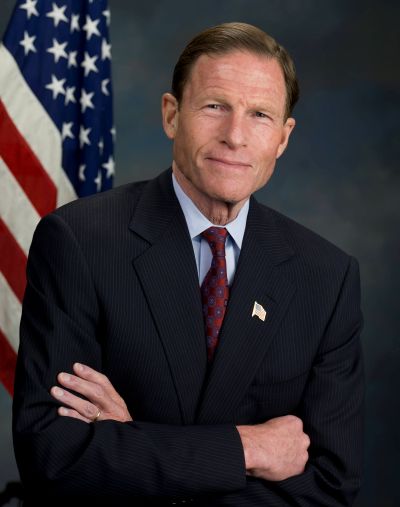 There was an article in a Connecticut newspaper profiling Senator Richard Blumenthal last week. He joined the over-eighty club last February. Though he still has two years to go in his current term, the paper was hinting that with his youthful spirit, he may run again in 2028 at 82. The last time I saw him speak in person was last spring, and he had a noticeable shuffle as he approached the podium.
What are these octogenarians and nonagenarians hanging on to? Isn’t it time to make way for people like me in our seventies? Just kidding.
I was speaking with someone the other day about Mike Bloomberg who served three terms as New York’s mayor. I mentioned that his first two terms had innovative policies that made the city better. But by his third term, he was phoning it in. Bloomberg had the two term limits waived for him. It was a bad idea.
 There is a shelf life for leadership. Even the best of us becomes tired and tiring to others if we hang around too long. Most non-pols usually figure out when its time to move on. I know that when I pulled the plug on my career at 68, I was ready. Like Mike in his third term, I was just phoning it in at least for the last year.
Retirement doesn’t mean you have to ride in a golf cart or stare at a television screen. I guess pols just don’t see the possibilities of a meaningful life in retirement as much as the rest of us do. And that is too bad if they believe the only way to retire from Congress is to lose an election.
If these men and women are just not pretend public servants, then they can serve the public in other ways than being a senator or congressperson when they leave office. They should try living in the real world with their constituents. Maybe that is what they are afraid of doing…just being a regular American.
A decade or so ago, hotels started charging “resort fees.” If they had a pool and towels, the management tacked on $50 or $60 to the room rate regardless of whether you used the service or not. That isn’t all they could and would charge you for…Wi-Fi, parking, the fitness center, or a shuttle service could be in addition to the rate that had been advertised. Being able to not inform the consumer when quoting a room rate isn’t the free market but rather a lack of consumer protection on the part of the government.
I have been a residential landlord for more than 50 years. I had all types of qualifications and certifications to manage that type of property. If someone rented an apartment from me unless they also wanted a garage space for their car, the rent was all inclusive of everything offered.
 For the past year and a half, I have been a residential tenant. I have no complaint about how much I pay in rent. I do have a problem with the mandatory pool and gym fee. I have never used either and yet that adds $80 a month to the rent.
There is also a charge for water usage and trash. Though I believe that too should be included in the rent, if the water was metered then I would pay for the water I consumed. Instead, they have their own complicated formula based on what apartments with two occupants should use. It changes each month depending on the bill from the municipality for the entire complex. We are there sometimes for as little as 10 days a month.
Both hotel and residential fees are just another way of padding the bill without really advertising the true cost to the consumer. It isn’t quite deceptive since when you sign your lease or register at the front desk, those fees are disclosed but it is gouging the customer.
The public is weary of businesses because of these practices. They are also weary of government for not doing a better job of making sure everything is disclosed when we book a flight, lease an apartment, or reserve a hotel room. There is just no reason not to disclose what the customer’s bottom line will be.
I don’t want a nanny state. Government should not force or dictate prices. It does need to protect the consumer against unjust practices.
For a time, consumer affairs laws did just that. But then government began equating protection with being anti market. Of course, it was easy to do since real estate, airlines, and the hospitality industries give billions to political campaigns. While John Smith and his family are just the shmoes voting.
Money always wins out.
Anyone who thinks American health care is the best in the world hasn’t experienced it lately or is one of Trump’s billionaire friends.
Going to a medical appointment is full of stress especially for the average person. It isn’t only the immediate medical reason that a person is seeking that they have to be worried about.
Increasingly, those with insurance are not always covered fully even when they go to a doctor in their network. They are being hit with outrageous facility fee charges for routine office visits. Insurance companies are refusing to pay when hospital-owned practices are charging 10 times more by claiming the office visit is a hospital one.
Hospitals have been buying up physicians’ practices for years now. Instead of independent “businesses,” the doctors become employees and need not worry about anything but the welfare of their patients. At least that is what they tell the public.
When a person goes for a routine exam, rather than the cost being covered by insurance, the patient is being stuck with the hospital fee since insurance companies are not covering. The justification from the hospitals is that they are providing round-the-clock care for their patients, and the facility fee provides a subsidy for the hospitals to provide that care. It also is a better setting for a patient than a standalone physician’s office.
Any thinking person would say just stop buying medical practices and return to the old system that worked just fine. Hospitals are squeezing insurance companies that, in turn, squeeze their customers…we, the patients. This is not good for anyone.
According to a recent Washington Post article, the cost differential for similar procedures performed in independent medical offices as opposed to those performed in offices that are part of a hospital system are staggering. A nerve block injection in a doctor’s office costs $282. The same exact procedure in one associated with a hospital $1530. A broken bone cast is $83 compared to $405 in a physician’s office where the office is part of a hospital practice. A Blue Cross Blue Shield research paper found that between 2017 and 2022, outpatient charges went up 27% in hospital settings as opposed to 2% in doctors’ offices.

Maine and Connecticut ban those fees for most routine care regardless of where the care is performed. While there have been efforts to pass legislation nationally, they have been blocked by the American Hospital Association. Nothing is clearer than the rationalization given by the director of the hospital lobby’s federal relations. He warned that if those fees go away, then money-losing services like burn units would go away.
Yet wouldn’t it be less expensive for the government to subsidize burn units directly than have millions of patients going for routine physicals charged 10 times more to see their doctors? Research done by the GAO and the AMA has shown that care is not improved by hospital acquisitions of private practices nor are outcomes different for procedures performed by physicians whose offices are located in hospital settings.
American medicine is broken. It is demonstrated to us every day. When you have to wait 6 months as a new patient to see a specialist or even longer to have routine surgery, we do not have a better system than other countries. What is more, our mediocre medical system forced 370,000 Americans in 2025 to declare bankruptcy. The vast majority of those declaring bankruptcy have some sort of insurance. It just would not cover the person’s entire medical bill.
A one-payer system is not a panacea. It comes with its own problems. However, no one is forced into losing everything they have worked for if something medically goes wrong and they cannot afford to pay.
And while Canadians wait longer to see specialists or have routine operations, care is given universally to anyone walking through the door. In the U.S. the more a patient can afford the quicker and better the outcome. Call it the worst of capitalism.
I remember entering numbers into a ledger book.
Mastering the art of being Bob Cratchit wasn’t the reason I was going to college at the time. But it was a living to help put me through school. I also remember preparing monthly real estate management statements for real estate properties by hand and with a manual typewriter.
 It was a lot of copying over those daily ledgers from one month to the next for the property owners. Inevitably, something was copied wrong which resulted in sometimes hours of searching to find out why you couldn’t balance to your proof.
What passed for computerization was just coming into offices. We didn’t have computers in ours, but our business bank did a form of computerization at their main offices. We would fill out forms to tell the bank that someone’s rent had changed, or we collected $200 from Apartment 3. We would give those forms to the bank every day when we made our deposits. And lo and behold, in a day or two a new printout using 14 ⅞ x 11 ½ with tractor-feed strips would appear with that information updated. There was never a computer in the office.
 Some of the bookkeepers would be fearful that “computers” were coming for their jobs. Ten years later, they were still working, and the office had hired more people to assist with computers. Eventually with the mainstreaming of the internet, forms gave way to terminals, but the computing power was still in a mainframe somewhere else.
Today everyone can have an unbelievable amount of computing power on their phones. American businesses employ millions of people in offices throughout the country. Americans are still being told that they will be replaced because of new technology. The big bugaboo today is A.I. The scourge of working people in 2026.
 A.I. is a powerful tool that we do not fully understand. It does make previous technological advances seem inconsequential. Yet without the Chemical Bank computerization I witnessed in the very early 1970s, A.I. would not be happening today. Each advancement was possible because of the ones that happened before.
I suspect once we embrace the new A.I. technology with less skepticism, we will see more jobs created than will be lost. Will offices change? The answer is yes. That is nothing to fear. The offices of today look nothing like those of 50 years ago.
My son-in-law was writing code for some of the first 3-D printers less than two decades ago. His 9-year-old just received a 3-D printer for her birthday, and she is having a ball creating things. What was cutting edge technology then is now available for mass use including for kids.
 Could A.I. get out of control and annihilate mankind? We definitely do need regulation, but the doomsday scenarios about new technology started with automatic looms and steam locomotive engines. In both instances, society only improved with new technologies. Even nuclear fission has brought us two diametrically opposite results at the same time…cheap energy and the possibility of human annihilation.
 Thus, the need for regulation of the technology. You could no more stop A.I. than you can nuclear fission knowhow. What we have done as a world society with nuclear knowledge is what we must do with Artificial Intelligence. We need to manage it for universal good and not let a small subset of companies be given the rights to own it for their own enrichment.
I have much more faith in mankind than the naysayers complaining like Chicken Little that the “sky is falling.”
Parenting has never been easy, but it seems like today's parents face a whole new level of expectations. Between social media, advertising, school activities, work responsibilities, and the opinions of others, parents are constantly being reminded of what they should be doing, buying, attending, and providing for their families. Sometimes, the hardest part of parenting isn't making the decisions themselves; it's dealing with the guilt that comes afterward.
 Consider grocery shopping. Parents are encouraged to buy the healthiest foods, choose organic products, read every label, avoid certain ingredients, and make sure their children are eating a perfectly balanced diet. While providing nutritious meals is important, the reality is that not every family can afford the most expensive options, and not every meal needs to be perfect. Sometimes, getting dinner on the table after a long day is an accomplishment all by itself.
Then there is the pressure to keep up with everyone else. Children see what their friends have, what influencers are promoting, and what is advertised as the newest and greatest. Suddenly, the good shoes, phone, gaming system, or clothing they currently have aren't good enough. Parents can feel pressured to spend money they hadn't planned to spend simply because they don't want their children to feel left out. It's easy to forget that providing children with everything they want isn't the same as providing them with everything they need.
Perhaps one of the greatest pressures comes from the expectation to make memories. We are constantly told that childhood goes by quickly and that we should take advantage of every opportunity to travel, attend sporting events, participate in activities, and spend quality time together. At the same time, parents are expected to maintain careers, meet workplace expectations, pay bills, and keep up with everyday responsibilities. Taking time off work to attend a school event or family activity can bring feelings of guilt about falling behind professionally. Missing that same event can bring guilt about not being there for your child.
So how do we find a balance?
 First, remember that your family's priorities don't have to look like everyone else's. Make purchasing decisions based on your family's needs and financial circumstances, not what you see others buying. Nutritious meals don't have to be expensive, and children don't need the newest products to feel loved and supported.
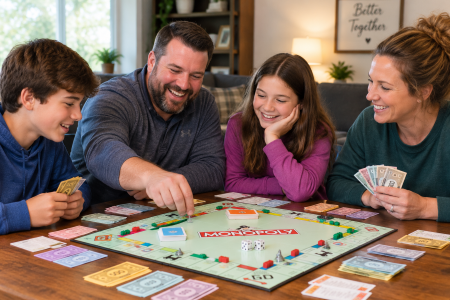
Second, recognize that meaningful family time doesn't have to be expensive or elaborate. Some of the best memories come from cooking dinner together, playing a board game, working in the yard, or simply having a conversation at the end of the day.
Finally, give yourself permission to miss things. You cannot attend every event, participate in every activity, or say yes to every opportunity. Sometimes work has to come first. Sometimes family has to come first. Sometimes the budget simply doesn't allow something. Those decisions don't make you a bad parent.

There is no perfect formula for raising a family. Do the best you can with the time, resources, and opportunities you have. Don't let the expectations of others become the measuring stick for your success as a parent. Your children don't need perfect parents. They need parents who love them, support them, teach them, and show up in the ways that matter most.
And perhaps most importantly, remember to give yourself a little grace along the way.
David Hafner’s opinions are his own and may not reflect Friends & Neighbors viewpoint.
As Martin County’s only open-admission, no-kill shelter, we serve more than 8,000 animals each year. Every animal is welcomed, regardless of age, health, breed, or circumstance. Many arrive abused, injured, or sick, and all have found themselves without a home. For each one, our goal is the same: provide compassionate care, relieve suffering, and create the best possible path toward recovery and a loving future.
We can only fulfill that promise because our community stands with us. Generous gifts to our Emergency Medical Fund provide the critical, lifesaving care that goes beyond routine shelter medicine.
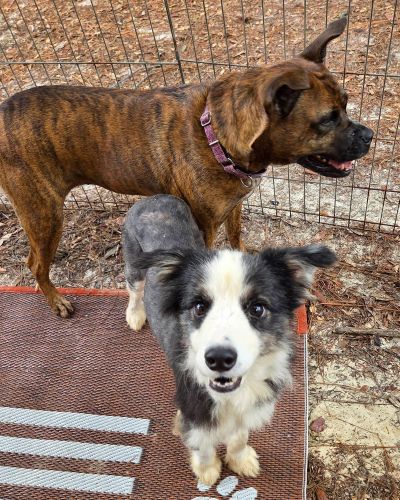 The hoarding cases we responded to this summer are a prime example of the fund’s impact, but urgent medical needs arise throughout the year. Continued support allows us to act quickly when an animal needs specialized testing, treatment, surgery, or extended recovery care.
The Emergency Medical Fund covers a wide range of services. Orthopedic consultations are needed for dogs and cats experiencing lameness that has not improved with cage rest and anti-inflammatory medication. Specialists help determine whether an animal is a candidate for orthopedic surgery or whether an amputation may offer the safest, most comfortable outcome. These decisions require expertise, careful diagnostics, and a treatment plan tailored to each patient.
We also partner with veterinary eye specialists when patients do not respond to initial treatment. Because specialists have equipment and resources not available at the shelter, they can recommend advanced treatment plans, specialty or compounded medications, and, when necessary, surgical procedures to preserve a patient’s eyesight or save the eye.
Our digital X-ray machine will soon expand our in-house capabilities, but the fund affords the necessary outsourcing of specialty diagnostics such as ultrasounds and complex laboratory work.
 Donations also help us modernize our surgical equipment. Recent purchases include a cautery unit to control bleeding during surgery, a Tono-Pen to measure pressure inside an animal’s eye, an additional EKG machine to monitor patients under anesthesia, and a suction unit. These tools have already strengthened our ability to perform procedures including eye enucleations, amputations, and mass removals safely and efficiently.
Just as importantly, the Emergency Medical Fund supports the skilled staff behind every recovery. From transporting patients and monitoring anesthesia to performing surgeries and dental procedures, preparing medications, developing treatment plans, and providing attentive post-operative care, each step takes time, expertise, and resources.
Every gift represents a neighbor helping an animal in need. Whether someone donates or encourages others to get involved, that support creates a stronger safety net for animals across Martin County. Together, our community makes it possible to say “yes” to lifesaving care and to give vulnerable animals the second chance they deserve.
Frank Valente's opinions are his own and may not reflect Friends & Neighbors viewpoint.
As November arrives and Thanksgiving approaches, our thoughts naturally turn toward gratitude. We begin thinking about the people, experiences, and blessings for which we are thankful. We gather around tables, share meals, and perhaps take a moment to name the good things in our lives. Of course, we’re also grateful for stretchy pants,, whoever invented pumpkin pie and the post turkey nap.
But what if gratitude is meant to be more than something we practice once a year? What if gratitude is a way of living that changes how we see God, ourselves, and one another?
Life isn’t always easy. There are seasons of grief, uncertainty, disappointment, and struggle. Some days, finding something to be thankful for feels nearly impossible. God doesn’t ask us to pretend everything is wonderful or to be thankful when the car breaks down, the bills pile up, or someone eats the last piece of pie. Instead, God invites us to recognize that even in life’s difficulties, we are not alone. Gratitude doesn’t necessarily mean everything is good. It means we trust that God’s goodness is still present.
One of the greatest challenges to gratitude is that we often become so focused on what is missing that we overlook what is already there.
We notice what we don’t have, what hasn’t worked out, or what we wish was different. We compare our lives with others and convince ourselves that happiness is waiting just beyond our reach. And thanks to social media, we can now compare our ordinary Tuesday with someone else’s perfectly photographed vacation!
But gratitude invites us to see life differently.

It helps us recognize the extraordinary blessings hidden within ordinary moments: a conversation with a friend, a meal shared with family, a neighbor who checks in, laughter that interrupts a difficult day, or a community that comes together when someone is hurting. These moments may not seem extraordinary, but they are reminders of God’s love at work in our lives. And gratitude does something else. It changes the way we relate to others.
When we recognize how much we have received, we become more willing to give. When we appreciate the kindness others have shown us, we become more intentional about showing kindness ourselves. Gratitude isn’t simply about appreciating what we have. It’s about allowing what we’ve received to become a blessing to someone else.
Imagine what might happen if gratitude became a defining characteristic of our community. What if we spent more time recognizing the good in one another than pointing out our differences? What if we thanked those whose work often goes unnoticed? What if our appreciation for life’s blessings inspired us to help those who are struggling?
A grateful community doesn’t ignore its problems. It faces them with generosity, compassion, and hope. And let’s face it, the world could use a little more of all three.
This Thanksgiving season, I encourage you to try something simple. Each day, identify three things for which you are grateful. They don’t have to be big things. Some of the most meaningful blessings are the ones we are most likely to overlook. And yes, coffee absolutely counts, even for those of us who don’t drink it. We appreciate the caffeinated version of you.
Then take it one step further. Let someone know you appreciate them. Reach out to someone who may be lonely. Offer encouragement to someone who is struggling. Find a way to turn your gratitude into an act of love.
Because perhaps the greatest expression of thanksgiving isn’t found in the words we say around a table, but in the way we live when we leave it.
When we live with grateful hearts, we become a little more of the light God calls us to be in the world.
Chad Fair's opinions are his own and may not reflect Friends & Neighbors viewpoint.
There was a tragic story in the news this past weekend. A young 24-year-old Division 1 athlete was running her first marathon. She was actually running to raise money for Parkinson's Disease, which afflicted her grandfather. Around mile 23 she started texting her dad that her legs were killing her and at mile 24 the texts stopped. Her mom was waiting at mile marker 25 to cheer her on for the last mile but she never appeared. She collapsed and despite immediate medical intervention she was unable to be resuscitated. Her family was told her cause of death was rhabdomyolysis. So what is rhabdomyolysis?
Rhabdomyolysis.. often shortened to just Rhabdo.. is a serious, life threatening emergency. It is caused by skeletal muscle breakdown. When this happens toxic components of your muscle fibers known as myoglobin enter your circulatory system and your kidneys. Since your kidneys filter your blood and remove waste they can get overwhelmed by the high amount of protein and toxins suddenly circulating through the blood stream and this can lead to kidney failure.
This case shows us that anyone can get rhabdomyolysis.. even if you are young, healthy and fit. People who are at higher risk include those who work outdoors in extreme heat, or have physically demanding jobs such as firefighters and first responders. Heat can cause more rapid muscle breakdown and without enough fluids, the kidneys can't keep up with the circulating waste. Military members participating in intensive boot camp are also susceptible.
Other risk factors for rhabdo include suffering a traumatic injury.. especially a crush injury that damages muscle fibers to break down rapidly. A burn or an electrical injury can also cause rapid muscle breakdown. We often see rhabdo in elderly people who fall and are unable to get up on their own. They end up lying on the floor for extended periods, and the pressure of their bodies against the floor cause the muscle fibers to break down . High intensity exercise is also a risk factor. Most of the cases of rhabdo that I have seen in my career are from people who participate in cross fit and are lfitng crazy heavy weights or are weekend warriors.

Certain medications are also known to increase risk for rhabdo as well such as amphetamines which are used to treat Attention Defiict Disorder, statins which treat high cholesterol, certain antipsychotics, and anti depressent medications. In addition some drugs of abuse can increase risk of rhabdo. There are also some genetic muscular disorders such as muscular dystrophy and McArdles disease which are at increased risk for developing rhabdo
Symptoms of rhabdo include muscle swelling, painful muscles, and urine that is the color of tea or coca cola. Symptoms can range from mild to severe. Symptoms usually develop one to three days after a muscle injury. Some people will also experience nausea, dehydration, decreased urination and even loss of consciousness. It does not usually lead to sudden death. I personally think with this runner when the muscle cells broke down it caused electrolyte disturbances which may have led to a cardiac arrhythmia causing her heart to stop beating.
Complications of rhabdo include kidney failure (sometimes requiring dialysis), electrolyte disturbances, and metabolic acidosis which is when the pH of the blood drops below the tightly regulated pH of 7.4, leading to all sorts of dysfunction within the body. It can cause compartment syndrome, which is when there is significant swelling that puts pressure on the nerves and blood vessels running through that body part, requiring that area to be cut open to relieve the pressure. Finally it can lead to a condition called Disseminated Intravascular Coagulation which is a usually fatal situation where the body's clotting factors are overwhelmed and patients develop internal bleeding.
Rhabdomyolysis is diagnosed by finding high levels of a protein called myoglobin in the urine as well as elevated levels of creatine kinase in your bloodstream. These are both proteins released by damaged muscles.
Treatment includes aggressive IV hydration to flush the toxins from your system. In cases of severe kidney injury a patient may require temporary dialysis to help filter the toxins from the circulatory system if the kidneys become overwhelmed. Most people recover after rhabdo but some may have lingering muscle soreness for several weeks.
You can reduce your risk of developing exercise induced rhabdomyolysis by starting an exercise program slowly and listening to your body. If you feel especially sore or tired stop what you are doing and rest. Don't push through it. Make sure you stay well hydrated and try to stay out of the heat. If you have to work outside, take frequent breaks in the shade and drink electrolyte replacement drinks. Avoid addictive substances like drugs and alcohol. Finally ask your provider if you are on any medications that can increase your risk of developing rhabdo. Finally be aware that if you have experienced rhabdo before you are at an increased risk of developing it again so it's even more important to do whatever you can to reduce your risk.
Michele Libman’s opinions are her own and may not reflect Friends & Neighbors viewpoint.
Advance warning: this column won’t be as lighthearted as some of my past ones. As I write this, my thoughts keep returning to people I care about and the water that has upended their lives.
The recent king tides and torrential rains have flooded homes and roads across parts of Florida, including right here on the Treasure Coast.
Our Firefly colleague Tiffany’s home on Hyline Drive in Jensen Beach flooded with waist-high water. She’s been salvaging belongings while facing questions no homeowner wants to contemplate. What can be saved? What comes next? What does the future hold for her home?
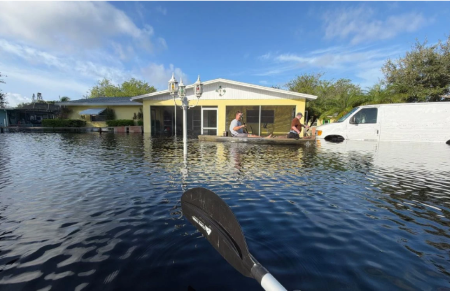 In St. Lucie West, my mom and many older residents in her gated community have been effectively stranded for days by flooded roads. When someone has limited mobility or depends on others for care, that isolation is especially frightening.
And down south, my friend Debbie had water enter her canal-front home in Fort Lauderdale for the first time in the 23 years she’s lived there.
For all of them, the flooding has shaken their sense of safety at home. And for Tiffany and some of her neighbors, the water was still rising days after the rain had stopped. The water had nowhere to go.
Martin County officials explained that the surrounding watershed was overwhelmed, leaving no capacity to receive water pumped out of the neighborhood. Imagine watching the water rise inside your home and being told you have to wait.
The situation is especially frustrating knowing how long we’ve been talking about Florida’s vulnerability to flooding. When I moved from New York to Martin County in 1994, I went back to school at Florida Tech to earn my master’s degree in Environmental Resource Management. We studied global warming and climate change and the implications for a low-lying state like Florida.
 I remember thinking we had thirty years to prepare, make changes and heed those warnings. Those decades have passed.
Today, sea level rise and resilience are familiar terms. Yet there’s a painful distance between understanding a risk and watching someone you care about live through it.
Last September, I wrote “When It Rains, It Pours… Pollution?” about stormwater, flooding and planning. Probably not my sexiest subject. I even asked readers to resist rolling their eyes and scrolling past it.
This week is a heartbreaking reminder of why those dry subjects deserve attention.
Parts of our region experienced what’s called “1,000-year” rainfall, meaning rain that heavy has an estimated 0.1% chance of occurring in any given year. Despite the name, it could happen again next year.
No single flood tells the whole climate story. Rainfall, saturated ground, drainage capacity and coastal water levels all matter. But the broader scientific warning is clear: extreme precipitation and rising seas are increasing flood risks in the Southeast.
Thankfully, work to prepare our communities for those risks is already underway. Martin County is planning for resilience. St. Lucie County has updated its stormwater planning and developed a Regional Resilience Plan. The South Florida Water Management District is evaluating flood protection and advancing adaptation projects. Florida’s Resilient Florida program supports planning and infrastructure improvements.
Those efforts matter.
More than thirty years ago, I sat in a classroom learning about risks that felt far off. This experience has been surreal. I wish more of what I learned had stayed theoretical. And I’m reminded that the work we do today will help determine what living here feels like thirty years from now.
How did you fare during the recent king tides and torrential rains? Did someone step up to help you or your neighbors? Please let me know at stacy@fireflyforyou.com.
Stacy Weller Ranieri's opinions are her own and may not reflect Friends & Neighbors viewpoint.
The political earthquake that swept across America on November 3rd should serve as a wake-up call to elected officials everywhere, including right here in Martin County.
Republicans who considered their positions secure watched Democrats capture congressional seats and make significant gains in traditionally Republican territory. Organized campaigns, disciplined messaging and energized voters demonstrated that no political party owns the electorate.
But beyond the victories and defeats lies a more important question: Have too many politicians forgotten whom they were elected to serve?
Public office was never intended to be a lifetime appointment, personal entitlement or platform for advancing one's political ambitions. It is a temporary privilege entrusted to individuals expected to represent their constituents, not themselves.
Unfortunately, some politicians eventually begin confusing their personal convictions with the public interest. They surround themselves with agreeable voices, dismiss criticism and regard disagreement as disloyalty. Worse, they begin believing voters owe them another term simply because they already occupy the office.
This isn't exclusively a Republican problem. Democrats have demonstrated similar tendencies when enjoying political dominance. Political arrogance knows no party affiliation.
Here in Martin County, these lessons deserve particular attention.
 Our county commissioners and municipal officials make decisions affecting property taxes, development, infrastructure, environmental protection and the character of our communities. These aren't abstract political debates. They directly influence our neighborhoods, businesses, property values and quality of life.
Consider Florida's overwhelming frustration with escalating property taxes.
For years, rapidly appreciating real estate values have increased the taxable property base available to local governments, even as homeowners struggled with rising insurance premiums, maintenance expenses and the overall cost of living.
Yet discussions about meaningful property tax relief frequently focused on threatened reductions in government services rather than equally serious examinations of spending priorities and governmental efficiency.
This November, Floridians approved constitutional Amendment 3, expanding homestead exemptions for non-school property taxes to $150,000 in 2027 and $250,000 in 2028 for qualifying homeowners.
That is meaningful relief, although local governments must now confront legitimate questions about funding essential services and managing future budgets responsibly.
The amendment also delivers a broader lesson: Government exists to serve taxpayers, not the other way around.
 As Thanksgiving approaches, perhaps our elected officials should reflect upon what public service truly means. They should be thankful for the extraordinary privilege of representing their neighbors, grateful for the public trust placed in them and humble enough to recognize that trust must continually be earned.
And taxpayers? They can be thankful that their voices still matter, their votes still count and meaningful change remains possible.
Leadership requires convictions, but convictions without humility can become arrogance. Political authority without accountability can become entitlement.
The citizens attending commission meetings, questioning expenditures or challenging development proposals aren't inconveniences to be tolerated.
They're the employers.
The message from November's elections isn't that Democrats possess all the answers or Republicans have none. It's that neither party, nor any individual politician, should mistake electoral victory for permanent public approval.
This Thanksgiving, Martin County's elected officials might consider one simple resolution:
Listen more. Explain more. Spend wisely. Respect disagreement.
And above all, remember that public office is a privilege for which to be thankful, never a possession to be taken for granted.
Andy Noble’s opinions are his own and may not reflect Friends & Neighbors viewpoint.
How much self-reflective honesty can we tolerate? Can we look into a mirror and give ourselves a fair self-assessment of the quality of our character? Or are we consumed with the fear of realizing that we do not live up to our own ideals of good personhood and citizenship? How often can we make a distinction between our psychological internalized distress and external misbehaviors? Therein lies not just a philosophical conundrum but a practical razor’s edge in providing humane and practical interventions in all disciplines which negotiate individual behaviors: social work, religious clergy, psychology, psychiatry, and jurisprudence. Sometimes, telling someone that his or her behaviors are inappropriate and intolerable is necessary, even if this message cannot be well-received.
There is a natural response to refute allegations of misbehavior which releases the energies of social correction and opprobrium; no one likes to be blamed or marked by a scarlet letter. One of the many debates in our current political climate is how to assess bad behavior in public and who deserves to be shamed and shunned. Progressives suggests that bad behaviors occur only in situations where there is social injustice and oppression, and thus there are those who will defend looting, rioting, and vandalism in the name of social justice. This is not a new debate. Stephen Sondheim’s lyrics from the 1957 Broadway musical West Side Story made light of this debate:
Dear kindly Sergeant Krupke
You gotta understand
It's just my bringin' up-ke
That gets me out of hand
My mother is a junky
My father is a drunk
Golly Moses, natcherly I'm a punk!
The interaction between nature and nurture has become well-accepted in all the disciplines of medicine, and discussing either nature or nurture as they relate to human behavior will raise hackles in the public square. Umbrage and offense is experienced by defenders of those who commit misbehaviors, while rage and disgust is expressed by those who defend the view that everyone should have accountability for behaviors without excuses for the back story. So, can people change? Can the benighted be brought into the light? Does redemption happen? This is unlikely in a pluralistic society where multiple belief systems are given co-equal status. We no longer have a single body of ethics and beliefs which we can all subscribe to. In 2014, Proposition 47 in California set the threshold for shoplifting at $950 before a misdemeanor becomes grand theft. Under the California Penal Code, prosecutors must prove that a person breaking into a car had specific intent to commit theft or a felony to be able to convict. As a result of these darkly comical legal somersaults, there is a tribe of homeless substance abusers in California who feels emboldened to redistribute wealth on their own and then wonder why there are food deserts and pharmacy deserts in places shoplifting and car break-ins go unprosecuted. The behavioral implication is that the behaviors of this tribe cannot be changed, and that is a pessimistic harbinger of greater distress for the future of our society and progress.
Progress is a complicated word: the movement of the present into the future, and hopefully a better future. Progress will also describe the course of human events, both individually and culturally. The advent of the Industrial Revolution and capitalism enabled historic progress in improving the lives of millions, more so than at any other point in human history. Humanity progressed from hunter-gatherers to settled farming communities to city-states to nation states, from feudalism to the 1945 United Nations Charter defending the rights of all men.

There is a more controversial understanding of progress currently in play around the world: is postmodern progressivism actual progress? We now witness turmoil globally in masses of angry people demanding greater “progressivism” from liberal democracies in the form of greater state control over national economies and redistribution of wealth against the very agents of capitalism that provided for the wealth and progress that took billions out of abject poverty in every corner of the world. Hermès, Louis-Vuitton, and Christian Dior were targeted by “social justice” rioters and looters in Paris in recent weeks, not the means of production stipulated by Marx, and yet French progressives defended their actions. It is noteworthy that France spends more on social spending than any other European country (34% of GDP).
Societies congeal around belief systems that propagate like contagion. Societies procure resources to self-sustain and grow, and to do so has always required competition, winners and losers. We are in need of ratifying a unifying social conscience and morality which accepts the successes of the past century without the revisionism propagated by the armchair far left. At the local and individual level, we need to have a unified social contract that demands personal accountability that is not influenced by political passions.

So, can people change? The answer is: sometimes. Good behaviors need to be reinforced and bad behaviors need to have limits set. There is some science to suggest that temperament and agreeableness are partially inherited, but these traits need to be nurtured and reinforced on a grand scale for our social polity to succeed. It is also essential that we agree to a social contract based upon common prosocial values. In the 20th Century, we have seen Bolsheviks, Nazis, Maoists, the Khmer Rouge, and Islamic radicals bully and benight entire nations through hive-mind coercion, and we should not think that we are above similar darkness, depravity, and evil, as so go societies, so will go individual behaviors. Primitive societies will bring out primitive behaviors in individuals. People can change for better or worse. We are challenged by nefarious cultural icons to “replace the frigidity of rugged individualism with the warmth of collectivism.” Good societies provide the substrate to bring out the best in all of us, but morality cannot be relegated to political trend
Dr. Louis Velazquez’s opinions are his own and may not reflect Friends & Neighbors viewpoint.
Thanksgiving is almost here. At House of Hope we have so much to be thankful for. We are supported by a caring community that gives their time, talent and treasure to help us to empower residents to overcome hunger and hardship. Our most recent fiscal year closed on September 30th, and thanks to our amazing donors, partners, volunteers and staff, it was another year of growth and impact as we continue to strive to make a difference in the lives of our most vulnerable neighbors. Here are some of the highlights:
- Nearly 1.6 million pounds of food was distributed through our four pantries and our food bank partners
- Almost half of the food shared with clients and partners was fresh and healthy, including fruits, veggies, meats, and dairy, with much of the produce grown on our own hydroponic farm
- The Elisabeth Lahti Nutrition Center produced nearly 33,000 meals
- We reached 1,008 people with over 8,000 services in our three enrichment centers
- 204,000 items were distributed by our thrift stores through our clothes closet program to clients and partners
- Over $31,000 in financial assistance helped 91 neighbors remain housed, healthy and safe
- 183 people received workforce training and career support
- 8,588 people participated in gardening and nutrition education programs
- 1,267 volunteers donated 43,598 hours of service impacting all of our locations and programs
- Almost 39,000 individuals were impacted by House of Hope programs and services
- We remain one of the highest ranked nonprofits in the region according to both Charity Navigator and Candid
- All of our programs and services remain at no cost to clients and partners
Our generous community drives so much of our success. All of us at House of Hope are grateful for the many ways that our supporters help us to move our mission forward. While we celebrate our results, we also prepare for the year ahead. The need in our community continues to grow, and we will once again lean into your generosity to keep our most vulnerable neighbors housed and healthy. To see the many ways to make a difference in the lives of our neighbors, please visit our website at www.hohmartin.org/donate. We are thankful that so many people care enough to make a difference. Happy Thanksgiving to all of our friends and neighbors.
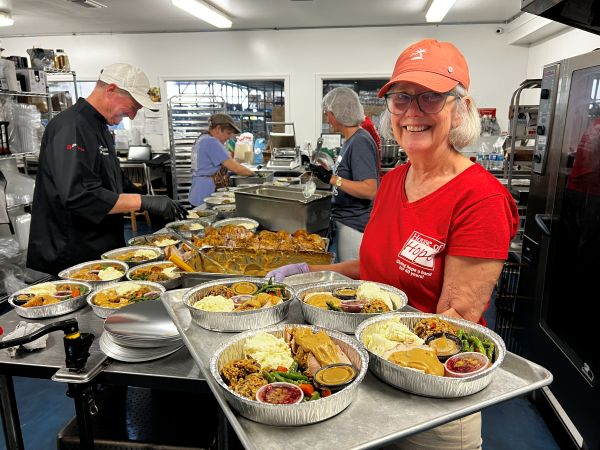
If you need House of Hope’s services, or want to learn how you can make a difference please visit us at www.hohmartin.org.
Rob Ranieri’s opinions are his own and may not reflect Friends & Neighbors viewpoint.
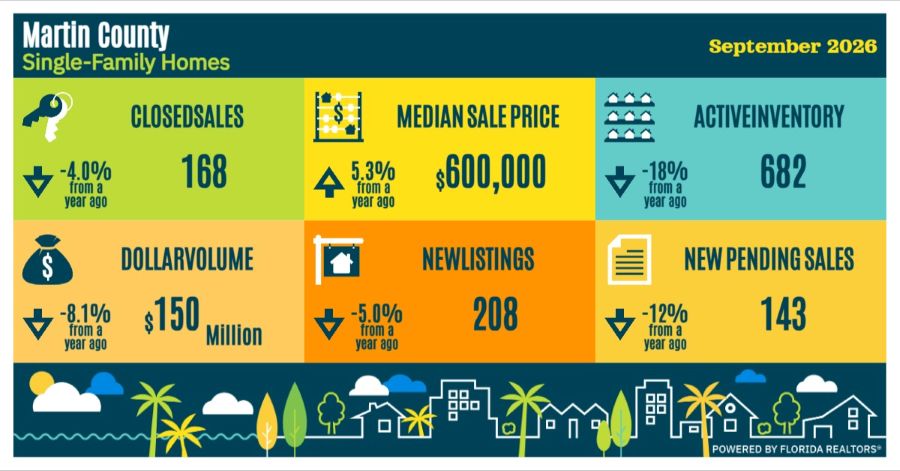
The election is finally over and there is an expectation that it will positively influence the Florida real estate market. Speculation includes the belief that high tax states residents will continue to migrate here for a stable tax state and friendlier rules. Corporations will continue to find Florida to be the best state in the nation to start or expand a business. I will discuss some of my observations about a continued migration to Florida and my opinion on the passage of Amendment 3.
The election saw some traditionally business friendly states change their party affiliation - Texas. Florida and Texas have competed head-to-head in economic development for businesses looking to relocate from high tax states. We had similar tax structures, weather, skilled labor, and a high quality of lifestyle. The Texas voter put into several key offices legislators that have advocated against big business and for higher taxes. Florida voters chose to continue its path forward with a business friendly tax legislature. Our new Governor is pro-industry and technology. I believe there will be a higher migration to Florida for the entrepreneur.
If you look South to West Palm Beach you will see a lot of cranes lifting steel beams to build new high rise buildings that are designed to house commercial offices and residential homes. Steve Ross is the largest developer in this corridor and he is betting (anticipating) many newcomers to South Florida. He predicts Palm Beach will attract technology entrepreneurs, finance professionals and others that want a friendly business environment and a beachfront lifestyle. Martin County will benefit from this growth in many ways. Our housing is close and is more affordable than PB county. Ross has built his own golf course in Hobe Sound and it commands a seven figure entrance fee to join. Indiantown has a manufacturing facility that will produce many of those specialty beams that are used to build those new projects.
How will amendment #3 affect the real estate industry. It is my opinion that it will add one more advantage to being a full time resident of Florida. If I am tired of paying high property taxes up north - it becomes another great reason to move to Florida. If you live in Florida it will help many families afford their existing homestead. The average Floridian will save several thousand dollars per year. To some, that is not much, but to a young working family it will help tremendously.
I was not the biggest fan of Amendment #3 but I did study it and came to terms with my belief that the benefit will be better than the potential down sides. I am concerned about our first responders, non-profit agencies and others that fear this will slash their budgets. I am hopeful that Floridians will let our legislators know that we want these tax savings to curtail wasteful spending but not eliminate valuable programs for hardworking families, the indigent and people that genuinely need our best social programs. Implementation of Amendment 3 is where the voters need to tell their legislators how to make this tax cut fair to all.
John Gonzalez’s opinions are his own and may not reflect Friends & Neighbors viewpoint.
I don’t have a strong opinion about Artificial Intelligence (AI) one way or another. Yet. My sense is that there are more unknowns than knowns currently. Due to the void of knowns, various groups with specific political agendas will use fear one way or the other to manipulate public perception/opinion. Whether you like that or not, it’s pretty typical political playbook stuff, unfortunately.
 One of the knowns about AI currently is that it is changing the purchase behavior of consumers in real time. And making a significant impact. If you haven’t noticed yet, try searching for something on the internet. Regardless of search engine you use, AI is now embedded into the search and influences what you see and read when the reply to your search is presented. A lot more summarized information and analysis is provided. And consumers are responding to this increase in analysis as a recommendation from a trusted source and following through with purchases, decisions, or related actions.
The days of paid ads popping up after a Google search are over. This has thrown off the traditional marketing strategy of many companies across a wide stretch of industries. No longer can a brand present itself as the top or most popular solely through paid advertisements. Think about that for a moment. Consumer advertising has completely changed. It’s not about getting a brand in front of a potential customer. It’s about how to get the consumer’s trusted source (AI) to recommend the brand. This is a whole new ball game. Consumers are using AI as their personal assistant, who happens to be the smartest source on the planet to help them make decisions.
 Among the unknowns about AI is whether the level of investment and funding going into it will return profits or meet expectations (over $200B in 2026). Most AI tools are not generating revenue currently. The mechanisms have not been “monetized” as industry folks say. Due to the pace of growth (perhaps potential) in this space and the heated competition among AI entities, a massive amount of funding is pouring into it. So much so that the players don’t have enough funds available to pay for the technology (specifically computer chips) they need to run AI. This has led the chip makers to provide these prized chips to AI companies via debt. This is one way all of this starts to become a bit tricky from a financing perspective. I’m not sounding an alarm as this is not so much different than you taking out a loan from an auto maker in order to buy their new car. In theory, you will be paying back the auto maker over time for their product because you have a stable income and have budgeted for it. In the case of AI, because the leaders haven’t monetized their businesses yet (at least not in a substantive way), the future income, and therefore the ability to pay back their debt could be perceived as a bit uncertain.
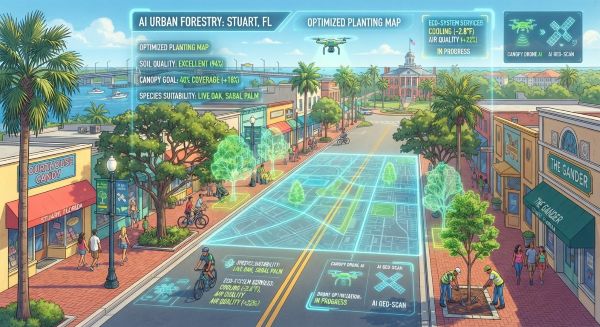
As has been written elsewhere, AI surely has the potential to improve our ability to innovate and develop new tools and solutions to real challenging problems faster than ever. I look forward to that. I wonder if AI can even help us get more street trees planted around the City of Stuart? 😊
Clay Scherer's opinions are his own and may not reflect Friends & Neighbors viewpoint.
While many are preparing for Thanksgiving, United Way is already hard at work spreading holiday cheer through its annual Holiday Project in partnership with Toys for Tots.
The holiday season is a time of joy, generosity and giving. But for families facing financial hardships, it can also bring added stress and uncertainty. As the local coordinating organization for Toys for Tots, United Way of Martin County is once again bringing our community together to collect and distribute toys, coordinate volunteers, and help ensure local children experience the magic of the holidays.
But we can't do it alone! Whether you're a family in need of assistance, a business looking to give back or a community member ready to lend a helping hand, there are several ways to get involved.
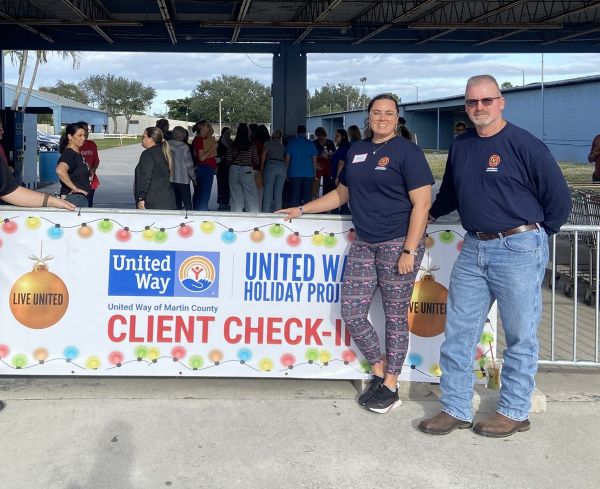
FAMILIES: Register for Holiday Assistance
Every child deserves to experience the excitement and wonder of the holiday season. Through the Holiday Project, United Way helps ease the financial burden on local families while bringing smiles to children's faces.
Families in need of assistance are encouraged to register now through Friday, December 4, at their child(ren)'s school or social service agency.
BUSINESSES: Help Us Fill the Toy Boxes!
Martin County businesses have always demonstrated an incredible spirit of generosity, and once again, we're counting on that generosity to help make the holidays brighter!
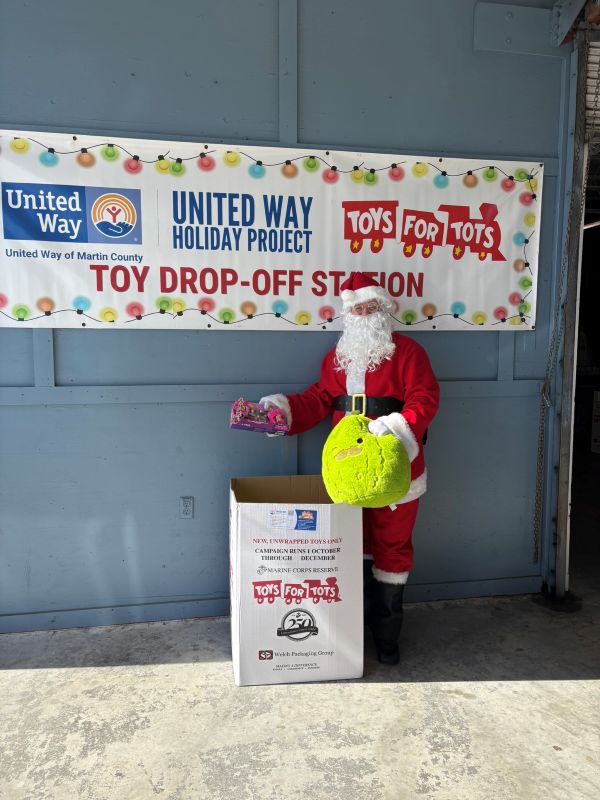
United Way invites local businesses, organizations and community groups to become official Holiday Project and Toys for Tots collection sites.
By hosting a collection box and encouraging employees, customers and neighbors to donate new, unwrapped toys, your business can help bring holiday joy to children right here in Martin County.
Whether you're a small local shop, restaurant, professional office or large corporation, every collection site makes a difference. If your business hasn't registered yet, we encourage you to sign up and help us fill toy boxes throughout our community!
Volunteers: Be Part of the Holiday Magic!
It takes more than toys to make the Holiday Project successful. It takes people willing to give one of the most valuable gifts of all — their time.
United Way of Martin County is seeking volunteers to help sort and organize toys, prepare donations and assist with holiday distribution to local families.
Whether you're an individual looking to give back or a business interested in a team volunteer opportunity, there are plenty of ways to get involved.
Sometimes, giving just a few hours of your time can make a world of difference to a family.
Together, Let's Make the Holidays Brighter!
The Holiday Project and Toys for Tots represent what makes Martin County so special — a community that comes together when it matters most.
Every donated toy, participating business and volunteer helps create moments of joy and lasting memories for local children.
Together, we can make sure the magic of the holiday season reaches as many Martin County children as possible.
Visit www.UnitedWayMartin.org to learn more about the Holiday Project and how you can get involved.
Carol Houwaart-Diez’s opinions are her own and may not reflect Friends & Neighbors viewpoint.
I’ve lived in Florida for six years now, but being from the Northeast, I still find myself a little thrown when November arrives. I’m accustomed to breaking out my boots, tights, sweaters, and parkas this time of year, so wearing sundresses in November still feels a little strange. Trust me, I’m not complaining! But there is something about turning the clocks back that takes me right back to growing up in Pennsylvania, when it was a sure sign that winter was on its way.
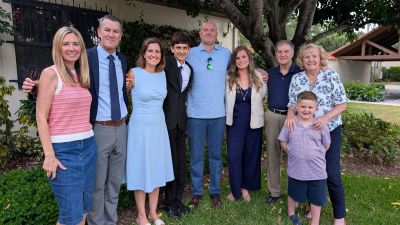 This annual ritual got me thinking about change and how we navigate it. Over the years, I’ve generally learned to adapt pretty well. At my previous organization, where I spent 22 years, we often said, “The only thing that stays the same is that everything is always changing.” It became a reminder to stay flexible, adjust expectations, and keep moving forward. That doesn't mean every change is easy, but I've learned that sometimes the best thing we can do is accept that change is part of life.
And there is certainly no shortage of change happening around us right now.
At Helping People Succeed, we are experiencing some significant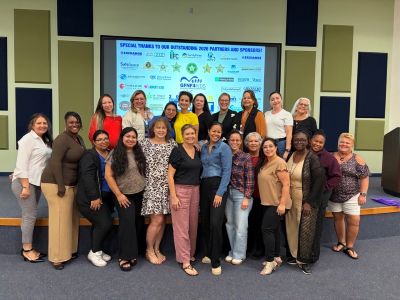 transitions of our own. We are preparing to move into a new headquarters, an exciting opportunity that will bring our programs and teams together in a new space designed to better support the individuals and families we serve. At the same time, the passage of Amendment 3 has introduced uncertainty about the future of property tax funding, which supports a meaningful portion of our services through the Children's Services Councils. While we don't yet know exactly what the longer-term implications will be, we know that change in the funding landscape may require us to adapt, plan carefully, and find new ways to sustain the work that matters so much to our community.
I share this because I think many of us are experiencing similar feelings in our own lives. Sometimes change is exciting, like a new opportunity or a fresh beginning. Other times, it arrives with questions we cannot yet answer. And sometimes the two happen at once. Even positive changes can bring uncertainty, and navigating several changes simultaneously can be challenging.
Through my work at Helping People Succeed, I have the privilege of seeing how individuals and families navigate change every day. A parent works through a child's developmental milestones. A young adult takes steps toward greater independence. Someone finds the courage to seek mental health support. Each of these experiences requires patience, encouragement, and often a willingness to step into the unknown. They remind us that progress doesn't always happen in a straight line and that no one should have to navigate life's challenges alone.
Perhaps that's something we can all take to heart, especially during a season when even our clocks are telling us it's time to adjust.

Here are a few reminders I try to keep in mind:
Find something steady. A morning routine, a walk outside, or a regular conversation with someone you trust can provide a sense of familiarity when other things are shifting.
Focus on the next step. You don't need to have everything figured out today. Sometimes progress simply means asking a question, making a phone call, or taking one small step in the right direction. Organizations, families, and individuals alike can move forward without having every answer.
Give yourself and others grace. We all respond to change differently. Some people embrace it immediately, while others need time to process what it means. A little patience and understanding can make all the difference.
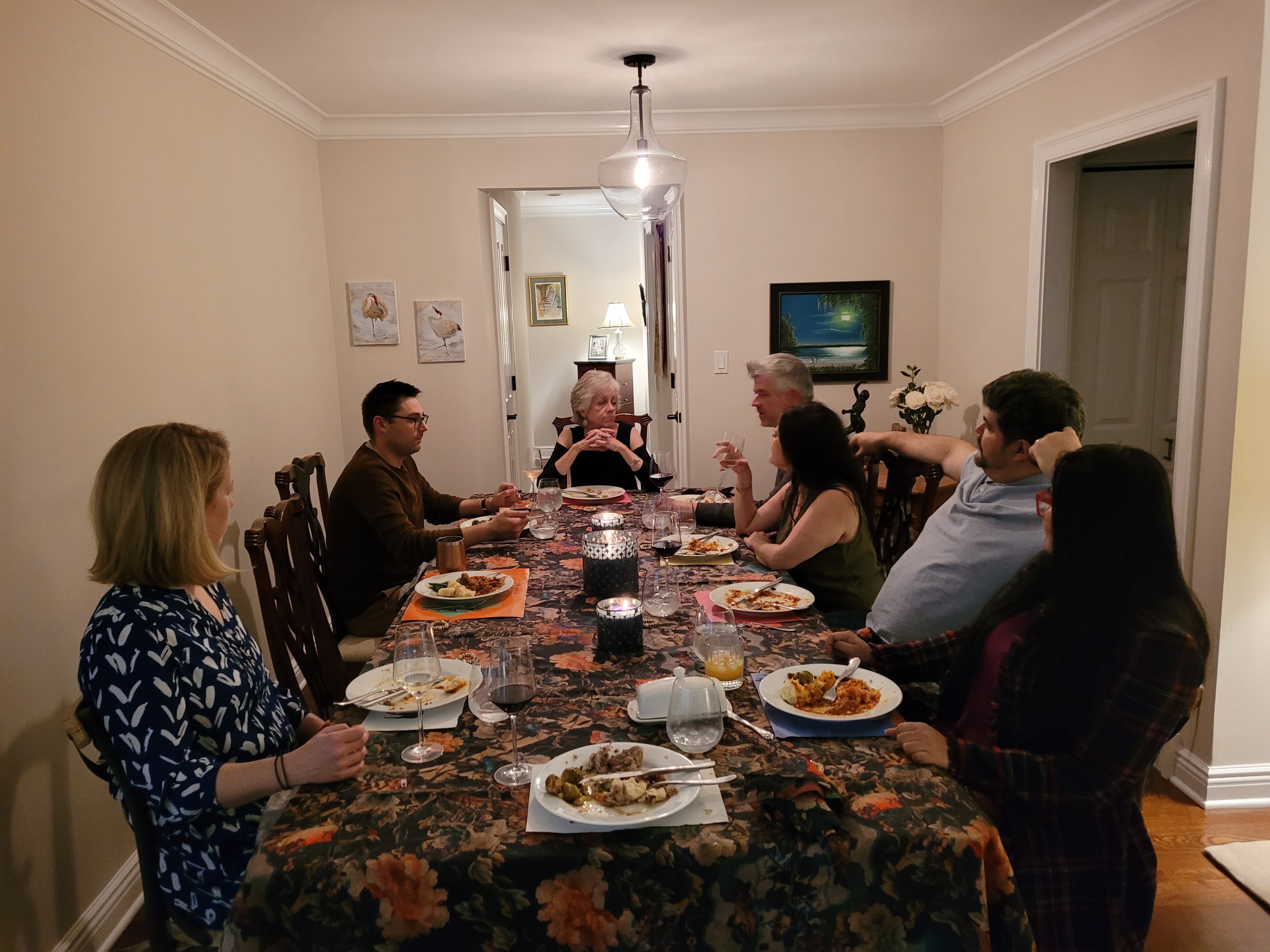
Remember your anchors. Think about the people (some of my anchors are pictured here- my family and our team), values, relationships, and sense of purpose that keep you grounded. At Helping People Succeed, our anchor is our commitment to helping individuals and families reach their full potential. Buildings may change, funding sources may shift, and the way we deliver services may evolve, but the reason we do this work remains the same.
As we move through November and into the holiday season, I hope we can all be a little more patient with ourselves and one another. Change doesn't have to be something we master. Sometimes it's simply something we learn to navigate, one day at a time, with a little support and encouragement along the way.
And just so you know, even after six years in Florida, you'll still find me wearing boots on a perfectly warm Florida day. Some things, apparently, are harder to change!
Christine Storm's opinions are her own and may not reflect Friends & Neighbors viewpoint.
We spend a lot of this newsletter on far-off places. But you don’t always need a plane ticket to feel like you’ve gotten away. With a little intention, an ordinary Sunday — or a drive you’ve done a hundred times — can turn into a day that feels like a real escape. Here are three we can vouch for, none more than a few hours from home.
1. A Sunday on Hutchinson Island
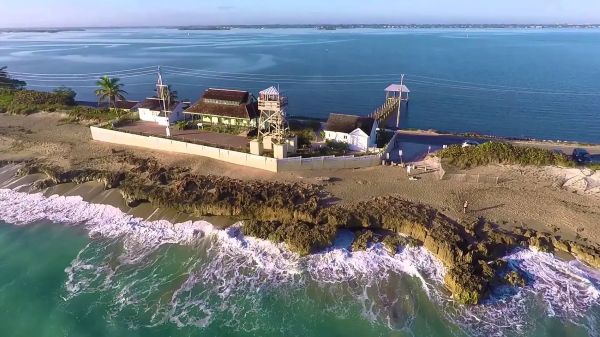
Start right here, at the House of Refuge at Gilbert’s Bar, the oldest building in Martin County. Built in 1876 to shelter shipwrecked sailors, it’s the last of ten such stations left standing anywhere in Florida — and after a careful restoration completed earlier this year, it has never looked better perched on its limestone rocks above the Atlantic. From there, we drove down to Palm Beach Gardens for a late lunch at Yard House, a walk through the freshly reworked downtown, and a stop at Van Leeuwen for ice cream (lots of funky flavors). We did exactly this with our nine-year-old a couple of months ago, and it made for a pretty-close-to-perfect Sunday.
2. A smarter way to Fort Myers
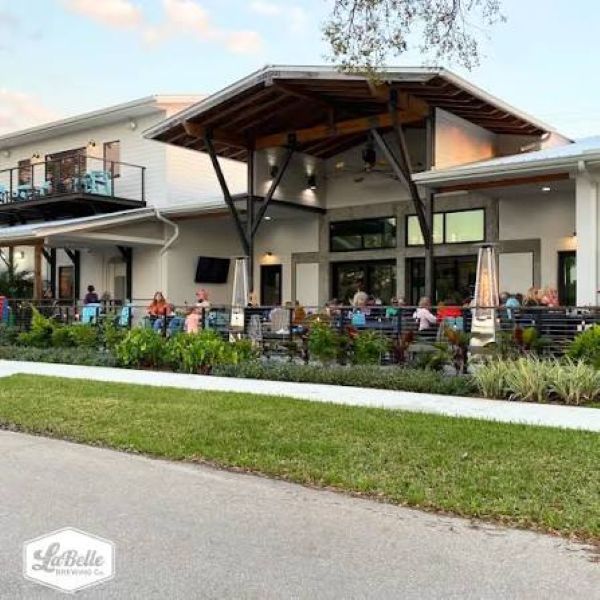
The drive across the state to Fort Myers is about three hours of not much. Blah. Our fix: a stop at LaBelle Brewing Company, roughly at the halfway mark. The beer is genuinely excellent, the food holds its own, and the room has the kind of easy, unhurried atmosphere that resets a long drive. Even your dog will love it. The designated driver, of course, is limited to a small taste, but it’s enough to make the second half of the trip feel like part of the fun rather than a slog.
3. The one that surprised us most: Bok Tower Gardens
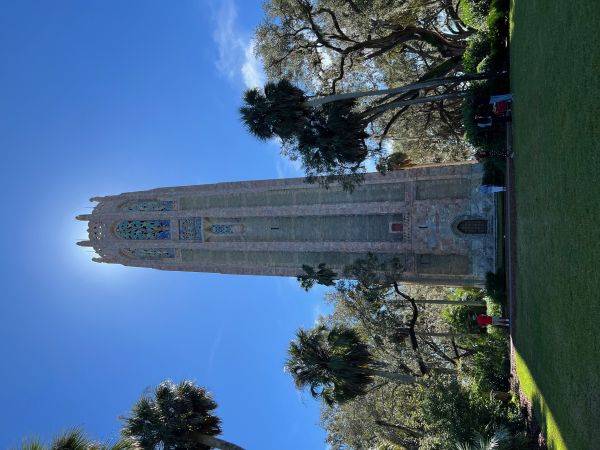 A couple of years ago, on the way back from Legoland, we detoured to Bok Tower Gardens in Lake Wales, and it stopped us in our tracks. At its heart stands the Singing Tower: a 205-foot Gothic-Revival tower of pink marble and coquina, built by the publisher Edward Bok and dedicated in 1929 by President Coolidge. Its 60-bell carillon plays out across the gardens several times a day, and the sound carrying over the grounds is genuinely moving. The gardens themselves were laid out by Frederick Law Olmsted Jr. on the highest hill in peninsular Florida. It’s a National Historic Landmark, and it feels like one — a place built, in Bok’s own words, as “a spot of beauty” to rest the spirit. Allow a few hours; it’s about two and a half from home. And if you need lunch, there’s a lovely, beautiful café to get the job done. Yes, they have beer, too.
None of these requires a flight, a hotel, or more than a tank of gas. That’s rather the point. The vacation feeling isn’t always about distance. Sometimes it’s just about paying attention to what’s already within a short drive of the front door.
Marcelo Guimarães' opinions are his own and may not reflect Friends & Neighbors viewpoint.
Now in its 37th year, the Stuart Air Show is one of my favorite community events. At least 30,000 people who will attend the annual aviation extravaganza on Nov. 13-15 agree with me.
 Intentionally scheduled to coincide with Veteran’s Day, the air show—which makes a direct local economic impact of $4 million—takes many moments to honor the service and sacrifice of our veterans.
Examples range from discounted tickets for veterans and their families to the Missing Man aerial formations that cap off the Saturday and Sunday performances to its support for JROTC programs at local high schools and Southeast Florida Honor Flight.
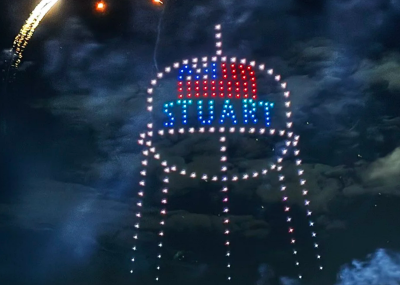 “We do our best to make sure that service members—past and present—know their service has not been forgotten,” says Dewey Vinaya, president and chair of the Stuart Air Show Board of Directors who also served as an Army paratrooper for 23 years.
Honoring our veterans is a top priority for many businessowners in our community, including two members of the BDB’s board of directors.
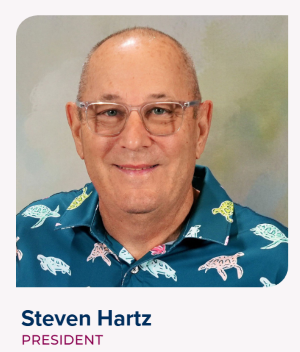 Steve Hartz is the president of our board and the founder and CEO of Value Tool & Engineering, a specialized precision manufacturing and engineering company with a Palm City facility that creates customized tools and fixtures for the aerospace industry.
Steve served six years in the Air Force as a nuclear weapons specialist. He credits the military with honing his management skills and establishing strong standards and structures that refine process and produce high-quality outcomes.
Steve is a big believer in the value that veterans bring to his company. Eleven percent of his nearly 100-person workforce (locally and out of state) is composed of veterans. Some still suffer with PTSD, which can make them sensitive to certain stress levels.
“We’re not discouraged by that,” says Steve. “We know what we’re taking on and we’re willing to do that as I look at their service as an overall benefit, being a veteran myself.”
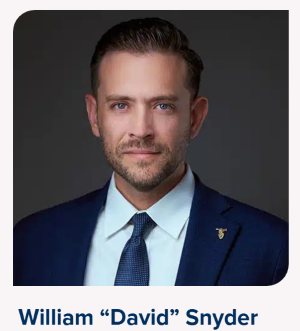 Another member of the BDB board who served in the military and owns a local business is David Snyder. Prior to a 14-year career in law enforcement, David served in the Marines during the Iraq war. Today, he owns and operates the home-healthcare business, Evergreen Private Care in Stuart.
Within a year of launching, covid hit. Observing veterans suffering in heartbreaking circumstances motivated David to broaden his company’s mission.
“I started interacting with veterans who couldn’t afford the services we offered,” he says, “and many were dying alone in nursing homes.”
David worked with the Veterans Administration’s Community Care network to assist struggling veterans.
 “Preserving dignity, that’s No 1,” he says. “For the patients and their families, we want to prolong independence—that means your health needs are treated in your home and you’re not confined to a facility.”
David makes a priority of hiring veterans as caregivers and pairing them with patients who are veterans, noting the special connection that quickly forms between those share the bond of serving in uniform.
We deeply admire and appreciate the way Steve, David, and other local businessowners demonstrate their support for our veterans. The entire community gets a chance to do the same at the Stuart Air Show. So, grab your tickets, enjoy the show, and if you get a moment with a veteran, please take the chance to say, “Thank you.”
Troy Mcdonald's opinions are his own and may not reflect Friends & Neighbors viewpoint.
When a new Club member walks through the Blue Doors of a Boys & Girls Clubs of Martin County facility, we do our best to make sure they feel a sense of welcome, comfort and acceptance.
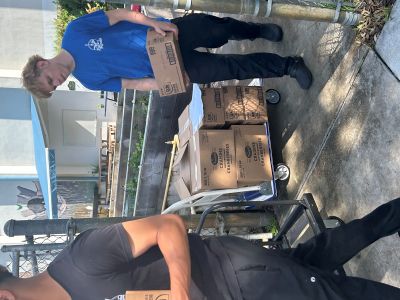 The welcome part is easy, thanks to the warmth with which our team greets new members. While the acceptance part takes time, leaders among the membership reach out to put new arrivals at ease. The feeling of comfort? That we can assess and address relatively quickly. The easiest way to get someone comfortable is by offering them something good to eat. And it’s difficult for anyone to feel comfortable if they’re living with food insecurity.
For the more than 1,000 members in our daily care, eight out of 10 qualify for the Martin County School District’s free or reduced lunch program. Some face even more destitute circumstances. So, the Clubs are more than safe havens for our members; they’re also consistent sources of healthy, delicious food.
The depth of need for reliable food in various Martin County communities is precisely why BGCMC is making providing all the fixings for a feast, and follow-up meals, the centerpiece of our holiday outreach efforts.
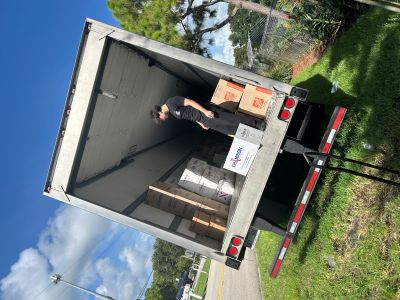
This holiday season, BGCMC will prepare 500 food boxes for our members and their families to help carry them through the winter break—2,000 family-sized meals in all, plus the makings for plenty more.
Prepared by the BGCMC culinary team, each box holds four family-sized meals featuring dishes such as whole grain chicken tenders, whole grain mac and cheese, green beans and lasagna. All recipients need to do is heat and serve.
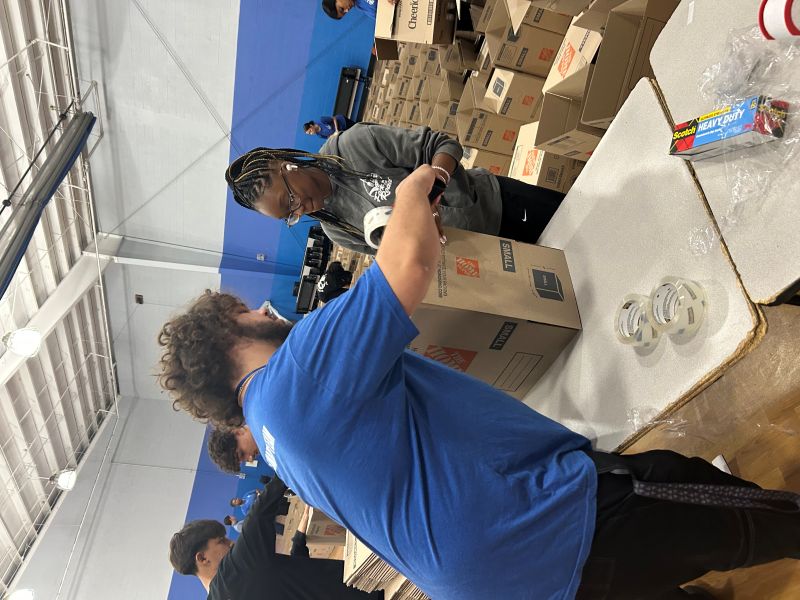
But the break lasts longer than four meals, so every box is also packed with a mix of perishable and non-perishable staples—eggs, rice, potatoes, bread, peanut butter, jelly and whole grain cereal—that families can turn into meals of their own. We’re including recipes, too.
The holiday food box program complements the nourishment we provide to our members daily, which includes a healthy snack and meal—two meals during the summer—and backpacks full of food staples to take home over the weekends.
The culinary team—overwhelmingly composed of BGCMC members—will be preparing the boxes on Dec. 21. From Dec. 22-23, they’ll be passing them out at our five Clubs in Stuart, Indiantown, Port Salerno, Jensen Beach and our temporary location in Hobe Sound.
 In many ways, our culinary team members—who earn industry certifications and competitive wages—trained for this holiday season’s focus throughout the summer. In support of No Kid Hungry Florida and part of Florida’s Summer BreakSpot, they prepared and provided pick-up breakfasts and lunches to families in need from Big Mound Park in Indiantown, serving an astounding 211,000 meals!
Members of the culinary team have already volunteered to help hand out food boxes this holiday season. For many of them, the issue of food insecurity hits not just close to home—it’s evident in their kitchens. They’ll be receiving their own food boxes to help support their families.
“Our culinary team members know the difference efforts like this make because they’ve experienced the need themselves,” says Chef Daniel Bettencourt, BGCMC director of culinary operations. “They know when they make a meal, it’s going for a good cause.”
Most of us think about the holidays as a time when our hearts are full. The tummies of local children in need will be, too, thanks to this effort and the community’s support.
Keith Fletcher's opinions are his own and may not reflect Friends & Neighbors viewpoint.
"We'll be fine, 'til tomorrow
Though I hope it won't rain”
-- Don McLean
The October 22 Rivers Coalition meeting featured a presentation by Todd Kimberlain, South Water Management District’s Chief Meteorologist, on the effects of the Super El Niño on our waterways.
El Niño is an unusually warm body of water that materializes in some years in the eastern Pacific Ocean near the equator. This year‘s version has already set temperature records, easily qualifying for its Super El Nino designation.
Super El Niños have several impacts:
1) They make the Atlantic Ocean cooler than usual. That’s why there weren’t any Atlantic hurricanes this season.
2) The Pacific Ocean, on the other hand, gets significantly warmer than usual. That led to the unending parade of major hurricanes there.
3) This winter, the Super El Niño is forecast to generate well-above normal rainfall in Florida during the November-April “dry season”: 15-22 inches of it on top of normal dry season rainfall, about 12 inches. The greatest risk to our estuary the extra rain poses is from the Kissimmee River Basin -- the amount of rainfall there and the subsequent runoff from it.
That additional rainfall is what has water managers concerned. Colonel Bowman (Army Corps of Engineers) explained it as follows: When engaging with the enemy, the military develops two scenarios: the most likely outcome and the worst possible outcome. In this case, the “most likely outcome” would lead to an easily-manageable lake level of 14.4 feet. But that “worst possible outcome” could result in the lake level rising as high as 18.7 feet.
And an 18.7-foot lake level would force the Corps to do discharges.
Fortunately, the lake’s level is currently 12.5 feet, well below its normal late-October level of 15.0 feet. Water managers are thus hopeful -- even expecting – that discharges won’t be needed.
The most comparable situation to this year’s Super El Niño is the Super El Niño event of 1997-98. Our area got 37 inches of rain during that dry season -- the wettest “dry season” on record. At the beginning of that dry season, though, the lake level was 14.3 feet compared to its currently it’s 12.5 feet. That’s still a pretty good cushion.
The bottom line: Hope the traditional dry season in Florida this winter isn’t too wet.
Water quality levels were also addressed. The worst water quality in the entire St. Lucie estuary is in the South Fork, and a three-month study is just getting underway to determine the main causes of the degrading factors there.
Some fascinating information emerged during the discussion. Sawfish, which are very endangered, use the winding South Fork as a nursery area. Most of the winding South Fork is relatively shallow, but the depth at the oxbows, where the sawfish nurseries are located, is 15-16 feet. The water quality in the winding South Fork is thus critical to sawfish.
Finally, the city of Stuart expects to get $15-$20 million during the next eight years from the half cent sales tax approved by Martin County voters in 2024 for environmental land acquisition. They’ve created a Sustainable Acquisition Lands for Tomorrow group (SALT) to study how best to use those funds. Unlike the county, Stuart can use their funds for more than strictly land acquisition, such as enhancing recreational facilities. This gives them a bit more flexibility than the county kas. The two of them will be working together to decide how best to leverage their priorities; matching grants play a major role in that.
Walter Deemer's opinions are his own and may not reflect Friends & Neighbors viewpoint.
November is National Alzheimer’s Disease Awareness Month and also National Family Caregivers Month. It’s a perfect combination, as anyone will tell you who has personally experienced Alzheimer’s or supported others who were coping with this disease.
National Alzheimer’s Disease Awareness Month was established in1983 by President Reagan when there was comparatively little known about the disease. There are now more than 6 million Americans living with Alzheimer’s, and the numbers are growing. We’ve made advances in our medical understanding of Alzheimer’s, but we still have no evidence-based definitive cure or prevention strategy.
What we do know without any doubt is that Alzheimer’s affects not just the individual coping with the disease but also family and friends. There are now more than 53 million people nationwide who are classified as family caregivers. They provide unpaid care to loved ones with health, disability, or age-related needs, often around the clock. That’s an estimated economic value totaling more than $470 billion.
It’s so important for us to remember what these caregivers are going through. As a loved one experiences changes in thinking, remembering, and carrying out the activities of daily living, the effect on a caregiver is profound. Besides the emotional toll of seeing someone change before their eyes, caregivers find themselves providing help with simple, everyday tasks like bathing, grooming, and dressing.

The person receiving care may find it upsetting to need help with such personal activities. They may experience agitation, anxiety, even anger, and often are not able to communicate clearly what they are feeling.
The Council on Aging Martin County recognizes the strain that puts on the caregiver. Our Care Navigators work with families to find resources for caregivers, ranging from support groups in person and online to respite care under the GUIDE program and a Caregivers Conference to be sure that caregivers know they are not alone in their efforts. On January 22, caregivers are invited to join us for a free event involving serious play with Legos, and on March 12 we’ll hold our Annual Caregiver Workshop.
If you know someone who is a caregiver, we encourage you to reach out to them. Even kind words of understanding can help. And if they need more resources than that, please refer them to the Council on Aging Martin County.
We are all in this together, and as your Hub for Senior Resources, we stand ready to help.
Karen Ripper's opinions are her own and may not reflect Friends & Neighbors viewpoint.
When someone is having a heart attack, every minute matters. For patients experiencing a STEMI, or ST-elevation myocardial infarction, rapid diagnosis and treatment can make the difference in survival and in keeping heart muscle damage to a minimum.
That is why Cleveland Clinic Tradition Hospital launched a new STEMI protocol in October, expanding access to advanced emergency heart care for patients across the Treasure Coast and helping more people receive timely treatment closer to home.
A STEMI is one of the most serious types of heart attack. It occurs when blood flow to part of the heart is completely blocked. In these moments, speed is critical. The faster a patient is diagnosed and treated, the better the chance of preserving heart muscle and improving outcomes.
This new protocol represents an important step forward in cardiovascular services at Tradition Hospital and reflects a broader commitment to strengthening heart care throughout our region.
As part of this initiative, Tradition Hospital has enhanced its cardiac catheterization lab and expanded specialized training for staff. We have also implemented protocols that begin before a patient even arrives at the hospital. Electrocardiograms performed by EMS crews in the field can now be transmitted directly to the emergency department, allowing clinicians to identify a STEMI early and activate the cardiac response team as quickly as possible.
Tradition-based cardiovascular interventionists are prepared to deliver first-line treatment, including percutaneous coronary intervention and balloon angioplasty. Reducing door-to-treatment time is essential in these emergencies, and this program is designed to streamline care at every step.
New providers at Martin Health also help us build support for prevention and cardiovascular follow-ups for patients regardless of where they are on the health journey. Since early 2025, eight new physicians and six new advanced practice providers see patients at Tradition Hospital and Martin North Hospital for everything from general cardiology to cardiothoracic surgery.
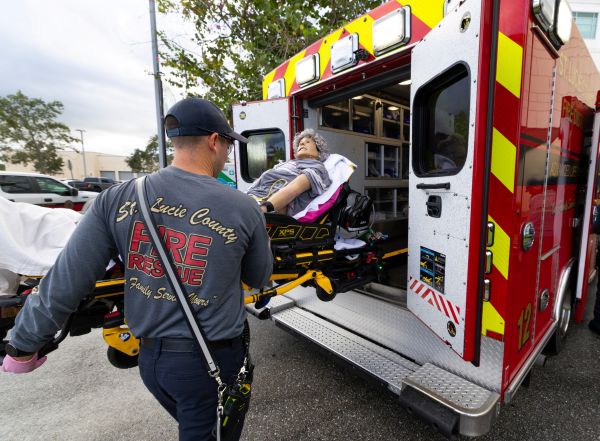
Expanding access to emergency cardiac care means more residents can receive lifesaving treatment without traveling too far from home during a medical crisis. Our STEMI program helps ensure patients can be treated quickly while also benefiting from the expertise, coordination and resources of Cleveland Clinic’s cardiovascular experience.
For patients who need additional treatment because of severe blockages or complications, care does not stop at Tradition Hospital. Patients can be stabilized and efficiently transferred to Cleveland Clinic Martin North, where cardiothoracic surgeons can perform coronary artery bypass grafting, or CABG, a procedure that uses a new blood vessel to route blood around a blockage.
This coordinated approach strengthens connections across Cleveland Clinic Florida’s cardiovascular network. Patients who require cardiac surgery, extended mechanical support or evaluation for heart transplantation can be rapidly transferred to the appropriate Cleveland Clinic facility, while many others will be able to receive urgent STEMI intervention at Tradition Hospital.
Ultimately, this initiative reflects Cleveland Clinic’s continued investment in advanced heart care and our commitment to ensuring greater access to specialized treatment when people need it most.
When every second counts, having the right care available at the right time can save lives.
Dr. Chirag Choudhary's opinions are his own and may not reflect Friends & Neighbors viewpoint.
Holiday shopping should be about finding gifts, spending time with family, and enjoying the season. But a quick trip to the store can take an unexpected turn when unsafe conditions lead to an injury.
With crowded aisles, busy parking lots, and employees working to keep up with holiday shoppers, accidents can happen. Knowing what to watch for and what to do after an injury can make a difficult situation easier to manage.
Common Hazards During Holiday Shopping
Slip-and-fall accidents are among the risks shoppers face during the holidays. Spilled drinks, wet floors, loose mats, and merchandise left in walkways can create dangerous conditions.
Parking lots can also be hazardous. Drivers searching for spaces may overlook pedestrians, while poor lighting, potholes, and uneven pavement can increase the risk of injury.
When Crowded Stores Become Unsafe
Holiday crowds can make shopping areas harder to navigate. Overflowing displays, blocked walkways, and long checkout lines can create situations where someone gets hurt.
Stores should take reasonable steps to keep aisles clear, address spills, and manage conditions that could put customers at risk.

What Are Store Owners Responsible For?
In Florida, businesses generally have a responsibility to maintain reasonably safe conditions for customers.
This includes checking for potential hazards, addressing dangerous conditions, and providing appropriate warnings when needed.
However, not every accident means a store is legally responsible. Whether a business may be liable depends on the circumstances, including what the store knew or should have known about the hazard.
What to Do After a Shopping Injury
If you're injured in a store or parking lot, your health comes first. Seek medical attention, even if the injury initially seems minor.
Please report the incident to store management and ask that it be documented. Take photos of the area, including any spills, damaged flooring, poor lighting, or other hazards.
Collect contact information from witnesses and keep copies of medical records and related expenses. Because surveillance footage may be erased or overwritten, acting quickly can help preserve important evidence.
The holidays are busy enough without an injury adding to your worries. Knowing what to do can help you focus on your recovery and the people who matter most.
Gene Zweben’s opinions are his own and may not reflect Friends & Neighbors viewpoint.
By Amanda Barry
We've all seen the effects of recent flooding across Martin County. Heavy rainfall has left neighborhoods and roadways flooded, while king tides have brought unusually high-water levels along our coastlines. And while much of the attention has understandably been on the flooding itself, there's another problem that comes with all that water: the litter and debris it carries along the way.
King tides are the highest predicted tides of the year, occurring naturally when the positions of the Earth, moon and sun combine to produce unusually high water levels. In low-lying areas like ours, these tides can cause flooding even without rain. When heavy rainfall occurs around the same time, drainage can become even more difficult, contributing to the widespread flooding we've recently experienced across Martin County.
As floodwater moves through neighborhoods, it can pick up debris and spread litter across roadsides, beaches and shorelines and carry it into nearby waterways.
When the water recedes, much of that litter remains scattered throughout our community, where it can eventually make its way into the St. Lucie River, Indian River Lagoon and surrounding waters.
With additional king tides expected during the weeks of Thanksgiving and Christmas, now is an important time to address the litter left behind by recent flooding before it has a chance to make its way back into our waterways.
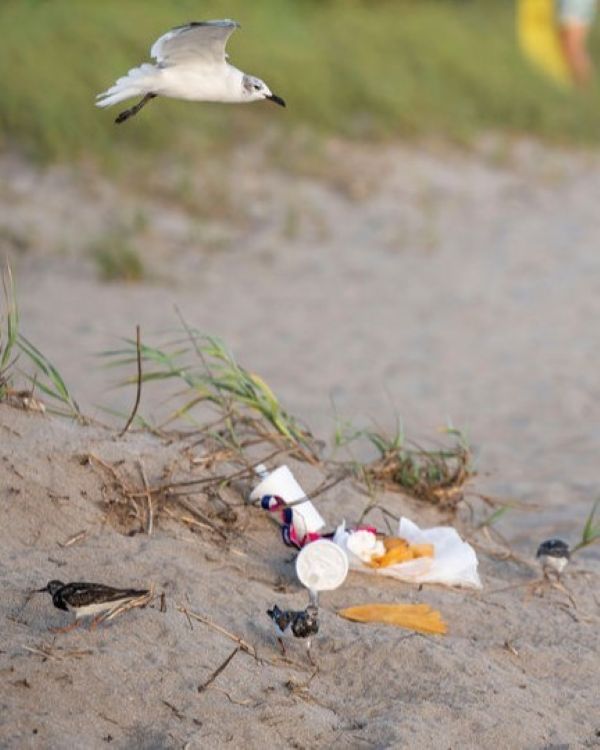
Keep Martin Beautiful is encouraging residents, families, businesses and community groups to help give our beaches, coastal parks and shorelines some extra care.
Organizing a cleanup is simple: choose a location that needs attention, select a date that works for your group and contact us to coordinate supplies, including gloves, trash bags and litter grabbers.
We're grateful to everyone who has already stepped up to help care for our community. With so many areas affected by recent flooding, these efforts are especially important.
We can't control the rain or the tides, but we can help prevent the litter they carry from becoming a bigger problem. Every piece of debris removed today is one less piece that could end up in our waterways tomorrow.
To organize a cleanup or request supplies, contact Keep Martin Beautiful at info@keepmartinbeautiful.org. To learn more about our programs and volunteer opportunities, visit keepmartinbeautiful.org.
Amanda Barry’s opinions are her own and may not reflect Friends & Neighbors viewpoint.
For more than 10 years, much of my work with Keep Martin Beautiful has involved bringing people together to make a difference in our community. From neighborhood cleanups to environmental improvement projects, I've had the privilege of coordinating volunteers who give their time and energy to help keep Martin County beautiful.
 I never imagined I would find myself writing about community support from quite a different perspective.
Like many others, my family has been personally impacted by the recent flooding in Jensen Beach. Here in my neighborhood along Hyline Drive, the situation unfolded quickly. We were among the first to evacuate, leaving our home in the middle of the night on Monday, November 2. When I returned to the neighborhood on Wednesday, November 4, the streets were still inaccessible by car, and getting back into our home required help from a neighbor who generously lent us her kayak and John boat. With their help, my husband, brother-in-law, and another neighbor were able to reach our home and retrieve as many belongings as possible.
 That experience is only one part of a much larger and ongoing situation. We still don't know when we might be able to return home or how extensive the work will be to make our house livable again. That uncertainty is shared by our neighbors, many of whom are facing the same difficult questions about their homes and what comes next. Recovery won't end when the water recedes. For many families, that will be when an entirely different and much longer process begins.
What I've witnessed throughout our neighborhood is neighbors finding ways to reach one another, checking on families, helping retrieve belongings, and sharing whatever resources they have available. In the middle of so much uncertainty and loss, these acts of kindness have been a powerful reminder of what community really means.
At Keep Martin Beautiful, organizing volunteers for community cleanups is a big part of what we do. We are already considering how we can bring people together to help affected neighborhoods like mine as recovery progresses.
However, the timing and nature of those efforts will depend on conditions on the ground. Safety must come first, and we want to make sure volunteers can make a meaningful difference when the time is right.
In the meantime, there are ways everyone can help:
- Check on your neighbors. A simple conversation, an offer of assistance, or helping someone connect with available resources can mean more than you realize.
- Support local recovery efforts. Consider donating supplies, supporting organizations assisting affected families, or sharing verified information about available resources.
- Look ahead to environmental recovery. As conditions improve, properly disposing of flood debris, protecting our waterways, and participating in organized neighborhood cleanups will all be important parts of restoring our community.
One thing this experience has reinforced for me is that environmental stewardship is about more than keeping our roadsides, parks, and waterways clean. It is also about the people who call these places home.
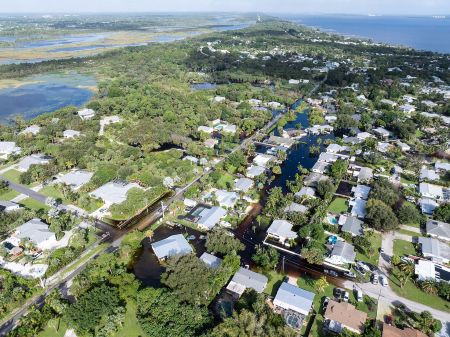 For more than a decade, I've been the person coordinating opportunities for others to give back to Martin County. Now, I find myself on the other side of that experience, needing to ask for and accept help in such a personal way. But I have been reminded firsthand of how generous, compassionate, and resilient our community can be.
There will be opportunities ahead to roll up our sleeves, bring volunteers together, and help restore the places we all care about. Until then, I encourage everyone to look for ways to support their neighbors, share helpful resources, and remember that even small acts of kindness can make a meaningful difference.
Martin County is a beautiful place because of its natural resources, but it is the people who care for one another that make it a community.
Tiffany Kincaid's opinions are her own and may not reflect Friends & Neighbors viewpoint.
Byron Donalds just won the governor’s race by about 108,000 votes, roughly 1.3 points, according to unofficial returns. But the person getting a ton of attention on education is his wife, Erika, and honestly, she’s earned it.
Quick background. She served one term on the Collier County School Board, skipped a second because she felt she couldn’t change enough, and went all in on school choice from the outside. She started a nonprofit and two for-profit companies, chairs education opportunities at the America First Policy Institute, and has advised Moms for Liberty. She’s upfront about it, too. At a Doral event she said profit shouldn’t be a bad word in education.
So let’s follow the money. Charter schools run on public dollars. A Miami Herald and Tampa Bay Times analysis found five charter schools paid more than $30 million over four years to two companies Erika runs. One online school paid her curriculum company $10 million last year and is on track for $15.7 million this year, though the campaign says those fees cover teachers, curriculum and tech. Byron’s own congressional disclosures list her as owning 81% of that company. Per Florida Bulldog, they also show she earned over half a million dollars from 2020 to 2022 at a payroll firm that Optima-run charter schools paid millions. Her nonprofit also reported paying her $183,326 in 2021.
Now the fair part. Revenue isn’t profit, the reporting doesn’t say how much she personally kept, and she and the campaign say this is a legitimate career, not a conflict.
Martin County has skin in this. Our School Board approved her foundation’s first charter, Treasure Coast Classical Academy in Stuart, in 2018. The school ended its management contract with her nonprofit in 2023 and later sued it. A judge tossed the case over where it could be filed, not on the merits, and the school appealed, per January reporting.
Who gets left out?

Charter fans point to state data showing charter students outperforming, and Stanford research suggesting low-income kids often gain more. Fair. But enrollment tells a different story. In the state’s 2017-18 comparison, 65% of traditional-school students qualified for free or reduced lunch, versus 54.9% in charters. At Treasure Coast Classical it’s about 8%, in a district around 43%. The school says it offers no bus service. Those numbers don’t prove why, since location, who applies and how families hear about it all matter. But a family without a ride or a flexible schedule hits a real wall. Even a major school-choice scholarship group, Step Up For Students, has acknowledged that transportation keeps some families from the schools they want.
I’d prefer she stayed away from public education policy, but now that Byron has been elected, I see an even grimmer future for Florida’s public education future.
Sydney Thomas' opinions are her own and may not reflect Friends & Neighbors viewpoint.
Well, this is the type of article you normally see at the beginning of hurricane season. Everyone starts talking about backups, generators, disaster recovery, and business continuity.
But honestly, now is the time to think about it.
I was recently up in Panama City for a wedding when a hurricane came through. The power went out, and suddenly all the things we normally take for granted simply stopped working.
At the same time, we had clients over in Pensacola who lost power for days. They had employees who could potentially work from somewhere else, but there was one big problem: some of their key line-of-business servers were sitting in buildings without power.
No power meant no servers. No servers meant no access to critical business applications.
It raises a pretty simple question:
What would happen if your business couldn’t open tomorrow?
Not necessarily because the building was damaged. Maybe you just didn't have power, or the Internet service was down, or the phones weren't working. Maybe your employees could work from home, but the systems they need to do their jobs were still sitting inside your dark office.
How long could you operate that way?
A few hours? A day? Three days? A week?
Business continuity isn't just about having a backup. It's about understanding what your business absolutely needs to operate and making sure those things will still be available when something unexpected happens.

That might mean distributed services and servers, redundant Internet connections, battery backup, generators, better remote-access options, cloud-hosted servers, or a disaster-recovery solution that can bring critical servers online somewhere else.
And hurricanes aren't the only reason to plan. We just had a nasty flooding incident that disrupted several businesses. Power failures, Internet outages, hardware failures, ransomware, and even something as simple as construction cutting a fiber line can accomplish the same thing.
So, while hurricane season may be just about over and still seem comfortably far away, this is actually the perfect time to ask:
If we couldn't get into our building tomorrow, could we still run our business?
If the answer is "I'm not sure," now is the time to find out. There are answers to the question and you need to ask to know what those answers are.
Eric Kiehn’s opinions are his own and may not reflect Friends & Neighbors viewpoint.
Thanksgiving is almost upon us so as we begin the busiest season of the year, let us be thankful for what we have and be willing to help those who need a bit of support. Our motto—Kids Need Kiwanis—is our focus as you will see.
Let us have fun by sharing with you what we have to offer both your kids and to you!
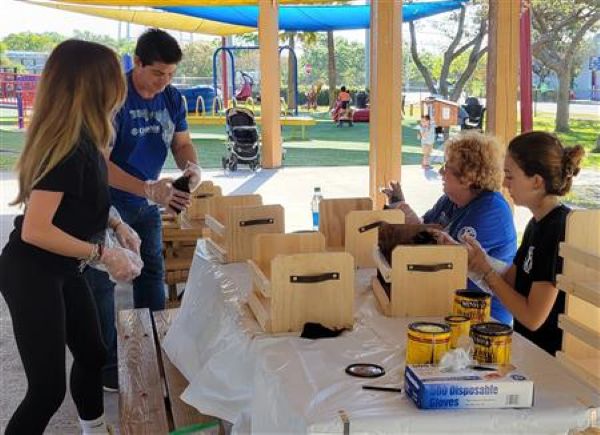
Our gift to the community in partnership with the City of Stuart--Kiwanis Park is thriving with opportunities for kids of all ages—we just added Harmony Highway thanks to our Impact 100 grant. Kids can play a variety of instruments—learning and enjoying music! I saw a number of adults enjoying Harmony Highway as much as the kids.
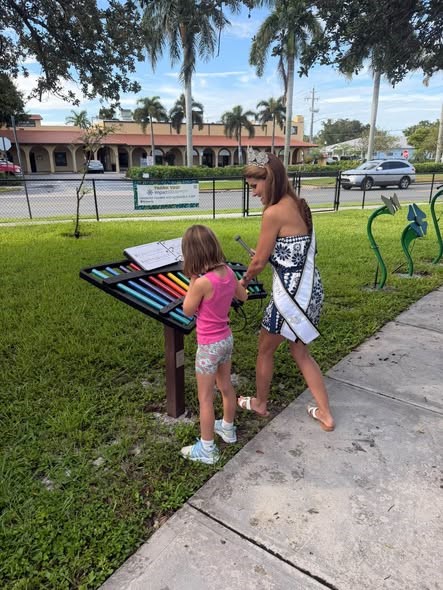 Over the past few years, we have upgraded much of our equipment, added a Barrier Free playground, and replaced the sand under the swing. Kiwanis Park a place for all kids to learn and have fun!
Literacy rules! We know that Reading is Fundamental, and we support numerous literacy projects in our community, distributing over 15,000 free books to children every year! We have 3 Little Libraries in Kiwanis Park—we keep them stocked with age- appropriate books—please take one (or two)!
Many kids have no books at all at home, we build and distribute, Kiwanis Bookshelves, filled with books. These bookcases and books are given to families through Habitat for Humanity, Helping People Succeed, and Family Promise.
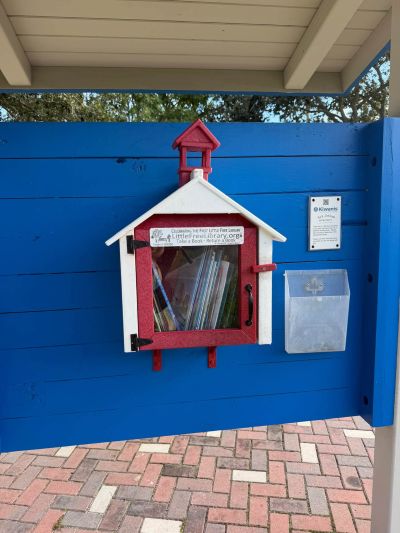 Kiwanis Reads! Our members read books at many of the local preschools, VPK programs and school/church-based locations. We have the absolute best time watching the kids pay attention and gain a love for reading! We always welcome volunteers to read with us—if you are interested, please contact me.
Super Saturday in Kiwanis Park is every 3rd Sat. morning from 9-11 AM during the school year and is co-sponsored by our club and the City of Stuart's Parks and Recreation Department. Come and play with us through music and crafts—we will have some very special events during the holiday season!
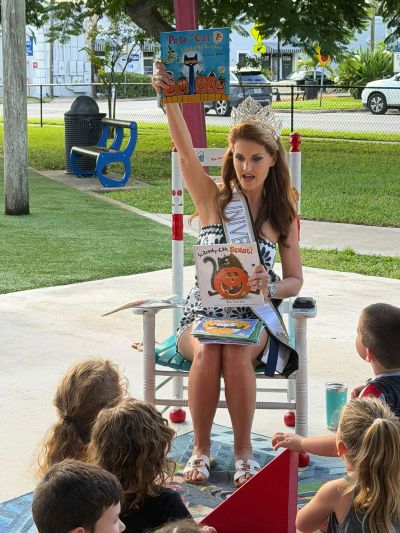 Currently we are getting ready to help 100 kids have a Happy Christmas and Holiday time. We work with guidance counselors in the elementary and middle schools to identify kids who need our help. We invite you to contribute to this program—a $100 tax deductible contribution to the Kiwanis Club of Stuart Foundation will gift a child a happy holiday. For more information contact me through the below information.
As you can see—we stay busy! We invite you to enjoy all that Kiwanis has to offer—again our website is kiwanisclubofstuart.org. We also invite you to become a member of our club—contact me at Suzy.Hutcheson@outlook.com.
In closing the members of the Kiwanis Club of Stuart wish you the happiest of the holiday season. You will be incredibly busy, exhausted and wanting it to be over—but the joy you will feel from the time you spend with your family, and friends will make it all worthwhile!
Suzy Hutcheson's opinions are her own and may not reflect Friends & Neighbors viewpoint.
It’s wet out there.
Schools cancelled, cars flooded.
And nary a hurricane in sight.
There were King Tides— already higher than normal.
And then came the rains.
Sheets of water pummeled already saturated land, showing us very clearly where the low spots are— where the wetlands used to be. Where the stormwater wasn’t thought out, or simply not maintained.
Along the Treasure Coast, the rainfall from Nov 1-3 is being hailed as a 100-200 year rain event. Big claims. In Palm Beach County, they’re calling a 1,000 year rain event. 17 inches of rain 6 hrs.

Some may recall the flooding in Hobe Heights in June of 2020. The rainfall that led to damaged homes and displaced residents was also hailed as a 100 year rain event— and that was only six years ago.
These bold claims made me ask: what is a rain event? Where do these statistics even come from? A rain event is a percent chance that it will rain so much in a year. So, a 100 year rain event has a 1% chance happening on any given year. A 200 year rain event has a 0.5% chance, and a 1,000 year rain event has a 0.1% chance. The amount of rain is based on annual averages for a specific area, and the length of time matters. Seventeen inches of rain in a month is July. Seventeen inches in six hours is historic.
We live in a state made of water. Florida is a peninsula surrounded by the ocean with freshwater aquifers buried in her limestone bones. Lakes, rivers, and hundreds of miles of wetlands were carved into her sandy soils, sculpted with the precision of eons to hold the five feet of water that rains down each year.
Whatever ridiculously numbered year rain event the news and media want to hype is irrelevant. The fact is that in the last six years, in our county alone, there has been enough rain to flood homes, block roadways, and turn streets into tiny rivers.
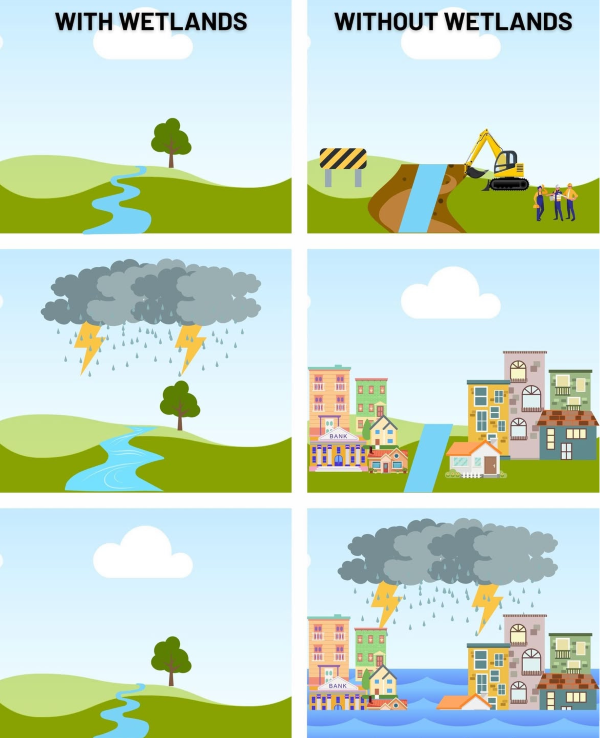
As much as we may want to try, we can’t actually control the weather. What we can do is be aware of our impacts. Each time a new house goes in, or a road, or a parking lot, it places concrete where land was, the equivalent of putting a cap over a sponge. The water has to go somewhere, and it’s up to the property owner to understand how their project affects the water that lands on their property. It’s also up to the county to enforce when a certain project will negatively impact the community at large.
The floodwaters, whether tidal or storm driven, are a reminder that we live on a living, breathing planet. The more we can connect our communities and our day to day lives with this fact, to work with, not just taking, but also giving back, the more resilient we will be for whatever crazy event comes next.
Kara Grace Muzia's opinions are her own and may not reflect Friends & Neighbors viewpoint.
As the holiday season approaches, many of us look forward to family gatherings, cherished traditions, and opportunities to give thanks. For children, the holidays can be magical. They can also be difficult.
While images of celebration often dominate the season, many children experience heightened stress, anxiety, grief, family conflict, financial hardship, or loneliness during the holidays. For some, the break from school means a loss of routine, support systems, and trusted adults. For others, memories of loss or family challenges can make this time of year especially difficult.
That is why communities need strong systems of support for children and families, not just during the holidays, but throughout the year. In Martin County, we are fortunate to have one of the strongest champions for children in the state: the Children's Services Council of Martin County. For decades, CSC has invested in programs that strengthen families, support mental health, prevent crises, and help children reach their full potential. Through its thoughtful stewardship and commitment to accountability, CSC has created opportunities for thousands of local children to thrive.
Organizations like Tykes & Teens have been able to expand access to children's mental health services because of the vision and partnership of the Children's Services Council of Martin County. Together with many other community providers, CSC has helped build a network of support that ensures children have access to counseling, prevention programs, family services, and other resources when they need them most.
These investments matter. When a child receives help for anxiety before it becomes debilitating, when a family receives support before a crisis occurs, or when a teenager finds hope during a difficult season, the benefits extend far beyond that individual child. Stronger children create stronger families and ultimately stronger communities.
As we celebrate this holiday season, there is also reason to pay close attention to the future. The recent passage of Florida's Amendment 3 has raised questions across the state about potential reductions in property tax revenues and how those changes could affect local services and community investments. While the long-term effects remain uncertain, many nonprofit organizations and community leaders have expressed concern that reduced revenues could place pressure on programs that serve children and families.
For agencies like Tykes & Teens, demand for services continues to grow. Across our community, children are facing increasing challenges related to anxiety, depression, trauma, substance use, and social pressures. These challenges do not disappear during the holidays. In many cases, they become more visible.
That is why maintaining a strong commitment to prevention, early intervention, and children's mental health remains so important. Investments made today will help prevent larger and more costly problems tomorrow. More importantly, they help children experience the safety, stability, and hope they deserve.
As we reflect on what we are thankful for this season, the Children's Services Council of Martin County deserves recognition for its unwavering commitment to local children and families. CSC's work often happens quietly behind the scenes, but its impact can be seen every day in healthier children, stronger families, and brighter futures.
This holiday season, perhaps the greatest gift we can give our children is a community that continues to put their well-being first. Thanks to the leadership of the Children's Services Council of Martin County, Martin County has long embraced that responsibility, and countless children are better for it.
Anne Posey's opinions are her own and may not reflect Friends & Neighbors viewpoint.
As we grow older, maintaining strong social connections becomes just as important as caring for our physical health. Relationships with family, friends, neighbors, and community members provide emotional support, a sense of belonging, and opportunities for meaningful engagement. While aging often brings life changes such as retirement, relocation, or the loss of loved ones, nurturing social connections can help older adults remain healthy, active, and fulfilled.
Why Social Connections Matter
Humans are naturally social beings. Meaningful relationships contribute to our overall well-being by providing companionship, reducing stress, and offering support during challenging times. For older adults, regular social interaction can help combat loneliness and isolation, which have been linked to poorer health outcomes and decreased quality of life.
 Social connections can also encourage healthy habits. Friends and family often motivate one another to stay active, attend medical appointments, participate in community activities, and maintain a positive outlook on life.
Improved Mental Health
Regular interaction with others can help reduce feelings of loneliness, anxiety, and depression. Sharing experiences, conversations, and laughter strengthens emotional well-being and can provide comfort during life's transitions.
Better Physical Health
Studies suggest that socially engaged older adults are more likely to remain active and maintain healthier lifestyles. Participation in social activities often involves movement, whether it's attending events, volunteering, walking with friends, or taking classes.
Enhanced Cognitive Function
Engaging in conversations, learning new skills, and participating in group activities helps keep the mind stimulated. Social interaction challenges the brain in ways that support memory, problem-solving, and overall cognitive health.
Increased Sense of Purpose
Strong relationships foster a sense of meaning and purpose. Whether caring for grandchildren, volunteering in the community, mentoring younger generations, or contributing to local organizations, social involvement helps individuals feel valued and connected.

A Simple Connection Can Make a Difference
As we approach the holiday season, take a moment to reach out to an older adult in your life. A phone call, visit, shared meal, or invitation to a community event can make a meaningful difference. Small acts of connection can help strengthen relationships and remind others that they are valued and supported.
Know Us Before You Need Us
The Area Agency on Aging is dedicated to promoting the well-being and independence of seniors, adults with disabilities, and their caregivers. We offer resources, support, and advocacy to help you live safely and independently.
📞 Helpline: 1-866-684-5885
Dwight D. Chenette's opinions are his own and may not reflect Friends & Neighbors viewpoint.
Many of us spend our working years saving for retirement. But as retirement gets closer, the focus shifts from accumulating money to figuring out how to make that money last. Whether it’s deciding when to claim Social Security, developing a withdrawal strategy, or managing taxes, there are several financial decisions that can have a lasting impact on retirement security. Understanding what needs to be considered before permanently clocking out can help individuals address and prepare for potential challenges before they become costly issues in retirement.
One of the biggest adjustments retirees face is transitioning from earning income to relying on savings or other sources of income. After spending decades building their nest egg, many pre-retirees don’t have a clear understanding of how much income they’ll actually need in retirement. Before leaving the workforce, workers should calculate how much income they’ll need to maintain their lifestyle. This includes daily expenses such as housing, groceries and utilities along with discretionary spending on travel, hobbies and other goals.
Once those expenses are established, the next step is figuring out how one’s retirement savings will work in tandem with Social Security benefits to provide income. When it comes to Social Security, the timing of when someone begins claiming benefits affects how much money they’ll receive each month. For married couples, this decision can also influence spousal and survivor benefits. Instead of basing the decision solely on how long it would take to financially benefit from delaying benefits, pre-retirees should consider how their claiming strategy impacts their overall plan.
Many pre-retirees likely know how much they have accumulated in retirement savings, but understanding how much of that money they’ll actually keep after taxes is also important. Deciding which accounts to withdraw money from and when can impact how much retirees owe in taxes each year.
Withdrawals from traditional IRAs and 401(k)s are usually subject to income taxes, potentially reducing the amount retirees have available to spend. While these accounts provide tax advantages during working years, taxes are typically owed once the money is withdrawn in retirement. Retirees could find themselves in a higher tax bracket depending on how much they withdraw combined with other sources of income.
It’s also important to understand how Required Minimum Distributions work when spending down accounts. Depending on the year they were born, retirees must start taking mandatory withdrawals once they reach a certain age. These withdrawals are required by the IRS and could increase taxable income, leading to larger tax bills. Taking larger withdrawals from retirement accounts could also increase a retiree’s income enough to trigger higher Medicare premiums.
Healthcare is another expense pre-retirees should consider before leaving the workforce. Those who are transitioning away from employer-sponsored health insurance should evaluate their coverage options, including Medicare, to find the best fit for their medical needs and budget. To better understand potential healthcare expenses, workers should compare premiums, deductibles, and out-of-pocket costs.
As retirees get older, long-term care becomes another financial consideration that can be easy to overlook. Whether it’s a nursing home, assisted living facility, or in-home care, receiving long-term care can create significant financial burdens, especially when care is needed for an extended period of time. Many assume Medicare will cover these expenses, but it generally doesn’t pay for ongoing custodial long-term care. Planning ahead for potential long-term care needs through personal savings or insurance coverage can help retirees prepare for these expenses without putting more strain on their savings.
Prospective retirees should also prepare for the possibility of a market downturn, especially in the early years of retirement. Unlike those who are still working and contributing to their retirement accounts, some retirees might be relying on those investments to cover daily expenses. Withdrawing money when markets are down can further reduce savings while leaving fewer assets available to recover when markets rebound. This is known as the sequence-of-returns risk.
Having a contingency plan that includes access to savings or other reliable sources of income can help retirees avoid selling investments in unfavorable market conditions.
Planning for retirement involves much more than reaching a certain level of savings. Understanding how decisions about Social Security, retirement withdrawals, healthcare and investment risks can impact long-term financial security is also an important part of the process. Working with a financial professional before leaving the workforce can help pre-retirees identify gaps in their plan or develop a strategy that supports them through retirement.
Charles Czajka's opinions are his own and may not reflect Friends & Neighbors viewpoint.
When a home fire turns a family's world upside down, Red Cross volunteers are there to provide immediate support and a path forward.
Over the past year, the American Red Cross Palm Beach & Treasure Coast Chapter responded to 12 home fires in Martin County, opening 14 cases and assisting 40 local residents affected by these emergencies. From emergency financial assistance and recovery planning to emotional support and community referrals, Red Cross Disaster Action Team volunteers help families begin rebuilding after some of their most challenging days.
As we enter the holiday season, the need for this support continues. Home fires remain the most common disaster the Red Cross responds to, and our volunteers stand ready 24 hours a day, 365 days a year to provide comfort, care, and hope when it is needed most.
Support through the Red Cross Holiday Giving Campaign helps ensure these lifesaving services remain available for families throughout Martin County and across South Florida.
Learn more at redcross.org/SouthFlorida or support the Holiday Giving Campaign at redcross.org/holidaygiving.
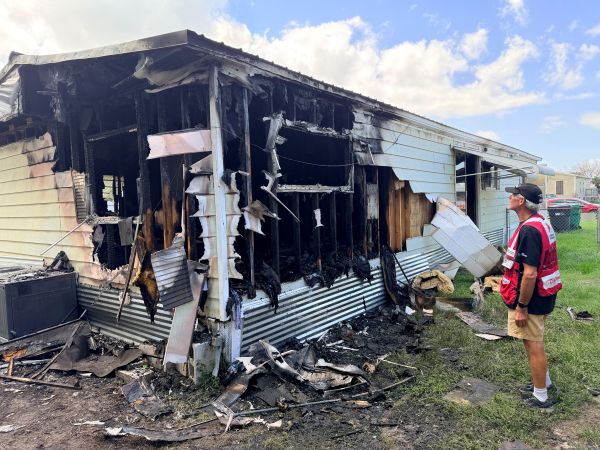
Meet the Red Cross at the Stuart Air Show
The American Red Cross Palm Beach & Treasure Coast Chapter is excited to be part of the 2026 Stuart Air Show on November 14-15.
If you're attending the show, be sure to stop by the Red Cross booth and meet the volunteers who help strengthen our community every day. Visitors can learn about disaster preparedness, CPR and First Aid training, volunteer opportunities, and the Red Cross Service to the Armed Forces program, which provides support to military members, veterans, and their families.
Whether helping families prepare for emergencies, teaching lifesaving skills, supporting those who serve our nation, or responding to disasters, the Red Cross is committed to helping people prevent, prepare for, and respond to life's emergencies.
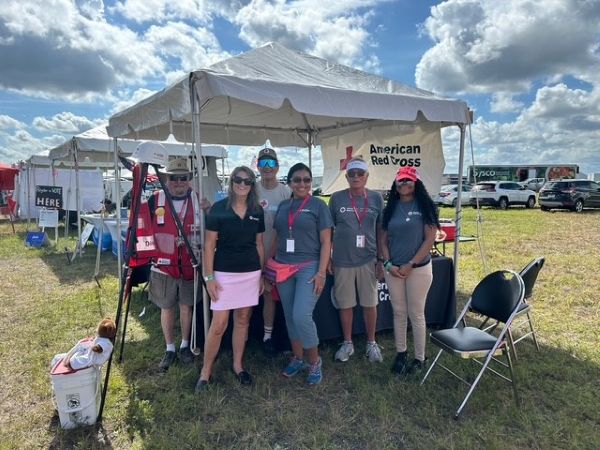
We look forward to seeing our Martin County neighbors at the Stuart Air Show and sharing the many ways you can get involved in making a difference close to home.
For more information, visit redcross.org/SouthFlorida.
Traci Mitchell's opinions are her own and may not reflect Friends & Neighbors viewpoint.
A Community to Be Thankful For
As we enter November, a month when we traditionally pause to reflect on what we are thankful for, I find myself thinking about the people who make Volunteers In Medicine Clinic possible. At VIM Clinic, gratitude is not an abstract idea. We see it every day—in the volunteers who give their time, the community providers who open their doors, the donors who make our work possible, and the patients who trust us with their care.
The numbers tell part of the story. In 2025, Volunteers In Medicine Clinic served 1,096 patients. Eighty-three volunteers gave more than 5,913 hours of their time to the Clinic. More than 100 physicians and other healthcare providers throughout our community generously cared for VIM patients at no charge, providing 829 specialty referrals. Together, these volunteers and community partners help ensure that our patients receive the comprehensive care they need.
 Our community's generosity also makes that care possible. In 2025, our budget was met through donations, grants and special events. Every $1 donated represents a $10 investment in better health for our neighbors who otherwise might have nowhere to turn. Behind every statistic is a person—a patient who received a diagnosis, found a treatment, had a chronic condition managed, or simply had someone listen and help.
I am especially grateful for our patients. Choosing to ask for help can be difficult, and allowing someone to become part of your healthcare journey requires trust. Our patients remind us why this work matters. They are not numbers on a spreadsheet or appointments on a schedule. They are our neighbors, friends and members of the Martin County community.
 This Thanksgiving season, I hope everyone involved with VIM Clinic knows how much their contribution matters. Whether you volunteer for a few hours, provide specialty care, make a donation, attend one of our events, or simply tell someone about VIM Clinic, you are helping make healthcare more accessible in our community. The success of Volunteers In Medicine Clinic has never belonged to one person or one organization. It belongs to all of us.
Volunteers In Medicine Clinic provides free, comprehensive healthcare to uninsured, low-income adults in Martin County who meet our eligibility requirements. Our patients receive primary care as well as access to a wide range of specialty services through our volunteer providers and community partners. There is no waiting list to become a VIM patient. To learn more, call 772-463-4128 or visit vimclinic.net.
To everyone who has given their time, expertise, financial support and trust: thank you. You are an important part of the VIM family, and we are grateful for you—not just in November, but every day.
Jordan Bromberg’s opinions are his own and may not reflect Friends & Neighbors viewpoint.
I have. Let me share my finds; “Trust” and “Mailman.” Both were incredibly complicated and took some time to fully trust the ride I was on with the two widely acclaimed writers.
“Trust” by Hernan Diaz was one of the most complicated novels I have ever read. I usually don’t cheat when I am reading a book but with “Trust,” I had to find a book site to explain its complicated author within an author structure set in the 1920s. It is a fascinating exploration of the use of wealth to manipulate the stock markets and make incredible profit while also weaving a story that examines the role of women. At that time women were no more than the workhorse of the home. Their fathers controlled them and expected them to put their beliefs and ambitions aside to cook and clean and agree with Popa, even if he’s an Italian crackpot anarchist, but you’ll have to read the book to find the author who grows up quite nicely after she learns to type and gets a job for a very wealthy man.
“Mailman: My Wild Ride Delivering the Mail in Appalachia and Finally Finding Home” by Stephen Starring Grant.” At first, I thought “not another what I did during covid memoir.” Imagine my surprise when a laid off, high strung marketing genius with anger management issues learns how to put on a post office jacket and work his butt off delivering the mail.
Grant is battling cancer and needs insurance. Imagine doing this job in the town where you grew up and your dad is a brilliant professor at Virginia Tech, and you deliver mail and packages to the therapist who treated you for your anger management issues. Grant’s mother has dementia and yet she is still expected to cook for her husband and other son. His father is slowly dying of cancer.
Blacksburg is a university town, but it is still a small town. Its outskirts are the wilds of the Appalachian Mountains with its mist and the New River running backwards. It truly is a place of mystery and miracles. Grant feels one with the universe while standing at the top of the gorge on a cloudless day. He mentions this to Kat, another mail carrier who recently lost both her mother and sister to Covid. She is evangelical and she says to him: “God speaks to you;” believing it was her mother and sister storming the gates of heaven.
Grant fends off dogs. He gets lost looking for an elusive address down a creek or across a creek. He delivers packages, books, and chicken feed to an old lady; she gives him eggs for his family. He delivers a portable refrigerator and a portable freezer, thinking the poor family must really need this equipment. Imagine his amazement that it’s for an older couple with a massive sailboat and an observatory next to their spacious home. Overtime they make sure they always have hot coffee waiting for Grant. Grant eventually gets his life back, but he’s found his life, home in Appalachia. I am glad I rode along.
Nicki van Vonno’s opinions are her own and may not reflect Friends & Neighbors viewpoint.
*Name changed for privacy
When Lilly* arrived at the Tilton Family Children’s Shelter, she was struggling with emotional and behavioral challenges stemming from difficult experiences in her young life. Like many children who have experienced abuse or neglect, Lilly needed more than a safe place to stay. She needed caring adults who believed in her and would help her discover her potential.
 Through compassionate counseling, educational support, and encouragement from Hibiscus staff, Lilly began making remarkable progress. She learned to manage her emotions, develop positive behaviors, and build confidence in herself and her abilities.
One of Lilly’s proudest achievements came during the Shelter’s summer tutoring program, where she earned recognition as the “Most Improved Student.” Her dedication and academic progress demonstrated just how much a child can accomplish when given the right tools, guidance, and opportunities.
For Lilly, this achievement represents more than academic success. It reflects her growing confidence, determination, and ability to overcome challenges that once seemed overwhelming.
At Hibiscus Children’s Center, children and teens are given opportunities to succeed every day. Through professional mental health counseling, educational and literacy support, life-skills development, and individualized care, Hibiscus helps children overcome the effects of trauma, discover their strengths, and achieve important milestones. Every accomplishment, whether in the classroom or in everyday life, is a meaningful step toward a more promising future.
 For more than four decades, Hibiscus has provided safety, stability, and life-changing services to vulnerable children. Thanks to the generosity of our community, children like Lilly receive the support and encouragement they need to build confidence, develop essential skills, and reach their full potential.
Every child deserves the opportunity to succeed. At Hibiscus Children’s Center, each achievement is a powerful reminder of what is possible when a child is surrounded by compassion, opportunity, and people who believe in them.
Matt Markley's opinions are his own and may not reflect Friends & Neighbors viewpoint.
This will probably be the shortest column I have ever done for the Friends and Neighbors since I started.
Mother Nature has had the surf fishing shut down for the past two and half weeks and we probably will not get a chance to wet a line until about the seventh or eigth of November. Rain, huge surf and steady 25 to 35 knot sustained winds of the past couple of weeks are still ongoing while I am writing this, which is on November 2.
Flood warnings are up again today, and I can honestly not remember a stretch of weather in October that has been this bad since I moved here 15 years ago. The shame of it all is that before all of this started a couple of weeks ago the surf bite was great. Pompano, bluefish, some mackerel, and some big whiting were all finding their way into angler's coolers.
The pompano were spread out from Vero Beach all the way down to our local beach accesses like Virginia Forrest, Bryn Mawr, Tiger Shores, and Stuart Beach. The key to finding the pompano when it becomes fishable again will be taking some time looking and figuring out how the beaches have changed. The beach erosion has been terrible so we will all need to see what accesses are still able to allow everyone to get a cart and your equipment to the water.
There will be some spots that have the big drop offs right at the dune line and that will keep you off of that area. A little bit of time with a notepad will help put some fish in your cooler. The troughs and runouts have all changed also so finding the areas that have some deeper channels will improve your results.
Looking around the low tide mark will make these areas more visible. The late fall run had started out to be a great one and hopefully after the wind and surf settles the action will pick right back up.
Good luck and catchem up.
Paul Sperco’s opinions are his own and may not reflect Friends & Neighbors viewpoint.
Before anyone passes the pie, the table usually goes quiet for a moment. Someone gives thanks for the food, the people who made it, or the loved ones who made it home. Someone may say the name of a person they wish were still there. For a few seconds, joy and sorrow sit side by side. That moment connects more closely to the history of Thanksgiving than the cheerful story many of us learned in school.
How Thanksgiving became a national holiday
In the autumn of 1621, English colonists at Plymouth celebrated their harvest. According to colonist Edward Winslow, the Wampanoag leader Ousamequin, also known as Massasoit, came with about 90 men. They spent three days with the settlers and contributed five deer. Earlier that year, the Wampanoag and the English had formed an alliance. More than two centuries later, a historian labeled the gathering the “first Thanksgiving,” helping link the harvest feast to a holiday that took shape much later.
That gathering was a moment of cooperation in a much longer history. As English settlements expanded, Native communities endured dispossession and violence. Since 1970, Indigenous people and their supporters have gathered in Plymouth on Thanksgiving for a National Day of Mourning. Their observance asks us to remember what the familiar holiday story often leaves out. If we want to talk about peace, we can begin by listening to the people whose experience of that history differs from our own.
The annual national tradition took hold during the Civil War. For years, writer and editor Sarah Josepha Hale had urged Americans to observe Thanksgiving on the same day, believing a shared occasion might help bring the country together. On October 3, 1863, President Abraham Lincoln called for a national day of thanksgiving on the last Thursday of November. He asked Americans to remember widows, orphans, and others suffering because of the war, and to pray for the country’s healing. In 1941, federal law set the holiday on the fourth Thursday of November.
What giving thanks looks like on an ordinary day
 What stays with me about Lincoln’s proclamation is that he asked people to give thanks while the war was still going on. Some families were waiting for news, and others had already received the worst of it. Gratitude can feel complicated under those circumstances. It can feel that way in our own lives, too. You can miss someone terribly and be grateful for the time you had together. You can have a hard day and still remember the person who called to see how you were doing.
Giving thanks becomes a daily practice when we tell people what their kindness meant to us. Thank the neighbor who brought the trash cans in while you were away. Tell a friend you still remember the meal they dropped off when you were too tired to cook. Then think about who might need that same care from you. It might be someone you see every week who could use a hand and has never asked.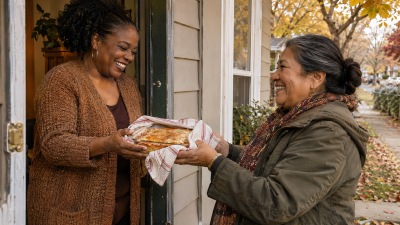
Peace can begin in those ordinary moments, too. It can sound like asking a sincere question when you feel tempted to argue, then staying quiet long enough to hear the answer. Around a holiday table, that may take more patience than cooking the whole meal.
When the dishes are done, and the guests have gone home, think of one person who made your life a little easier this year. On an ordinary day, call them. Tell them what you remember.
Do you have a great story about someone you are thankful for? I would love to hear it. Email me @ Chriss@ChrissdavidAndAssociates.com
Chriss David’s opinions are her own and may not reflect Friends & Neighbors viewpoint.
By MaryLynn Magar, Vice Chair, Florida Department of Eduction
Recently, the Martin County School Board and Superintendent welcomed members of the Florida State Board of Education and Dr. Henry Mack, Florida’s Commissioner of Education, for a firsthand look at what workforce education looks like in today’s public schools. What we saw should make every Floridian proud. Students and teachers showcased programs in culinary arts and hospitality, healthcare, first responder and public safety training, welding, automotive repair, and JROTC. These were not isolated electives. They were rigorous, career-focused programs preparing students for success in college, the workforce, and beyond.
One of the biggest misconceptions about workforce education is that it is reserved for students who “can’t” go to college or simply do not want to pursue higher education. That stereotype is outdated and frankly incorrect.
The students we met demonstrated exactly why workforce education has become one of Florida’s greatest educational success stories. Yes, many are earning industry-recognized certifications that could allow them to enter the workforce immediately after graduation and earn excellent wages. But many also plan to continue their education. They see workforce programs as a way to gain valuable skills, reduce college costs, build real-world experience, and explore career interests before choosing a degree path.
One student in particular left a lasting impression. She was passionate about food preparation and hospitality and excelled in her culinary program. We all thought that she may very well become a successful restaurateur one day. Yet her goal is not simply to work in a restaurant. She plans to attend college and become an attorney specializing in hospitality law. Her workforce education experience is not replacing college. It is enriching her future college experience by giving her industry knowledge, practical skills, and a deeper understanding of the field she hopes to serve professionally.
That story illustrates what workforce education in Florida has become: an opportunity creator rather than a limitation.
Florida’s investment in career and technical education has grown dramatically. The state’s Career and Technical Education (CTE) framework includes programs ranging from health sciences and information technology to hospitality, manufacturing, transportation, and public safety.
The scale of participation is equally impressive. According to GetThereFL.com data, more than 818,000 Florida secondary students participated in Career and Technical Education programs during the 2024–25 school year.
Florida’s participation numbers place the state among the nation’s leaders in preparing students for both college and careers.
The results speak for themselves. Research consistently shows that students in Career and Technical Education programs graduate at high rates and often continue into postsecondary education while possessing skills that employers desperately need. In Florida, 98.7% of CTE concentrators graduated high school during the 2024–25 school year, compared with 92.2% of students statewide — a difference of 6.5 percentage points.
Equally important are the economic opportunities available to students. Programs such as welding, healthcare, manufacturing, and public safety can lead to rewarding careers with strong earning potential. Florida’s own workforce education materials highlight fields such as diagnostic medical imaging, dental hygiene, software development, physical therapy assistance, electrical line work, and healthcare support occupations as career options that may require specialized training, certifications, or associate degrees rather than a traditional four-year pathway.
Many of these occupations can offer competitive wages while allowing individuals to begin earning sooner and potentially accumulate less student debt. Workforce education gives students options, and options are powerful.
Governor Ron DeSantis and the Florida Department of Education have made workforce development a priority, investing more than $12 billion in workforce education and training programs since 2019 as part of a goal to make Florida the nation’s leader in workforce education.
These investments are paying dividends not only for students but also for employers seeking to fill critical positions. Industries across Florida need nurses, automotive technicians, welders, cybersecurity specialists, firefighters, emergency responders, hospitality professionals, and skilled trades workers. High schools are increasingly helping to build that talent pipeline before students even graduate.
The visit to Martin County High School reinforced a simple truth: workforce education is not a lesser pathway. It is a different pathway, and often a complementary one. The students in these programs are future entrepreneurs, healthcare professionals, attorneys, engineers, first responders, and business owners. They are learning valuable skills, earning credentials, gaining confidence, and discovering passions that will shape their futures.
Florida’s workforce education programs are helping students connect classroom learning to real opportunity. They are breaking down outdated distinctions between “college-bound” and “career-bound” students. Most importantly, we are recognizing that success looks different for every student.
That is not lowering expectations. It is expanding possibilities. THAT is something worth celebrating.
MaryLynn Magar’s opinions are her own and may not reflect Friends & Neighbors viewpoint.
American Humane Society Comes to the
Aid of Local Horse Rescue Following Martin County Flooding
Team delivers emergency supplies of fresh, dry bedding to Equine Rescue & Adoption Foundation after floodwaters impact horse stalls
PALM CITY, FL (November 6, 2026) – Following a week of heavy rainfall that brought significant flooding to Palm City and surrounding Martin County, American Humane Society swiftly stepped in to support local equine rescue Equine Rescue & Adoption Foundation (ERAF), delivering urgently needed supplies after floodwaters reached the rescue’s horse stalls and destroyed its bedding.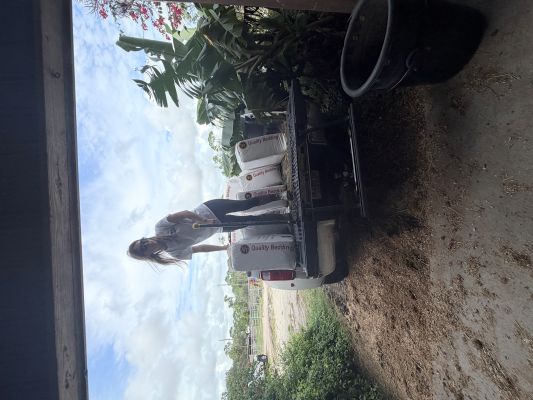
Flooding peaked Monday, November 2, and water levels across ERAF’s pastures rose well above the horses’ knees, disrupting operations across the property. The floodwaters also destroyed the rescue’s large onsite stockpile of horse shavings, leaving the animals without the dry bedding they urgently needed. Once American Humane Society’s own animals were secured and safe, its Sanctuary team quickly mobilized to help. Staff loaded a truck with nearly 900 pounds of fresh, dry shavings, delivered them to ERAF, and unloaded them for the rescue’s horses, where they are now stored for ongoing use. With supplies brought directly to them, ERAF’s team could stay with their animals and move them to higher ground instead of leaving the site to find what they needed. The Sanctuary team also met with ERAF staff to offer additional support.
Based in Palm City, ERAF is a local equine rescue currently caring for 35 horses. While this marks the first time American Humane Society has worked directly with the organization, the experience represents the beginning of what both hope will be a lasting relationship.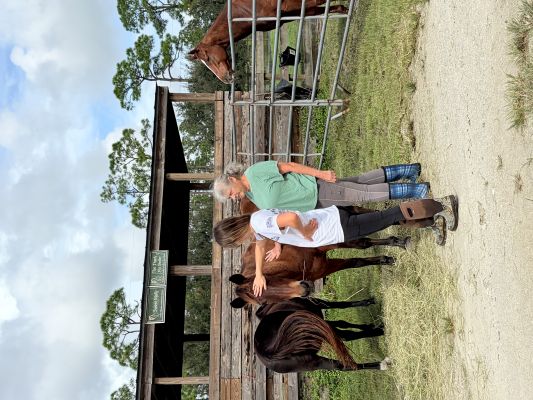
“This was a meaningful opportunity for us to stand alongside our local animal welfare community,” said Robin Ganzert, President and CEO of American Humane Society. “When we learned that flooding had impacted the horses’ stalls and left them without the dry bedding they urgently needed, we knew we had to act. These animals deserve safety and comfort, and we’re so grateful we could bring immediate relief. We’re inspired by the dedication of the ERAF team and hopeful about all we can accomplish together in the months and years ahead.”
American Humane Society remains vigilant and committed to supporting animals in need, whether through its own lifesaving work or by helping fellow animal welfare organizations respond to challenging circumstances.
ABOUT AMERICAN HUMANE SOCIETY
With offices in Palm Beach, FL and Washington, D.C., American Humane Society is the United States’ first national humane organization and the world’s largest certifier of animal welfare, helping to verify the humane treatment of more than one billion animals across the globe each year. Founded in 1877, American Humane Society has been at the forefront of virtually every major advancement in the humane movement to rescue, care for and protect animals. For more information or to support our life-changing work, visit AmericanHumane.org, follow us on Facebook, X and Instagram and subscribe to our channel on YouTube for the latest breaking news and features about the animals with whom we share our Earth.
ABOUT EQUINE RESCUE & ADOPTION FOUNDATION (ERAF)
Equine Rescue & Adoption Foundation is a nonprofit equine rescue dedicated to providing care and support to horses in need. The organization is currently caring for 35 horses. For more information, visit eraf.org.

Together at Banner Lake
October was a busy month! We walked for breast cancer awareness, celebrated our award ceremony, and enjoyed the Fall Festival together. We also introduce you to a member of our staff and share details on a First Aid and CPR training. Read on for the full update.
Fall Award Ceremony
 Families and friends gathered to celebrate the hard work of Banner Lake Academy students at this season’s awards ceremony. Students walked the stage to receive their certificates and proudly held them up for the crowd.
Awards recognized a range of achievements. Students were honored for Most Improved in reading and math, as well as for making the Honor Roll. Conscious Discipline awards went to students who show kindness, work well with classmates, and stay calm under pressure. These are skills that matter just as much as grades!
After the awards, each grade took the stage to perform poems and songs for the audience. Students shared their talents with confidence, and families cheered them on throughout.
Congratulations to all of our award winners and to every student who performed. We are proud of the effort they put in this year, and we look forward to seeing what they accomplish next.
Fall Festival!
 Students and staff dressed up for Halloween in book and character costumes. The day started with young learners from the Early Learning Center visiting staff for candy. Front office, Outreach, BLAST, and cafeteria staff all handed out treats to the students. Older students at the Academy held parties and spent time with friends. Everyone enjoyed the costumes and a fun Friday.
Staff Spotlight: Faleecia!
Faleecia has been a dedicated preschool teacher since 2008. Her goal is to love, nurture, and protect every child in her care while creating a safe, supportive environment where they can learn and grow. She treats each child the way she would want her own to be treated, with patience, care, and respect. Her greatest reward is knowing she has helped lay the foundation for a child’s future success.
CPR and First Aid Training
 On Saturday, October 24th, staff and community members gathered at Banner Lake Community Center for an important CPR, First Aid, and AED training session. Hosted by Chenelle Weaver, this valuable event was made possible through a grant from the American Heart Association.
Participants gained important knowledge and hands-on skills to help them respond confidently in emergency situations. Learning how to perform CPR, provide first aid, and use an automated external defibrillator (AED) can make a life-saving difference when every second counts.
We are grateful to Chenelle Weaver and the American Heart Association for helping make this training opportunity possible, and to all the staff and community members who took the time to participate.
Together, we are building a stronger, better-prepared, and safer community. Thank you for being part of the effort to save lives!
Walking together for Breast Cancer Awareness!
On Friday the 23rd, Banner Lake Club came together for the annual Breast Cancer Awareness Walk on campus. The walk is part of our workplace United Way Campaign.
Students from the Early Learning Center were joined by Banner Lake Academy students as they walked from the ELC to the playground by the Academy. Marlyn, a breast cancer survivor, led the way carrying a banner celebrating survivors. Students and staff followed behind her, walking side by side along the sidewalk.
Thank you to Marlyn for leading us, and to our students and staff for showing support in such a meaningful way.

COMMUNITY FOUNDATION FOR PALM BEACH AND MARTIN COUNTIES
LAUNCHES 2027 COMPETITIVE GRANTMAKING CYCLE ON NOV. 2
Grant-Seeker Sessions, Open to Nonprofits Serving Palm Beach and Martin Counties, Begin in November
West Palm Beach, FL (October 19, 2026) – The Community Foundation for Palm Beach and Martin Counties today announced the launch of its 2026-2027 competitive Community Impact grantmaking cycle, offering nonprofit organizations serving Palm Beach and Martin Counties the opportunity to apply for funding to support programs, operations and organizational growth.
Applications open November 2, 2026 and close December 18, 2026 at 5 p.m. Grant recipients will be announced in late Spring of 2027.
“Our Community Impact grants are about investing in the organizations that are closest to the needs of our community and helping them turn strong ideas into meaningful, lasting impact,” said Pam Rauch, Chair of the Community Foundation’s Community Impact Committee. “Each year, we have the opportunity to learn from nonprofit leaders across Palm Beach and Martin Counties, understand the challenges they are seeing firsthand, and direct resources where they can make a real difference. It is incredibly rewarding to see how these grants strengthen organizations and, ultimately, the communities they serve.”
To help nonprofit organizations prepare for the application process, the Community Foundation will host a series of free Grant-Seeker Sessions throughout November, with both in-person and virtual options.
Grant-Seeker Sessions Dates and Locations:
- Stuart: Monday, November 2, 2026 from 1:30 to 3:30 p.m. at the Children’s Services Council of Martin County, 101 SE Central Pkwy, Stuart, FL 34994
- Belle Glade: Thursday, November 5, 2026 from 6 to 7 p.m. at the Student ACES Center (the SAC), 915 S. Main Street, Belle Glade, FL 33430
- Delray Beach: Friday, November 6, 2026 from 10:30 a.m. to 12 p.m. at the Delray Beach Public Library, 100 W. Atlantic Avenue, Delray Beach, FL 33444
- West Palm Beach: Monday, November 16, 2026 from 2 to 4 p.m. at the Mandel Public Library of West Palm Beach, 411 Clematis Street, WPB, FL 33401
- Virtual (Zoom): Tuesday, November 17, 2026 from 5:30 to 7 p.m. Zoom link will be emailed to all registered attendees in advance
Designed to help grant seekers better understand the application process, eligibility requirements, and funding priorities for the coming year, the sessions are open to nonprofit organizations serving Palm Beach and Martin Counties. Registration is available online here: https://cfpbmc.fcsuite.com/erp/donate/list/ticket.
The Community Foundation is a nonprofit organization that leads partnerships with donors, nonprofit organizations, and community members to address the region’s chronic and emerging issues. Through its competitive grantmaking program, nonprofits may apply for year-round or summer funding to support programs or general operations.
The 2026-2027 grantmaking cycle will prioritize the following areas:
- Economic Opportunity: Programs that focus on job training and workforce development that lead to greater economic success and an improved quality of life (e.g. financial literacy, vocational skills, life skills, etc.).
- Education and Youth: Programs that will lead young people to their fullest potential (e.g. early childhood literacy, mentoring, internships, etc.).
- Thriving Communities: Programs that address a broad range of issues aligned with current community needs (e.g., arts and culture, housing, hunger, mental health, the environment, etc.).
- Capacity Building: These grants provide nonprofits with the resources (e.g. strategic planning, executive coaching, communications, marketing, etc.) to sustain and grow their work.
The Community Foundation’s grantmaking process is overseen by its Community Impact Committee, a dedicated group of volunteers who carefully review applications to align funding with the Community Foundation’s mission and values. Grants are made possible through charitable funds established by individuals, families, businesses, and organizations committed to creating lasting local change.
In 2026, the Community Foundation awarded over $6.56 million in grants to 177 nonprofit organizations across Palm Beach and Martin Counties. Over its 55-year history, the Community Foundation has distributed grants to more than 3,600 nonprofit partners.
For a full list of 2026 grant recipients, please click here.
To learn more about the competitive grantmaking process, visit yourcommunityfoundation.org/the-competitive-grantmaking-process/.
About the Community Foundation for Palm Beach and Martin Counties
The Community Foundation for Palm Beach and Martin Counties is a nonprofit organization that leads philanthropy locally. The Foundation provides charitable expertise and vehicles to increase the investment options on behalf of individuals, family foundations, and corporations. Since 1972, the Foundation has distributed over $300 million in grants and scholarships aimed at closing the area’s opportunity gaps. With its vast network of donors and nonprofit partners, the Foundation supports initiatives that improve education and youth, economic opportunity, thriving communities, and crisis preparation and response. Learn more at yourcommunityfoundation.org.
The Chamber Singers, the classical chorale of the Treasure Coast Community Singers, will present Luigi Cherubini’s Requiem in C Minor on November 14-15, 2026. Cherubini, born in Florence, Italy, in 1760, lived much of his life in France. He composed this traditional requiem on the death of Louis XVI, King of France. Completed in 1816, the work is composed of seven sections, including “Introitus,” “Dies Irae,” “Sanctus,” “Pie Jesu,” and “Agnus Dei.” The Latin text centers on a plea for eternal rest and perpetual light to shine on those who have died. Cherubini was admired by Ludwig von Beethoven, Robert Schumann, and Johannes Brahms; and his work represents the transition from Classicism to Romanticism. He was applauded for his string quartets, sacred music, and operas. This concert will be full of dramatic elements, lovely harmonies, and plaintive choruses. Add it to your November calendar!
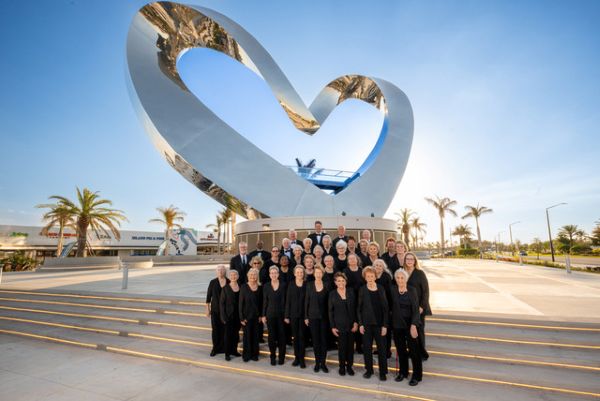
Another part of the concerts on November 14-15, will include the Ensemble, a select group of accomplished singers under the TCCS umbrella. They will be performing seven well-known and well-loved choral pieces from different composers, which will include John Rutter’s “For the Beauty of the Earth,” Randall Thompson’s “Alleluia,” Brahms’ “How Lovely is Thy Dwelling Place,” and Faure’s “Cantique de Jean Racine.”
On Saturday, November 14th, the concert will be performed at Trinity United Methodist Church, 2221 NE Savannah Rd., Jensen Beach. Sunday’s concert, November 15th, will be presented at St. Bernadette’s Catholic Church, 350 NW California Blvd., Port St. Lucie. Both choral groups will be accompanied by a chamber orchestra of professional musicians under the direction of Dr. Douglas P. Jewett, the founder of TCCS. Concert time is 3:00 p.m. both days. To purchase tickets, visit www.tccsingers.org.
Concluding 2026, the Treasure Coast Community Singers will present Season of Joy on December 5th and 6th, plus a Messiah Sing-Along on December 13th. The Christmas season will bring your family even more joy as you listen to the beautiful music of Christmas at one of these concerts. In addition, the Youth Chorus and the Middle/High School Chorus will present Here Come the Holidays on December 12th. Nothing is more wonderful than to hear children singing at the most blessed time of year. Check our website, www.tccsingers.org, for details about all concerts, and mark your calendars now.
TCCS is one of the largest non-profit organizations on the Treasure Coast. Celebrating more than 20 years of “Keeping People Singing,” TCCS is sponsored by National Endowment for the Arts, The Arts Council of Martin County, Florida Department of State Division of Arts and Culture, St. Lucie Cultural Alliance, and Women Supporting the Arts. The organization is a 501(c)3, non-profit group.

Madison’s Miracles Walk & 5K Run Draws More Than 370 Participants to Honor Babies Gone Too Soon
STUART, Fla. – More than 370 runners and walkers laced up their sneakers Oct. 17 to honor babies gone too soon and remind the families who love them that they are not alone.
The Madison’s Miracles Remembrance Walk & 5K Run marked its 10th anniversary at Veterans Memorial Park in downtown Stuart, raising more than $20,000 to support families experiencing pregnancy and infant loss. Madison’s Miracles is a program of the Martin County Healthy Start Coalition.
Support for the event stretched beyond the Treasure Coast, with virtual runners participating across Florida and as far away as California, Texas, Ohio, North Carolina, New York, Wyoming, Massachusetts and Connecticut.
Held during National Pregnancy and Infant Loss Awareness Month, the event offers families a place to honor their babies and gives the community an opportunity to stand beside them.
“When you lose a baby, having people acknowledge your child and remember with you means so much,” said Anastasia Anderson, Director of Clinical Services, Martin County Healthy Start Coalition. “This event brings together families who understand that loss and people throughout our community who want to help. Some walk or run, some sponsor the event, and others share their time and talents. Together, they remind families they have support long after this day is over.”
The community surrounding Madison’s Miracles includes people whose own losses inspired them to help others. Among them is Ben Wilkins, who taught himself photography after his family received remembrance portraits following the loss of their baby. He now volunteers with event sponsor Now I Lay Me Down to Sleep, which provides those photographs to grieving families at no cost.
Wilkins also donated a cuddle cot to Cleveland Clinic Tradition Hospital, giving families experiencing the loss of a baby more time together before saying goodbye. Several families who participated in this year's event have used that very cuddle cot to spend precious time with their babies.
Those kinds of connections are at the heart of Madison’s Miracles. After losing their own daughter, Madison Elizabeth, in 2007, the Stamper family had just two hours with her and only five photographs to remember her by. They founded Madison’s Miracles in 2016 to give other families more time, resources and support. Today, the program continues her legacy through the Martin County Healthy Start Coalition, serving families in Martin and Okeechobee counties.
Funds raised through the event support Madison’s Miracles services for families experiencing pregnancy and infant loss, including grief counseling, hospital memory boxes and assistance with funeral expenses.
Jake Stansbury of Boynton Beach was the top overall male finisher in the 5K, while Diane Labar of Palm City was the top overall female finisher.
The annual walk and run gives the broader community a way to be part of that support, which continues long after participants cross the finish line.
To learn more about Madison’s Miracles or support its work, contact Anastasia Anderson at aanderson@mchealthystart.org or visit www.mchealthystart.org.
About Martin County Healthy Start Coalition
Martin County Healthy Start is a nonprofit organization dedicated to ensuring that every baby is born healthy. It provides educational and health services to pregnant women, new mothers and their families at no cost, particularly expectant mothers who are at risk for late or no prenatal care.
Part of a statewide coalition, Healthy Start connects pregnant women and young mothers with essential services including prenatal care, home visitations by a nurse or social worker, breastfeeding support, parenting education, car seat and sleeping safety, a free diaper pantry, and access to other community partner agencies. The David Cardno Fatherhood Initiative, also part of the Martin County Healthy Start Coalition, helps fathers to become more involved in parenting and offers legal assistance to fathers who are separated from their children.
The programs of Martin County Healthy Start Coalition are voluntary and available to all Florida residents at no cost.
For more information about Martin County Healthy Start Coalition and its ongoing programs, visit www.mchealthystart.org, call 772-463-2888 or follow the organization on Facebook.

Hibiscus Children’s Center
A Place to Believe in the Future for Children Like Ella
For a young child who has experienced abuse, neglect or family instability, the world can feel frightening and uncertain. At Hibiscus Children’s Center, children receive the safety, compassion and support they need to overcome difficult experiences, build confidence and begin looking toward a more promising future. As 2026 comes to a close, we want to thank all our supporters who have made a difference for children throughout the year! Your kindness and generosity helps children heal and begin their journey to a successful future.
 At the Tilton Family Children’s Shelter in Jensen Beach, children receive 24-hour care in a nurturing environment where their physical, emotional and educational needs are met. Through professional mental health counseling, educational and literacy programs, medical care and enriching activities, Hibiscus helps children develop important skills, regain confidence and experience the joys of childhood.
Nine-year-old Ella (name changed for privacy) was struggling with fear, anger and emotional challenges resulting from traumatic experiences. These overwhelming feelings often led to behavioral difficulties and made it hard for her to manage everyday situations. With the compassionate guidance of her Hibiscus therapist, Ella began learning healthy ways to express her emotions and cope with difficult feelings.

Through consistent counseling and encouragement, Ella made significant progress. She learned to better manage her emotions, reduce negative behaviors and understand that the painful experiences she endured were not her fault. As her confidence grew, Ella began responding to challenges in healthier ways and developing a more positive outlook.
For Ella, these accomplishments represent important steps toward emotional well-being and a childhood filled with greater confidence, stability and possibility. Your year-end gift can help make more success stories like Ella’s possible.
Your generosity today can help a child overcome yesterday’s challenges and embrace tomorrow’s possibilities. Thank you for making a difference for children! If you would like to learn more or get involved, please visit us at HibiscusChildrensCenter.org.
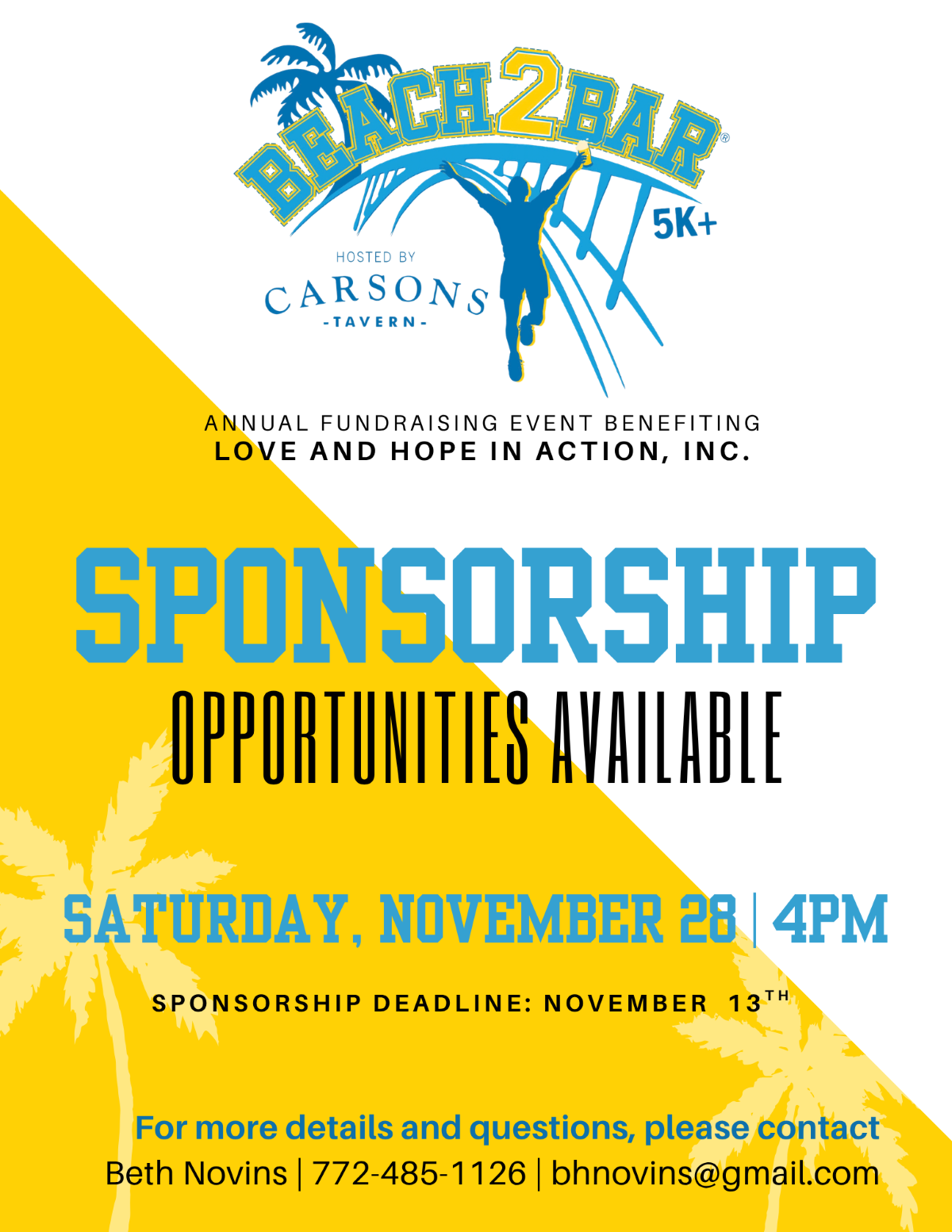
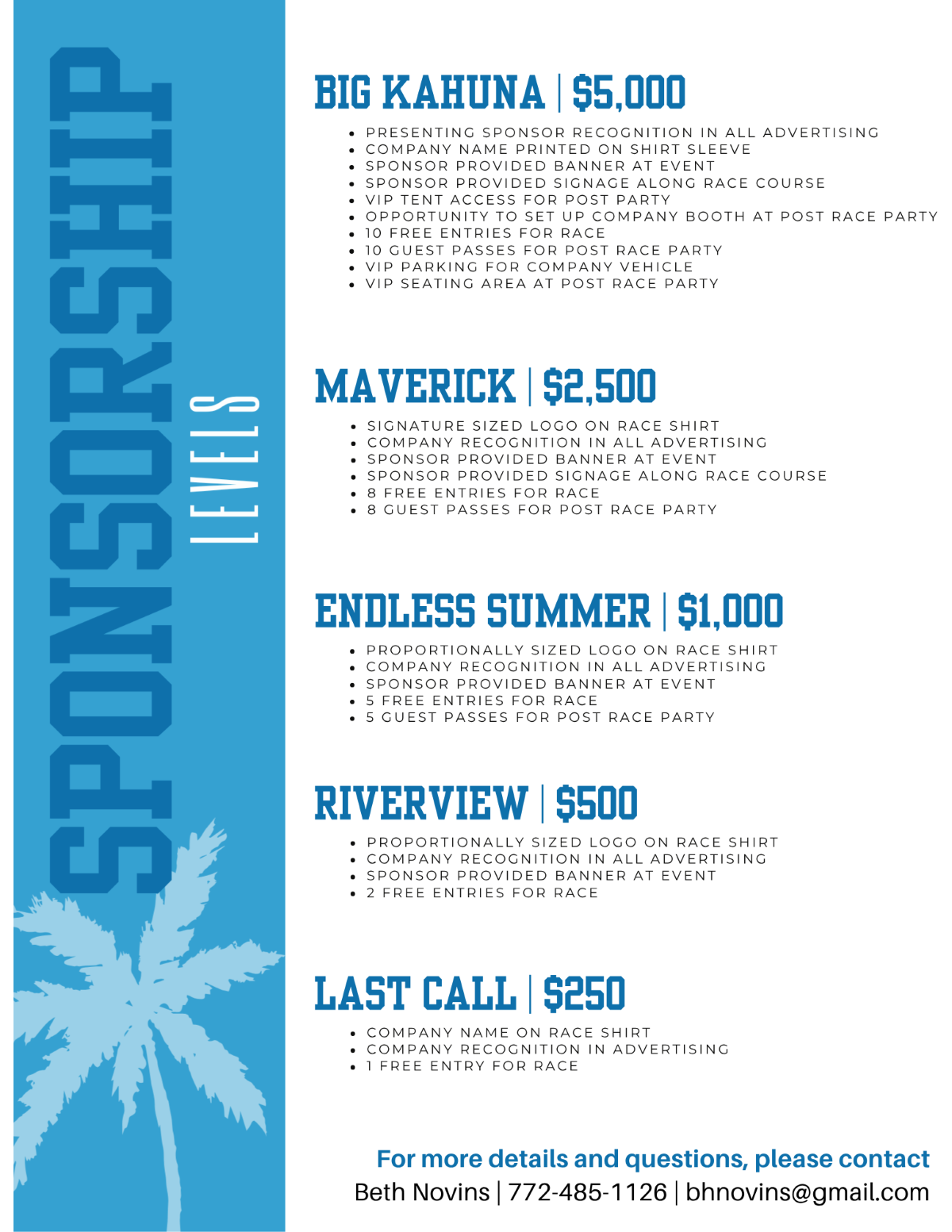
MartinArts Carries Forward Beloved Art for Living Calendar, Celebrating Local Artists and Investing in the Future
STUART, FL. — MartinArts is honored to carry forward the beloved Art for Living Calendar, celebrating the extraordinary talent of local artists while investing in the creative future of Martin County.
More than a calendar, Art for Living reflects the belief that art enriches our daily lives, inspires creativity, and helps develop the imagination, critical thinking, and innovation that future generations need to thrive. By showcasing the work of local artists, the calendar brings creativity into homes and workplaces while celebrating the people whose talents make our community a more vibrant place to live.
“Excellence grows where creativity is encouraged, celebrated, and shared. This calendar celebrates the MartinArts legacy of supporting and encouraging artistic excellence in our community,” said Nancy K. Turrell, CEO of MartinArts.

Proceeds from calendar sales support MartinArts’ mission to inspire participation and passion for the arts in our community. Through arts education, exhibitions, grants, and community programs, MartinArts works to ensure the arts remain an essential part of life in Martin County for today and for generations to come.
2027 Featured Artists: Jodi Gaines, Mallo Bisset, Patrice Scott, Geoffrey C. Smith, Pat Hoshino, Susan Clifford, Dan Mackin, Jane Lawton Baldridge, Mary Lou Pults, Charles White, Donald MacIntosh, Lisa P. Young, and Katie Gianni.
The Art for Living Calendar is available for purchase online at MartinArts.org or at the Court House Cultural Center for $25/calendar. A limited number of artist hand-signed calendars are available for $40. Beginning November 1, a list of retail partners carrying the calendar will be available on the website, making it easy for community members to purchase a copy while supporting local arts and culture.
By carrying this tradition forward, MartinArts celebrates not only the artists whose work fills the calendar, but also the lasting impact of creativity on our community.
Because art isn’t simply something we admire; it’s something we live.
About MartinArts
MartinArts is dedicated to inspiring participation and passion for the arts in our community. Through exhibitions, arts education, grants, and signature cultural events, MartinArts connects people with the arts and champions the artists and creative experiences that make Martin County a vibrant place to live, work, and visit.

A Community to Be Thankful For
As we enter November, a month when we traditionally pause to reflect on what we are thankful for, I find myself thinking about the people who make Volunteers In Medicine Clinic possible. At VIM Clinic, gratitude is not an abstract idea. We see it every day—in the volunteers who give their time, the community providers who open their doors, the donors who make our work possible, and the patients who trust us with their care.
The numbers tell part of the story. In 2025, Volunteers In Medicine Clinic served 1,096 patients. Eighty-three volunteers gave more than 5,913 hours of their time to the Clinic. More than 100 physicians and other healthcare providers throughout our community generously cared for VIM patients at no charge, providing 829 specialty referrals. Together, these volunteers and community partners help ensure that our patients receive the comprehensive care they need.
Our community's generosity also makes that care possible. In 2025, our budget was met through donations, grants and special events. Every $1 donated represents a $10 investment in better health for our neighbors who otherwise might have nowhere to turn. Behind every statistic is a person—a patient who received a diagnosis, found a treatment, had a chronic condition managed, or simply had someone listen and help.
I am especially grateful for our patients. Choosing to ask for help can be difficult, and allowing someone to become part of your healthcare journey requires trust. Our patients remind us why this work matters. They are not numbers on a spreadsheet or appointments on a schedule. They are our neighbors, friends and members of the Martin County community.
This Thanksgiving season, I hope everyone involved with VIM Clinic knows how much their contribution matters. Whether you volunteer for a few hours, provide specialty care, make a donation, attend one of our events, or simply tell someone about VIM Clinic, you are helping make healthcare more accessible in our community. The success of Volunteers In Medicine Clinic has never belonged to one person or one organization. It belongs to all of us.
Volunteers In Medicine Clinic provides free, comprehensive healthcare to uninsured, low-income adults in Martin County who meet our eligibility requirements. Our patients receive primary care as well as access to a wide range of specialty services through our volunteer providers and community partners. There is no waiting list to become a VIM patient. To learn more, call 772-463-4128 or visit vimclinic.net.
To everyone who has given their time, expertise, financial support and trust: thank you. You are an important part of the VIM family, and we are grateful for you—not just in November, but every day.
Council on Aging Martin County Welcomes New Director of Adult Day Club
Stuart, FL – Louann Robinson, MSN, BSN,RN, CCRN, an experienced Treasure Coast healthcare professional, has joined the Council on Aging Martin County as Director of the Adult Day Club.
“We are delighted to welcome Lou Robinson to our team,” said CEO Karen Ripper. “She brings the leadership qualities, competence and compassion that our clients in the Adult Day Club need and deserve.”
Robinson hold a Master of Science in Nursing with a specialty in Healthcare System Leadership from Norwich University. She was most recently the Director of a Patient Care Unit at HCA Florida Lawnwood in Fort Pierce and formerly was the Director of Critical Care Nursing Services at Kuakini Medical Center in Honolulu, Hawaii. Robinson is a U.S. Air Force Veteran and the recipient of the Daisy Award for Outstanding COVID-19 Nursing Care.
Robinson takes over the Director role from Phyllis Brown, who oversaw recent physical renovations to the Day Club. “Phyllis has helped to build our program to an extraordinary level of client interaction and family involvement,” Ripper said. “She leaves an impressive legacy. We are grateful for all she did for our clients and wish her the best in her retirement.”
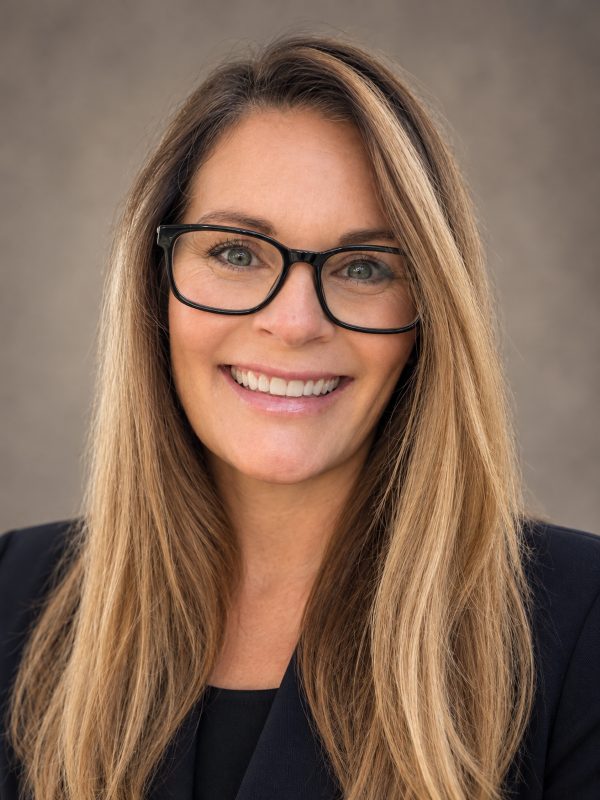 Lou Robinson
The Adult Day Club serves seniors with mild or moderate dementia or mobility issues. Clients spend their days at the Club in meaningful social activities, specialized therapies, memory care, and brain fitness. The program provides respite to caregivers while enhancing the quality of life of its participants.
If there’s the sound of music and laughter at the Council on Aging’s home at the Kane Center on Salerno Road, it’s sure to be coming from the Day Club. “I’m very excited to be working at the ground level, interacting with our clients every day, and having a positive impact on their quality of life,” Robinson said.
For more information about the Adult Day Club and other resources designed for and about seniors, visit the Council on Aging Martin County website, www.coa.org, or call 772-223-7843.
About the Council on Aging Martin County
For seniors, their families, and caregivers, the Council on Aging Martin County is their trusted and comprehensive hub for senior resources. We work with the community to reduce anxiety, depression, loneliness, and hunger. Together, we help seniors live a safer, healthier, and happier life.
From our Adult Day Club, Day Primary Care Center, Case Management, and Memory Enhancement programming, to our nutrition and exercise classes, games to improve memory, concerts and social events, the Council on Aging’s Kane Center on Salerno Road is a beehive of activities.
Services also take to the road – like Meals on Wheels, providing a hot meal and a warm smile to more than 500 homebound and needy Martin County senior residents in their home each day, or Senior Dining Centers at locations throughout the county in Stuart, Jensen Beach, Indiantown and Hobe Sound. The Elder Care Mobile Outreach Bus brings knowledgeable and compassionate staff directly to seniors in local neighborhoods.
For 52 years, the Council on Aging Martin County has been working tirelessly to inspire a community that embraces, uplifts and encourages seniors to maintain lives of quality and purpose. Stay healthy. Be active. Eat well. Get help when you need it from the Council on Aging Martin County. Please visit us in person, online at coamartin.org, or on social media, and learn more about the many services of the Council on Aging Martin County. Our staff and volunteers are ready and eager to help.

SafeSpace Summit Brings Regional Partners Together to Strengthen Domestic Violence Response
October 13 training connects professional practice and survivor experience with continued regional action
PORT ST. LUCIE, Fla. — SafeSpace’s Domestic Violence Summit brought regional professionals together Oct. 13 at the MIDFLORIDA Event Center to strengthen how communities recognize domestic violence, respond to survivors and coordinate support.
Held during Domestic Violence Awareness Month, “From Awareness to Action: Safety. Solidarity. Solutions.” was hosted by SafeSpace in collaboration with the Circuit 19 Domestic Violence Task Force and the Gabby Petito Foundation. The Summit grew from feedback shared by survivors and professionals about gaps in recognizing abuse, understanding trauma, documenting concerns and connecting people with appropriate help.
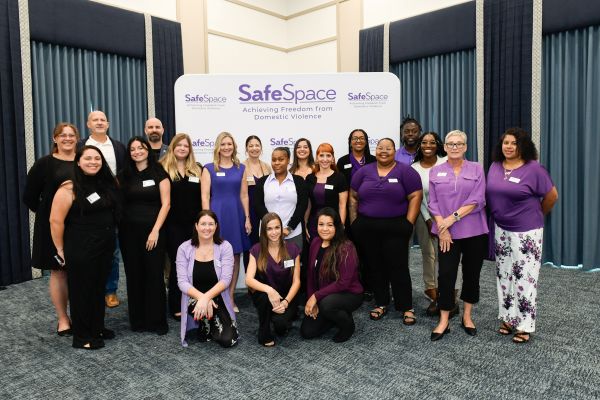
Featured presenter Jim Schmidt, a Gabby Petito Foundation board member, Gabby Petito’s stepfather and a former first responder, led sessions on lessons from the Gabby Petito case, recognizing serious risk and understanding how trauma can affect survivor behavior.
Two concurrent learning tracks offered guidance specific to participants’ roles. Schmidt led a track for first responders and prosecutors focused on risk recognition, evidence and documentation. SafeSpace Chief Program Officer Melanie Afanador led a second track for professionals in healthcare, education, and social services, focused on identifying abuse and strengthening referral pathways.
 Jennifer Fox, Jennie Carter and Melanie Afanador-
Survivor and advocate Jennie Carter joined Schmidt for the closing session, “Every Link Matters: Building a Coordinated Response That Saves Lives.” Carter offered a survivor’s perspective on how professional decisions and coordinated support affect people experiencing abuse. One participant shared, “This Summit validated my experience as a domestic violence survivor.”
The Circuit 19 Domestic Violence Task Force is preparing for a January 2027 relaunch to strengthen a coordinated community response across Indian River, Martin, Okeechobee and St. Lucie counties. Professionals, organizations and community members interested in participating, sharing resources or requesting training can contact info@safespacefl.org.
SafeSpace thanks the sponsors who made the Summit possible: Presenting Sponsor Wong Family Foundation; Impact Sponsors Gabby Petito Foundation and Coral Shores Behavioral Health; Community Partner Sponsors Inspired Closets, Jan and Jessica Malasek, and Tykes & Teens; and Supporting Sponsors House of Hope, iTHINK Financial, John Schmahl, and Thompson’s Remodeling & Home Repair.
Community members can help support survivors and their children by sharing SafeSpace’s resources and donating to sustain its services. To learn more or make a donation, visit SafeSpaceFL.org.
About SafeSpace
SafeSpace is the Treasure Coast’s only state-certified domestic violence center, serving survivors and their children 24/7. Since its founding, SafeSpace has provided more than 500,000 safe nights of shelter to over 40,000 victims and children. Its comprehensive programs include shelter, legal advocacy, financial literacy, counseling, prevention education, and specialized children’s services.

Whiskers for Whiskey raises nearly $10,000 for Humane Society shelter animals
STUART, Fla. — The Humane Society of the Treasure Coast raised nearly $10,000 through its recent Whiskers for Whiskey Tasting at the Chef’s Table. A Chicken Cock Whiskey representative guided 36 guests through a top-shelf tasting, followed by a four-course menu prepared by the restaurant, which is known for its refined cuisine and personal dining experience.
Raffle winner Lisa Bevacqua received a bottle of Chicken Cock Whiskey, courtesy of Libations Mobile Catering Co., and dinner for two at the Chef’s Table.
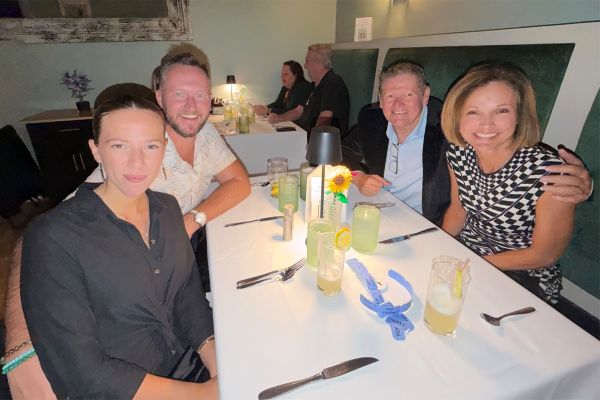
Water Pointe Realty Group served as presenting sponsor. Additional event partners included Honu Compliance Solutions, Chef’s Table, Libations Mobile Catering Co. and Stuart Magazine.
“We appreciate everyone who supported our humane society’s mission through this one-of-a-kind event,” said Humane Society Community Events Manager Alyssa Bean. “The funds raised will help us continue caring for shelter animals in our community.”
About the Humane Society of the Treasure Coast — The Humane Society of the Treasure Coast is a no-kill animal welfare organization located at 4100 SW Leighton Farm Ave. in Palm City, Florida. Since 1955, it has been the leading advocate for animal protection and well-being in the Martin County area. A 501(c)(3) private nonprofit organization, HSTC is independent and locally operated and relies on donations to support its programs and services. Follow HSTC on Facebook at https://www.facebook.com/humanesocietyTC and X at https://x.com/hstc1. For more information, visit https://www.hstc1.org or call 772-223-8822.


I urge those who are reading this newsletter to send an email expressing their opinions on subjects. When a reader sends one, it will be included if I find it relevant and I have adequate space. I may edit the letter because of length and clarity. You don’t have to agree with me to have your letter in Friends & Neighbors. All you must do is send it to TOM CAMPENNI or fill out the form on the website.
Ann Cerneglia
I so appreciate your newspaper “Friends and…. Of Martin County”
It’s the only paper where I can get news. Do you know of any other.
I do not have a Facebook page..
My Answer
Ann:
Thanks for the compliment.
You can try the Hometown News. There is TCPalm.
Michael Mortell
I read your article about the Supreme Court. It reminded me of an upcoming issue that will have dramatic financial impacts on the Florida Judicial system at the same time that all the funding for the same system is cut. The Supreme Court has decided to hear a case from Jupiter Florida about a Chiropractor that was convicted of a felony for practicing as a chiropractor without a license. In the case, the jury of 6 found him guilty. Florida only uses a 12 member jury for Capital Crimes and major offenses. This has been the law in Florida for as long as I can remember (at least 50 years). I believe there are 6 other states that use less than 12 jurors in criminal cases. If the Supreme Court was going to affirm the 6 person jury, it probably would have selected a case with a crime that would be found intimidating to the public rather than a chiropractor. It is my opinion that the case that was selected was because no one would be afraid of letting a chiropractor walk free because of the ruling. But, if the Supreme Court adopts this position, there will be terrible consequences. First, there is already an extreme shortage of jurors appearing for jury duty. Secondly, Martin County has one courtroom that can support a 12 member jury. The same goes for Okeechobee and Indian River Counties. St. Lucie County courthouse has two. All of the Court rooms would have to be modified to make the jury boxes bigger (and there is limited space). They also don’t have deliberation rooms that are large enough for 12 and all of the Clerk’s offices claim that the current set up for prospective jurors to meet prior to being selected for a jury are already too small and they can not support any additional people. According to Florida Law, each County is responsible to fund and maintain the physical structure of the courthouse. If Amendment 3 passes, those same counties will be facing millions in lost revenue at the same time they are going to be required to spend millions to rebuild or remodel courthouses. Unfortunately, this new mandate will treat the finically constricted counties like Okeechobee the worst because they already don’t have sufficient funding to operate their courthouses so the additional costs will be devastating.

At the last meeting of the BOCC, there was a unanimous vote to sign a new one-year contract with MTM Transit to restore MARTY fixed route bus service.
On October 8th, the operator shut down without notice claiming they were losing $70,000 a month. The United Way stepped in with its pickup and drop off service using Lyft. But at best the way that service presently works and is funded, it could not take the place of a real transit system.
I believe in public transit, and it is very necessary in most places. I even for years championed it in Martin County. I have now concluded it will never work here.
Indian River, our sister county to the north, has a great system that actually does work with about the same population as Martin County. One thing they do have that we do not is that their roadways are really a true grid system with interconnecting roadways. Urban planning professionals will tell you that an interconnecting road system makes people’s use of mass transit much higher.
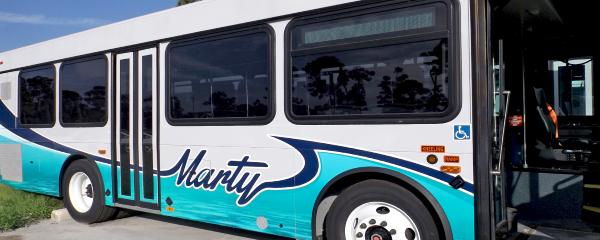
Our routes and stops are further than what would be optimal in capturing enough riders to ultimately justify mass transit. In most cases, anything more than ½ mile walk to a bus stop keeps people from using the system. A grid street system allows users to walk “as the crow flies” to a stop instead of having to take circuitous routes.
For a variety of reasons, at least in my mind, having to do with keeping development at a minimum, we have not built a grid here. If we had, our traffic would have been better because there would be other ways to drive to places. And of course we could have had a much better bus system.
I was very surprised that our commission was so eager to throw more money at this intractable problem after just approving a new budget. If they did it because they felt sorry for the laid off employees, then it was a very expensive jobs program. If they capitulated because of the roughly 156,000 rides (not passengers) last year, that also was a big subsidy even if you have grants.
Once the system stopped charging ridership last year, it did increase by 35% according to MARTY. That proves a free lunch does attract people to the product. However, we probably are close to the number of residents that will ever take the bus. Is there a better way of providing this service?
We could use the United Way’s Lyft model. But as we have seen, if the county is paying for door-to-door service, then what is to stop anyone from using the service, even those that can afford to pay for their own private Lyft?
If we feel we want to provide transit to those that cannot afford their own car and to use a door-to-door service, the county can provide vouchers. That would require means testing and ultimately rationing. There is only so much money.
Politicians, as this episode demonstrates, can be totally inconsistent. I was especially surprised that Commissioner Vargas voted to spend $3 million to continue subsidizing a failed transit system. That is not tightening one’s belt, Commissioner Vargas.
Does the rest of the commission believe this is worthy of the expenditure of public money when it is used by so few residents? It costs about $20.00 for a passenger trip. What will happen if Amendment 3 passes? Even if Amendment 3 does not pass, a super majority vote will be needed next budget year not to go to rollback, and if a budget is presented that increases the millage rate, you will need to have 5 votes.
How likely is that?
Martin County always has some fear that something will destroy everything about the county known as having the “Martin County Difference.”
It was once about allowing I-95 through to connect north and south. When the county finally acceded, they moved the highway so far from the coast that they ended up creating 5 miles more of development opportunity between the highway and small towns like Stuart dotting the St. Lucie. The Martin County fathers thought they had tricked those pesky developers because no one would want to live five miles from the population center of Stuart.
Then the next deterrent was not to build a grid pattern for roads. That was also supposed to slow down development. All it did was make traffic concentrated on too few roads and made mass transit unworkable.
Commissioners, egged on by their constituents most of whom were from somewhere else, fought every good planning idea from Brightline to anything but 20-acre ranchettes in the west. The idea was that they were saving the “Martin County Difference.” They succeeded in making sure most of the locals couldn’t afford homes and would never have a good paying job.
Now comes the overwhelming fear of data centers.
If anything has killed rationality, it is social media. It is a scourge on mankind. Because instead of being used for true informational facts, it has become a source for nonsense and falsehoods.
 I remember about 30 years ago when Local Operators in conjunction with the U.S. Department of Energy began drilling for natural gas in Pennsylvania and wanted to drill in New York as well. The same irrationality came over people. It wasn’t the people who lived on the farms in those areas who pushed back, it was the city people who didn’t have a financial stake in the outcome.
The commission chamber is always filled when a development is being considered. People hated it when Rural Lifestyle was proposed and when the first project came forward. That project now has occupants and has less of a footprint than any other project in my memory…just as was promised. It brings in additional millions of tax dollars without impact on services.
Now we have the latest in the Martin County series of disastrous proposals…Data Centers.
 Data Centers are a targeted industry in Martin County which means the BDB and Martin County staff are supposed to recruit those businesses. I guess we wanted them before the technology was perfected. We wanted them when they actually did use substantial water and took their electricity from the grid…neither of which is true now.
If you go on social media, you can pull up horror stories about smells and use of diesel pumps to generate air conditioning. You can read other stories about aquafers being sucked dry, and electric rate payers having their kilowatt charges going higher. All of that is history not the reality of today.
However, that did not stop more than an hour of public comment about just those fears. Commissioners playing to the crowd instead of stating facts rather than fiction played to their fans. Isn’t that what politicians do? Boss Collins is still in his role as a citizen wanting not just a moratorium but an outright ban. Commissioner Vargas, who has been his acolyte for the past two years, wants the same or at least not wanting a year for the ban to occur.
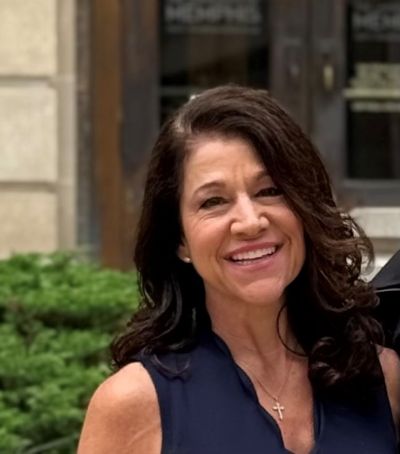 County Attorney Elder laid out a case for why the moratorium is needed. I have a feeling if Lee Baggett was the county attorney instead of Stuart’s, he would have counted noses and regardless of consequences would have done what the Boss wanted. We saw that in Stuart.
Elder stated there were 26 items to be studied under the ordinance. Here they are:
The 26 comprehensive evaluation criteria listed under Section E of the Martin County Data Center Moratorium Ordinance require county staff to analyze and establish regulations for the following distinct impacts:
Utility & Resource Strains
- Aquifer Impact & Subsurface Drawdowns: Evaluating the deep-well extraction and long-term depletion risks to the local groundwater supply.
- Massive Daily Water Consumption: Placing strict caps on the millions of gallons of daily water required by liquid-to-air cooling loops.
- Wastewater & Thermal Discharge: Tracking where superheated or chemically treated cooling water is dumped into municipal infrastructure.
- Everglades Restoration Structural Synergy: Ensuring regional hydrological changes do not conflict with the nearby 16-county Comprehensive Everglades Restoration Plan (CERP) initiatives.
- Localized Grid Capacity Strains: Assessing the risk of massive, continuous mega-watt drawdowns destabilizing neighborhood electrical grids.
- Substation Expansion & Infrastructure Overhaul: Regulating the land footprint and location of newly required high-voltage utility substations.
- Ratepayer Cost-Burden Protections: Structuring local rules under Florida Senate Bill 484 to prevent residential utility customers from funding massive commercial grid upgrades.
Environmental & Clean Air Mandates
- Industrial Generator Air Emission Caps: Restricting localized carbon, nitrogen oxide, and particulate matter output during continuous emergency testing.
- Massive On-Site Fuel Storage Safety: Imposing containment rules on thousands of gallons of diesel or liquid gas stored for backup generators.
- Continuous Noise Pollution Limits: Measuring and restricting the constant, low-frequency 24/7 hum produced by industrial server exhaust chillers.
- Wildlife Habitat Fragmentation: Protecting sensitive native species from broad-scale land clearing for data center complexes.
- Ecosystem & Wetland Runoff Mitigation: Managing stormwater runoff from massive impervious server buildings and parking facilities near vulnerable local watersheds.
Zoning & Growth Management Overhauls
- Zoning Definition Separations: Explicitly stripping data centers out of generic "targeted business" or "light industrial" categories to create a standalone land-use classification.
- Total Project Size & Square Footage Caps: Limiting the maximum footprint allowable for individual or grouped server structures.
- Maximum Building Height Thresholds: Adjusting vertical structure limits to account for tall, multi-story industrial cooling towers.
- Perimeter Fencing & Industrial Security Buffers: Regulating structural safety requirements, high walls, and clear zones around hyper-secured compounds.
- Scenic Highway Corridor Visual Impacts: Ensuring long warehouse structures do not degrade local greenways and protected visual zones.
- Fiber Optic & Telecommunication Conduit Mapping: Evaluating how right-of-way excavations for high-capacity data cables affect local roads.
Community Compatibility & Proximity Controls
- Residential Buffer Distance Expansion: Enforcing wide physical separations between massive data campuses and active neighborhoods.
- Property Value Protection Analyses: Studying the long-term economic effect of nearby hyperscale sites on adjacent residential parcels.
- Construction Phase Traffic Strains: Tracking heavy machinery and heavy truck volume impacts on local secondary roads.
- Permanent Staffing & Traffic Logistics: Comparing initial build-out traffic against minimal permanent job-site vehicle patterns.
- Public Health and Safety Setbacks: Factoring in community setback lines away from high-voltage fields and cooling stack exhausts.
- Agriculture & Farm Animal Protection Zoning: Ensuring industrial hums and emissions do not impact livestock, equestrian zones, or rural farming belts.
- Economic Opportunity vs. Resource Trade-offs: Conducting independent cost-benefit analyses balancing short-term tax revenues against permanent local resource depletion.
- Municipal & Extra-Jurisdictional Boundary Adjustments: Coordinating unified zoning responses with neighboring municipalities like the City of Stuart and Village of Indiantown to prevent boundary-hopping projects.
If you read through the items, Elder has done a good job of protecting the commission from themselves. She exempted the one project that is already in the hopper at South Florida Gateway. The ordinance explains the rationale for the moratorium using different Florida statutes. It was a good draft of an ordinance that would stand up to a legal challenge.
The commission voted 4-0 for the one-year moratorium with Hetherington abstaining.
Some time ago, the Martin County Taxpayers Association did two papers regarding the commissioners spending on travel.
For the most part, four of the commissioners were good stewards of taxpayer funds. One, Eileen Vargas, was not. There was a discussion on the dais, and Administrator Donaldson was supposed to come back with a policy. If he has, then it is a secret policy that was never discussed in the Sunshine.
 Paul Nicoletti is the magistrate for Martin County. He is an attorney with half a century of experience in local government. Since 2023, he has been paid $200 an hour which is one of the lowest rates around. He has proposed an increase to $250 per hour.
Vargas as usual is all about conserving money. She railed against it claiming it is an honor to work for Martin County as if that pays the bills. And once again tightening one’s belt.
Ciampi mentioned all of Nicoletti’s roles through the years. He made a motion to accept the increase seconded by Hetherington. He ended by saying he was prepared to mention other things. I suppose that meant Vargas’ travel expenses. The motion passed 4-1 with Vargas voting no.
Martin County needed final site plan approval for the new operations facility. This is being done as a P-3 project. Though the project has been approved and financing has been set, Vargas could not resist once again harping that there weren’t three bids.
It has already been proven more than a year ago that this project is much cheaper than what it would have been if a traditional design-bid-build process had been used. The State of Florida wants P-3s to be used whenever possible.
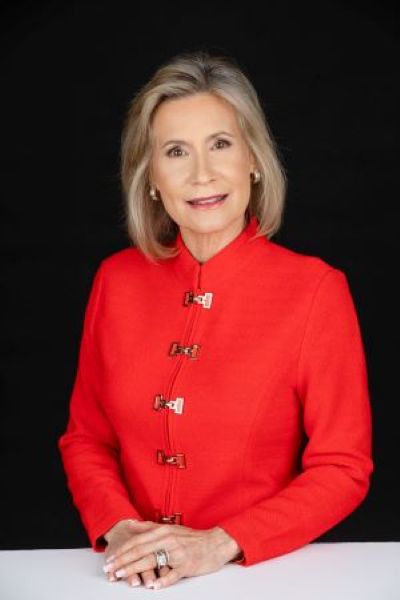 But Vargas couldn’t resist discussing costs and asking why it hadn’t been built years ago. Either she is the worst type of politician that plays to the crowd, or she can’t or won’t understand why this is the reason the State of Florida and 47 other states and many countries use P-3s instead of design-bid-build.
The county wants to offer an employee separation package in anticipation of Amendment 3. At first, they were going to offer a maximum of 20 weeks or 2 weeks for every year for employees with a minimum of five years of service.
Ciampi trimmed it back to 16 weeks with medical being given for up to 20 weeks. It was seconded by Heatherington. Vargas thought it was too generous.
I am not going to discuss the merits of whether it is a good idea or not. If it works as intended, it allows for a better weaning of staff than traditional layoffs.
I could buy into Vargas’ “I am looking out for the taxpayer” spiel if she walked the walk and talked the talk. She doesn’t. She has never seen a conference or convention that she (and her husband) shouldn’t attend.
Perhaps the rest of the commission except Ciampi does not have the stomach to confront her or put a policy in place. But as a Martin County resident, I find it appalling that someone who has no problem telling others to cut their expenses won’t do so for herself. She has no credibility with me.
There were two issues that caused public comment to be long at the November 10th meeting. Both have to do with people wanting their government to help them have a better quality of life.
Locomotive horns have been more of a problem since Brightline introduced trains running through our area into the late evenings. If you live anywhere near a crossing, you noticed the many times a day that horns sound. Then you add the mostly nighttime freight trains, and that is a lot of noise.
The question is will having quiet zones be too dangerous for our residents.

After many people spoke at the November 10th meeting, it seemed that the commission was of two minds. Ed Ciampi was in favor of allowing quiet zones to be implemented at all the 27 crossings and for beginning the process immediately. The total cost was $650,000 for all road crossings.
 Blake Capps made a motion to have three crossings as quiet zones. One on Dixie Highway at Mariner’s Sands and two in Jensen Beach at North County Line Road and Skyline Road. According to staff, the three would cost $30,000.
“Quiet Zones” mean that train horns are not routinely used. The Federal Rail Administration (FRA) still requires that bells go off when gates go down at road crossings. These are active warning devices that include flashing lights. The bells are known as localized warnings through aiming the sound to be at the immediate intersection. Homes around the crossings will still hear them.
The other thing is that the FRA requires updates to the crossings every 4 to 5 years. Martin County already pays FEC for maintenance now. The added cost because of quiet zones will be about $5,000 per crossing.
Capps motion passed 3-2 with Ciampi and Hetherington opposing because of their stance to do all the crossings immediately.
J ensen Beach suffered severe flooding because of torrential rains. We essentially had a hurricane without the wind. As of this meeting, many residents’ homes were still several feet under water. The Skyline Drive neighborhood backs up to Savanna State Park.
The “Savannas” is a 7,000-acre ecosystem of freshwater marshes from Fort Pierce into northern Martin County. It acts as a flow way for water especially after a rain event like last week. Originally before man decided to settle around the area, no damage was done. It was how water ended up in the estuary.
The Savannas act as a basin and last week we had an overflow because of the 16 inches of rain in St. Lucie County. They have a permit to pump some of their excess water into the Savannas. Of course, it wasn’t the only reason the Skyline neighborhood flooded but it did contribute.
Martin County would like an entity such as South Florida Management District to manage who can pump what into the basin and when. With more and more catastrophic rain events happening, this won’t be an isolated instance. Someone must be in charge.
And that is what government does. It is where citizens turn when no one else can help. With both quiet zones and the catastrophic flooding, in the end only government can provide a solution.
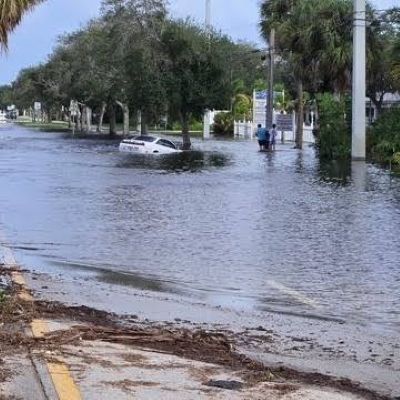 Yet how many of the people that spoke and asked for assistance voted for Amendment 3?
Eileen Vargas, the district commissioner for Jensen, held an emergency meeting last Sunday to try and provide assistance for those residents. She should be congratulated for stepping up to the plate. Yet isn’t she always a voice for saying government must tighten its belt?
The floods have ruined people’s homes and should be a top priority. The commission should do everything possible to elicit help from our state and federal partners. To a much lesser extent, quiet zones are also important. Only government can help there also.
With passage of Amendment 3 there will be much less money for both problems. I applaud Ciampi for wanting to help, but as a fiscal watchdog, shouldn’t he also be concerned about next year’s $42 million loss to the budget. Taxes in the Free State of Florida have been looked on as a burden and not a responsibility to help our neighbors for far too long.
Things are going to get a lot worse in Florida, and things like quiet zones will be perceived as annoyances and not necessities as time goes on and government money is saved to be used for law enforcement. I only hope that the Skyline flooding will not be seen in the same light at some future point.

Before Mike Mortell was fired in October 2025, there was an illegal change to the LDRs by the Stuart Commission. Boss Collins with his Politburo didn’t care what the state law was. He just wanted to stop new construction or even building alterations. The order went out from the Boss to the Development Director to cease processing applications.
Since then, Boss Collins has gone to greener pastures. A new election brought a sane majority to the commission. Collins’ handpicked manager has been fired, and Mortell has been restored to being city manager.
What hasn’t changed apparently is the “moratorium” in the development department. Development Director Jodi Kugler is either walking slowly or not processing applications at all.

There were complaints by the business community before Mortell being sacked. One of the reasons that they supported Clarke, Rich, and Matheson was because of the department’s disregard of having timely applications processed. One of the reasons that the same business community worked to defeat Collins from being elected as a county commissioner was the fear of what he did for the city will now happen in the county.
It has only been a month since Mike Mortell has returned to being city manager. His biggest worry has been trying to sort out the mess in the Finance Department and in the city’s books and even Moody’s downgrading the city’s credit worthiness because of the Collins and Giardino chaos. But now it is time for him to do what is right with those who have been waiting to get their applications approved from the Development Department. There can no longer be months that go by while applications just sit on desks. It is unconscionable.
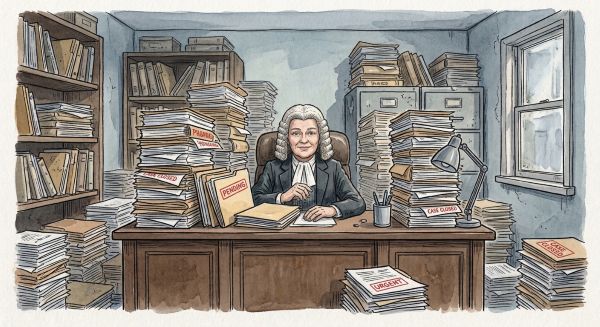
With the passage of Amendment 3, severe cuts will have to be made. This is an opportunity to rethink how government services are provided. The approval of applications may be something that Stuart outsources. Fees are already being paid for the development review. Does it matter if it is paid to a consultant instead of a bureaucrat, especially if it will be done in a timely manner? Anyone reviewing plans would need to follow the development code.
What we can’t do is continue with a department and a staff that do not meet the needs of the people of Stuart. On all levels, the Development Department is a failure. Even if Mortell wants to keep a full-service department, it is time for an efficiently run one. Again, with Amendment 3’s passage, Mortell (and to some degree the Commission) needs to look at all options.
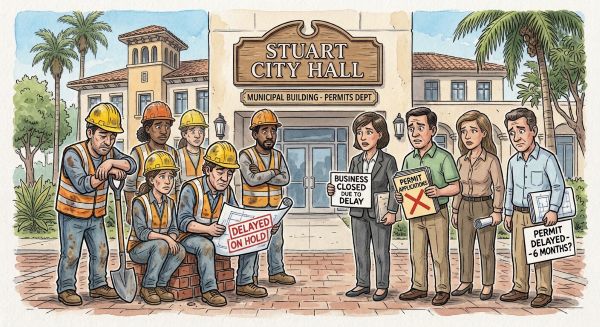
An entire election happened to have a better run city than the Collins/Politburo/Giardino Regime. The commission has been wasting its time debating chickens and not being able to decide even on that. Employees are Mortell’s bailiwick, and a functioning Development Department needs to be addressed now and not later.
I promise I do not pay rent for all the space I apparently occupy in Laura Giobbi’s brain.
In fact, most of what she says even on the dais is not worth repeating. Her understanding of how government works is minimal even after two years in office. Since her mentor Boss Collins left, she seems lost.
Apparently, she is upset because she claims I have more pull than she does. After her first two years of being in the majority with Reed and Collins, she should recognize that the Collins’ years are over. And just like Rich and Clarke were in the political wilderness for 2 years, she has not accepted that realization now for herself.
Poor Laura hasn’t grasped. I am not Svengali even though I am friendly and sympathetic to the positions of Clarke, Matheson, and Rich. I do not instruct them how to vote as she claims. I may from time to time give my opinion mostly through this publication, but these are 3 highly knowledgeable adults.
Laura certainly was taking her cues from the Boss. On a few occasions when she voiced her own opinion, once Collins spoke, she then spouted the opposite of her earlier opinion even within the same meeting if Collins had a different view than her. The Boss had influence… especially on Giobbi.
From the dais, she was utterly upset about me not printing the email that she sent to me. I don’t print many emails I receive. I only do so when there is something that I deem newsworthy or informative. There was nothing that I believed rose to that standard in her email.
 She also sent the email using her personal email address. In my book, since she was speaking about city business, the communication should come from her city email address. How many other times has she not used her official account when sending emails about city business or policies?
You would think after two years as a commissioner, she would have grown used to criticism. But she hasn’t. Other elected officials are sensitive also when things are written about them.
However, Laura Giobbi is the first politician I have dealt with who is mad that I didn’t engage with her because I believe what she wrote is just drivel. According to her own statement, she published the letter on Facebook because I wasn’t going to do so. Do you think she is a bit obsessed with me?
I just want everyone to know that I do not pay rent to Laura for the good amount of space that she has given me in her brain. What she does on the dais is mostly not important enough to comment upon.
If she wants to be relevant as a commissioner, she should find a project she can champion as a commissioner and work with staff to accomplish it. For the first two years of her term, I haven’t seen anything like that at all. What a waste of being an elected official.
After much discussion for several months, here is where Stuart stands about backyard chickens.
A questionnaire with five questions will be available on Stuart’s website. How will Stuart residents find out about it? There will be a notice on that ever-reliable information explainer, the utility bill.
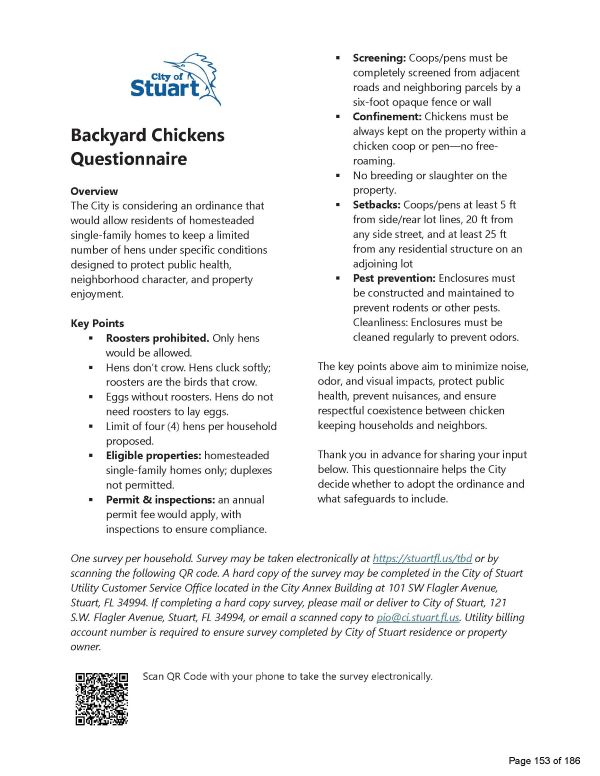
The commissioners didn’t believe that it would reach enough residents. About 8,700 residents live in condos, townhouses, and rentals. They do not receive utility bills. Commissioner Giobbi, who is a condo owner, does not receive a utility bill nor do any of her neighbors. How would that be fair for these residents not to weigh in on such an important matter?
The commissioners, with help from staff, will be using emails as another means of tracking down residents. The city will use voters’ emails and other email addresses in their possession to alert Stuartians to their opportunities to weigh in on chickens.
For years people have had backyard chickens in Stuart. Yes, it is against code. Yet unless a formal complaint was made to code enforcement, everyone took the keeping of chickens in stride.
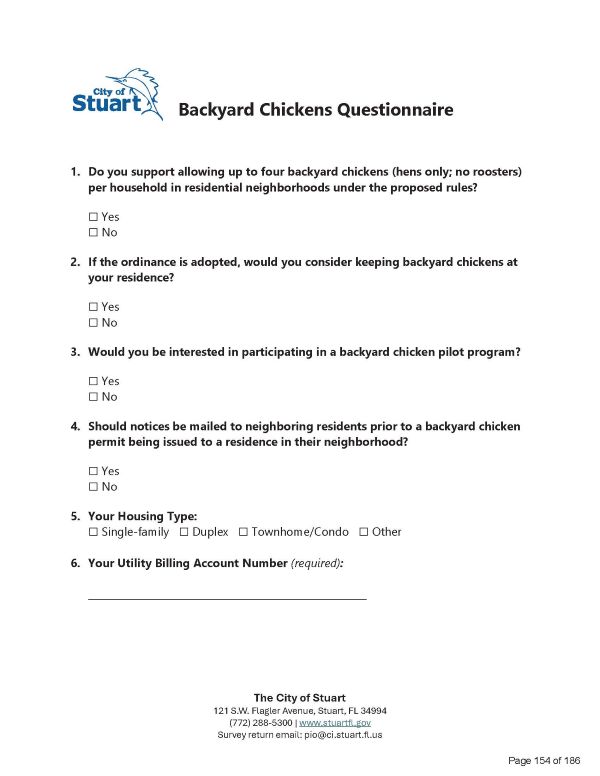
More than a decade ago this same issue came before the commission, and it was voted down. There were packed houses on those commission nights. I voted yes as a commissioner. This time around, the chamber doesn’t have one public commenter speaking yea or nay on this.
This all started when Boss Collins brought up the subject last winter. It was to help him in his campaign for county commission. This is another aftermath of his legacy. A supposedly decisive issue that only Collins could bestow upon the citizens of Stuart.
The commission vote was unanimous that the questionnaire be open to every residence in Stuart. How the news will reach the residents is haphazard at best. Residents must vote by March 1st, 2027. Every household regardless of whether you live in an apartment, townhouse and duplex…none of which are not eligible for backyard chickens…or a single-family home which is.
By the time this nonsense is over, the city will have spent an inordinate amount of taxpayer dollars for something so very inconsequential. It is apparent that the commission no longer wants to make an unpopular decision on any issue. This is not governance but cowardice. We saw it with the two referenda on the ballfields and Haney Creek, and we are seeing it again here. It is government by survey not by representative democracy.

Stuart apparently is being governed by chickens.
Under Florida Statute 218.39, municipalities are required to complete their audits nine months after their fiscal year ends. Stuart’s fiscal year for 2024/2025 ended on September 30th, 2025. The audit should have been completed and filed with the state no later than June 30th ,2026.
This is the first time since audits were required more than 50 years ago that Stuart has been late. And this was the easy year.
 Boss Collins and his Politburo decided that “It became necessary to destroy Stuart to save it” to paraphrase Bob Arnott, a journalist from Vietnam War days. Like any good Fifth Columnist, Collins knew that honest and competent government employees are not assets to those who want to manipulate the law for their benefit. Collins took his first 2 years when he was a commission minority of one to probe which city employees were and were not vulnerable to being corrupted or just were looking for a paycheck and would not give him any pushback.
The fire union leadership was where Collins found his first ally. By insinuating himself into private negotiations and promising the moon, he single-handedly increased the budget by about one million dollars the amount necessary to hire more employees. The City of Stuart’s service was cheaper for taxpayers before the Boss but is now more expensive than Martin County’s. At some point in the not-too-distant future, Stuart will no longer have an independent fire service for financial reasons. We may also lose our ISO rating which will cause insurance premiums to skyrocket.
 Then once his Politburo of Reed and Giobbi were installed, Collins could move on Manager Mortell. Mortell could keep the Boss in check. For that reason alone, he was a liability. He needed to be fired.
Louis Boglioli had been with the city for years. He rose to be the Financial Director for over a decade. Boglioli is a nationally recognized expert on municipal finance.
 But because of limited choices and perception, Collins had no alternative but to have Boglioli become interim city manager after Mortel’s ouster. He had served in that capacity previously when Stuart was recruiting other managers. He was more than qualified.
That was not a good characteristic as far as the Boss was concerned. Competency means that he could not, with the collaboration of his other commission buddies, run rough shod and, in some instances, illegally change how the city functioned.
When Boglioli challenged Collins’ fire fighter contract pointing out that it would increase the budget by more than a million dollars, it was time for the finance director to go. He was voluntold to resign.
His firing could not have happened at a worse time for the 2025 budget audit. Once Boglioli left, most of his department employees also decided they did not want to be part of what Stuart had become. Not only was the information needed to complete the audit never sent over to the auditors, but the city also couldn’t even bother to balance the bank accounts every month. It was a fiscal mess.
 The employees with integrity left. The choices for interim manager were very slim. After Boglioli was told to resign by Collins, no board action or public comment was needed. Roz Johnson Strong, the Human Resource Director, was tapped as interim.
Her inflated Linkedin profile shows her wearing several hats, for most of which she had no experience…. including the Financial Director. Everything fell apart. One thing she did have was an uncanny ability to take orders regardless of moral consequence.
Out of 80 plus candidates for the new city manager, the Boss and his minions chose Michael Giardino. He had nothing but a short stint of about 6 months a decade or more ago in the small Village of Brockport in upstate New York’s Monroe County. Giardino then became airport director of Monroe County Airport. He had no other municipal experience.
 What he did was have a naval background that both Reed and Collins said they liked because he knew how to take orders. Having no experience was a big plus also. A civilian Florida city manager is not a military officer reporting to the higher ups. Managers have distinct responsibilities and duties regardless of who the commissioners are.
The commission makes policy and is not responsible for day-to-day operations. That is the manager’s job. Giardino failed in that job.
I have been told by more than one city employee that Giardino was a bit of an absentee manager. He was not someone who came to the office every day. He also said to his department heads that they should do their jobs more than once. He never inquired as to what their jobs were. He had a hands-off managerial style.
Since he had so little municipal managerial experience and none in Florida, how could he lead and hold others responsible for their duties? His lackadaisical style became his hallmark. The Finance Director they did hire was inexperienced and was just as absent as her boss. Thus her abrupt resignation a day after Giardino’s firing. There would be no way the city could have an audit prepared in time.
 The city did receive letters of deficiency from the state. It is serious business when you don’t comply with statute. Once Mortell was back even without a finance director, the materials necessary for the auditors were provided. Community Services Director Jim Chrulski, the third interim manager, who served in that role between Giardino’s ouster and Mortell’s return was responsible for making sure much of that needed information reached the auditors.
I began by writing that this was the easy audit since Mortell and Boglioli were in place during the actual year. The city’s finances were in good order.
The 2025/2026 that ended September 2026 will be an absolute nightmare. And the audit for the CRA for the year 2024/2025 hasn’t been completed yet. It seems that Giardino and his crack team hadn’t realized there was a separate audit needed for that operation.
I believe Martin County has no idea about the cost, corruption, and chaos that awaits them once Boss Collins takes his county commission seat.
You can see the presentation and audit here
Here is something that never seemed to be a big deal for commissioners in the past. What is and what is not a public record? Today, the animosity is so high between commissioners that it is turned into a major point of contention.
It is almost without precedent that a commissioner (Reed) is making public record requests of city documents and fellow commissioners notes and files. No matter how heated the splits were between the county commissioners about a decade ago, I don’t think commissioners themselves made those types of requests. This was at a time when three commissioners faced criminal charges for public record breaches.

In my opinion, commissioners should be prepared at the end of a meeting to turn every scrap of paper they have had on the dais into the clerk. Not because it is required but because it promotes transparency. If you need to retain a note taken, ask the clerk to make a copy for you.
The session on public records was supposed to be handled by the clerk, but instead the city attorney stepped in. City Attorney Baggett cited cases and an Attorney General’s opinion of what was and not a public record that needed to be preserved. In each case commissioner notes are not a public record but if a commissioner reads a prepared speech, it is.
Baggett said however, it is good practice to hand in everything. The problem with not handing things into the clerk is that if a commissioner does not, then the commissioner is responsible for keeping the public record. The Clerk is not going to hound commissioners for their public records.
Commissioner Giobbi (who is no fan of mine) is following good practice by turning in her speeches she makes from the dais. She stated why should she have the responsibility to maintain records. That makes perfect sense.
For most of his first term Commissioner Rich brought a notebook to jot things down. While it was within the scope of not being a public record according to the law, it led to accusation that he was hiding things. There is no difference between writing notes in a notebook or on an agenda for action later. For the past few months, Rich no longer has a notebook. Again, it does promote transparency.

Commissioner Reed, who has no legal background, stated he did his own research (which is usually incorrect) and that Baggett’s interpretation of the law was wrong. Never mind that Reed cited no case precedents or opinions, his research and a 4-hour ethics course he was required to take was correct and Baggett was wrong. Reed brought no document or pamphlet from the course to buttress any of his arguments.
I would ask Reed why doesn’t he begin the process of removing the attorney if he believes he is getting bad advice? Baggett reports to the commission. Knowing Public Records Law is an important part of his job.
In all fairness, I believe Baggett allowed the changes to the LDRs to appease Collins and the Politburo when they were the majority. Because of SB 180, those changes were illegal. He may have seen his responsibility as to do the majority’s bidding. The majority has changed.
That isn’t because the commission may hire and fire the attorney. The title is known as the City Attorney not the Commissioner Attorney. He is supposed to make sure the city is following the law.
There is no doubt in this case that it isn’t only Baggett’s interpretation. The plethora of cases and opinions cited by him is indisputable. Commissioners, especially one without any training, diploma, or degree, is not even competent to render an opinion.
I urge all commissioners to do what Giobbi does which is turn everything in. In today’s environment, I would not even open my computer on the dais. We are in a place where you are guilty no matter what.
At the November 9th meeting, Laura once again attacked me. I don’t quite understand why she is spending so much time doing so. Doesn’t she have enough things to keep track of? She sure wasn’t keeping track of Stuart’s money as was demonstrated at this week’s meeting.
This week I annoyed her by writing about the chickens. What can one say about chickens? I said that instead of spending hours and hours of time on a survey about chickens, isn’t that something the commission should determine whether they are to be allowed or not?
There must be many unused brain crevasses in Laura’s head if she is attacking a citizen for expressing an opinion. An opinion, by the way, which called out all commissioners for not making the decision.
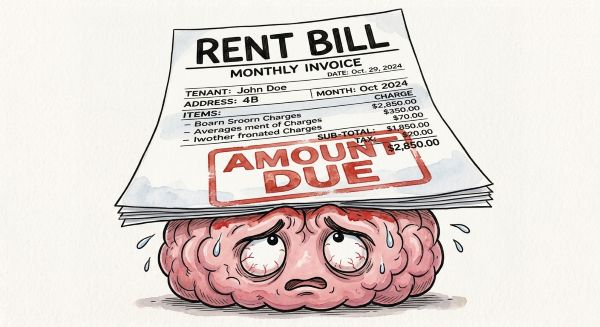
I feel sorry for Laura. If what I write upsets her so much, she shouldn’t read it. It is amazing that she is spending so much time with me and my ability to take up so much space in her head. How about doing something for your constituents…like you should have thought better of when you fired Mortell. You allowed the city to have its credit downgraded, and your city manager, Giardino, along with your finance department never even bothered to balance their bank statements for many months. Where were you?
Why don’t you pay attention to your job instead of me. I am only one of your reluctant constituents that must put up with your emptiness.
What Stuart witnessed from the time that Mortell was unceremoniously fired in October of 2025 by Boss Collins, Little Boss Reed, and the Ever-Faithful Giobbi until his return in September 2026, was an unmitigated disaster for the city.
What was probably even worse was when Finance Director and Acting City Manager Louis Boglioli was pushed out in January 2026. Boglioli was the one indispensable employee that the city had. Once he was gone, the fiscal wheels stopped turning for Stuart.
In Collins’ very unsophisticated and corrupt reign, he was more interested in control than having a well-managed city. Because he could not control Mortell…Mortell had to go. Once Boglioli refused to knuckle under to Collins, he too needed to go. The result was six months of bedlam during the nominal reign of Interim City Manager Roz Johnson Strong and the incompetence of Manager Michael Giardino. Giardino was handpicked by Boss Collins to do whatever the Boss told him to do.
Everything having to do with the city’s finances during that brief period of incompetency was handled by Finance Director Kate Ambrosino. She was from a small village in Illinois who had applied for a senior accountant position with the city which is far from being a director. No reputable finance person with Florida experience would apply for Stuart. Consequently, Ambrosino was tapped to be the director.
It was a lackadaisical city manager leading a person who had absolutely no experience and was doing the job mostly remotely. She resigned the day after Giardino was terminated.
One of Mortell’s first acts was to bring back Boglioli as soon as he was able to return under the terms of Florida’s FRS system. What everyone suspected was the utter mess that greeted Boglioli. In fact, it was even worse than expected.
In Part 2 I will go over the very detailed explanation that Boglioli presented regarding the 2025 Fiscal Audit.
At the November 9th meeting, the last item of business was a presentation led by newly installed Finance Director Louis Boglioli.
During the thorough presentation, Boglioli went through a step-by-step explanation of what transpired regarding the 2025 Audit, the 2026 Budget Year, and now the 2027 Budget Year. It shows a record by those in charge for most of 2026 of misfeasance if not malfeasance. Though both Mortell and Boglioli stated that this was not about blame…it certainly should be since it is likely to cost the taxpayers millions of dollars over time.
One of the big bugaboos you hear from both Reed and Giobbi is the need for transparency. Before Joly (Boglioli) left, he had migrated much of the financial system from one that was decades old to a modern cloud-based software platform on the city’s website. It was interactive with commissioners, staff, and the public with all being able to use it.
Citizens could use it to not only compile data but to see different budget scenarios. Much of the city’s finances were online for anyone to see. Isn’t that the very definition of transparency?
One of the first casualties of the Strong/Giardino regime was the system was disabled or removed. I noticed it last spring when I could no longer find answers to my questions. Apparently, commissioners never had any questions or looked at anything unless directed to do so by staff. I don’t blame them in this regard because the only commissioner that has a financial background is Rich. And I understand he did make his concerns known to Giardino who shrugged them off.
The links to the Budget and CIP from 2023 to 2027 were broken and unobtainable. Some of that data may be permanently lost, especially the newer information since nothing in many cases was ever recorded anywhere. It was just gross incompetence driven by who was hired and then no one supervised those that were in the Finance Department.
Commissioners, especially Reed and Giobbi were looking for a CIP (Capital Improvement Plan). They believed none existed. What no staff person would tell them was that those budgets did exist, but staff had inadvertently removed them from the platform, and they didn’t know how to retrieve the CIPs. Remember that Boglioli’s department previously had won an outstanding award for having a paperless budget.
The 2025 Audit was late not because of the auditors, but because they could not receive information from Finance Director Kate Ambrosino and the staff she had hired with Roz Strong. In many cases, the department simply did not answer the auditors’ emails. As Boglioli pointed out, the auditors are acting for the public by making sure that all expenditures and income is being properly used. They are the taxpayers’ eyes and ears.
The 2025 Budget year was completed on September 30th, 2025. The books and records were there for the auditors. It was the manager and his staff that were not answering their questions.
Auditors are chosen by competitive bid. They are independent and are selected by a panel composed of staff, usually a commissioner, and members of the public. No one from the Finance Department sits on that panel.
When doing their audit, they receive everything. They have follow-up questions and the Finance Department answers usually providing additional information. Also, the auditors select what are known as test transactions to make sure that what is recorded is accurate. In addition, they will do a microscopic in-depth analysis of one thing such as payroll. Even requiring all employees to personally come to the office to pick up their paychecks to make sure that employees actually exist.
The only finding the auditors made for the 2025 audit was that it was late. The first time in three decades. All due to staff’s lackadaisical incompetence.
In several meetings before Giardino was terminated, he specifically stated to the commission that the audit was done even though it was not. By law, the 2025 audit was due by June 30th, 2026. The city received a two-month extension. It was still not ready by August 2026 but was filed a month later.
There are several things that could happen because of a late audit. The city could receive a slap on the wrist such as “don’t do it again” or much worse such as a loss in revenue sharing, grants, or appropriations. Because of Collins (and how much he was despised in Tallahassee,) the city has received no legislative appropriations for a few years.
One repercussion that has already been felt is that Moody’s Rating Agency has downgraded Stuart’s credit rating. Because of Amendment 3 and the CRA’s Audit for 2025 just being completed, further downgrades may be coming resulting in higher interest and bond payments. Giardino and his crack team didn’t realize that a separate audit was needed under state statute for a CRA even though there have been decades of past audits.
Continued In Part 3
Boglioli left the 2025 financial year for the auditors in good standing. For 2026, which was the current year at the time of his departure, all was well and the budget and transactions were up to date. There was simply very little to do but follow the turnkey, cloud-based system that Ambrosino and her team inherited.
The online system had routing and internal controls built into it. There were flags that notified the finance team if they were overspending in a budget category. There was a list of action items for the team to follow. Everything was in the cloud.
Boglioli had prepared the initial 2026 budget with a millage rate of 5.0000. The commission in their budget meeting under Collins cut it by a quarter mill to 4.7500. There were 16 positions that were identified to be eliminated, combined with other ones or some funded through different streams of revenue to make up the difference.
Then Boss Collins, in his corrupt bargain with the fire fighters’ union, added three new positions which resulted in an increased millage of 4.9000. The big difference between the existing rate of 5.0000 in the previous year and 4.9000 is $10 for every $100,000 of value. This was the tax reduction that Collins ran on in his race for county commissioner.
After Mortell was terminated, the Collins Commission decided they did not want anymore bad publicity that layoffs would bring. But that left the 2026 budget seriously out of balance. The entire staff knew that there would need to be a budget amendment to bring the budget into compliance.
When Commissioner Rich asked several times about it from the dais, he was told by Manager Giardino that none was needed. Either because of willful deceit or sheer incompetence, the commission was misled. However, by this time the city’s finances were seriously out of control.
Something as basic as reconciling bank statements was not done from the time Boglioli left until Community Services Director Jim Chrulski was appointed interim manger when Giardino was terminated. The city’s investment accounts were not reconciled either. In some cases, the envelopes containing the statements were not even opened.
Stuart self-insures for employee health. None of those numbers which run in the hundreds of thousands were reconciled until October of 2026. Filing with the State Actuary was done with unaudited numbers.
Payments were made from Stuart’s bank account but never recorded in the city’s books. Payroll was not charged to the right accounts. Because the checks and balances that were in the city’s procedures were either ignored or discontinued, departments overspent their 2026 budget allocations. There were no internal controls by the end of the Giardino tenure.
An audit doesn’t only have to be filed with the Florida Department of Financial Services. It must also be filed with other agencies especially if you have bonds, which the city does. The CRA individual audit needs to file with the Auditor General which was just done almost 5 months late.
Some services have been stopped for non-payment due to violation of internal controls. Cash management was nonexistent. Even if the finance staff had never seen a computer or used modern software, the basics of accounting going back more than a hundred years when using paper and pencil would still apply. They ignored it all
The entire fiscal picture of the city has changed for the worse because of the Collins-initiated fiasco carried out by his inexperienced handpicked manager, Giardino.
Continued In Part 4
The 2027 year began in October of 2026.
How do you have an accurate 2027 budget if in 2026 nothing was checked or done…not even a bank reconciliation. It is impossible. At best, it is a rough estimate of how much the city has in its accounts.
The starting point for 2027 was based on incorrect expenses, incorrect reserves and balances, and incorrect revenue. Boglioli calls the current budget “a guideline” when it always was in the past taken as gospel. A simple error of booking expenses to the wrong account becomes a huge problem in over and under reporting what balances are in each department.
With a week on the job, so far Boglioli has found that the General Fund had an overstatement of $450,000 of revenue from state revenue sharing. Payroll calculations may be either over or understated. Reserves were used without an audited amount to verify the balances. Giardino and Ambrosino used already committed impact fees twice. Because of sheer ignorance, $1.4 million was moved from the General Fund to the Water & Sewer Enterprise Fund which is strictly forbidden by law. It will have a severe impact to future rates and bonding costs.
Since the CRA is an independent fund that is contributed to by both the city’s General Fund and Martin County, it is important and by statute needs to be paid by January 1st. How the amounts are set is not an arbitrary guess.
What Giardino did not understand was that each fund is its own entity with its own budget. You cannot use money from one fund for another without commission action or in some cases at all because it cannot be done by statute. In simpler terms, “you can’t borrow from Peter to pay Paul.” It appears that every possible mistake that could be made was made in the span of six months.
After the presentation, Matheson expressed it best by saying, “I am in a nightmare.”
Elections have consequences. The election of Chris Collins four years ago and Laura Giobbi and Sean Reed two years ago will reverberate for many years to come. To borrow a phrase from intelligence agencies, both Giobbi and Reed are just the useful idiots of Collins. Why Collins set out to destroy a functioning government and offered no viable alternative is a great mystery.
Watch out Martin County…he intends to do the same with that government. He already has set in motion the same outcome for Indiantown with the placement of Giardino in the manger role and causing what seems to be good department heads streaming for the exits. Beginning on the 17th when Collins is sworn in as a county commissioner, be aware of his evil destructive plan.

What is the purpose of school board meetings? I am less certain with every meeting I watch.
It certainly isn’t to keep the public informed. The October 20th meeting had about 2 dozen items on consent. Most were trivial. But only Li Roberts pulled two items to discuss briefly about what she wanted to have added. No other member had anything to discuss.
The board needs to approve these items but I wonder how many are read by school board members. Perhaps the district could save thousands of dollars by having an AI chatbot read and formulate questions that are answered for the public regarding what is contained in the agenda items.
I have been following the district for years and it seems less and less comes up for real discussion. Maybe the board members’ questions are answered prior to the meetings by the superintendent and staff and there is no need to air anything in public. But isn’t that why we have a public meeting?
Watching a school board meeting is like watching one big propaganda promotion. Every presentation is to make sure that we know how great everything in the district is going.
It is nice that we are an “A” District. But it sounds better than it actually is. The public is told that we rank 4th overall out of 67 districts statewide. Yet only 55% of our students are at grade level for math and 53% in reading. Is that really anything to celebrate?
As compared with the rest of the U.S. our 4th graders rank among the top 10. By the time our students get to middle and high school their rankings drop toward the bottom half. Internationally 4th graders do especially well. By high school Florida is in the bottom half again. This is not just a Martin County or Florida problem but a United States problem.
Perhaps instead of the rosy scenarios that are being presented at Martin County School Board Meetings, how about a more in-depth explanation of why math and reading proficiency in the 50ish percentile should be celebrated? The board is supposed to represent the taxpayers and parents not just be recipients of glossy presentations.
The board meets in public so that the public can be informed. They should speak without using acronyms and delve into the subject matter. Board members make $45,500 per year plus perks. You can afford to spend more than a couple of hours a month at board and workshop meetings.
At the end of the meeting Vice Chair Moriarity asked about excess school board properties for sale. The district has been discussing this for months if not years. Because of his question the board decided that their real estate attorney should be at the next meeting to discuss how to sell the properties (one more time). Would anything have happened if Moriarity had not asked the questin?
Will that result in concrete action being taken? When Martin Arts first started speaking about the old high school I had mainly brown hair. It now is mostly gray, and the disposal of the unused property is no further along.
Air school board business in public and since that is the only time board members can speak to one another about these matters… do so.
When Charlie Kirk was tragically killed last year, some made it about his politics instead of dwelling on his assassination as being the crime. That is not where the focus should have been, but in today’s tribal America, it is where it settled. On the Red side, he became John the Baptist preaching about the second coming. On the Blue, his views came straight from Beelzebub.
In my opinion, both sides decided propaganda wars were more important than discussing the terrible results of political violence and assassination. In the Red Free State of Florida, someone speaking (or more importantly social media posting) that Kirk was anything more than a martyred saint was tantamount to committing blasphemy. Just like blasphemy could get you burned at the stake in the past, today especially if you were a government employee, you could end up losing your job.
Like some others, Matt Theobold a Martin County teacher and union president, lost his position. As a point of reference, he did not express his views in the classroom to his students or even at school to other teachers. Theobold did so on his mother’s Facebook page.
In every instance that I could find, the courts in other cases of other employees expressing their opinions on their private pages have either been reinstated or given large judgements. Think about the money. The Martin County School Board and District are no doubt going to be liable for a big pay day for Theobold. That means us…the taxpayers.
Yet we haven’t heard a peep out of the board since Theobold won a decision in an administrative hearing. The school board must decide whether to reinstate with back pay or not. The board cannot sweep this under the rug and pretend it didn’t happen.
The board did reject the administrative judge’s decision. To my understanding, Theobold did not appeal the rejection within the thirty-day time limit. It is now up to Theobold to bring a suit in Circuit Court.
Every legal action that has been brought by a terminated employee for this Kirk debacle has been won by the employee. Is the board so pig headed that for the good of the district (saving thousands of dollars which is better spent in the classroom), they can’t make a deal with Theobold?
This is what happens when everything is about politics and nothing is about common sense. In my opinion, Theobold did a stupid thing. As a teacher and the head of the union, he should have acted with more restraint. But did he commit a firing offence? Absolutely not! And every court, even in the Free State of Florida, has agreed in similar cases.
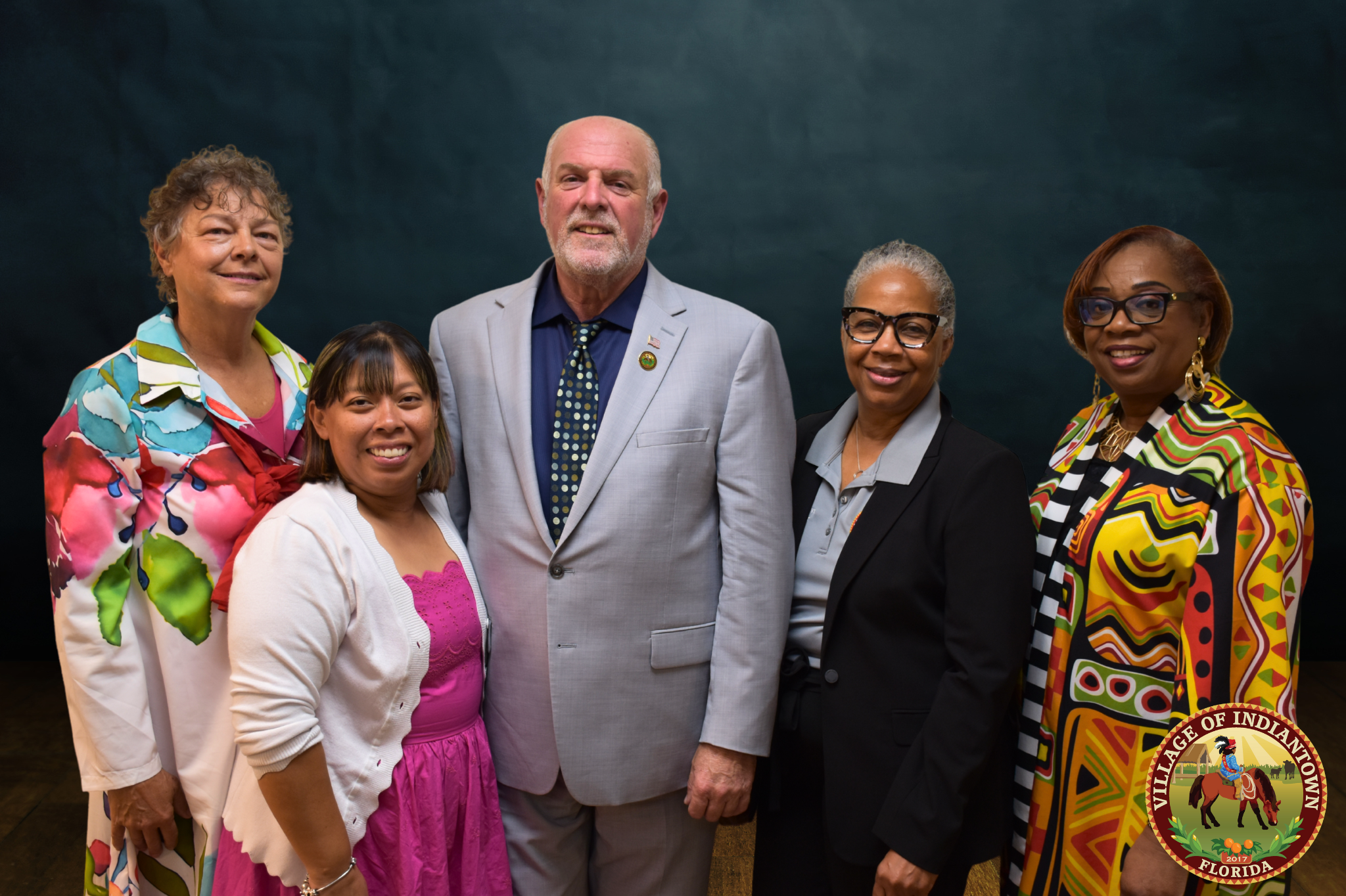
Dowling has no idea about the buzz saw he is running into with the second lawsuit to be filed since he came back into office.
He may think he is going to be King of the Hill as he tried to be in his last go round on the council. He isn’t. Dowling is playing with serious people and serious money. They are not going to give him a pass.
Dowling is judgement-proof as the lawyers say. He has no discernable outside income or assets. The old adage that you can’t get blood from a stone applies here. No one is looking for his assets.
This is not about getting money but records. Dowling can’t turn over the information requested because it would prove he wasn’t following Sunshine with his fellow council members. Not only is Dowling breaking one law regarding public records but another regarding secret communications.
What Stephen Leighton, the plaintiff, is really hoping to get a hold of is the metadata contained within Anthony Dowling’s accounts. What is discovered in Indiantown is added information for Silver Fox which Leighton’s attorney, Ethan Loeb, is also representing.
But I suspect Loeb is trying to tie in Indiantown’s decisions to our old friend Capo Chris Collins who looked like he was directing the entire tableaux at the September 1st meeting from his ringside seat at the meeting. Besides the village, the other two parties to Silver Fox’s case are Penny Kaminsky-Preli and Eric Miller. If they can tie everything into some grand conspiracy, there will be damages and legal fees awarded.
Dowling and the rest of the Martin County crowd should not confuse Loeb, Silver Fox or even Leighton with the usual suspects. These guys are the real thing. The lawsuits will continue, they are not the type that back down and make nice.
Dowling, Hernandez, Miley, Giardino, and the rest are entering a maelstrom that will result in the village paying enormous legal fees to defend what is stupidity and clearly against the law. And then we have the legal fees of the other side plus any damages awarded. The people of Indiantown should be asking why these clowns were ever put back in office?
Christa Miley is either the most prepared council member that the village has ever had, or for that matter Martin County, or she is reading someone else’s words.
Ever since being elected and on her first meeting, Miley has read her comments and the questions she has asked. There are no off-the-cuff remarks, only scripted language. It sounds like she was a Congressperson reading what to say at a hearing that had been prepared by her staff. Only in this case, she has no staff.
It would be more believable if she improvised a bit instead of the deadpan rote reading of the words she speaks. Who could be her erstwhile ghost writer? If it were like every place else in the county, I would say it was Boss Collins extending his reach to Indiantown.
Yet with Miley voting to exempt three data centers from the moratorium, I would doubt that was something he would write. The same goes for gadfly Eric Miller. Taking that position would be anathema to those guys.
 Then a little bird told me that Miley is tight with the former Community and Economic Director Althea Jefferson. Jefferson was the one that spearheaded the efforts to place data centers as a permitted use in heavy industrial districts. In 2020, she went so far as to say that the code should be less restrictive than Martin County.
Then manager Howard Brown hired Jefferson, with the explicit goal to streamline business moving into Indiantown. Jefferson and Miley worked closely together when she was a member and vice chair of the PZAB. Jefferson left Indiantown soon after Howard Brown’s ouster to become a planner at South Florida Water Management District.
Jefferson did not remain at the district very long. She moved on to Palm Bay to become the Assistant Growth Management Director and has since become the Growth Management Director of that city.
It is highly doubtful that she would want to step down from a job in Palm Bay with more than 130,000 residents to return to Indiantown with only 6,000. That doesn’t mean that she isn’t interested in helping a friend and seeing the “Jefferson” initiated code survive.
One thing is for sure…someone is writing Miley’s words. I am just not so sure who that somebody is.
How did the new council’s absolutely, positively, no way on data centers go from Indiantown’s fighting-them-forever moratorium to one that has exemptions?
That is the question that many of us wanted to know after the meeting that occurred on October 27th. Did sanity suddenly prevail among the council? I think it was more reality once the cost of defending irrational and unwinnable lawsuits was beginning to be understood. It only took one being filed to confirm the gravity of the situation.
 What we heard from public speakers and several council members is that lawsuits don’t make sense. Between Vernestine Williams-Palmer and Mayor Phyllis Waters-Brown, the idea of trying to defend developer lawsuits was just not what they had signed up to do. They were joined in that sentiment by Vice Mayor Christa Miley reading a prepared statement (see more in an article to follow) of the futility of it all.
Waters-Brown stated that from September 2nd to September 30th the village paid $40,050 for normal legal expenses and $35,214.03 on the one data center lawsuit. When Vose was the village attorney, the entire legal amount for 2025 was budgeted at $150,000 for the entire year. For some reason, the village is paying Dowling’s legal expenses in a separate lawsuit for sunshine and records violations.
 The question is why? The village should not be paying for that lawsuit since his actions are his alone and not the village’s. Since the village is also a party to the suit, the council is claiming that Dowling’s fees should be paid by the taxpayer. I think you can make a good argument that each party should be represented by different attorneys and that Dowling’s interests are not the village’s.
There was a vote that the moratorium exempt the three data centers presently in the pipeline. It passed 3-2 with Dowling and Hernandez voting no.
The council instructed their very expensive attorney to speak with the data centers’ attorneys and make sure everyone is happy. Williams-Palmer wants all the lawsuits to go away, but until the exemptions are passed, that will not happen. However, by the end of November if the council sticks to its tight schedule, that should happen.
 What I don’t think will happen is the lawsuit against Dowling by Stephen Leighton will end. While the same attorney that represents Leighton represents Silver Fox, the two are distinct and different. Leighton’s suit is tied into ongoing litigation against Sarah Merker and The Martin County Watchdog for libel and public records.
Leighton is probably trying to show that Dowling had violated Sunshine with the newly elected council members, Miley and Hernandez. There is no Sunshine violation with either Chris Collins or Eric Miller who also was instrumental in Giardino’s hiring and the attempted stopping of data centers, since they are not on the same public boards. It may serve Leighton’s other lawsuit against Merker to depose the three.
The PZAB must approve the moratorium and are scheduled to meet on November 5th. After that meeting, there will be a special meeting of the council scheduled with this one item on the agenda for first reading. If all goes as anticipated, then after 2nd reading at the last meeting in November, Silver Fox’s lawsuit goes away.
Mayor Waters-Brown may currently be the most important person in making sure that Indiantown survives.
She is the embodiment of the Kipling poem “If.” The first two lines are:
If you can keep your head when all about you
 Are losing theirs and blaming it on you,
Waters-Brown, along with Councilperson Williams-Palmer, are the only thing keeping Indiantown from self-annihilation. Councilperson Dowling was given a second chance by voters, but he seems intent on making sure the village doesn’t survive his second term. Even before taking his seat, his actions embroiled Indiantown in a lawsuit for records and sunshine violations.
Without the restraint of Brown and Palmer, Dowling, Miley, and Hernandez probably would have continued the lawsuit and encouraged more by not allowing the three data centers already being processed to proceed. In the first month alone, the village spent $40,000 defending the indefensible. Rhetoric may work well in campaign mode but not when it comes to governance.
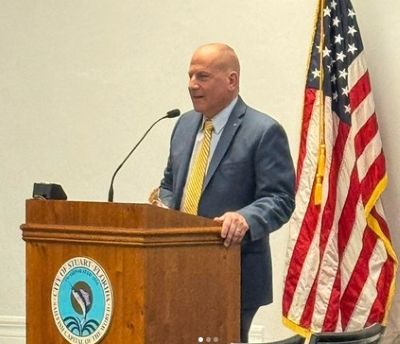 On November 5th, the Planning and Zoning Board met to discuss the proposed moratorium on data centers. Manager Giardino stated he was the village manager but also the economic development director and would leave any questions on the moratorium to the attorney to explain. The attorney, James White from Weiss, Serota, had not been to the village before. He is a specialist on LDRs.
The board took 30 minutes to recommend approval. That half hour included electing officers.
The council convened soon after to take up the matter.
Vice Mayor Miley did a poor recitation of the statement she read into the record during commissioner comments. Hernadez said she wished she could continue to fight for no data centers, but she has an obligation to govern not just campaign. For once, a sensible statement.
 Dowling took the opposite approach and would be willing to fight on. This is the same approach that was leading the village to insolvency the last time he was a councilperson. It seems he learned nothing in the four intervening years.
He did blame the previous council for the data centers. Dowling must have forgotten that he and Hernandez voted to include that use in the village’s LDRs. Both were also trying to bring centers to the village when last on the council. As Antonio (Anthony in Italian) said in Shakespeare’s “Tempest” to Sebastion, “Whereof what’s past is prologue, what to come, in yours and my discharge.”
The moratorium passed on first reading with the three current application for centers exempted.
Transparency is very important to this council or at least that is what they want the public to believe. But there have been some glaring examples of behind the scenes maneuvering to belay that claim. Examples include the way Kryzda was fired, Giardino was appointed, the law firm was selected, and of course Dowling and the Village Of Indiantown became embroiled in a public records and sunshine lawsuit. More should be done to encourage transparency. Dowling proposed an Indiantown Citizens Data Center Advisory Committee.”
This committee, which is subject to both public records and sunshine, will consist of an appointee from each councilperson, and the three exempted data centers will each have a representative. You can see what it is supposed to accomplish here
During public comment on this item, a very smart person asked how would 5 members who don’t even have to be village residents keep the rest of the community informed? That is a very good question. She is right this is transparency in name only.
As a sunshine committee, their meetings will be open to the public. So, they will be advertised and of course the public can attend. I would imagine that they will be recorded to watch. Just like the public can now attend and watch all government meetings and have even been able to during the previous council, who Dowling believes was not transparent enough. Though they did the same exact things as this council, there were no lawsuits for not being transparent as is the case currently with Dowling.
I would doubt that the three current data center applicants will be members of a sunshine board. Why would they do it? They are businesses not government bodies or concerned citizens. I am surprised this week’s village attorney did not mention that.
This is not transparency but bureaucracy. How is the homeowner in Booker Park any more informed with this committee being added. Are they going to go door to door to explain what is going on?
If the council wants transparency, they should have more community meetings. This is one more thing that Interim Manager and Acting Economic Development Director Mike Giardino can add to his plate.
As an aside, I understand that Finance Director Mike Florio is leaving. They are advertising for his replacement. Giardino can take that title on since he did such a stellar job in his last managerial position with finance. The finance director he directed in his stint in Stuart who was way over her head is probably still looking for a job. Indiantown could continue to collect all of her sister city’s cast offs.
Through the LDRs, Martin County makes those parties with more than 5% ownership divulge their names before receiving a permit or zoning and site plan approval. The stated purpose is to make sure there are no conflicts with members of staff or advisory board members. It was suggested that Jupiter Island follow suit. Scott asked for this to come before the commission.
In October 2026 a former senior CIA official, David Rush, pleaded guilty to wire fraud for orchestrating a $193.6 million fraud scheme against the government. Using his high security clearance, he stole the money and then made it hard for others in the government to track where the cash went. One of his acquisitions through a holding company was a $40 million parcel on South Beach Road.
He took original title in a shell corporate holding company, 0701 Holding LLC. A Virginia associate was the manager of the entity. The corporate entity was registered in the West Palm Beach office of Kochman and Ziska where Maura Ziska, an attorney, acted as the buyer of record. Ziska and the other local people believed they were facilitating transactions for a highly classified government operation.
This case was alluded to by the town commissioners. However, it should be noted that regardless of whether the proposed ordinance and changes to the LDRs were in effect or not, the town would not have any idea about who bought what property. No one ever applied for any permits, lot splits, or site plans from the South Beach Road property.

Tadeo thought it would be an invasion of privacy to delve into those who owned a property. I guess you could use it to find out who was moving on the island but so what. Tadeo was worried about being sued if a permit was denied. Field mentioned that by the use of trusts and other means, true ownership could be hidden. And as was the case with the South Beach Road property, the natural person listed as the owner had no ownership interest.
Several members bemoaned the fact that some of the newer residents were not like the “old timers.” And that is true. But as Field stated, as prices increase astronomically, the nature of the buyers will change.
I never thought it was a good policy at the county, and I believe on Jupiter Island it will be one more reason for a property owner to commence litigation with the town if a permit or zoning change is denied. They instructed the attorney to bring back an ordinance.
The Reed family through the Hobe Sound Company owned much of the Island. As they sold off their holdings they maintained low key development as their nexus just the opposite of the flashier Palm Beach. They also established the exclusive Jupiter Island Club where Permelia Reed would interview prospective members of the club and buyers on the island. That was many years ago and times and residents have changed.
It isn’t Mrs. Reed’s Jupiter Island anymore.
Mayor Anne Scott has certainly proven that a meeting can be run in a timely fashion.
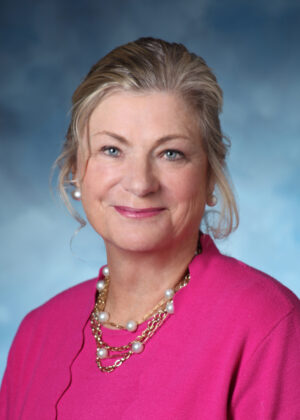 Her agendas have recommended time limits for each item, and she usually keeps the discussion, presentation, and vote to the allotted times. I must admit that I was skeptical about whether it would work or not. She has proven that indeed they can. Other boards should give her system a try.
The District County Commissioner Blake Capps was there to give a presentation on what is happening at the county. I know the Island is special but why don’t other commissioners go to at least the municipalities in their districts and do the same thing? Capps could be a bit long winded but again Scott kept him to just a little over his allotted time.
Capps did mention how the county will have a moratorium on data centers. It appeared to appease the town commission except for Field. He said not outlawing data centers is cutting your nose to spite your face. Field went on to explain that people’s fears are based on antiquated notions of water and electric use.
Both water and electricity can be regulated, and such regulations exist already in Florida statute. My take on Field is that he is a knowledgeable guy but never learned the adage about flies and sugar. That is too bad.
South Beach Road is currently a county road. At the next county commission meeting they will transfer it to Jupiter Island. It runs from Bridge Road to the county line. The town wants to take possession so they can enforce parking and other traffic-related problems. Some thought it was a designated evacuation route which it is not.
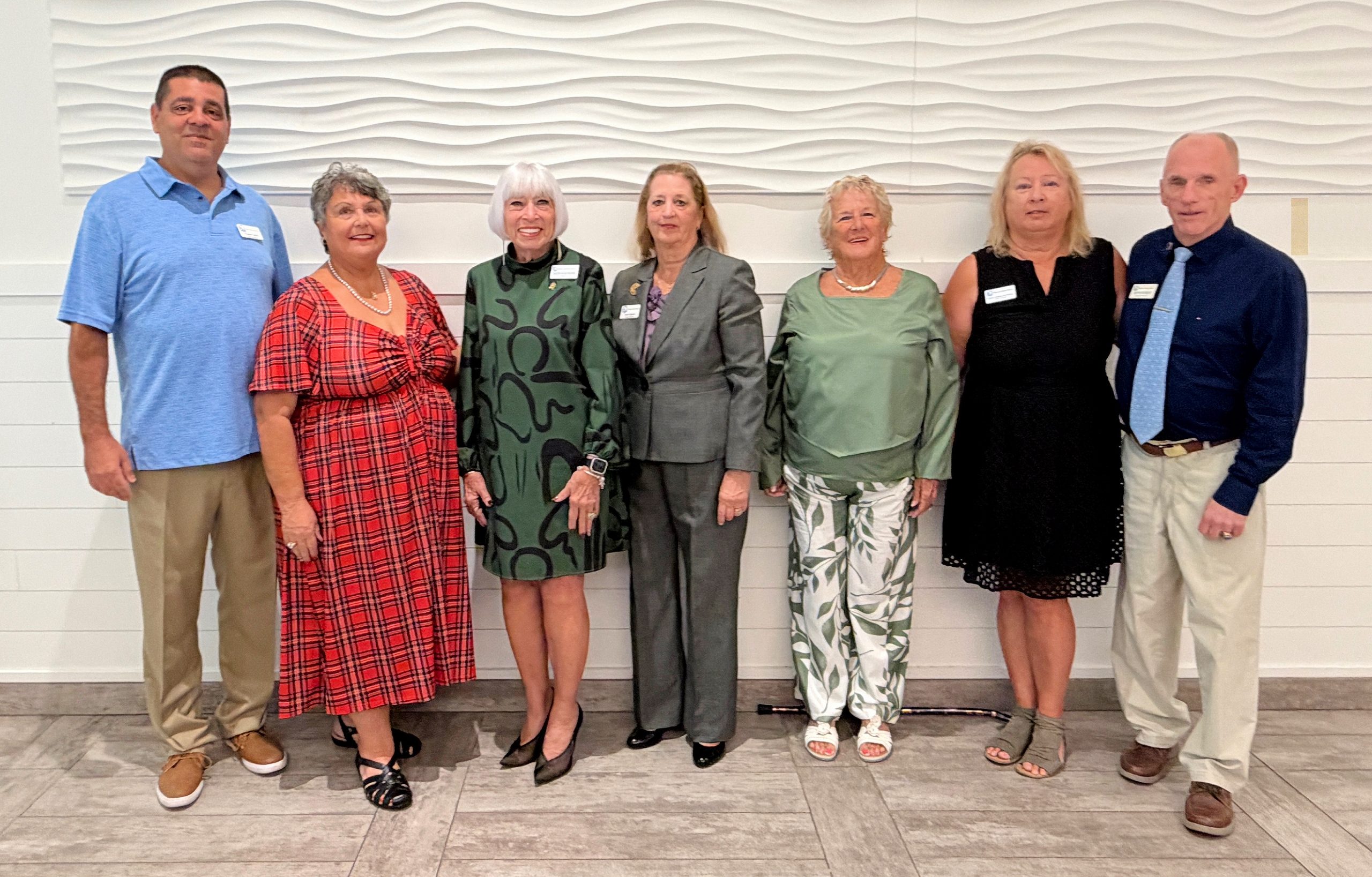
After many years, Ocean Breeze will have a new mayor next month. George Ciaschi will succeed longtime incumbent Karen Ostrand. Karen has been a tireless defender and booster of Ocean Breeze for years.
Unlike other municipalities in Martin County, the mayoralty is filled by election. The mayor is the chief executive officer of the town. There is not a town manager but there is someone called a town consultant. Technically the buck stops with the mayor.
The people of Ocean Breeze should congratulate Ciaschi for stepping up. If the town loses Sea Walk coupled with Amendment 3, there will be serious financial strains on that government.
Danna (Dana) Pace from the resort is the new council member. She succeeds Sandy Kelly who was the last council member from Sea Walk to be on the council. I don’t know whether there will be a special election or whether Ciaschi’s council seat will remain vacant. The new charter calls for a council of 5 members. The council is trying to have an election on the new charter in early 2027.
Ann Kagdis who was on the council for many years came up with a slogan to describe Ocean Breeze 15 years ago. “Gem of the Treasure Coast” was how she described the town to anyone that she met. Karen Ostrand as mayor began doing the same thing. At this meeting, the council unanimously proclaimed that the saying is now the official slogan of the town.
The attorneys for the town and for Sea Walk are working on a survey to see how many Sea Walk residents would vote for de-annexation. The survey should go out in early 2027.
Sea Walk and the town are working toward a mediation with the bond company regarding finally fixing the problems at the development. It has been a long process and that is the last piece to settle in the building of those homes.
AutoZone will have 28 dedicated parking spots at the shopping center. Apparently, they will not share with other users. The board felt that will cause even further parking problems. Unfortunately, there is nothing the town can do about that according to the town consultant.
In the past few weeks, we have had an election that has shown that people will only take so much.
Enough voters in many states decided that it was time to go back to their business and away from Trump’s. They felt neglected as costs have continued to rise with no one taking responsibility for what is going on. And surprisingly to me, they have had enough of the grift being perpetrated by the president and his minions.
When all is said and done, the Republican Party has been repudiated in much of the country. The voters made a simple and declarative statement. They want prices to come down, corruption to end, and civility to return.
It doesn’t look like the president is heeding the people’s voices. Instead of taking the election as a wake-up call, he is ignoring what most of the country told him when the election results turned some of the reddest states dark blue. In 2024 the young, males, and Hispanics wanted to believe in his campaign promises. Two years later, they ran back to the opposition.
There is still time for the president and the Republicans to make amends. It just seems they don’t want to do so. Not since 1974 have the Democrats taken so many seats in Congress. If this isn’t going to be a one-shot deal, the Democrats must extend a hand across the aisle to their Republican colleagues regardless of Trump’s continued hostility. If the Republicans accept, then they will survive as a political party if not they will be perceived as a cult.

There are differences in the two parties. Yet that didn’t stop Democrat Khanna and Republican Massey from working together on Epstein for the good of the nation. We need a strong two-party system and not a one-party oligarchy.
The Democrats need to forget about impeaching the president (although a few cabinet officers should be replaced) and concentrate on passing bills to help Americans. They need to do investigations that show what has transpired since Trump took office. If the bills are vetoed and the Republicans refuse any accommodation, then it sets them up for further losses in 2028.
The majority of people have spoken, and they want relief from bad government. And we have had some of the worst government in the past two years. It is now time to move ahead to make the U.S. better either with both parties working together or the Democrats alone.
IF YOU ARE NOT A SUBSCRIBER DO SO FOR FREE HERE www.friendsandneighborsofmartincounty.com
GET THE WORD OUT
Friends and Neighbors of Martin County is your eyes and ears so that you know what is going on in Martin County’s municipal and county governments. I attempt to be informative and timely so that you may understand how your tax money is being spent. Though I go to the meetings and report back, I am no substitute for your attending meetings. Your elected officials should know what is on your mind.
Tom Campenni 772-341-7455 (c) Email: thomasfcampenni@gmail.com
Tom’s Articles
From Medium
"Trains The Past Is The Future"
"How Many Ways Can The Concumer Be Charged"
"Fastest Way To Bankruptcy"
"The Sky Is Falling"
"What An Election"
Other Articles
CT Capitol Dispatch: "Trump HHS Hands $68 Million in Teen Pregnancy Funds to Consultant"
SCOTUSblog: "12 angry men --- or six?"
Florida Phoenix: "Administrative judge siles with Florida instructor regarding Charlie Kirk post"
Washington Post: "The suprising way walking can benefit your brain"
Paul Krigman Substack: "It's Time To Take Starlink Away from Elon Musk"
The Guardians Position On Data Centers
Florida Phoenix: "900+women criminally charged for their conduct during preganancies"
Florida Phoenix: "Appeals court lifts block on Florida law restricting social media access for teens"
Washington Post: "The suprising way walking can benefit your brain"
Capitol Dispatch: "Fed Study Finds Trump Tariffs Reversed Falling Concumer Prices"
The Economist: "How the 2010's remade business"
The Atlantic: "How the Catholic Church Is Rethinking War"
The New York Times: "In U.S. Gas Talks With Kremlin, Hidden Financing for Alaska Project Emerges"
Route Fifty: More body-cam footage is not the end goal. More usuable, accountable footage should be"
The New York Times: "Mortgage Rates at 7.4%, Highest Since 2023"
The New York Times: "Social Security Says Retirees Will Get a 3.6% Raise for 2007"
Wall Street Journal: "The Immigration Crackdown Is Making It MUch Harder to Build Houses"
The Economist: "The winners and losers of Trumponomics"
Florida Phoenix: "Trump administration awards Florida 193.7M for riral healthcare"
The New York Times: "What Are Data Centers Doing? A Mind-Boggling Amount of Math.
Florida Phoenix: "Trump immigration policies could turn away much-needed foriegn doctors, critics say"
The Economist: "Donald Trump's humiliation offers America an opportunity"
The New York Times: "How A Franciscan Priest Lives on a Vow of Poverty in Midtown Manhattan"
The New York Times: Newsom Commutes the Sentences of California's 548 Death Row Inmates"
Route Fifty: "Voters reject data centers in local ballot initiatives"
Copyright © November 13, 2026 Friends & Neighbors of Martin County, LLC., All rights reserved.