



 We have had colder than normal temperatures this winter. The snowbirds can’t be too happy. I sort of enjoyed them though it appears to be warming up. We may have one more cold snap before the long march toward summer begins. The perfect giving way to the hot and humid.
We are heading to the close of another legislative session. Tallahassee continues to put holds on local government. I will say some of the bills are justified. Others are not. Yet for a local government that has exceeded its authority look no further than Stuart which continues to ignore state statute. I don’t understand how the city attorney can be a party to openly defying the law that he swore to uphold.
 If you live in the City of Stuart, you may believe everything couldn’t be better. That would be a wrong assumption. You need to read our articles regarding the gutting of the Finance Department. These are the people that make sure dollars are being spent appropriately.
There are also several stories regarding the terrible dissension at the BOCC. At all levels of government civility and just doing the right thing has rapidly gone downhill. Like they say leadership and acceptable conduct starts at the top.
Last month Brent Hanlon introduced himself as our food and restaurant columnist. In this edition he reviews his first restaurant for us. He will begin writing for every edition.
 I don’t know whether most people know that a slaughterhouse is being proposed for Western Martin County. I would normally wait for it to come before the commission before informing you about it. It doesn’t look as though it will. The owners claim that the state will oversee and permit it. Greg Braun from the Guardians wrote about it in this week’s Friends & Neighbors.
The Martin County Taxpayers Association has a five-part series on property taxes. We have the first installment for you this morning. The four subsequent ones will appear in our next four editions.
So, sit back and pour another cup of coffee and enjoy your window on Martin County.
Have a great Sunday Morning!
In the fall of 1976, my wife and I made an offer on a semi- attached row house in Flushing, Queens. Two blocks farther east it would have been in Bayside a more prestigious neighborhood but more expensive.
 On a cold Saturday morning in January, my three best friends with a borrowed truck arrived at our apartment in then very much working-class Chelsea, and we moved what little furniture we had to our new home. My neighbor on one side was a NYPD lieutenant and his wife, and on the attached side was a guy who worked as a lathe operator and his family.
Both of those neighbors were American born. Both had grown up in city apartments. This was the first rung of leaving the city behind without quite being in suburbia. There was a good smattering of Americans, mainly Jewish and immigrants, mostly from Italy, Greece, and Eastern Europe.
I loved that little house. Another friend, a commercial building superintendent, and I created an apartment in the basement so my wife and I could have a little extra income. I was technically his boss but did anything he told me to do not only on this project but at the garment center building I managed. I was at least smart enough to know that age and experience meant more than titles. By late summer, the apartment was finished in time for my wife’s cousin to move in while she completed her medical residency at Lincoln Hospital in the South Bronx.
 After she left, we never rented the apartment again. It became an office for me and a playroom for the kids. We were beginning to be more prosperous. We had no place to go but up.
During the nearly 10 years that we lived there, two kids came along. I started several businesses, bought a few buildings, became more involved in politics, and would dutifully walk to the corner every morning at 5:20 and catch the bus to Main Street, Flushing where I took the #7 train to Manhattan and my office.
As time went on, I would drive to Jackson Heights, Woodside, or Sunnyside, park on the street and catch the same train along its route to the city. I couldn’t afford to pay for a garage near my office, but I would often find myself having to go to buildings I managed in Queens, Brooklyn, and the Bronx. It was easier to go by car when it was parked only 20 minutes away and then drive home than navigate multiple subway lines.
Over the years my neighbors left, and others came. The police lieutenant succumbed to the call of Nassau County and moved to be replaced by a Korean family. The family on my other side also moved and a Greek family moved in. He worked for Swingline in Long Island City. That same migration was repeated by others on the block.
A Dominican family moved across the street and my wife who was Puerto Rican welcomed them. More Koreans came as did Chinese. A smattering of Hispanics was also now on the block.
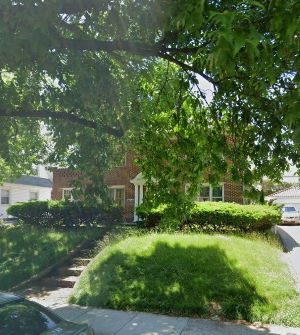 We moved to a larger home in another Flushing neighborhood. Our neighbors on either side and on the street were Americans. One neighbor was a NYU professor who had bought the house from his parents to raise his children…the other a retired executive. We bought the house from the widow of a Pathé News owner/executive she said. Path
 had been a movie news reel company for the most part. I had watched those news reels in movie theaters as a kid. They had owned the home since the late 1930s. She kept a big old 1956 Caddy in the garage.
Throughout this time, I continued to commute to Manhattan. I now drove and parked in a garage across the street from my office. I rarely used the #7 train. When I did, I could see why the this El line and the streets below were called the International Express.
People from all over the world had settled in the neighborhoods along its route. They had moved to Queens just like my forebears had ended up in Manhattan. The immigrants and their children from Italy, Ireland, and Eastern European Jews who had once left the slums of New York for the apartments and tiny homes of Queens were giving way to a new diaspora.
When we sold our house, most of the neighbors were from Korea. The new owner of our home was a Korean family. There is nothing new with any of this except the languages spoken.
In 2023, Florida passed its own border security by making employers use E-Verify if they had more than 25 workers.
When Florida enacted the law, it had its intended consequences of making some migrants unemployable. It also hurt many farmers and construction companies by taking away a large source of their employment pool. E-Verify is also unreliable since it has old information and takes months to update making it impossible for some newly legal immigrants able to work.
 The year before the statute was passed, Florida led the nation in job growth. In 2024, employment fell by half and has been flat since last February. Today Florida ranks 26th in the nation in employment growth. There are 7500 fewer jobs in construction and 2500 in hospitality over the last 12 months.
Employers can’t find labor. Noncitizens made up 1/3rd of construction workers and half of farm laborers. 70% of all building contractors can’t find any workers. Now the state is doubling down by introducing a bill that all employers of any size must use E-Verify.
There is little evidence that Americans want these jobs even at attractive wages. Farm laborers earn nearly $50,000 per year in Florida if they work year-round. This is having serious consequences for the Florida economy.
A lack of an immigrant labor force is creeping into healthcare with a shortage of every occupation from doctor to orderly. The Florida economic miracle is rapidly deteriorating because of misplaced policies from insurance to home prices and now a shortage of workers. But we showed those illegals.
What is the purpose of both written and practical driver’s license exams?
Most people would say that it is to ascertain whether the driver has the ability to operate a motor vehicle in a safe manner and knows the relevant laws. It is not a language proficiency test. The state has a responsibility to make sure that drivers are not a danger to the public, other drivers, or themselves. Then why is the “Free State of Florida” only giving the written test in English?
I guess the main reason is a hatred of the non-English speaker. Or maybe just to make a legal resident’s life a little more difficult. Many people are here legally but are not proficient enough in the English language to pass a written test. Whether someone is a citizen or not, most of us are car dependent in Florida.
Just as Americans must present documents proving who they are when applying for a license, so too must non-citizens. Non-citizens have the added burden of providing proof they are here legally to be eligible. All that makes perfect sense.

At one time, a driver’s license was only proof that the holder could drive. When I first received mine, it was a piece of cardboard with no photo anywhere. Over the years, it became a national identity card proving who you were to all government authorities. Now you can’t fly without a “Real I.D.” Even your doctor wants to see your license before seeing you.
States should not be involved if your license is going to be used as proof of whether you are a citizen or anything else except the ability to safely go behind the wheel of a car. Like many people, I have driven in several countries including those where I don’t speak the language. Millions of Americans have. The lack of language proficiency did not stop me from driving safely.
Twenty years ago, I was in favor of the Feds issuing everyone that was legally in this country, whether a citizen or not, an I.D. card. It would have to be presented to work, collect benefits, or fly. That would settle so many things. I still believe that.
A driver’s license is not a citizen test but a document about your ability to drive on our roads. We need to go back to having a license that means you can drive and stop making states the guarantor of a person’s legal identity. Reading English has nothing to do with driving, and we shouldn’t confuse safety with politics.
Political parties are relics of the past. It doesn’t seem they will be coming back with any vibrance anytime soon.
 If you ask how I can say that when partisanship has never been greater, then you need to understand the difference between the two. Political parties are concrete vehicles that run candidates in elections and make coalitions in order to win those elections and govern. Partisanship is really the behavior of a fan of a political party or political issues. Those fans are rabid for a particular philosophy, value or issue but usually do not participate in any meaningful way in the life of the political party. They may be low propensity voters.
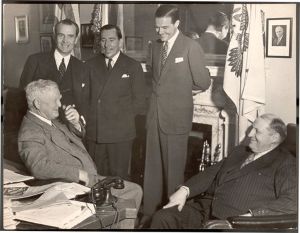 Up until the early 1970s, political parties nominated most candidates. Today primaries do. If you wanted to run for an office, you just couldn’t get anywhere without the party bosses giving you not only the okay but the funding to seek the office. Now you are on your own until you win the primary, and then the party may back you with some support.
That left individuals and donors calling the shots for the candidates. One-issue voters and candidates became normalized. Pragmatism went out the window since individuals molded their philosophy to appeal to a narrowing base. You were no longer a Democrat or Republican because they did something specifically for your family or you. You went along on a promise and a prayer…an idea not a benefit for you personally.
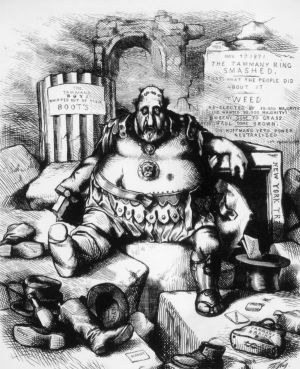 It wasn’t only Democrats that had clubhouses before modern politics. Republicans had some of the biggest machines in the country. The Vare Brothers in Philadelphia, the Barnes Machine in Albany, the Hague Organization in Jersey City and, of course, Nucky Thompson of Atlantic City made famous in the HBO series “Boardwalk Empire.”
At the time of both Republican and Democrat clubhouse politics, the loyalty of the faithful was based on jobs, housing, and services. The party provided all three to their constituents, and the constituents provided the votes to keep the party in control of the government. It was a simple quid pro quo. Your political beliefs were almost incidental to whether you supported a party and their candidates.
With the introduction of primaries, who funded campaigns, and national media budgets, politics became everyman for themselves. A candidate needed to attract their voters instead of relying on a party machine. Hyper-partisanship was the result.
 If you use a sports analogy, voters became fans who sat in the stands. They seldom were involved in working for a party’s candidate but may have become active in an individual candidate’s race if they share similar beliefs. Like fans everywhere, today’s voters watch and argue with their friends but seldom play the game themselves.
What does it mean to be a Democrat? Is it only that you oppose Trump? In the old days, your vote was for sale because you felt you received a benefit (a job, your street paved or help with paying your electric bill). Now you may vote for a Democrat strictly because you think they will be better on the economy. When they fail to move that needle, you vote for a Republican in the next election. The so called Reagan Democrats or the Obama/Trump voter.
The Republican Party may even be in worse shape. Loyalty is to one man. Ideas can change in an instant, but the faithful are expected to fall in line with whatever President Trump wants. That is a recipe for the destruction of the party. It is partisanship as a cult. You get nothing concrete for your vote but the supposed satisfaction of owning the libs.
The only reason that these two parties continue to exist is because they control how elections are held. Twenty states including Florida have closed primaries. That means you must be registered with a party to vote in the primary.
 A Gallup Poll on January 26th showed that 45% of voters are independent with more than 50% of Millennials and Gen Zs identifying as independent. Democrats and Republicans each have 27% of the voters. How long can primaries remain the way they are currently? Probably not very long.
Partisanship has made it harder for political parties to be relevant. Without relevance, we all become freelancers. Fanhood is not good for our nation, nor will it advance political ideas. All it does is make partisanship more pronounced where the only people that benefit are career politicians and not their constituents.
If the county fair is the heartbeat of our community, then adult mentors and volunteers are the steady hands that keep it beating. Long after the barns are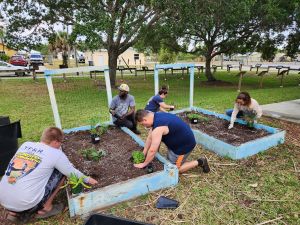 cleaned and the ribbons tucked away, the most meaningful moments of the fair season are often the quiet ones: an experienced cattleman showing a nervous exhibitor how to set a heifer’s feet, a 4-H alumnus sharing showmanship tips with a first-time exhibitor, or a longtime volunteer calmly reminding a young member that mistakes are part of learning.
In my last article, I explored how youth projects build real-world skills like responsibility, communication, problem-solving, and a strong work ethic. What makes those lessons stick, however, is mentorship. Behind nearly every successful youth exhibitor is an adult who takes the time to teach, encourage, and model what excellence looks like.
T he county fair creates a rare space where generations meet with purpose. Adults bring years, if not decades, of practical knowledge, while young people bring curiosity, energy, and a willingness to try. When those two meet, something powerful happens. Youth gain confidence not just in their projects, but in themselves. Adults, in turn, experience the deep satisfaction that comes from passing on skills they worked hard to learn. There is pride in watching a young person master a task with which you once struggled, and joy in knowing your experience will live on through someone else.
This exchange does not happen by accident. It happens because volunteers step up. From barn crew and judges to club leaders, parents, and behind-the-scenes helpers, volunteers are the backbone of the county fair. Simply put, the county fair would not exist without them. The same is true for youth development programs like 4-H and FFA. These programs thrive because adults are willing to give their time, talents, and patience to invest in young people.
 Volunteering is more than filling a role; it is shaping a future. Every hour spent mentoring a youth exhibitor helps build a workforce that knows how to show up, work hard, communicate clearly, and take pride in a job well done. These are skills employers are desperately seeking.
The benefits of volunteering are not just for the children. Adults who volunteer with youth development programs experience significant personal, mental, and social benefits, including reduced stress, increased self-esteem, enhanced skill development, and a greater sense of community purpose. Beyond mentoring youth, volunteers sharpen their own leadership, communication, and project management skills while building valuable social networks and improving their overall mental health.
As we reflect on another fair, let’s remember that the true measure of the impact isn’t found in the number of blue ribbons awarded or the sale price of the market animals. It’s found in the relationships built, the knowledge shared, and the adults who chose to pour into the next generation. When we mentor, we don’t just preserve traditions, we ensure they grow stronger with every passing year.
Children are starving for practical knowledge given in a hands-on way. If you are interested in becoming a volunteer for the Martin County 4-H program, I would love to talk with you and explore your ideas. Please email me- dhafner@ufl.edu.
David Hafner’s opinions are his own and may not reflect Friends & Neighbors viewpoint.
Every animal that comes through our doors carries a story, even if we don’t know it yet. The shelter environment, despite our best efforts to make it warm and welcoming, is still a place filled with unfamiliar sights and sounds. These unknowns can overwhelm an animal, and we recognize that the behaviors we see here often reflect the stress of an animal trying to cope and are usually just temporary.
Many of the animals have just experienced a major upheaval, whether they were surrendered, found as a stray, or in a situation no animal should endure. That sudden change, even if it’s ultimately bringing them to a better outcome, can shake even the most confident animal.
Dogs sometimes retreat to the back of their kennels, bark nonstop, avoid eye contact, or even shut down completely. Social behaviors can shift dramatically too. A cat that once lived peacefully with other pets may become reactive when surrounded by dozens of new animals. Limited personal territory can also heighten tension. Conversely, some animals cling to staff and volunteers, desperate for reassurance in a chaotic environment.
Every animal deserves a chance to thrive while waiting for their forever home, and our job is to help them rediscover their sense of safety so that their true personalities shine again. Routine is one of our most powerful tools in doing this. Structured feeding times, daily walks, and socializing with people can help them decompress.
Our Enrichment Program also provides a range of innovative activities that reduce the animals’ stress while keeping their minds engaged in learning useful and interactive behaviors.
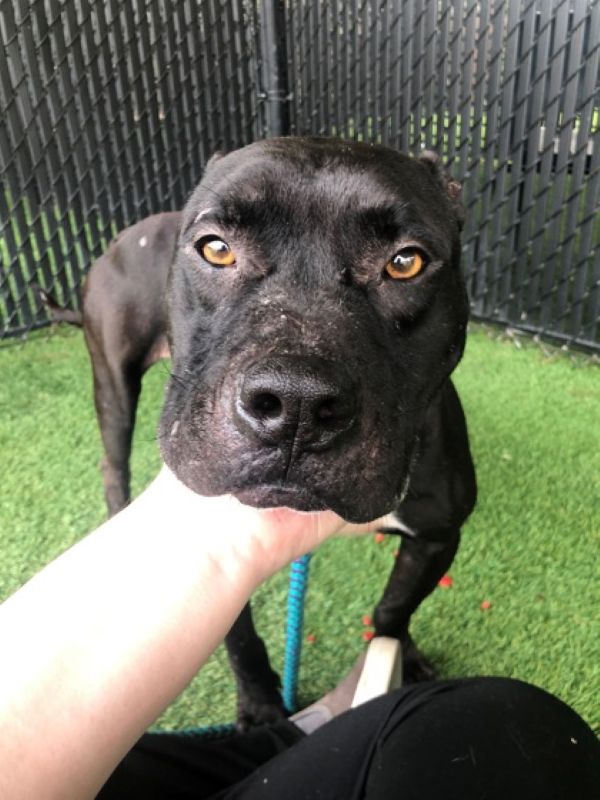
Understanding shelter behavior leads to better matches, smoother transitions, and more successful adoptions.
Some options we offer at the shelter to help in selecting the right pet for your family are a private visiting room to spend one-on-one time with an adoptable dog, meet and greet sessions between an adoptable dog and your dog, and adoption trials for Martin County residents. Our staff is also always happy to share what they’ve discovered about an animal.
Once adopted, it could take a pet a few days or even a few weeks for them to adjust. To make their (and your!) new life dynamic a more positive experience, you can set up a quiet, safe space for them, provide predictable schedules, limit overwhelming introductions, and enable them to explore at their own pace.
Getting to know an animal’s real personality is one of the most rewarding parts of the pet ownership journey – but you’re not alone – we are available to answer questions through the transition and also offer discounted behavior and obedience training for pets adopted from our shelter.
For more information about our adoption program, please visit https://hstc1.org/Adopt.
Frank Valente's opinions are his own and may not reflect Friends & Neighbors viewpoint.
There’s a moment I’ve come to recognize almost instantly.
A room full of smart, well-intentioned people. Deep expertise. Years, sometimes decades, in a particular field. The conversation starts strong. Then the acronyms arrive, tossed around like confetti. Heads begin to nod, not because everyone understands, but because no one wants to be the person who stops the flow.
That’s usually when I find myself gently naming it. The curse of knowledge.
Once you know something well, it becomes nearly impossible to remember what it felt like not to know it. Industry shorthand feels efficient. Technical language feels precise. What’s familiar to experts can sound like gibberish to everyone else.
 Having the curse of knowledge doesn’t make you arrogant. It just means you’re so fluent in something that the expertise becomes muscle memory. But if you don’t know how to translate what you know, you leave people behind, especially when the issues are complex, controversial or emotional.
I see this often when working alongside consulting teams. Engineers, planners and attorneys are all highly skilled and notorious for speaking in their own professional dialects. Inside those circles, the language works perfectly. Outside them, meaning can get lost before the conversation even begins.
That’s when I have to gently mention the curse of knowledge. Not to call anyone out, but to remind us that expertise can make it easy to forget how unfamiliar this all sounds to someone hearing it for the first time.
Good communication isn’t about dumbing things down. It’s about meeting people where their knowledge base begins.
Plain-language wording matters. Not because people aren’t smart, but because they don’t all start with the same information. When complex ideas are explained simply, more people can follow the conversation, ask better questions, and actually engage.
When that doesn’t happen, people check out. Confusion turns into frustration. Frustration turns into distrust. Not because the facts are wrong, but because they never made sense in the first place.
In community conversations, this isn’t optional. These aren’t theoretical discussions. They affect long-term decisions that shape our daily lives.
Good communicators understand this. They know the details, but they don’t lead with them. They explain the “why” before the “how.” They pause. They listen. They invite questions instead of racing past them.
The goal should never be to sound like the smartest person in the room but to be understood by everyone in the room.
Have you ever found yourself the perpetrator – or the victim of – the curse of knowledge? Let me know at stacy@fireflyforyou.com.
Stacy Weller Ranieri's opinions are her own and may not reflect Friends & Neighbors viewpoint.
By Greg Braun, Executive Director Guardinas of Martin County
Preemptions from Tallahassee – shouldn't we get to hear about it?
As the 2026 Florida legislative session continues, we’re hearing about renewed efforts to prevent local oversight of a variety of types of projects – including increases in housing densities and eliminations of growth boundaries.
A specific project that the Guardians of Martin County have been tracking is a proposed project at Chancey Bay Ranch in northwestern Martin County.
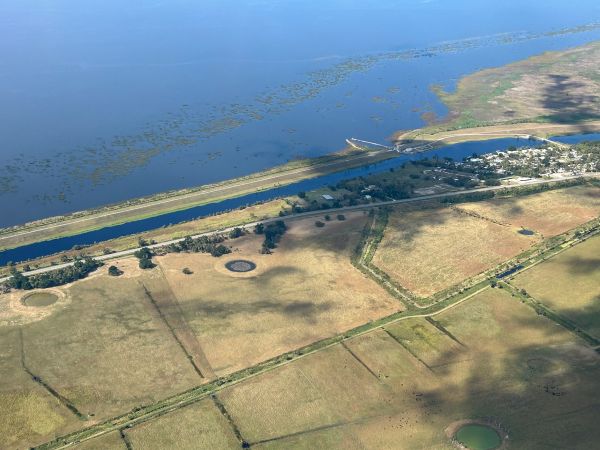
Whether you call it an “abattoir”, a “meat processing facility”, or a “slaughterhouse”, the reality is that one of the largest facilities of this type east of the Mississippi has been proposed in Martin County, and the Florida Department of Agriculture and Consumer Services (FDACS) has made a preliminary determination that Martin County does not have the authority to ensure that the project meets the County’s Comprehensive Growth Management Plan and Land Development Regulations.
- No public hearings. No water quality controls. No public analyses of impacts. No building permits.
- More than six million gallons of water to be withdrawn from the surficial aquifer annually.
- At least 1,000 “animal units” to be processed every year.
- Un-regulated stormwater runoff from the ~2,000-acre ranch entering into the Lake Okeechobee watershed, which has already been designated as “Impaired” and is subject to periodic nutrient-induced outbreaks of toxic algae.
Fortunately, at the request of The Guardians, Martin County Commissioners agreed unanimously that County residents deserve to hear about and comment on what is being proposed. Discussion of the project has been scheduled for the County Commission meeting on Tuesday, February 24th.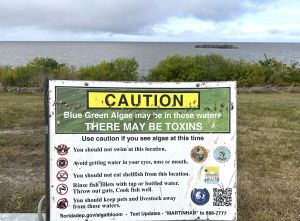
If you care about potential impacts on water quality, animal welfare, the bald eagles that nest on the ranch, and/or the authority for Martin County to ensure that the project meets our standards, please attend or watch the live feed.
While the Guardians value Martin County's positive relationship with FDACS for the great things they do, this project raises complex legal questions about agricultural exemptions and local government authority. The Guardians' position paper (see https://theguardiansofmartincounty.com/chancey-bay-ranch/ recommends that the County Commission seek independent legal review of these jurisdictional issues before relinquishing regulatory authority.
Let your commissioners know that you support their effort to regulate this facility, even if that means acknowledging that a slaughterhouse is an industrial facility - not one that should be sheltered from public exposure under the Florida Right-to-Farm Act.
Greg Braun’s opinions are his own and may not reflect Friends & Neighbors viewpoint.
Things are changing rapidly with regard to what we are learning about how our gut affects our health. As I am getting more educated about menopausal medicine, I was fascinated to learn about the estrobolome.
The estrobolome is a subset of the gut microbiome, composed of bacterial genes capable of metabolizing estrogens. While we know that the gut bacteria (microbiome) is important for digestion, immunity and metabolism, it is only recently we are learning how the estrobolome can affect hormone balance and how that can pertain to overall health and disease.
I think most people are aware that estrogens are hormones essential for reproductive function, bone density, cardiovascular health and brain function in both men and women (yes men too!!). After estrogens circulate through the body and do their usual functions they get metabolized by the liver. They get bound to a molecule called glucuronic acid which makes the estrogens water soluble so they can be excreted via bile into the gastrointestinal tract.

This is where the estrobolome becomes critically important. Certain gut bacteria produce enzymes called beta glucuronidases, which can deconjugate (separate) these estrogen metabolites. Once deconjugated, estrogens can be reabsorbed through the intestinal lining and returned to circulation... a process known as enterohepatic recirculation.
This is how the estrobolome directly influences how much active estrogen remains in the body. Beta glucuronidase also has an important role in breaking down complex carbohydrates and the absorption of bilirubin and flavonoids.
A healthy diverse estrobolome helps maintain healthy estrogen levels and prevents reabsorption of estrogen. However, if there is dysbiosis (an imbalance in the gut bacteria) this process can be disrupted. If there is an excess of bacteria that produce beta glucuronidase, this reverts estrogen back into its unconjugated active form and it gets absorbed back into the bloodstream resulting in estrogen dominance.
Elevated levels of estrogen are associated with conditions such as estrogen related cancers (prostate and ER positive breast cancer), thickening of the uterine lining which can lead to uterine cancer, endometriosis, infertility, and other issues. If there is too little estrogen this can lead to osteoporosis, cardiovascular disease, cognitive decline, and menopausal symptoms.
Research suggests that diet plays a major role in shaping the estrobolome. Diets rich in fiber support microbial diversity and promote the growth of beneficial bacteria that help regulate estrogen metabolism. Fiber also binds estrogen in the gut, facilitating its excretion and preventing excessive reabsorption. In contrast, diets high in processed foods, saturated fat and low in fiber are associated with dysbiosis and altered estrogen metabolism. Alcohol consumption, antibiotic use, chronic stress, and environmental toxins can further disrupt the estrobolome.
The estrobolome affects other important functions. Estrogen plays a role in immune function, insulin sensitivity, and inflammation. This means the estrobolome imbalances may contribute to metabolic disorders, autoimmune conditions, and mood disorders. Emerging research also suggests links between the estrobolome and prostate health in men!
Although the field is still evolving, the estrobolome presents a promising target for personalized medicine. Interventions such as dietary modification, prebiotics, probiotics, and lifestyle changes may one day be used to optimize estrogen balance and reduce disease risk. The estrobolome confirms what we already know... that gut health and hormone health are deeply interconnected and taking care of the gut microbiome may be critical for long term well-being.
Michele Libman’s opinions are her own and may not reflect Friends & Neighbors viewpoint.
Like the old Army commercial, there’s a lot going on in Martin County’s marine businesses before 7AM.
Across the county, doors roll up and crews pick up where they left off the night before. A laminator checks what cured overnight, a rigging bay still sits mid-job, and a technician unlocks a cabinet to pull parts that showed up late. A contractor walks in with coffee and heads straight to the work he left half finished. Our marine workforce is hard at work.

During an Economic Impact Breakfast hosted by the Marine Industries Association of the Treasure Coast, the Business Development Board of Martin County outlined the footprint: about 2,000 residents working directly in marine trades across roughly 260 establishments. By concentration, the sector runs about 17x the national average and 5x the Florida average. We have 9x the marinas of a typical Florida community. Boat dealers and marine wholesalers run at about 7x. Boat repair sits around 5x the Florida average.
 Indiantown Marine Center is one of the Treasure Coast’s newest and largest working waterfronts. Boats move through haul-outs, staging, and contractor work alongside the same rhythms happening across the county. Directly across the street, Indiantown High School introduces students to technical pathways that lead into trade environments. Next door sits land the marine center donated to Indian River State College to develop a marine training facility. In the Pocket, Chapman School of Seamanship prepares captains and technicians whose work keeps boats moving. Yard, classroom, and training water sit within the same working neighborhood.

By midmorning, the yards are fully awake. A lift hums to life and chains settle into place. Someone calls out a measurement. A student enters class with his backpack. A contractor wipes his hands and reaches for the next tool. Radios chatter, doors roll, and another job comes into view. This is Martin County’s hard working marine industry.
Bill West’s opinions are his own and may not reflect Friends & Neighbors viewpoint.
South Florida’s recent sub-freezing temperatures produced an unsettling and oddly cinematic sight: large lizards dropping from trees onto sidewalks, docks, seawalls, and canal banks. In Martin County, where water, shoreline stability, and environmental stewardship shape daily life and property values, the moment felt less like novelty and more like some kind of warning.
When iguanas “freeze,” they are not actually freezing. As temperatures fall below roughly 50°F, these tropical reptiles enter a temporary coma-like state known as torpor or cold-stunning. Their muscles seize, nerve signals slow, and they lose their grip on branches, often tumbling to the ground. Many are not dead and can recover once temperatures rise, though prolonged cold can be fatal to them, particularly for juveniles.
These reptiles didn’t simply wander here to Florida. Green iguanas and other non-native lizard species now common across Florida originate from Central and South America, the Caribbean, and parts of Africa. Their arrival has been driven by the exotic pet trade, intentional and accidental releases, natural dispersal via hurricanes, and even global commerce. Cargo ships moving through Florida’s ports have long served as an unintended pipeline, transporting reptiles and eggs hidden among shipping containers, produce shipments, and construction materials.
Once established, Martin County proved ideal. Mild winters, lush vegetation, and an extensive network of canals, retention ponds, and waterfront neighborhoods allowed populations to flourish from Palm City to Jensen Beach and into Stuart. With few natural predators, their numbers expanded quickly. Florida’s state government has taken a clear position. The Florida Fish and Wildlife Conservation Commission classifies green iguanas and several other non-native lizards as invasive and supports statewide eradication and control programs. These animals are not protected, and humane removal is encouraged because their impact is measurable and quite costly.
Iguanas are primarily herbivores and occasionally omnivores, feeding on leaves, flowers, fruits, and vegetation - including native plants, mangroves, and shoreline stabilization plantings that protect Martin County’s canals and estuaries. They will periodically consume animal material such as insects, other lizards, small animals, nestling birds, and eggs, but this opportunistic behavior does not make them effective pest controllers or a net ecological benefit. More concerning is their burrowing, which weakens canal banks, seawalls, levees, and stormwater infrastructure - increasing erosion and maintenance costs in a county already investing heavily in flood mitigation, lagoon restoration, and water-quality projects.

Cold snaps act as an occasional population check, but they are unpredictable and incomplete. Many iguanas recover once temperatures rebound, underscoring that weather alone is not a management strategy.
For Martin County, this connects directly to environmental and water policy. We debate lagoon health, stormwater systems, Lake Okeechobee discharges, climate resilience, and coastal protection, yet invasive species management often remains an afterthought. Iguanas are not the root problem, but they are a visible symptom of how global trade, growth, and fragmented planning collide locally.
This freeze wasn’t just about falling lizards. It is a reminder that protecting Martin County’s waterways requires proactive, coordinated stewardship - not waiting for the next cold snap to do the work for us.
Andy Noble’s opinions are his own and may not reflect Friends & Neighbors viewpoint.
Tom & Jerry, The Cat in the Hat, Wile E. Coyote & the Road Runner Why can’t we all get along?
In the best of circumstances, we are taught the golden rule as toddlers by our parents and how best to play in a sandbox in kindergarten. Many social scientists would argue that some of the most important lessons in life are learned in the sandbox: share your toys; don’t kick sand in other’s faces; and don’t let the sandbox become cat litter. We are hard-wired to be social animals, and yet very few of us live kumbaya lives. Conflict seems to be a necessary catalyst for forming relationships, so the best lessons in life are those that teach us to negotiate conflicts functionally and with the least collateral damage.
We are taught socio-cultural rules of engagement, and we develop an intra-psychic and interpersonal skill set with which to negotiate life. That skill set is who we are; it is the firmware of our personalities. In the best of outcomes, we learn to live functional and gratifying lives by getting along well with others and negotiating conflicts effectively. This is not always the case; we have all had internal dialogues prompted by disappointment and frustration at not having negotiated a conflict or relationship effectively.
We define interpersonal ineffectiveness as a personality disorder, and the mere mention of personality disorder has become pejorative, so perhaps it is best not to mention it. Not so. Some of the most important conversations in our lives are going to be uncomfortable. First, I will state that everyone has a little slice of interpersonal dysfunction, and we learn to live better lives as we get older by learning new interpersonal skills with which to improve our intrapsychic quality of life. If we are unable to do this on our own, we seek counsel from friends, family, clergy, or psychotherapists competent in treating personality disorders.
 Tom& Jerry are natural enemies, and they engage in violence. Would it be possible for them to get along without Tom consuming Jerry? Sometimes, interpersonal pairings are impossible, and it would be best to simply not engage. The Cat in the Hat is a morality tale; be careful with whom you choose to keep company. A brother and sister invite the bon vivant and charismatic cat into their home; the cat seeks thrills and spills. The cat makes a mess in pursuit of thrills. The siblings fail to set boundaries or negotiate the cat’s intrusion into their lives. Their passivity will remain a vulnerability to being exploited until they can learn the interpersonal skills of setting limits with aggressive and intrusive personalities.
 The Road Runner & Wile E. Coyote is a parody of predation and the natural order like Tom & Jerry, though there is also a moral lesson not to over-intellectualize solutions; for all his genius machinations and devices to catch the Road Runner, Mr. Coyote always fails miserably. These cartoon adversaries are hardwired to engage, so the lesson that should be learned is the radical acceptance of unavoidable conflict and the need to learn to negotiate conflict effectively without becoming an emotional casualty. It is noteworthy that there are no iconic cartoons about functional and ethical pairings, as we would not find them entertaining.
Most literature and cinema portray human conflict between flawed and imperfect individuals who seek solutions. The cartoon cats, mouse, and coyote are adversarial archetypes. A personality disorder can be understood in terms of how much of a dysfunctional archetype we internalize. These disorders are characterized by interpersonal difficulties, emotional dysregulation, unstable self-esteem, a fluctuating sense of identity, over-valued ideas or distortions, paranoia, and cognitive rigidity. These are the goals of treatment: to identify the dysfunctional cognitive and behavioral patterns and to learn new interpersonal skills while not becoming overwhelmed with affective dysregulation.
Addressing chronic interpersonal dysfunction is not amenable to medications. It requires a psychotherapeutic process that may take months to years. The preferred modalities of treatment are Interpersonal Psychotherapy (IPT), Cognitive Behavioral Therapy (CBT), Mentalization-based Treatment (MBT), and Dialectical Behavior Therapy (DBT). In the current healthcare financing environment, the drive is to identify mental health problems as biologically based and therefore requiring medications, but this view is excessively reductionistic and unethical. It is noteworthy that personality disorders are often not diagnosed. A disorder can be treated before it forms (prevention), while it governs life (active illness), and after the damage in long-term health span (palliative treatment). It is perhaps most cost-effective to engage in disease prevention and then treat active illness before damage becomes irreversible. A comprehensive mental health assessment should include a formal personality inventory such as the evidence-based Five Factor Model of personality or the DSM-5 Alternative Model for Personality Disorders. It is cathartic and potentially constructive to identify our inner cartoons.
Dr. Louis Velazquez’s opinions are his own and may not reflect Friends & Neighbors viewpoint.
If you’ve lived in or around Port Salerno long enough, you know this building.
You’ve known it as Fysh.
You’ve known it as Finz.
You’ve known it as Twisted Tuna.
And now, you know it as Two Georges Dockside Grill.
Located in the heart of Manatee Pocket, Two Georges Dockside Grill is the anchor of the waterfront, a place that has always been part of the fabric of this working harbor. Boats tied up out back. Music drifting across the marina. Locals dropping in without overthinking it. That hasn’t changed, and that’s important to say right up front.The people who have always come here will still feel at home.
What has changed is the intention.
 The current owners clearly took their time with this one. Instead of rushing to reopen, they reworked the space in a way that makes sense for how people actually gather. The outdoor bar area has been expanded and opened up, the live music has a real presence now, and the whole place flows better between inside, outside, and dockside. On a good night, it feels like the restaurant, the marina, and the music are all part of the same conversation.
The vibe is lively but comfortable. Great music, a relaxed crowd, and that easy waterfront energy that Port Salerno does so well.
Once you arrive, you’re offered three menus. Seafood is front and center, as it should be. Fresh fish prepared simply and well, without trying to reinvent things that already work. They also offer a full sushi menu with classic rolls and sashimi. And a third menu that features house specials - giving diners even more reason to explore. If you’re looking for Tennessee whiskey wings, a NY Strip steak, or Fish Oscar, Two Georges truly has something for everyone.
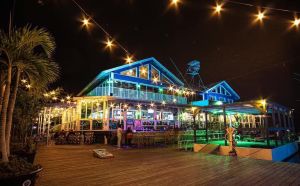 They’ve also stepped up their live music schedule, now offering music seven days a week. Fridays feature two rotating bands, with sets from 3:30 to 6:30 pm and again from 8:00 to 11:00 pm, keeping the energy high well into the night.
The perfectly appointed upper level offers seating for up to 150 guests, making it ideal for birthday celebrations, weddings, or any special occasion, all set against that classic dockside backdrop.
There’s a confidence here that comes from experience. The owners behind Two Georges have had success with waterfront restaurants elsewhere, and it shows in the pacing, the menu balance, and the overall feel of the place. Nothing feels forced. It feels intentional.
If you’re in Port Salerno, you already know this spot, and you’ll appreciate how it’s been refreshed without losing its soul.
If you’re in Hobe Sound, Palm City, or Jensen Beach, this is absolutely worth the short drive. Even those coming down from Port Saint Lucie or up from Tequesta or Jupiter will find it an easy excuse to cross the county line for a great meal, great music, and a true dockside evening.
Some places try too hard to be destinations.
Two Georges Dockside Grill has become one naturally - the anchor of Manatee Pocket.
Do you have a favorite restaurant you’d like to share? Email me at dinewithbrent@gmail.com.
Brent Hanlon’s opinions are his own and may not reflect Friends & Neighbors viewpoint.
February is American Heart Month. This federal designation is designed to shine a light on heart disease and all of the associated risk factors, including high blood pressure, high cholesterol, diabetes, alcohol abuse, smoking, obesity and others. Heart disease has been the number one cause of death in men and women in our country since 1950. In lower income communities, heart disease and the associated risk factors are prevalent at much higher than normal levels. At House of Hope, many of our programs and services emphasize health as a means to improve the stability and success of the households that we serve.
The most obvious way for House of Hope to have an impact on heart disease and other chronic conditions is by improving the quality and quantity of healthy foods that we provide to those we serve in our four client choice pantries and to our 35 food bank partners in Martin County and the Treasure Coast, as well as Palm Beach County. Last year, we distributed nearly 1.7 million pounds of food, with about 60% of that total being fresh fruits, veggies, meats and dairy. This is also an area where our community supporters can help us to have an impact. If you are considering donating food or organizing a food drive, focus on heart healthy non-perishable items. Think protein-packed beans, peas, and lentils, like black beans and garbanzo beans (chickpeas). Opt for whole-grain items such as brown or wild rice, quinoa, oats, whole-wheat or whole-grain pasta. Unsalted nuts, seeds, and nut butter, like almond or peanut butter, are packed with heart-healthy fats. These are great options for us to offer our clients and partners.
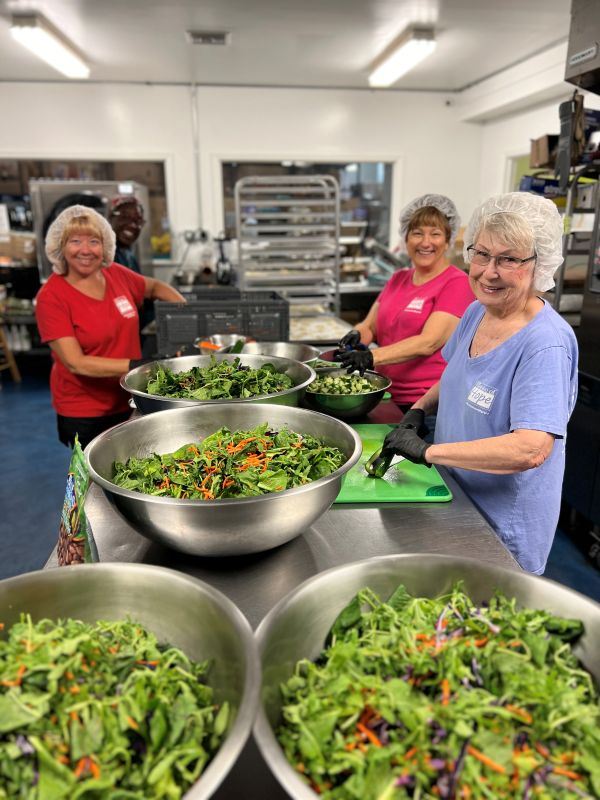
House of Hope also uses our six in-ground nutrition gardens, as well as our traveling nutrition garden, to provide nutrition education and gardening classes across our community. Our three newest gardens are in partnership with Martin County Parks and Recreation, thanks to generous support from Commissioners Heard and Hetherington. Last year, we reached over 12,000 children and adults with these efforts. We also own and operate Growing Hope Farm in Palm City. We focus on hydroponic growing in greenhouses and also have conventional in-ground growing, with twice weekly harvests year round to keep a steady flow of heart healthy produce reaching our most vulnerable neighbors. The farm has expanded to now include nearly 100,000 cubic feet of greenhouse space and a certified packing house.
House of Hope also operates three Centers for enrichment, including locations in Golden Gate, Jensen Beach and Indiantown. These centers offer a variety of classes and programs all at no cost to participants, including healthy cooking classes, nutrition classes, quit smoking classes and others. All of these efforts are an important part of our model as we strive to empower residents to overcome hunger and hardship. We know that healthy children are better learners, and healthy adults are better earners. This month and every month, remember the importance of heart healthy choices. To learn more about us, access services, or get involved, please visit us at www.hohmartin.org. Thank you for helping to grow hope in our community.
Rob Ranieri’s opinions are his own and may not reflect Friends & Neighbors viewpoint.
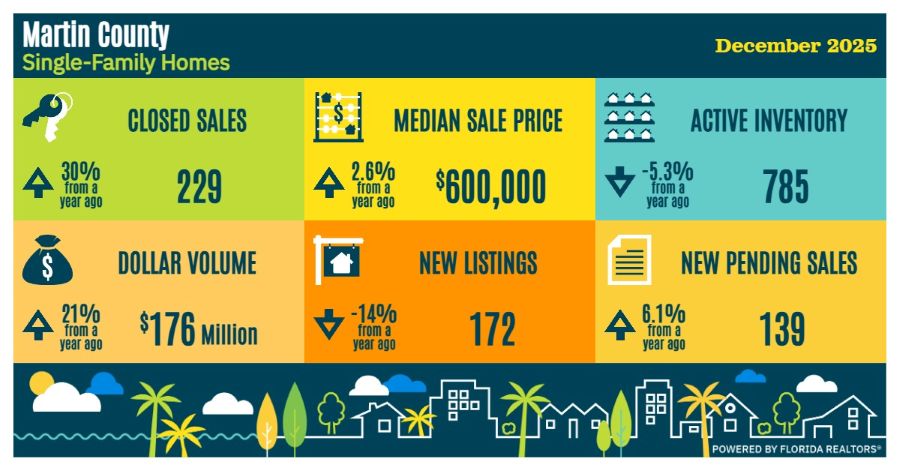
 In early 2026, our local real estate market remains a "cautiously optimistic" place for buyers and sellers. While the rest of the world thinks we’re just retirees and palm trees, current conditions show a healthy rebalancing. The median sale price for single-family homes has settled at roughly $600,000, a steady 2.6% climb from last year that suggests we’ve entered into a balanced market. Inventory has nudged up to a 4.5-month supply—still technically a "seller’s market," but sellers are now actually having to clean their baseboards to get a deal done. With homes sitting for a median of 53 days before going under contract, frantic bidding wars have been replaced by a "patience paired with readiness" vibe. Essentially, we’ve moved from a sprint to a light jog where everyone is still sweating, but mostly because of the humidity.
In Tallahassee, the "Granny Flat" revolution is in full swing. Proposed legislative mandates would force local governments to allow Accessory Dwelling Units (ADUs) "by right" in all single-family zones (excluding HOA’s) by December 2026. Soon, you might have a legal place to put your mother-in-law—or a rent-paying tenant—without the county or city commission treating it like a form of blight. These affordable housing initiatives are the state’s way of saying "please don't leave," as workforce housing remains tight. Legislators are even debating "tiny home" pilot programs, proving that "living large" in Florida might soon mean mastering the art of a 300-square-foot floor plan. Other legislation on property tax reductions and affordable housing initiatives are winding their way through a contentious House and Senate before landing on the Governor's desk.
Martin County and Stuart are grappling with the struggle of being too popular for its own good. The "Martin County Forever" initiative is currently leveraging sales tax revenue to snatch up conservation lands before they become another subdivision. We’re also knee-deep in "septic-to-sewer" conversions. This infrastructure shift is vital for protecting the St. Lucie River from looking like a science experiment. Between managing Lake Okeechobee discharges and fighting development pressures, the local mantra is clear: keep the charm, fix the pipes, and hope the lagoon stays blue.
I love our community. I have lived here for nearly 40 years and have no desire to live anywhere else. I love bringing buyers and sellers together - buyers add new vitality to our community. Don’t be fooled by the anti-growth mantra that is raising its head again. We are a slow healthy growth community and will remain this way for years to come. Settle in and enjoy one of Florida’s healthiest and happiest communities.
John Gonzalez’s opinions are his own and may not reflect Friends & Neighbors viewpoint.
It’s a little like experiencing the perspective of a sports scout who first discovers the next great athlete.
If you want to feel a sense of joy, excitement and encouragement about the character, achievements, and potential of young people in our local community, then I have an event you simply cannot miss.
You’re invited to join us—free of charge—for a delicious dinner and rousing program at the Boys & Girls Clubs of Martin County’s Youth of the Year Awards Ceremony.
The ceremony—open to the community—takes place at 6 p.m. Feb. 26 at our Greater Stuart Club, 551 S.E. Martin Luther King Jr., Blvd. You can RSVP at specialevents@bgcmartin.org or (772) 545-1255.
The year’s field of four nominees provides a sneak preview of tomorrow’s leaders.
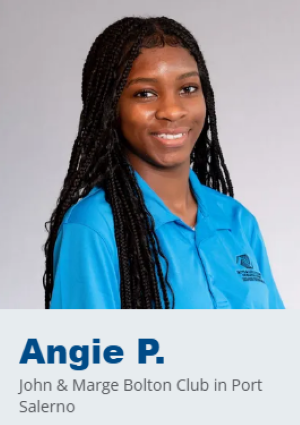 Angie, 16, has been a member of our Port Salerno club for 10 years. Planning a career in business, marketing and real estate, Angie is an excellent student who’s already earned a Copper Key Scholarship, ensuring her a four-year scholarship for any Florida university. Volunteering for beach and neighborhood cleanups, through her church and at the clubs where she helps others with their schoolwork, Angie’s also earned the prestigious Emerging Professional NAACP Award.
Only 14, Jacqueline has been a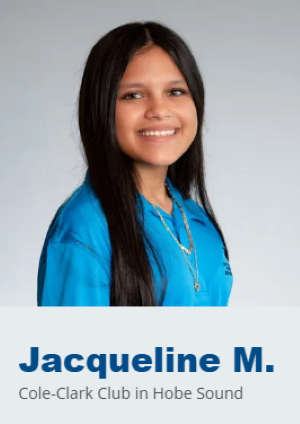 member of our Hobe Sound club for seven years. Planning to become an immigration lawyer, she holds herself to high academic standards while investing tremendous time volunteering. She’s already earned more than 100 community service hours helping out at House of Hope and at community cleanups.
A new member to our Jensen Beach club, Doan distinguished herself right away through her work ethic, integrity and consistent acts of kindness and respect to all. 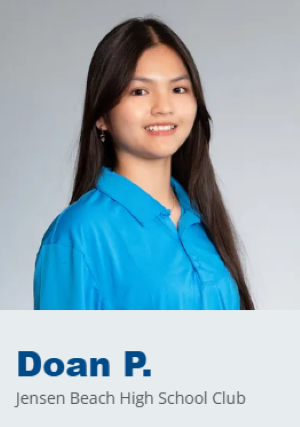 Originally from Vietnam, she’s earning a 4.0 grade point average while working part-time. She’s also active in the club’s photography and tufting programs.
Also new to Florida and only a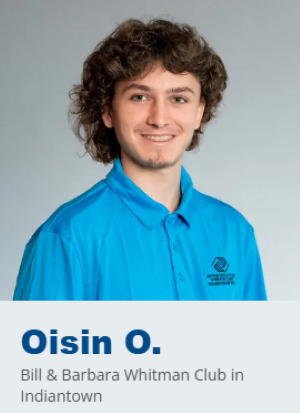 member of our Indiantown club for a year, Oisin got involved quickly in club and community activities. An Indiantown High School student also plays soccer and lacrosse for South Fork High, he helps his club’s assistant coaches and readily serves meals to his fellow club members, consistently putting others first. He plans a career inspired by his father in aviation and IT.
Fortunately, two members of the BGCMC board of directors—Carol Webb, Christina K. Gidwitz and Beth Garcia Svopa—are joining Martin County School Board Member Jennifer Russell and Steve Rivera of Truist on the judge’s panel. They’re tasked with the unenviable challenge of selecting a winner among these impressive nominees.
In keeping with tradition, the 2026 Youth of the Year winner will later appear in front of the Martin County Commission, the Stuart City Commission, the Village of Indiantown Council and other community venues to share their story of inspiration and possibility.
We’re confident these speaking opportunities will be among the first of many audiences that the winner will address as he or she goes through life in pursuit of their passions. Please reserve your seat today and be among the first to get a glimpse of future greatness.
Keith Fletcher's opinions are his own and may not reflect Friends & Neighbors viewpoint.
My original plan for this month was to talk about some of the southern destinations we serve. But it seems to me – well, to a lot of reasonable people – that the Nordic Countries could use some extra love these days, so I will keep my narrative pointing north.
More specifically, I want to outline the most meaningful ways to visit and experience Norway. It’s a peaceful, safe, magnificently beautiful country with a charm that travelers find very appealing. You know, that you-can’t-bully-me-into-awarding-you-a-prize-that-you-obviously-don’t-deserve charm.
Over there, most tourists can be found in Flåm, a southwestern village which is the focal point of the famous Norway in a Nutshell route, and in Tromsø, the most popular location for those chasing the Northern Lights.
Dear reader: don’t do that. Those are perfectly fine destinations, but the cruise-ship and mass-tourism crowds have – sadly – drained all the authenticity out of those places. For that type of experience, the Norway pavilion at Epcot is a lot closer.
 My team and I, at SilverOpus, saw an opportunity, so we set out to create a portfolio of Norway programs with experiences that are refined, exclusive and quite authentic. After having traveled all over the kingdom, I knew that a better solution existed. Here it is:
First, the bread and butter: fjords – very deep and narrow bodies of water that can be found all over Norway – are the number one attraction, so we combined all kinds of fjord experiences into a week-long program called Fjord Fascination in Norway. In addition to showcasing Oslo, the hip capital, and Bergen, the country’s second largest city, the adventure places visitors in idyllic villages, like Balestrand, and historic accommodations, like Hotel Walaker, Norway’s oldest hotel. When a traveler comes to us looking for the best way to experience the fjords, stay in gorgeous villages and disconnect from the chaos of life, Fjord Fascination is our prescription.
 Next, we built a program for those looking to experience the cultural, gastronomic and maritime aspects of life in Norway. Starting from Bergen, the journey takes you along the Norwegian coast and allows visitors to eat, relax and explore their surroundings in fishing villages and towns often missed by tourists. To illustrate the adventure, I’ll mention a few highlights: cruising to the tiny island of Kinn and visiting a 12th century church, built as the Viking age concluded, before returning to the village of Florø for a beer tasting. A fishing trip, a kayak tour of a local fjord and relaxing in a floating sauna are also elements of Hugging the Coast in Norway. It ends in Trondheim, home of the country’s most prominent university, with a stay at the prestigious Hotel Britannica. What you won’t find here: Flåm and Tromsø throngs.
Still, a key part of Norway remained to be covered: the north. We became consumed with the idea of creating an itinerary to the Lofoten Islands – possibly the country’s most famous and coveted postcard – that separated itself from all that’s out there. Something unique and spectacular. From that effort came Away From Crowds in Lofoten, our most exclusive and sophisticated program to date. In 8 days, we take travelers in a luxurious journey to Alta (Tromsø’s more interesting and much less crowded neighbor) and several remote corners of the Lofoten archipelago. Hotels are the finest available, the gastronomy is Michelin-level, and activities include all that authentically defines the region: Sami culture, the Northern Lights, horseback riding, RIB (Rigid Inflatable Boat) adventures on the fjord, King Crab fishing, sustainable salmon farms and much more. The success of the design is easily measured in “WOWs.”
It took a lot of work and a lot of passion, but I am proud of what we accomplished. I feel certain that our travelers experience Norway in a way that measures up to all that it – and its lovely, welcoming people – have to offer.
If Norway is on your list, feel free to get in touch with us to learn more: info@silveropus.com.
If it isn’t… I recommend it.
Marcelo Guimarães' opinions are his own and may not reflect Friends & Neighbors viewpoint.
The call came in the middle of a busy, stressful workday. “It’s your mother. She left the stove on again and wandered away from the house in her slippers. A neighbor found her at the corner, very confused. You have to do something.”
If that call came to you, would you know what to do and who to call?
Our Care Navigators get calls from families in circumstances like this every day. Adult children who have their own family and work responsibilities are suddenly plunged into crisis, looking for resources for parents or elderly relatives, desperate for guidance.
For those who know about the Council on Aging Martin County, the community’s Hub for Senior Resources, there’s a trusted place to turn. Family members tell us it’s like “the sun breaking through dark clouds” when they meet with our staff, or like “a gift from heaven” that knowledgeable and compassionate professionals can give them the guidance they need. “You helped my parent,” we hear often, “but you also saved me.”
But what if they didn’t know about us?
Our Pep Rally Gala on February 28 is a hugely popular party, with great music, fabulous food, and unique entertainment. But it also has a serious purpose.

We are very deliberately appealing to younger people in our community, inviting them to get to know us long before they need us, not just for themselves, but for family members who may one day be at a crisis point. In fact, we can help avoid a crisis if we’re called in soon enough.
We have many resources within our own organization to help, from our Adult Day Club and Memory Enhancement Programs to our Circle of Safety bracelets, Meals on Wheels, Congregate Dining Centers, Day Primary Care, GUIDE Program for dementia patients and respite care, support groups, and social activities at the Kane Center.
Our Care Navigators also know what other resources are available in the region, including funding sources for seniors in financial distress.
But all of these resources aren’t of any use if you don’t know to make the call to the Council on Aging.
So get to know us. Come join the party on February 28. Teams of business people, young professionals, and our own staff and Board of Directors are competing to raise the most funds to support the Council on Aging programs and earn a year’s worth of bragging rights.
The teams have their sights set on a very specific goal: $80,000 to purchase a meal delivery vehicle to support the Meals on Wheels program. Every day, volunteers deliver more than 580 meals to the homes of seniors in need and also to four congregate dining sites. The Meal Delivery Truck will be a game changer in how well we are able to deliver hots meals to our congregate sites in Jensen Beach, Stuart, Hobe Sound and Indiantown. These programs help us fight senior hunger, isolation, and loneliness.
To become a sponsor, support a team, or secure a ticket to the best party on the calendar, go to https://donate.coamartin.org/team-leaderboard/ or contact Michele Leigh Jacobs at 772-223-7803 or mjacobs@coamartin.org.
And tell your friends and neighbors about the Council on Aging Martin County. We can be a lifeline for seniors in our community and the families who love them.
Karen Ripper's opinions are her own and may not reflect Friends & Neighbors viewpoint.
Many parents believe estate planning is something to worry about later in life. If you’re young, healthy, and busy raising children, creating a will may not feel urgent. But for parents, having a will is one of the most important steps you can take, no matter your age.
A will is not about expecting the worst. It’s about being prepared and protecting your family in the event of the unexpected.
A Will Protects Your Children
One of the biggest reasons parents need a will is to name a guardian for their children. If something happens to you and the other parent is unable to care for them, the court will decide who steps in if there is no will.
By creating a will, you get to choose someone you trust to raise your children. This helps avoid uncertainty, conflict, and stressful court decisions during an already difficult time.
It Helps Manage Finances for Minors
Children cannot legally manage their own money. Without a will, the court may appoint someone to handle your assets, and the process can be slow and expensive.
A will allows you to decide how your children's money will be handled, who will manage it, and when they will receive it. This can help ensure funds are used for things like housing, education, and medical care.

You Don’t Need to Be Wealthy
Many people assume wills are only for families with large estates. That’s not true. Even if you don’t own a home or have significant savings, a will still gives clear instructions about your wishes.
Life changes quickly. Marriage, divorce, new children, and new responsibilities are all reasons to have a plan in place and to keep it updated.
Avoid Stress and Confusion for Loved Ones
Without a will, your family may face delays, legal costs, and disagreements during a time of grief. A clear plan can make things easier for those you leave behind.
Having a will in place provides peace of mind, knowing your children and loved ones are protected no matter what happens.
When Should Parents Create a Will?
The best time is now. Once you become a parent, your responsibilities grow, and so does the importance of planning ahead. Waiting until later can leave gaps that no one intends.
Gene Zweben’s opinions are his own and may not reflect Friends & Neighbors viewpoint.
In my last column, I wrote about the lawsuit filed by Treasure Coast Classical Academy against the Optima Foundation and Erika Donalds (wife of Byron Donalds) — a case that raises uncomfortable questions about transparency, control, and who really benefits when public dollars flow through private education networks. It also touched on the participation of Byron Donalds ( a gubernatorial candidate) and John Snyder (a Florida representative up for re-election.)
Time to zoom out even more.
Governor Ron DeSantis has now opted Florida into the new federal Education Freedom Tax Credit program. Starting in 2027, taxpayers will be able to receive a federal tax credit — up to $1,700 — for donating to scholarship organizations that fund private school tuition and other education expenses.
If you donate up to $1,700 to a scholarship organization, like Step Up for Students or AAA Scholarship Foundation, you can subtract up to $1,700 from your federal tax liability. This means you have to be able to donate the money in the first place, mind you.

Supporters call it a move for “school choice.” I think I addressed that claim quite thoroughly last month.
So let’s be honest about what this means.
This policy doesn’t just expand school choice. It deepens the pipeline of taxpayer dollars flowing into privately operated systems — including charter networks and private schools that are not governed the way traditional public schools are.
Politicians like Byron Donalds and John Snyder, affiliated construction companies, other charter management companies, private schools, etc., all operate within this broader ecosystem.
Florida already leads the nation in school-choice expansion. Nearly half of our students now participate in some form of alternative education — charter, private scholarship, or homeschooling. This new federal tax credit stacks on top of that existing framework.
However, traditional public schools are still educating most of Florida’s kids. They’re the ones serving students with the highest needs, the most disabilities, and the toughest economic challenges. When money and political attention keep moving toward privatized options, neighborhood schools are left trying to do more with less.
This isn’t about being against school choice. Parents should absolutely have options — I chose one myself. But options need oversight. Public dollars need transparency. We shouldn’t be building parallel systems with limited public accountability while taxpayers are the ones paying for them.

The Education Freedom Tax Credit may sound like a win for families. But in practice, it’s another step toward moving education funding into private hands with fewer democratic guardrails.
Given what we’re seeing locally, that should give all of us pause.
If we’re going to expand choice, we need to expand accountability just as seriously — otherwise, we risk turning education into just another political marketplace.
Sydney Thomas' opinions are her own and may not reflect Friends & Neighbors viewpoint.
The Kiwanis Club of Stuart is often asked are simply a social organization that meets for lunch. In reality, our club is deeply committed to improving the lives of children in our community through meaningful, hands-on service.
This month we are proud to highlight two literacy-focused initiatives that directly support our mission.
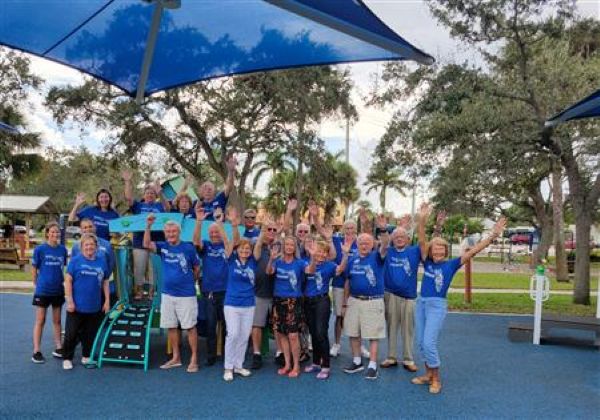
The Kiwanis Storytime Reading Initiative is a new program designed to promote early literacy amount children who may have limited access to books at home, while also encouraging parents to read with their children. We are seeking volunteers who are willing to read to children on a regular basis.
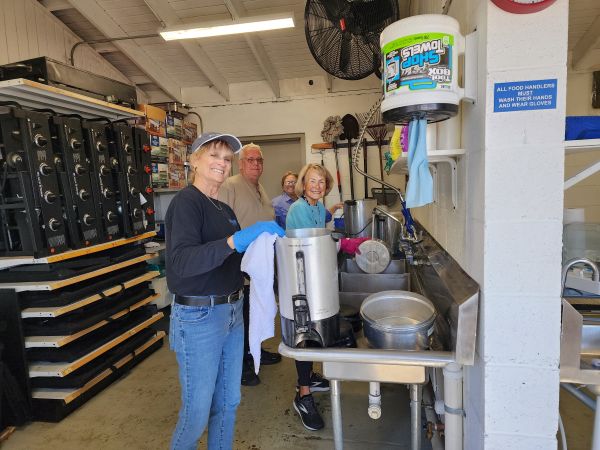
Our pilot partnership is with the Gertrude Walden Child Care Center in Stuart, with plans to expand to additional sites as the program grows. Volunteer readers will serve during two daily shifts, with two volunteers reading to small groups of two to three children per session. Flexible scheduling options are available—weekly, monthly, or seasonally—to help create a consistent and reliable experience for the children. We are also partnering with Misty Pals, an organization that provides trained dogs and two volunteers.
This initiative is expected to enhance both reading skills and concentration among participating children. Those interested in volunteering may contact me at Suzy.Hutcheson@outlook.com.
Our second featured event is Pancakes and Reading the Park, a long-standing community tradition. This year’s event will be held on Saturday, March 7, from 7:00 to 11:00 am at Kiwanis Park, located on Colorado Avenue near Confusion in downtown Stuart.
The event promotes a love of reading among young children with a special focus on the works of Dr. Seuss. Community leaders will read aloud from Dr. Seuss books while seated in a themed chair, and many readers will participate in costume. The event also features local vendors, free books for children, and family-friendly activities.
Breakfast offerings will include plain, blueberry, chocolate, and specialty pancakes, along with the popular green eggs and ham. Beverages include coffee, tea, orange juice, and water. Tickets are $5 per person, and children under five are free of charge.
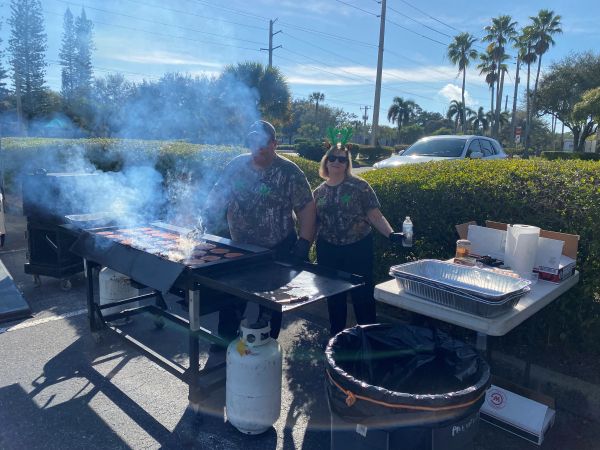
Kiwanis Park is a reflection of our ongoing partnership with the City of Stuart providing safe; engaging recreations space for children and families.
These two programs represent just a portion of the Kiwanis Club of Stuart’s year-round service efforts. We invite you to join us for lunch on the first and third Tuesdays of each month at Manero’s in Palm City or visit KiwanisClubofStuart.org for more information.
Please feel free to contact me directly with any questions or interest in getting involved.
The Kiwanis Club of Stuart has proudly served the children of Martin County since 1938. Through our time, creativity, and commitment we continue to make a meaningful difference in our community—while enjoying the fellowship and fulfillment that comes from serving others.
Suzy Hutcheson's opinions are her own and may not reflect Friends & Neighbors viewpoint.
Each year on March 2, we recognize World Teen Mental Wellness Day—an observance dedicated to raising awareness about the mental health challenges teens face and encouraging meaningful conversations that reduce stigma and strengthen support. While teen mental health deserves attention year‑round, this day offers a timely opportunity for families, schools, and communities to pause, connect, and empower adolescents with tools that nurture wellbeing.
Today’s teens are growing up in an environment that moves faster and feels more demanding than ever before. Academic pressure, social comparison, and the constant presence of social media can create significant stress. Many teens report feeling overwhelmed, isolated, or unsure of how to manage big emotions. World Teen Mental Wellness Day reminds us that behind every busy schedule and brave face is a young person who needs understanding, connection, and space to be heard.
One of the most powerful ways we can support teens is by simply checking in. Regular, judgment‑free conversations give teens permission to share what’s on their minds. Asking open questions—“How have you been feeling lately?” or “What’s been weighing on you?”—can help them express concerns they may not otherwise voice. When adults listen calmly and without immediately trying to “fix” everything, teens feel validated and supported.
This day also encourages us to help teens build healthy coping skills. Small, consistent practices such as journaling, mindfulness, movement, creative outlets, or time outdoors can make a meaningful difference in stress levels and emotional resilience. Just as important is promoting balanced technology habits. Encouraging device‑free downtime, healthy sleep routines, and limits on scrolling can protect teens’ emotional wellbeing.
For schools and youth‑serving organizations, March 2 is an ideal time to share resources, host discussions, or highlight supportive services. When teens see mental health acknowledged openly by trusted adults, it reinforces that seeking help is a sign of strength—not failure.
World Teen Mental Wellness Day is more than a date on the calendar. It’s a reminder that every teen deserves to feel seen, valued, and supported. And the conversations we start in March can open the door to lasting mental wellness all year long.
Anne Posey's opinions are her own and may not reflect Friends & Neighbors viewpoint.
Valentine’s Day is often associated with cards, flowers, and heartfelt words—but at Tilton Family Children’s Shelter, love is something far deeper. It is shown every day through compassion, patience, and unwavering commitment to children who have experienced abuse, neglect, and trauma. At Hibiscus Shelter in Jensen Beach, love is not just a feeling; it is an action that changes lives.
For children who arrive at Hibiscus Shelter, trust and safety have often been broken. Many have never known what it feels like to be truly cared for or valued. Hibiscus exists to change that narrative. Through a nurturing environment and trauma-informed care, children are met with consistency, understanding, and genuine concern for their well-being. They are reminded—sometimes for the very first time—that they matter.
 The care provided at Hibiscus Shelter goes beyond meeting basic needs. It is about restoring a child’s sense of worth. Our dedicated staff create a safe haven where children can begin to heal emotionally, physically, and mentally. With structure, guidance, and encouragement, children learn that they are not defined by their past experiences. Instead, they are seen for who they are and who they can become.
Caring for abused children has a profound and lasting impact. When children receive stability, affection, and positive reinforcement, they are more likely to develop healthy relationships, build self-confidence, and succeed academically and socially. Love and consistent care help rewire how children see the world—and themselves. Over time, fear gives way to trust, and uncertainty is replaced with hope.
Hibiscus also empowers children with tools for the future. Programs focused on education, life skills, and personal growth help youth gain confidence and independence. By investing in their healing today, Hibiscus helps prevent the long-term effects of trauma and creates pathways to brighter, more secure futures.
During this time of year, Hibiscus reminds us that love has the power to heal. It is found in listening without judgment, offering encouragement during difficult moments, and showing up day after day for children who need it most. Every act of care—no matter how small—reinforces an essential message: you are loved, you are safe, and you are valued.

Volunteers are an essential part of life at Hibiscus Shelter and are greatly appreciated! Opportunities include helping with homework, math tutoring, cooking meals, sharing a skill, reading bedtime stories, playing games, and arts and crafts. Volunteers offer consistency and care that greatly assist the staff and give children a sense that they are valued and important. Background checks are required for all volunteers. If you would like more information about Hibiscus and our programs, please visit us at HibiscusChildrensCenter.org.
Matt Markley's opinions are his own and may not reflect Friends & Neighbors viewpoint.
It is the ninth of May and the end of winter, beginning of spring, and the pompano bite is starting to pick up.
At least now anglers seem to be catching some on a daily basis from Fort Pierce to Juno. The recent arctic plunge that we had certainly pushed some pompano down with the drop in water temperature along the beaches. The one downside to the temperature drop is the whiting appear to have developed lockjaw.
I am sure as our temperatures get back to normal this week our surf temperature will bump up a couple of degrees, and the whiting will start to chew again. The pompano bite is also starting to develop into a spring characteristic of getting away from an early morning active feeding period to a mid-morning or afternoon time slot.
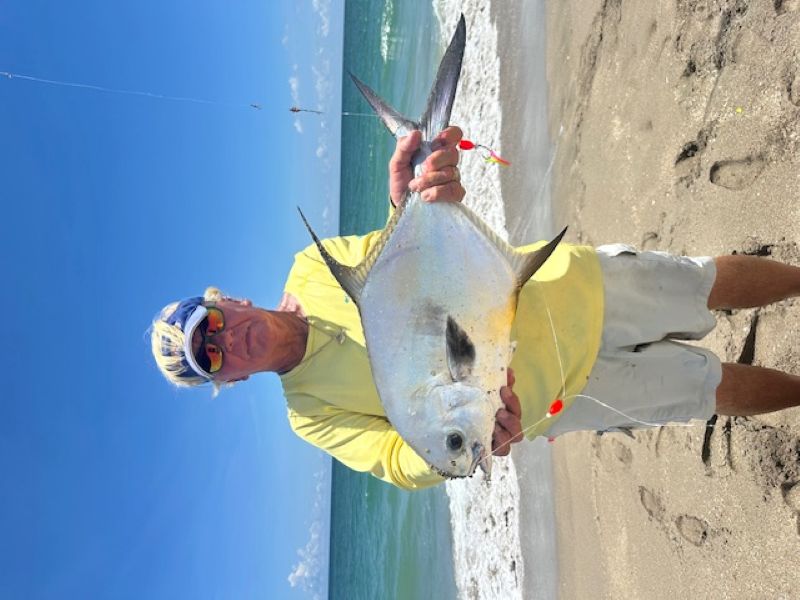
After Daylight Savings Time kicks in the first weekend of March, a high tide that peaks in the afternoon will be the time you want to be on the beach. I am not saying you will not catch any if you are an early riser, but the most consistent action will be in the afternoon. The sand fleas continue to show on our local beach accesses for those that like to catch and use your own bait but make sure you have some EZ Flea Electric Chicken and the Orange and White in your tackle box.
Always tip your sand flea, shrimp. or clam strip with a piece of Fishbite to put fish in the cooler. This is also the time of year when the pompano will travel in that 50-to-60-yard distance from the edge of the surf so stagger your rods from 50 to 100 yards from the edge. As the water warms and the days get longer some of our winter species like the bluefish will begin their northward migration, so it is always good to have a spinning rod with a silver spoon ready to throw their way if they show when you are waiting for a pompano bite.
The warm weather is just around the corner and some great surf fishing will be here before you know it. Good luck this month and catch em up.
Paul Sperco’s opinions are his own and may not reflect Friends & Neighbors viewpoint.
Going through the Florida House currently are versions of a bill to achieve property tax relief. Little birdies in Tallahassee tell the MCTA that the Governor will probably end up calling a special session to get what he wants which is total elimination. As you can imagine, MCTA is getting a lot of questions as to where we stand on this issue. It’s not so easy. In a five part article, we will attempt to give you probably more information than you want, but information that you need.
Let’s break it down so you can make up your mind.
How and why is this being considered? While we cannot speak for our Governor, we can see what the state’s CFO is up to. Blaise Ingolia has been perusing the budgets of many counties and cities throughout the state and coming up with what he calls “wasteful spending”. Wasteful spending is subjective. His findings include $150,000 a year to a management company that brings drag shows to the city’s theater and $300,000 for an equity-focused strategic plan and residential “equity survey” by Pensacola. Orlando has spent $460,000 since 2020 to count trees. St. Petersburg has paid $258,000 to support Pride events and on and on. Political, no doubt. But it suggests a question.
What is a “want” and what is a “need” and who decides?
Here in the County with which we are concerned, those decisions are largely determined by our elected board of County Commissioners. Five people WE, the people, chose to wield common sense and rationality in their choices on our behalf. And yet they are susceptible to, and because they are accountable to WE, the people, their choices may puzzle us. Former County Commissioner Doug Smith was famous for saying that ‘There’s a constituent for everything’. He was absolutely right. Do you golf? Do you love to walk? Do you have kids? Most of us would lobby for any number of things. So the Commissioners do the best that they can to please as many as they can while attempting to keep their positions. We trust them. They live here after all. It’s a small county, so many of us even know them. What becomes apparent though is that they may listen to a disproportionate number of us. The squeaky wheel gets the grease after all, and it is difficult to ignore a commission room full of US. So, we get things like Sailfish Splash Waterpark which you can read an assessment of their first 5 years here: https://mctaxpayers.org/sailfish-splash-waterpark/, a gorgeous albeit completely frivolous walkway through the mangroves at what expense we are still trying to pin down, a multimillion dollar club house on a public golf course. We end up with more conservation land. And that sounds really warm and fuzzy until you find out that about half of the County is owned by some form of government already (South Florida Water Management District alone owns thousands of Martin acres). Or, until you find out that what the County REALLY needs is a $70 million public works complex. So, ask yourself a question. If those 2 items were put on a ballot as an either-or choice, which would you vote for? MCTA would love to hear your answers. You can see how we can end up with things that we might realize down the road were really only wants.
We, the people, are offered wants and needs as though they are interchangeable and piecemeal. The County Commissioners could do a better job of keeping US informed by explaining the County from a 10,000 foot view. They are really the only ones who know what the left hand is doing.
***
We have instituted an INSIGHTS series of events which will feature a prominent issue or speaker of importance to you the taxpayer. And, of course, there is our monthly newsletter which will report on Commission meetings etc. To get invitations to the INSIGHTS events or to sign up for the newsletter go to www.mctaxpayers.org. Email us at mctaxpayers1950@gmail.com. We’d like to hear from you!
Martin County Tax Payers Associates' opinions are his own and may not reflect Friends & Neighbors viewpoint.
Join us for the grand opening of the REACH Center—a new hub for adult education and aviation-focused training. This collaborative effort between the County and CareerSource Research Coast will align workforce training with real-world industry needs—strengthening our local economy and expanding opportunity. Together, we’re creating pathways and helping our local aviation and other legacy industries soar.
Ribbon Cutting
Wednesday, February 18, 2 p.m.
1811 SE Airport Rd, Stuart
REACH - Reimagining Education and Career Help
FOR MORE INFORMATION https://www.martin.fl.us/events/2026-02-18t140000-2026-02-18t140000/reach-center-ribbon-cutting


CTWH Forms Important Partnership with NCMEC
By Jackie Holfelder
2025 was a big year for Catch the Wave of Hope (CTWH), with several new meaningful collaborations and partnerships established.
None was more important than that with the National Center for Missing & Exploited Children (NCMEC), with whom a special alliance as a Community Education Partner was announced in November.
Sarah Marie Henry, executive director of CTWH, says, “Through this partnership, we will strengthen efforts to protect children from trafficking and exploitation, enhance data sharing, and expand educational resources for communities nationwide.”
NCEMC works to find missing children, reduce child sexual exploitation, and prevent child victimization. It provides resources for law enforcement, families, and children, operates the CyberTipline to report online sex abuse of children and offers educational materials about online and offline safety through programs like NetSmartz.
When someone in law enforcement gets a tip about a sexual predator of children, the tip comes directly from NCMEC’s CyberTipline.
“NCMEC has resources that will help CTWH reach more children and families, train more communities, and boost our prevention efforts to ensure every child is safe and educated about the dangers of trafficking and online exploitation,” adds Henry.
The National Center for Missing & Exploited Children is a private, non-profit 501(c)(3) corporation whose mission is to help find missing children, reduce childhood sexual exploitation, and to prevent child victimization.
NCMEC works with families, victims, private industry, law enforcement, and the public to assist with preventing child abductions, recover missing children, and provide services to deter and combat childhood sexual exploitation.
To learn more about Catch the Wave of Hope visit www.catchthewaveofhope.org.
Photo provided Sarah Marie Henry, executive director of Catch the Wave of Hope



COMMUNITY FOUNDATION FOR PALM BEACH AND MARTIN COUNTIES
OPENS ANNUAL SCHOLARSHIP CYCLE ON FEBRUARY 2
More than 140 Scholarships Available for High School Seniors Enrolling in Colleges,
Universities, and Trade or Vocational Programs in Summer/Fall 2026
West Palm Beach, Fla. (February 2, 2026) – The Community Foundation for Palm Beach and Martin Counties, a nonprofit organization that leads partnerships with donors, nonprofits, and community members to address the region’s chronic and emerging issues, today announced the launch of its annual Scholarship Program for local high school students.
 Applications open today, February 2, 2026, and will be accepted through March 4, 2026. The program offers more than 140 need- and merit-based scholarships, with awards averaging $12,000, for students enrolling in colleges, universities, trade schools or vocational programs in summer or fall.
In 2025, the Community Foundation awarded scholarships totaling $1.4 million to students in Palm Beach and Martin Counties. The nonprofit had received more than 800 applications. Since the program’s launch in 1985, the Community Foundation has distributed $19.1 million through nearly 3,500 scholarships to deserving students. This year marks the program’s 41st year of expanding access to higher education.
 “Our mission is to open doors for motivated students in Palm Beach and Martin Counties by removing the financial barriers that stand between them and their goals,” said Joanne Julien, chair of the Community Foundation’s Scholarship Committee. “Each year, we are inspired by the resilience, ambition, and potential of our applicants, and we look forward to supporting the next class of scholars as they pursue their education and future careers.”
“Scholarships are transformative investments that change the trajectory of a student’s life while strengthening families and our broader community,” said Danita R. DeHaney, president and CEO of the Community Foundation for Palm Beach and Martin Counties. “With the support of our donors, we are committed to expanding access to higher education for students, especially those who are the first in their families to attend college, because investing in their success is an investment in the future of Palm Beach and Martin Counties.”
About the Application
The Scholarship Program application opens February 2, 2026 for those planning to enroll in college or a trade or vocational program in the summer and fall of 2026. Applications close on March 4, 2026, at 5 p.m. EST. Scholarship interviews will take place in April, with recipients notified in mid-June and funds distributed in July. A scholar celebration will be held on June 19, 2026.
 Applicants must have a minimum grade point average of 2.0, be a graduating high school senior from Palm Beach or Martin County, demonstrate financial need and/or academic achievement, and be accepted to an accredited college, university or vocational/trade program. Some scholarships include additional eligibility criteria such as being a member of the school’s band, playing on the softball team, or pursuing a career in accounting.
The Community Foundation’s Scholarship Committee reviews applications and matches candidates to scholarship funds based on established criteria. Select scholarships require interviews. Final award recommendations are approved by the Community Foundation’s Board of Directors.
To view all available scholarships, apply, or learn more about the process, visit https://yourcommunityfoundation.org/scholarship-seekers/.
About the Community Foundation for Palm Beach and Martin Counties
The Community Foundation for Palm Beach and Martin Counties is a nonprofit organization that leads philanthropy locally. The foundation provides charitable expertise and vehicles to increase the investment options on behalf of individuals, family foundations, and corporations. Since 1972, the foundation has distributed over $275 million in grants and scholarships aimed at closing the area’s opportunity gaps. With its vast network of donors and nonprofit partners, the foundation supports initiatives that improve youth and education, economic opportunity, thriving communities, and crisis preparation and response. Learn more at yourcommunityfoundation.org.
The Hobe Sound Nature Center’s 2026 Spring Program Series invites the community to connect with nature through a dynamic lineup of FREE expert-led lectures and guided outdoor experiences. Designed to inspire curiosity, stewardship, and a deeper understanding of the natural world, this series blends science, conservation, and creative exploration in engaging, accessible ways.
WHO: Hobe Sound Nature Center
WHAT: 2026 Spring Program Series
WHEN: February 3 – March 12, 2026
• Lecture Series: Tuesdays at 6 PM
• Activity Series: Thursdays at 10 AM
WHERE: Hobe Sound Nature Center, 13640 SE Federal Hwy, Hobe Sound, FL 33455 (unless otherwise noted)
Throughout this series, participants will hear from leading scientists, educators, and conservation professionals on topics ranging from Everglades restoration and marine conservation to astronomy 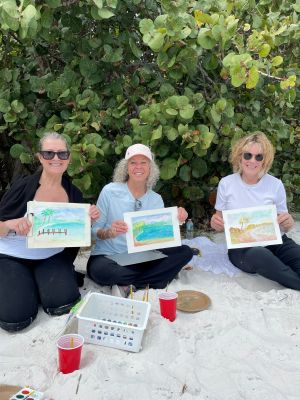 and sustainable landscaping. Complementing the lectures are immersive outdoor programs – including guided hikes, wading in the Indian River Lagoon, beach-based wellness activities, and creative nature workshops – designed to foster hands-on learning and meaningful connections to the natural world.
“We’re thrilled to welcome our community back for our Spring Program Series beginning February 3, 2026,” said Marlie Rivera, Outreach Coordinator at the Hobe Sound Nature Center. “This series reflects our commitment to sparking curiosity and making conservation accessible – creating opportunities for people to explore, learn, and reconnect with the natural world in meaningful ways.”
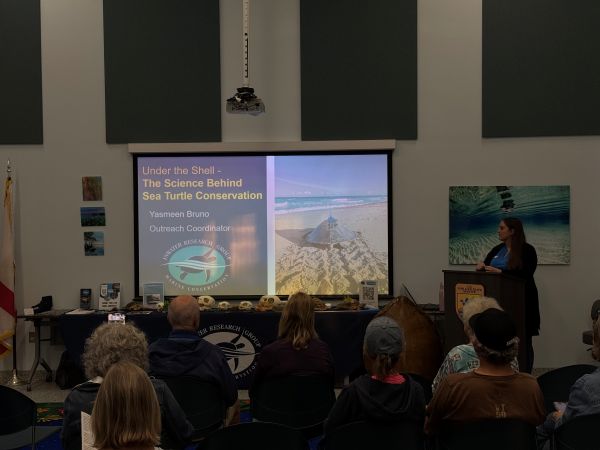
The event is open to the public and free of charge, though donations are appreciated to support the Nature Center’s education and conservation programs. All activities are appropriate for all ages.
For more information, please visit: https://hobesoundnaturecenter.org/2026-spring-series
About the Hobe Sound Nature Center
The Hobe Sound Nature Center is a 501(c)(3) non-profit organization that works in cooperation with the Nathaniel P. Reed Hobe Sound National Wildlife Refuge to educate and inspire people of all ages about South Florida’s critical habitats and wildlife.

Boost Your Happiness Quotient and Find Calm in Chaos with Dr. Laurie Santos at
2026 Rappaport Speaker Series
Stuart, Fla. - How’s your Happiness Quotient these days? If you’re defaulting to frowning emojis, clutching a stress ball during everyday conversations, or wishing you could spend the day hiding under a blanket, you’re not alone.
According to Dr. Laurie Santos, we should all be much happier than we are – and the science backs her up.
 A professor, cognitive scientist, psychologist, and podcast host, Dr. Santos is one of the world’s leading experts on happiness and well-being. Her course at Yale University, which explores science-backed strategies for living a more fulfilling life, is the most popular class in the university’s 300-year history, and she fills auditoriums wherever she speaks. More than 4 million people have signed up for her happiness course online.
Now, Treasure Coast audiences will have the chance to learn directly from Dr. Santos when she presents “Calm Amidst the Chaos: The Science of Happiness,” on Feb. 26 at 7 p.m. at Temple Beit HaYam in Stuart as part of the 2026 Rappaport Speaker Series.
Don’t think it’s easy to get an “A” in the course, though. Dr. Santos’ students will tell you that it takes a lot of work to be happy. The great news is that Dr. Santos has the research to back up her insights into practical things people can do to enrich their lives and build their happiness quotient. The surprising and inspiring stories from her Happiness Lab will challenge and change people’s understanding of how to get unstuck, feel less stressed, and be happy.
Tickets for Dr. Santos’ talk are $50 each and available now at www.RappaportSpeakerSeries.com.
The final presentation in the 2026 season will take place on March 26, when Eve Samples, former journalist and current executive director of Friends of the Everglades, will speak on “Everglades on Trial: A Test for Environmental Policy in America.”
More information about the Rappaport Center, the Speaker Series, and the 2026 presenters is available at www.RappaportSpeakerSeries.com and on Facebook at www.facebook.com/RappaportCenterSpeakerSeries
###
About the Rappaport Foundation
The Phyllis & Jerome Lyle Rappaport Foundation partners with leading institutions in Boston and beyond to cultivate emerging leaders in public policy, mental health, neurodegenerative research, and the arts. The Foundation has a long and proud history of supporting emerging leaders, including civic leaders who improve the lives of their constituents and communities, medical researchers who have unlocked the mysteries of the brain, mental illness and Alzheimer’s disease, and artists who enrich lives, ignite imaginations, and challenge us to see the world in a new light. In Stuart, Florida, the Foundation sponsors the Rappaport Center Speaker Series to promote informed dialogue on issues of national and international importance.
About Temple Beit HaYam
Founded in 1993, Temple Beit HaYam is a Reform Jewish congregation in Stuart dedicated to Torah (lifelong learning), Avodah (worship), and Gemilut Chasadim (acts of kindness and justice). Temple Beit HaYam is a Reform Jewish Congregation committed to Torah (life-long Jewish education), avodah (worship through prayer and service) and gemilut chasadim (acts of loving kindness). The Temple offers Hebrew and religious training to youngsters from kindergarten through high school, has active Sisterhood and Brotherhood programs, and is an active cultural hub, hosting concerts, lectures, and community events that enrich the Treasure Coast.

The Fellowship Program of Foxwynd Foundation Awards $150,000 Grant to House of Hope for Growing Hope Farm
STUART, Fla. – House of Hope has been awarded a grant through the Foxwynd Foundation’s Fellowship Program to support its Growing Hope Farm, providing a total of $150,000 over two consecutive years ($75,000 per year). This grant was nominated by Foxwynd Trustee Jenn Hebert in recognition of House of Hope’s outstanding impact.
 “The nomination of House of Hope reflects the Foundation’s commitment to organizations that provide essential resources and create sustainable impact. This grant will help them continue delivering vital support to those in need,” stated Hebert.
The grant award reflects the Foundation’s commitment to organizations like House of Hope that provide essential resources and create sustainable impact.
This grant will strengthen House of Hope’s Growing Hope Farm production and healthy food distribution. Growing Hope Farm in Palm City includes greenhouses, orchards, and a packing house. Its operations enable House of Hope to grow fresh produce for its Client Choice pantries and food bank partners. At peak production, the farm is now producing well over 2,000 packages of fresh produce weekly.
 “We’re committed to the health of our clients,” said House of Hope CEO Rob Ranieri. “It’s good for their mind and body to have fresh fruits and vegetables on a regular basis. These are often the most expensive items in the grocery store and are not always in our clients’ food budgets. Having them available in our food pantries makes a positive difference in their nutrition.”
Volunteers are essential to the work of Growing Hope Farm, from tending the crops to gleaning the fields after harvest. Interested in volunteering?
Last year’s grant from Foxwynd Foundation helped House of Hope procure perishable items for its pantries—like milk, butter, eggs, chicken, and turkey—and supported the production facilities at Growing Hope Farm. This year’s grant will continue that effort and add a second freight farm on the property. Like the first freight farm purchased in the spring of 2025, it consists of an innovative temperature-controlled hydroponic greenhouse where fresh produce is grown without pesticides. It complements the hydroponic greenhouses, in-ground beds, and orchard already in full operation on Growing Hope Farm.
“We’re excited about what this second freight farm means for our ability to provide fresh produce to our clients year round,” said Ranieri. “The needs of our community continue to increase. The additional freight farm will help us provide a consistent supply of produce for our pantry program and many of our soup kitchen partners across the region.”
 Towers of hydroponic lettuce, herbs and vegetables at the Growing Hope Farm look artistic and serve a meaningful purpose by providing hundreds of harvested plants each week to support House of Hope’s efforts to improve health and nutrition on the Treasure Coast.
The Foxwynd Foundation DAF, the underlying funder of the Foxwynd grant, has awarded the funds at an important time for House of Hope. “Our mission is clear: to empower residents to overcome hunger and hardship,” Ranieri said. “We have seen the demand on our services grow exponentially during the past several years, and we’re grateful to Foxwynd and other generous supporters who are helping us meet the moment.”
To learn more about House of Hope or to make a donation, visit House of Hope’s website at https://hohmartin.org or call 772-286-4673. Updates and announcements can also be found on Facebook, Instagram, and X.
About House of Hope
Founded in 1984, House of Hope is a 501(c)(3) nonprofit organization that empowers Martin County residents to overcome hunger and hardship. House of Hope touches the lives of more than 30,000 people each month, helping with basic needs such as food, clothing, furniture, financial assistance, as well as longer-term case management services that help build life skills for a more self-sufficient future.
The organization has service centers in Stuart, Hobe Sound, Indiantown, and Jensen Beach, with thrift stores in Stuart, Hobe Sound, and Indiantown. House of Hope’s Centers for Enrichment at Golden Gate in Stuart, in Jensen Beach, and at KinDoo Family Center in Indiantown offer free programs, technology, and workshops designed to enhance life skills, earning potential, health, and overall well-being.
House of Hope also operates the Growing Hope Farm in Palm City and several nutrition gardens that provide sustainable sources of fresh produce for clients as well as nutrition education and vocational opportunities to the community. For more information, visit hohmartin.org or call 772-286-4673. Updates and announcements can also be found on Facebook, Instagram, and X.
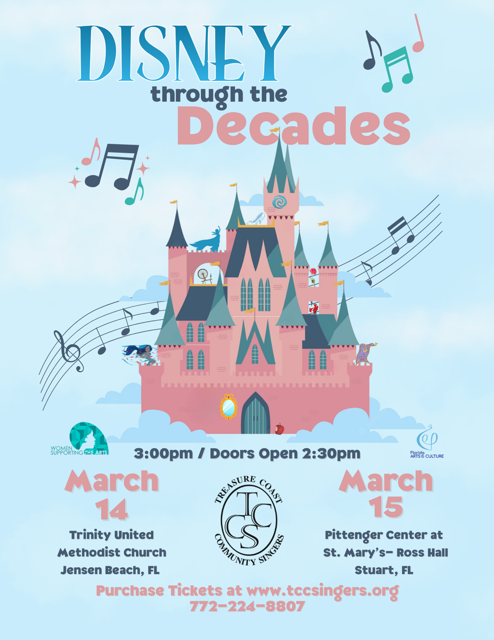
Impact100 Martin Sets Sights on Record Year as Members Prepare to Vote on 2026 Impact Grants
STUART, Fla. (Feb. 10, 2026) – In just eight years, Impact100 Martin has transformed philanthropy in Martin County, awarding more than $2.32 million in Impact Grants to local nonprofits. Now, as the organization sets its sights on a record-breaking 2026 membership year, women across the county are invited to help shape the next round of $100,000 grants by becoming a voting member by Feb. 28.
Amanda Purnell and Dana Espinosa
 This year’s semifinalists have already been announced and include:
- CareBag Mobile Shower Unit Martin County – Carebag
- Compassion House: Transitional Shelter and Family Restoration Program – The Salvation Army
- Hope in Motion – Hope Center for Autism
- Kiwanis Park at Woodlawn - “Music in the Park” & ADA Swing Project – Kiwanis Club of Stuart
- NextGen Veterinary Clinical Simulation & Skills Lab Project – Education Foundation of Martin County
- Purchase of a New Digital X-Ray Machine for Veterinary Clinic – Humane Society of the Treasure Coast
- River Scout II: A New Voyage – Environmental Studies Council
- WildLab on Wheels – Hobe Sound Nature Center
- Wildlife Education Update – Treasure Coast Wildlife Hospital
 At the Grants Awards Celebration in April, the finalists from this group will present their project to the entire Impact100 Martin membership for a vote.
“We are intent on growing our organization to a record-breaking 550 members this year,” Impact100 Martin President Sue Whittington said. “That will give us the amazing opportunity to award a full $100,000 grant in each of our five focus areas: Arts & Culture, Education, Environment, Family, Health & Wellness, and Preservation & Recreation.”
Amy Brunjes and Paula Hundt
The Impact100 model of collective giving is simple and powerful: members contribute $1,000 a year to be pooled together into a grant-making fund. For every 100 members, Impact100 is able to award one $100,000 grant. After a rigorous vetting process carried out by the Impact100 Grant Committee members, the entire membership gathers at the annual Grant Awards Celebration in the spring to hear from the finalists, and vote on which projects to fund.
Ann Caggiano and Pam Fogt
The Impact100 model of collective giving is simple and powerful: members contribute $1,000 a year to be pooled together into a grant-making fund. For every 100 members, Impact100 is able to award one $100,000 grant. After a rigorous vetting process carried out by the Impact100 Grant Committee members, the entire membership gathers at the annual Grant Awards Celebration in the spring to hear from the finalists, and vote on which projects to fund.
 Whittington described the “ripple effect” of the grants, inspiring nonprofits to think big, bring partners together in new collaborations, and leverage additional grants from other philanthropic sources.
Brigite Babine, Carrie Lavargna and Kathy Lockhart
“It’s truly exciting to read the submissions from each semifinalist, hear their presentations, cast a vote, and know that you’re having a tremendous impact on our community and its future,” Whittington said. “We’re prepared to make Season 9 our most impactful ever!”
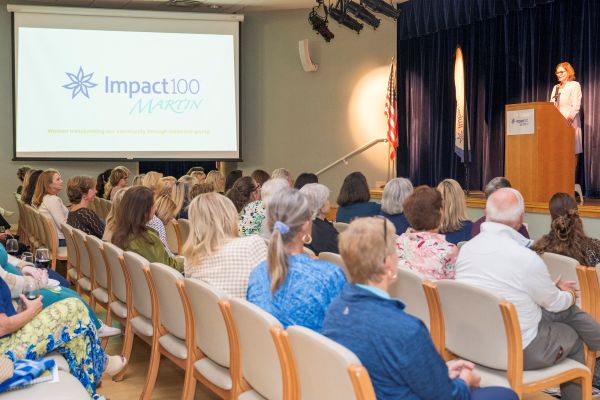 Impact100 Martin Kickoff
To become a member, sign up for the Grants Award Celebration, or learn more about Impact100 Martin, visit www.impact100martin.org.
ABOUT: Impact100 Martin is a nonprofit organization with a mission of creating positive, lasting change in the community through collective giving. Founded in 2017, it is a chapter of the national Impact100 Movement founded by philanthropist Wendy Steele to transform communities through the power of women’s philanthropy. It is a member-driven organization that awards grants in $100,000 increments each year to local nonprofits in the areas of arts & culture, education, family, health & wellness, and environment, preservation & recreation. Detailed information about membership, grants, and community impact is available at the website www.impact100martin.org, on Facebook at www.facebook.com/Impact100Martin or on LinkedIn at linkedin.com/company/impact100-martin-county.
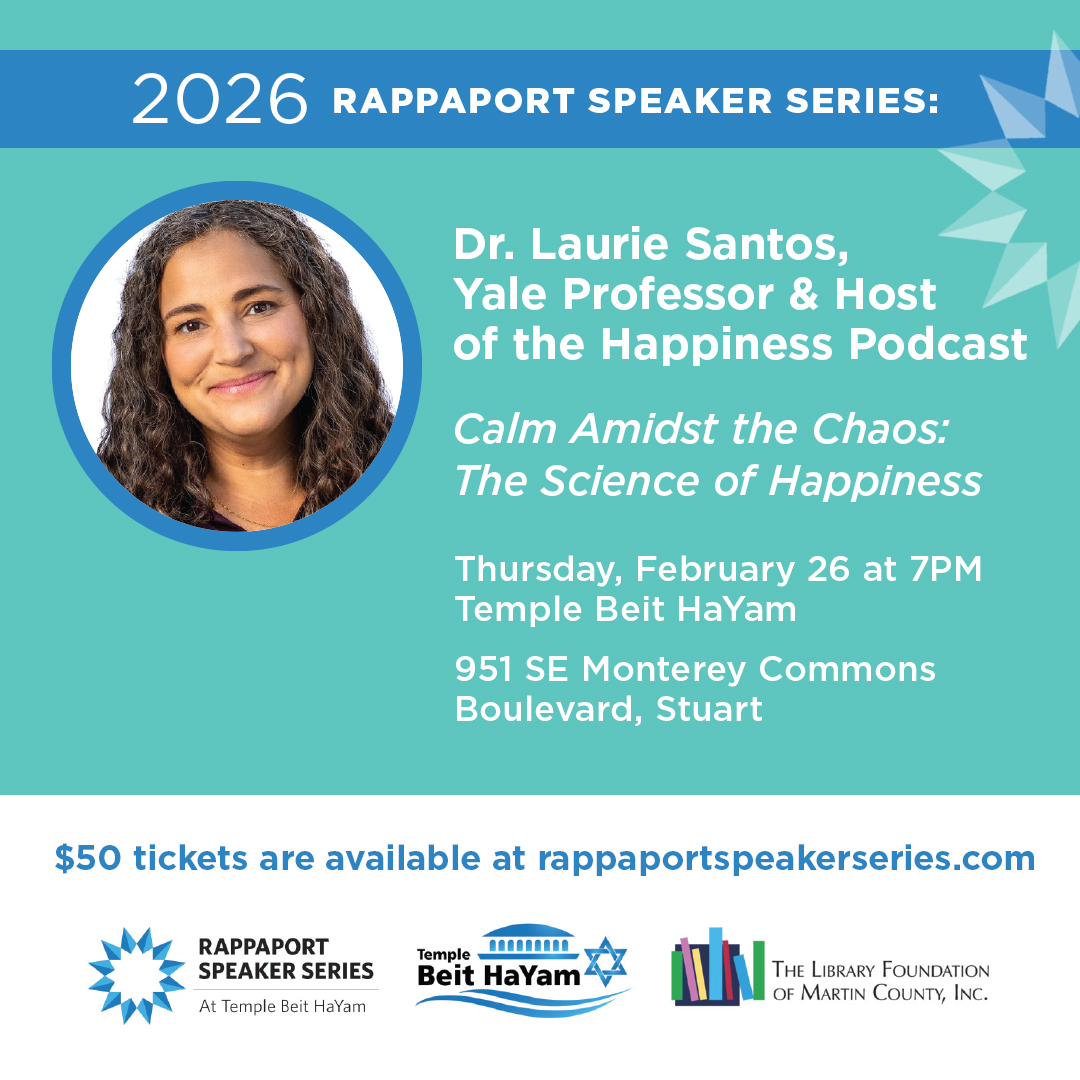

15-Year Old John Morgan Helping to Make Life Better for Hibiscus Children
 John Morgan exemplifies what it means to lead with heart and purpose. At just 15 years old, he has become a powerful role model, demonstrating how compassion and commitment can create meaningful change. For more than five years, John has dedicated himself to supporting children at the Tilton Family Children’s Shelter in Jensen Beach.
One of John’s most impactful contributions has been building the Hibiscus Shelter Library - he has collected more than 360 books for the children. Through books, children find opportunities for empowerment, emotional growth, cognitive development, and a lifelong love of learning. John’s efforts ensure that these benefits are accessible to some of our community’s most vulnerable youth. John has also stepped up to meet the Shelter’s needs including summer items such as towels and sunscreen, often purchasing items himself when donations fall short.
 John’s journey with Hibiscus began in 2020, when he was just 10 years old and learned about Hibiscus’ mission. Moved by the challenges faced by the children, he launched a holiday gift drive to ensure no child felt forgotten during the holidays. Each year since, John has collected an extraordinary number of toys, games, and gifts through heartfelt letters to friends, family, and classmates. This year, he surpassed the total number of gifts he has collected and hosted a pizza party at the Shelter.
John is a true hero and friend to our children and we are incredibly proud of the difference he continues to make. For more information about Hibiscus programs, please visit us at HibiscusChildrensCenter.org.

Molly’s House to Auction $15,000+ Golf Cart
at Annual Polo Charity Event
Champion Golf Carts Donates Brand-New Golf Cart to Support Local Patients and Families
STUART, FL — A major highlight is returning to the Molly’s House Polo Charity Event on March 7, 2026, held at the beautiful Port Mayaca Polo Club: the live auction of a brand-new Vivid Peak 2G golf cart, valued at over $15,000 and generously donated by Champion Golf Carts.
The luxury cart features a lithium battery, aluminum frame, extended roof, upgraded lighting and safety features, and premium comfort amenities — perfect for golf, neighborhood cruising, or equestrian use. (Specs sourced from manufacturer sheet:)
“Our Polo Charity Event is truly a celebration of community,” said Katie Bartlett, Executive Director of Molly’s House. “The generosity of Champion Golf Carts adds incredible excitement to the day and strengthens our ability to serve patients who need to be close to their medical care. One lucky bidder is going home with a beautiful new golf cart, and every dollar raised supports the mission of Molly’s House.”
In an exciting opportunity for bidders, the golf cart will be auctioned with no reserve, guaranteeing it will go home with the highest bidder. VIP guests will have the closest vantage point for the auction, though absentee bids are also welcomed. To submit an absentee bid, contact Sarah Siebritz at 772-223-6659 or email ssiebritz@mollyshouse.org with your maximum bid amount.
The annual polo event blends an elegant afternoon of horses, hospitality, and philanthropy — all in support of Molly’s House, which provides affordable, supportive lodging to patients and families traveling to the Treasure Coast for medical treatment.
More event information and ticket details are available at: www.mollyshouse.org/annual-polo-classic/

Cleveland Clinic Martin North Hospital Earns Comprehensive Center Accreditation from The American College of Surgeons and
American Society for Metabolic and Bariatric Surgery
Accreditation reflects excellence in patient care and comprehensive weight-loss care
STUART, Fla. – Feb. 9, 2026 – Cleveland Clinic Martin North Hospital has received the Comprehensive Center accreditation from the Metabolic and Bariatric Surgery Accreditation and Quality Improvement Program (MBSAQIP), a joint quality program of the American College of Surgeons (ACS) and the American Society for Metabolic and Bariatric Surgery (ASMBS).
“We’re proud to be accredited for providing world-class, compassionate care to patients undergoing bariatric surgery,” said Federico Serrot, M.D., medical director of Bariatric and Metabolic Surgery at Cleveland Clinic Martin Health. “Cleveland Clinic’s physicians are recognized for advancing surgical weight-loss techniques through research and innovation, so to be accredited reflects the high standards and quality of our program.”
The accreditation formally acknowledges Cleveland Clinic Martin North Hospital’s commitment to providing and supporting quality improvement and patient safety efforts for metabolic and bariatric surgery patients. It is granted to centers that demonstrate multidisciplinary, high-quality, patient-centered care.
As an MBSAQIP-accredited hospital, Cleveland Clinic Martin North Hospital also becomes an ACS Surgical Quality Partner. Being a Surgical Quality Partner signifies a hospital’s dedication to consistently improving procedures and approaches, while maintaining a critical eye on process at every step.
The Bariatric and Metabolic Institute, part of Cleveland Clinic’s Digestive Disease Institute, treats patients seeking weight loss through bariatric surgery, as well as those experiencing gastrointestinal conditions. Bariatric surgery options include, but are not limited to, gastric sleeve, gastric bypass, complex reoperations, and Lap-Band care.
Cleveland Clinic Martin North Hospital joins Cleveland Clinic Weston Hospital in the Florida market, which has also been recognized by the American College of Surgeons and the American Society for Metabolic and Bariatric Surgery.
To learn more, visit my.clevelandclinic.org/florida/departments/digestive/depts/bariatric.
###
About Cleveland Clinic Martin Health
Cleveland Clinic Martin Health is part of Cleveland Clinic’s Florida market. It features three hospitals, Cleveland Clinic Martin North Hospital, Cleveland Clinic Martin South Hospital and Cleveland Clinic Tradition Hospital, with a total of 521 beds, a free-standing emergency center, and numerous outpatient centers and clinics across Martin and St. Lucie counties on Florida’s east coast. Cleveland Clinic Martin Health offers preventive, primary and acute hospital care, as well as cancer care, a heart center, wellness and rehabilitation services, and much more. Cleveland Clinic’s Florida market is an integral part of Cleveland Clinic, where providing outstanding patient care is based upon the principles of cooperation, compassion and innovation. Physicians at Cleveland Clinic are experts in the treatment of complex conditions that are difficult to diagnose. For more information, visit www.clevelandclinicflorida.org.
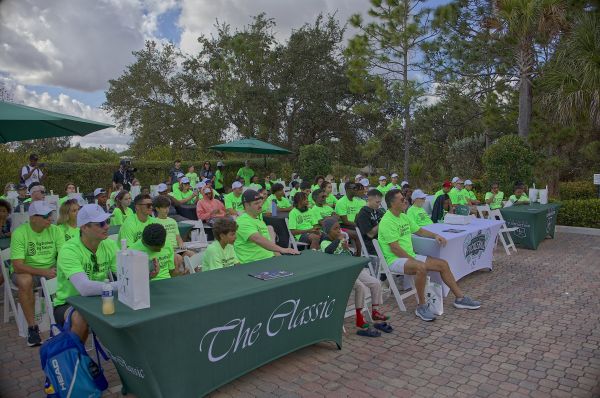 Bigs & Littles Group Photo
TERRELL OWENS HOSTED A PICKLEBALL EVENT TO BENEFIT A LOCAL CHARITY
AS PART OF THE JIM CRANE CELEBRITY GOLF CLASSIC WEEKEND
Monday, February 9, 2026- (Stuart, Fla.) –Big Brothers Big Sisters of Palm Beach and Martin Counties was a beneficiary of the first annual Jim Crane Celebrity Classic presented by James Hardie charity event that was recently held January 24-26, 2026, at the Floridian National Golf Club in Palm City, FL.
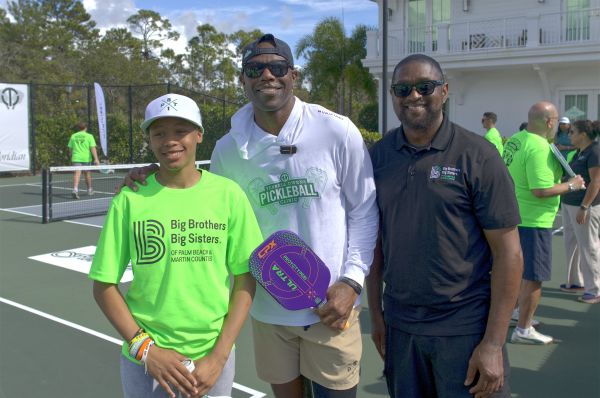 BBBS Little Skye Wilcox, Terrell Owens, David Hall
“The Classic,” a three-day, star-studded charity event, was hosted in conjunction between the Astros Foundation and the G-Unity Foundation, and one of the local charities that benefited was Big Brothers Big Sisters of Palm Beach and Martin Counties.
One of the highlights of the event was the Jim Crane Celebrity Golf Classic presented by James Hardie on Monday, Jan. 26. The event featured several prominent and former pro athletes, including more than 20 Hall of Famers, as well as several A-list stars from music and entertainment. Among those attending were Jack Nicklaus, Ken Griffey, Jr., 50 Cent, Albert Pujols, Barry Sanders, Ray Lewis, Jeff Bagwell, Andruw Jones, DaBaby, Flo Rida, Bun B, and Chase Rice.
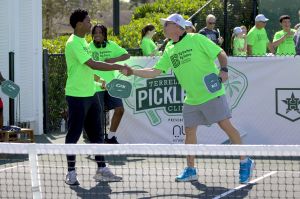 Big Matthew Billitti and Little RJ Gaston
In addition to the Golf Classic, the Astros Foundation hosted multiple private charity events on-site at the Floridian. On Saturday, January 24th, Terrell Owens hosted an instructional pickleball event for 81 members of Big Brothers Big Sisters of Palm Beach and Martin Counties.
“Over the last few years, pickleball has become a passion for me, and I’m grateful to host Big Brothers Big Sisters of Palm Beach & Martin Counties at the beautiful Floridian in an effort to emphasize growing the sport as a powerful tool for inclusivity and opportunity. My purpose is to introduce underserved kids to this great game I love and provide them with access to and resources for a fun, healthy, community-driven activity that builds confidence and connection. My goal is to break down barriers, ensuring that children from all backgrounds can participate and feel included in a sport that celebrates teamwork and resilience. It’s truly an honor to partner with Jim Crane and the Astros Foundation to host this impactful event, providing students from all backgrounds with mentorship and guidance to further their dreams and ambitions. Getcha’ Pickleball Ready!” said Terrell Owens.
 Little Sister Novah Woodall
“Today showed our kids that an entire community is cheering them on,” said Yvette Acevedo Flores, CEO of Big Brothers Big Sisters of Palm Beach and Martin Counties. “Meeting Jim Crane and spending time on the court with Terrell Owens and the athletes playing pickleball, talking, laughing, and being encouraged was mentorship in action. Our Littles left feeling seen, appreciated, and more confident for trying something new, knowing their dreams matter and they’re not pursuing them alone.”
The Astros Foundation, on behalf of Owner & Chairman, Jim Crane, and Nine-Time Major Champion, Gary Player, the original architect of Floridian’s golf course, introduced the first annual “The Harder You Work The Luckier You Get” Award presented by U.S. Coins and Jewelry, which was presented to 50 Cent during the G-Unity Kick Off Party.
 Shelby Bates Pickleball professional
Numerous check presentations were held throughout the event in support of local charitable organizations, including the Nicklaus Children’s Healthcare Foundation, Martin County North Little League, Big Brothers Big Sisters of Palm Beach and Martin Counties, and more.
This exciting new event would not be possible without the generous support of several outstanding sponsors and partners. That list includes: James Hardie Building Products, NU Energy, Petersen Family Foundation, Daikin Comfort, Google, Coca-Cola, Sire Spirits, U.S. Coins and Jewelry, Sky High for Kids, Five Point Infrastructure, Lowenberg Law Firm, Municipal, Shaftel Diamonds, Rush Resources, Tito’s Vodka, Oakley, Jordan/Nike, Peter Millar, Imperial, Topps, Trill Burgers, J-Bar-M BBQ, Camp Aspen, RTIC, Enterprise, Adam Ross Custom Clothiers, Iceman Nick, Aperture, The Global VIP, EZGO, Breitling, Melin, Bumpboxx, CPX Pickleball, KITCH Pickleball, IMRSV-XR, Bocock Brothers Premium Cigars, Margaritaville Lake Resort, Baha Mar, Courtyard Marriott, and more.
 Big Larry Port with Ramell Gaston
“The Astros Foundation is the official charity of the Houston Astros, focusing on youth sports, education, and community support initiatives,” said Emelda Douglas, Sr. Vice President and Executive Director Astros Foundation.
“We were excited to be in West Palm Beach, home of the Houston Astros’ state-of-the-art spring training facility, CACTI Park of the Palm Beaches. We were proud to bring the Jim Crane Charity Classic and other ancillary charitable events to this region for three days with a portion of the proceeds benefiting deserving local charities such as Big Brothers Big Sisters of Palm Beach & Martin Counties.”

Emelda Douglas, Mathew Billitti, David Hall, Jim Crane, Terrell Owens, Katie Knapfel, Yvette Flores
Photos: John Biondo
About Big Brothers Big Sisters of Palm Beach and Martin Counties:
BBBS provides children facing adversity aged 6-18 with volunteer mentors who serve as positive role models. Since 1986, the organization has provided mentors to children in Martin County and, since July 2010, in Palm Beach County. Big Brothers Big Sisters of America (BSA/BBSA) recognized the Martin County organization in 2007 as one of the thirty-five best-performing agencies nationwide. Recently, this chapter was awarded the Big Brothers Big Sisters of America (BSA/BBBSA) Growth Award for program excellence in 2023. The Growth Award recognizes agencies that have demonstrated growth in the number of ("Bigs") and youth ("Littles") who are matched through the program, year over year. In the past year, Big Brothers Big Sisters of Palm Beach and Martin Counties has served 446 youth and grown its local services by seven percent. Visit https://mentorbig.org/ to learn more.
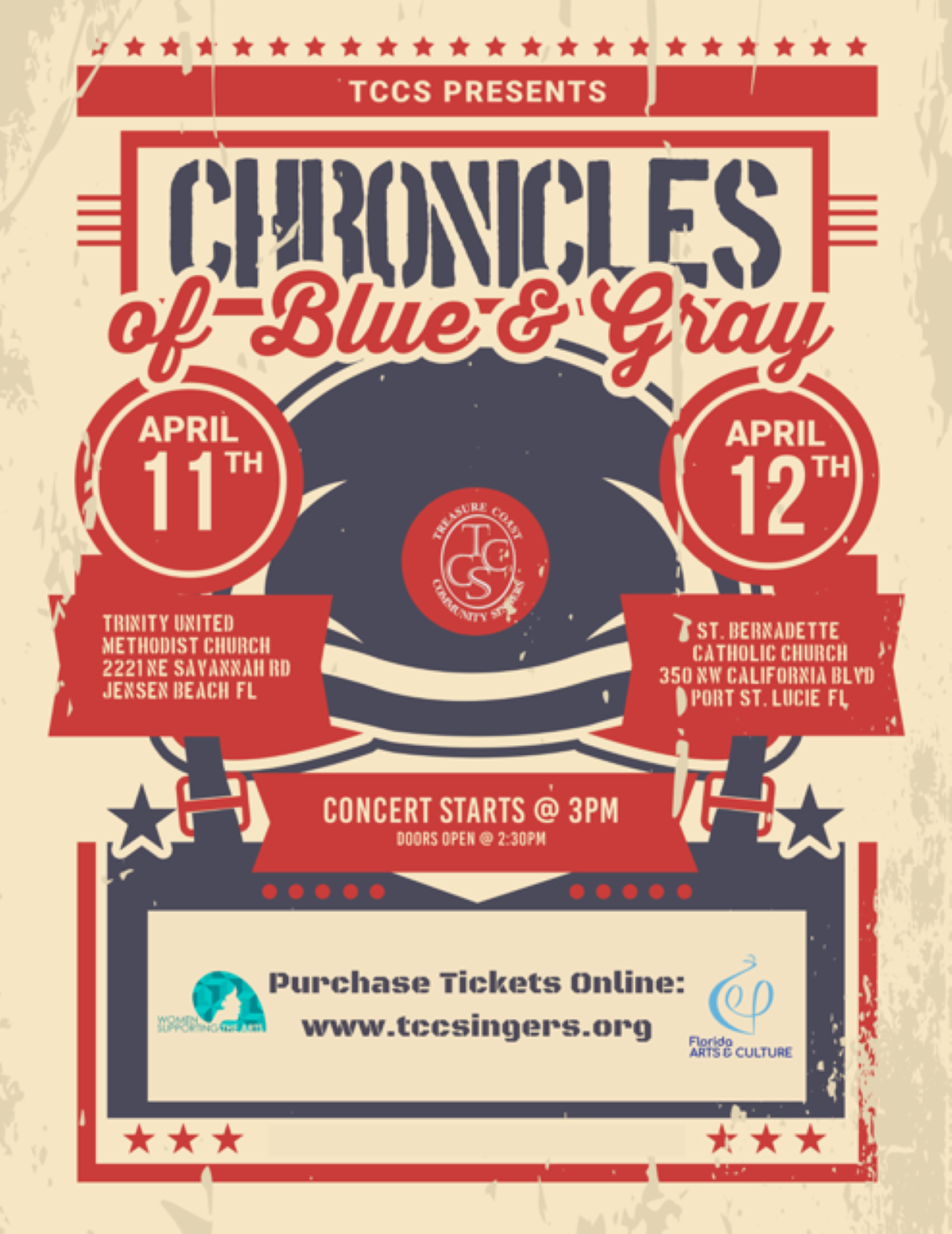

I urge those who are reading this newsletter to send an email expressing their opinions on subjects. When a reader sends one, it will be included if I find it relevant and I have adequate space. I may edit the letter because of length and clarity. You don’t have to agree with me to have your letter in Friends & Neighbors. All you must do is send it to TOM CAMPENNI or fill out the form on the website.
Rosemarie Zummo
Hello Tom,
Thank you for the work you do to publish Friends & Neighbors. Just read "Way Too Many Deaths" and wonder if you are following Brightline's bond payments issue? Brightline deferred interest payments on its subordinate bonds in July 2025 and again in January 2026. A missed third payment could trigger default. Of course, revenue hasn't met projections. Personally, I want to see this project succeed but IMO, Americans love their cars too much to take the train. Especially, when we need to rent a car at the end of the train ride anyway.
https://finance.yahoo.com/news/second-debt-downgrade-default-warning-224330406.html
Stay well. Thank you again for publishing Friends & Neighbors.
My Answer:
Yes I know about the defaults.
It would be astounding if Brightline did not succumb to what every line has. However, I believe just having a station even if it is part of Amtrak or Tri-Rail would enhance our lives. Even if we are able to provide a mode of transportation that could entice seniors and the young out of their cars it would be worth it. Again if 10% of the commuters chose rails to go to work in West Palm Beach then thousands of cars could come off the roads.
Doug Tayor
Just wondering if you could update the progress getting Briteline Service in Stuart?? It was announced and now not a word...
My Answer
Doug:
The county had to reapply for federal grants because of the change in administrations. Trump has different criteria than Biden, Though it set the timeline back, there are people that worked at Brightline that are now working for the Federal Rail Administration on a high level.
We should know more about it by the summer, I understand.
Ostyn Levi
Tom,
If you don't recognize the name, I am one of the followers of your Facebook page "Friends and Neighbors of Martin County" who has left comments on your posts that you continue to delete.
I reached out to you via facebook messenger but did not receive a reply. I am reaching out to you now via email in hopes that we can have a conversation. My biggest interest is in Fire Rescue. In your articles, you find some way to throw in fire rescue - mainly the budget and staffing. It is clear that you are not educated in the staffing needs of fire rescue, and the operations that make up the majority of our budget. The fire department of today does not have the same needs and operations of the fire department in 2015. I would like to discuss this with you, preferably in person or via phone.
I look forward to hearing from you.
My Answer
The purpose of our Facebook page is to publish articles that will appear later in Friends & Neighbors. It is not to have debate nor have inane comments answered or even preserved. I don't live in a social media world. It is a tool not my existence. I do not use Facebook Messenger.
On occasion I print some of the letters sent. I also on occasion respond to letters sent to me regarding Friends & Neighbors. I am responding to yours which I will publish in our next edition along with this response.
Stuart Fire/Rescue is now more expensive than Martin County. That is just the factual numbers. There is no equivocation or two sides to the story.
I see that you live in unincorporated Martin County and receive your emergency services from the county. If you were a Stuart taxpayer I am sure you would be screaming if you paid more for Fire Rescue than your neighbors in the rest of the county. Charging more for a comparable service is unsustainable.
Collins, in order to curry favor with the Stuart fire union, whose members do not live in the city, decided that his constituents will pay more than anyone else in the county for service. Former Commissioner Doug Smith gave in to higher and higher demands at the county level to their union. He also believed that the county's union would get him reelected...it did not.
There is always a reason to have a third person in a rescue or a fifth person on a truck or new positions such as captain. You would say people will be better served and protected. I will counter and ask who will pay? You obviously won't because of where you reside outside the city.
Chris has done enough damage in 4 years to the city including the death of our fire department and fiscal discipline. It is his turn to spread the chaos and pain to the county where you will pay more if he is elected.
Kathy Setliff
Wow just read “our presidential peace award” article. Had no idea there is such disdain for our president from the author of this article. Whatever awards he has received he deserved every one of them. What’s behind this article? TDS? Jealousy? I will be unsubscribing from this rag immediately.
Carol Ball
I do read your newsletter and I did see your view on immigration. I also saw a presentation on how my grandparents came to America. They were so happy to be "a part of America" but I just don't see the same with these immigrants that traveled illegally across the border. If they were interested in becoming part of America, why haven't these people who have been here for many many years tried to become a citizen? There are classes offered "FREE" at the library. When I volunteered at Martin hospital in the baby section, I asked this Spanish couple why they came here and the answer was "to have this baby here". By having this baby in America, they were now entitled to all the "FREE" benefits.
I know we should welcome all these immigrants but it seems they are coming for the wrong reason....not to be part of America but to get the free things we can provide. What about our veterans who served for us and the homeless people...shouldn't we care about these people who are citizens and should get benefits.
How are these immigrants living if they are here illegally? I know when I had the Dairy Queen that I could not hire them if they were illegals because I would be shut down.
My grandparents came here with a plan and a sponsor with somewhere to live and work but these people came across with NO PLAN,...NO NOTHING....but expected to be taken care of.
This is simply "My Opinion".

The first Blueway parcel of a little over one acre will close on or before March 16th. It is being purchased with proceeds from the ½ cent sales tax. The Environmental Lands Oversight Committee recommended the purchase, and it was subsequently approved by the BOCC.
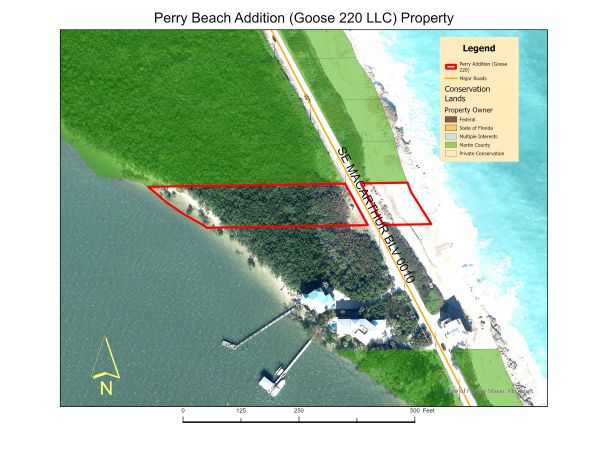
The lot stretches on MacArthur Blvd from the ocean to the river. On the riverside the property consists of almost all mangroves. It is next to Perry Beach and will remain open to the public. The price negotiated is $1,980,000.
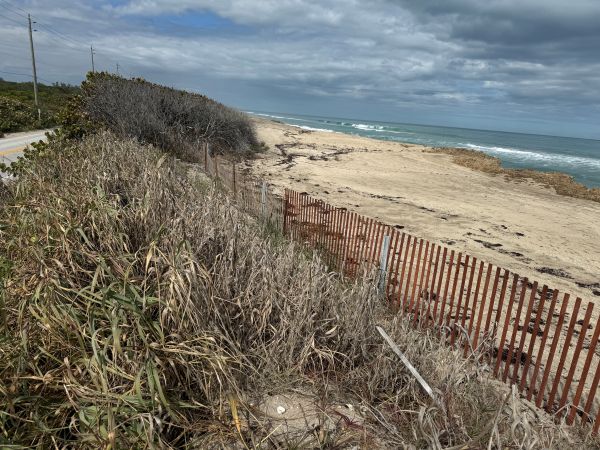
There is so little land which is beach or river front that this may end up being the only piece purchased using the program. It is nice that the public can immediately see the benefit of the sales tax. The money for the purchase was approved 5-0
 My mother would use the word dungarees for jeans and britches for pants. Until the day she died, my grandmother would say “close the ice box door” instead of refrigerator. What we call everyday items will change over time.
For some time, guest cottages have been allowed almost universally on single-family lots in Martin County. It is an antiquated term…like ice box and dungarees. It is time we changed the nomenclature to the term used today which is accessory dwelling units (ADU).
 The same goes for residential units associated with commercial and industrial properties. They have been allowed forever also but they were known as watchman’s quarters. Now they are also ADUs. They can’t be rented out but must be used by the business or owner. Growth Management Director Schiller said even now he only knows of one such unit in Martin County.
When approving construction of these units, they must conform to all zoning requirements. On residential and commercial properties, they need to meet all setback requirements. They can only have 50% of the space as the main dwelling on residential parcels. Nothing for either one has changed except that residential ADUs are now legally permitted to be rented.
 For some time, people with guest houses have illegally done so. Now the ADU can be leased. Chair Heard brought up the idea that 2, 3, or 4 people could occupy a bedroom. That has not happened. According to the code, only five unrelated people may occupy a home. She also brought up parking, but a driveway or a street can only hold so many cars.
 Here is the real kicker. Since a simple dwelling costs about $300 and up per square foot to build, it makes no economic sense to do so unless the purpose is to have your parent or kid live there. Once again, the Chicken Little Syndrome of the sky falling is very much in evidence.
Commissioner Vargas keeps speaking about her vast knowledge of real estate. She said that in Miami-Dade, where she is from, she saw with her own eyes great growth occurring with ADUs as a culprit. Perhaps when speaking of Miami, we should start with the newly constructed 80-story buildings or higher for one of the reasons for the population growth. It would make more sense than the one she has claimed.

We need these units for a couple of reasons. First, there is a lack of affordable housing. I don’t expect people either to rent out their own home or build an ADU as a money-making scheme. They would lose their shirt. But it will help the young and old find a first or last place to live in Martin County.
It passed 3-2 with Vargas and Heard dissenting.
At an earlier meeting, the commission was asked to approve a request from the Parks & Recreation Department to change the Parks & Recreation Advisory Board’s meeting schedule to quarterly. Commissioners thought that they should wait until the board met and came up with a revised schedule themselves.
Sounded like a good idea, and the Advisory Board subsequently met. The PRAB voted unanimously to meet 6 times per year. When the item was placed on the agenda for the commission to vote on their revised meeting schedule, it was placed on the consent agenda. I wrote Chair Heard to ask for it to be placed on the regular agenda.
I felt that since the commission had not ratified staff’s quarterly recommendation earlier, the item belonged on the regular agenda rather than the consent agenda. A matter of transparency was called for here. On the regular agenda, anyone who wanted to comment could. No one did and it was a unanimous vote of the commission.
I want to thank Sarah Heard for seeing my point and placing it on the regular agenda.
In November of last year, the commission had an item before them to approve sewers being installed in parts of South Sewall’s Point. The town was going to manage the contractors and pay to install 129 grinders and piping. They then would turn ownership over of the infrastructure to Martin Utilities for hookup when the homeowner wanted or their septic tank failed.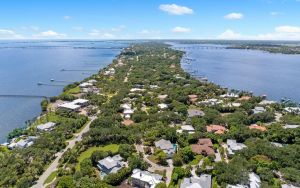
After all the hubbub, the commission took a vote that approved the town building the 129 grinders and the force mains. Then since it would be Martin County’s sewer service, the pipes would then be theirs. The vote then was 3-2 with Vargas and Heard dissenting to providing the 129 connections. This is not where I think Vargas and Heard were wrong.
People from the town spoke at the county commission meeting in November both pros and cons. All five town commissioners spoke with one even speaking against the county providing permission for installation of the system. The point is everyone argued it out at that time, and the ones against the project lost. The project goes forward.
The town, which is completing this work using grant money, must be finished by June or give back millions of dollars. They have seven contractors working on it.  Martin County is contributing nothing to have these additional 129 customers at some point. Sewall’s Point believes, as does the state, that homes are better being off septic systems, especially places like Sewall’s Point which borders two bodies of water.
This meeting was never meant to be a rehearing of the project. One Sewall’s Point resident spoke and said that there was a problem with what the town provided regarding public records. All this stuff has been argued before. Guess what…it is immaterial even if the one resident who spoke is correct. Sewall’s Point is its own government. The county doesn’t get to decide whether it is a good government or not. Even if something is wrong with the government, the state will step in or at the next election the commission will see a change in members.
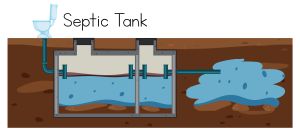 The county gave its word, and the town went forward believing they could trust it. While Vargas and Heard may not approve of providing grinders, a vote was taken and a commission majority said to proceed. It is not fair to go back on it now. That action would define sore loser.
Town Manager Daniels, Mayor Vinny Barile, and the Town Engineer Capra rushed down to the commission chamber. It was embarrassing for the county that they needed to do that. Remember this was on the consent agenda.
 Ciampi made a motion to accept the operating agreement prepared by county staff between the county and Sewall’s Point. It was seconded by Capps. The vote was 3-2 with Vargas and Heard voting no. Both these commissioners are wrong for voting this way. If you live in Sewall’s Point and the county didn’t keep its promise then you can see all residents responsible for $10 million to reimburse the state and federal governments.
At the end of the meeting, Commissioner Ciampi asked the Administrator to form a committee consisting of Donaldson, Finance Services Director Stephanie Merle, and Comptroller Carolyn Timman to come up with a commissioner spending policy. It was immediately met with invective and derision by Commissioner Vargas.
 The Martin County Taxpayers Association (MCTA) had done a “White Paper” on commissioner expenses last month. It showed where some commissioners were travelling and spending quite lavishly. Perhaps that was Commissioner Ciampi’s impetuous.
I also believe when he heard about Commissioner Vargas planning to go to Seattle to look at the Sedron Plant, he may have just had enough. Though Donaldson asked if any other commissioner wanted to go, no one put up their hands, at least in public. My question is why anyone is going now since the county has already signed a contract to use Sedron’s plant in Indiantown for the county’s biowaste solids once it is built.
 Before the contract was signed, I could understand the commissioner going, but I would say it was completely unnecessary. Before the contract was signed, a staff member or two with the right knowledge should have gone to make sure the technology was appropriate. But now…can you spell J-U-N-K-E-T?
Ciampi also said that he would like to find out about continued membership in the National Association of Counties (NACO). He wants to know what it costs and whether it is worth it or not to continue. Martin County belongs to the Florida Association of Counties (FAC) which is something that lobbies in Tallahassee. The largest expense associated with these organizations is to attend their meetings. The NACO meetings are all over the country, but FAC meetings are only in Florida.
 Vargas looked as if she was going to explode. She kept saying she is a commissioner that “Works Her Position.” She began insinuating that Ciampi isn’t even around, and he should take advantage of the mental health benefit that is offered. Ciampi shot back that he was elected four times to the county commission. And it is true that while he does have a job outside of the commission, he is all over the county at meetings during the day and at night.
Ciampi said he never mentioned a commissioner by name. He said a policy was never necessary until recently. He mentioned, to steal a line from Vargas, that “we are stewards of tax dollars.” Except for Vargas, the rest of the commissioners are on board with having a policy created.
The other thing taxpayers should watch out for is that staff don’t become the slush fund to hide commissioner travel expenses. I have heard stories of staff being told to put things on their travel budgets. The public should be disappointed in this behavior and hold the commission’s feet to the fire. Administrator Donaldson should make it quite clear to all that breaches will not be tolerated.
The MCTA is correct that the travel budget has gone way out of line. There needs to be a strong policy delineating where county dollars can be spent with a cap for each commissioner’s individual expenditures. Vargas keeps saying that she is the one looking after taxpayer funds! That means she needs to keep in mind that applies to her spending of tax dollars too.

Mayor Boss Collins and his Politburo lose another decision.
 A couple of weeks ago, we reported that Judge Ewen ordered the city commission to reconsider their denial of the rezoning for the owners of two contiguous lots on Federal Highway. They wanted to build a hotel just south of the Roosevelt Bridge. The zoning on both parcels allows hotels as of right. The reason for the rezoning to one category from another was to determine whether the parking must be in the front or rear of the structure.
The lot owners are being denied their property rights by the Boss. It took no time for the judge to rule once again in favor of the owner. How many times do you need to be told you are wrong? We all know that the Boss can’t ever accept the fact that he is wrong.
I wonder if he is going to spend more of the taxpayers’ money to appeal this decision again. It is futile to do so but what does he care because it is not his money. However, before so cavalierly instructing the Stuart City Attorney to do so, there needs to be a discussion in public at a meeting.
 Mayor Boss may decide to give the hotel another hearing. Not to approve it but Collins believes if he can say the right words in the denial, property rights go away….make a bet? Step by step since the firing of Mortel, Stuart is that much closer to insolvency.
When he keeps killing the opening of new businesses, the Boss better be saving his pennies. He has drastically increased spending on the Fire/Rescue budget by hiring more personnel. Collins has stopped all building within the city’s borders and with it the new dollars that would have been brought to Stuart’s coffers.
His war on business, the health of the real estate market, the young and old people, with his regressive policies, needs to stop. Collins is making the city less fiscally able than it was last year and the years before. Either he just doesn’t understand government or the Boss wants to destroy all that Stuart has become since the bad old days of the 1980s. In my opinion, it is both.
Here is the real kicker…the lot owners will just build affordable housing instead of building a hotel on those 2 parcels. And, under state statute, that use would only need administrative approval. Boss Collins and his two followers will be ushering in the one thing that they detest the most…multi-family housing. I have been told that these property owners will not take this lightly.
 STUART IS A NO BUILD ZONE BY ORDER OF MAYOR BOSS COLLINS
Moving forward, Stuart and possibly Martin County have a choice between a viable future or a deadening past. Collins is the guy that is anti-business and anti-anything being built. It is up to any citizen who wants a future to do everything possible to retire him from the scene.
You can see the order here
I know Mayor Boss Collins is telling everyone that the city has never been better, but all you need to do is look around to know that it is not true.
 After 34 years in city government, Louis Boglioli is no longer the Financial Director. And the simple reason was that he told the Boss that the city’s Fire Department now costs the city taxpayer more than the cost would be if the county provided the city’s fire service by paying their MSTU.
Mayor Boss also told Boglioli, who was acting as the interim city manager, that he was not to meet with certain people. One of them was me. Boglioli said he would meet with any citizen.
 Collins must really be afraid of what I write to issue that command. Why does he want to stop me from communicating about how badly he has ruined the City of Stuart? In less than two years since he became dictator, he has squandered Stuart’s fiscal heritage and so much more.
Collins, Reed, and Giobbi have increased costs so much that the only way the Fire Department can continue is to generate additional revenue by a tax hike or by lowering expenses which means that every other department will take a very big haircut. Apparently, Collins and his Politburo don’t embrace the old saying “don’t shoot the messenger,” and so Boglioli is gone.
 After they fired Mortell, another messenger who wasn’t appreciated, Boglioli was appointed by the commission to run the city until a permanent manager could be found. When Louis was terminated as manager, he received the news from the Boss. Not the commission but the Boss. It wasn’t Reed or Giobbi but only the Boss in an encounter right before a commission meeting.
Roz Johnson, the HR Director, was informed by the Boss that she would be the new city manager long before Joli found out he was being terminated. No commission action, no discussion, only the Boss Collins decree. Once again in Stuart, the Boss has usurped the authority of the other commissioners so that he can call the shots. Since his reign began, he has done nothing but increase costs, foster political and managerial corruption, and brought chaos to City Hall.
There is a nasty rumor going around promulgated by “She Who Must Be Obeyed.” (For those that may not have gotten the reference, please read our story that appeared here. ) For the past several years, Boglioli has worked mostly remotely. The agreement did not cost the city any money.
 It was rumored by “She Who Must Be Obeyed” that Boglioli had some plush condo apartment on the city’s dime when he was in town. Nothing could be farther from the truth. He was staying in an office in the city-owned building in Shepard Park where Duffy Boats had been for a decade. His accommodation was one 8’x10’ room without a stove, hot plate, or microwave. The bathroom with a shower that a small man couldn’t turn around in was in the hallway and shared with the Dragon Boat Club which the city lets use for their meetings and equipment storage.
 You may ask why the city wasn’t renting the premises out after Duffy. Because of a FRDAP grant, there must be some benefit to the park or the marine industry. Duffy leased boats to the public as their benefit. If the city didn’t adhere to those terms, Stuart would have to return millions of dollars that were used for the refurbishing of the park.
 Joli saw the handwriting on the wall, and I would imagine he was so fed up with the way the Boss operates, that he decided to resign on January 28th. He was obligated to stay for 90 days. I understand both Collins and Reed flipped out and worried that Boglioli would somehow sabotage the system. The sabotage was not done by Joli but by the Kings of Chaos, Reed and Collins.
Through a convoluted week where Boglioli was hired and let go and hired and let go, Friday February 6th was Joli’s last day after 34 years. The man just couldn’t take anymore of the World of Facebook where the Boss, Politburo, “She Who Must Be Obeyed” and their followers did nothing but try to impugn his integrity.
But Louis didn’t leave alone. Three perhaps four others from that department are gone and now only two maybe three finance employees remain. They are leaving so fast it is hard to keep up to date on the sinking ship. A full-service city with three employees who probably will be looking for new jobs and also leaving.
 First you get rid of a guy that has won awards every year for three decades, has been acknowledged as pre-eminent in the field of government accounting throughout the U.S. and internationally, and has been a guest lecturer about government finances. Way to go Chris….
The city has hired William Perez to be interim finance director. Mr. Perez has never worked in government before. Mr. Perez, I understand, is a friend of someone in City Hall who has been angling to get him a job for years. I guess the Boss doesn’t consider experience a prerequisite when you are grasping for straws. The city runs accounting software that is only for governmental entities and has been customized for Stuart. Governments have their own accounting practices which are quite distinct from the private sector.
Cost, Corruption, and Chaos are what Mayor Boss Collins has brought to the city. And now I understand he wants to export his brand to the county. I guess you deserve the government that you elect. Stuart made a mistake, and I hope the people of Martin County won’t make the same one.

In the January 18th edition I wrote a story regarding Stuart and School Resource Officers (SROs).
It was a story about Redemer Lutheran and how Boss Collins used undue influence to leave the individual SRO in place instead of following SPD policy and rotating the officer out of that position. As an aside I wrote that St Joseph’s SRO had been rotated out in accordance with the policy. I also mentioned that the city was not compensated fully by St. Joseph’s for what SPD spent for the school’s SRO. I received an irate phone call from someone representing the school telling me I was wrong.
The numbers don't show I ws wrong. In fact though, the answer was more nuanced and complicated than just the raw numbers. I decided to make a public records request for further information. I received the following information regarding St. Joseph’s SRO for 2024/25. Here is what the city spent for the officer during that timeframe:
|
Row Labels |
Sum of HOURS |
Sum of PAY AMOUNT |
|
0 |
- |
|
|
AUTO ALLOW |
0 |
692.31 |
|
CLOTHING |
0 |
250.00 |
|
CMP ERN OT |
348.1 |
- |
|
COMP USED |
279.4 |
10,142.18 |
|
EDU INCNTV |
0 |
1,560.00 |
|
HOLIDAY ST |
64 |
2,712.04 |
|
HOURLY |
1987.47 |
80,235.38 |
|
LUMP PYMT |
0 |
1,500.00 |
|
LUMP SUM |
0 |
1,014.59 |
|
LWOP EA |
16 |
- |
|
MANDT1.5 |
12.03 |
547.81 |
|
OD DETAIL |
424 |
17,627.94 |
|
OVERTIME |
44.38 |
1,107.32 |
|
PBAHOLIDAY |
40 |
1,431.28 |
|
PHNSTIPEND |
0 |
710.00 |
|
PTO LEAVE |
10 |
673.08 |
|
PTOBUYDOWN |
150 |
5,226.00 |
|
TUITION |
0 |
5,250.00 |
|
TUITIONTX |
0 |
6,428.00 |
|
(blank) |
||
|
Grand Total |
3375.38 |
137,107.93 |
Here is what SPD billed the school:
�PYMENTS
|
Joseph’s School |
10.00% |
7.50% |
4.50% |
|
|
|
START-UP |
FY2023/2024 |
F\"2024/2025 |
FY26 (2025/2026) |
|
Salary |
$48,277.00 |
$53,104.70 |
$62,000.00 |
$65,405.00 |
|
FRS |
$13,435.00 |
$14,778.50 |
$20,331.00 |
$23,016.02 |
|
Health |
$9,225.00 |
$10,147.50 |
$8,419.40 |
$10,115.04 |
|
FICA |
$2,993.00 |
$3,292.30 |
$3,844.00 |
$4,055.11 |
|
Medicare |
$700.00 |
$770.00 |
$899.00 |
$948.37 |
|
Dental |
$348.00 |
$382.80 |
$441.51 |
$276.00 |
|
Life |
$114.00 |
$125.40 |
$134.81 |
$247.00 |
|
EAP |
$25.00 |
$27.50 |
$25.00 |
$56.16 |
|
Phone |
$40.00 |
$44.00 |
$40.00 |
$40.00 |
|
long Term Disability |
$0.00 |
$0.00 |
$273.16 |
$623.43 |
|
Short Term Disability |
$0.00 |
$0.00 |
$241.23 |
$706.68 |
|
TOTAL |
$75,157.00 |
$82,672.70 |
$96,649.U |
$105,488.82 |
|
October 1st Payment |
$37,578.50 |
$41,336.35 |
$48,324.56 |
$52,744.41 |
|
April1st Payment |
$37,578.50 |
$41,336.35 |
$48,324.56 |
$52,744.41 |
There is a $40,000 gap. The question a taxpayer should ask is why?
You can’t blame the school for paying what they were billed. And in some respects, it seems the officer is performing tasks that are not part of his SRO duties when not at school (at least I hope so.) If he is a member of SWAT or Explorers and being paid for that, the school may not be liable for that cost. One can argue if it were SWAT he was being prepared for an active shooter response. The fuzziness is the problem with the SRO program in the city and the county in terms of how costs are allocated.
Being an SRO is a special responsibility. We should have officers who are only dedicated to that duty and not also regular police work. They should be trained in childhood psychology and counseling. Sure, they need training responding to active shooters, but it is more likely that they will need to help a student in crisis than respond to a school shooting.
Currently, SROs are law enforcement first and get engaged with student well-being second. Nationally statistics show that when SROs are in the school building, student arrests go up. There needs to be a more balanced approach.
SROs as a profession should be solely dedicated to protecting and helping students. We need a dedicated force to do just that. St. Joseph’s paid what was billed and that should be all that is expected of them.
The management of the officer is under SPD and as such it is up to them to make sure the training the officer receives while an SRO is for that duty alone. Better yet, the school district should create its own SROs and then as a separate force, if wanted by individual non-district schools, make their trained officers available.
You can see the entire public record I received here.

The district entitled this presentation: “District Properties, K-8 Conversions, and Future Readiness Options.”
When it comes to jargon, the education establishment is full of verbiage that takes a while to decipher. What I think they were trying to explain to the school board in this presentation is the best way to utilize schools for the benefit of their customers who are the parents and children in Martin County. Because many are not happy with the traditional set-up.
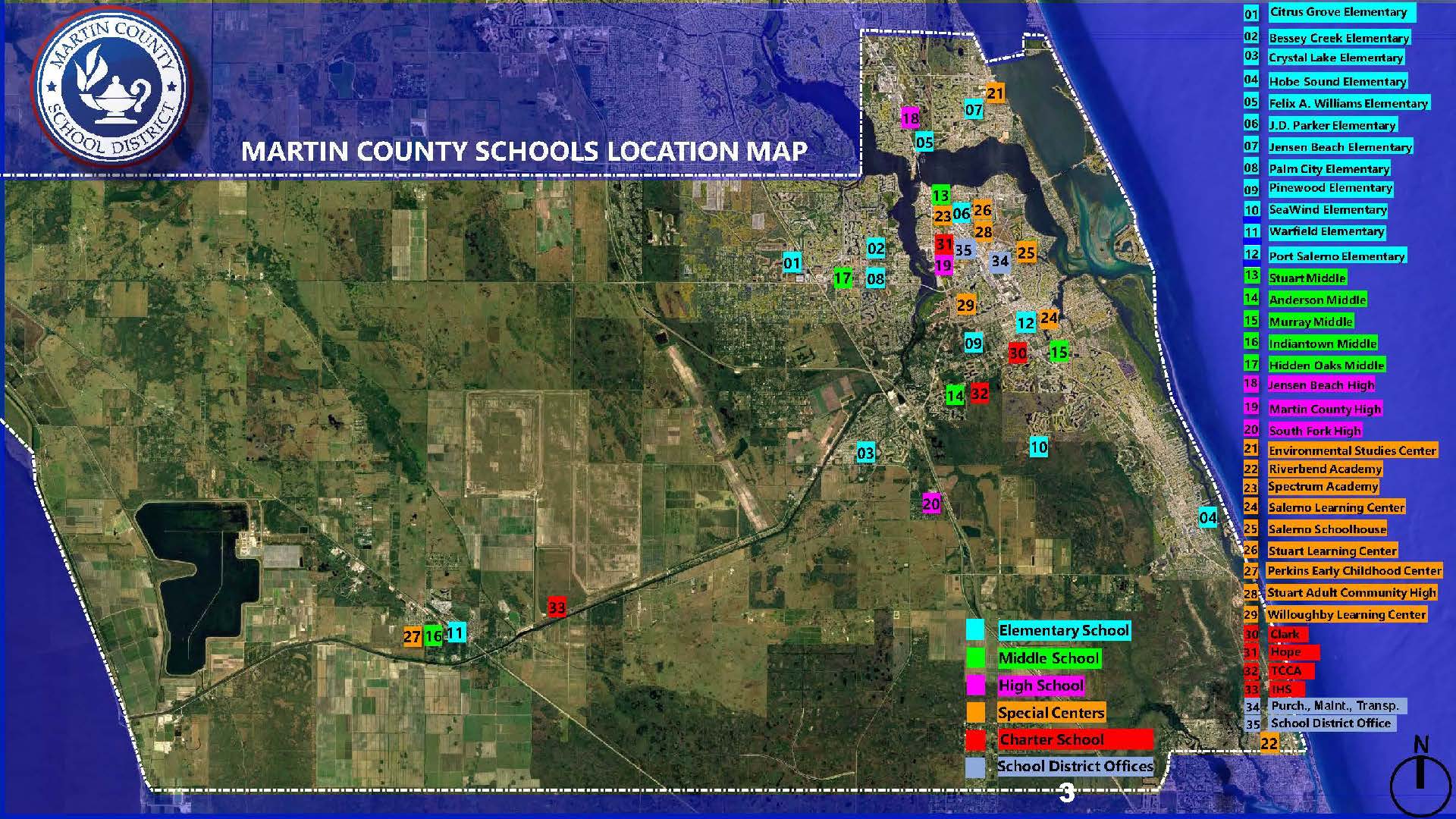
As you can see from the map, most are located in the east of the county. There are 12 elementary schools, 5 middle schools, and 3 high schools. The average school is operating at 75% capacity.
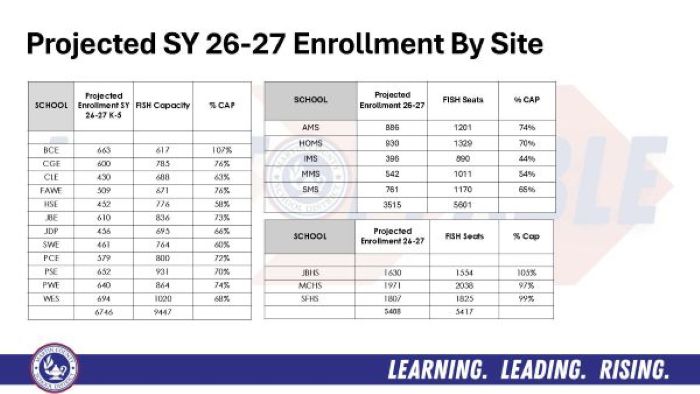
Now we come to the unattended consequences of Tallahassee sticking their noses into local affairs. If this was a normal business, the board would just sell the surplus buildings. But the state has said that a charter school can come in and take the building for their operations for free. That means even charter schools run by for-profit companies.
Further if there are unused classroom spaces in existing school buildings, a charter can come in and use the rooms without paying the district anything. How is that good for the taxpayer who funded the public school? This presentation is trying to determine how to not burden the taxpayer and at the same time not to have underutilized space.
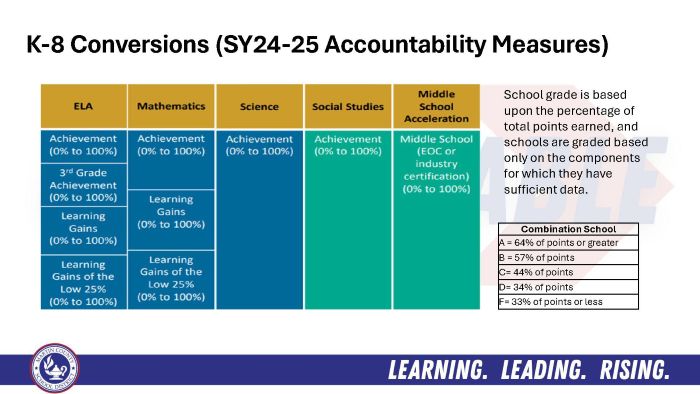
The board also knows that the current middle school model does not serve a large segment of their students. A substantial minority of 5th grade students are not moving on to middle school but rather leaving for alternate educational choices only to come back into the system for high school. If you look at the number of student seats available in the middle schools (FISH Seats), you can see the gap and then that gap disappears in high school.
The current situation of middle schoolers exiting the system and the possibility of others assuming control of unused school property for alternative education models, it is easy to now understand the board’s eagerness to find solutions like the K-8 propositions. The other problem for the district is that the new housing construction is not producing many additional students. The modelling projections are highly inaccurate. And once existing students graduate, parents don’t immediately move away, and new families move into existing homes with a fresh crop of kids.
 The following projects were supposed to generate new students yet haven’t so far. Newfield with 130 new homes has 6 elementary school students. Terra Lago, with 70 homes completed and occupied, has 4 elementary attendees. River Oaks, which is a rental community with 15 homes occupied, has 10 students. I don’t know if the students are new to the district or moved from other Martin County public schools. What is certain is that the scenario of hundreds of kids moving into new housing developments like in the 1950s and 1960s is not being repeated today.
The information cited in the presentation shows that K-8 schools perform better than Martin County’s traditional middle schools for those upper grade levels. Because of Tallahassee regulations surrounding 7th and 8th graders, the K-8 model would need a different gym, furniture, and equipment than what is required for an elementary school. That can make it very expensive.
 However, by adding just a 6th grade, there is no additional expense. They can use the same gym and classrooms. Though extra teachers are needed, the ones that teach 6th grade in the middle school can now just go over to the elementary schools.
7th and 8th graders can still attend middle schools if enough students want that option. If the school’s curriculum is based on student interests like robotics or aeronautics, perhaps 6th graders may want to join older kids in middle schools because of that interest could do so. What doesn’t work is sending kids to a designated school because they became a year older.
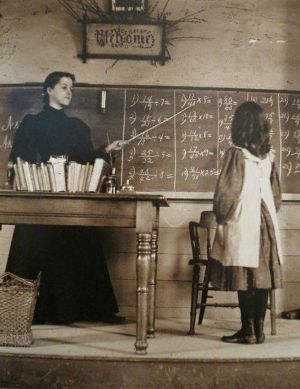 In the presentation, staff has conversions of some middle schools to the K-8 model. If that were to occur, Anderson Middle will have 1951 student stations. I know I would never send my 1st grader to a school of that size. Would the principal ever know my kid’s name? Only if the child misbehaved a lot.
Let’s not forget the millions and millions of dollars in costs for these conversions.
For eternity, parochial schools have used the K-8 model because it works. Public schools for years used the junior high or intermediate model (7th grade-9th grade) because it gave the smaller children a safer space but the older ones a time to transition to high school during years when they might be experiencing the challenges of puberty. What we haven’t even discussed is throwing 14-year-old freshmen into 18-year-old seniors’ environment as we do now with the 9th-12th grade high school. Would you want your freshman daughter dating a senior?
Expectations are different than they were. The school district is trying to compete in the education market…. a market that didn’t really exist for most students a decade ago. Vouchers have opened a new world in which the Martin County School District must compete, or they will lose more students.
The entire presentation is found here
The Arts Foundation of Martin County is back for one more try to lease and maybe eventually purchase the old Stuart High School on East Ocean.
The last time around, we saw the leader of the group, Nancy Turrell, admit that without the ability to sell booze, her plan wouldn’t work. Has anything changed?
In the lease submitted, it was silent on that point. After discussion, the board wanted to make sure there was no ambiguity about that. They have instructed the attorney to place a clause that states the tenant will follow all school board policies including the prohibition of liquor.
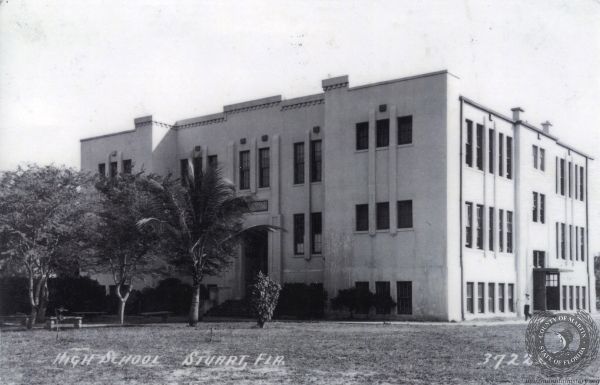
Throughout the lease term, they may purchase the property. The foundation will need to make investments in construction by certain dates to avoid large rent increases or outright default. The school board is talking about millions of dollars at certain intervals to fulfill the requirements in the foundation’s lease.
I don’t get it! What changed if anything? Tallahassee and Washington are giving fewer dollars in arts grants than before. Did a great benefactor step up to the plate? If someone did, the foundation is not announcing it.
The only reason that another entity such as a charter school hasn’t approached the district to use the site is because they have more sense than the Arts Foundation. A charter could build a great school for the $30 million it will take for the renovation that the foundation has in mind.
You can see the lease and the comments here
It is amazing what happens when a school board member has an idea. It can cost the school district hundreds of dollars in man hours for presentations and thousands of dollars in implementation.
 Member Moriarity doesn’t like the idea of ice cream being offered as a snack for whatever reason. He stated that he was told (always a dangerous concept) that kids were throwing their lunches in the garbage to buy ice cream instead. Nearly 70 years after I went to school, on the surface not much has changed. Yet so much has.
 In elementary school we went home for lunch or brown bagged it. My mother was big on bologna or salami with a Hostess twinkie or a snowball (even I thought it was disgusting). Soda was sold to those who had a dime, or for five cents you could have milk, orangeade, or chocolate drink. By junior high, there was a cafeteria lunch for thirty cents. A hot meal or you could have PB&J on white bread. And ice cream was for sale as an extra.
 Flash ahead these many years later, and when I look at the meals being served, much has changed. They look edible and frankly delicious. The schools even make their own pizza from scratch. No frozen stuff for these kids.
We ate twinkies as our snacks and these kids have the following:
- Gatorade G2
- Juice: Capri Sun, Switch, Cool Tropics, Carton
- Milk
- Slushy
- Sparkling ICE
- Tea Zero (Arizona)
- Water: 8oz, 16.9oz
- Brownie (Whole-Grain)
- Cookie (Whole-Grain)
- Fruit
- Fruit Snacks (Fruit Juice)
- Rolls/Bread/Graham Crackers (Whole-Grain)
- Granola Bar
- Ice-Cream
- Pop-Tart (1 or 2 pack)
- Pretzel - Soft (Whole-Grain)
- Rice Krispie Treat (Whole-Grain)
- Yogurt Cup
- Cheese Stick
- Chips/Popcorn/ Rold Gold Pretzel
- Veggies
 And there is a wonderful tool available to parents that was not available when I had kids in school. A card is given to each child which is loaded with money by their parents and is programmable. If you don’t want your kid to have ice cream, just add it to the instructions and the cashier will make sure they don’t have it on their tray. In fact, if you don’t want them to have anything including what is being served for lunch, a parent can opt out.
If you believe in the parent choice concept, then this is a great system unless you only believe in choice when it agrees with your beliefs. And don’t make it harder by requiring parents to opt in for each individual offering. There is enough on a parent’s plate.
You can see the entire presentation here
What possesses someone to post a meme of the Obama’s as “apes?”
 I don’t buy the fabrication that an aide did it. Or the entire minute video was not fully viewed before it was posted. If that is the excuse, then how many secrets has Trump inadvertently told the Russians or Chinese because he didn’t think.
It is far from funny and is completely insensitive to anyone who knows any of our history. President Trump would have a conniption if he were depicted as big, fat, balding orange man on the body of a pig by Obama on social media. It is beneath the dignity of the office to post. It is the sign of a little man.
 Perhaps it is Trump’s desire to take America back to the 19th or early 20th centuries when humor like that was fairly universal. The old minstrel model of slow and lazy Black Americans who are inferior to White people. Is Trump projecting his own insecurities and inadequacies on others? He always tears down people while everything Trump does or needs is to be described in superlatives. He is a very insecure man.
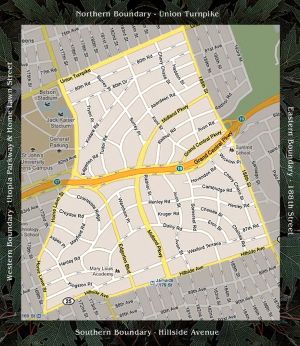 Fred Trump, the president’s father, was someone who was accomplished. I don’t think he ever thought his son was able to walk in his footsteps. Most of Donald’s early successes were because Fred whispered into a political boss’ ear for a building permit or a phone call was made to the right person to make sure the concrete would be delivered to Donald’s project.
Jamaica Estates Trump's Home Town
We have all heard the story about the time that Fred and a crony dumped millions of dollars into chips at one of Donald’s casinos to rescue his son from foreclosure. No successful businessperson would go bankrupt as many times as Donald Trump did and then claim it a success or a strategy to make a better deal.
I was always told that your word was your bond not just given so that you could fool the other guy into giving you something more. Reneging on paying your obligations was not what men did. And if it happened, bankruptcy should only occur once and not become your business strategy.
Loews Valencia Jamaica Now A Church
I never voted for President Obama, nor did I agree with most of his policies. What you can’t say is that he was and is not successful. Only someone whose feelings of inadequacies could fill an ocean would say otherwise.
 Trump only believes that by knocking others can he look better. Trump grew up despising those who weren’t White. He lived in a big house. It was not a mansion in some fancy suburb but within walking distance of a large Black neighborhood. The racial tensions sizzled on those streets. The president was born at Jamica Hospital which served a diverse but growing number of minority patients.
 Both he and Fred knew in the 1960s or 1970s that if they rented an apartment in their middle-income buildings to a Black family, ten White families would move out. A neighborhood could “turn” really fast and with it millions of dollars of property values would be lost. It was just the way it was, and Trump has never let it go. There was a reason Archie Bunker of 704 Hauser Street was upset when the Jeffersons moved next door.
 Even though Donald Trump has climbed to the highest pinnacle, he is still that kid from Queens. He is still Fred’s son. He can’t forget how many times his father came to his rescue. He can’t forget his prejudices with what he considers the less than human qualities of Black and Brown people.
Who forbids everyone to immigrate here but White South Africans, the oppressors who are now the oppressed. That is what Trump fears if those darker people take over. Best to keep them in their place way down in the hole.
Obama did take over and became president, and nothing happened. Bush’s political policies may have been different but fundamentally the United States stayed the same. Because both men believed in America. An America of ideals not one with a president posting absurd and highly inflammatory memes.
IF YOU ARE NOT A SUBSCRIBER DO SO FOR FREE HERE www.friendsandneighborsofmartincounty.com
GET THE WORD OUT
Friends and Neighbors of Martin County is your eyes and ears so that you know what is going on in Martin County’s municipal and county governments. I attempt to be informative and timely so that you may understand how your tax money is being spent. Though I go to the meetings and report back, I am no substitute for your attending meetings. Your elected officials should know what is on your mind.
Tom Campenni 772-341-7455 (c) Email: thomasfcampenni@gmail.com
Tom’s Articles
From Medium
"Government Thugs"
From Martin County Moments
"The Boss Loses Another"
Other Articles
Florida Phoenix: "Bill adding transparency to state land swaps sweeps through House committees"
The Center Square: "DeSantis DOGE slams 'excessive spending,' finds no fraud
The Capitolist: "Florida joins federal K-12 education tax credit program beginning in 2027"
Washington Post: "Are Yimbys winning the housing wars? Not so fast these people say."
Wall Street Journal: "How Remaking the Neighborhood Could Boost Poor Kids' Futures"
The Capitolist: "Florida Supreme Court dismisses adult-use marijuana advisory care"
The Economist: "Inside the crisis at the Kennedy Centre"
Wall Street Journal: "Mass Deportation and Florida Jobs"
The New York Times: "Trump's Stifling Of Dissent Reaches A New Level"
The Center Square: "Florida's pandemic population boom cools"
The New York Times: "U.S. Trade Deficit Widens Despite Trump's Tariffs"
Copyright © February 13, 2026 Friends & Neighbors of Martin County, LLC., All rights reserved.